


8452 Results
Form:
books
books
Actions:
Price:
$180.00
(available to order)
Summary:
FILE Magazine occupies a very unique position: between 1972 and 1989, the celebrated Canadian artists' collective General Idea (active 1969 1994) published 26 issues of this sophisticated magazine, which had a distribution extending far beyond its Toronto underground origins. The name and logo adapted those of the famous LIFE—whose heyday was in the 1950s and early 1960s(...)
Title:
FILE Magazine: complete reprint
Actions:
Price:
$180.00
(available to order)
Summary:
FILE Magazine occupies a very unique position: between 1972 and 1989, the celebrated Canadian artists' collective General Idea (active 1969 1994) published 26 issues of this sophisticated magazine, which had a distribution extending far beyond its Toronto underground origins. The name and logo adapted those of the famous LIFE—whose heyday was in the 1950s and early 1960s demonstrating an already very Pop strategy of appropriation. As AA Bronson, one of the members of the collective has since described it, the magazine's purpose was the search for "an alternative to the Alternative Press," a subversive concept of infiltration within mainstream media and culture. Thus the manifestos of the early issues, lists of addresses, and letters from friends, were rapidly replaced by General Idea's scripts and projects as well as cultural issues (as in the famous 'Glamour' or 'Punk' issues), while never loosing a cutting-edge attention to emerging practices on the art scene and experimental layouts.
Form:
books
books
Publication:
December 2007, Zurich
December 2007, Zurich
Subject:
Contemporary Art Monographs
Contemporary Art Monographs
Form:
books
books

Actions:
Price:
$10.95
(available to order)
Summary:
The paintings of Balthus, one of the most enigmatic and poetic figures in 20th century art, long remained a mystery - just like Balthus himself who persistently fended off all intrusions into his private life. In the late 70s, the aging master finally settled down in the Grand Chalet, a splendid and spacious 18th century timber house in a remote Swiss mountain(...)
Title:
Balthus : The painter's house/Das haus der malers
Actions:
Price:
$10.95
(available to order)
Summary:
The paintings of Balthus, one of the most enigmatic and poetic figures in 20th century art, long remained a mystery - just like Balthus himself who persistently fended off all intrusions into his private life. In the late 70s, the aging master finally settled down in the Grand Chalet, a splendid and spacious 18th century timber house in a remote Swiss mountain area. Both house and occupants remained strictly "off limits" to media and public alike, until 1993 when the ban was graciously lifted for Japanese photographer Kishin Shinoyama. Not only was he allowed to photograph the Grand Chalet, its rooms and the family life there, but he was admitted to the inner sanctum, Balthus' studio, located in a roomy atelier outside. The present selection offers a unique glimpse into the world of an artist whose paintings, personality, lifestyle, and career add up to no less than a 20th century complete art work.
Form:
books
books
Publication:
January 1900, Tokyo
January 1900, Tokyo
Subject:
Photography monographs
Photography monographs
Form:
books
books
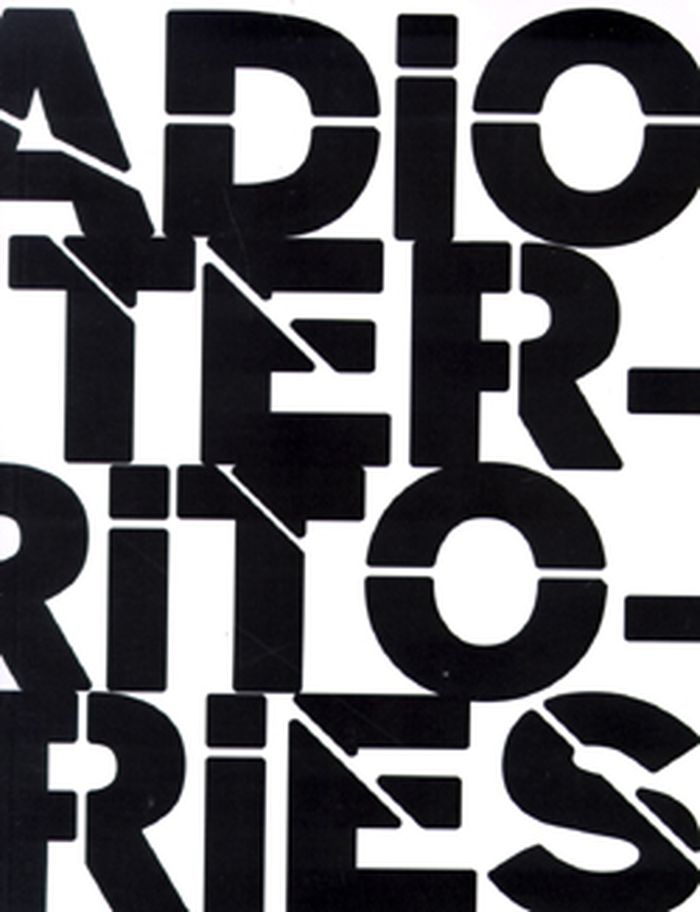
Title:
Radio territories
Radio territories
Actions:
Price:
$30.00
(available to order)
Summary:
The legacy of radio and the arts has spawned many forms of radical culture over the years, from early Modernist notions of the "Wireless imagination" and its subsequent vernacular tongues to Acoustic Ecology's call for "Radical radio". This contemporary history of radical radio addresses the transformation of this broadcast medium by recent breakthroughs in digital(...)
Subject:
Acoustics
Acoustics
Publication:
November 2006, Los Angeles, Copenhagen, New York
November 2006, Los Angeles, Copenhagen, New York
Title:
Radio territories
Actions:
Price:
$30.00
(available to order)
Summary:
The legacy of radio and the arts has spawned many forms of radical culture over the years, from early Modernist notions of the "Wireless imagination" and its subsequent vernacular tongues to Acoustic Ecology's call for "Radical radio". This contemporary history of radical radio addresses the transformation of this broadcast medium by recent breakthroughs in digital technology - from digital streaming to web radio and podcasting - paying special attention to the "transmission arts" in culture and politics. It includes creative and critical essays by historians, media theorists, radio producers and activists, coupled with artistic and audio projects by current avant-gardists Kabir Carter, Brandon LaBelle, James Sey and others. While "Modern" radio stitched together an electronic network by expanding outward, today's radio may fulfill Marshall McLuhan's idea of the global "extended nervous system" by networking individual lives on more of a cellular level. According to the authors, radio is no longer out there, in the ether, but inside us, transmitting intense stratifications of culture. Comes with audio CD
Form:
books
books
Publication:
November 2006, Los Angeles, Copenhagen, New York
November 2006, Los Angeles, Copenhagen, New York
Subject:
Acoustics
Acoustics
Form:
books
books
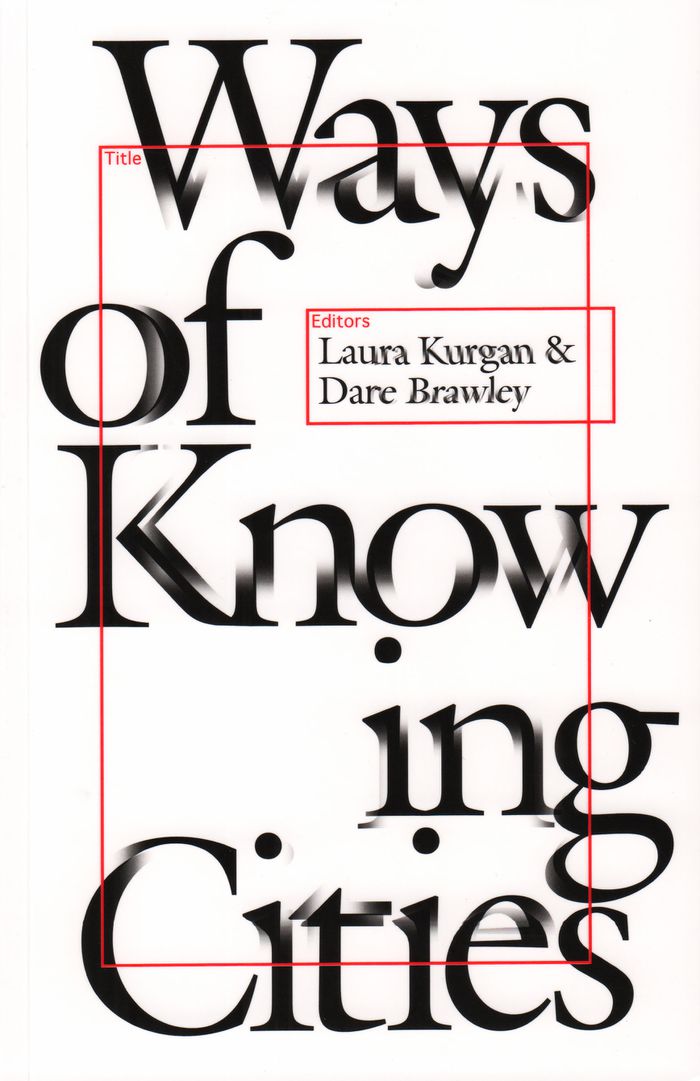
Title:
Ways of knowing cities
Ways of knowing cities
Actions:
Price:
$35.95
(available to order)
Summary:
Technology mediates how we know and experience cities, and the nature of this mediation has always been deeply political. Today, the production and deployment of data is at the forefront of projects to grasp and reshape urban life. ''Ways of knowing cities'' considers the role of technology in generating, materializing, and contesting urban epistemologies- tracing an arc(...)
Title:
Ways of knowing cities
Actions:
Price:
$35.95
(available to order)
Summary:
Technology mediates how we know and experience cities, and the nature of this mediation has always been deeply political. Today, the production and deployment of data is at the forefront of projects to grasp and reshape urban life. ''Ways of knowing cities'' considers the role of technology in generating, materializing, and contesting urban epistemologies- tracing an arc from ubiquitous sites of ''smart'' urbanism, to discrete struggles over infrastructural governance, to forgotten histories of segregation now naturalized in urban algorithms, to exceptional territories of border policing. Bringing together architects, urbanists, artists, and scholars of critical migration studies, media theory, geography, anthropology, and literature, the essays stage a deeply interdisciplinary conversation, interrogating the ways in which certain ways of knowing are predicated on the erasure of others. In this opening, the book engages the information systems that structure urban space and social life in it, historically and in the present moment, to imagine alternative practices and generate new critical perspectives on spatial research.
Form:
books
books
Publication:
December 2019
December 2019
Subject:
Urban Theory
Urban Theory
Form:
books
books
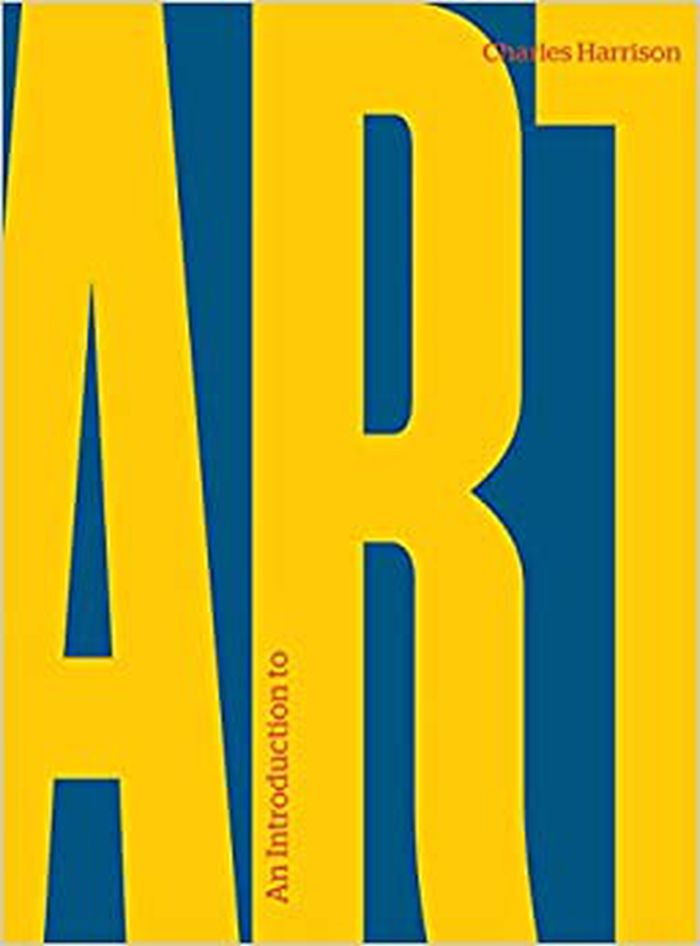
Title:
Art: an introduction
Art: an introduction
Actions:
Price:
$32.00
(available to order)
Summary:
This publication offers an original, clear, and wide-ranging introduction to the arts of painting and sculpture, to the principal artistic print media, and to the visual arts of modernism and post-modernism. Covering the entire history of art, from Paleolithic cave painting to contemporary art, it provides foundational guidance on the basic character and techniques of the(...)
Title:
Art: an introduction
Actions:
Price:
$32.00
(available to order)
Summary:
This publication offers an original, clear, and wide-ranging introduction to the arts of painting and sculpture, to the principal artistic print media, and to the visual arts of modernism and post-modernism. Covering the entire history of art, from Paleolithic cave painting to contemporary art, it provides foundational guidance on the basic character and techniques of the different art forms, on the various genres of painting in the Western tradition, and on the techniques of sculpture as they have been practiced over several millennia and across a wide range of cultures. Throughout the book, Harrison discusses the relative priorities of aesthetic appreciation and historical inquiry, and the importance of combining the two approaches. Written in a style that is at once graceful, engaging, and personal, as well as analytical and exact, this illuminating book offers an impassioned and timely defense of the importance and value of the firsthand encounter with works of art, whether in museums or in their original locations.
Form:
books
books
Publication:
March 2020
March 2020
Subject:
Art Theory
Art Theory
Form:
books
books
Price:
$33.95
(available in store)
Summary:
There is widespread consensus that we are living at the end—of democracy, of liberalism, of capitalism, of a healthy planet, of the Holocene, of civilization as we know it. In this book, drawing on radical futurisms and visions of justice-to-come emerging from the traditions of the oppressed—Indigenous, African-American, multispecies, anti-capitalist—as materialized in(...)
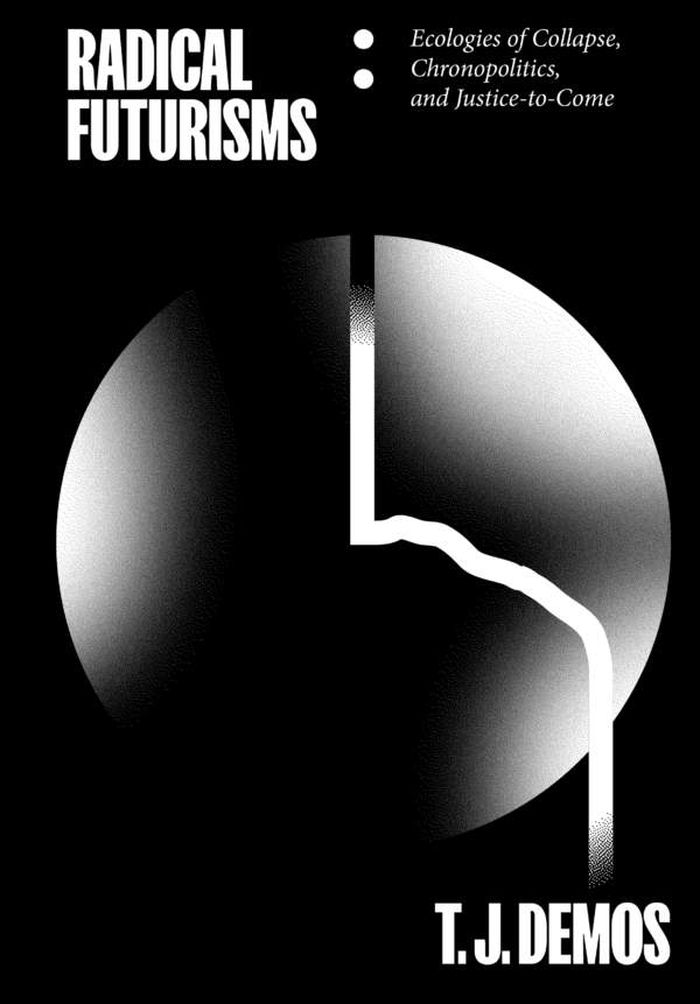
Title:
Radical futurisms: Ecologies of collapse/chronopolitics/justice to come
Actions:
Price:
$33.95
(available in store)
Summary:
There is widespread consensus that we are living at the end—of democracy, of liberalism, of capitalism, of a healthy planet, of the Holocene, of civilization as we know it. In this book, drawing on radical futurisms and visions of justice-to-come emerging from the traditions of the oppressed—Indigenous, African-American, multispecies, anti-capitalist—as materialized in experimental visual cultural, new media, aesthetic practices, and social movements, T. J. Demos poses speculative questions about what comes after end-of-world narratives. He argues that it's as vital to defeat fatalistic nihilism as it is to defeat the false solutions of green capitalism and algorithmic governance. How might we decolonize the future, and cultivate an emancipated chronopolitics in relation to an undetermined not-yet? If we are to avoid climate emergency's cooptation by technofixes, and the defuturing of multitudes by xenophobic eco-fascism, Demos argues, we must cultivate visions of just futurity and multispecies flourishing.
Form:
books
books
Publication:
May 2023
May 2023
Subject:
Architecture ecologies
Architecture ecologies
Form:
books
books
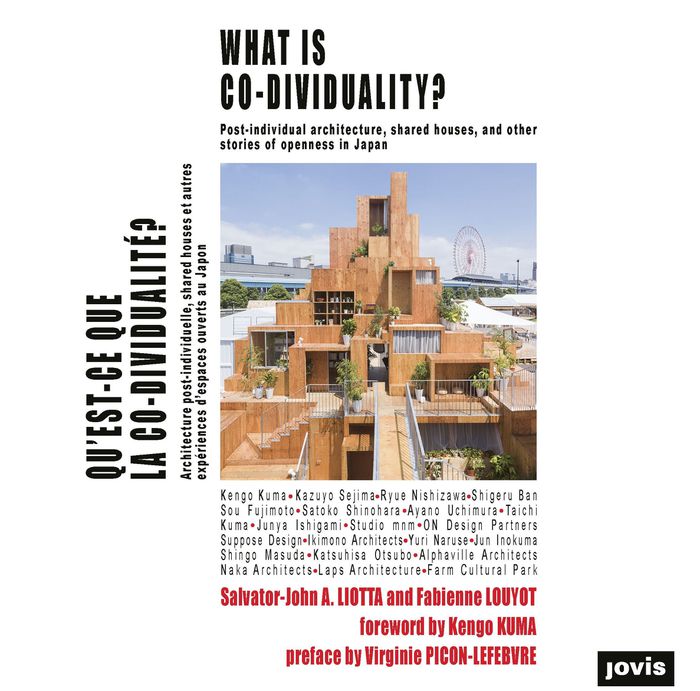
Title:
What is co-dividuality?: post-individual architecture, shared houses and other stories of openness
What is co-dividuality?: post-individual architecture, shared houses and other stories of openness
Actions:
Price:
$48.95
(available to order)
Summary:
This book explores the concept of co-dividuality, an architecture that expresses a new response to joint living in the age of postindividualism, social media, and the sharing economy. The focus lies on current experimentation in Japanese architecture and presents thematic homes with shared spaces designed as a result of warm, simple, fun and contemporary design(...)
Publication:
June 2020
June 2020
Title:
What is co-dividuality?: post-individual architecture, shared houses and other stories of openness
Actions:
Price:
$48.95
(available to order)
Summary:
This book explores the concept of co-dividuality, an architecture that expresses a new response to joint living in the age of postindividualism, social media, and the sharing economy. The focus lies on current experimentation in Japanese architecture and presents thematic homes with shared spaces designed as a result of warm, simple, fun and contemporary design reflections. In addition to their private room, the co-tenants have large common areas where they can practice urban farming, create a start-up, cook together, or experience new spatial ergonomics. The book offers an overview not only on domestic space but also on projects characterized by a multifarious mix between public and private spheres. 'What Is Co-dividuality?' reflects on how we might want to live tomorrow. The book includes projects by Kengo Kuma, Kazuyo Sejima, Ryue Nishizawa, Shigeru Ban, Sou Fujimoto, Satoko Shinohara, Ayano Uchimura, Taichi Kuma, Junya Ishigami, Suppose Design, Naruse Inokuma, and Masuda + Otsubo, among others.
Form:
books
books
Publication:
June 2020
June 2020
Form:
books
books

Actions:
Price:
$41.95
(available to order)
Summary:
In ''Couplets,'' Brian Massumi presents twenty-four essays that represent the full spectrum of his work during the past thirty years. Conceived as a companion volume to ''Parables for the virtual,'' ''Couplets'' addresses the key concepts of ''Parables'' from different angles and contextualizes them, allowing their stakes to be more fully felt. Rather than organizing the(...)
Title:
Couplets: travels in speculative pragmatism
Actions:
Price:
$41.95
(available to order)
Summary:
In ''Couplets,'' Brian Massumi presents twenty-four essays that represent the full spectrum of his work during the past thirty years. Conceived as a companion volume to ''Parables for the virtual,'' ''Couplets'' addresses the key concepts of ''Parables'' from different angles and contextualizes them, allowing their stakes to be more fully felt. Rather than organizing the essays chronologically or by topic, Massumi pairs them into couplets to encourage readers to make connections across conventional subject matter categories, to encounter disjunctions, and to link different phases in the evolution of his work. In his analyses of topics ranging from art, affect, and architecture to media theory, political theory, and the philosophy of experience, Massumi charts a field on which a family of conceptual problems plays out in ways that bear on the potentials for acting and perceiving the world. As an essential guide to Massumi's oeuvre, ''Couplets'' is both a primer for his new readers and a supplemental resource for those already engaged with his thought.
Form:
books
books
Publication:
September 2021
September 2021
Subject:
Critical Theory
Critical Theory
Form:
journals and magazines
journals and magazines

Price:
$20.00
(available to order)
Summary:
Countless magazine covers in North America have responded to the reading public’s capacity for gender-diverse literacy. Gender-diverse representation in narrative forms have spread across all media platforms to become standard or even predictable in their depictions. The expressions of a gender-diverse presence therefore exist within a vast number of communities, more(...)
Title:
Public 62
Actions:
Price:
$20.00
(available to order)
Summary:
Countless magazine covers in North America have responded to the reading public’s capacity for gender-diverse literacy. Gender-diverse representation in narrative forms have spread across all media platforms to become standard or even predictable in their depictions. The expressions of a gender-diverse presence therefore exist within a vast number of communities, more than ever before in history. Emerging designations for gender are more often embedded within a more inclusive, albeit challenging and complex web of shifting societal values around identity. To further capture this pivotal and seismic shift in the history of the human identity spectrum, guest editor Wayne Baerwaldt has invited lens-based visual artists and writers to reflect on their creative subject matter and their gender identity in any way they felt comfortable-through still and moving images, narrative text, collage, Instagram sites, audio, poetry, and so on. Each contributor was asked to examine the impact of their own evolving gender identity on their creative lens-based work.
Form:
journals and magazines
journals and magazines
Publication:
July 2021
July 2021
Subject:
Magazines
Magazines
Form:
books
books
Actions:
Price:
$84.95
(available to order)
Summary:
Tracing the shifting meanings of photography in the early Soviet Union, Aglaya K. Glebova reconsiders the relationship between art and politics during what is usually considered the end of the critical avant-garde. Aleksandr Rodchenko, a versatile Russian artist and one of Constructivism’s founders, embraced photography as a medium of revolutionary modernity. Yet his(...)
Title:
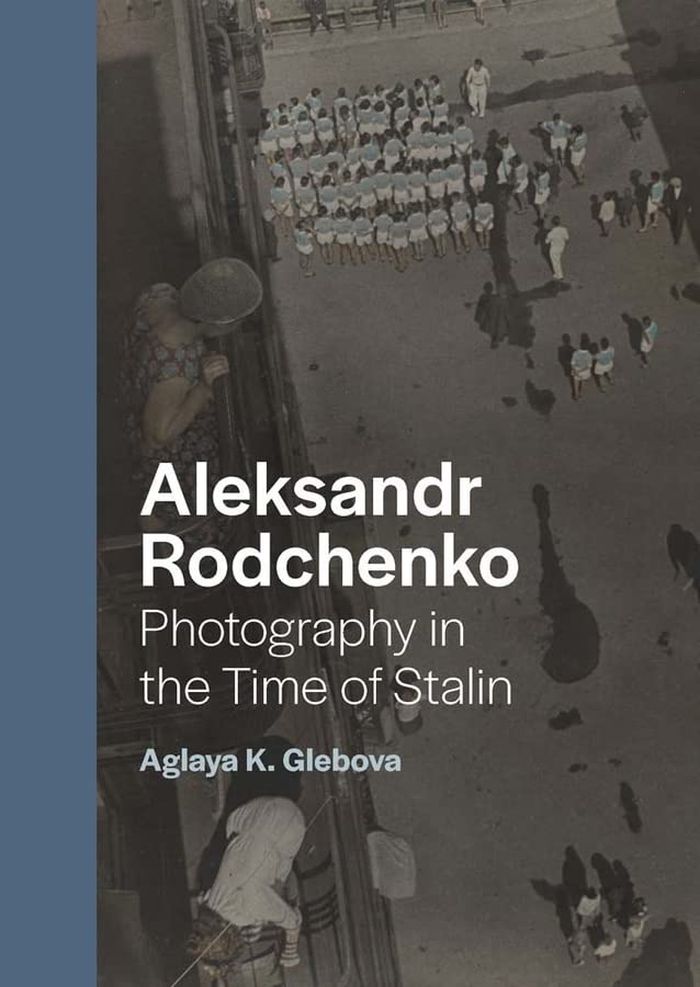
Aleksandr Rodchenko: Photography in the time of Stalin
Actions:
Price:
$84.95
(available to order)
Summary:
Tracing the shifting meanings of photography in the early Soviet Union, Aglaya K. Glebova reconsiders the relationship between art and politics during what is usually considered the end of the critical avant-garde. Aleksandr Rodchenko, a versatile Russian artist and one of Constructivism’s founders, embraced photography as a medium of revolutionary modernity. Yet his photographic work between the late 1920s and the end of the 1930s exhibits an expansive search for a different pictorial language. In the context of the extreme transformations carried out under the first Five-Year Plans, Rodchenko’s photography questioned his own modernist commitments. At the heart of this book is Rodchenko’s infamous 1933 photo-essay on the White Sea–Baltic Canal, site of one of the first gulags. Glebova’s careful reading of Rodchenko’s photography reveals a surprisingly heterodox practice and brings to light experiments in adjacent media, including the collaborative design work he undertook with Varvara Stepanova, Rodchenko’s partner in art and life.
Form:
books
books
Publication:
November 2022
November 2022
Subject:
Photography monographs
Photography monographs


