


960 Results
Form:
books
books
Actions:
Price:
$72.50
(available to order)
Summary:
"Urgent archives" argues that archivists can and should do more to disrupt white supremacy and hetero-patriarchy beyond the standard liberal archival solutions of more diverse collecting and more inclusive description. Grounded in the emerging field of critical archival studies, this book uncovers how dominant western archival theories and practices are oppressive by(...)
$72.50
(available to order)
Summary:
"Urgent archives" argues that archivists can and should do more to disrupt white supremacy and hetero-patriarchy beyond the standard liberal archival solutions of more diverse collecting and more inclusive description. Grounded in the emerging field of critical archival studies, this book uncovers how dominant western archival theories and practices are oppressive by(...)
Title:
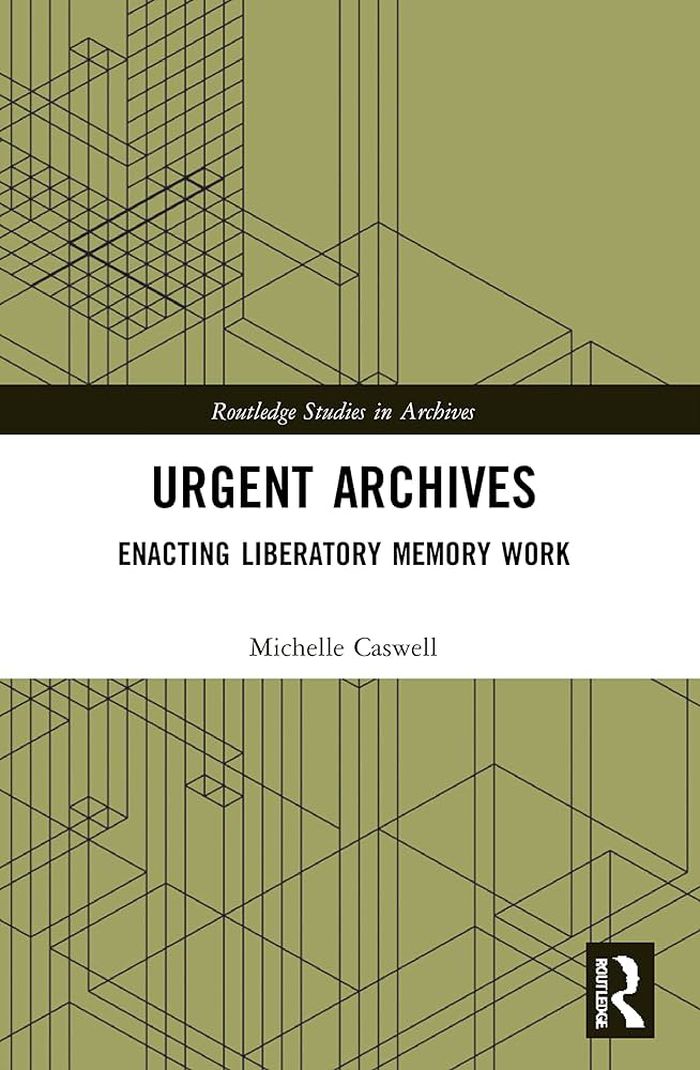
Urgent Archives: Enacting liberatory memory work
Actions:
Price:
$72.50
(available to order)
Summary:
"Urgent archives" argues that archivists can and should do more to disrupt white supremacy and hetero-patriarchy beyond the standard liberal archival solutions of more diverse collecting and more inclusive description. Grounded in the emerging field of critical archival studies, this book uncovers how dominant western archival theories and practices are oppressive by design, while looking toward the the radical politics of community archives to envision new liberatory theories and practices. Based on more than a decade of ethnography at community archives sites including the South Asian American Digital Archive (SAADA), the book explores how members of minoritized communities activate records to build solidarities across and within communities, trouble linear progress narratives, and disrupt cycles of oppression. Caswell explores the temporal, representational, and material aspects of liberatory memory work, arguing that archival disruptions in time and space should be neither about the past nor the future, but about the liberatory affects and effects of memory work in the present.
Urgent Archives: Enacting liberatory memory work
Actions:
Price:
$72.50
(available to order)
Summary:
"Urgent archives" argues that archivists can and should do more to disrupt white supremacy and hetero-patriarchy beyond the standard liberal archival solutions of more diverse collecting and more inclusive description. Grounded in the emerging field of critical archival studies, this book uncovers how dominant western archival theories and practices are oppressive by design, while looking toward the the radical politics of community archives to envision new liberatory theories and practices. Based on more than a decade of ethnography at community archives sites including the South Asian American Digital Archive (SAADA), the book explores how members of minoritized communities activate records to build solidarities across and within communities, trouble linear progress narratives, and disrupt cycles of oppression. Caswell explores the temporal, representational, and material aspects of liberatory memory work, arguing that archival disruptions in time and space should be neither about the past nor the future, but about the liberatory affects and effects of memory work in the present.
Form:
books
books
Publication:
January 2023
January 2023
Subject:
Archive, library and the digital
Archive, library and the digital
Form:
books
books
Actions:
Price:
$33.00
(available in store)
Summary:
How does media architecture distribute suspicion and trust? What is a collage of media architecture? How is media architecture vectored? How can media architecture address privilege? These questions and conceptual provocations aim to challenge the binary of techno-optimism and technological agoraphobia, offering a platform for developing new, critically and contextually(...)
$33.00
(available in store)
Summary:
How does media architecture distribute suspicion and trust? What is a collage of media architecture? How is media architecture vectored? How can media architecture address privilege? These questions and conceptual provocations aim to challenge the binary of techno-optimism and technological agoraphobia, offering a platform for developing new, critically and contextually(...)
Subject:
Archive, library and the digital
Archive, library and the digital
Publication:
November 2023
November 2023
Title:
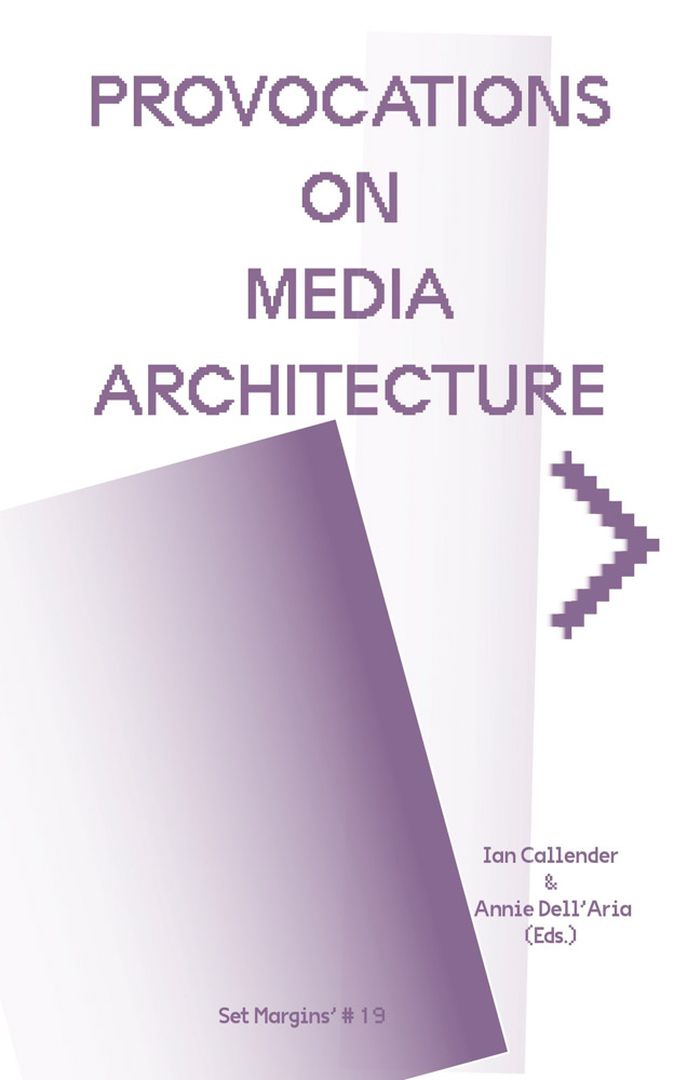
Provocations on media architecture
Actions:
Price:
$33.00
(available in store)
Summary:
How does media architecture distribute suspicion and trust? What is a collage of media architecture? How is media architecture vectored? How can media architecture address privilege? These questions and conceptual provocations aim to challenge the binary of techno-optimism and technological agoraphobia, offering a platform for developing new, critically and contextually rooted theories that media architecture might grab hold of. Intentionally open-ended, ''Provocations on Media Architecture'' brings together 21 thought leaders across architecture, visual arts, design, curation, academia and public policy to address these ideas and themes. Authors respond with images and brief texts incorporating the perspective of their own creative and scholarly practice. Entries range from descriptions of relevant artworks and design projects to reflections spawned from first-person encounters with media architecture in situ, scholarly analyses and AI-assisted theory.
Provocations on media architecture
Actions:
Price:
$33.00
(available in store)
Summary:
How does media architecture distribute suspicion and trust? What is a collage of media architecture? How is media architecture vectored? How can media architecture address privilege? These questions and conceptual provocations aim to challenge the binary of techno-optimism and technological agoraphobia, offering a platform for developing new, critically and contextually rooted theories that media architecture might grab hold of. Intentionally open-ended, ''Provocations on Media Architecture'' brings together 21 thought leaders across architecture, visual arts, design, curation, academia and public policy to address these ideas and themes. Authors respond with images and brief texts incorporating the perspective of their own creative and scholarly practice. Entries range from descriptions of relevant artworks and design projects to reflections spawned from first-person encounters with media architecture in situ, scholarly analyses and AI-assisted theory.
Form:
books
books
Publication:
November 2023
November 2023
Subject:
Archive, library and the digital
Archive, library and the digital
Form:
books
books

Actions:
Price:
$54.95
(available to order)
Summary:
Avec la transformation numérique des processus documentaires, les professionnels de l'information et des bibliothèques sont confrontés de manière croissante à la gestion des données numériques, qu'elles soient structurées ou non. L'auteure évoque les diverses facettes du monde de la donnée et montre ses enjeux et ses opportunités pour les pratiques professionnelles en bibliothèque.
$54.95
(available to order)
Summary:
Avec la transformation numérique des processus documentaires, les professionnels de l'information et des bibliothèques sont confrontés de manière croissante à la gestion des données numériques, qu'elles soient structurées ou non. L'auteure évoque les diverses facettes du monde de la donnée et montre ses enjeux et ses opportunités pour les pratiques professionnelles en bibliothèque.
Title:
Les bibliothèques face au monde des données
Actions:
Price:
$54.95
(available to order)
Summary:
Avec la transformation numérique des processus documentaires, les professionnels de l'information et des bibliothèques sont confrontés de manière croissante à la gestion des données numériques, qu'elles soient structurées ou non. L'auteure évoque les diverses facettes du monde de la donnée et montre ses enjeux et ses opportunités pour les pratiques professionnelles en bibliothèque.
Les bibliothèques face au monde des données
Actions:
Price:
$54.95
(available to order)
Summary:
Avec la transformation numérique des processus documentaires, les professionnels de l'information et des bibliothèques sont confrontés de manière croissante à la gestion des données numériques, qu'elles soient structurées ou non. L'auteure évoque les diverses facettes du monde de la donnée et montre ses enjeux et ses opportunités pour les pratiques professionnelles en bibliothèque.
Form:
books
books
Publication:
July 2023
July 2023
Subject:
Archive, library and the digital
Archive, library and the digital
Form:
books
books
Actions:
Price:
$31.95
(available to order)
Summary:
L'architecture, son évolution comme sa connaissance, dépend en grande partie de la circulation et de la transmission dans l'espace et le temps d'une accumulation d'expériences, de règles ou de modèles. Voilà pourquoi ce livre examine les moyens de communication utilisés par les architectes occidentaux, de Vitruve à l'époque moderne, en montrant comment chaque média influe(...)
$31.95
(available to order)
Summary:
L'architecture, son évolution comme sa connaissance, dépend en grande partie de la circulation et de la transmission dans l'espace et le temps d'une accumulation d'expériences, de règles ou de modèles. Voilà pourquoi ce livre examine les moyens de communication utilisés par les architectes occidentaux, de Vitruve à l'époque moderne, en montrant comment chaque média influe(...)
Title:
L'architecture à l'âge de l'imprimerie
Actions:
Price:
$31.95
(available to order)
Summary:
L'architecture, son évolution comme sa connaissance, dépend en grande partie de la circulation et de la transmission dans l'espace et le temps d'une accumulation d'expériences, de règles ou de modèles. Voilà pourquoi ce livre examine les moyens de communication utilisés par les architectes occidentaux, de Vitruve à l'époque moderne, en montrant comment chaque média influe sur les formes spécifiques de la pensée architecturale et sur les modalités de la diffusion des savoirs.
L'architecture à l'âge de l'imprimerie
Actions:
Price:
$31.95
(available to order)
Summary:
L'architecture, son évolution comme sa connaissance, dépend en grande partie de la circulation et de la transmission dans l'espace et le temps d'une accumulation d'expériences, de règles ou de modèles. Voilà pourquoi ce livre examine les moyens de communication utilisés par les architectes occidentaux, de Vitruve à l'époque moderne, en montrant comment chaque média influe sur les formes spécifiques de la pensée architecturale et sur les modalités de la diffusion des savoirs.
Form:
books
books
Publication:
April 2009, Paris
April 2009, Paris
Subject:
Archive, library and the digital
Archive, library and the digital
Form:
books
books
Title:
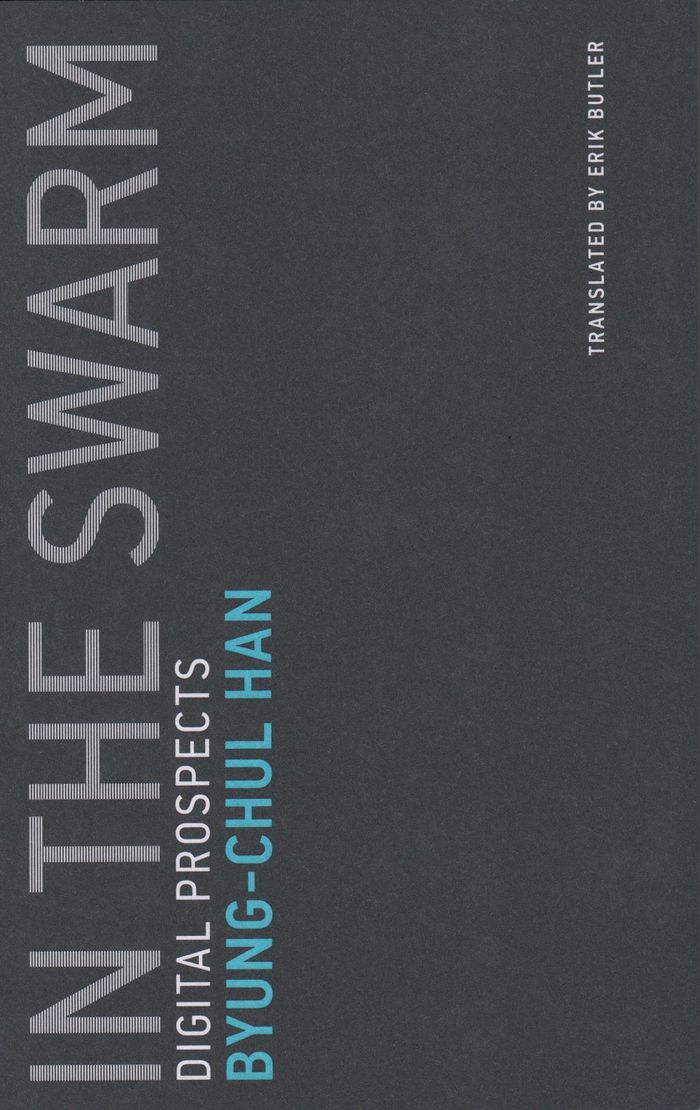
In the swarm
In the swarm
Actions:
Price:
$18.95
(available to order)
Summary:
Digital communication and social media have taken over our lives. In this contrarian reflection on digitized life, Byung-Chul Han counters the cheerleaders for Twitter revolutions and Facebook activism by arguing that digital communication is in fact responsible for the disintegration of community and public space and is slowly eroding any possibility for real political(...)
$18.95
(available to order)
Summary:
Digital communication and social media have taken over our lives. In this contrarian reflection on digitized life, Byung-Chul Han counters the cheerleaders for Twitter revolutions and Facebook activism by arguing that digital communication is in fact responsible for the disintegration of community and public space and is slowly eroding any possibility for real political(...)
Title:
In the swarm
Actions:
Price:
$18.95
(available to order)
Summary:
Digital communication and social media have taken over our lives. In this contrarian reflection on digitized life, Byung-Chul Han counters the cheerleaders for Twitter revolutions and Facebook activism by arguing that digital communication is in fact responsible for the disintegration of community and public space and is slowly eroding any possibility for real political action and meaningful political discourse. In the predigital, analog era, by the time an angry letter to the editor had been composed, mailed, and received, the immediate agitation had passed. Today, digital communication enables instantaneous, impulsive reaction, meant to express and stir up outrage on the spot. “The shitstorm,” writes Han, ”represents an authentic phenomenon of digital communication.” Meanwhile, the public, the senders and receivers of these communications have become a digital swarm—not a mass, or a crowd, or Negri and Hardt’s antiquated notion of a “multitude,” but a set of isolated individuals incapable of forming a “we,” incapable of calling dominant power relations into question, incapable of formulating a future because of an obsession with the present. The digital swarm is a fragmented entity that can focus on individual persons only in order to make them an object of scandal. Han, one of the most widely read philosophers in Europe today, describes a society in which information has overrun thought, in which the same algorithms are employed by Facebook, the stock market, and the intelligence services. Democracy is under threat because digital communication has made freedom and control indistinguishable. Big Brother has been succeeded by Big Data.
In the swarm
Actions:
Price:
$18.95
(available to order)
Summary:
Digital communication and social media have taken over our lives. In this contrarian reflection on digitized life, Byung-Chul Han counters the cheerleaders for Twitter revolutions and Facebook activism by arguing that digital communication is in fact responsible for the disintegration of community and public space and is slowly eroding any possibility for real political action and meaningful political discourse. In the predigital, analog era, by the time an angry letter to the editor had been composed, mailed, and received, the immediate agitation had passed. Today, digital communication enables instantaneous, impulsive reaction, meant to express and stir up outrage on the spot. “The shitstorm,” writes Han, ”represents an authentic phenomenon of digital communication.” Meanwhile, the public, the senders and receivers of these communications have become a digital swarm—not a mass, or a crowd, or Negri and Hardt’s antiquated notion of a “multitude,” but a set of isolated individuals incapable of forming a “we,” incapable of calling dominant power relations into question, incapable of formulating a future because of an obsession with the present. The digital swarm is a fragmented entity that can focus on individual persons only in order to make them an object of scandal. Han, one of the most widely read philosophers in Europe today, describes a society in which information has overrun thought, in which the same algorithms are employed by Facebook, the stock market, and the intelligence services. Democracy is under threat because digital communication has made freedom and control indistinguishable. Big Brother has been succeeded by Big Data.
Form:
books
books
Publication:
April 2017
April 2017
Subject:
Archive, library and the digital
Archive, library and the digital
Form:
books
books
Title:
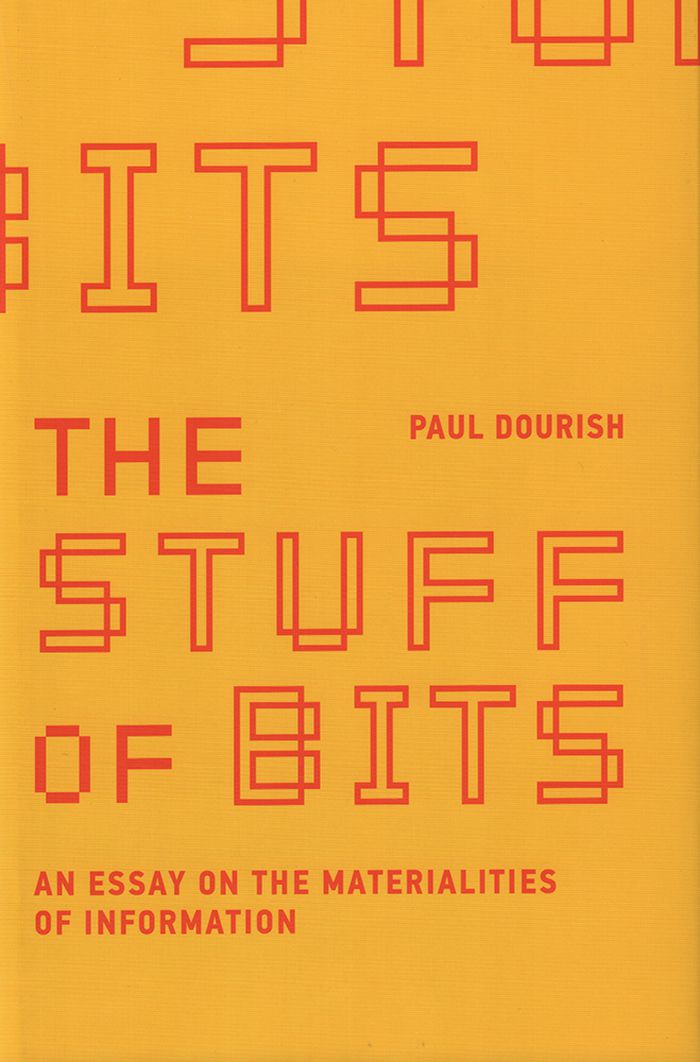
The stuff of bits
The stuff of bits
Actions:
Price:
$46.95
(available to order)
Summary:
In this publication, Paul Dourish examines the specific materialities that certain digital objects exhibit. He presents four case studies: emulation, the creation of a “virtual” computer inside another; digital spreadsheets and their role in organizational practice; relational databases and the issue of “the databaseable”; and the evolution of digital networking and the(...)
$46.95
(available to order)
Summary:
In this publication, Paul Dourish examines the specific materialities that certain digital objects exhibit. He presents four case studies: emulation, the creation of a “virtual” computer inside another; digital spreadsheets and their role in organizational practice; relational databases and the issue of “the databaseable”; and the evolution of digital networking and the(...)
Title:
The stuff of bits
Actions:
Price:
$46.95
(available to order)
Summary:
In this publication, Paul Dourish examines the specific materialities that certain digital objects exhibit. He presents four case studies: emulation, the creation of a “virtual” computer inside another; digital spreadsheets and their role in organizational practice; relational databases and the issue of “the databaseable”; and the evolution of digital networking and the representational entailments of network protocols. These case studies demonstrate how a materialist account can offer an entry point to broader concerns - questions of power, policy, and polity in the realm of the digital.
The stuff of bits
Actions:
Price:
$46.95
(available to order)
Summary:
In this publication, Paul Dourish examines the specific materialities that certain digital objects exhibit. He presents four case studies: emulation, the creation of a “virtual” computer inside another; digital spreadsheets and their role in organizational practice; relational databases and the issue of “the databaseable”; and the evolution of digital networking and the representational entailments of network protocols. These case studies demonstrate how a materialist account can offer an entry point to broader concerns - questions of power, policy, and polity in the realm of the digital.
Form:
books
books
Publication:
April 2017
April 2017
Subject:
Archive, library and the digital
Archive, library and the digital
Form:
books
books
Title:
Programmed inequality: how Britain discarded women technologists and lost its edge in computing
Programmed inequality: how Britain discarded women technologists and lost its edge in computing
Actions:
Price:
$51.95
(available to order)
Summary:
In 1944, Britain led the world in electronic computing. By 1974, the British computer industry was all but extinct. What happened in the intervening thirty years holds lessons for all postindustrial superpowers. As Britain struggled to use technology to retain its global power, the nation’s inability to manage its technical labor force hobbled its transition into the(...)
$51.95
(available to order)
Summary:
In 1944, Britain led the world in electronic computing. By 1974, the British computer industry was all but extinct. What happened in the intervening thirty years holds lessons for all postindustrial superpowers. As Britain struggled to use technology to retain its global power, the nation’s inability to manage its technical labor force hobbled its transition into the(...)
Title:
Programmed inequality: how Britain discarded women technologists and lost its edge in computing
Actions:
Price:
$51.95
(available to order)
Summary:
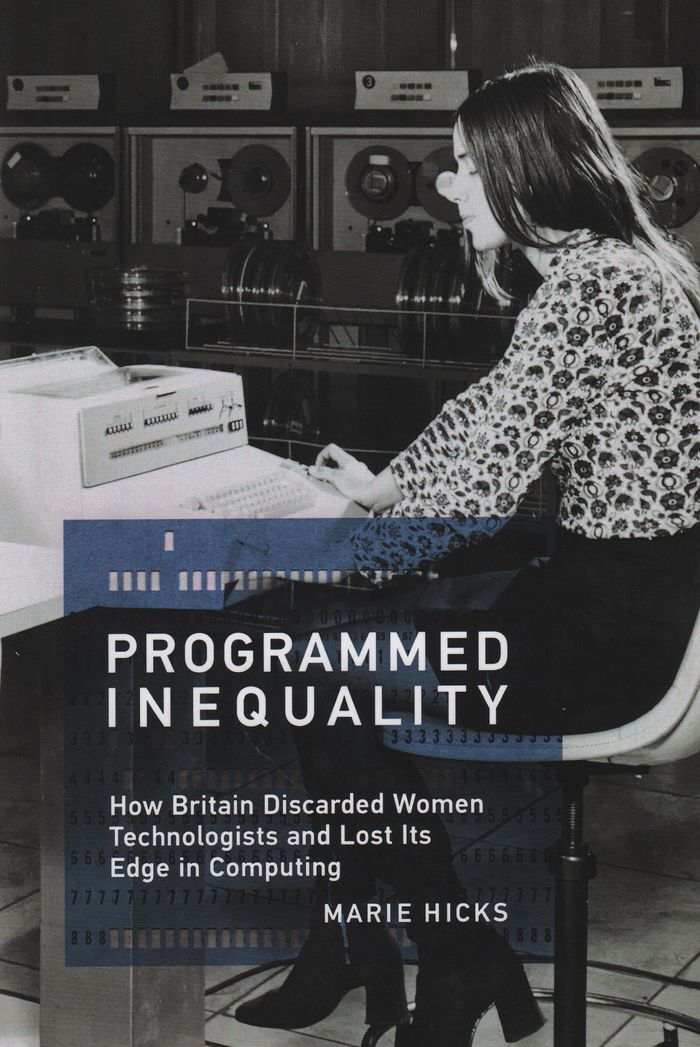
In 1944, Britain led the world in electronic computing. By 1974, the British computer industry was all but extinct. What happened in the intervening thirty years holds lessons for all postindustrial superpowers. As Britain struggled to use technology to retain its global power, the nation’s inability to manage its technical labor force hobbled its transition into the information age. In "Programmed inequality", Marie Hicks explores the story of labor feminization and gendered technocracy that undercut British efforts to computerize. That failure sprang from the government’s systematic neglect of its largest trained technical workforce simply because they were women. Women were a hidden engine of growth in high technology from World War II to the 1960s. As computing experienced a gender flip, becoming male-identified in the 1960s and 1970s, labor problems grew into structural ones and gender discrimination caused the nation’s largest computer user—the civil service and sprawling public sector—to make decisions that were disastrous for the British computer industry and the nation as a whole.
Programmed inequality: how Britain discarded women technologists and lost its edge in computing
Actions:
Price:
$51.95
(available to order)
Summary:
In 1944, Britain led the world in electronic computing. By 1974, the British computer industry was all but extinct. What happened in the intervening thirty years holds lessons for all postindustrial superpowers. As Britain struggled to use technology to retain its global power, the nation’s inability to manage its technical labor force hobbled its transition into the information age. In "Programmed inequality", Marie Hicks explores the story of labor feminization and gendered technocracy that undercut British efforts to computerize. That failure sprang from the government’s systematic neglect of its largest trained technical workforce simply because they were women. Women were a hidden engine of growth in high technology from World War II to the 1960s. As computing experienced a gender flip, becoming male-identified in the 1960s and 1970s, labor problems grew into structural ones and gender discrimination caused the nation’s largest computer user—the civil service and sprawling public sector—to make decisions that were disastrous for the British computer industry and the nation as a whole.
Form:
books
books
Publication:
February 2017
February 2017
Subject:
Archive, library and the digital
Archive, library and the digital
Form:
books
books
Title:
The big archive
The big archive
Actions:
Price:
$35.50
(available to order)
Summary:
The typewriter, the card index, and the filing cabinet: these are technologies and modalities of the archive. To the bureaucrat, archives contain little more than garbage, paperwork no longer needed; to the historian, on the other hand, the archive’s content stands as a quasi-objective correlative of the “living” past. Twentieth-century art made use of the archive in a(...)
$35.50
(available to order)
Summary:
The typewriter, the card index, and the filing cabinet: these are technologies and modalities of the archive. To the bureaucrat, archives contain little more than garbage, paperwork no longer needed; to the historian, on the other hand, the archive’s content stands as a quasi-objective correlative of the “living” past. Twentieth-century art made use of the archive in a(...)
Title:
The big archive
Actions:
Price:
$35.50
(available to order)
Summary:
The typewriter, the card index, and the filing cabinet: these are technologies and modalities of the archive. To the bureaucrat, archives contain little more than garbage, paperwork no longer needed; to the historian, on the other hand, the archive’s content stands as a quasi-objective correlative of the “living” past. Twentieth-century art made use of the archive in a variety of ways—from what Spieker calls Marcel Duchamp’s “anemic archive” of readymades and El Lissitzky’s Demonstration Rooms to the compilations of photographs made by such postwar artists as Susan Hiller and Gerhard Richter. In "The big archive", Sven Spieker investigates the archive—as both bureaucratic institution and index of evolving attitudes toward contingent time in science and art—and finds it to be a crucible of twentieth-century modernism.
The big archive
Actions:
Price:
$35.50
(available to order)
Summary:
The typewriter, the card index, and the filing cabinet: these are technologies and modalities of the archive. To the bureaucrat, archives contain little more than garbage, paperwork no longer needed; to the historian, on the other hand, the archive’s content stands as a quasi-objective correlative of the “living” past. Twentieth-century art made use of the archive in a variety of ways—from what Spieker calls Marcel Duchamp’s “anemic archive” of readymades and El Lissitzky’s Demonstration Rooms to the compilations of photographs made by such postwar artists as Susan Hiller and Gerhard Richter. In "The big archive", Sven Spieker investigates the archive—as both bureaucratic institution and index of evolving attitudes toward contingent time in science and art—and finds it to be a crucible of twentieth-century modernism.
Form:
books
books
Publication:
March 2017
March 2017
Subject:
Archive, library and the digital
Archive, library and the digital
Form:
books
books
Actions:
Price:
$41.95
(available to order)
Summary:
Each of us has an ever-growing collection of personal digital data: documents, photographs, PowerPoint presentations, videos, music, emails and texts sent and received. To access any of this, we have to find it. The ease (or difficulty) of finding something depends on how we organize our digital stuff. In this book, personal information management (PIM) experts Ofer(...)
$41.95
(available to order)
Summary:
Each of us has an ever-growing collection of personal digital data: documents, photographs, PowerPoint presentations, videos, music, emails and texts sent and received. To access any of this, we have to find it. The ease (or difficulty) of finding something depends on how we organize our digital stuff. In this book, personal information management (PIM) experts Ofer(...)
Subject:
Archive, library and the digital
Archive, library and the digital
Publication:
November 2016
November 2016
Title:
The science of managing our digital stuff
Actions:
Price:
$41.95
(available to order)
Summary:
Each of us has an ever-growing collection of personal digital data: documents, photographs, PowerPoint presentations, videos, music, emails and texts sent and received. To access any of this, we have to find it. The ease (or difficulty) of finding something depends on how we organize our digital stuff. In this book, personal information management (PIM) experts Ofer Bergman and Steve Whittaker explain why we organize our personal digital data the way we do and how the design of new PIM systems can help us manage our collections more efficiently.
The science of managing our digital stuff
Actions:
Price:
$41.95
(available to order)
Summary:
Each of us has an ever-growing collection of personal digital data: documents, photographs, PowerPoint presentations, videos, music, emails and texts sent and received. To access any of this, we have to find it. The ease (or difficulty) of finding something depends on how we organize our digital stuff. In this book, personal information management (PIM) experts Ofer Bergman and Steve Whittaker explain why we organize our personal digital data the way we do and how the design of new PIM systems can help us manage our collections more efficiently.
Form:
books
books
Publication:
November 2016
November 2016
Subject:
Archive, library and the digital
Archive, library and the digital
Form:
books
books

Actions:
Price:
$27.95
(available to order)
Summary:
From Greek and Roman times to the digital era, the library has remained central to knowledge, scholarship, and the imagination. The Meaning of the Library is a generously illustrated examination of this key institution of Western culture. Tracing what the library has meant since its beginning, examining how its significance has shifted, and pondering its importance in the(...)
$27.95
(available to order)
Summary:
From Greek and Roman times to the digital era, the library has remained central to knowledge, scholarship, and the imagination. The Meaning of the Library is a generously illustrated examination of this key institution of Western culture. Tracing what the library has meant since its beginning, examining how its significance has shifted, and pondering its importance in the(...)
Title:
The meaning of the library: a cultural history
Actions:
Price:
$27.95
(available to order)
Summary:
From Greek and Roman times to the digital era, the library has remained central to knowledge, scholarship, and the imagination. The Meaning of the Library is a generously illustrated examination of this key institution of Western culture. Tracing what the library has meant since its beginning, examining how its significance has shifted, and pondering its importance in the twenty-first century, notable contributors—including the Librarian of Congress and the former executive director of the HathiTrust—present a cultural history of the library. In an informative introduction, Alice Crawford sets out the book's purpose and scope, and an international array of scholars, librarians, writers, and critics offer vivid perspectives about the library through their chosen fields. The Meaning of the Library will appeal to all who are interested in this vital institution's heritage and ongoing legacy.
The meaning of the library: a cultural history
Actions:
Price:
$27.95
(available to order)
Summary:
From Greek and Roman times to the digital era, the library has remained central to knowledge, scholarship, and the imagination. The Meaning of the Library is a generously illustrated examination of this key institution of Western culture. Tracing what the library has meant since its beginning, examining how its significance has shifted, and pondering its importance in the twenty-first century, notable contributors—including the Librarian of Congress and the former executive director of the HathiTrust—present a cultural history of the library. In an informative introduction, Alice Crawford sets out the book's purpose and scope, and an international array of scholars, librarians, writers, and critics offer vivid perspectives about the library through their chosen fields. The Meaning of the Library will appeal to all who are interested in this vital institution's heritage and ongoing legacy.
Form:
books
books
Publication:
May 2017
May 2017
Subject:
Archive, library and the digital
Archive, library and the digital


