


8415 Results
Form:
books
books

Title:
Hilde Bouchez: A wild thing
Hilde Bouchez: A wild thing
Actions:
Price:
$38.00
(available to order)
Summary:
Everyday objects can have an extra dimension or quality that has no relation to functionality, form, a concept or a trend. So what is it that gives a particular glass an 'aura'? Why should one thing have more shine, passion and 'mystical allure' than another? 'A Wild Thing' attempts to identify and describe these often intangible qualities. There seems to be an inner(...)
$38.00
(available to order)
Summary:
Everyday objects can have an extra dimension or quality that has no relation to functionality, form, a concept or a trend. So what is it that gives a particular glass an 'aura'? Why should one thing have more shine, passion and 'mystical allure' than another? 'A Wild Thing' attempts to identify and describe these often intangible qualities. There seems to be an inner(...)
Title:
Hilde Bouchez: A wild thing
Actions:
Price:
$38.00
(available to order)
Summary:
Everyday objects can have an extra dimension or quality that has no relation to functionality, form, a concept or a trend. So what is it that gives a particular glass an 'aura'? Why should one thing have more shine, passion and 'mystical allure' than another? 'A Wild Thing' attempts to identify and describe these often intangible qualities. There seems to be an inner light that shines from certain things. Unlike the blinding spotlight of media and marketing, this light is gentle and clear and reflects the methodology and intention of the maker. Ancient craftsmen designed from a place of unity with matter and the cosmos, putting themselves at the service of the making process and thereby creating a moment of transference from maker to thing. In a series of essays, Hilde Bouchez reflects on design history and the latest movements within the design world. She also presents a phenomenological methodology that opens up a new, more poetic approach to everyday objects for both maker and consumer. The texts are linked by the author’s search for a sustainability and meaning that transcends the organic component of materials.
Hilde Bouchez: A wild thing
Actions:
Price:
$38.00
(available to order)
Summary:
Everyday objects can have an extra dimension or quality that has no relation to functionality, form, a concept or a trend. So what is it that gives a particular glass an 'aura'? Why should one thing have more shine, passion and 'mystical allure' than another? 'A Wild Thing' attempts to identify and describe these often intangible qualities. There seems to be an inner light that shines from certain things. Unlike the blinding spotlight of media and marketing, this light is gentle and clear and reflects the methodology and intention of the maker. Ancient craftsmen designed from a place of unity with matter and the cosmos, putting themselves at the service of the making process and thereby creating a moment of transference from maker to thing. In a series of essays, Hilde Bouchez reflects on design history and the latest movements within the design world. She also presents a phenomenological methodology that opens up a new, more poetic approach to everyday objects for both maker and consumer. The texts are linked by the author’s search for a sustainability and meaning that transcends the organic component of materials.
Form:
books
books
Publication:
February 2020
February 2020
Subject:
Design Theory
Design Theory
Form:
books
books
Title:
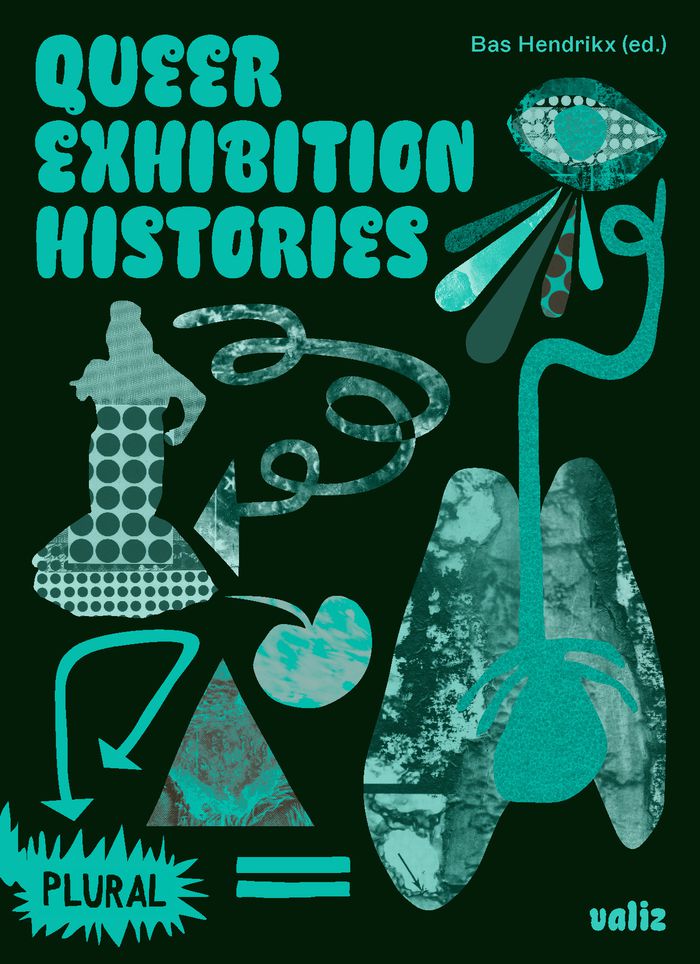
Queer Exhibition Histories
Queer Exhibition Histories
Actions:
Price:
$50.50
(available to order)
Summary:
In the histories of art exhibitions that we know, LGBTQIA+ artists and curators have always been underexposed or forgotten. This new title in the PLURAL series focuses on these forgotten and hidden histories, by scrutinizing a wide variety of exhibitions and other presentations by LGBTQIA+ artists and curators. ''Queer exhibition histories'' is composed of case studies,(...)
$50.50
(available to order)
Summary:
In the histories of art exhibitions that we know, LGBTQIA+ artists and curators have always been underexposed or forgotten. This new title in the PLURAL series focuses on these forgotten and hidden histories, by scrutinizing a wide variety of exhibitions and other presentations by LGBTQIA+ artists and curators. ''Queer exhibition histories'' is composed of case studies,(...)
Title:
Queer Exhibition Histories
Actions:
Price:
$50.50
(available to order)
Summary:
In the histories of art exhibitions that we know, LGBTQIA+ artists and curators have always been underexposed or forgotten. This new title in the PLURAL series focuses on these forgotten and hidden histories, by scrutinizing a wide variety of exhibitions and other presentations by LGBTQIA+ artists and curators. ''Queer exhibition histories'' is composed of case studies, interviews and essays that emphasize different queer exhibitions and their modes of presentation and archiving. Many of these projects were short-lived or were executed between the walls of the private or domestic space, far beyond the scope of any institutional recognition. Therefore, the exhibitions materialized on limited budgets, were hardly documented and received barely any media coverage. For this reason, the legacy of these projects is highly dependent on personal archives, memories and paraphernalia, whereof the entries are not always easy to find. The events were not only artistic, but they could equally be discursive, activist and educational, or serve as a tool for community building. At the intersection of queerness and contemporary art, ''Queer exhibition histories'' investigates how the efforts of LGBTQIA+ artists and curators have advanced their public presence.
Queer Exhibition Histories
Actions:
Price:
$50.50
(available to order)
Summary:
In the histories of art exhibitions that we know, LGBTQIA+ artists and curators have always been underexposed or forgotten. This new title in the PLURAL series focuses on these forgotten and hidden histories, by scrutinizing a wide variety of exhibitions and other presentations by LGBTQIA+ artists and curators. ''Queer exhibition histories'' is composed of case studies, interviews and essays that emphasize different queer exhibitions and their modes of presentation and archiving. Many of these projects were short-lived or were executed between the walls of the private or domestic space, far beyond the scope of any institutional recognition. Therefore, the exhibitions materialized on limited budgets, were hardly documented and received barely any media coverage. For this reason, the legacy of these projects is highly dependent on personal archives, memories and paraphernalia, whereof the entries are not always easy to find. The events were not only artistic, but they could equally be discursive, activist and educational, or serve as a tool for community building. At the intersection of queerness and contemporary art, ''Queer exhibition histories'' investigates how the efforts of LGBTQIA+ artists and curators have advanced their public presence.
Form:
books
books
Publication:
November 2022
November 2022
Subject:
Art Theory
Art Theory
Form:
books
books
Actions:
Price:
$41.99
(available in store)
Summary:
Digital and social media have transformed how much and how fast we communicate, but they have also altered the palette of expressive strategies: the cultural forms that shape how citizens, activists, and artists speak and interact. Most familiar among these strategies are storytelling and representation. In A Theory of Assembly, Kyle Parry argues that one of the most(...)
$41.99
(available in store)
Summary:
Digital and social media have transformed how much and how fast we communicate, but they have also altered the palette of expressive strategies: the cultural forms that shape how citizens, activists, and artists speak and interact. Most familiar among these strategies are storytelling and representation. In A Theory of Assembly, Kyle Parry argues that one of the most(...)
Publication:
January 2023
January 2023
Title:
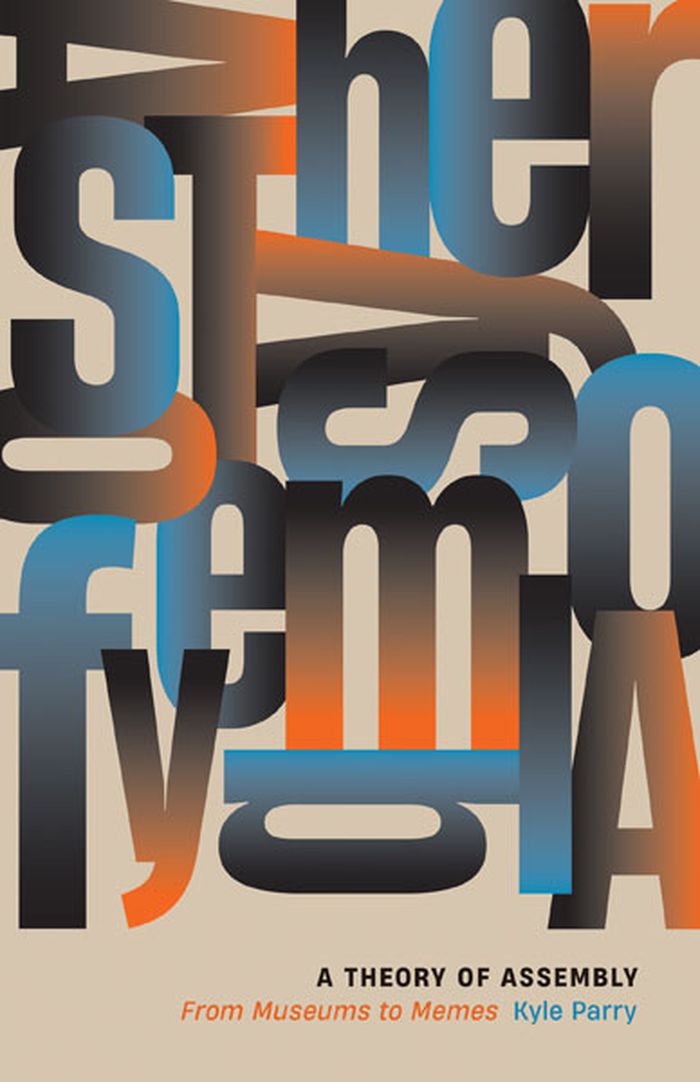
A theory of assembly: From museums to memes
Actions:
Price:
$41.99
(available in store)
Summary:
Digital and social media have transformed how much and how fast we communicate, but they have also altered the palette of expressive strategies: the cultural forms that shape how citizens, activists, and artists speak and interact. Most familiar among these strategies are storytelling and representation. In A Theory of Assembly, Kyle Parry argues that one of the most powerful and pervasive cultural forms in the digital era is assembly. Whether as subtle photographic sequences, satirical Venn diagrams, or networked archives, projects based in assembly do not so much narrate or represent the world as rearrange it. This work of rearranging can take place at any scale, from a simple pairing of images, undertaken by one person, to the entire history of internet memes, undertaken by millions. With examples ranging from GIFs and paintings to museum exhibitions and social movement hashtags, Parry shows how, in the internet age, assembly has come to equal narrative and representation in its reach and influence, particularly as a response to ecological and social violence. He also emphasizes the ambivalence of assembly—the way it can be both emancipatory and antidemocratic.
A theory of assembly: From museums to memes
Actions:
Price:
$41.99
(available in store)
Summary:
Digital and social media have transformed how much and how fast we communicate, but they have also altered the palette of expressive strategies: the cultural forms that shape how citizens, activists, and artists speak and interact. Most familiar among these strategies are storytelling and representation. In A Theory of Assembly, Kyle Parry argues that one of the most powerful and pervasive cultural forms in the digital era is assembly. Whether as subtle photographic sequences, satirical Venn diagrams, or networked archives, projects based in assembly do not so much narrate or represent the world as rearrange it. This work of rearranging can take place at any scale, from a simple pairing of images, undertaken by one person, to the entire history of internet memes, undertaken by millions. With examples ranging from GIFs and paintings to museum exhibitions and social movement hashtags, Parry shows how, in the internet age, assembly has come to equal narrative and representation in its reach and influence, particularly as a response to ecological and social violence. He also emphasizes the ambivalence of assembly—the way it can be both emancipatory and antidemocratic.
Form:
books
books
Publication:
January 2023
January 2023
Form:
books
books
Title:
General Idea
General Idea
Actions:
Price:
$105.00
(available to order)
Summary:
This 768-page volume stands as the most comprehensive source on the Canadian collective General Idea, founded in Toronto in 1969 by Felix Partz, Jorge Zontal and AA Bronson and active until the deaths of Partz and Zontal in 1994. The book is arranged in three parts: Performances and Actions, In the Streets and In the Showroom. The first two parts focus on ephemeral,(...)
$105.00
(available to order)
Summary:
This 768-page volume stands as the most comprehensive source on the Canadian collective General Idea, founded in Toronto in 1969 by Felix Partz, Jorge Zontal and AA Bronson and active until the deaths of Partz and Zontal in 1994. The book is arranged in three parts: Performances and Actions, In the Streets and In the Showroom. The first two parts focus on ephemeral,(...)
Title:
General Idea
Actions:
Price:
$105.00
(available to order)
Summary:
This 768-page volume stands as the most comprehensive source on the Canadian collective General Idea, founded in Toronto in 1969 by Felix Partz, Jorge Zontal and AA Bronson and active until the deaths of Partz and Zontal in 1994. The book is arranged in three parts: Performances and Actions, In the Streets and In the Showroom. The first two parts focus on ephemeral, time-based and even disposable works. The third part includes a plate section offering a near-complete visual survey of General Idea's practice. Facing-page comparative images show works as they appeared in historical installations or other relevant contexts. These three sections correspond broadly to the collective’s development: from performances, actions, pageants and other practices (1969–78), through works engaging with mass-media formats such as the magazine, television and video (1972–’80s), and finally to works conceived for galleries and museums (1985–94). The publication features a prologue by AA Bronson, a conversation between him and Beatrix Ruf, and new texts by international scholars. The appendix includes a complete scholarly bibliography, exhibition and performance histories, and an illustrated chronology of the group.
General Idea
Actions:
Price:
$105.00
(available to order)
Summary:
This 768-page volume stands as the most comprehensive source on the Canadian collective General Idea, founded in Toronto in 1969 by Felix Partz, Jorge Zontal and AA Bronson and active until the deaths of Partz and Zontal in 1994. The book is arranged in three parts: Performances and Actions, In the Streets and In the Showroom. The first two parts focus on ephemeral, time-based and even disposable works. The third part includes a plate section offering a near-complete visual survey of General Idea's practice. Facing-page comparative images show works as they appeared in historical installations or other relevant contexts. These three sections correspond broadly to the collective’s development: from performances, actions, pageants and other practices (1969–78), through works engaging with mass-media formats such as the magazine, television and video (1972–’80s), and finally to works conceived for galleries and museums (1985–94). The publication features a prologue by AA Bronson, a conversation between him and Beatrix Ruf, and new texts by international scholars. The appendix includes a complete scholarly bibliography, exhibition and performance histories, and an illustrated chronology of the group.
Form:
books
books
Publication:
December 2022
December 2022
Subject:
Canadian art
Canadian art
Form:
books
books
Actions:
Price:
$27.95
(available in store)
Summary:
As London emerged from the devastation of the Second World War, planners and policymakers sought to rebuild the city in ways that would reshape the behavior of its citizens as much as it would its buildings and infrastructure—a program defined by a strong emphasis on civic order and conservative values of national community. One of the groups most significantly affected(...)
$27.95
(available in store)
Summary:
As London emerged from the devastation of the Second World War, planners and policymakers sought to rebuild the city in ways that would reshape the behavior of its citizens as much as it would its buildings and infrastructure—a program defined by a strong emphasis on civic order and conservative values of national community. One of the groups most significantly affected(...)
Title:
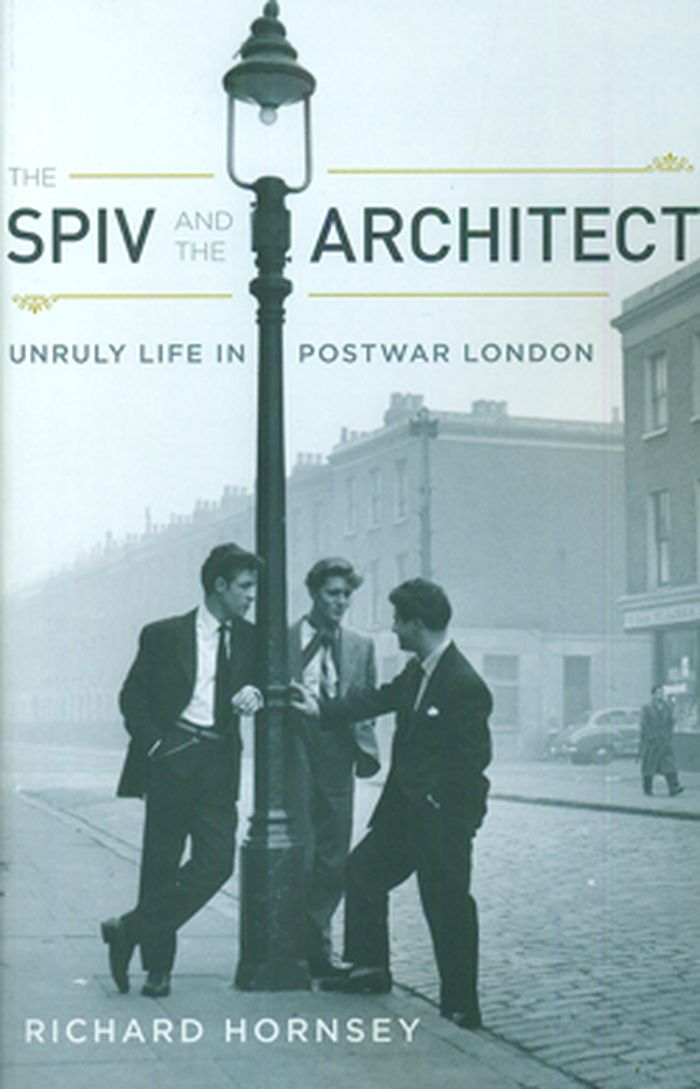
The spiv and the architect: unruly life in postwar London
Actions:
Price:
$27.95
(available in store)
Summary:
As London emerged from the devastation of the Second World War, planners and policymakers sought to rebuild the city in ways that would reshape the behavior of its citizens as much as it would its buildings and infrastructure—a program defined by a strong emphasis on civic order and conservative values of national community. One of the groups most significantly affected by this new, moralistic climate of reformation and renewal was queer men, whom the police, the media, and lawmakers targeted as an urgent urban problem by marking their lives and desires as criminal and deviant. Richard Hornsey examines how queer men legitimized, resisted, and reinvented this ambitious reconstruction program, which extended from the design of basic public spaces and municipal libraries to private living rooms and home decor. From their association with the urban stereotype of the spiv (slang for a young petty criminal who lived by his wits and shirked legitimate work) and vilification in the tabloids as perverts to the assimilated homosexuals within reformist psychology, Hornsey details how these efforts to transform London fundamentally restructured the experiences and identities of gay men in the city and throughout the country.
The spiv and the architect: unruly life in postwar London
Actions:
Price:
$27.95
(available in store)
Summary:
As London emerged from the devastation of the Second World War, planners and policymakers sought to rebuild the city in ways that would reshape the behavior of its citizens as much as it would its buildings and infrastructure—a program defined by a strong emphasis on civic order and conservative values of national community. One of the groups most significantly affected by this new, moralistic climate of reformation and renewal was queer men, whom the police, the media, and lawmakers targeted as an urgent urban problem by marking their lives and desires as criminal and deviant. Richard Hornsey examines how queer men legitimized, resisted, and reinvented this ambitious reconstruction program, which extended from the design of basic public spaces and municipal libraries to private living rooms and home decor. From their association with the urban stereotype of the spiv (slang for a young petty criminal who lived by his wits and shirked legitimate work) and vilification in the tabloids as perverts to the assimilated homosexuals within reformist psychology, Hornsey details how these efforts to transform London fundamentally restructured the experiences and identities of gay men in the city and throughout the country.
Form:
books
books
Publication:
April 2010
April 2010
Subject:
Gender Theory in Architecture
Gender Theory in Architecture
Form:
books
books
Actions:
Price:
$32.95
(available to order)
Summary:
Dystopic imagery has figured prominently in modern depictions of the urban landscape. The city is often portrayed as a terrifying world of darkness, crisis, and catastrophe. Noir Urbanisms traces the history of the modern city through its critical representations in art, cinema, print journalism, literature, sociology, and architecture. It focuses on visual forms of(...)
$32.95
(available to order)
Summary:
Dystopic imagery has figured prominently in modern depictions of the urban landscape. The city is often portrayed as a terrifying world of darkness, crisis, and catastrophe. Noir Urbanisms traces the history of the modern city through its critical representations in art, cinema, print journalism, literature, sociology, and architecture. It focuses on visual forms of(...)
Title:
Noir urbanisms: Dystopic images of the modern city
Actions:
Price:
$32.95
(available to order)
Summary:
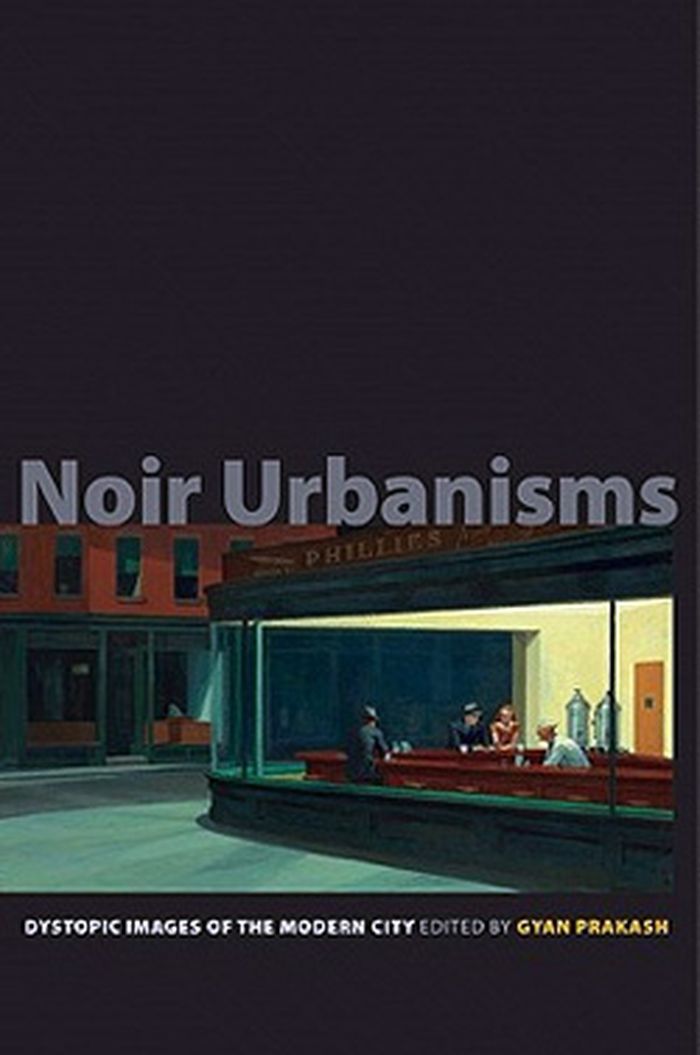
Dystopic imagery has figured prominently in modern depictions of the urban landscape. The city is often portrayed as a terrifying world of darkness, crisis, and catastrophe. Noir Urbanisms traces the history of the modern city through its critical representations in art, cinema, print journalism, literature, sociology, and architecture. It focuses on visual forms of dystopic representation--because the history of the modern city is inseparable from the production and circulation of images--and examines their strengths and limits as urban criticism. Contributors explore dystopic images of the modern city in Germany, Mexico, Japan, India, South Africa, China, and the United States. Their topics include Weimar representations of urban dystopia in Fritz Lang's 1927 film Metropolis; 1960s modernist architecture in Mexico City; Hollywood film noir of the 1940s and 1950s; the recurring fictional destruction of Tokyo in postwar Japan's sci-fi doom culture; the urban fringe in Bombay cinema; fictional explorations of urban dystopia in postapartheid Johannesburg; and Delhi's out-of-control and media-saturated urbanism in the 1980s and 1990s. What emerges in Noir Urbanisms is the unsettling and disorienting alchemy between dark representations and the modern urban experience.
Noir urbanisms: Dystopic images of the modern city
Actions:
Price:
$32.95
(available to order)
Summary:
Dystopic imagery has figured prominently in modern depictions of the urban landscape. The city is often portrayed as a terrifying world of darkness, crisis, and catastrophe. Noir Urbanisms traces the history of the modern city through its critical representations in art, cinema, print journalism, literature, sociology, and architecture. It focuses on visual forms of dystopic representation--because the history of the modern city is inseparable from the production and circulation of images--and examines their strengths and limits as urban criticism. Contributors explore dystopic images of the modern city in Germany, Mexico, Japan, India, South Africa, China, and the United States. Their topics include Weimar representations of urban dystopia in Fritz Lang's 1927 film Metropolis; 1960s modernist architecture in Mexico City; Hollywood film noir of the 1940s and 1950s; the recurring fictional destruction of Tokyo in postwar Japan's sci-fi doom culture; the urban fringe in Bombay cinema; fictional explorations of urban dystopia in postapartheid Johannesburg; and Delhi's out-of-control and media-saturated urbanism in the 1980s and 1990s. What emerges in Noir Urbanisms is the unsettling and disorienting alchemy between dark representations and the modern urban experience.
Form:
books
books
Publication:
October 2010
October 2010
Subject:
Architecture and Film, Set Design
Architecture and Film, Set Design
Form:
books
books
Actions:
Price:
$30.00
(available to order)
Summary:
Michiel Schwarz and Joost Elffers declare the dawn of a new cultural era, as we transition from modernity to sustainity - towards a world that is more connected, more localist, more digital and more sustainable. As the authors of this manifesto argue, "sustainism marks a shift not only in thinking and doing but in collective perception - of how we live, do business, feed(...)
$30.00
(available to order)
Summary:
Michiel Schwarz and Joost Elffers declare the dawn of a new cultural era, as we transition from modernity to sustainity - towards a world that is more connected, more localist, more digital and more sustainable. As the authors of this manifesto argue, "sustainism marks a shift not only in thinking and doing but in collective perception - of how we live, do business, feed(...)
Title:
Sustainism is the new modernism : a cultural manifesto for the sustainist era
Actions:
Price:
$30.00
(available to order)
Summary:
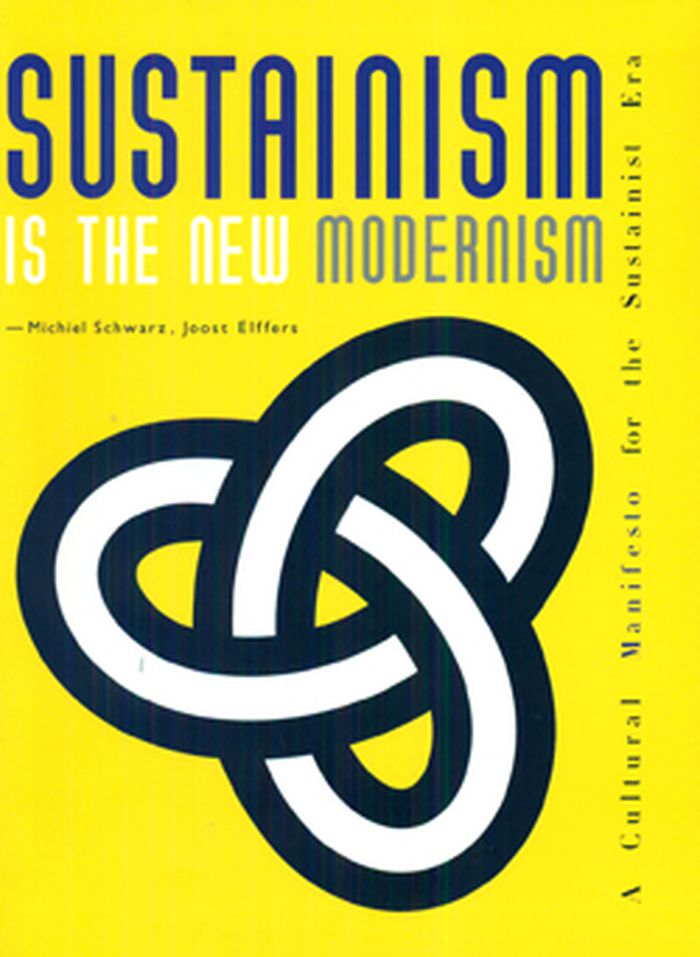
Michiel Schwarz and Joost Elffers declare the dawn of a new cultural era, as we transition from modernity to sustainity - towards a world that is more connected, more localist, more digital and more sustainable. As the authors of this manifesto argue, "sustainism marks a shift not only in thinking and doing but in collective perception - of how we live, do business, feed ourselves, design, travel and communicate, as much as how we deal with nature." In the twentieth century, whether we knew it or not, our world was shaped by modernist values, from the design of our cities to our homes, technologies and our conceptions of progress. Sustainism recasts our relationship to all of these things, binding ecological issues to a larger picture of our world. Through a series of graphically dynamic aphorisms, quotes and symbols designed for worldwide use by businesses, individuals and institutions, to signal support for sustainism, Michiel Schwarz and Joost Elffers show how the movement is already reshaping global culture, technology, food and media. With this concise manifesto, they launch the term sustainism into the public consciousness. The sustainist era has begun.
Sustainism is the new modernism : a cultural manifesto for the sustainist era
Actions:
Price:
$30.00
(available to order)
Summary:
Michiel Schwarz and Joost Elffers declare the dawn of a new cultural era, as we transition from modernity to sustainity - towards a world that is more connected, more localist, more digital and more sustainable. As the authors of this manifesto argue, "sustainism marks a shift not only in thinking and doing but in collective perception - of how we live, do business, feed ourselves, design, travel and communicate, as much as how we deal with nature." In the twentieth century, whether we knew it or not, our world was shaped by modernist values, from the design of our cities to our homes, technologies and our conceptions of progress. Sustainism recasts our relationship to all of these things, binding ecological issues to a larger picture of our world. Through a series of graphically dynamic aphorisms, quotes and symbols designed for worldwide use by businesses, individuals and institutions, to signal support for sustainism, Michiel Schwarz and Joost Elffers show how the movement is already reshaping global culture, technology, food and media. With this concise manifesto, they launch the term sustainism into the public consciousness. The sustainist era has begun.
Form:
books
books
Publication:
August 2010
August 2010
Subject:
Green Architecture
Green Architecture
Form:
books
books

Actions:
Price:
$45.00
(available to order)
Summary:
General Idea was founded in Toronto in 1969 by Felix Partz, Jorge Zontal and AA Bronson as a generic identity to free the artists "from the tyranny of individual genius." Under the leadership of their fictitious muse Miss General Idea, and inspired by William Burroughs' conception of the "image virus," the collective interrogated media image culture through now legendary(...)
$45.00
(available to order)
Summary:
General Idea was founded in Toronto in 1969 by Felix Partz, Jorge Zontal and AA Bronson as a generic identity to free the artists "from the tyranny of individual genius." Under the leadership of their fictitious muse Miss General Idea, and inspired by William Burroughs' conception of the "image virus," the collective interrogated media image culture through now legendary(...)
Title:
General idea: haute culture, a retrospective, 1969-1994
Actions:
Price:
$45.00
(available to order)
Summary:
General Idea was founded in Toronto in 1969 by Felix Partz, Jorge Zontal and AA Bronson as a generic identity to free the artists "from the tyranny of individual genius." Under the leadership of their fictitious muse Miss General Idea, and inspired by William Burroughs' conception of the "image virus," the collective interrogated media image culture through now legendary projects like File magazine, as well as paintings, installations, sculptures, mail art, photographs, videos, ephemera, TV programs and even a beauty pageant. General Idea came to an end in 1994, when Partz and Zontal died of AIDS. Today General Idea can be seen to anticipate the later art collectives of the 1970s as well as aspects of Relational Aesthetics in the 1990s. This volume presents an overview of the Canadian collective''s bold mingling of reality and fiction and their frequently transgressive, parodic incursions upon both art and society. Including newly commissioned essays and reprinted texts, this volume is richly illustrated with documents and reproductions of the most significant projects realized by General Idea between 1969 and 1994. Exhibited at ARC/Musée d'art moderne de la Ville de Paris and the Art Gallery of Ontario, Toronto in 2011.
General idea: haute culture, a retrospective, 1969-1994
Actions:
Price:
$45.00
(available to order)
Summary:
General Idea was founded in Toronto in 1969 by Felix Partz, Jorge Zontal and AA Bronson as a generic identity to free the artists "from the tyranny of individual genius." Under the leadership of their fictitious muse Miss General Idea, and inspired by William Burroughs' conception of the "image virus," the collective interrogated media image culture through now legendary projects like File magazine, as well as paintings, installations, sculptures, mail art, photographs, videos, ephemera, TV programs and even a beauty pageant. General Idea came to an end in 1994, when Partz and Zontal died of AIDS. Today General Idea can be seen to anticipate the later art collectives of the 1970s as well as aspects of Relational Aesthetics in the 1990s. This volume presents an overview of the Canadian collective''s bold mingling of reality and fiction and their frequently transgressive, parodic incursions upon both art and society. Including newly commissioned essays and reprinted texts, this volume is richly illustrated with documents and reproductions of the most significant projects realized by General Idea between 1969 and 1994. Exhibited at ARC/Musée d'art moderne de la Ville de Paris and the Art Gallery of Ontario, Toronto in 2011.
Form:
books
books
Publication:
January 2011
January 2011
Subject:
Contemporary Art Monographs
Contemporary Art Monographs
Form:
books
books
Title:
Imagery in the 21st century
Imagery in the 21st century
Actions:
Price:
$44.95
(available in store)
Summary:
We are surrounded by images as never before: on Flickr, Facebook, and YouTube; on thousands of television channels; in digital games and virtual worlds; in media art and science. Without new efforts to visualize complex ideas, structures, and systems, today’s informatio explosion would be unmanageable. The digital image represents endless options for manipulation; images(...)
$44.95
(available in store)
Summary:
We are surrounded by images as never before: on Flickr, Facebook, and YouTube; on thousands of television channels; in digital games and virtual worlds; in media art and science. Without new efforts to visualize complex ideas, structures, and systems, today’s informatio explosion would be unmanageable. The digital image represents endless options for manipulation; images(...)
Title:
Imagery in the 21st century
Actions:
Price:
$44.95
(available in store)
Summary:
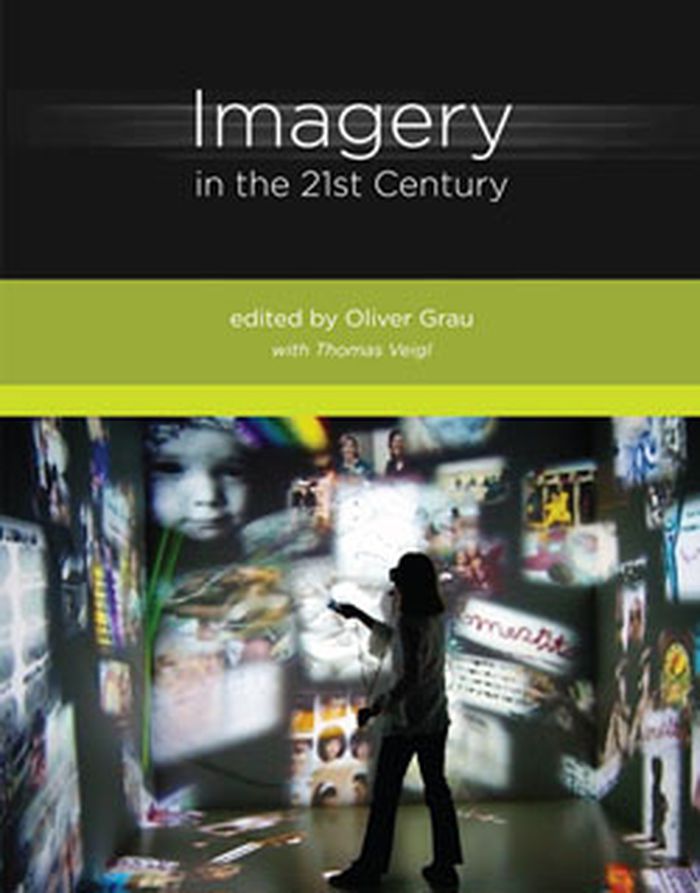
We are surrounded by images as never before: on Flickr, Facebook, and YouTube; on thousands of television channels; in digital games and virtual worlds; in media art and science. Without new efforts to visualize complex ideas, structures, and systems, today’s informatio explosion would be unmanageable. The digital image represents endless options for manipulation; images seem capable of changing interactively or even autonomously. This volume offers systematic and interdisciplinary reflections on these new image worlds and new analytical approaches to the visual. This publication examines this revolution in various fields, with researchers from the natural sciences and the humanities meeting to achieve a deeper understanding of the meaning and impact of the image in our time. The contributors explore and discuss new critical terms of multidisciplinary scope, from database economy to the dramaturgy of hypermedia, from visualizations in neurosciences to the image in bio art. They consider the power of the image in the development of human consciousness, pursue new definitions of visual phenomena, and examine new tools for image research and visual analysis. The goal is to expand visual competence in investigating new visual worlds and to build cross-disciplinary exchanges among the arts, humanities, and natural sciences.
Imagery in the 21st century
Actions:
Price:
$44.95
(available in store)
Summary:
We are surrounded by images as never before: on Flickr, Facebook, and YouTube; on thousands of television channels; in digital games and virtual worlds; in media art and science. Without new efforts to visualize complex ideas, structures, and systems, today’s informatio explosion would be unmanageable. The digital image represents endless options for manipulation; images seem capable of changing interactively or even autonomously. This volume offers systematic and interdisciplinary reflections on these new image worlds and new analytical approaches to the visual. This publication examines this revolution in various fields, with researchers from the natural sciences and the humanities meeting to achieve a deeper understanding of the meaning and impact of the image in our time. The contributors explore and discuss new critical terms of multidisciplinary scope, from database economy to the dramaturgy of hypermedia, from visualizations in neurosciences to the image in bio art. They consider the power of the image in the development of human consciousness, pursue new definitions of visual phenomena, and examine new tools for image research and visual analysis. The goal is to expand visual competence in investigating new visual worlds and to build cross-disciplinary exchanges among the arts, humanities, and natural sciences.
Form:
books
books
Publication:
September 2011
September 2011
Subject:
Art Theory
Art Theory
Form:
books
books

Actions:
Price:
$24.50
(available to order)
Summary:
Set in the long-lost City of Victoria (a fictional world similar to Hong Kong), Atlas is written from the unified perspective of future archaeologists struggling to rebuild a thrilling metropolis. Divided into four sections — “Theory,” “The City,” “Streets,” and “Signs” — the novel reimagines Victoria through maps and other historical documents and artifacts, mixing(...)
$24.50
(available to order)
Summary:
Set in the long-lost City of Victoria (a fictional world similar to Hong Kong), Atlas is written from the unified perspective of future archaeologists struggling to rebuild a thrilling metropolis. Divided into four sections — “Theory,” “The City,” “Streets,” and “Signs” — the novel reimagines Victoria through maps and other historical documents and artifacts, mixing(...)
Title:
Atlas : the archaeology of an imaginary city
Actions:
Price:
$24.50
(available to order)
Summary:
Set in the long-lost City of Victoria (a fictional world similar to Hong Kong), Atlas is written from the unified perspective of future archaeologists struggling to rebuild a thrilling metropolis. Divided into four sections — “Theory,” “The City,” “Streets,” and “Signs” — the novel reimagines Victoria through maps and other historical documents and artifacts, mixing real-world scenarios with purely imaginary people and events while incorporating anecdotes and actual and fictional social commentary and critique. Much like the quasi-fictional adventures in map-reading and remapping explored by Paul Auster, Jorge Luis Borges, and Italo Calvino, Dung Kai-cheung’s novel challenges the representation of place and history and the limits of technical and scientific media in reconstructing a history. It best exemplifies the author’s versatility and experimentation, along with China’s rapidly evolving literary culture, by blending fiction, nonfiction, and poetry in a story about succeeding and failing to recapture the things we lose. Playing with a variety of styles and subjects, Dung Kai-cheung inventively engages with the fate of Hong Kong since its British “handover” in 1997, which officially marked the end of colonial rule and the beginning of an uncharted future.
Atlas : the archaeology of an imaginary city
Actions:
Price:
$24.50
(available to order)
Summary:
Set in the long-lost City of Victoria (a fictional world similar to Hong Kong), Atlas is written from the unified perspective of future archaeologists struggling to rebuild a thrilling metropolis. Divided into four sections — “Theory,” “The City,” “Streets,” and “Signs” — the novel reimagines Victoria through maps and other historical documents and artifacts, mixing real-world scenarios with purely imaginary people and events while incorporating anecdotes and actual and fictional social commentary and critique. Much like the quasi-fictional adventures in map-reading and remapping explored by Paul Auster, Jorge Luis Borges, and Italo Calvino, Dung Kai-cheung’s novel challenges the representation of place and history and the limits of technical and scientific media in reconstructing a history. It best exemplifies the author’s versatility and experimentation, along with China’s rapidly evolving literary culture, by blending fiction, nonfiction, and poetry in a story about succeeding and failing to recapture the things we lose. Playing with a variety of styles and subjects, Dung Kai-cheung inventively engages with the fate of Hong Kong since its British “handover” in 1997, which officially marked the end of colonial rule and the beginning of an uncharted future.
Form:
books
books
Publication:
November 2012
November 2012
Subject:
Architectural Theory
Architectural Theory


