


8415 Results
Form:
books
books
Actions:
Price:
$63.95
(available to order)
Summary:
In Soviet Salvage, Catherine Walworth explores how artists on the margins of the Constructivist movement of the 1920s rejected “elitist” media and imagined a new world, knitting together avant-garde art, imperial castoffs, and everyday life. Applying anthropological models borrowed from Claude Lévi-Strauss, Walworth shows that his mythmaker typologies—the “engineer”(...)
$63.95
(available to order)
Summary:
In Soviet Salvage, Catherine Walworth explores how artists on the margins of the Constructivist movement of the 1920s rejected “elitist” media and imagined a new world, knitting together avant-garde art, imperial castoffs, and everyday life. Applying anthropological models borrowed from Claude Lévi-Strauss, Walworth shows that his mythmaker typologies—the “engineer”(...)
Title:
Soviet salvage: Imperial debris, revolutionary reuse, and Russian Constructivism
Actions:
Price:
$63.95
(available to order)
Summary:
In Soviet Salvage, Catherine Walworth explores how artists on the margins of the Constructivist movement of the 1920s rejected “elitist” media and imagined a new world, knitting together avant-garde art, imperial castoffs, and everyday life. Applying anthropological models borrowed from Claude Lévi-Strauss, Walworth shows that his mythmaker typologies—the “engineer” and “bricoleur”—illustrate, respectively, the canonical Constructivists and artists on the movement’s margins who deployed a wide range of clever make-do tactics. Walworth explores the relationships of Nadezhda Lamanova, Esfir Shub, and others with Constructivists such as Aleksei Gan, Varvara Stepanova, and Aleksandr Rodchenko. Together, the work of these artists reflected the chaotic and often contradictory zeitgeist of the decade from 1918 to 1929 and redefined the concept of mass production. Reappropriated fragments of a former enemy era provided a wide range of play and possibility for these artists, and the resulting propaganda porcelain, film, fashion, and architecture tell a broader story of the unique political and economic pressures felt by their makers. An engaging multidisciplinary study of objects and their makers during the Soviet Union’s early years, this volume highlights a group of artists who hover like free radicals at the border of existing art-historical discussions of Constructivism and deepens our knowledge of Soviet art and material culture.
Soviet salvage: Imperial debris, revolutionary reuse, and Russian Constructivism
Actions:
Price:
$63.95
(available to order)
Summary:
In Soviet Salvage, Catherine Walworth explores how artists on the margins of the Constructivist movement of the 1920s rejected “elitist” media and imagined a new world, knitting together avant-garde art, imperial castoffs, and everyday life. Applying anthropological models borrowed from Claude Lévi-Strauss, Walworth shows that his mythmaker typologies—the “engineer” and “bricoleur”—illustrate, respectively, the canonical Constructivists and artists on the movement’s margins who deployed a wide range of clever make-do tactics. Walworth explores the relationships of Nadezhda Lamanova, Esfir Shub, and others with Constructivists such as Aleksei Gan, Varvara Stepanova, and Aleksandr Rodchenko. Together, the work of these artists reflected the chaotic and often contradictory zeitgeist of the decade from 1918 to 1929 and redefined the concept of mass production. Reappropriated fragments of a former enemy era provided a wide range of play and possibility for these artists, and the resulting propaganda porcelain, film, fashion, and architecture tell a broader story of the unique political and economic pressures felt by their makers. An engaging multidisciplinary study of objects and their makers during the Soviet Union’s early years, this volume highlights a group of artists who hover like free radicals at the border of existing art-historical discussions of Constructivism and deepens our knowledge of Soviet art and material culture.
Form:
books
books
Publication:
September 2018
September 2018
Form:
books
books
Actions:
Price:
$34.99
(available to order)
Summary:
In an era when technology, biology, and culture are becoming ever more closely connected, The Dada Cyborg explains how the cyborg as we know it today actually developed between 1918 and 1933 when German artists gave visual form to their utopian hopes and fantasies in a fearful response to World War I. In what could be termed a prehistory of the posthuman, Matthew Biro(...)
$34.99
(available to order)
Summary:
In an era when technology, biology, and culture are becoming ever more closely connected, The Dada Cyborg explains how the cyborg as we know it today actually developed between 1918 and 1933 when German artists gave visual form to their utopian hopes and fantasies in a fearful response to World War I. In what could be termed a prehistory of the posthuman, Matthew Biro(...)
Title:
The Dada cyborg: vision of the new human in Weimar Berlin
Actions:
Price:
$34.99
(available to order)
Summary:
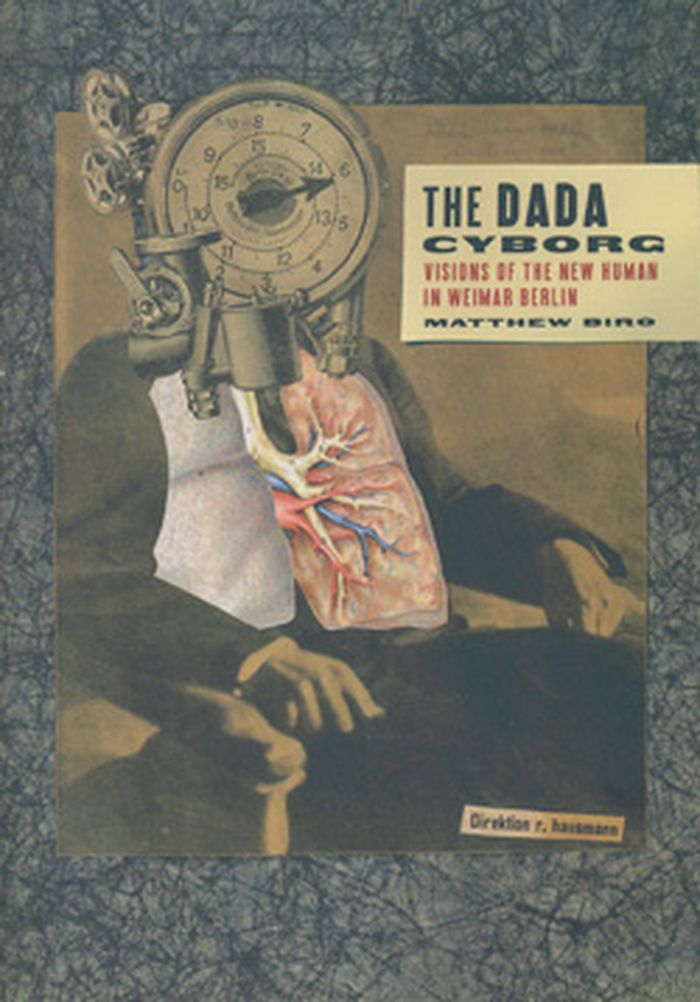
In an era when technology, biology, and culture are becoming ever more closely connected, The Dada Cyborg explains how the cyborg as we know it today actually developed between 1918 and 1933 when German artists gave visual form to their utopian hopes and fantasies in a fearful response to World War I. In what could be termed a prehistory of the posthuman, Matthew Biro shows the ways in which new forms of human existence were imagined in Germany between the two world wars through depictions of cyborgs. Examining the work of Hannah Höch, Raoul Hausmann, George Grosz, John Heartfield, Otto Dix, and Rudolf Schlichter, he reveals an innovative interpretation of the cyborg as a representative of hybrid identity, as well as a locus of new modes of awareness created by the impact of technology on human perception. Tracing the prevalence of cyborgs in German avant-garde art, Biro demonstrates how vision, hearing, touch, and embodiment were beginning to be reconceived during the Weimar Republic. Biro’s unique and interdisciplinary analysis offers a substantially new account of the Berlin Dada movement, one that integrates the group’s poetic, theoretical, and performative practices with its famous visual strategies of photomontage, assemblage, and mixed-media painting to reveal radical images of a “new human.”
The Dada cyborg: vision of the new human in Weimar Berlin
Actions:
Price:
$34.99
(available to order)
Summary:
In an era when technology, biology, and culture are becoming ever more closely connected, The Dada Cyborg explains how the cyborg as we know it today actually developed between 1918 and 1933 when German artists gave visual form to their utopian hopes and fantasies in a fearful response to World War I. In what could be termed a prehistory of the posthuman, Matthew Biro shows the ways in which new forms of human existence were imagined in Germany between the two world wars through depictions of cyborgs. Examining the work of Hannah Höch, Raoul Hausmann, George Grosz, John Heartfield, Otto Dix, and Rudolf Schlichter, he reveals an innovative interpretation of the cyborg as a representative of hybrid identity, as well as a locus of new modes of awareness created by the impact of technology on human perception. Tracing the prevalence of cyborgs in German avant-garde art, Biro demonstrates how vision, hearing, touch, and embodiment were beginning to be reconceived during the Weimar Republic. Biro’s unique and interdisciplinary analysis offers a substantially new account of the Berlin Dada movement, one that integrates the group’s poetic, theoretical, and performative practices with its famous visual strategies of photomontage, assemblage, and mixed-media painting to reveal radical images of a “new human.”
Form:
books
books
Publication:
May 2009
May 2009
Subject:
Art Theory
Art Theory
Form:
books
books
Title:
Situating El Lissitzky
Situating El Lissitzky
Actions:
Price:
$62.50
(available to order)
Summary:
Situating El Lissitzky reassesses the complex career of one of the most influential yet controversial experimental artists of the early twentieth century. A prolific painter, designer, architect, and photographer, El Lissitzky (1890-1941) worked with the Soviet and the European artistic avant-gardes in the 1920s and as a propagandist for the Stalinist regime in the(...)
$62.50
(available to order)
Summary:
Situating El Lissitzky reassesses the complex career of one of the most influential yet controversial experimental artists of the early twentieth century. A prolific painter, designer, architect, and photographer, El Lissitzky (1890-1941) worked with the Soviet and the European artistic avant-gardes in the 1920s and as a propagandist for the Stalinist regime in the(...)
Subject:
Photography monographs
Photography monographs
Publication:
August 2003, Los Angeles
August 2003, Los Angeles
Title:
Situating El Lissitzky
Actions:
Price:
$62.50
(available to order)
Summary:
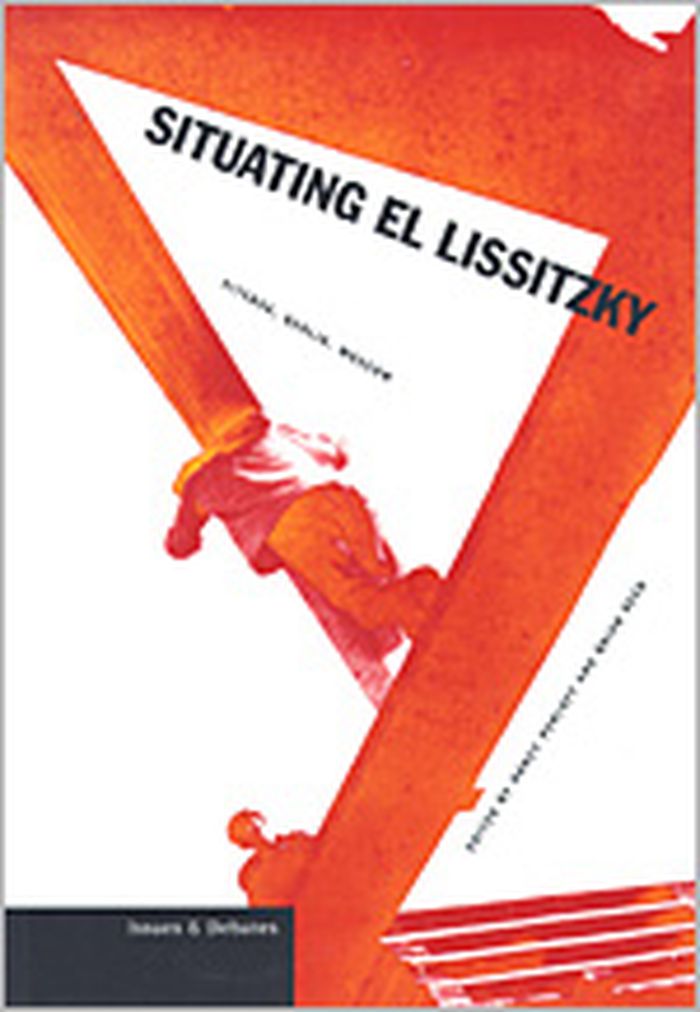
Situating El Lissitzky reassesses the complex career of one of the most influential yet controversial experimental artists of the early twentieth century. A prolific painter, designer, architect, and photographer, El Lissitzky (1890-1941) worked with the Soviet and the European artistic avant-gardes in the 1920s and as a propagandist for the Stalinist regime in the following decade. Taking readers into the thick of current debates about Lissitzky's artistic personae, Situating El Lissitzky reconstructs aspects of his elusive identity across different periods, places, and media. Following an introduction in which Nancy Perloff distills and draws together the volume's eight essays, Christina Lodder, Éva Forgács, and Maria Gough offer revisionist accounts of Lissitzky's years as an international constructivist and exhibition designer in Europe. John E. Bowlt then investigates the role of handicraft and the symbol of the hand in Lissitzky's artistic production, and Leah Dickerman and Margarita Tupitsyn elucidate the interplay between physicality and opticality at different stages in Lissitzky's development as a photographer. Finally, T. J. Clark and Peter Nisbet address the disconcerting balance of aesthetic value and political expediency in Lissitzky's overtly Communist art. The result is a kaleidoscopic portrait of Lissitzky as Bolshevik visionary, craftsman, modernist, internationalist, and Soviet propagandist.
Situating El Lissitzky
Actions:
Price:
$62.50
(available to order)
Summary:
Situating El Lissitzky reassesses the complex career of one of the most influential yet controversial experimental artists of the early twentieth century. A prolific painter, designer, architect, and photographer, El Lissitzky (1890-1941) worked with the Soviet and the European artistic avant-gardes in the 1920s and as a propagandist for the Stalinist regime in the following decade. Taking readers into the thick of current debates about Lissitzky's artistic personae, Situating El Lissitzky reconstructs aspects of his elusive identity across different periods, places, and media. Following an introduction in which Nancy Perloff distills and draws together the volume's eight essays, Christina Lodder, Éva Forgács, and Maria Gough offer revisionist accounts of Lissitzky's years as an international constructivist and exhibition designer in Europe. John E. Bowlt then investigates the role of handicraft and the symbol of the hand in Lissitzky's artistic production, and Leah Dickerman and Margarita Tupitsyn elucidate the interplay between physicality and opticality at different stages in Lissitzky's development as a photographer. Finally, T. J. Clark and Peter Nisbet address the disconcerting balance of aesthetic value and political expediency in Lissitzky's overtly Communist art. The result is a kaleidoscopic portrait of Lissitzky as Bolshevik visionary, craftsman, modernist, internationalist, and Soviet propagandist.
Form:
books
books
Publication:
August 2003, Los Angeles
August 2003, Los Angeles
Subject:
Photography monographs
Photography monographs
Form:
books
books
Price:
$38.99
(available to order)
Summary:
In 1982, the protests of antiporn feminists sparked the censorship of the ''Diary of a Conference on Sexuality'', a radical and sexually evocative image-text volume whose silencing became a symbol for the irresolvable feminist sex wars. ''In Visible archives'' documents the community networks that produced this resonant artifact and others, analyzing how visual culture(...)
$38.99
(available to order)
Summary:
In 1982, the protests of antiporn feminists sparked the censorship of the ''Diary of a Conference on Sexuality'', a radical and sexually evocative image-text volume whose silencing became a symbol for the irresolvable feminist sex wars. ''In Visible archives'' documents the community networks that produced this resonant artifact and others, analyzing how visual culture(...)
Title:
In Visible archives: Queer and feminist visual culture in the 1980s
Actions:
Price:
$38.99
(available to order)
Summary:
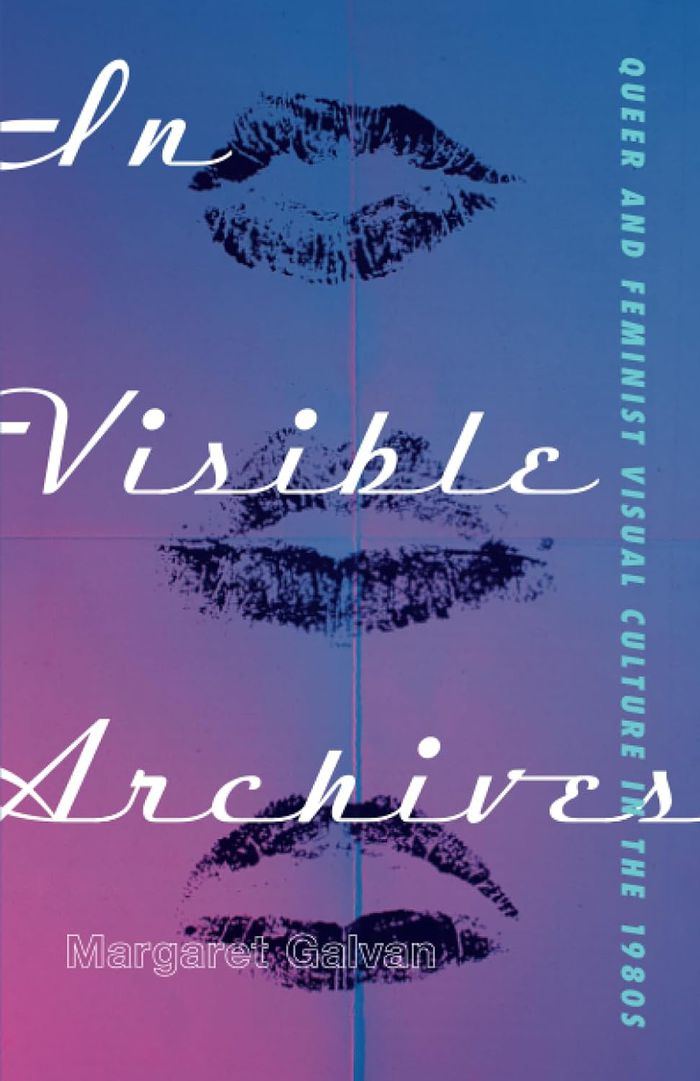
In 1982, the protests of antiporn feminists sparked the censorship of the ''Diary of a Conference on Sexuality'', a radical and sexually evocative image-text volume whose silencing became a symbol for the irresolvable feminist sex wars. ''In Visible archives'' documents the community networks that produced this resonant artifact and others, analyzing how visual culture provided a vital space for women artists to theorize and visualize their own bodies and sexualities. Margaret Galvan explores a number of feminist and cultural touchstones—the feminist sex wars, the HIV/AIDS crisis, the women in print movement, and countercultural grassroots periodical networks—and examines how visual culture interacts with these pivotal moments. She goes deep into the records to bring together a decade’s worth of research in grassroots and university archives that include comics, collages, photographs, drawings, and other image-text media produced by women, including Hannah Alderfer, Beth Jaker, Marybeth Nelson, Roberta Gregory, Lee Marrs, Alison Bechdel, Gloria Anzaldúa, and Nan Goldin. The art highlighted in ''In Visible archives'' demonstrates how women represented their bodies and sexualities on their own terms and created visibility for new, diverse identities, thus serving as blueprints for future activism and advocacy—work that is urgent now more than ever as LGBTQ+ and women’s rights face challenges and restrictions across the nation.
In Visible archives: Queer and feminist visual culture in the 1980s
Actions:
Price:
$38.99
(available to order)
Summary:
In 1982, the protests of antiporn feminists sparked the censorship of the ''Diary of a Conference on Sexuality'', a radical and sexually evocative image-text volume whose silencing became a symbol for the irresolvable feminist sex wars. ''In Visible archives'' documents the community networks that produced this resonant artifact and others, analyzing how visual culture provided a vital space for women artists to theorize and visualize their own bodies and sexualities. Margaret Galvan explores a number of feminist and cultural touchstones—the feminist sex wars, the HIV/AIDS crisis, the women in print movement, and countercultural grassroots periodical networks—and examines how visual culture interacts with these pivotal moments. She goes deep into the records to bring together a decade’s worth of research in grassroots and university archives that include comics, collages, photographs, drawings, and other image-text media produced by women, including Hannah Alderfer, Beth Jaker, Marybeth Nelson, Roberta Gregory, Lee Marrs, Alison Bechdel, Gloria Anzaldúa, and Nan Goldin. The art highlighted in ''In Visible archives'' demonstrates how women represented their bodies and sexualities on their own terms and created visibility for new, diverse identities, thus serving as blueprints for future activism and advocacy—work that is urgent now more than ever as LGBTQ+ and women’s rights face challenges and restrictions across the nation.
Form:
books
books
Publication:
September 2023
September 2023
Subject:
Social
Social
Form:
books
books
Title:
Mary Ellen Mark: Encounters
Mary Ellen Mark: Encounters
Actions:
Price:
$73.00
(available to order)
Summary:
The images of American photographer Mary Ellen Mark are icons of documentary and humanistic photography. Focusing her camera on the socially disadvantaged and those on the fringes of society, she told the stories of her protagonists without prejudice. In the context of the emerging women’s movement in the USA during the 1960s and 70s, and as a freelance photographer at a(...)
$73.00
(available to order)
Summary:
The images of American photographer Mary Ellen Mark are icons of documentary and humanistic photography. Focusing her camera on the socially disadvantaged and those on the fringes of society, she told the stories of her protagonists without prejudice. In the context of the emerging women’s movement in the USA during the 1960s and 70s, and as a freelance photographer at a(...)
Title:
Mary Ellen Mark: Encounters
Actions:
Price:
$73.00
(available to order)
Summary:
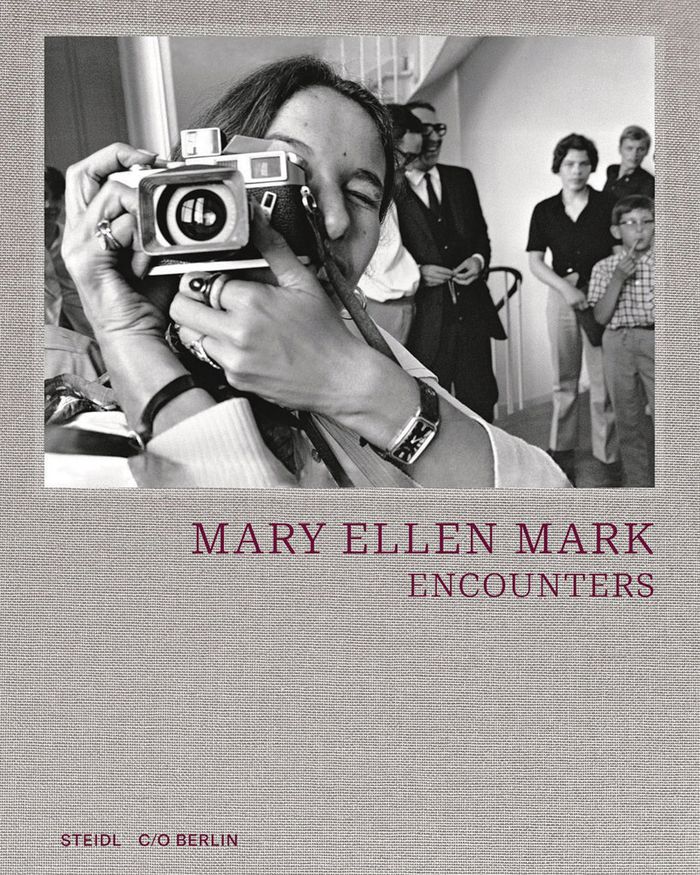
The images of American photographer Mary Ellen Mark are icons of documentary and humanistic photography. Focusing her camera on the socially disadvantaged and those on the fringes of society, she told the stories of her protagonists without prejudice. In the context of the emerging women’s movement in the USA during the 1960s and 70s, and as a freelance photographer at a time when print media was suffering its first major crisis, Mark fought her way to the forefront of female voices in photojournalism. Encounters provides an expansive cross-section of the photographer’s full body of work. The book focuses on five iconic series that contributed significantly to Mark’s reputation: Ward 81 in which she photographed residents at an Oregon psychiatric hospital for women; a reportage on prostitutes on Falkland Road in Mumbai; a tribute to Mother Teresa’s charitable work; Indian Circus, documenting traveling circus families; and the long-term project Streetwise, in which Mark followed the life of Erin Blackwell (Tiny) for more than 30 years. For the first time, this book contextualizes these works within Mark’s œuvre and presents them alongside original magazine spreads and archival material—including contact sheets, letters and notebooks—to reveal the breadth of her accomplishments and singularly compassionate eye.
Mary Ellen Mark: Encounters
Actions:
Price:
$73.00
(available to order)
Summary:
The images of American photographer Mary Ellen Mark are icons of documentary and humanistic photography. Focusing her camera on the socially disadvantaged and those on the fringes of society, she told the stories of her protagonists without prejudice. In the context of the emerging women’s movement in the USA during the 1960s and 70s, and as a freelance photographer at a time when print media was suffering its first major crisis, Mark fought her way to the forefront of female voices in photojournalism. Encounters provides an expansive cross-section of the photographer’s full body of work. The book focuses on five iconic series that contributed significantly to Mark’s reputation: Ward 81 in which she photographed residents at an Oregon psychiatric hospital for women; a reportage on prostitutes on Falkland Road in Mumbai; a tribute to Mother Teresa’s charitable work; Indian Circus, documenting traveling circus families; and the long-term project Streetwise, in which Mark followed the life of Erin Blackwell (Tiny) for more than 30 years. For the first time, this book contextualizes these works within Mark’s œuvre and presents them alongside original magazine spreads and archival material—including contact sheets, letters and notebooks—to reveal the breadth of her accomplishments and singularly compassionate eye.
Form:
books
books
Publication:
December 2023
December 2023
Subject:
Photography monographs
Photography monographs
Form:
books
books
Actions:
Price:
$30.00
(available to order)
Summary:
The 12 artists in Phantasmagoria: Specters of Absence--Christian Boltanski, Jim Campbell, Michel Delacroix, Laurent Grasso, Jeppe Hein, William Kentridge, Rafael Lozano-Hemmer, Teresa Margolles, Oscar Munoz, Julie Nord, Rosangela Renno and Regina Silveira--draw on forms of representation associated with phantasmagoria and reframe them around contemporary notions of(...)
$30.00
(available to order)
Summary:
The 12 artists in Phantasmagoria: Specters of Absence--Christian Boltanski, Jim Campbell, Michel Delacroix, Laurent Grasso, Jeppe Hein, William Kentridge, Rafael Lozano-Hemmer, Teresa Margolles, Oscar Munoz, Julie Nord, Rosangela Renno and Regina Silveira--draw on forms of representation associated with phantasmagoria and reframe them around contemporary notions of(...)
Title:
Phantasmagoria : Specters of absence
Actions:
Price:
$30.00
(available to order)
Summary:
The 12 artists in Phantasmagoria: Specters of Absence--Christian Boltanski, Jim Campbell, Michel Delacroix, Laurent Grasso, Jeppe Hein, William Kentridge, Rafael Lozano-Hemmer, Teresa Margolles, Oscar Munoz, Julie Nord, Rosangela Renno and Regina Silveira--draw on forms of representation associated with phantasmagoria and reframe them around contemporary notions of absence and loss, using spectral effects and immaterial media such as shadows, fog, mist and breath. A "phantasmagoria" was a pre-cinematic theatrical show, devised in France in the late eighteenth century, which gained popularity throughout Europe in the nineteenth century. Long before blockbuster art exhibitions, crowds were wowed by these traveling shows, in which stories were performed with magic lanterns and rear projections that created dancing shadows and frightening melodramatic effects. These lively, interactive events incorporated narrative, mythology and theater in a single art form; they entertained a wide audience and provided a space to consider the otherworldly, mobilizing viewers' anxieties regarding death and the afterlife. This catalogue, produced for the traveling exhibition of the same name, includes a text by curator Jose Roca and his interviews with the 12 artists, as well as a newly commissioned short-fiction piece by Bruce Sterling. The exhibition is co-organized by the Museo de Arte del Banco de la Republica, Bogota, Columbia.
Phantasmagoria : Specters of absence
Actions:
Price:
$30.00
(available to order)
Summary:
The 12 artists in Phantasmagoria: Specters of Absence--Christian Boltanski, Jim Campbell, Michel Delacroix, Laurent Grasso, Jeppe Hein, William Kentridge, Rafael Lozano-Hemmer, Teresa Margolles, Oscar Munoz, Julie Nord, Rosangela Renno and Regina Silveira--draw on forms of representation associated with phantasmagoria and reframe them around contemporary notions of absence and loss, using spectral effects and immaterial media such as shadows, fog, mist and breath. A "phantasmagoria" was a pre-cinematic theatrical show, devised in France in the late eighteenth century, which gained popularity throughout Europe in the nineteenth century. Long before blockbuster art exhibitions, crowds were wowed by these traveling shows, in which stories were performed with magic lanterns and rear projections that created dancing shadows and frightening melodramatic effects. These lively, interactive events incorporated narrative, mythology and theater in a single art form; they entertained a wide audience and provided a space to consider the otherworldly, mobilizing viewers' anxieties regarding death and the afterlife. This catalogue, produced for the traveling exhibition of the same name, includes a text by curator Jose Roca and his interviews with the 12 artists, as well as a newly commissioned short-fiction piece by Bruce Sterling. The exhibition is co-organized by the Museo de Arte del Banco de la Republica, Bogota, Columbia.
Form:
books
books
Publication:
October 2007, New York
October 2007, New York
Subject:
Contemporary Art Monographs
Contemporary Art Monographs
Form:
books
books
Actions:
Price:
$60.00
(available to order)
Summary:
Gordon Matta-Clark died at only 35 of pancreatic cancer and has since become a cult figure of late 20th-century art. Trained in architecture at Cornell, he went on to question the field’s conventions in vivid projects—performance and recycling pieces, space and texture works and word games—some of which excised holes into existing buildings or assembled deeds to New York(...)
$60.00
(available to order)
Summary:
Gordon Matta-Clark died at only 35 of pancreatic cancer and has since become a cult figure of late 20th-century art. Trained in architecture at Cornell, he went on to question the field’s conventions in vivid projects—performance and recycling pieces, space and texture works and word games—some of which excised holes into existing buildings or assembled deeds to New York(...)
Publication:
August 2016
August 2016
Title:
Gordon Matta-Clark: Experience becomes the object
Actions:
Price:
$60.00
(available to order)
Summary:
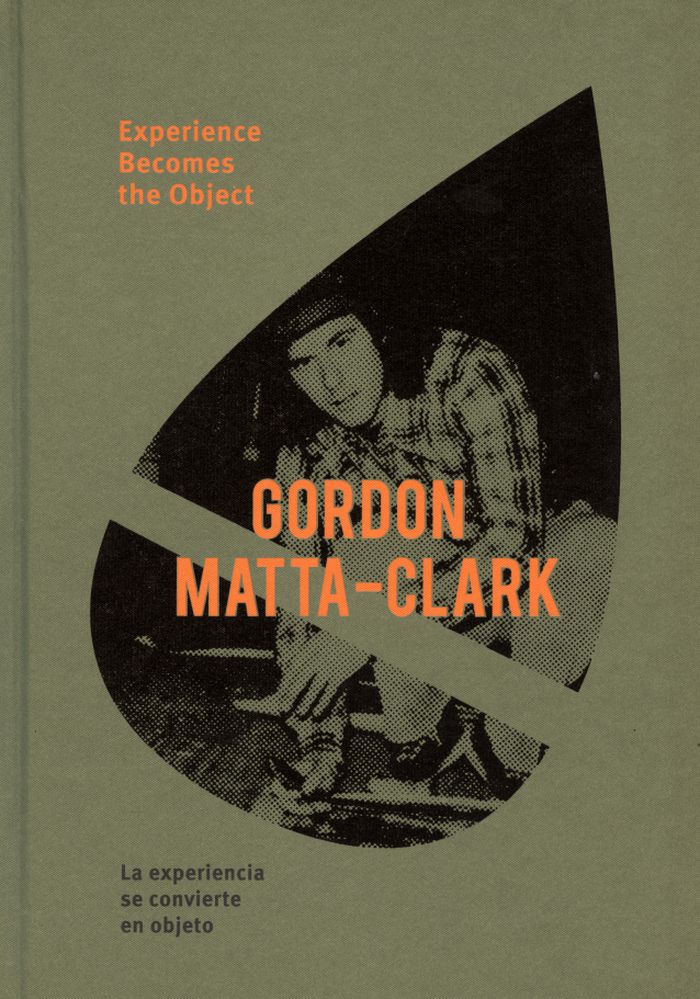
Gordon Matta-Clark died at only 35 of pancreatic cancer and has since become a cult figure of late 20th-century art. Trained in architecture at Cornell, he went on to question the field’s conventions in vivid projects—performance and recycling pieces, space and texture works and word games—some of which excised holes into existing buildings or assembled deeds to New York City alleys and curbs. The artist used a variety of media to document his work, including film, video and photography. His work and words, while sophisticated enough to make him an "artist’s artist," and colossal and outgoing enough to draw public attention and affection, were always also grounded in social or political convictions. In the early 1970s, Matta-Clark developed the idea of "anarchitecture," which encompassed his interest in voids, gaps and left-over spaces. Gordon Matta-Clark: Experience Becomes the Object collects five essays and ten individual interviews with various friends and family members of Matta-Clark’s. Together, they outline a biographical profile and offer an analysis of the historical period in which the artist developed his short but successful career. New, never-before-published material and photographs as well as an exclusive link to the documentary Crosswords: Matta-Clark’s Friends by Matias Cardone are also included.
Gordon Matta-Clark: Experience becomes the object
Actions:
Price:
$60.00
(available to order)
Summary:
Gordon Matta-Clark died at only 35 of pancreatic cancer and has since become a cult figure of late 20th-century art. Trained in architecture at Cornell, he went on to question the field’s conventions in vivid projects—performance and recycling pieces, space and texture works and word games—some of which excised holes into existing buildings or assembled deeds to New York City alleys and curbs. The artist used a variety of media to document his work, including film, video and photography. His work and words, while sophisticated enough to make him an "artist’s artist," and colossal and outgoing enough to draw public attention and affection, were always also grounded in social or political convictions. In the early 1970s, Matta-Clark developed the idea of "anarchitecture," which encompassed his interest in voids, gaps and left-over spaces. Gordon Matta-Clark: Experience Becomes the Object collects five essays and ten individual interviews with various friends and family members of Matta-Clark’s. Together, they outline a biographical profile and offer an analysis of the historical period in which the artist developed his short but successful career. New, never-before-published material and photographs as well as an exclusive link to the documentary Crosswords: Matta-Clark’s Friends by Matias Cardone are also included.
Form:
books
books
Publication:
August 2016
August 2016
Form:
books
books
Actions:
Price:
$56.95
(available to order)
Summary:
How do we live well? The first sentence of ''Grace and gravity'' raises the fundamental question that constantly occupies our minds-and of all those who lived before us. Paradoxically, the impossibility of answering this question opens up the very room needed to find ways of living well. It is the gap where all disciplines fall short, where architecture does not fit its(...)
$56.95
(available to order)
Summary:
How do we live well? The first sentence of ''Grace and gravity'' raises the fundamental question that constantly occupies our minds-and of all those who lived before us. Paradoxically, the impossibility of answering this question opens up the very room needed to find ways of living well. It is the gap where all disciplines fall short, where architecture does not fit its(...)
Title:
Grace and gravity: Architectures of the figure
Actions:
Price:
$56.95
(available to order)
Summary:
How do we live well? The first sentence of ''Grace and gravity'' raises the fundamental question that constantly occupies our minds-and of all those who lived before us. Paradoxically, the impossibility of answering this question opens up the very room needed to find ways of living well. It is the gap where all disciplines fall short, where architecture does not fit its inhabitants, where economy is not based on shortage, where religion cannot be explained by its followers, and where technology works far beyond its own principles. According to Lars Spuybroek, the prize-winning former architect, this marks the point where the “paradoxical machine” of grace reveals its powers, a point where we “cannot say if we are moving or being moved”. Following the trail of grace leads him to a new form of analysis that transcends the age-old opposition between appearances and technology. Linking up a dazzling and often delightful variety of sources-monkeys, paintings, lamp posts, octopuses, tattoos, bleeding fingers, rose windows, robots, smart phones, spirits, saints, and fossils-with profound meditations on living, death, consciousness, and existence, ''Grace and gravity'' offers an eye-opening provocation to a wide range of art historians, architects, theologians, anthropologists, artists, media theorists and philosophers.
Grace and gravity: Architectures of the figure
Actions:
Price:
$56.95
(available to order)
Summary:
How do we live well? The first sentence of ''Grace and gravity'' raises the fundamental question that constantly occupies our minds-and of all those who lived before us. Paradoxically, the impossibility of answering this question opens up the very room needed to find ways of living well. It is the gap where all disciplines fall short, where architecture does not fit its inhabitants, where economy is not based on shortage, where religion cannot be explained by its followers, and where technology works far beyond its own principles. According to Lars Spuybroek, the prize-winning former architect, this marks the point where the “paradoxical machine” of grace reveals its powers, a point where we “cannot say if we are moving or being moved”. Following the trail of grace leads him to a new form of analysis that transcends the age-old opposition between appearances and technology. Linking up a dazzling and often delightful variety of sources-monkeys, paintings, lamp posts, octopuses, tattoos, bleeding fingers, rose windows, robots, smart phones, spirits, saints, and fossils-with profound meditations on living, death, consciousness, and existence, ''Grace and gravity'' offers an eye-opening provocation to a wide range of art historians, architects, theologians, anthropologists, artists, media theorists and philosophers.
Form:
books
books
Publication:
November 2020
November 2020
Subject:
Architectural Theory
Architectural Theory
Form:
books
books
Actions:
Price:
$46.99
(available to order)
Summary:
"Biennials: The exhibitions we love to hate" examines one of the most significant recent transitions in the contemporary art world: the proliferation of large-scale international recurrent survey shows of contemporary art, commonly referred to as contemporary biennials. Since the mid-1980s biennials have been instrumental in shaping curating as an autonomous practice.(...)
$46.99
(available to order)
Summary:
"Biennials: The exhibitions we love to hate" examines one of the most significant recent transitions in the contemporary art world: the proliferation of large-scale international recurrent survey shows of contemporary art, commonly referred to as contemporary biennials. Since the mid-1980s biennials have been instrumental in shaping curating as an autonomous practice.(...)
Title:
Biennials: The exhibitions we love to hate
Actions:
Price:
$46.99
(available to order)
Summary:
"Biennials: The exhibitions we love to hate" examines one of the most significant recent transitions in the contemporary art world: the proliferation of large-scale international recurrent survey shows of contemporary art, commonly referred to as contemporary biennials. Since the mid-1980s biennials have been instrumental in shaping curating as an autonomous practice. These exhibitions are also said to have provided increased visibility for certain types of new art practices, notably those that are socially and politically committed, research-based and site-specific, and to have undermined some of the more traditional art media, such as painting, drawing or sculpture. They have been responsible for substantially reshaping the contemporary art world and disrupting the existing value chain of the art market, which now relies on biennials as much as it does on major museums’ acquisitions and exhibitions. Rafal Niemojewski, Director of the Biennial Foundation, deftly unpicks the critical discussion and controversy surrounding contemporary biennials. Branded by some critics as showcases of neo-liberalism run amok, in which culture has become synonymous with the dollar-generating leisure industry, biennials have also been associated with the production of monumental artworks which are both highly consumable and photogenic (Instagrammable). The exhibitions we love to hate? This engaging publication makes an essential contribution to a fascinating cultural debate.
Biennials: The exhibitions we love to hate
Actions:
Price:
$46.99
(available to order)
Summary:
"Biennials: The exhibitions we love to hate" examines one of the most significant recent transitions in the contemporary art world: the proliferation of large-scale international recurrent survey shows of contemporary art, commonly referred to as contemporary biennials. Since the mid-1980s biennials have been instrumental in shaping curating as an autonomous practice. These exhibitions are also said to have provided increased visibility for certain types of new art practices, notably those that are socially and politically committed, research-based and site-specific, and to have undermined some of the more traditional art media, such as painting, drawing or sculpture. They have been responsible for substantially reshaping the contemporary art world and disrupting the existing value chain of the art market, which now relies on biennials as much as it does on major museums’ acquisitions and exhibitions. Rafal Niemojewski, Director of the Biennial Foundation, deftly unpicks the critical discussion and controversy surrounding contemporary biennials. Branded by some critics as showcases of neo-liberalism run amok, in which culture has become synonymous with the dollar-generating leisure industry, biennials have also been associated with the production of monumental artworks which are both highly consumable and photogenic (Instagrammable). The exhibitions we love to hate? This engaging publication makes an essential contribution to a fascinating cultural debate.
Form:
books
books
Publication:
May 2021
May 2021
Subject:
Museology
Museology
Form:
books
books
Actions:
Price:
$38.95
(available to order)
Summary:
Since its publication twenty years ago, Brian Massumi's pioneering ''Parables for the virtual'' has become an essential text for interdisciplinary scholars across the humanities. Massumi views the body and media such as television, film, and the internet as cultural formations that operate on multiple registers of sensation. Renewing and assessing William James's radical(...)
$38.95
(available to order)
Summary:
Since its publication twenty years ago, Brian Massumi's pioneering ''Parables for the virtual'' has become an essential text for interdisciplinary scholars across the humanities. Massumi views the body and media such as television, film, and the internet as cultural formations that operate on multiple registers of sensation. Renewing and assessing William James's radical(...)
Title:
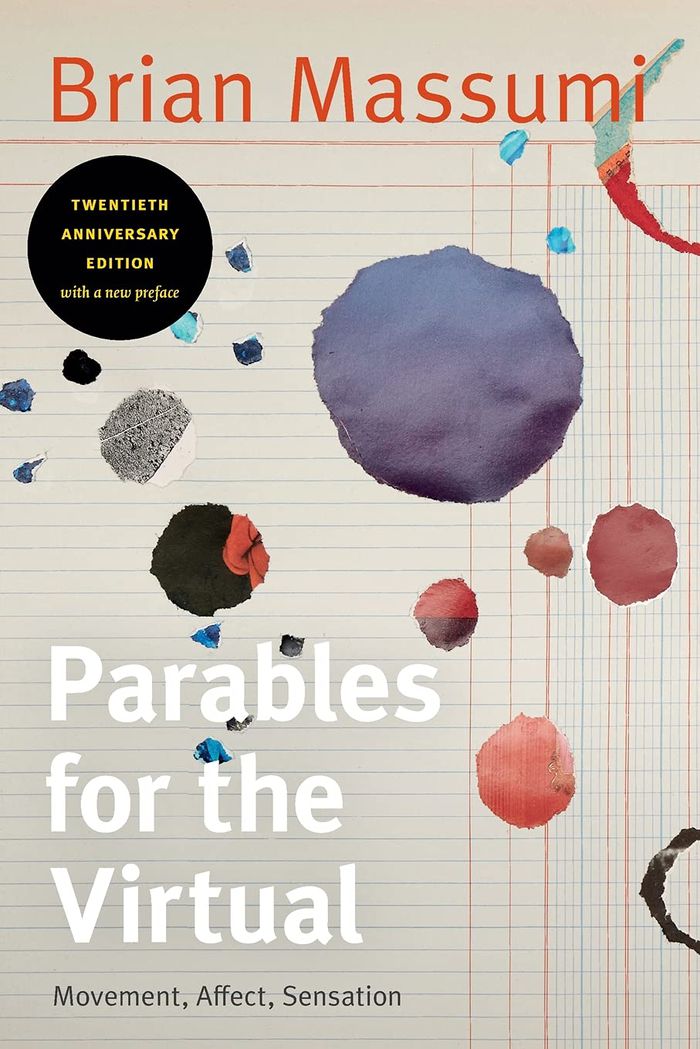
Parables for the virtual: movement, affect, sensation
Actions:
Price:
$38.95
(available to order)
Summary:
Since its publication twenty years ago, Brian Massumi's pioneering ''Parables for the virtual'' has become an essential text for interdisciplinary scholars across the humanities. Massumi views the body and media such as television, film, and the internet as cultural formations that operate on multiple registers of sensation. Renewing and assessing William James's radical empiricism and Henri Bergson's philosophy of perception through the filter of the postwar French philosophy of Deleuze, Guattari, and Foucault, Massumi links a cultural logic of variation to questions of movement, affect, and sensation. Replacing the traditional opposition of literal and figural with distinctions between stasis and motion and between actual and virtual, Massumi tackles related theoretical issues by applying them to cultural mediums as diverse as architecture, body art, the digital art of Stelarc, and Ronald Reagan's acting career. The result is an intriguing combination of cultural theory, science, and philosophy that asserts itself in a crystalline and multifaceted argument. This twentieth anniversary edition includes a new preface in which Massumi situates the book in relation to developments since its publication and outlines the evolution of its main concepts. It also includes two short texts, "Keywords for Affect" and "Missed Conceptions about Affect," in which Massumi explicates his approach to affect in ways that emphasize the book's political and philosophical stakes.
Parables for the virtual: movement, affect, sensation
Actions:
Price:
$38.95
(available to order)
Summary:
Since its publication twenty years ago, Brian Massumi's pioneering ''Parables for the virtual'' has become an essential text for interdisciplinary scholars across the humanities. Massumi views the body and media such as television, film, and the internet as cultural formations that operate on multiple registers of sensation. Renewing and assessing William James's radical empiricism and Henri Bergson's philosophy of perception through the filter of the postwar French philosophy of Deleuze, Guattari, and Foucault, Massumi links a cultural logic of variation to questions of movement, affect, and sensation. Replacing the traditional opposition of literal and figural with distinctions between stasis and motion and between actual and virtual, Massumi tackles related theoretical issues by applying them to cultural mediums as diverse as architecture, body art, the digital art of Stelarc, and Ronald Reagan's acting career. The result is an intriguing combination of cultural theory, science, and philosophy that asserts itself in a crystalline and multifaceted argument. This twentieth anniversary edition includes a new preface in which Massumi situates the book in relation to developments since its publication and outlines the evolution of its main concepts. It also includes two short texts, "Keywords for Affect" and "Missed Conceptions about Affect," in which Massumi explicates his approach to affect in ways that emphasize the book's political and philosophical stakes.
Form:
books
books
Publication:
September 2021
September 2021
Subject:
Critical Theory
Critical Theory


