


8416 Results
Form:
books
books

Title:
The ethics of earth art
The ethics of earth art
Actions:
Price:
$27.95
(available to order)
Summary:
Since its inception in the 1960s, the earth art movement has sought to make visible the elusive presence of nature. Though most often associated with monumental land-based sculptures, earth art encompasses a wide range of media, from sculpture, body art performances, and installations to photographic interventions, public protest art, and community projects. In this(...)
$27.95
(available to order)
Summary:
Since its inception in the 1960s, the earth art movement has sought to make visible the elusive presence of nature. Though most often associated with monumental land-based sculptures, earth art encompasses a wide range of media, from sculpture, body art performances, and installations to photographic interventions, public protest art, and community projects. In this(...)
Title:
The ethics of earth art
Actions:
Price:
$27.95
(available to order)
Summary:
Since its inception in the 1960s, the earth art movement has sought to make visible the elusive presence of nature. Though most often associated with monumental land-based sculptures, earth art encompasses a wide range of media, from sculpture, body art performances, and installations to photographic interventions, public protest art, and community projects. In this book, Amanda Boetzkes analyzes the development of the earth art movement, arguing that such diverse artists as Robert Smithson, Ana Mendieta, James Turrell, Jackie Brookner, Olafur Eliasson, Basia Irland, and Ichi Ikeda are connected through their elucidation of the earth as a domain of ethical concern. Boetzkes contends that in basing their works’ relationship to the natural world on receptivity rather than representation, earth artists take an ethical stance that counters both the instrumental view that seeks to master nature and the Romantic view that posits a return to a mythical state of unencumbered continuity with nature. By incorporating receptive surfaces into their work—film footage of glaring sunlight, an aperture in a chamber that opens to the sky, or a porous armature on which vegetation grows—earth artists articulate the dilemma of representation that nature presents. Revealing the fundamental difference between the human world and the earth, Boetzkes shows that earth art mediates the sensations of nature while allowing nature itself to remain irreducible to human signification.
The ethics of earth art
Actions:
Price:
$27.95
(available to order)
Summary:
Since its inception in the 1960s, the earth art movement has sought to make visible the elusive presence of nature. Though most often associated with monumental land-based sculptures, earth art encompasses a wide range of media, from sculpture, body art performances, and installations to photographic interventions, public protest art, and community projects. In this book, Amanda Boetzkes analyzes the development of the earth art movement, arguing that such diverse artists as Robert Smithson, Ana Mendieta, James Turrell, Jackie Brookner, Olafur Eliasson, Basia Irland, and Ichi Ikeda are connected through their elucidation of the earth as a domain of ethical concern. Boetzkes contends that in basing their works’ relationship to the natural world on receptivity rather than representation, earth artists take an ethical stance that counters both the instrumental view that seeks to master nature and the Romantic view that posits a return to a mythical state of unencumbered continuity with nature. By incorporating receptive surfaces into their work—film footage of glaring sunlight, an aperture in a chamber that opens to the sky, or a porous armature on which vegetation grows—earth artists articulate the dilemma of representation that nature presents. Revealing the fundamental difference between the human world and the earth, Boetzkes shows that earth art mediates the sensations of nature while allowing nature itself to remain irreducible to human signification.
Form:
books
books
Publication:
July 2010
July 2010
Subject:
Land Art
Land Art
Form:
books
books
Price:
$29.95
(available to order)
Summary:
This publication illuminates the dynamic relationship between the visual media, particularly film and theater, and the planning and development of cities in China and Taiwan, from the emergence of the People’s Republic in 1949 to the staging of the Beijing Olympics in 2008. Yomi Braester argues that the transformation of Chinese cities in recent decades is a result not(...)
$29.95
(available to order)
Summary:
This publication illuminates the dynamic relationship between the visual media, particularly film and theater, and the planning and development of cities in China and Taiwan, from the emergence of the People’s Republic in 1949 to the staging of the Beijing Olympics in 2008. Yomi Braester argues that the transformation of Chinese cities in recent decades is a result not(...)
Publication:
April 2010
April 2010
Title:
Painting the city red : Chinese cinema and the urban contract
Actions:
Price:
$29.95
(available to order)
Summary:
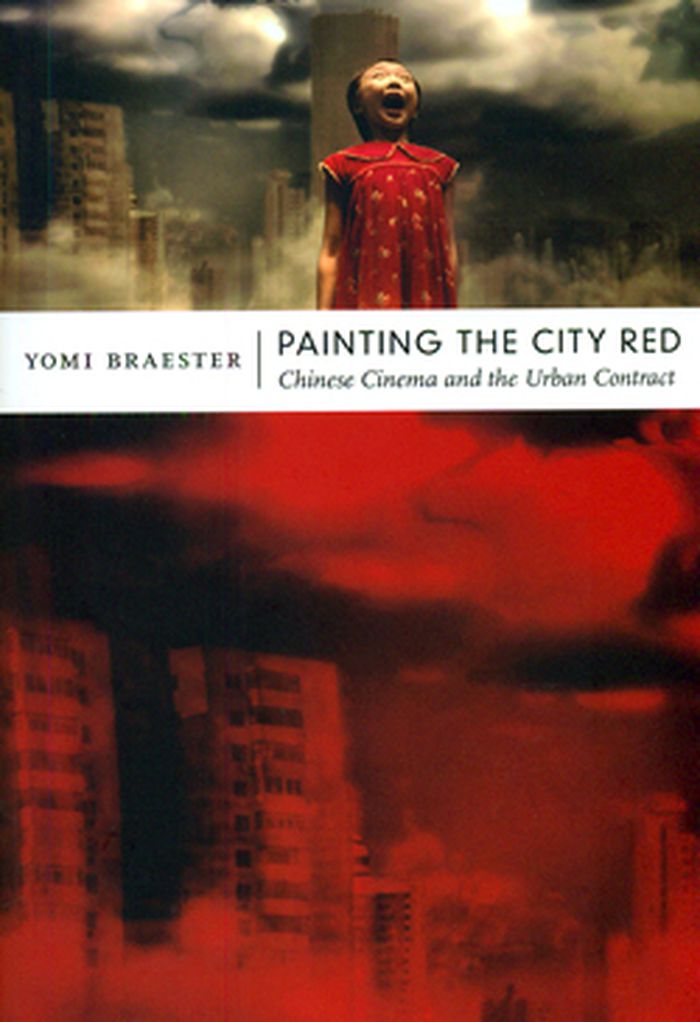
This publication illuminates the dynamic relationship between the visual media, particularly film and theater, and the planning and development of cities in China and Taiwan, from the emergence of the People’s Republic in 1949 to the staging of the Beijing Olympics in 2008. Yomi Braester argues that the transformation of Chinese cities in recent decades is a result not only of China’s abandonment of Maoist economic planning in favor of capitalist globalization but also of a shift in visual practices. Rather than simply reflect urban culture, movies and stage dramas have facilitated the development of new perceptions of space and time, representing the future city variously as an ideal socialist city, a metropolis integrated into the global economy, and a site for preserving cultural heritage. Drawing on extensive archival research, interviews with leading filmmakers and urban planners, and close readings of scripts and images, Braester describes how films and stage plays have promoted and opposed official urban plans and policies as they have addressed issues such as demolition-and-relocation plans, the preservation of vernacular architecture, and the global real estate market. He shows how the cinematic rewriting of historical narratives has accompanied the spatial reorganization of specific urban sites, including Nanjing Road in Shanghai; veterans’ villages in Taipei; and Tiananmen Square, centuries-old courtyards, and postmodern architectural landmarks in Beijing.
Painting the city red : Chinese cinema and the urban contract
Actions:
Price:
$29.95
(available to order)
Summary:
This publication illuminates the dynamic relationship between the visual media, particularly film and theater, and the planning and development of cities in China and Taiwan, from the emergence of the People’s Republic in 1949 to the staging of the Beijing Olympics in 2008. Yomi Braester argues that the transformation of Chinese cities in recent decades is a result not only of China’s abandonment of Maoist economic planning in favor of capitalist globalization but also of a shift in visual practices. Rather than simply reflect urban culture, movies and stage dramas have facilitated the development of new perceptions of space and time, representing the future city variously as an ideal socialist city, a metropolis integrated into the global economy, and a site for preserving cultural heritage. Drawing on extensive archival research, interviews with leading filmmakers and urban planners, and close readings of scripts and images, Braester describes how films and stage plays have promoted and opposed official urban plans and policies as they have addressed issues such as demolition-and-relocation plans, the preservation of vernacular architecture, and the global real estate market. He shows how the cinematic rewriting of historical narratives has accompanied the spatial reorganization of specific urban sites, including Nanjing Road in Shanghai; veterans’ villages in Taipei; and Tiananmen Square, centuries-old courtyards, and postmodern architectural landmarks in Beijing.
Form:
books
books
Publication:
April 2010
April 2010
Form:
books
books
Title:
Dubuffet as architect
Dubuffet as architect
Actions:
Price:
$49.95
(available to order)
Summary:
As the champion of "Art Brut," the artist Jean Dubuffet (1901-1985) is remembered foremost as a painter. Yet his creative instinct extended far beyond the parameters of paint. Later in his life, in 1965, his interest in architecture was sparked by a commission for two large-scale paintings for the University of Nanterre in Paris. Although he ultimately abandoned that(...)
$49.95
(available to order)
Summary:
As the champion of "Art Brut," the artist Jean Dubuffet (1901-1985) is remembered foremost as a painter. Yet his creative instinct extended far beyond the parameters of paint. Later in his life, in 1965, his interest in architecture was sparked by a commission for two large-scale paintings for the University of Nanterre in Paris. Although he ultimately abandoned that(...)
Title:
Dubuffet as architect
Actions:
Price:
$49.95
(available to order)
Summary:
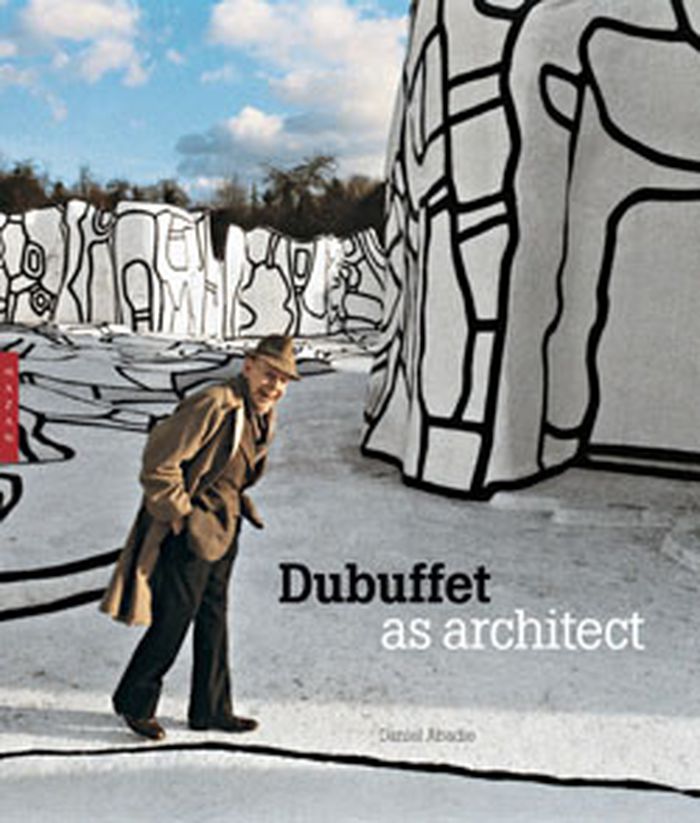
As the champion of "Art Brut," the artist Jean Dubuffet (1901-1985) is remembered foremost as a painter. Yet his creative instinct extended far beyond the parameters of paint. Later in his life, in 1965, his interest in architecture was sparked by a commission for two large-scale paintings for the University of Nanterre in Paris. Although he ultimately abandoned that project, he became intrigued by the idea of producing large works in a more enduring format, capable of withstanding the elements. He experimented with different media in search of a solution, producing works in ceramic, concrete, and eventually plastic resin. The large size and relief surface of his 1967 Mur Bleu (Blue Wall) catapulted his painting into the third dimension in a big way. Many commissions followed, and today Dubuffet's massive architectural forms grace several cities across the globe. The artist did not intend for these structures to be mere supports for his paintings; he meant for them to give his work architectural space. His efforts in this area earned him the medal of the American Institute of Architects in 1982. These stunningly inventive and playful works stand as a testament to Dubuffet's desire to expand his practice through new materials and techniques—and even into new dimensions. This publication is the first published account of this little-known aspect of this artist's work.
Dubuffet as architect
Actions:
Price:
$49.95
(available to order)
Summary:
As the champion of "Art Brut," the artist Jean Dubuffet (1901-1985) is remembered foremost as a painter. Yet his creative instinct extended far beyond the parameters of paint. Later in his life, in 1965, his interest in architecture was sparked by a commission for two large-scale paintings for the University of Nanterre in Paris. Although he ultimately abandoned that project, he became intrigued by the idea of producing large works in a more enduring format, capable of withstanding the elements. He experimented with different media in search of a solution, producing works in ceramic, concrete, and eventually plastic resin. The large size and relief surface of his 1967 Mur Bleu (Blue Wall) catapulted his painting into the third dimension in a big way. Many commissions followed, and today Dubuffet's massive architectural forms grace several cities across the globe. The artist did not intend for these structures to be mere supports for his paintings; he meant for them to give his work architectural space. His efforts in this area earned him the medal of the American Institute of Architects in 1982. These stunningly inventive and playful works stand as a testament to Dubuffet's desire to expand his practice through new materials and techniques—and even into new dimensions. This publication is the first published account of this little-known aspect of this artist's work.
Form:
books
books
Publication:
August 2011
August 2011
Subject:
Architecture Monographs
Architecture Monographs
Form:
books
books
Actions:
Price:
$48.00
(available to order)
Summary:
Is there a cultural logic of what we have come to call the information age? Have the technologies and techniques centered on the computer provided not only tools but also the metaphors through which we now understand the social and economic formation of our world? In Control, Seb Franklin addresses the conditions of knowledge that make the concept of the "information(...)
$48.00
(available to order)
Summary:
Is there a cultural logic of what we have come to call the information age? Have the technologies and techniques centered on the computer provided not only tools but also the metaphors through which we now understand the social and economic formation of our world? In Control, Seb Franklin addresses the conditions of knowledge that make the concept of the "information(...)
Title:
Control: digitality as cultural logic
Actions:
Price:
$48.00
(available to order)
Summary:
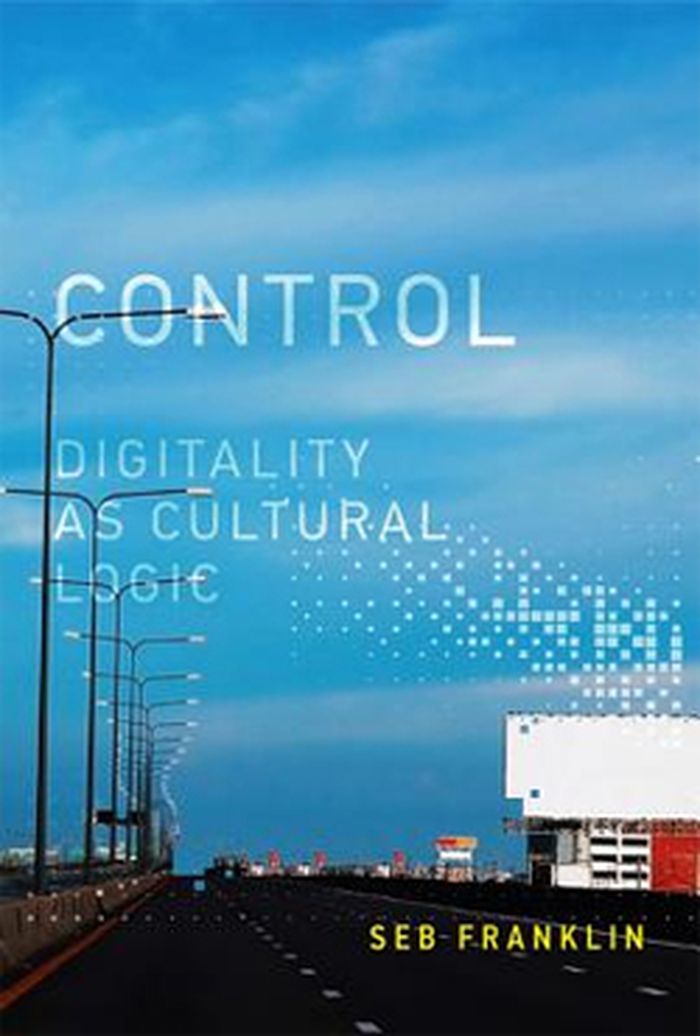
Is there a cultural logic of what we have come to call the information age? Have the technologies and techniques centered on the computer provided not only tools but also the metaphors through which we now understand the social and economic formation of our world? In Control, Seb Franklin addresses the conditions of knowledge that make the concept of the "information economy" possible while at the same time obscuring its effects on material social spaces. In so doing, Franklin traces three intertwined threads: the relationships among information, labor, and social management that emerged in the nineteenth century; the mid-twentieth-century diffusion of computational metaphors; and the appearance of informatic principles in certain contemporary socioeconomic and cultural practices. Drawing on critical theory, media theory, and the history of science, Franklin names control as the episteme grounding late capitalism. Beyond any specific device or set of technically mediated practices, digitality functions within this episteme as the logical basis for reshaped concepts of labor, subjectivity, and collectivity, as well as for the intensification of older modes of exclusion and dispossession. In tracking the pervasiveness of this logical mode into the present, Franklin locates the cultural traces of control across a diverse body of objects and practices, from cybernetics to economic theory and management styles, and from concepts of language and subjectivity to literary texts, films, and video games.
Control: digitality as cultural logic
Actions:
Price:
$48.00
(available to order)
Summary:
Is there a cultural logic of what we have come to call the information age? Have the technologies and techniques centered on the computer provided not only tools but also the metaphors through which we now understand the social and economic formation of our world? In Control, Seb Franklin addresses the conditions of knowledge that make the concept of the "information economy" possible while at the same time obscuring its effects on material social spaces. In so doing, Franklin traces three intertwined threads: the relationships among information, labor, and social management that emerged in the nineteenth century; the mid-twentieth-century diffusion of computational metaphors; and the appearance of informatic principles in certain contemporary socioeconomic and cultural practices. Drawing on critical theory, media theory, and the history of science, Franklin names control as the episteme grounding late capitalism. Beyond any specific device or set of technically mediated practices, digitality functions within this episteme as the logical basis for reshaped concepts of labor, subjectivity, and collectivity, as well as for the intensification of older modes of exclusion and dispossession. In tracking the pervasiveness of this logical mode into the present, Franklin locates the cultural traces of control across a diverse body of objects and practices, from cybernetics to economic theory and management styles, and from concepts of language and subjectivity to literary texts, films, and video games.
Form:
books
books
Publication:
November 2015
November 2015
Subject:
Archive, library and the digital
Archive, library and the digital
Form:
books
books
Actions:
Holdings:
Description:
336 pages : illustrations (some color), maps, plans ; 27 cm
Description:
336 pages : illustrations (some color), maps, plans ; 27 cm
Author:
Subject:
Publication:
New York : W.W. Norton & Co., [2007], ©2007
New York : W.W. Norton & Co., [2007], ©2007
Title:
Robert Moses and the Modern City : The Transformation of New York / edited by Hilary Ballon and Kenneth T. Jackson.
Actions:
Holdings:
Description:
336 pages : illustrations (some color), maps, plans ; 27 cm
Robert Moses and the Modern City : The Transformation of New York / edited by Hilary Ballon and Kenneth T. Jackson.
Actions:
Holdings:
Description:
336 pages : illustrations (some color), maps, plans ; 27 cm
Form:
books
books
Publication:
New York : W.W. Norton & Co., [2007], ©2007
New York : W.W. Norton & Co., [2007], ©2007
Author:
Subject:
Form:
books
books
Actions:
Holdings:
Description:
xxxii, 268 pages : 1 map ; 24 cm
Description:
xxxii, 268 pages : 1 map ; 24 cm
Author:
Subject:
Publication:
Cork, Ireland : Cork University Press, 2001.
Cork, Ireland : Cork University Press, 2001.
Title:
The tourist's gaze : travellers to Ireland, 1800-2000 / edited by Glenn Hooper.
Actions:
Holdings:
Description:
xxxii, 268 pages : 1 map ; 24 cm
The tourist's gaze : travellers to Ireland, 1800-2000 / edited by Glenn Hooper.
Actions:
Holdings:
Description:
xxxii, 268 pages : 1 map ; 24 cm
Form:
books
books
Publication:
Cork, Ireland : Cork University Press, 2001.
Cork, Ireland : Cork University Press, 2001.
Author:
Subject:
Form:
books
books
Actions:
Price:
$46.99
(available to order)
Summary:
An in-depth look at the evolution of one of the most engaging and experimental architecture studios today. The ciliary muscle reproduces the effect of a lens and allows the eye to focus or blur vision. The ciliary muscle became the emblem of the critical vision that Diller + Scofidio (+ Renfro) had of their heterogeneous fields of research and experimentation. The(...)
$46.99
(available to order)
Summary:
An in-depth look at the evolution of one of the most engaging and experimental architecture studios today. The ciliary muscle reproduces the effect of a lens and allows the eye to focus or blur vision. The ciliary muscle became the emblem of the critical vision that Diller + Scofidio (+ Renfro) had of their heterogeneous fields of research and experimentation. The(...)
Subject:
Architecture Monographs
Architecture Monographs
Publication:
November 2007, Milan
November 2007, Milan
Title:
Diller + Scofidio (+Renfro) : The Ciliary function, works and projects 1979-2007
Actions:
Price:
$46.99
(available to order)
Summary:
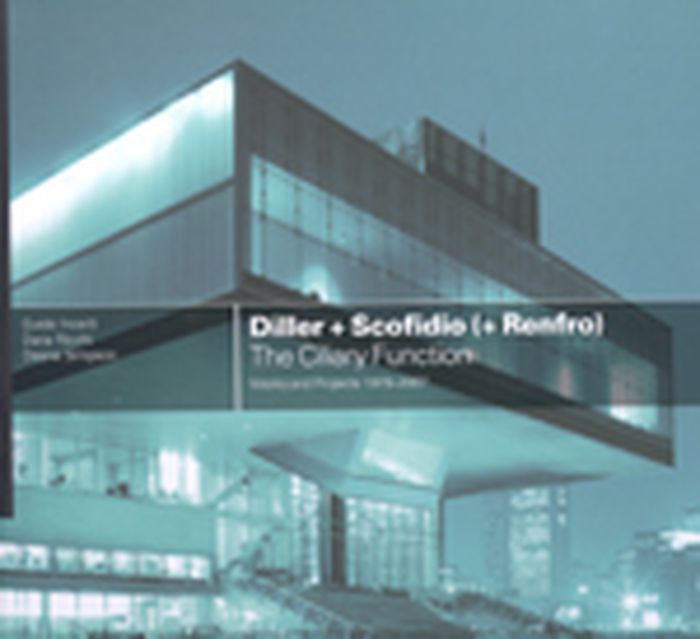
An in-depth look at the evolution of one of the most engaging and experimental architecture studios today. The ciliary muscle reproduces the effect of a lens and allows the eye to focus or blur vision. The ciliary muscle became the emblem of the critical vision that Diller + Scofidio (+ Renfro) had of their heterogeneous fields of research and experimentation. The work of this New York studio owes its notoriety to a genre that challenges the contemporary role of both the architect and architecture. Their interdisciplinary projects range from objects, installations and performances to media and architecture. In recent years they have expanded � with a third partner joining their studio � to embrace projects on an urban scale. Their works, recognised on an international level, include the Blur Building for Swiss Expo 2002, �the brasserie� restaurant in New York, the ICA in Boston, the Lincoln Center and the High-Line, both in New York. Diller + Scofidio (+ Renfro): The Ciliary Function covers their development documenting about twenty works, from the earliest to the most recent. The volume, with a foreword by Reinhold Martin, includes essays investigating the studio�s context, influences and strategies, some interviews with the architects, dossiers on the chronology of their engagements, an itinerary, a scheme showing the evolution and growth of the studio from 1979 to today and a DVD documenting the multimedia and interdisciplinary projects by Diller + Scofidio (+ Renfro).
Diller + Scofidio (+Renfro) : The Ciliary function, works and projects 1979-2007
Actions:
Price:
$46.99
(available to order)
Summary:
An in-depth look at the evolution of one of the most engaging and experimental architecture studios today. The ciliary muscle reproduces the effect of a lens and allows the eye to focus or blur vision. The ciliary muscle became the emblem of the critical vision that Diller + Scofidio (+ Renfro) had of their heterogeneous fields of research and experimentation. The work of this New York studio owes its notoriety to a genre that challenges the contemporary role of both the architect and architecture. Their interdisciplinary projects range from objects, installations and performances to media and architecture. In recent years they have expanded � with a third partner joining their studio � to embrace projects on an urban scale. Their works, recognised on an international level, include the Blur Building for Swiss Expo 2002, �the brasserie� restaurant in New York, the ICA in Boston, the Lincoln Center and the High-Line, both in New York. Diller + Scofidio (+ Renfro): The Ciliary Function covers their development documenting about twenty works, from the earliest to the most recent. The volume, with a foreword by Reinhold Martin, includes essays investigating the studio�s context, influences and strategies, some interviews with the architects, dossiers on the chronology of their engagements, an itinerary, a scheme showing the evolution and growth of the studio from 1979 to today and a DVD documenting the multimedia and interdisciplinary projects by Diller + Scofidio (+ Renfro).
Form:
books
books
Publication:
November 2007, Milan
November 2007, Milan
Subject:
Architecture Monographs
Architecture Monographs
Form:
books
books
Price:
$68.95
(available to order)
Summary:
This collection contains studies written by art historian James Ackerman over the past decade. Whereas Ackerman’s earlier work assumed a development of the arts as they responded to social, economic, political, and cultural change, his recent work reflects the poststructural critique of the presumption of progress that characterized Renaissance and modernist history and(...)
$68.95
(available to order)
Summary:
This collection contains studies written by art historian James Ackerman over the past decade. Whereas Ackerman’s earlier work assumed a development of the arts as they responded to social, economic, political, and cultural change, his recent work reflects the poststructural critique of the presumption of progress that characterized Renaissance and modernist history and(...)
Subject:
Architectural Theory
Architectural Theory
Publication:
November 2001, Cambridge, Mass.
November 2001, Cambridge, Mass.
Title:
Origins, imitation, conventions : representation in the visual arts
Actions:
Price:
$68.95
(available to order)
Summary:
This collection contains studies written by art historian James Ackerman over the past decade. Whereas Ackerman’s earlier work assumed a development of the arts as they responded to social, economic, political, and cultural change, his recent work reflects the poststructural critique of the presumption of progress that characterized Renaissance and modernist history and criticism. In this book he explores the tension between the authority of the past--which may act not only as a restraint but as a challenge and stimulus--and the potentially liberating gift of invention. He examines the ways in which artists and writers on art have related to ancestors and to established modes of representation, as well as to contemporary experiences. The "origins" studied here include the earliest art history and criticism; the beginnings of architectural drawing in the Middle Ages and Renaissance; Leonardo Da Vinci’s sketches for churches, the first in the Renaissance to propose supporting domes on sculpted walls and piers; and the first architectural photographs. "Imitation" refers to artistic achievements that in part depended on the imitation of forms established in practices outside the fine arts, such as ancient Roman rhetoric and print media. "Conventions," like language, facilitate communication between the artist and viewer, but are both more universal (understood across cultures) and more fixed (resisting variation that might diminish their clarity). The three categories are closely linked throughout the book, as most acts of representation partake to some degree of all three.
Origins, imitation, conventions : representation in the visual arts
Actions:
Price:
$68.95
(available to order)
Summary:
This collection contains studies written by art historian James Ackerman over the past decade. Whereas Ackerman’s earlier work assumed a development of the arts as they responded to social, economic, political, and cultural change, his recent work reflects the poststructural critique of the presumption of progress that characterized Renaissance and modernist history and criticism. In this book he explores the tension between the authority of the past--which may act not only as a restraint but as a challenge and stimulus--and the potentially liberating gift of invention. He examines the ways in which artists and writers on art have related to ancestors and to established modes of representation, as well as to contemporary experiences. The "origins" studied here include the earliest art history and criticism; the beginnings of architectural drawing in the Middle Ages and Renaissance; Leonardo Da Vinci’s sketches for churches, the first in the Renaissance to propose supporting domes on sculpted walls and piers; and the first architectural photographs. "Imitation" refers to artistic achievements that in part depended on the imitation of forms established in practices outside the fine arts, such as ancient Roman rhetoric and print media. "Conventions," like language, facilitate communication between the artist and viewer, but are both more universal (understood across cultures) and more fixed (resisting variation that might diminish their clarity). The three categories are closely linked throughout the book, as most acts of representation partake to some degree of all three.
Form:
books
books
Publication:
November 2001, Cambridge, Mass.
November 2001, Cambridge, Mass.
Subject:
Architectural Theory
Architectural Theory
Form:
books
books
Title:
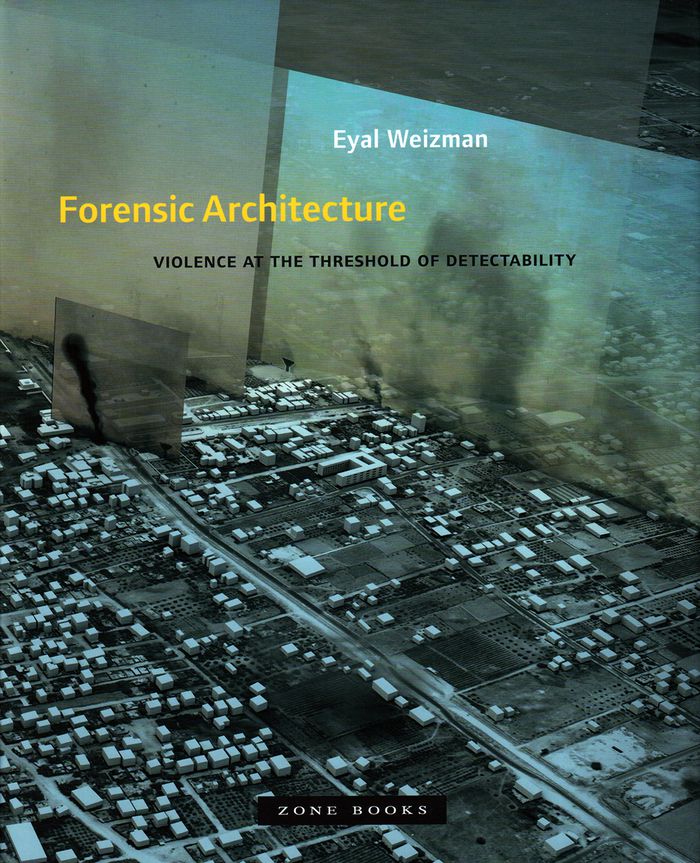
Forensic architecture
Forensic architecture
Actions:
Price:
$49.95
(available to order)
Summary:
In recent years, the group Forensic Architecture began using novel research methods to undertake a series of investigations into human rights abuses. Today, the group provides crucial evidence for international courts and works with a wide range of activist groups, NGOs, Amnesty International, and the UN. Forensic Architecture has not only shed new light on human rights(...)
$49.95
(available to order)
Summary:
In recent years, the group Forensic Architecture began using novel research methods to undertake a series of investigations into human rights abuses. Today, the group provides crucial evidence for international courts and works with a wide range of activist groups, NGOs, Amnesty International, and the UN. Forensic Architecture has not only shed new light on human rights(...)
Title:
Forensic architecture
Actions:
Price:
$49.95
(available to order)
Summary:
In recent years, the group Forensic Architecture began using novel research methods to undertake a series of investigations into human rights abuses. Today, the group provides crucial evidence for international courts and works with a wide range of activist groups, NGOs, Amnesty International, and the UN. Forensic Architecture has not only shed new light on human rights violations and state crimes across the globe, but has also created a new form of investigative practice that bears its name. The group uses architecture as an optical device to investigate armed conflicts and environmental destruction, as well as to cross-reference a variety of evidence sources, such as new media, remote sensing, material analysis, witness testimony, and crowd-sourcing. In "Forensic architecture", Eyal Weizman, the group’s founder, provides, for the first time, an in-depth introduction to the history, practice, assumptions, potentials, and double binds of this practice. The book includes an extensive array of images, maps, and detailed documentation that records the intricate work the group has performed. Traversing multiple scales and durations, the case studies in this volume include the analysis of the shrapnel fragments in a room struck by drones in Pakistan, the reconstruction of a contested shooting in the West Bank, the architectural recreation of a secret Syrian detention center from the memory of its survivors, a blow-by-blow account of a day-long battle in Gaza, and an investigation of environmental violence and climate change in the Guatemalan highlands and elsewhere.
Forensic architecture
Actions:
Price:
$49.95
(available to order)
Summary:
In recent years, the group Forensic Architecture began using novel research methods to undertake a series of investigations into human rights abuses. Today, the group provides crucial evidence for international courts and works with a wide range of activist groups, NGOs, Amnesty International, and the UN. Forensic Architecture has not only shed new light on human rights violations and state crimes across the globe, but has also created a new form of investigative practice that bears its name. The group uses architecture as an optical device to investigate armed conflicts and environmental destruction, as well as to cross-reference a variety of evidence sources, such as new media, remote sensing, material analysis, witness testimony, and crowd-sourcing. In "Forensic architecture", Eyal Weizman, the group’s founder, provides, for the first time, an in-depth introduction to the history, practice, assumptions, potentials, and double binds of this practice. The book includes an extensive array of images, maps, and detailed documentation that records the intricate work the group has performed. Traversing multiple scales and durations, the case studies in this volume include the analysis of the shrapnel fragments in a room struck by drones in Pakistan, the reconstruction of a contested shooting in the West Bank, the architectural recreation of a secret Syrian detention center from the memory of its survivors, a blow-by-blow account of a day-long battle in Gaza, and an investigation of environmental violence and climate change in the Guatemalan highlands and elsewhere.
Form:
books
books
Publication:
April 2017
April 2017
Subject:
Architectural Theory
Architectural Theory
Form:
books
books
Actions:
Price:
$47.95
(available to order)
Summary:
"Design Culture Now" is the first survey of American design to cut across the disciplines of architecture, product design, and graphic design. This comprehensive work, organized by the Smithsonian's National Design Museum, catalogues the best in (...)
$47.95
(available to order)
Summary:
"Design Culture Now" is the first survey of American design to cut across the disciplines of architecture, product design, and graphic design. This comprehensive work, organized by the Smithsonian's National Design Museum, catalogues the best in (...)
Subject:
Interior Design
Interior Design
Publication:
March 2000, New York
March 2000, New York
Title:
National design triennial : design culture now
Actions:
Price:
$47.95
(available to order)
Summary:
"Design Culture Now" is the first survey of American design to cut across the disciplines of architecture, product design, and graphic design. This comprehensive work, organized by the Smithsonian's National Design Museum, catalogues the best in architecture, interiors, environments, landscapes, products, furniture, fashion, objects, typefaces, posters, publications, film graphics, and interactive media produced over the last three years. Organized around a series of themes -- Branded, Fluid, Local, Minimal, Narrative, Physical, Reclaimed, and Unbelievable -- "Design Culture Now" presents current projects by up-and-coming designers who are forging new ideas at the margins of the profession as well as established masters whose work continues to evolve. Some of the over 80 individuals and firms whose work is repre-sented include Kyle Cooper, who created the titles for the films "Seven", "The Mummy", and "Mission: Impossible"; graphic designers Bruce Mau and Stefan Sagmeister; Jonathan Ive, designer of the iMac; style guru Martha Stewart; Arlen and Cory Ness, customizers of Harley-Davidson motorcycles; Julie Taymor, director and designer of the Broadway musical "The Lion King"; architects Neil Denari and Frank Gehry; Dante Ferretti, art director of the films Kundun and Casino; fashion designers Kate Spade and Geoffrey Beene; and John Kricfalusi, creator of the cartoon "Ren & Stimpy". Authoritative essays by Donald Albrecht, Ellen Lupton, and Steven Skov Holt describe the state of design at the beginning of the new millennium. Vibrantly designed, this exhaustive survey includes hundreds of full-colour images.
National design triennial : design culture now
Actions:
Price:
$47.95
(available to order)
Summary:
"Design Culture Now" is the first survey of American design to cut across the disciplines of architecture, product design, and graphic design. This comprehensive work, organized by the Smithsonian's National Design Museum, catalogues the best in architecture, interiors, environments, landscapes, products, furniture, fashion, objects, typefaces, posters, publications, film graphics, and interactive media produced over the last three years. Organized around a series of themes -- Branded, Fluid, Local, Minimal, Narrative, Physical, Reclaimed, and Unbelievable -- "Design Culture Now" presents current projects by up-and-coming designers who are forging new ideas at the margins of the profession as well as established masters whose work continues to evolve. Some of the over 80 individuals and firms whose work is repre-sented include Kyle Cooper, who created the titles for the films "Seven", "The Mummy", and "Mission: Impossible"; graphic designers Bruce Mau and Stefan Sagmeister; Jonathan Ive, designer of the iMac; style guru Martha Stewart; Arlen and Cory Ness, customizers of Harley-Davidson motorcycles; Julie Taymor, director and designer of the Broadway musical "The Lion King"; architects Neil Denari and Frank Gehry; Dante Ferretti, art director of the films Kundun and Casino; fashion designers Kate Spade and Geoffrey Beene; and John Kricfalusi, creator of the cartoon "Ren & Stimpy". Authoritative essays by Donald Albrecht, Ellen Lupton, and Steven Skov Holt describe the state of design at the beginning of the new millennium. Vibrantly designed, this exhaustive survey includes hundreds of full-colour images.
Form:
books
books
Publication:
March 2000, New York
March 2000, New York
Subject:
Interior Design
Interior Design


