


1034 Results
Form:
books
books
Actions:
Price:
$38.95
(available to order)
Summary:
This book is a pioneering effort to insert South Africa's largest city into urban theory on its own terms. The volume's essays include an investigation of representation and self-stylization in the city, an ethnographic examination of friction zones and practices of social reproduction in inner-city Johannesburg, and a discussion of the economic and literary(...)
$38.95
(available to order)
Summary:
This book is a pioneering effort to insert South Africa's largest city into urban theory on its own terms. The volume's essays include an investigation of representation and self-stylization in the city, an ethnographic examination of friction zones and practices of social reproduction in inner-city Johannesburg, and a discussion of the economic and literary(...)
Subject:
Architecture since 1900, Africa
Architecture since 1900, Africa
Publication:
September 2008, Durham
September 2008, Durham
Title:
Johannesburg: the elusive metropolis
Actions:
Price:
$38.95
(available to order)
Summary:
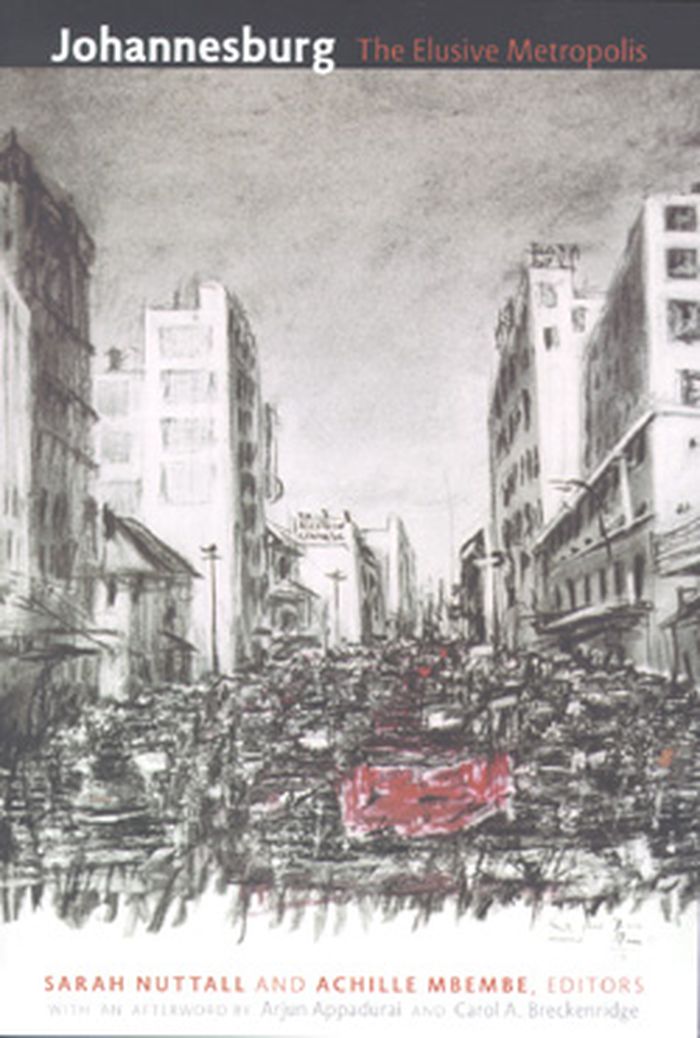
This book is a pioneering effort to insert South Africa's largest city into urban theory on its own terms. The volume's essays include an investigation of representation and self-stylization in the city, an ethnographic examination of friction zones and practices of social reproduction in inner-city Johannesburg, and a discussion of the economic and literary relationship between Johannesburg and Maputo, Mozambique's capital. One contributor considers how Johannesburg's cosmopolitan sociability enabled the anti-colonial projects of Ghandi and Mandela. Journalists, artists, architects, writers, and scholars bring contemporary Johannesburg to life in ten short pieces including reflections on music and megamalls, nightlife, living as foreigners in the city, and built spaces.
Johannesburg: the elusive metropolis
Actions:
Price:
$38.95
(available to order)
Summary:
This book is a pioneering effort to insert South Africa's largest city into urban theory on its own terms. The volume's essays include an investigation of representation and self-stylization in the city, an ethnographic examination of friction zones and practices of social reproduction in inner-city Johannesburg, and a discussion of the economic and literary relationship between Johannesburg and Maputo, Mozambique's capital. One contributor considers how Johannesburg's cosmopolitan sociability enabled the anti-colonial projects of Ghandi and Mandela. Journalists, artists, architects, writers, and scholars bring contemporary Johannesburg to life in ten short pieces including reflections on music and megamalls, nightlife, living as foreigners in the city, and built spaces.
Form:
books
books
Publication:
September 2008, Durham
September 2008, Durham
Subject:
Architecture since 1900, Africa
Architecture since 1900, Africa
Form:
books
books
Actions:
Price:
$59.00
(available to order)
Summary:
With nearly three million inhabitants, Cameroon's most populous city, Douala, is a multicultural hub strongly tied to its European colonial past. The arts and culture organization Doual'art has attracted international workers to Douala since 1991, and this small-format book collects their essays and stories, chronicling perspectives on Douala, both real and fictionalized,(...)
$59.00
(available to order)
Summary:
With nearly three million inhabitants, Cameroon's most populous city, Douala, is a multicultural hub strongly tied to its European colonial past. The arts and culture organization Doual'art has attracted international workers to Douala since 1991, and this small-format book collects their essays and stories, chronicling perspectives on Douala, both real and fictionalized,(...)
Subject:
Architecture since 1900, Africa
Architecture since 1900, Africa
Publication:
June 2008, Rotterdam
June 2008, Rotterdam
Title:
Douala in Translation: a view of the city and its creative transformative potentials
Actions:
Price:
$59.00
(available to order)
Summary:
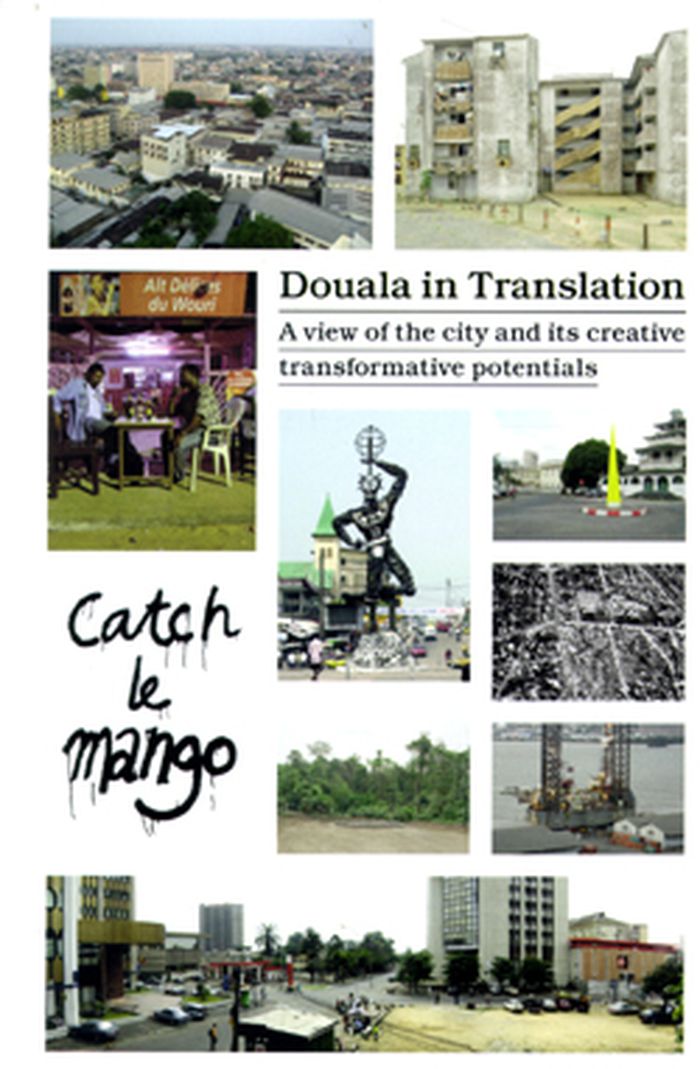
With nearly three million inhabitants, Cameroon's most populous city, Douala, is a multicultural hub strongly tied to its European colonial past. The arts and culture organization Doual'art has attracted international workers to Douala since 1991, and this small-format book collects their essays and stories, chronicling perspectives on Douala, both real and fictionalized, with 20 entries and hundreds of full-color photos.
Douala in Translation: a view of the city and its creative transformative potentials
Actions:
Price:
$59.00
(available to order)
Summary:
With nearly three million inhabitants, Cameroon's most populous city, Douala, is a multicultural hub strongly tied to its European colonial past. The arts and culture organization Doual'art has attracted international workers to Douala since 1991, and this small-format book collects their essays and stories, chronicling perspectives on Douala, both real and fictionalized, with 20 entries and hundreds of full-color photos.
Form:
books
books
Publication:
June 2008, Rotterdam
June 2008, Rotterdam
Subject:
Architecture since 1900, Africa
Architecture since 1900, Africa
Form:
books
books
Actions:
Price:
$69.95
(available to order)
Summary:
Celebrated by colonial writers, filmed by Hollywood, magnet for Europeans and Moroccans, Casablanca is above all an exceptional collection of urban spaces, houses, and gardens. While it is true that Casablanca developed as a port city well before the introduction of the French in 1907, it unquestionably ranks among the most significant urban creations of the twentieth(...)
$69.95
(available to order)
Summary:
Celebrated by colonial writers, filmed by Hollywood, magnet for Europeans and Moroccans, Casablanca is above all an exceptional collection of urban spaces, houses, and gardens. While it is true that Casablanca developed as a port city well before the introduction of the French in 1907, it unquestionably ranks among the most significant urban creations of the twentieth(...)
Subject:
Architecture since 1900, Africa
Architecture since 1900, Africa
Publication:
August 2001, New York
August 2001, New York
Title:
Casablanca : colonial myths and architectural ventures
Actions:
Price:
$69.95
(available to order)
Summary:
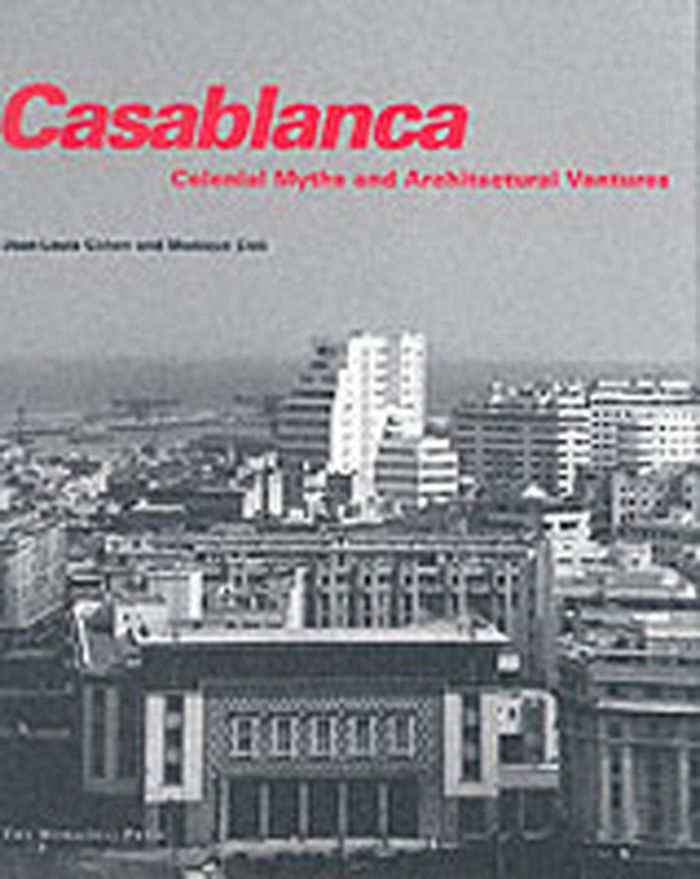
Celebrated by colonial writers, filmed by Hollywood, magnet for Europeans and Moroccans, Casablanca is above all an exceptional collection of urban spaces, houses, and gardens. While it is true that Casablanca developed as a port city well before the introduction of the French in 1907, it unquestionably ranks among the most significant urban creations of the twentieth century, attracting remarkable teams of architects and planners. Their commissions came from clients who were interested in innovation and modernization, thereby fostering the emergence of Casablanca as a laboratory for legislative, technological, and visual experimentation. Having studied the city for ten years, Jean-Louis Cohen and Monique Eleb trace, from the late nineteenth century to the early 1960s, the rebirth of a once-forgotten port and its metamorphosis into a teeming metropolis that is an amalgam of Mediterranean culture from Tunisia, Algeria, Spain, and Italy. The extensive presentation of the significant buildings of this hybrid city -- where, alongside the French, Muslim and Jewish Moroccan patrons commissioned provocative buildings -- is drawn from French and Moroccan archives, including hundreds of previously unpublished photographs.
Casablanca : colonial myths and architectural ventures
Actions:
Price:
$69.95
(available to order)
Summary:
Celebrated by colonial writers, filmed by Hollywood, magnet for Europeans and Moroccans, Casablanca is above all an exceptional collection of urban spaces, houses, and gardens. While it is true that Casablanca developed as a port city well before the introduction of the French in 1907, it unquestionably ranks among the most significant urban creations of the twentieth century, attracting remarkable teams of architects and planners. Their commissions came from clients who were interested in innovation and modernization, thereby fostering the emergence of Casablanca as a laboratory for legislative, technological, and visual experimentation. Having studied the city for ten years, Jean-Louis Cohen and Monique Eleb trace, from the late nineteenth century to the early 1960s, the rebirth of a once-forgotten port and its metamorphosis into a teeming metropolis that is an amalgam of Mediterranean culture from Tunisia, Algeria, Spain, and Italy. The extensive presentation of the significant buildings of this hybrid city -- where, alongside the French, Muslim and Jewish Moroccan patrons commissioned provocative buildings -- is drawn from French and Moroccan archives, including hundreds of previously unpublished photographs.
Form:
books
books
Publication:
August 2001, New York
August 2001, New York
Subject:
Architecture since 1900, Africa
Architecture since 1900, Africa
Form:
books
books
Actions:
Price:
$71.95
(available to order)
Summary:
This publication looks at Fez, Morocco's famous former capital and today its second-largest city. Based on a recent research program conducted by EPFL's Laboratory Basel (laba), it investigates how these clashes have marked the city's socioeconomic structure and urban fabric, and whether or not it offers alternative and relevant means of human association and(...)
$71.95
(available to order)
Summary:
This publication looks at Fez, Morocco's famous former capital and today its second-largest city. Based on a recent research program conducted by EPFL's Laboratory Basel (laba), it investigates how these clashes have marked the city's socioeconomic structure and urban fabric, and whether or not it offers alternative and relevant means of human association and(...)
Subject:
Architecture since 1900, Africa
Architecture since 1900, Africa
Publication:
June 2020
June 2020
Title:
Fez Lessons: industrious habitat
Actions:
Price:
$71.95
(available to order)
Summary:
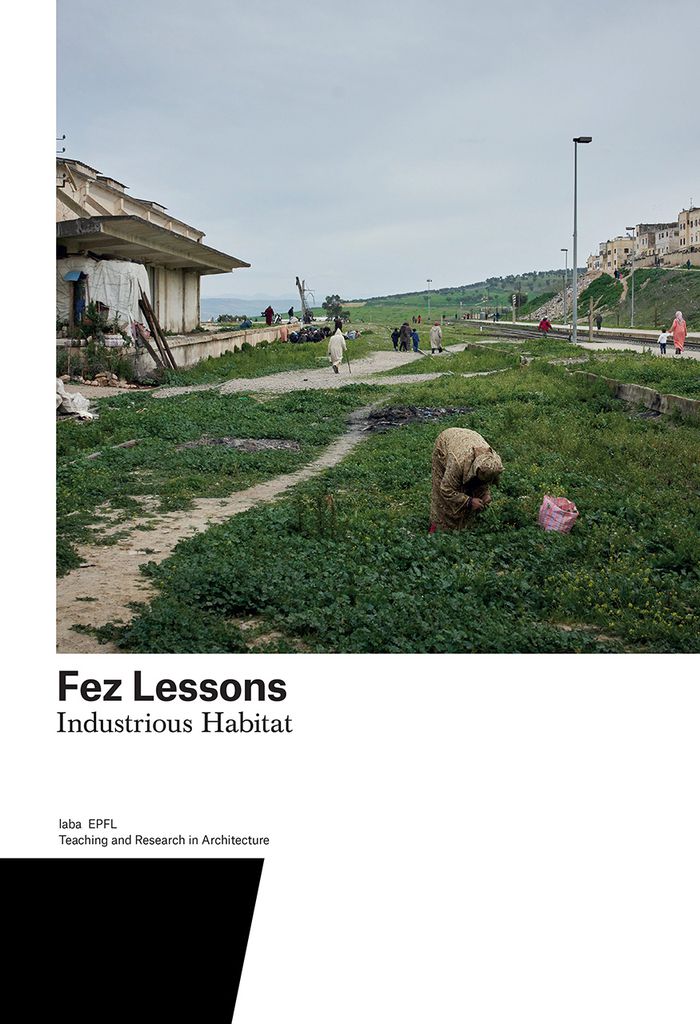
This publication looks at Fez, Morocco's famous former capital and today its second-largest city. Based on a recent research program conducted by EPFL's Laboratory Basel (laba), it investigates how these clashes have marked the city's socioeconomic structure and urban fabric, and whether or not it offers alternative and relevant means of human association and community. Given the growing stream of large-scale international investment, the constant enticement of tourism, and a worldwide revival of nationalism, Laba's student's and researchers were looking for tiny cues, nagging doubts, and signs of the fusion between form and life, raising questions about identity, authenticity, tradition, the globalisation of culture, and the use of local resources. Their findings are visualised in the book in striking images, graphics and maps. Students' proposals for architectural interventions addressing these issues are presented through images and plans.
Fez Lessons: industrious habitat
Actions:
Price:
$71.95
(available to order)
Summary:
This publication looks at Fez, Morocco's famous former capital and today its second-largest city. Based on a recent research program conducted by EPFL's Laboratory Basel (laba), it investigates how these clashes have marked the city's socioeconomic structure and urban fabric, and whether or not it offers alternative and relevant means of human association and community. Given the growing stream of large-scale international investment, the constant enticement of tourism, and a worldwide revival of nationalism, Laba's student's and researchers were looking for tiny cues, nagging doubts, and signs of the fusion between form and life, raising questions about identity, authenticity, tradition, the globalisation of culture, and the use of local resources. Their findings are visualised in the book in striking images, graphics and maps. Students' proposals for architectural interventions addressing these issues are presented through images and plans.
Form:
books
books
Publication:
June 2020
June 2020
Subject:
Architecture since 1900, Africa
Architecture since 1900, Africa
Form:
books
books
Actions:
Price:
$37.95
(available to order)
Summary:
L’Afrique connaît aujourd’hui une croissance urbaine rapide qui se traduit par une multiplication des constructions en béton. Le ciment, composant essentiel de ce matériau, est devenu le symbole de cette urbanisation frénétique qui bouleverse le paysage des villes africaines. Plus qu’une simple matière inerte, il se charge d’affect et de valeurs et redéfinit les pratiques(...)
$37.95
(available to order)
Summary:
L’Afrique connaît aujourd’hui une croissance urbaine rapide qui se traduit par une multiplication des constructions en béton. Le ciment, composant essentiel de ce matériau, est devenu le symbole de cette urbanisation frénétique qui bouleverse le paysage des villes africaines. Plus qu’une simple matière inerte, il se charge d’affect et de valeurs et redéfinit les pratiques(...)
Title:
Matière grise de l'urbain : la vie du ciment en Africa
Actions:
Price:
$37.95
(available to order)
Summary:
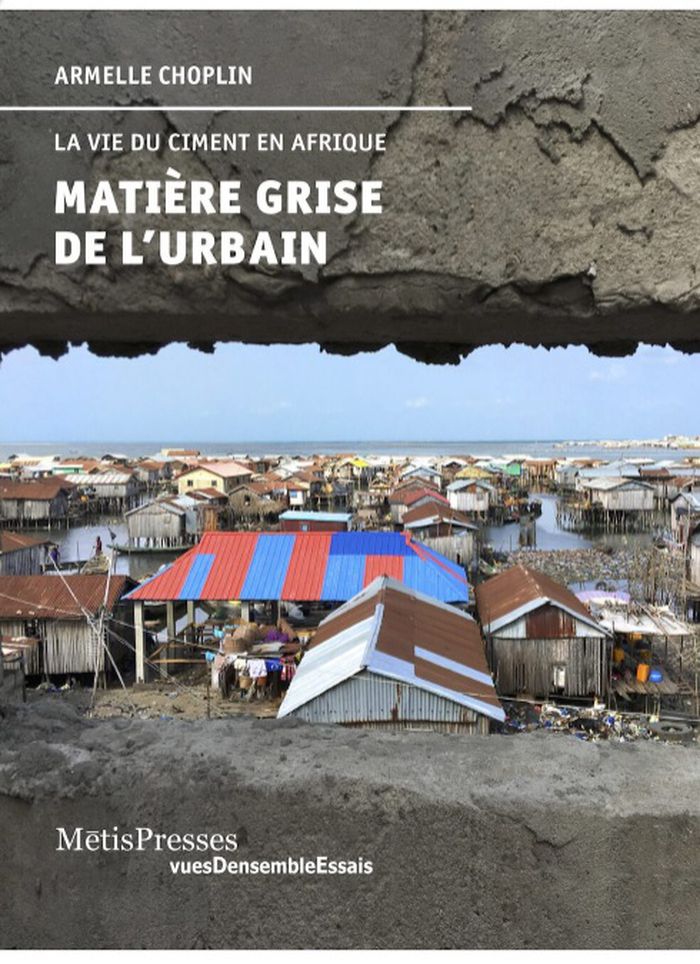
L’Afrique connaît aujourd’hui une croissance urbaine rapide qui se traduit par une multiplication des constructions en béton. Le ciment, composant essentiel de ce matériau, est devenu le symbole de cette urbanisation frénétique qui bouleverse le paysage des villes africaines. Plus qu’une simple matière inerte, il se charge d’affect et de valeurs et redéfinit les pratiques et les imaginaires de sociétés en quête d’émergence économique et de réussite sociale, alors même qu’à l’heure du dérèglement climatique des voix s’élèvent pour dénoncer une industrie cimentière aux effets destructeurs sur l’environnement. Pour comprendre la production et la consommation grandissante de cette poudre banale devenue « or gris », Armelle Choplin nous invite à suivre les sacs de ciment sur les routes ouest-africaine, le long du corridor urbain de 500 km qui relie Accra, Lomé, Cotonou et Lagos. Depuis la carrière de calcaire jusqu’à la parcelle en chantier, l’auteure nous amène à la rencontre des géants du secteur, des investisseurs, des acteurs politiques mais aussi des maçons et des habitants qui construisent leur propre maison « en dur ». À travers l’exploration d’une filière au coeur de multiples enjeux politiques, sociaux et économiques, cet ouvrage nous appelle à repenser les rapports étroits qui lient l’urbain, l’humain et le monde.
Matière grise de l'urbain : la vie du ciment en Africa
Actions:
Price:
$37.95
(available to order)
Summary:
L’Afrique connaît aujourd’hui une croissance urbaine rapide qui se traduit par une multiplication des constructions en béton. Le ciment, composant essentiel de ce matériau, est devenu le symbole de cette urbanisation frénétique qui bouleverse le paysage des villes africaines. Plus qu’une simple matière inerte, il se charge d’affect et de valeurs et redéfinit les pratiques et les imaginaires de sociétés en quête d’émergence économique et de réussite sociale, alors même qu’à l’heure du dérèglement climatique des voix s’élèvent pour dénoncer une industrie cimentière aux effets destructeurs sur l’environnement. Pour comprendre la production et la consommation grandissante de cette poudre banale devenue « or gris », Armelle Choplin nous invite à suivre les sacs de ciment sur les routes ouest-africaine, le long du corridor urbain de 500 km qui relie Accra, Lomé, Cotonou et Lagos. Depuis la carrière de calcaire jusqu’à la parcelle en chantier, l’auteure nous amène à la rencontre des géants du secteur, des investisseurs, des acteurs politiques mais aussi des maçons et des habitants qui construisent leur propre maison « en dur ». À travers l’exploration d’une filière au coeur de multiples enjeux politiques, sociaux et économiques, cet ouvrage nous appelle à repenser les rapports étroits qui lient l’urbain, l’humain et le monde.
Form:
books
books
Publication:
January 2021
January 2021
Subject:
Architecture since 1900, Africa
Architecture since 1900, Africa
Form:
books
books
Actions:
Price:
$54.95
(available to order)
Summary:
C'est à la découverte de près de deux siècles d'architectures que nous convient les auteurs de cette publication. Deuxième plus grande ville d'Algérie, Oran possède un patrimoine architectural exceptionnel, témoignage des différentes strates d'occupation qu'elle a connues. L'ouvrage permet de découvrir un large éventail de programmes architecturaux : constructions(...)
$54.95
(available to order)
Summary:
C'est à la découverte de près de deux siècles d'architectures que nous convient les auteurs de cette publication. Deuxième plus grande ville d'Algérie, Oran possède un patrimoine architectural exceptionnel, témoignage des différentes strates d'occupation qu'elle a connues. L'ouvrage permet de découvrir un large éventail de programmes architecturaux : constructions(...)
Subject:
Architecture since 1900, Africa
Architecture since 1900, Africa
Publication:
December 2021
December 2021
Title:
Oran : ville & architecture 1790-1960
Actions:
Price:
$54.95
(available to order)
Summary:
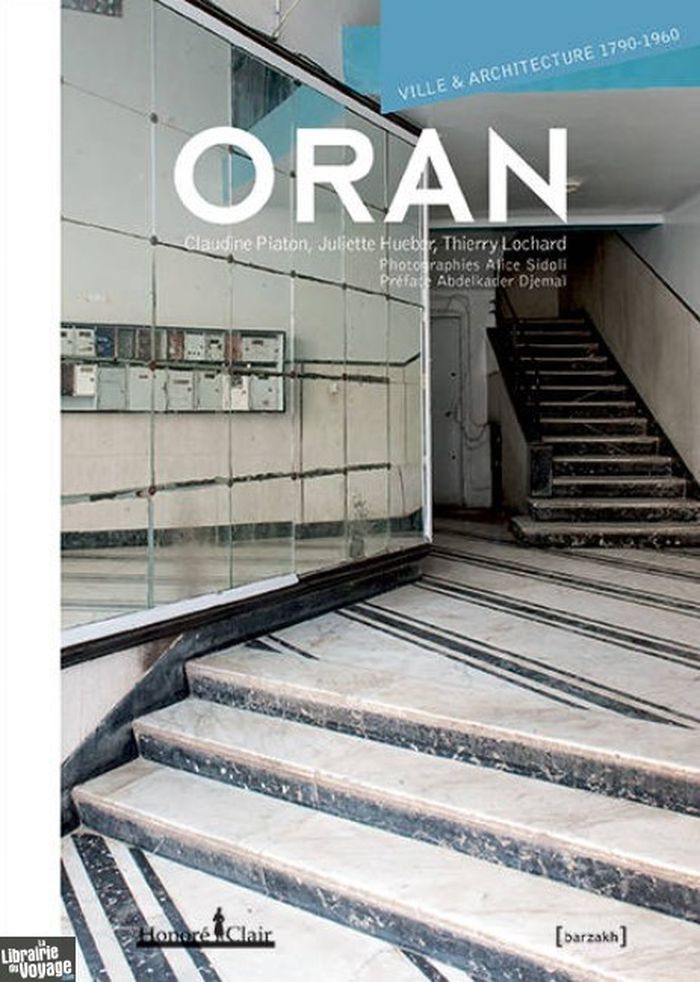
C'est à la découverte de près de deux siècles d'architectures que nous convient les auteurs de cette publication. Deuxième plus grande ville d'Algérie, Oran possède un patrimoine architectural exceptionnel, témoignage des différentes strates d'occupation qu'elle a connues. L'ouvrage permet de découvrir un large éventail de programmes architecturaux : constructions militaires espagnoles, monuments ottomans, immeubles de style Art déco, logements et équipements modernistes des années 1950-1960. La publication se présente sous la forme de six promenades regroupant de courtes monographies de près de 250 édifices, bâtiments publics et immeubles privés. Elle contient également les notices biographiques de plus d'une centaine d'architectes actifs durant la période. Résultat d'un inventaire de terrain minutieux croisé avec des recherches dans les archives algériennes, espagnoles et françaises, l'ouvrage est à la fois une publication scientifique de référence et un guide d'architecture. Il s'adresse autant aux spécialistes, architectes et historiens, qu'à un public d'amateurs des deux rives de la Méditerranée.
Oran : ville & architecture 1790-1960
Actions:
Price:
$54.95
(available to order)
Summary:
C'est à la découverte de près de deux siècles d'architectures que nous convient les auteurs de cette publication. Deuxième plus grande ville d'Algérie, Oran possède un patrimoine architectural exceptionnel, témoignage des différentes strates d'occupation qu'elle a connues. L'ouvrage permet de découvrir un large éventail de programmes architecturaux : constructions militaires espagnoles, monuments ottomans, immeubles de style Art déco, logements et équipements modernistes des années 1950-1960. La publication se présente sous la forme de six promenades regroupant de courtes monographies de près de 250 édifices, bâtiments publics et immeubles privés. Elle contient également les notices biographiques de plus d'une centaine d'architectes actifs durant la période. Résultat d'un inventaire de terrain minutieux croisé avec des recherches dans les archives algériennes, espagnoles et françaises, l'ouvrage est à la fois une publication scientifique de référence et un guide d'architecture. Il s'adresse autant aux spécialistes, architectes et historiens, qu'à un public d'amateurs des deux rives de la Méditerranée.
Form:
books
books
Publication:
December 2021
December 2021
Subject:
Architecture since 1900, Africa
Architecture since 1900, Africa
Form:
books
books
Actions:
Price:
$36.95
(available to order)
Summary:
In this volume, Ayala Levin charts the settler colonial imagination and practices that undergirded Israeli architectural development aid in Africa. Focusing on the ''golden age'' of Israel’s diplomatic relations in and throughout the continent from 1958 to 1973, Levin finds that Israel positioned itself as a developing-nation alternative in the competition over aid and(...)
$36.95
(available to order)
Summary:
In this volume, Ayala Levin charts the settler colonial imagination and practices that undergirded Israeli architectural development aid in Africa. Focusing on the ''golden age'' of Israel’s diplomatic relations in and throughout the continent from 1958 to 1973, Levin finds that Israel positioned itself as a developing-nation alternative in the competition over aid and(...)
Title:
Architecture and development: Israeli construction in sub-saharan Africa 1958-1973
Actions:
Price:
$36.95
(available to order)
Summary:
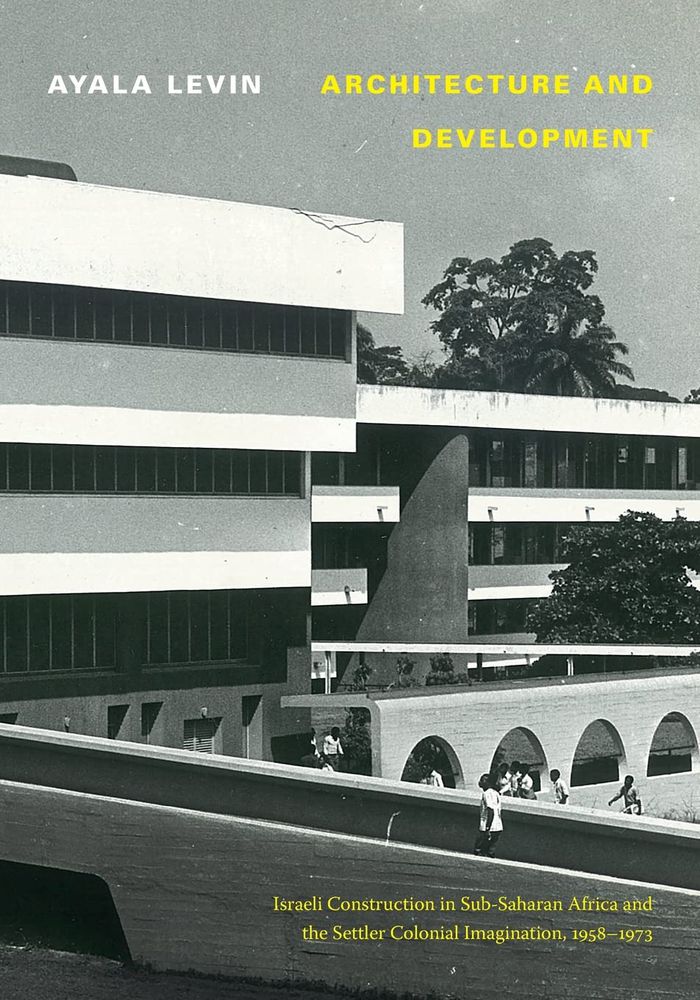
In this volume, Ayala Levin charts the settler colonial imagination and practices that undergirded Israeli architectural development aid in Africa. Focusing on the ''golden age'' of Israel’s diplomatic relations in and throughout the continent from 1958 to 1973, Levin finds that Israel positioned itself as a developing-nation alternative in the competition over aid and influence between global North and global South. In analyses of the design and construction of prestigious governmental projects in Nigeria, Sierra Leone, and Ethiopia, Levin details how architects, planners, and a trade union--owned construction company staged Israel as a new center of nonaligned expertise. These actors and professionals paradoxically capitalized on their settler colonial experience in Palestine, refashioning it as an alternative to Western colonial expertise. Levin traces how Israel became involved in the modernization of governance, education, and agriculture in Africa, as well as how African leaders chose to work with Israel to forge new South-South connections. In so doing, she offers new ways of understanding the role of architecture as a vehicle of postcolonial development and in the mobilization of development resources.
Architecture and development: Israeli construction in sub-saharan Africa 1958-1973
Actions:
Price:
$36.95
(available to order)
Summary:
In this volume, Ayala Levin charts the settler colonial imagination and practices that undergirded Israeli architectural development aid in Africa. Focusing on the ''golden age'' of Israel’s diplomatic relations in and throughout the continent from 1958 to 1973, Levin finds that Israel positioned itself as a developing-nation alternative in the competition over aid and influence between global North and global South. In analyses of the design and construction of prestigious governmental projects in Nigeria, Sierra Leone, and Ethiopia, Levin details how architects, planners, and a trade union--owned construction company staged Israel as a new center of nonaligned expertise. These actors and professionals paradoxically capitalized on their settler colonial experience in Palestine, refashioning it as an alternative to Western colonial expertise. Levin traces how Israel became involved in the modernization of governance, education, and agriculture in Africa, as well as how African leaders chose to work with Israel to forge new South-South connections. In so doing, she offers new ways of understanding the role of architecture as a vehicle of postcolonial development and in the mobilization of development resources.
Form:
books
books
Publication:
March 2022
March 2022
Subject:
Architecture since 1900, Africa
Architecture since 1900, Africa
Form:
books
books
Actions:
Price:
$73.50
(available in store)
Summary:
On February 29, 1960, a catastrophic earthquake devastated the Moroccan coastal city of Agadir, erasing it almost entirely and killing a third of its population. The world was shocked, and very quickly large amounts of international aid arrived. Following an emotional speech by King Mohammed V, the reconstruction of Agadir also turned into an undertaking of national and(...)
$73.50
(available in store)
Summary:
On February 29, 1960, a catastrophic earthquake devastated the Moroccan coastal city of Agadir, erasing it almost entirely and killing a third of its population. The world was shocked, and very quickly large amounts of international aid arrived. Following an emotional speech by King Mohammed V, the reconstruction of Agadir also turned into an undertaking of national and(...)
Subject:
Architecture since 1900, Africa
Architecture since 1900, Africa
Publication:
October 2022
October 2022
Title:
Agadir: Building the modern Afropolis
Actions:
Price:
$73.50
(available in store)
Summary:
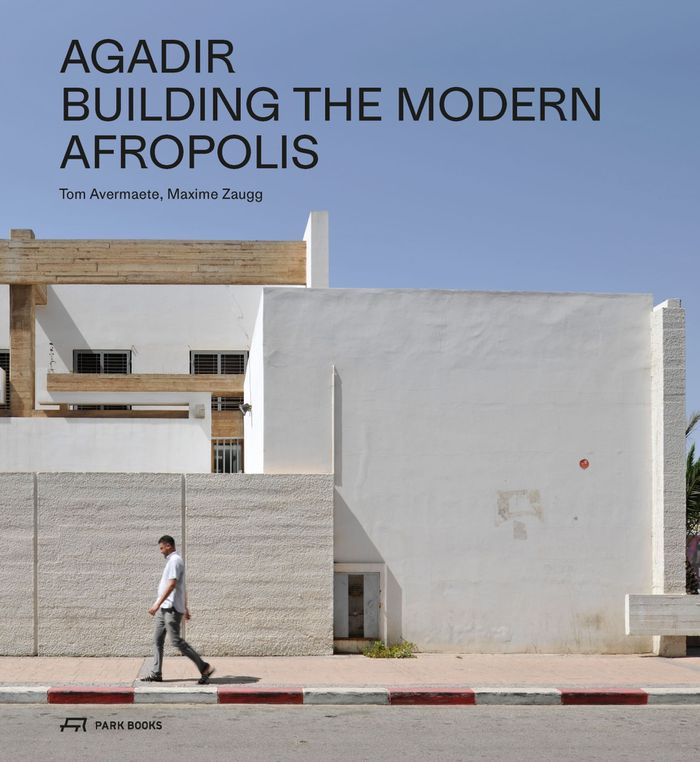
On February 29, 1960, a catastrophic earthquake devastated the Moroccan coastal city of Agadir, erasing it almost entirely and killing a third of its population. The world was shocked, and very quickly large amounts of international aid arrived. Following an emotional speech by King Mohammed V, the reconstruction of Agadir also turned into an undertaking of national and international solidarity. A new and unprecedented process of urban construction was developed that allowed many architects—national and international—to simultaneously design the new city. The result of this joint effort was astounding. In a very short time, the new Agadir rose from the ashes. The best Moroccan and international architects experimented with novel housing typologies, which mediated between ultramodern and vernacular ways of dwelling, complemented by innovative public structures, such as schools, dispensaries, and cinemas. All of these combined into an original urban reality: a modern Afropolis.
Agadir: Building the modern Afropolis
Actions:
Price:
$73.50
(available in store)
Summary:
On February 29, 1960, a catastrophic earthquake devastated the Moroccan coastal city of Agadir, erasing it almost entirely and killing a third of its population. The world was shocked, and very quickly large amounts of international aid arrived. Following an emotional speech by King Mohammed V, the reconstruction of Agadir also turned into an undertaking of national and international solidarity. A new and unprecedented process of urban construction was developed that allowed many architects—national and international—to simultaneously design the new city. The result of this joint effort was astounding. In a very short time, the new Agadir rose from the ashes. The best Moroccan and international architects experimented with novel housing typologies, which mediated between ultramodern and vernacular ways of dwelling, complemented by innovative public structures, such as schools, dispensaries, and cinemas. All of these combined into an original urban reality: a modern Afropolis.
Form:
books
books
Publication:
October 2022
October 2022
Subject:
Architecture since 1900, Africa
Architecture since 1900, Africa
Form:
books
books
Actions:
Price:
$55.00
(available to order)
Summary:
This edited collection of essays and image-driven pieces by anthropologists, archaeologists, architects, and historians examines the legacies of African architecture from around the time of independence through examples from different countries. Drawing on ethnography, archival research, and careful observation of buildings, remains, and people, the case studies seek to(...)
$55.00
(available to order)
Summary:
This edited collection of essays and image-driven pieces by anthropologists, archaeologists, architects, and historians examines the legacies of African architecture from around the time of independence through examples from different countries. Drawing on ethnography, archival research, and careful observation of buildings, remains, and people, the case studies seek to(...)
Subject:
Architecture since 1900, Africa
Architecture since 1900, Africa
Publication:
September 2022
September 2022
Title:
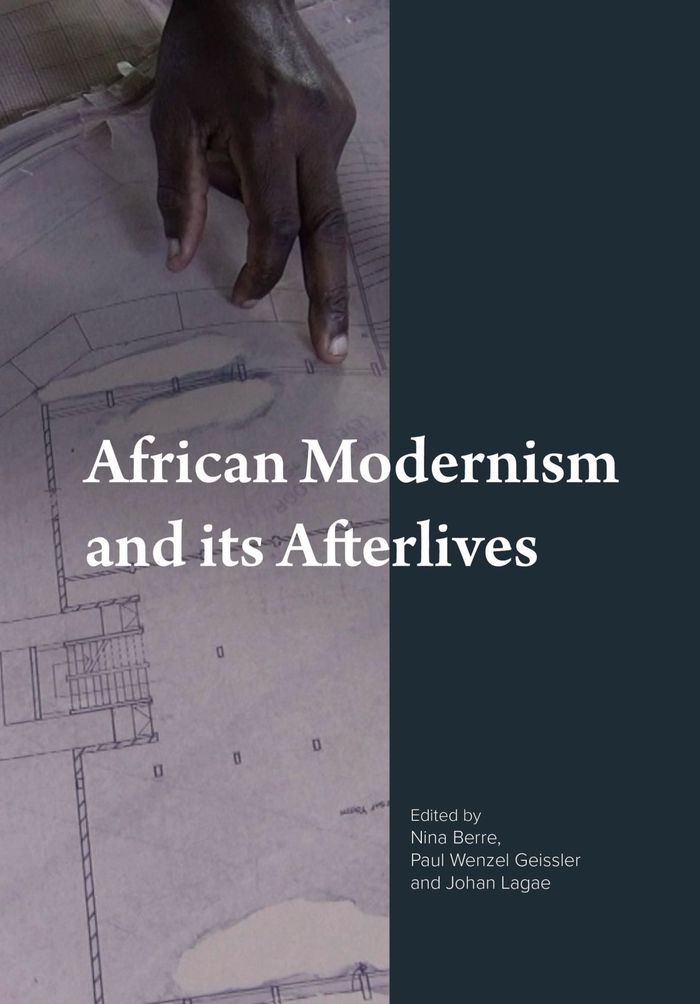
African modernism and its afterlives
Actions:
Price:
$55.00
(available to order)
Summary:
This edited collection of essays and image-driven pieces by anthropologists, archaeologists, architects, and historians examines the legacies of African architecture from around the time of independence through examples from different countries. Drawing on ethnography, archival research, and careful observation of buildings, remains, and people, the case studies seek to connect the colonial and postcolonial origins of modernist architecture, the historical processes they underwent, and their present use and habitation, adaptation, and decay. Deriving from a workshop in connection with the 2015 exhibition ''Forms of Freedom'' at the National Museum in Oslo and the Venice Biennale, the volume combines recent developments in architectural history, the anthropology of modernism and of material culture, and contemporary archaeology to move beyond the admiration or preservation of prized architectural ''heritage'' and to complicate the contemplation—or critique—of ''ruins'' and ''ruination.''
African modernism and its afterlives
Actions:
Price:
$55.00
(available to order)
Summary:
This edited collection of essays and image-driven pieces by anthropologists, archaeologists, architects, and historians examines the legacies of African architecture from around the time of independence through examples from different countries. Drawing on ethnography, archival research, and careful observation of buildings, remains, and people, the case studies seek to connect the colonial and postcolonial origins of modernist architecture, the historical processes they underwent, and their present use and habitation, adaptation, and decay. Deriving from a workshop in connection with the 2015 exhibition ''Forms of Freedom'' at the National Museum in Oslo and the Venice Biennale, the volume combines recent developments in architectural history, the anthropology of modernism and of material culture, and contemporary archaeology to move beyond the admiration or preservation of prized architectural ''heritage'' and to complicate the contemplation—or critique—of ''ruins'' and ''ruination.''
Form:
books
books
Publication:
September 2022
September 2022
Subject:
Architecture since 1900, Africa
Architecture since 1900, Africa
Form:
books
books
Price:
$49.95
(available to order)
Summary:
How to respond to climatic changes reconciling nature with tekné? What is the social role of technology? How architects would reconsider their practices supporting community-oriented projects? The theoretical assumption for this investigation is based on the observation of cause-effect relations, between different urban and architectural configurations and their(...)
$49.95
(available to order)
Summary:
How to respond to climatic changes reconciling nature with tekné? What is the social role of technology? How architects would reconsider their practices supporting community-oriented projects? The theoretical assumption for this investigation is based on the observation of cause-effect relations, between different urban and architectural configurations and their(...)
Title:
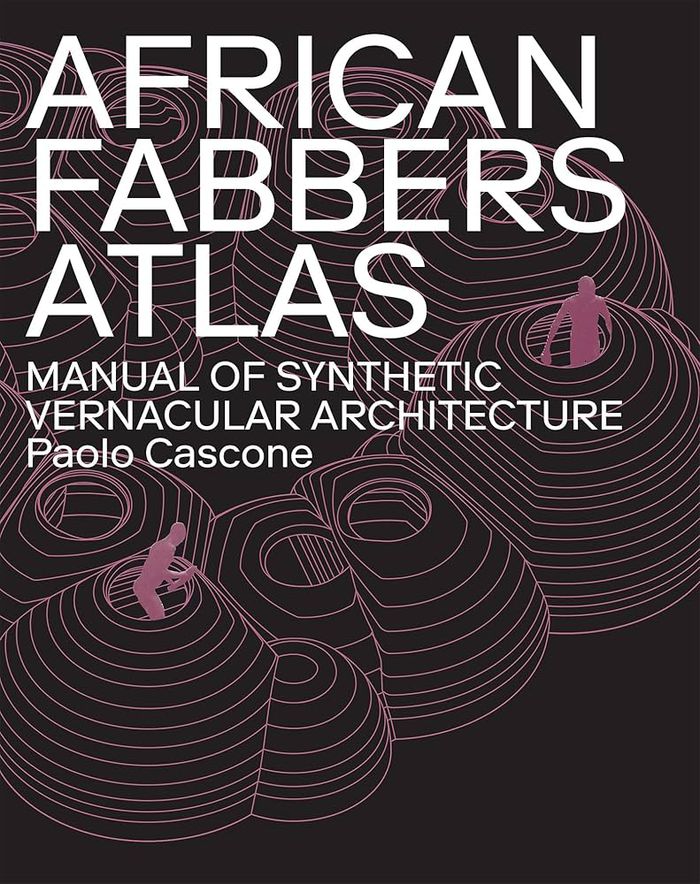
African Fabbers Atlas: Manual of synthetic vernacular architecture
Actions:
Price:
$49.95
(available to order)
Summary:
How to respond to climatic changes reconciling nature with tekné? What is the social role of technology? How architects would reconsider their practices supporting community-oriented projects? The theoretical assumption for this investigation is based on the observation of cause-effect relations, between different urban and architectural configurations and their performances: social, environmental, structural etc. in both pre-colonial and informal cultures around Africa. The diachronic approach intends to generate, after many years of post-colonial studies, an operative agenda of possible strategies, which is in accordance with different conditions starting from the anthropological and the climatic ones. Such an agenda responds to a global cultural need for an ecological shift in the contemporary design and manufacturing processes, which should bridge high and low-tech cultures. Therefore, the book is conceived also as a sort of manual that is articulated around emergent principles inspired by traditional and informal African practices and architectures: self-similarity and diversified typologies, material optimisation and circular economy, self-sufficiency and responsive dwellings.
African Fabbers Atlas: Manual of synthetic vernacular architecture
Actions:
Price:
$49.95
(available to order)
Summary:
How to respond to climatic changes reconciling nature with tekné? What is the social role of technology? How architects would reconsider their practices supporting community-oriented projects? The theoretical assumption for this investigation is based on the observation of cause-effect relations, between different urban and architectural configurations and their performances: social, environmental, structural etc. in both pre-colonial and informal cultures around Africa. The diachronic approach intends to generate, after many years of post-colonial studies, an operative agenda of possible strategies, which is in accordance with different conditions starting from the anthropological and the climatic ones. Such an agenda responds to a global cultural need for an ecological shift in the contemporary design and manufacturing processes, which should bridge high and low-tech cultures. Therefore, the book is conceived also as a sort of manual that is articulated around emergent principles inspired by traditional and informal African practices and architectures: self-similarity and diversified typologies, material optimisation and circular economy, self-sufficiency and responsive dwellings.
Form:
books
books
Publication:
September 2022
September 2022
Subject:
Architecture since 1900, Africa
Architecture since 1900, Africa


