


13794 Results
Form:
books
books
Title:
Refection on a past life
Refection on a past life
Actions:
Price:
$22.00
(available in store)
Summary:
Originally written in 1976 for his Paris–New York exhibition, Reflection on a Past Life is painter William N. Copley’s (1919–1996) humorous and insightful account of his many bizarre encounters with key Surrealists, such as Man Ray, Max Ernst, Marcel Duchamp and René Magritte. After inheriting a fortune as a young man, Copley (often known as "CPLY"), used his family(...)
$22.00
(available in store)
Summary:
Originally written in 1976 for his Paris–New York exhibition, Reflection on a Past Life is painter William N. Copley’s (1919–1996) humorous and insightful account of his many bizarre encounters with key Surrealists, such as Man Ray, Max Ernst, Marcel Duchamp and René Magritte. After inheriting a fortune as a young man, Copley (often known as "CPLY"), used his family(...)
Title:
Refection on a past life
Actions:
Price:
$22.00
(available in store)
Summary:
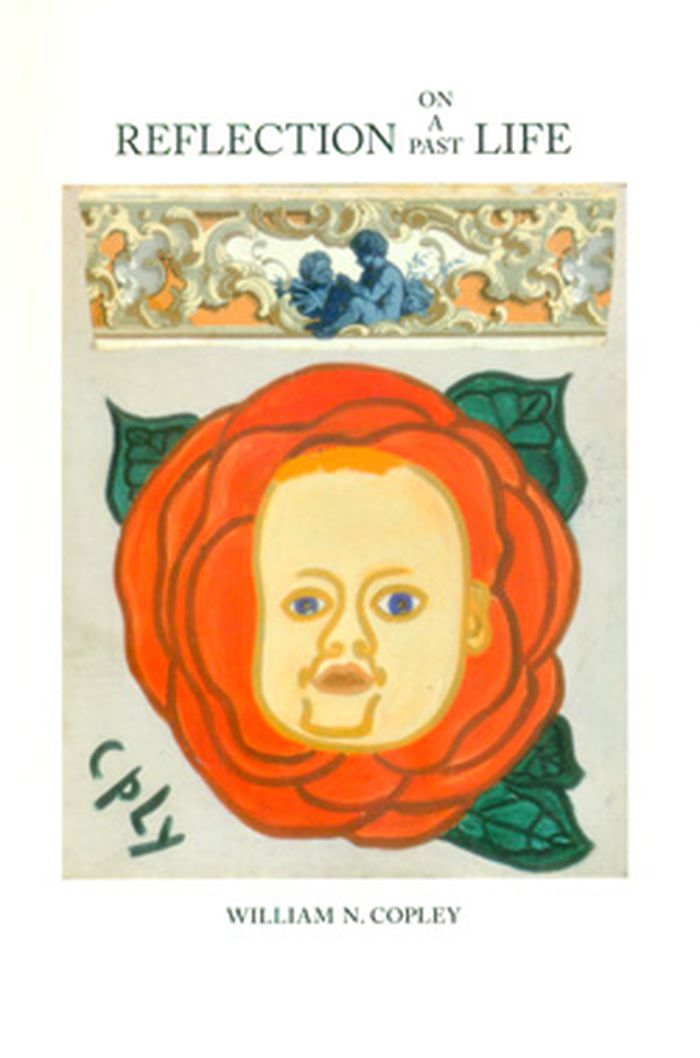
Originally written in 1976 for his Paris–New York exhibition, Reflection on a Past Life is painter William N. Copley’s (1919–1996) humorous and insightful account of his many bizarre encounters with key Surrealists, such as Man Ray, Max Ernst, Marcel Duchamp and René Magritte. After inheriting a fortune as a young man, Copley (often known as "CPLY"), used his family wealth to open The Copley Galleries in Beverly Hills shortly after World War II, where he exhibited works by major Surrealist artists. Although the gallery proved to be a financial flop, closing after its first year, Copley secured a place in the annals of art history by bringing Surrealism to Hollywood, as well as with his own painting.
Refection on a past life
Actions:
Price:
$22.00
(available in store)
Summary:
Originally written in 1976 for his Paris–New York exhibition, Reflection on a Past Life is painter William N. Copley’s (1919–1996) humorous and insightful account of his many bizarre encounters with key Surrealists, such as Man Ray, Max Ernst, Marcel Duchamp and René Magritte. After inheriting a fortune as a young man, Copley (often known as "CPLY"), used his family wealth to open The Copley Galleries in Beverly Hills shortly after World War II, where he exhibited works by major Surrealist artists. Although the gallery proved to be a financial flop, closing after its first year, Copley secured a place in the annals of art history by bringing Surrealism to Hollywood, as well as with his own painting.
Form:
books
books
Publication:
February 2014
February 2014
Subject:
Art Theory
Art Theory
Form:
books
books
Title:
On the new
On the new
Actions:
Price:
$26.95
(available to order)
Summary:
On the New looks at the economies of exchange and valuation that drive modern culture's key sites: the intellectual marketplace and the archive. As ideas move from one context to another, newness is created. This continuous shifting of the line that separates the valuable from the worthless, culture from profanity, is at the center of Boris Groys's investigation which(...)
$26.95
(available to order)
Summary:
On the New looks at the economies of exchange and valuation that drive modern culture's key sites: the intellectual marketplace and the archive. As ideas move from one context to another, newness is created. This continuous shifting of the line that separates the valuable from the worthless, culture from profanity, is at the center of Boris Groys's investigation which(...)
Title:
On the new
Actions:
Price:
$26.95
(available to order)
Summary:
On the New looks at the economies of exchange and valuation that drive modern culture's key sites: the intellectual marketplace and the archive. As ideas move from one context to another, newness is created. This continuous shifting of the line that separates the valuable from the worthless, culture from profanity, is at the center of Boris Groys's investigation which aims to map the uncharted territory of what constitutes artistic innovation and what processes underpin its recognition and appropriation.
On the new
Actions:
Price:
$26.95
(available to order)
Summary:
On the New looks at the economies of exchange and valuation that drive modern culture's key sites: the intellectual marketplace and the archive. As ideas move from one context to another, newness is created. This continuous shifting of the line that separates the valuable from the worthless, culture from profanity, is at the center of Boris Groys's investigation which aims to map the uncharted territory of what constitutes artistic innovation and what processes underpin its recognition and appropriation.
Form:
books
books
Publication:
July 2014
July 2014
Subject:
Critical Theory
Critical Theory
Form:
books
books
Title:
The city as a project
The city as a project
Actions:
Price:
$41.95
(available to order)
Summary:
What if the city can be seen differently than as a sort of self-organising chaos? Shaped not only by material forces, but also by cultural and didactic visions, the city may instead result from political intention in the form of architectural projects. This collection of eight essays, edited by Pier Vittorio Aureli, examines a fascinating set of urban conditions across(...)
$41.95
(available to order)
Summary:
What if the city can be seen differently than as a sort of self-organising chaos? Shaped not only by material forces, but also by cultural and didactic visions, the city may instead result from political intention in the form of architectural projects. This collection of eight essays, edited by Pier Vittorio Aureli, examines a fascinating set of urban conditions across(...)
Title:
The city as a project
Actions:
Price:
$41.95
(available to order)
Summary:
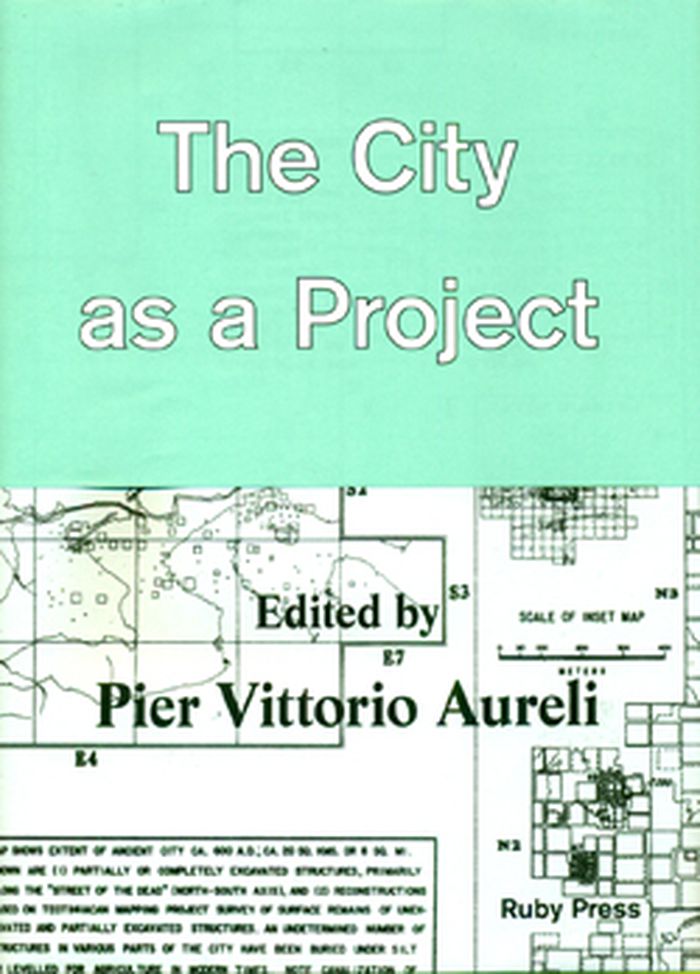
What if the city can be seen differently than as a sort of self-organising chaos? Shaped not only by material forces, but also by cultural and didactic visions, the city may instead result from political intention in the form of architectural projects. This collection of eight essays, edited by Pier Vittorio Aureli, examines a fascinating set of urban conditions across more than two millennia of history, from the political theology of the Islamic city to the political economy of Renaissance architecture, and from the planned Mesoamerican metropolis to the Fordist factory floor, revealing the ways in which the city arises from the constant interaction between ideas and spatial conditions.
The city as a project
Actions:
Price:
$41.95
(available to order)
Summary:
What if the city can be seen differently than as a sort of self-organising chaos? Shaped not only by material forces, but also by cultural and didactic visions, the city may instead result from political intention in the form of architectural projects. This collection of eight essays, edited by Pier Vittorio Aureli, examines a fascinating set of urban conditions across more than two millennia of history, from the political theology of the Islamic city to the political economy of Renaissance architecture, and from the planned Mesoamerican metropolis to the Fordist factory floor, revealing the ways in which the city arises from the constant interaction between ideas and spatial conditions.
Form:
books
books
Publication:
February 2014
February 2014
Subject:
Urban Theory
Urban Theory
Form:
books
books

Actions:
Price:
$32.50
(available to order)
Summary:
In this comprehensive and engaging volume, medical historian Jonathan Reinarz offers a historiography of smell from ancient to modern times. Synthesizing existing scholarship in the field, he shows how people have relied on their olfactory sense to understand and engage with both their immediate environments and wider corporal and spiritual worlds.
$32.50
(available to order)
Summary:
In this comprehensive and engaging volume, medical historian Jonathan Reinarz offers a historiography of smell from ancient to modern times. Synthesizing existing scholarship in the field, he shows how people have relied on their olfactory sense to understand and engage with both their immediate environments and wider corporal and spiritual worlds.
Title:
Past Scents: historical perspectives on Smell
Actions:
Price:
$32.50
(available to order)
Summary:
In this comprehensive and engaging volume, medical historian Jonathan Reinarz offers a historiography of smell from ancient to modern times. Synthesizing existing scholarship in the field, he shows how people have relied on their olfactory sense to understand and engage with both their immediate environments and wider corporal and spiritual worlds.
Past Scents: historical perspectives on Smell
Actions:
Price:
$32.50
(available to order)
Summary:
In this comprehensive and engaging volume, medical historian Jonathan Reinarz offers a historiography of smell from ancient to modern times. Synthesizing existing scholarship in the field, he shows how people have relied on their olfactory sense to understand and engage with both their immediate environments and wider corporal and spiritual worlds.
Form:
books
books
Publication:
April 2014
April 2014
Subject:
Architectural Theory
Architectural Theory
Form:
books
books
Price:
$37.50
(available to order)
Summary:
Focusing on images of New York, the rural South, and Miami from the 1890s to the 1940s, Mary N. Woods explores the ways photographers used the built environment to explore not only the gulfs but also the overlaps between modern and traditional culture in America during the early twentieth century.
$37.50
(available to order)
Summary:
Focusing on images of New York, the rural South, and Miami from the 1890s to the 1940s, Mary N. Woods explores the ways photographers used the built environment to explore not only the gulfs but also the overlaps between modern and traditional culture in America during the early twentieth century.
Title:
Beyond the architect's eye: photographs and the american built environment
Actions:
Price:
$37.50
(available to order)
Summary:
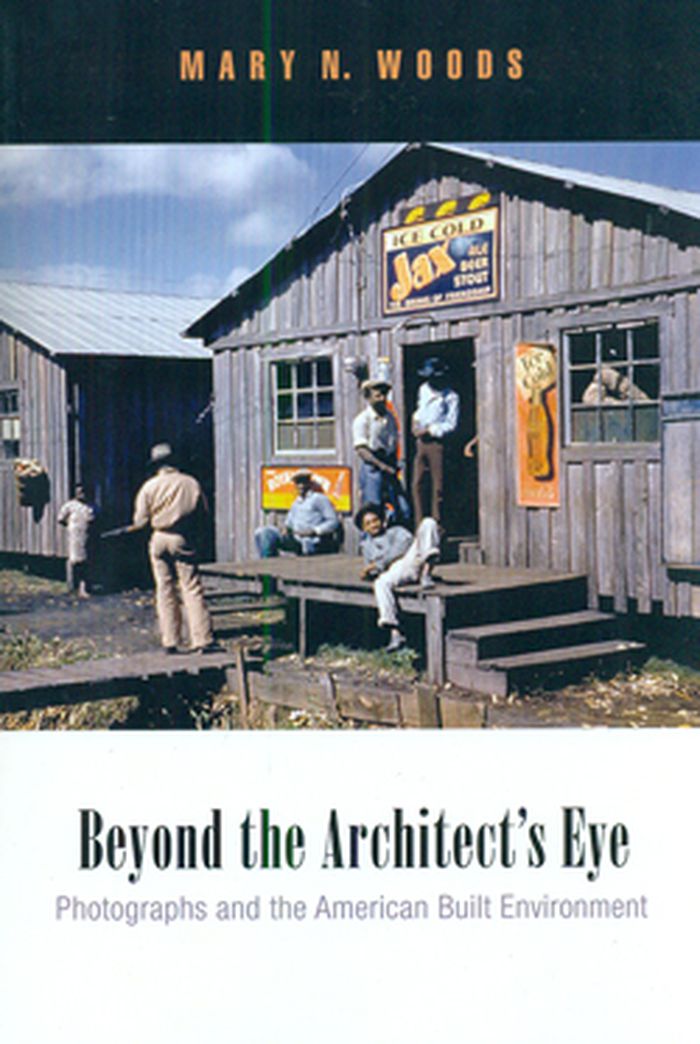
Focusing on images of New York, the rural South, and Miami from the 1890s to the 1940s, Mary N. Woods explores the ways photographers used the built environment to explore not only the gulfs but also the overlaps between modern and traditional culture in America during the early twentieth century.
Beyond the architect's eye: photographs and the american built environment
Actions:
Price:
$37.50
(available to order)
Summary:
Focusing on images of New York, the rural South, and Miami from the 1890s to the 1940s, Mary N. Woods explores the ways photographers used the built environment to explore not only the gulfs but also the overlaps between modern and traditional culture in America during the early twentieth century.
Form:
books
books
Publication:
February 2014
February 2014
Subject:
Architectural Theory
Architectural Theory
Form:
books
books
Actions:
Price:
$37.50
(available to order)
Summary:
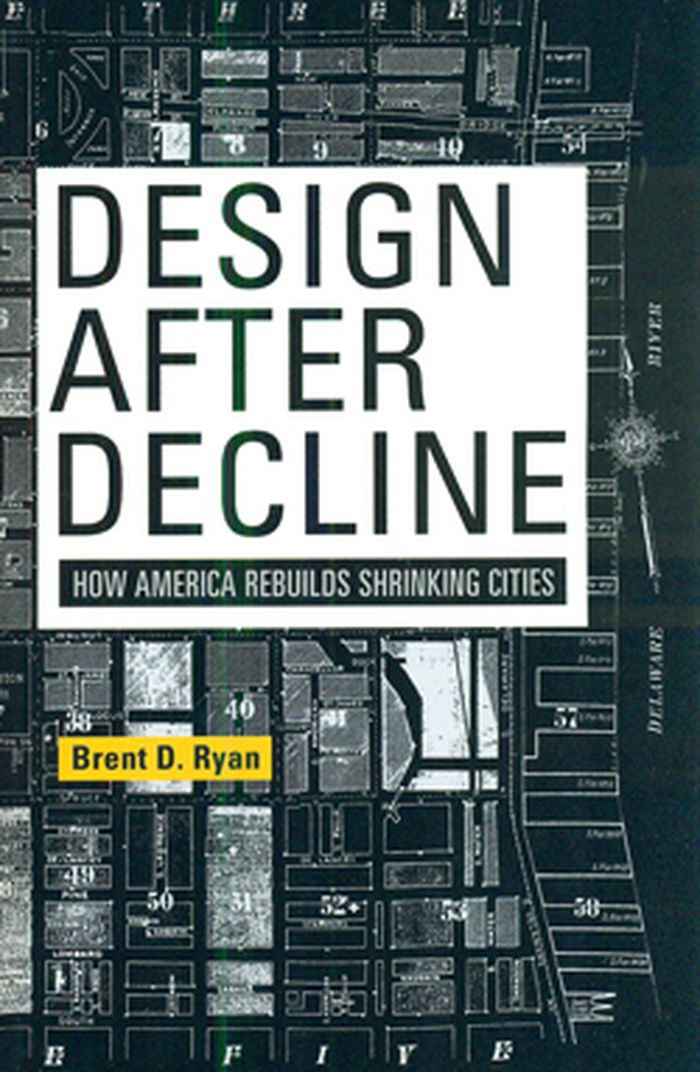
In Design After Decline, Brent D. Ryan chronicles the fraught and intermittently successful rebuilding of Detroit and Philadelphia in recent decades, concluding that small-scale strategies must give way to a revived combination of innovative urban design and social planning.
$37.50
(available to order)
Summary:
In Design After Decline, Brent D. Ryan chronicles the fraught and intermittently successful rebuilding of Detroit and Philadelphia in recent decades, concluding that small-scale strategies must give way to a revived combination of innovative urban design and social planning.
Title:
Design after decline: how America rebuilds shrinking cities
Actions:
Price:
$37.50
(available to order)
Summary:
In Design After Decline, Brent D. Ryan chronicles the fraught and intermittently successful rebuilding of Detroit and Philadelphia in recent decades, concluding that small-scale strategies must give way to a revived combination of innovative urban design and social planning.
Design after decline: how America rebuilds shrinking cities
Actions:
Price:
$37.50
(available to order)
Summary:
In Design After Decline, Brent D. Ryan chronicles the fraught and intermittently successful rebuilding of Detroit and Philadelphia in recent decades, concluding that small-scale strategies must give way to a revived combination of innovative urban design and social planning.
Form:
books
books
Publication:
February 2014
February 2014
Subject:
Urban Theory
Urban Theory
Form:
books
books
Actions:
Price:
$43.75
(available to order)
Summary:
Between 1937 and 1938, garden designer Christopher Tunnard published a series of articles in the British Architectural Review that rejected the prevailing English landscape style. Inspired by the principles of Modernist art and Japanese aesthetics, Tunnard called for a "new technique" in garden design that emphasized an integration of form and purpose. Tunnard's magazine(...)
$43.75
(available to order)
Summary:
Between 1937 and 1938, garden designer Christopher Tunnard published a series of articles in the British Architectural Review that rejected the prevailing English landscape style. Inspired by the principles of Modernist art and Japanese aesthetics, Tunnard called for a "new technique" in garden design that emphasized an integration of form and purpose. Tunnard's magazine(...)
Title:
Gardens in the modern landscape
Actions:
Price:
$43.75
(available to order)
Summary:
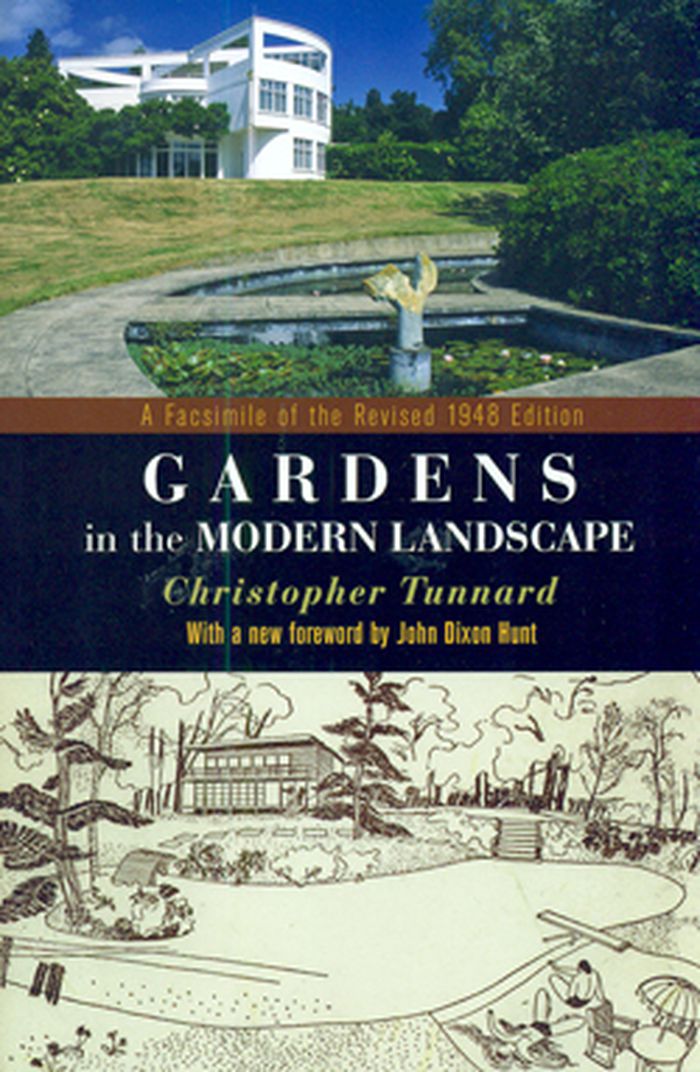
Between 1937 and 1938, garden designer Christopher Tunnard published a series of articles in the British Architectural Review that rejected the prevailing English landscape style. Inspired by the principles of Modernist art and Japanese aesthetics, Tunnard called for a "new technique" in garden design that emphasized an integration of form and purpose. Tunnard's magazine pieces were republished in book form as Gardens in the Modern Landscape in 1938, and a revised second edition was issued a decade later. Taken together, these articles constituted a manifesto for the modern garden, its influence evident in the work of such figures as Lawrence Halprin, Philip Johnson, and Edward Larrabee Barnes. Long out of print, the book is here reissued in a facsimile of the 1948 edition, accompanied by a contextualizing foreword by John Dixon Hunt.
Gardens in the modern landscape
Actions:
Price:
$43.75
(available to order)
Summary:
Between 1937 and 1938, garden designer Christopher Tunnard published a series of articles in the British Architectural Review that rejected the prevailing English landscape style. Inspired by the principles of Modernist art and Japanese aesthetics, Tunnard called for a "new technique" in garden design that emphasized an integration of form and purpose. Tunnard's magazine pieces were republished in book form as Gardens in the Modern Landscape in 1938, and a revised second edition was issued a decade later. Taken together, these articles constituted a manifesto for the modern garden, its influence evident in the work of such figures as Lawrence Halprin, Philip Johnson, and Edward Larrabee Barnes. Long out of print, the book is here reissued in a facsimile of the 1948 edition, accompanied by a contextualizing foreword by John Dixon Hunt.
Form:
books
books
Publication:
June 2014
June 2014
Subject:
Landscape Theory
Landscape Theory
Form:
books
books
Title:
Art et renouvellement urbain
Art et renouvellement urbain
Actions:
Price:
$39.95
(available to order)
Summary:
La communauté du Grand Lyon réalise depuis plusieurs années un renouvellement urbain que ce livre se propose, pour la première fois, de révéler au public en établissant le bilan de cette initiative. A partir des témoignages des expériences menées dans 12 quartiers du Grand Lyon, dont 9 communes (Bron, Givors, Oullins, Lyon, Rillieux, la Pape, Saint Fons Vaulx en Velin,(...)
$39.95
(available to order)
Summary:
La communauté du Grand Lyon réalise depuis plusieurs années un renouvellement urbain que ce livre se propose, pour la première fois, de révéler au public en établissant le bilan de cette initiative. A partir des témoignages des expériences menées dans 12 quartiers du Grand Lyon, dont 9 communes (Bron, Givors, Oullins, Lyon, Rillieux, la Pape, Saint Fons Vaulx en Velin,(...)
Title:
Art et renouvellement urbain
Actions:
Price:
$39.95
(available to order)
Summary:
La communauté du Grand Lyon réalise depuis plusieurs années un renouvellement urbain que ce livre se propose, pour la première fois, de révéler au public en établissant le bilan de cette initiative. A partir des témoignages des expériences menées dans 12 quartiers du Grand Lyon, dont 9 communes (Bron, Givors, Oullins, Lyon, Rillieux, la Pape, Saint Fons Vaulx en Velin, Villeurbanne, Vénissieux), le lecteur sera informé de ces avancements qui relèvent, pour une grande part, d'un fort aspect culturel.
Art et renouvellement urbain
Actions:
Price:
$39.95
(available to order)
Summary:
La communauté du Grand Lyon réalise depuis plusieurs années un renouvellement urbain que ce livre se propose, pour la première fois, de révéler au public en établissant le bilan de cette initiative. A partir des témoignages des expériences menées dans 12 quartiers du Grand Lyon, dont 9 communes (Bron, Givors, Oullins, Lyon, Rillieux, la Pape, Saint Fons Vaulx en Velin, Villeurbanne, Vénissieux), le lecteur sera informé de ces avancements qui relèvent, pour une grande part, d'un fort aspect culturel.
Form:
books
books
Publication:
February 2014
February 2014
Subject:
Urban Theory
Urban Theory
Form:
books
books
Actions:
Price:
$24.95
(available to order)
Summary:
Les travaux de Paola Vigano, qui parcourent les thèmes de l'urbanisme contemporain (porosité, isotropie...), offrent un horizon à la ville diffuse et abordent les grandes problématiques du développement durable.
$24.95
(available to order)
Summary:
Les travaux de Paola Vigano, qui parcourent les thèmes de l'urbanisme contemporain (porosité, isotropie...), offrent un horizon à la ville diffuse et abordent les grandes problématiques du développement durable.
Title:
Métamorphoses de l'ordinaire - Paola Vigano, Grand Prix de l'urbanisme 2013
Actions:
Price:
$24.95
(available to order)
Summary:
Les travaux de Paola Vigano, qui parcourent les thèmes de l'urbanisme contemporain (porosité, isotropie...), offrent un horizon à la ville diffuse et abordent les grandes problématiques du développement durable.
Métamorphoses de l'ordinaire - Paola Vigano, Grand Prix de l'urbanisme 2013
Actions:
Price:
$24.95
(available to order)
Summary:
Les travaux de Paola Vigano, qui parcourent les thèmes de l'urbanisme contemporain (porosité, isotropie...), offrent un horizon à la ville diffuse et abordent les grandes problématiques du développement durable.
Form:
books
books
Publication:
February 2014
February 2014
Subject:
Urban Theory
Urban Theory
Form:
books
books
Price:
$28.50
(available to order)
Summary:
The book offers an exploration of intersecting concerns of urban residents and scholars today that include social relations and diversity, public space and civic life, privatization and suburbanization and economic and cultural globalization. At a moment when cities around the world are undertaking similar efforts to revitalize their centers, Sound, Space, and the City(...)
$28.50
(available to order)
Summary:
The book offers an exploration of intersecting concerns of urban residents and scholars today that include social relations and diversity, public space and civic life, privatization and suburbanization and economic and cultural globalization. At a moment when cities around the world are undertaking similar efforts to revitalize their centers, Sound, Space, and the City(...)
Title:
Sound, space and the city: civic performance in downtown Los Angeles
Actions:
Price:
$28.50
(available to order)
Summary:
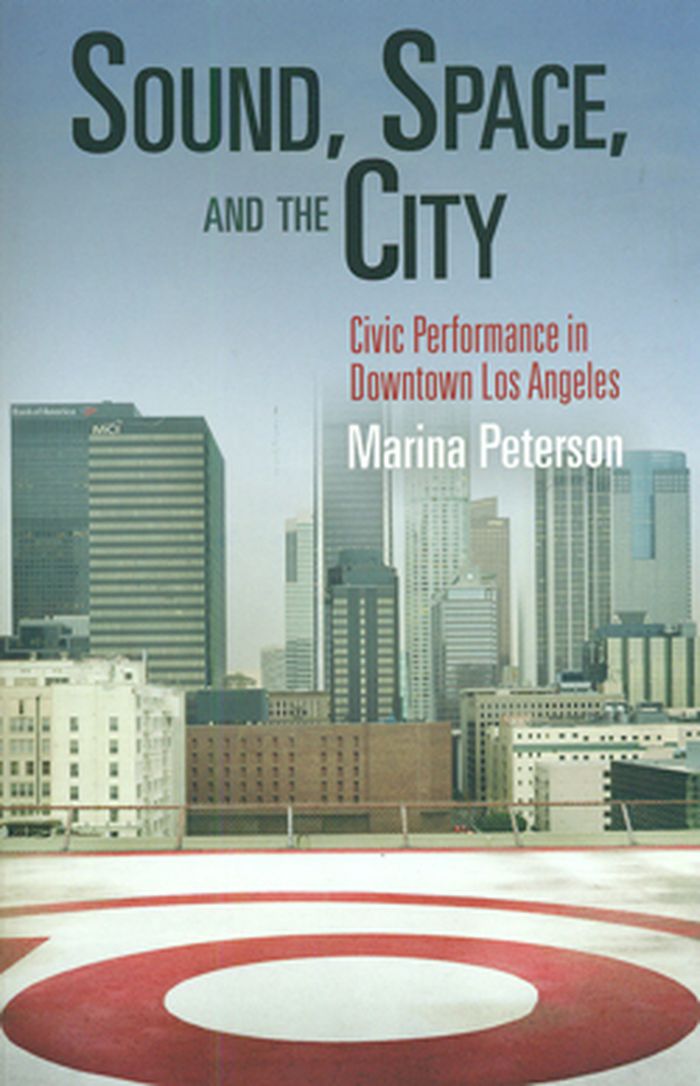
The book offers an exploration of intersecting concerns of urban residents and scholars today that include social relations and diversity, public space and civic life, privatization and suburbanization and economic and cultural globalization. At a moment when cities around the world are undertaking similar efforts to revitalize their centers, Sound, Space, and the City conveys the underlying tensions of such projects and their relevance for understanding urban futures.
Sound, space and the city: civic performance in downtown Los Angeles
Actions:
Price:
$28.50
(available to order)
Summary:
The book offers an exploration of intersecting concerns of urban residents and scholars today that include social relations and diversity, public space and civic life, privatization and suburbanization and economic and cultural globalization. At a moment when cities around the world are undertaking similar efforts to revitalize their centers, Sound, Space, and the City conveys the underlying tensions of such projects and their relevance for understanding urban futures.
Form:
books
books
Publication:
February 2014
February 2014
Subject:
Urban Theory
Urban Theory


