


856 Results
Form:
books
books
Title:
Climatic Architecture
Climatic Architecture
Actions:
Price:
$88.00
(available to order)
Summary:
Architecture and urbanism were traditionally based on climate and health, as we can read in the treatises of Vitruvius, Palladio or Alberti, where exposure to wind and sun, variations in temperature and humidity influenced the forms of cities and buildings. These fundamental causes of urban planning and buildings were ignored in the second half of the 20th century thanks(...)
$88.00
(available to order)
Summary:
Architecture and urbanism were traditionally based on climate and health, as we can read in the treatises of Vitruvius, Palladio or Alberti, where exposure to wind and sun, variations in temperature and humidity influenced the forms of cities and buildings. These fundamental causes of urban planning and buildings were ignored in the second half of the 20th century thanks(...)
Title:
Climatic Architecture
Actions:
Price:
$88.00
(available to order)
Summary:
Architecture and urbanism were traditionally based on climate and health, as we can read in the treatises of Vitruvius, Palladio or Alberti, where exposure to wind and sun, variations in temperature and humidity influenced the forms of cities and buildings. These fundamental causes of urban planning and buildings were ignored in the second half of the 20th century thanks to the enormous use of fossil energy by heating and air conditioning systems, pumps and refrigerators, that today cause the greenhouse effect and global warming. The fight against climate change forces architects and urban designers to take seriously the climatic issue in order to base their design on its the local climatic context and energy resources. Faced with the climatic challenge of the 21st century, we propose to reset our discipline on its intrinsic atmospheric qualities, where air, light, heat or humidity are recognized are real materials of building, convection, thermal conduction, evaporation, emissivity, or effusivity are becoming design tools for composing architecture and cities, and through materialism dialectic, are able to revolutionize esthetic and social values.
Climatic Architecture
Actions:
Price:
$88.00
(available to order)
Summary:
Architecture and urbanism were traditionally based on climate and health, as we can read in the treatises of Vitruvius, Palladio or Alberti, where exposure to wind and sun, variations in temperature and humidity influenced the forms of cities and buildings. These fundamental causes of urban planning and buildings were ignored in the second half of the 20th century thanks to the enormous use of fossil energy by heating and air conditioning systems, pumps and refrigerators, that today cause the greenhouse effect and global warming. The fight against climate change forces architects and urban designers to take seriously the climatic issue in order to base their design on its the local climatic context and energy resources. Faced with the climatic challenge of the 21st century, we propose to reset our discipline on its intrinsic atmospheric qualities, where air, light, heat or humidity are recognized are real materials of building, convection, thermal conduction, evaporation, emissivity, or effusivity are becoming design tools for composing architecture and cities, and through materialism dialectic, are able to revolutionize esthetic and social values.
Form:
books
books
Publication:
November 2023
November 2023
Subject:
Architecture Monographs
Architecture Monographs
Form:
books
books
Title:
On Bramante
On Bramante
Actions:
Price:
$53.95
(available to order)
Summary:
In ''On Bramante,'' architect Pier Paolo Tamburelli considers the work of the celebrated Italian Renaissance architect Donato Bramante and through this reappraisal suggests a possible agenda for current architectural practice. Bramante, Tamburelli argues, offers an excellent starting point to imagine a contemporary theory of space, to reflect on the relationship between(...)
$53.95
(available to order)
Summary:
In ''On Bramante,'' architect Pier Paolo Tamburelli considers the work of the celebrated Italian Renaissance architect Donato Bramante and through this reappraisal suggests a possible agenda for current architectural practice. Bramante, Tamburelli argues, offers an excellent starting point to imagine a contemporary theory of space, to reflect on the relationship between(...)
Title:
On Bramante
Actions:
Price:
$53.95
(available to order)
Summary:
In ''On Bramante,'' architect Pier Paolo Tamburelli considers the work of the celebrated Italian Renaissance architect Donato Bramante and through this reappraisal suggests a possible agenda for current architectural practice. Bramante, Tamburelli argues, offers an excellent starting point to imagine a contemporary theory of space, to reflect on the relationship between architecture and politics, and to look back—with neither nostalgia nor contempt—at the tradition of Western classicism. Starting from a discussion of the difference in the work of Bramante in Milan (1481–1499) and Rome (1499–1514), Tamburelli highlights the peculiarities of Bramante’s architecture, especially in comparison to that of his predecessor Leon Battista Alberti and successor Andrea Palladio. This in turn opens up new possibilities for appreciating his spatial experiments, and to derive from Bramante’s abstraction and disassociation of form from function a revised theory of space for contemporary architecture. Such a theory might even advance a newfound political understanding of classicism, and a model—perhaps more valid now than ever before—for a public architecture.
On Bramante
Actions:
Price:
$53.95
(available to order)
Summary:
In ''On Bramante,'' architect Pier Paolo Tamburelli considers the work of the celebrated Italian Renaissance architect Donato Bramante and through this reappraisal suggests a possible agenda for current architectural practice. Bramante, Tamburelli argues, offers an excellent starting point to imagine a contemporary theory of space, to reflect on the relationship between architecture and politics, and to look back—with neither nostalgia nor contempt—at the tradition of Western classicism. Starting from a discussion of the difference in the work of Bramante in Milan (1481–1499) and Rome (1499–1514), Tamburelli highlights the peculiarities of Bramante’s architecture, especially in comparison to that of his predecessor Leon Battista Alberti and successor Andrea Palladio. This in turn opens up new possibilities for appreciating his spatial experiments, and to derive from Bramante’s abstraction and disassociation of form from function a revised theory of space for contemporary architecture. Such a theory might even advance a newfound political understanding of classicism, and a model—perhaps more valid now than ever before—for a public architecture.
Form:
books
books
Publication:
May 2022
May 2022
Subject:
Architecture Monographs
Architecture Monographs
Form:
books
books
Actions:
Price:
$80.00
(available to order)
Summary:
Inigo Jones (1573-1652) is widely acknowledged to have been England's most important architect. As court designer to the Stuart kings James I and Charles I, he is credited with introducing the classical language of architecture to the country. He famously traveled to Italy and studied firsthand the buildings of the Italian masters, particularly admiring those by Andrea(...)
$80.00
(available to order)
Summary:
Inigo Jones (1573-1652) is widely acknowledged to have been England's most important architect. As court designer to the Stuart kings James I and Charles I, he is credited with introducing the classical language of architecture to the country. He famously traveled to Italy and studied firsthand the buildings of the Italian masters, particularly admiring those by Andrea(...)
Title:
Inigo Jones: the architect of kings
Actions:
Price:
$80.00
(available to order)
Summary:
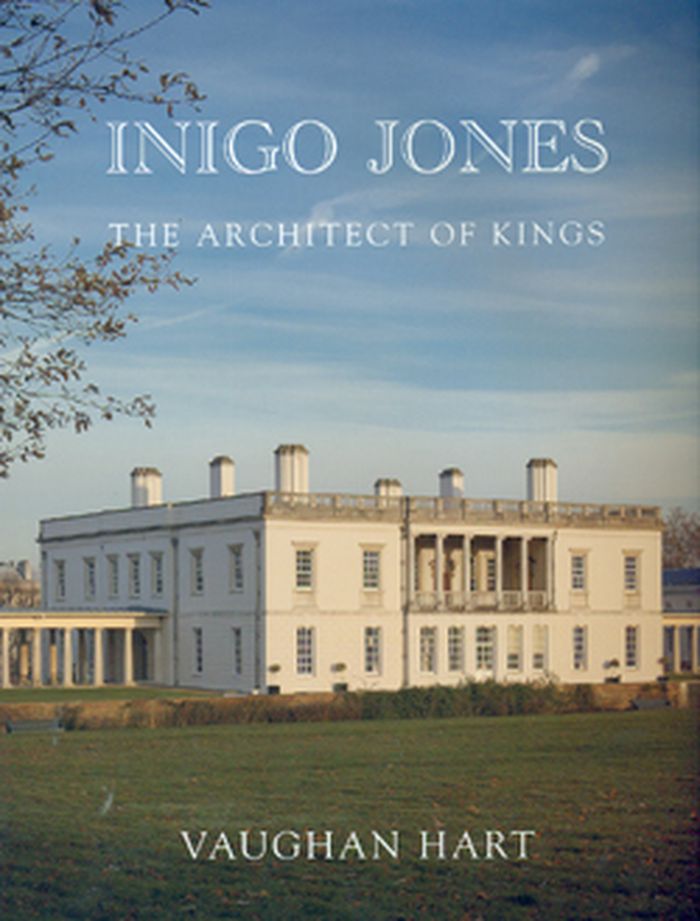
Inigo Jones (1573-1652) is widely acknowledged to have been England's most important architect. As court designer to the Stuart kings James I and Charles I, he is credited with introducing the classical language of architecture to the country. He famously traveled to Italy and studied firsthand the buildings of the Italian masters, particularly admiring those by Andrea Palladio. Much less well known is the profound influence of native British arts and crafts on Jones's architecture. Likewise, his hostility to the more opulent forms of Italian architecture he saw on his travels has largely gone unnoted. This book examines both of these overlooked issues. Vaughan Hart identifies well-established links between the classical column and the crown prior to Jones, in early Stuart masques, processions, heraldry, paintings, and poems. He goes on to discuss Jones's preference for a "masculine and unaffected" architecture, demonstrating that this plain style was consistent with the Puritan artistic sensitivities of Stuart England. For the first time, the work of Inigo Jones is understood in its national religious and political context.
Inigo Jones: the architect of kings
Actions:
Price:
$80.00
(available to order)
Summary:
Inigo Jones (1573-1652) is widely acknowledged to have been England's most important architect. As court designer to the Stuart kings James I and Charles I, he is credited with introducing the classical language of architecture to the country. He famously traveled to Italy and studied firsthand the buildings of the Italian masters, particularly admiring those by Andrea Palladio. Much less well known is the profound influence of native British arts and crafts on Jones's architecture. Likewise, his hostility to the more opulent forms of Italian architecture he saw on his travels has largely gone unnoted. This book examines both of these overlooked issues. Vaughan Hart identifies well-established links between the classical column and the crown prior to Jones, in early Stuart masques, processions, heraldry, paintings, and poems. He goes on to discuss Jones's preference for a "masculine and unaffected" architecture, demonstrating that this plain style was consistent with the Puritan artistic sensitivities of Stuart England. For the first time, the work of Inigo Jones is understood in its national religious and political context.
Form:
books
books
Publication:
November 2011
November 2011
Subject:
Architecture Monographs
Architecture Monographs
Form:
books
books
Actions:
Holdings:
Description:
143 pages : illustrations (some color), plans (some color) ; 32 cm.
Description:
143 pages : illustrations (some color), plans (some color) ; 32 cm.
Subject:
Publication:
London : Academy Editions, 1993.
London : Academy Editions, 1993.
Title:
Quinlan Terry : selected works.
Actions:
Holdings:
Description:
143 pages : illustrations (some color), plans (some color) ; 32 cm.
Quinlan Terry : selected works.
Actions:
Holdings:
Description:
143 pages : illustrations (some color), plans (some color) ; 32 cm.
Form:
books
books
Publication:
London : Academy Editions, 1993.
London : Academy Editions, 1993.
Subject:
Form:
books
books
Actions:
Price:
$64.95
(available to order)
Summary:
Aeolian Winds and the Spirit in Renaissance Architecture introduces new dimensions of thinking about architectural theory. Investigating Renaissance pneumatic architecture with respect to other disciplines of arts and sciences, the collected essays substantiate the thesis that pneuma (air, wind, spirit, soul) is a fundamental link for establishing harmony among the human(...)
$64.95
(available to order)
Summary:
Aeolian Winds and the Spirit in Renaissance Architecture introduces new dimensions of thinking about architectural theory. Investigating Renaissance pneumatic architecture with respect to other disciplines of arts and sciences, the collected essays substantiate the thesis that pneuma (air, wind, spirit, soul) is a fundamental link for establishing harmony among the human(...)
Title:
Aeolian winds and the spirit in renaissance architecture
Actions:
Price:
$64.95
(available to order)
Summary:
Aeolian Winds and the Spirit in Renaissance Architecture introduces new dimensions of thinking about architectural theory. Investigating Renaissance pneumatic architecture with respect to other disciplines of arts and sciences, the collected essays substantiate the thesis that pneuma (air, wind, spirit, soul) is a fundamental link for establishing harmony among the human body, a building, and the cosmos. While much of sixteenth and seventeenth century scholarship has been devoted to the mathematics of ideal architecture, the book proves that essence, wind and ventilation are all part of the classical principles of building, and that one of the primary goals of Renaissance architects was to enhance the powers of pneuma so as to foster the art of well-being. This volume, written by leading architectural historians and scholars, delineates ancient and Renaissance theories and practice of pneumatology, and indicates a link to contemporary environmental questions. It examines Anaximenes, Hippocrates, Galen, Trento, Romano, Alberti, Serlio, Palladio, Scamozzi and other thinkers and humanists. Moreover, the essays illustrate the most famous examples of hygienico-therapeutic villas, including Rotonda, La Rocca Pisana and Eolia, a pneumatic model of Renaissance Venetian architecture.
Aeolian winds and the spirit in renaissance architecture
Actions:
Price:
$64.95
(available to order)
Summary:
Aeolian Winds and the Spirit in Renaissance Architecture introduces new dimensions of thinking about architectural theory. Investigating Renaissance pneumatic architecture with respect to other disciplines of arts and sciences, the collected essays substantiate the thesis that pneuma (air, wind, spirit, soul) is a fundamental link for establishing harmony among the human body, a building, and the cosmos. While much of sixteenth and seventeenth century scholarship has been devoted to the mathematics of ideal architecture, the book proves that essence, wind and ventilation are all part of the classical principles of building, and that one of the primary goals of Renaissance architects was to enhance the powers of pneuma so as to foster the art of well-being. This volume, written by leading architectural historians and scholars, delineates ancient and Renaissance theories and practice of pneumatology, and indicates a link to contemporary environmental questions. It examines Anaximenes, Hippocrates, Galen, Trento, Romano, Alberti, Serlio, Palladio, Scamozzi and other thinkers and humanists. Moreover, the essays illustrate the most famous examples of hygienico-therapeutic villas, including Rotonda, La Rocca Pisana and Eolia, a pneumatic model of Renaissance Venetian architecture.
Form:
books
books
Publication:
December 2006, London New York
December 2006, London New York
Subject:
Architectural Theory
Architectural Theory
Form:
books
books
Actions:
Price:
$97.90
(available in store)
Summary:
The sketch is a window into the architects mind. As creative designers, architects are interested in how other architects, particularly successful ones, think through the use of drawings to approach their work. Historically designers have sought inspiration for their own work through an insight into the minds and workings of people they often regard as geniuses. This(...)
$97.90
(available in store)
Summary:
The sketch is a window into the architects mind. As creative designers, architects are interested in how other architects, particularly successful ones, think through the use of drawings to approach their work. Historically designers have sought inspiration for their own work through an insight into the minds and workings of people they often regard as geniuses. This(...)
Title:
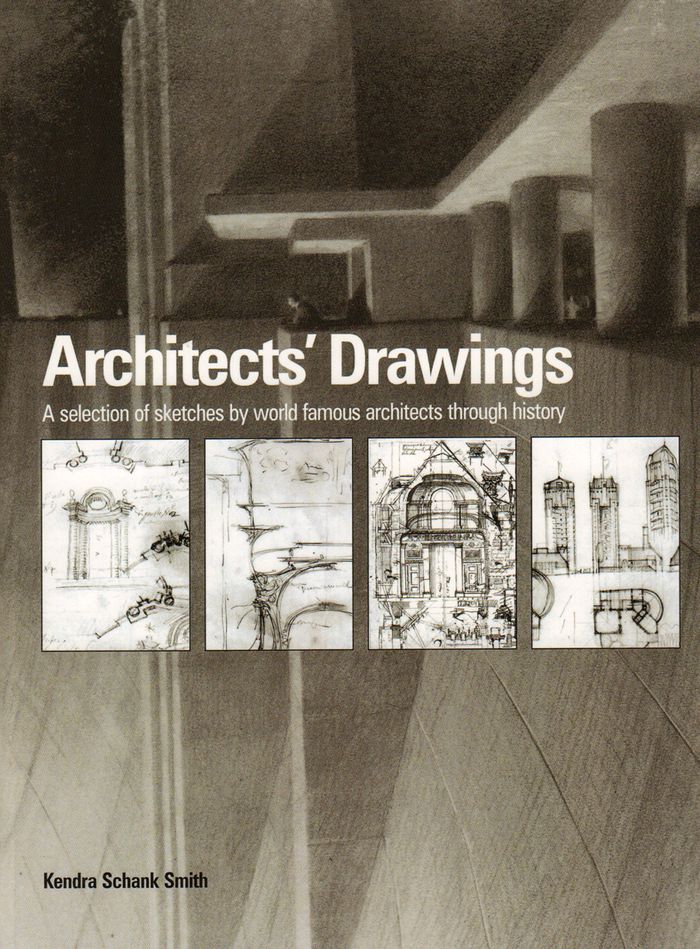
Architects' drawings: a selection of sketches by world famous archittects through history
Actions:
Price:
$97.90
(available in store)
Summary:
The sketch is a window into the architects mind. As creative designers, architects are interested in how other architects, particularly successful ones, think through the use of drawings to approach their work. Historically designers have sought inspiration for their own work through an insight into the minds and workings of people they often regard as geniuses. This collection of sketches aims to provide this insight. Here for the first time, a wide range of world famous architects' sketches from the Renaissance to the present day can be seen in a single volume. The sketches have been selected to represent the concepts or philosophies of the key movements in architecture in order to develop an overall picture of the role of the sketch in the development of architecture. The book illustrates the work of designers as diverse as Andrea Palladio, Erich Mendelsohn, Sir Edwin Lutyens, Gianlorenzo Bernini, Le Corbusier, Michelangelo, Alvar Aalto, Sir John Soane, Francesco Borromini, Walter Gropius, and contemporary architects Tadao Ando, Zaha Hadid and Frank Gehry to name but a few. Each chronologically placed sketch is accompanied by text providing details about the architect’s life, a look at the sketch in context, and the connection to specific buildings where appropriate. Style, media and meaning are also discussed, developing an explanation of the architect’s thinking and intentions.
Architects' drawings: a selection of sketches by world famous archittects through history
Actions:
Price:
$97.90
(available in store)
Summary:
The sketch is a window into the architects mind. As creative designers, architects are interested in how other architects, particularly successful ones, think through the use of drawings to approach their work. Historically designers have sought inspiration for their own work through an insight into the minds and workings of people they often regard as geniuses. This collection of sketches aims to provide this insight. Here for the first time, a wide range of world famous architects' sketches from the Renaissance to the present day can be seen in a single volume. The sketches have been selected to represent the concepts or philosophies of the key movements in architecture in order to develop an overall picture of the role of the sketch in the development of architecture. The book illustrates the work of designers as diverse as Andrea Palladio, Erich Mendelsohn, Sir Edwin Lutyens, Gianlorenzo Bernini, Le Corbusier, Michelangelo, Alvar Aalto, Sir John Soane, Francesco Borromini, Walter Gropius, and contemporary architects Tadao Ando, Zaha Hadid and Frank Gehry to name but a few. Each chronologically placed sketch is accompanied by text providing details about the architect’s life, a look at the sketch in context, and the connection to specific buildings where appropriate. Style, media and meaning are also discussed, developing an explanation of the architect’s thinking and intentions.
Form:
books
books
Publication:
February 2016
February 2016
Subject:
Architectural Drawing
Architectural Drawing


