


3241 Results
Level of archival description:
Project
Project
Reference number:
CI005.S1.1917.PR2
Description:
Villa Allegonda was originally built by architect, H.J. Jesse, in the early 20th century before being remodelled by Menso Kamerlingh in 1916-1917. The villa was further renovated in 1927. The villa was one of three summer houses that Jesse built in the dunes of Katwijk aan Zee: Oud assisted with drafting and providing technical advice for the third villa, Villa Sigrid, in 1916-17. Oud worked in partnership with Menso Kamerlingh Onnes. Oud also coordinated the contribution of artist friends and chose the colours. In the second phase of design, Oud contributed to remodelling the villa windows and pillars and designing furniture. Exhaustion caused him to resign in 1928 (Taverne et al. 2001, 127-132). The project series features drawings for different phases of the project, including drawings of the 1917 design and 1931 furniture designs. The series also includes photographs of exterior and interior views of Villa Allegonda and furniture items.
CI005.S1.1917.PR2
Description:
Villa Allegonda was originally built by architect, H.J. Jesse, in the early 20th century before being remodelled by Menso Kamerlingh in 1916-1917. The villa was further renovated in 1927. The villa was one of three summer houses that Jesse built in the dunes of Katwijk aan Zee: Oud assisted with drafting and providing technical advice for the third villa, Villa Sigrid, in 1916-17. Oud worked in partnership with Menso Kamerlingh Onnes. Oud also coordinated the contribution of artist friends and chose the colours. In the second phase of design, Oud contributed to remodelling the villa windows and pillars and designing furniture. Exhaustion caused him to resign in 1928 (Taverne et al. 2001, 127-132). The project series features drawings for different phases of the project, including drawings of the 1917 design and 1931 furniture designs. The series also includes photographs of exterior and interior views of Villa Allegonda and furniture items.
People:
Date:
1901-1931 (1917 and 1931 predominant)
1901-1931 (1917 and 1931 predominant)
Title:
Villa Allegonda, Katwijk aan Zee, Netherlands (1917-1928)
Actions:
CI005.S1.1917.PR2
Description:
Villa Allegonda was originally built by architect, H.J. Jesse, in the early 20th century before being remodelled by Menso Kamerlingh in 1916-1917. The villa was further renovated in 1927. The villa was one of three summer houses that Jesse built in the dunes of Katwijk aan Zee: Oud assisted with drafting and providing technical advice for the third villa, Villa Sigrid, in 1916-17. Oud worked in partnership with Menso Kamerlingh Onnes. Oud also coordinated the contribution of artist friends and chose the colours. In the second phase of design, Oud contributed to remodelling the villa windows and pillars and designing furniture. Exhaustion caused him to resign in 1928 (Taverne et al. 2001, 127-132). The project series features drawings for different phases of the project, including drawings of the 1917 design and 1931 furniture designs. The series also includes photographs of exterior and interior views of Villa Allegonda and furniture items.
Villa Allegonda, Katwijk aan Zee, Netherlands (1917-1928)
Actions:
CI005.S1.1917.PR2
Description:
Villa Allegonda was originally built by architect, H.J. Jesse, in the early 20th century before being remodelled by Menso Kamerlingh in 1916-1917. The villa was further renovated in 1927. The villa was one of three summer houses that Jesse built in the dunes of Katwijk aan Zee: Oud assisted with drafting and providing technical advice for the third villa, Villa Sigrid, in 1916-17. Oud worked in partnership with Menso Kamerlingh Onnes. Oud also coordinated the contribution of artist friends and chose the colours. In the second phase of design, Oud contributed to remodelling the villa windows and pillars and designing furniture. Exhaustion caused him to resign in 1928 (Taverne et al. 2001, 127-132). The project series features drawings for different phases of the project, including drawings of the 1917 design and 1931 furniture designs. The series also includes photographs of exterior and interior views of Villa Allegonda and furniture items.
Level of archival description:
project
project
Date:
1901-1931 (1917 and 1931 predominant)
1901-1931 (1917 and 1931 predominant)
People:
Level of archival description:
Project
Project
Actions:
Reference number:
AP056.S1.1990.PR04
Description:
This project series documents a competition entry for the Canada Life Assurance building in Toronto in 1990. The office identified the project number as 9007. This project consisted of a proposal to renovate the existing Canada Life Assurance headquarters located in the historic Beaux-Arts style building on the corner of Queen and University Streets. This work would also include the construction of a new, 15 storey mixed-use development with approximately 1,000,000 square feet of commercial office space, retail space and a hotel. The design goal was to create an urban campus while extending the corporate headquarters. This proposal was done in joint-venture with Bregman & Hamann and was headed by Marianne McKenna and Bruce Kuwabara. This was not the winning entry for the competition and the project was eventually realized by Shore Tilbe Henshall Irwin. The project is recorded through drawings, a presentation painting and a model dating from 1988-1990. The drawings are mostly originals and consist of sketches, plans, elevations, perspectives and axonometric drawings.
AP056.S1.1990.PR04
Description:
This project series documents a competition entry for the Canada Life Assurance building in Toronto in 1990. The office identified the project number as 9007. This project consisted of a proposal to renovate the existing Canada Life Assurance headquarters located in the historic Beaux-Arts style building on the corner of Queen and University Streets. This work would also include the construction of a new, 15 storey mixed-use development with approximately 1,000,000 square feet of commercial office space, retail space and a hotel. The design goal was to create an urban campus while extending the corporate headquarters. This proposal was done in joint-venture with Bregman & Hamann and was headed by Marianne McKenna and Bruce Kuwabara. This was not the winning entry for the competition and the project was eventually realized by Shore Tilbe Henshall Irwin. The project is recorded through drawings, a presentation painting and a model dating from 1988-1990. The drawings are mostly originals and consist of sketches, plans, elevations, perspectives and axonometric drawings.
People:
Date:
1988-1990
1988-1990
Title:
Canada Life Assurance Building Competition, Toronto (1990)
Actions:
AP056.S1.1990.PR04
Description:
This project series documents a competition entry for the Canada Life Assurance building in Toronto in 1990. The office identified the project number as 9007. This project consisted of a proposal to renovate the existing Canada Life Assurance headquarters located in the historic Beaux-Arts style building on the corner of Queen and University Streets. This work would also include the construction of a new, 15 storey mixed-use development with approximately 1,000,000 square feet of commercial office space, retail space and a hotel. The design goal was to create an urban campus while extending the corporate headquarters. This proposal was done in joint-venture with Bregman & Hamann and was headed by Marianne McKenna and Bruce Kuwabara. This was not the winning entry for the competition and the project was eventually realized by Shore Tilbe Henshall Irwin. The project is recorded through drawings, a presentation painting and a model dating from 1988-1990. The drawings are mostly originals and consist of sketches, plans, elevations, perspectives and axonometric drawings.
Canada Life Assurance Building Competition, Toronto (1990)
Actions:
AP056.S1.1990.PR04
Description:
This project series documents a competition entry for the Canada Life Assurance building in Toronto in 1990. The office identified the project number as 9007. This project consisted of a proposal to renovate the existing Canada Life Assurance headquarters located in the historic Beaux-Arts style building on the corner of Queen and University Streets. This work would also include the construction of a new, 15 storey mixed-use development with approximately 1,000,000 square feet of commercial office space, retail space and a hotel. The design goal was to create an urban campus while extending the corporate headquarters. This proposal was done in joint-venture with Bregman & Hamann and was headed by Marianne McKenna and Bruce Kuwabara. This was not the winning entry for the competition and the project was eventually realized by Shore Tilbe Henshall Irwin. The project is recorded through drawings, a presentation painting and a model dating from 1988-1990. The drawings are mostly originals and consist of sketches, plans, elevations, perspectives and axonometric drawings.
Level of archival description:
Project
Project
Date:
1988-1990
1988-1990
People:
Level of archival description:
Project
Project
Actions:
Reference number:
AP018.S1.1974.PR11
Description:
This project series documents planning and construction for Sangster International Airport in Montego Bay, Jamaica from 1974-1977. The office identified the project number as 7413. This project consisted of renovations to the existing terminal 1 building, the addition of a terminal 2 and the addition of a small charter terminal. This work was undertaken in joint venture with other Canadian firms who worked together on airport planning projects around the world. The firms for this project consisted of Parkin Architects Planners as the architects, the Montreal Engineering Company Limited, Peat, Marwick and Partners, Ffolkes, Harrison & Partners Ltd., Rutkowski, Bradford & Partners, and IBI Group. The new terminal was a roughly rectangular building with paving and landscaping extending towards the parking lot. A long, narrow hallway moving diagonally from the main building was used for planing and deplaning. It was predicted that terminal 2 would need to be expanded in 1990 to deal with increased international traffic. This project was originally proposed in a report to plan developments for Jamaican airports from 1970-1990. It originally proposed airports in Kingston and Montego Bay, but only this Montego Bay project was realized. The project is recorded through drawings and textual records dating from 1970-1977. The drawings include plans, sections, elevations, details, schedules, perspectives and development and phasing drawings. The textual records consist of correspondence, project reports and studies, the original 30 year development plan, drawing lists, schedules, specifications, contractor records, progress reports, meeting minutes, interoffice letters, daily diaries and tender documents.
AP018.S1.1974.PR11
Description:
This project series documents planning and construction for Sangster International Airport in Montego Bay, Jamaica from 1974-1977. The office identified the project number as 7413. This project consisted of renovations to the existing terminal 1 building, the addition of a terminal 2 and the addition of a small charter terminal. This work was undertaken in joint venture with other Canadian firms who worked together on airport planning projects around the world. The firms for this project consisted of Parkin Architects Planners as the architects, the Montreal Engineering Company Limited, Peat, Marwick and Partners, Ffolkes, Harrison & Partners Ltd., Rutkowski, Bradford & Partners, and IBI Group. The new terminal was a roughly rectangular building with paving and landscaping extending towards the parking lot. A long, narrow hallway moving diagonally from the main building was used for planing and deplaning. It was predicted that terminal 2 would need to be expanded in 1990 to deal with increased international traffic. This project was originally proposed in a report to plan developments for Jamaican airports from 1970-1990. It originally proposed airports in Kingston and Montego Bay, but only this Montego Bay project was realized. The project is recorded through drawings and textual records dating from 1970-1977. The drawings include plans, sections, elevations, details, schedules, perspectives and development and phasing drawings. The textual records consist of correspondence, project reports and studies, the original 30 year development plan, drawing lists, schedules, specifications, contractor records, progress reports, meeting minutes, interoffice letters, daily diaries and tender documents.
People:
Date:
1970-1977
1970-1977
Title:
Sangster International Airport, Montego Bay, Jamaica (1974-1977)
Actions:
AP018.S1.1974.PR11
Description:
This project series documents planning and construction for Sangster International Airport in Montego Bay, Jamaica from 1974-1977. The office identified the project number as 7413. This project consisted of renovations to the existing terminal 1 building, the addition of a terminal 2 and the addition of a small charter terminal. This work was undertaken in joint venture with other Canadian firms who worked together on airport planning projects around the world. The firms for this project consisted of Parkin Architects Planners as the architects, the Montreal Engineering Company Limited, Peat, Marwick and Partners, Ffolkes, Harrison & Partners Ltd., Rutkowski, Bradford & Partners, and IBI Group. The new terminal was a roughly rectangular building with paving and landscaping extending towards the parking lot. A long, narrow hallway moving diagonally from the main building was used for planing and deplaning. It was predicted that terminal 2 would need to be expanded in 1990 to deal with increased international traffic. This project was originally proposed in a report to plan developments for Jamaican airports from 1970-1990. It originally proposed airports in Kingston and Montego Bay, but only this Montego Bay project was realized. The project is recorded through drawings and textual records dating from 1970-1977. The drawings include plans, sections, elevations, details, schedules, perspectives and development and phasing drawings. The textual records consist of correspondence, project reports and studies, the original 30 year development plan, drawing lists, schedules, specifications, contractor records, progress reports, meeting minutes, interoffice letters, daily diaries and tender documents.
Sangster International Airport, Montego Bay, Jamaica (1974-1977)
Actions:
AP018.S1.1974.PR11
Description:
This project series documents planning and construction for Sangster International Airport in Montego Bay, Jamaica from 1974-1977. The office identified the project number as 7413. This project consisted of renovations to the existing terminal 1 building, the addition of a terminal 2 and the addition of a small charter terminal. This work was undertaken in joint venture with other Canadian firms who worked together on airport planning projects around the world. The firms for this project consisted of Parkin Architects Planners as the architects, the Montreal Engineering Company Limited, Peat, Marwick and Partners, Ffolkes, Harrison & Partners Ltd., Rutkowski, Bradford & Partners, and IBI Group. The new terminal was a roughly rectangular building with paving and landscaping extending towards the parking lot. A long, narrow hallway moving diagonally from the main building was used for planing and deplaning. It was predicted that terminal 2 would need to be expanded in 1990 to deal with increased international traffic. This project was originally proposed in a report to plan developments for Jamaican airports from 1970-1990. It originally proposed airports in Kingston and Montego Bay, but only this Montego Bay project was realized. The project is recorded through drawings and textual records dating from 1970-1977. The drawings include plans, sections, elevations, details, schedules, perspectives and development and phasing drawings. The textual records consist of correspondence, project reports and studies, the original 30 year development plan, drawing lists, schedules, specifications, contractor records, progress reports, meeting minutes, interoffice letters, daily diaries and tender documents.
Level of archival description:
Project
Project
Date:
1970-1977
1970-1977
People:
Level of archival description:
Project
Project
Actions:
Reference number:
AP178.S1.2003.PR02
Description:
This project series documents the Recupero del Palazzo Donnaregina / Museu de Arte Contemporâneo in Napoli, Italy. While the records were held in the office’s archives this project was assigned the number 55/00. The office assigned the date 2003 for this project. The Palazzo Donnaregina was built during the 19th century and served multiple functions during his history, including a bank and a school of administration. In 2001, the building was abandoned after a flood. In 2005, the Campania Regional Government bought the building and leased it to the Fondazione Donnaregina per le arti contemporane. Àlvaro Siza and the Studio DAZ-Dumontet Antonini Zaske were selected to renovate and repurpose the builsing into a contemporary art museum. The museum included exhibition halls, a library, a bookshop, and a mediatheque. The project was realized. Documenting this project are sketches, studies, design development drawings, plans, and details. Textual material includes project documentation, catalogs from suppliers, and correspondence. Photographic material documents Siza's visits, project site, and construction work.
AP178.S1.2003.PR02
Description:
This project series documents the Recupero del Palazzo Donnaregina / Museu de Arte Contemporâneo in Napoli, Italy. While the records were held in the office’s archives this project was assigned the number 55/00. The office assigned the date 2003 for this project. The Palazzo Donnaregina was built during the 19th century and served multiple functions during his history, including a bank and a school of administration. In 2001, the building was abandoned after a flood. In 2005, the Campania Regional Government bought the building and leased it to the Fondazione Donnaregina per le arti contemporane. Àlvaro Siza and the Studio DAZ-Dumontet Antonini Zaske were selected to renovate and repurpose the builsing into a contemporary art museum. The museum included exhibition halls, a library, a bookshop, and a mediatheque. The project was realized. Documenting this project are sketches, studies, design development drawings, plans, and details. Textual material includes project documentation, catalogs from suppliers, and correspondence. Photographic material documents Siza's visits, project site, and construction work.
People:
Date:
2003-2006
2003-2006
Title:
Recupero del Palazzo Donnaregina, Museu de Arte Contem. [Restoration of the Palazzo Donnaregina, Museum of contemporary Art], Naples, Italy (2003)
Actions:
AP178.S1.2003.PR02
Description:
This project series documents the Recupero del Palazzo Donnaregina / Museu de Arte Contemporâneo in Napoli, Italy. While the records were held in the office’s archives this project was assigned the number 55/00. The office assigned the date 2003 for this project. The Palazzo Donnaregina was built during the 19th century and served multiple functions during his history, including a bank and a school of administration. In 2001, the building was abandoned after a flood. In 2005, the Campania Regional Government bought the building and leased it to the Fondazione Donnaregina per le arti contemporane. Àlvaro Siza and the Studio DAZ-Dumontet Antonini Zaske were selected to renovate and repurpose the builsing into a contemporary art museum. The museum included exhibition halls, a library, a bookshop, and a mediatheque. The project was realized. Documenting this project are sketches, studies, design development drawings, plans, and details. Textual material includes project documentation, catalogs from suppliers, and correspondence. Photographic material documents Siza's visits, project site, and construction work.
Recupero del Palazzo Donnaregina, Museu de Arte Contem. [Restoration of the Palazzo Donnaregina, Museum of contemporary Art], Naples, Italy (2003)
Actions:
AP178.S1.2003.PR02
Description:
This project series documents the Recupero del Palazzo Donnaregina / Museu de Arte Contemporâneo in Napoli, Italy. While the records were held in the office’s archives this project was assigned the number 55/00. The office assigned the date 2003 for this project. The Palazzo Donnaregina was built during the 19th century and served multiple functions during his history, including a bank and a school of administration. In 2001, the building was abandoned after a flood. In 2005, the Campania Regional Government bought the building and leased it to the Fondazione Donnaregina per le arti contemporane. Àlvaro Siza and the Studio DAZ-Dumontet Antonini Zaske were selected to renovate and repurpose the builsing into a contemporary art museum. The museum included exhibition halls, a library, a bookshop, and a mediatheque. The project was realized. Documenting this project are sketches, studies, design development drawings, plans, and details. Textual material includes project documentation, catalogs from suppliers, and correspondence. Photographic material documents Siza's visits, project site, and construction work.
Level of archival description:
Project
Project
Date:
2003-2006
2003-2006
People:
Form:
photographs
photographs
Actions:
Reference number:
PH1999:0167
Description:
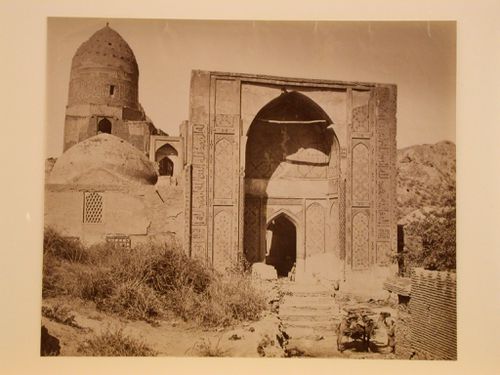
Man with load-bearing camel posed for scale next to the entrance at bottom of stairs. The complex was renovated in the 20th century.
PH1999:0167
Description:
Man with load-bearing camel posed for scale next to the entrance at bottom of stairs. The complex was renovated in the 20th century.
People:
Subject:
architecture
architecture
Date:
1890s
1890s
Title:
View of the Shah-i-Zinda complex with the Kusam-ibn-Abbas mausoleum and mosque on the left, Samarkand, Uzbekistan
Actions:
PH1999:0167
Description:
Man with load-bearing camel posed for scale next to the entrance at bottom of stairs. The complex was renovated in the 20th century.
View of the Shah-i-Zinda complex with the Kusam-ibn-Abbas mausoleum and mosque on the left, Samarkand, Uzbekistan
Actions:
PH1999:0167
Description:
Man with load-bearing camel posed for scale next to the entrance at bottom of stairs. The complex was renovated in the 20th century.
Form:
photographs
photographs
Date:
1890s
1890s
People:
Subject:
architecture
architecture
Form:
textual records
textual records
Actions:
Reference number:
ARCH276679
Description:
8 files and spiral bound documents (oversize) - primarily contains presentation and working materials (plans, notes, sketches) for projects that Arthur Erickson collaborated on as a design consultant while at Nick Milkovich Architects. Includes Robson Square Revitalization (1999), Canadian Canoe Museum (2002), 1133 West Georgia Street (ca. 2006), Denali Point, International Glass Museum (1998), Laxton Residence Renovations (ca. 2003), Trump Hotel and Tower (ca. 2005), Evrensel Residence (2006), Museum of Anthropology Renewal (2004).
ARCH276679
Description:
8 files and spiral bound documents (oversize) - primarily contains presentation and working materials (plans, notes, sketches) for projects that Arthur Erickson collaborated on as a design consultant while at Nick Milkovich Architects. Includes Robson Square Revitalization (1999), Canadian Canoe Museum (2002), 1133 West Georgia Street (ca. 2006), Denali Point, International Glass Museum (1998), Laxton Residence Renovations (ca. 2003), Trump Hotel and Tower (ca. 2005), Evrensel Residence (2006), Museum of Anthropology Renewal (2004).
People:
Date:
1998-2006
1998-2006
Title:
Presentation material and working material from Erickson's office
Actions:
ARCH276679
Description:
8 files and spiral bound documents (oversize) - primarily contains presentation and working materials (plans, notes, sketches) for projects that Arthur Erickson collaborated on as a design consultant while at Nick Milkovich Architects. Includes Robson Square Revitalization (1999), Canadian Canoe Museum (2002), 1133 West Georgia Street (ca. 2006), Denali Point, International Glass Museum (1998), Laxton Residence Renovations (ca. 2003), Trump Hotel and Tower (ca. 2005), Evrensel Residence (2006), Museum of Anthropology Renewal (2004).
Presentation material and working material from Erickson's office
Actions:
ARCH276679
Description:
8 files and spiral bound documents (oversize) - primarily contains presentation and working materials (plans, notes, sketches) for projects that Arthur Erickson collaborated on as a design consultant while at Nick Milkovich Architects. Includes Robson Square Revitalization (1999), Canadian Canoe Museum (2002), 1133 West Georgia Street (ca. 2006), Denali Point, International Glass Museum (1998), Laxton Residence Renovations (ca. 2003), Trump Hotel and Tower (ca. 2005), Evrensel Residence (2006), Museum of Anthropology Renewal (2004).
Form:
textual records
textual records
Date:
1998-2006
1998-2006
People:
Level of archival description:
Project
Project
Actions:
Reference number:
AP066.S2.D26
Description:
Le dossier documente la rénovation du Bar l'oeuf- Brasserie Holder situé au 3816 boulevard Saint-Laurent, à Montréal, Québec. Le budget aloué pour ce projet était de 350 000$ et la superficie est de 660 m2. Aussi, le projet s'est mérité le Prix d'excellence de l'OAQ, Mention en architecture 1992, catégorie "bâtiment commercial". Le dossier contient des dessins et des documents photographiques. Description du projet par l'architecte: "Transformation d'une quincaillerie en un bar-causerie "à l'européenne" qui, après quelques mois d'exploitation, sera modifié en restaurant. Le bâtiment voit son volume et sa superficie presque doublés. Cette dernière passant de quelque 340 m2 à 660 m2." ARQ: Architecture-Québec, nº 70, janvier 1993, p. 24.
AP066.S2.D26
Description:
Le dossier documente la rénovation du Bar l'oeuf- Brasserie Holder situé au 3816 boulevard Saint-Laurent, à Montréal, Québec. Le budget aloué pour ce projet était de 350 000$ et la superficie est de 660 m2. Aussi, le projet s'est mérité le Prix d'excellence de l'OAQ, Mention en architecture 1992, catégorie "bâtiment commercial". Le dossier contient des dessins et des documents photographiques. Description du projet par l'architecte: "Transformation d'une quincaillerie en un bar-causerie "à l'européenne" qui, après quelques mois d'exploitation, sera modifié en restaurant. Le bâtiment voit son volume et sa superficie presque doublés. Cette dernière passant de quelque 340 m2 à 660 m2." ARQ: Architecture-Québec, nº 70, janvier 1993, p. 24.
People:
Date:
1990-1991
1990-1991
Title:
Bar L'oeuf - Brasserie Holder
Actions:
AP066.S2.D26
Description:
Le dossier documente la rénovation du Bar l'oeuf- Brasserie Holder situé au 3816 boulevard Saint-Laurent, à Montréal, Québec. Le budget aloué pour ce projet était de 350 000$ et la superficie est de 660 m2. Aussi, le projet s'est mérité le Prix d'excellence de l'OAQ, Mention en architecture 1992, catégorie "bâtiment commercial". Le dossier contient des dessins et des documents photographiques. Description du projet par l'architecte: "Transformation d'une quincaillerie en un bar-causerie "à l'européenne" qui, après quelques mois d'exploitation, sera modifié en restaurant. Le bâtiment voit son volume et sa superficie presque doublés. Cette dernière passant de quelque 340 m2 à 660 m2." ARQ: Architecture-Québec, nº 70, janvier 1993, p. 24.
Bar L'oeuf - Brasserie Holder
Actions:
AP066.S2.D26
Description:
Le dossier documente la rénovation du Bar l'oeuf- Brasserie Holder situé au 3816 boulevard Saint-Laurent, à Montréal, Québec. Le budget aloué pour ce projet était de 350 000$ et la superficie est de 660 m2. Aussi, le projet s'est mérité le Prix d'excellence de l'OAQ, Mention en architecture 1992, catégorie "bâtiment commercial". Le dossier contient des dessins et des documents photographiques. Description du projet par l'architecte: "Transformation d'une quincaillerie en un bar-causerie "à l'européenne" qui, après quelques mois d'exploitation, sera modifié en restaurant. Le bâtiment voit son volume et sa superficie presque doublés. Cette dernière passant de quelque 340 m2 à 660 m2." ARQ: Architecture-Québec, nº 70, janvier 1993, p. 24.
Level of archival description:
Projet
Projet
Date:
1990-1991
1990-1991
People:
Level of archival description:
Sub-series
Sub-series
Reference number:
AP178.S1.2002.PR05.SS1
Description:
This project subseries documents the Parque de Vidago Complexo Termal e Hotel Palace in Vidago, Portugal. While the records were held in the office’s archives this project was assigned the number 49/00. The office assigned the date 2002 to this project. The project consisted of major renovations to update and modernize the Vidago Palace Hotel, originally opened in 1910, and the addition of a new thermal spa. Architects José Pedro Lopes Vieira and Diogo Rosa Lã were responsible for the interior decoration of the Palace Hotel, while Siza designed the Spa. The full or partial demolition of some parts of the hotel and nearby buildings was necessary to maintain the original character of the resort. In contrast to the historic hotel, the new spa was contemporary and minimalist with marble interiors. It included pools, Turkish baths, treatment and relaxation rooms, a gym, bars and meditation area. This project subseries is documented through drawings, photographic materials, study models and textual records dating from 2002-2012. These materials primarily document the spa but documentation for the surrounding site, Palace Hotel, Fonte Salus (spring), gatehouse and Serralves exhibition space is also included. The drawings are largely reprographic copies of printed CAD drawings and include sketches, studies, plans, details, sections, elevations, demolition drawings and mechanical, electrical and structural drawings. The textual records include correspondence, meeting minutes, studies, building programs, furniture and spa equipment documentation, budgets and contracts. A large amount of documentation on various electrical, structural and mechanical systems is also included. The photographic materials are mostly printed digital photos showing buildings across the site, pre and post construction work and reference images. There are also a number of photos, postcards and brochures showing historical images of the hotel.
AP178.S1.2002.PR05.SS1
Description:
This project subseries documents the Parque de Vidago Complexo Termal e Hotel Palace in Vidago, Portugal. While the records were held in the office’s archives this project was assigned the number 49/00. The office assigned the date 2002 to this project. The project consisted of major renovations to update and modernize the Vidago Palace Hotel, originally opened in 1910, and the addition of a new thermal spa. Architects José Pedro Lopes Vieira and Diogo Rosa Lã were responsible for the interior decoration of the Palace Hotel, while Siza designed the Spa. The full or partial demolition of some parts of the hotel and nearby buildings was necessary to maintain the original character of the resort. In contrast to the historic hotel, the new spa was contemporary and minimalist with marble interiors. It included pools, Turkish baths, treatment and relaxation rooms, a gym, bars and meditation area. This project subseries is documented through drawings, photographic materials, study models and textual records dating from 2002-2012. These materials primarily document the spa but documentation for the surrounding site, Palace Hotel, Fonte Salus (spring), gatehouse and Serralves exhibition space is also included. The drawings are largely reprographic copies of printed CAD drawings and include sketches, studies, plans, details, sections, elevations, demolition drawings and mechanical, electrical and structural drawings. The textual records include correspondence, meeting minutes, studies, building programs, furniture and spa equipment documentation, budgets and contracts. A large amount of documentation on various electrical, structural and mechanical systems is also included. The photographic materials are mostly printed digital photos showing buildings across the site, pre and post construction work and reference images. There are also a number of photos, postcards and brochures showing historical images of the hotel.
People:
Date:
2002-2012
2002-2012
Title:
Parque de Vidago, Complexo Termal e Hotel Palace [Vidago Palace Hotel and Spa], Vidago, Portugal (2002)
Actions:
AP178.S1.2002.PR05.SS1
Description:
This project subseries documents the Parque de Vidago Complexo Termal e Hotel Palace in Vidago, Portugal. While the records were held in the office’s archives this project was assigned the number 49/00. The office assigned the date 2002 to this project. The project consisted of major renovations to update and modernize the Vidago Palace Hotel, originally opened in 1910, and the addition of a new thermal spa. Architects José Pedro Lopes Vieira and Diogo Rosa Lã were responsible for the interior decoration of the Palace Hotel, while Siza designed the Spa. The full or partial demolition of some parts of the hotel and nearby buildings was necessary to maintain the original character of the resort. In contrast to the historic hotel, the new spa was contemporary and minimalist with marble interiors. It included pools, Turkish baths, treatment and relaxation rooms, a gym, bars and meditation area. This project subseries is documented through drawings, photographic materials, study models and textual records dating from 2002-2012. These materials primarily document the spa but documentation for the surrounding site, Palace Hotel, Fonte Salus (spring), gatehouse and Serralves exhibition space is also included. The drawings are largely reprographic copies of printed CAD drawings and include sketches, studies, plans, details, sections, elevations, demolition drawings and mechanical, electrical and structural drawings. The textual records include correspondence, meeting minutes, studies, building programs, furniture and spa equipment documentation, budgets and contracts. A large amount of documentation on various electrical, structural and mechanical systems is also included. The photographic materials are mostly printed digital photos showing buildings across the site, pre and post construction work and reference images. There are also a number of photos, postcards and brochures showing historical images of the hotel.
Parque de Vidago, Complexo Termal e Hotel Palace [Vidago Palace Hotel and Spa], Vidago, Portugal (2002)
Actions:
AP178.S1.2002.PR05.SS1
Description:
This project subseries documents the Parque de Vidago Complexo Termal e Hotel Palace in Vidago, Portugal. While the records were held in the office’s archives this project was assigned the number 49/00. The office assigned the date 2002 to this project. The project consisted of major renovations to update and modernize the Vidago Palace Hotel, originally opened in 1910, and the addition of a new thermal spa. Architects José Pedro Lopes Vieira and Diogo Rosa Lã were responsible for the interior decoration of the Palace Hotel, while Siza designed the Spa. The full or partial demolition of some parts of the hotel and nearby buildings was necessary to maintain the original character of the resort. In contrast to the historic hotel, the new spa was contemporary and minimalist with marble interiors. It included pools, Turkish baths, treatment and relaxation rooms, a gym, bars and meditation area. This project subseries is documented through drawings, photographic materials, study models and textual records dating from 2002-2012. These materials primarily document the spa but documentation for the surrounding site, Palace Hotel, Fonte Salus (spring), gatehouse and Serralves exhibition space is also included. The drawings are largely reprographic copies of printed CAD drawings and include sketches, studies, plans, details, sections, elevations, demolition drawings and mechanical, electrical and structural drawings. The textual records include correspondence, meeting minutes, studies, building programs, furniture and spa equipment documentation, budgets and contracts. A large amount of documentation on various electrical, structural and mechanical systems is also included. The photographic materials are mostly printed digital photos showing buildings across the site, pre and post construction work and reference images. There are also a number of photos, postcards and brochures showing historical images of the hotel.
Level of archival description:
Project
Project
Date:
2002-2012
2002-2012
People:
Form:
textual records
textual records
Actions:
Reference number:
ARCH257051
Description:
22 files of "Promo Material" consisting of written data and photos - California Plaza, King's Landing Condominiums, Medinah University, Napp Laboratories, University of Arizona School of Business, Roy Thompson Hall, Vancouver Art Gallery, Bank of Canada, Canadian Chancery, Rideau Hall Renovations (Ottawa), Teck Corporation offices, Robson Square, Simon Fraser Universty, Provincial Court Building (Thunder Bay), Banff School of Fine Arts, Markham Civic Centre, Robert McLaughlin Gallery, Promotional Material, AEA brochure covers, title pages, resumes
ARCH257051
Description:
22 files of "Promo Material" consisting of written data and photos - California Plaza, King's Landing Condominiums, Medinah University, Napp Laboratories, University of Arizona School of Business, Roy Thompson Hall, Vancouver Art Gallery, Bank of Canada, Canadian Chancery, Rideau Hall Renovations (Ottawa), Teck Corporation offices, Robson Square, Simon Fraser Universty, Provincial Court Building (Thunder Bay), Banff School of Fine Arts, Markham Civic Centre, Robert McLaughlin Gallery, Promotional Material, AEA brochure covers, title pages, resumes
People:
Title:
Project photographs and projects descriptions for promotion
Actions:
ARCH257051
Description:
22 files of "Promo Material" consisting of written data and photos - California Plaza, King's Landing Condominiums, Medinah University, Napp Laboratories, University of Arizona School of Business, Roy Thompson Hall, Vancouver Art Gallery, Bank of Canada, Canadian Chancery, Rideau Hall Renovations (Ottawa), Teck Corporation offices, Robson Square, Simon Fraser Universty, Provincial Court Building (Thunder Bay), Banff School of Fine Arts, Markham Civic Centre, Robert McLaughlin Gallery, Promotional Material, AEA brochure covers, title pages, resumes
Project photographs and projects descriptions for promotion
Actions:
ARCH257051
Description:
22 files of "Promo Material" consisting of written data and photos - California Plaza, King's Landing Condominiums, Medinah University, Napp Laboratories, University of Arizona School of Business, Roy Thompson Hall, Vancouver Art Gallery, Bank of Canada, Canadian Chancery, Rideau Hall Renovations (Ottawa), Teck Corporation offices, Robson Square, Simon Fraser Universty, Provincial Court Building (Thunder Bay), Banff School of Fine Arts, Markham Civic Centre, Robert McLaughlin Gallery, Promotional Material, AEA brochure covers, title pages, resumes
Form:
textual records
textual records
People:
Form:
archives
Level of archival description:
Fonds
archives
Level of archival description:
Fonds
Title:
Luc Durand fonds
Luc Durand fonds
Reference number:
AP121
Synopsis:
Le fonds documente la formation de l'architecte au Canada et à l'étranger ainsi que toutes les étapes de la carrière de Luc Durand tant en Suisse, en Inde qu'au Canada. Il révèle incidemment l'activité peu connue d'un jeune architecte canadien installé en Inde au début des années soixante. Les archives documentent également les projets d'importance auxquels il fut associé à son retour au Canada, notamment avec Papineau Gérin-Lajoie LeBlanc (Concours du Pavillon du Québec, Résidence des filles, à l'Université de Montréal) et avec Roger D'Astous (Village Olympique, Institut Canadien de recherche en génie forestier).
AP121
Synopsis:
Le fonds documente la formation de l'architecte au Canada et à l'étranger ainsi que toutes les étapes de la carrière de Luc Durand tant en Suisse, en Inde qu'au Canada. Il révèle incidemment l'activité peu connue d'un jeune architecte canadien installé en Inde au début des années soixante. Les archives documentent également les projets d'importance auxquels il fut associé à son retour au Canada, notamment avec Papineau Gérin-Lajoie LeBlanc (Concours du Pavillon du Québec, Résidence des filles, à l'Université de Montréal) et avec Roger D'Astous (Village Olympique, Institut Canadien de recherche en génie forestier).
People:
Date:
1945-2000
1945-2000
Title:
Luc Durand fonds
Actions:
AP121
Synopsis:
Le fonds documente la formation de l'architecte au Canada et à l'étranger ainsi que toutes les étapes de la carrière de Luc Durand tant en Suisse, en Inde qu'au Canada. Il révèle incidemment l'activité peu connue d'un jeune architecte canadien installé en Inde au début des années soixante. Les archives documentent également les projets d'importance auxquels il fut associé à son retour au Canada, notamment avec Papineau Gérin-Lajoie LeBlanc (Concours du Pavillon du Québec, Résidence des filles, à l'Université de Montréal) et avec Roger D'Astous (Village Olympique, Institut Canadien de recherche en génie forestier).
Luc Durand fonds
Actions:
AP121
Synopsis:
Le fonds documente la formation de l'architecte au Canada et à l'étranger ainsi que toutes les étapes de la carrière de Luc Durand tant en Suisse, en Inde qu'au Canada. Il révèle incidemment l'activité peu connue d'un jeune architecte canadien installé en Inde au début des années soixante. Les archives documentent également les projets d'importance auxquels il fut associé à son retour au Canada, notamment avec Papineau Gérin-Lajoie LeBlanc (Concours du Pavillon du Québec, Résidence des filles, à l'Université de Montréal) et avec Roger D'Astous (Village Olympique, Institut Canadien de recherche en génie forestier).
Form:
archives
Level of archival description:
Fonds
archives
Level of archival description:
Fonds
Date:
1945-2000
1945-2000
People:


