


36173 Results
Form:
books
books
Actions:
Price:
$49.95
(available to order)
Summary:
A beautifully designed and extensively illustrated monograph tells the story of one of North America's leading firms, TEN Architects, based in New York City and Mexico City. Founded in 1986 by principal Enrique Norten, TEN has grown to 70 members and left its mark on a wide variety of award-winning projects in architecture and planning.
$49.95
(available to order)
Summary:
A beautifully designed and extensively illustrated monograph tells the story of one of North America's leading firms, TEN Architects, based in New York City and Mexico City. Founded in 1986 by principal Enrique Norten, TEN has grown to 70 members and left its mark on a wide variety of award-winning projects in architecture and planning.
Title:
TEN arquitectos & Enrique Norten : The limits of form
Actions:
Price:
$49.95
(available to order)
Summary:
A beautifully designed and extensively illustrated monograph tells the story of one of North America's leading firms, TEN Architects, based in New York City and Mexico City. Founded in 1986 by principal Enrique Norten, TEN has grown to 70 members and left its mark on a wide variety of award-winning projects in architecture and planning.
TEN arquitectos & Enrique Norten : The limits of form
Actions:
Price:
$49.95
(available to order)
Summary:
A beautifully designed and extensively illustrated monograph tells the story of one of North America's leading firms, TEN Architects, based in New York City and Mexico City. Founded in 1986 by principal Enrique Norten, TEN has grown to 70 members and left its mark on a wide variety of award-winning projects in architecture and planning.
Form:
books
books
Publication:
April 2012
April 2012
Subject:
Architecture Monographs
Architecture Monographs
Form:
books
books
Actions:
Price:
$26.95
(available to order)
Summary:
Welcome to Finland, a young land experiencing a rapidly aging consciousness, where newly founded institutions are already outmoded and geographic impediments are a constant crippling agent. The latest addition to international prankster/deep thinker Ingo Niermann's Solution series, this wryly entertaining book addresses the Nordic country's numerous predicaments. The(...)
$26.95
(available to order)
Summary:
Welcome to Finland, a young land experiencing a rapidly aging consciousness, where newly founded institutions are already outmoded and geographic impediments are a constant crippling agent. The latest addition to international prankster/deep thinker Ingo Niermann's Solution series, this wryly entertaining book addresses the Nordic country's numerous predicaments. The(...)
Title:
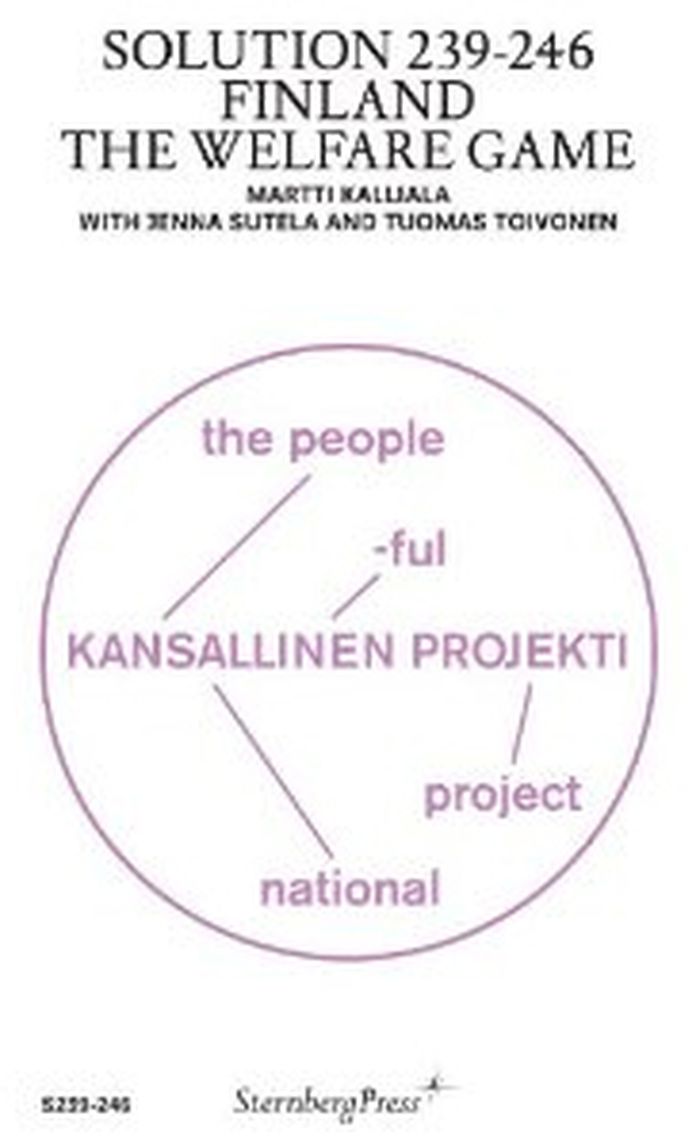
Solution 239-246 : Finland, the welfare game
Actions:
Price:
$26.95
(available to order)
Summary:
Welcome to Finland, a young land experiencing a rapidly aging consciousness, where newly founded institutions are already outmoded and geographic impediments are a constant crippling agent. The latest addition to international prankster/deep thinker Ingo Niermann's Solution series, this wryly entertaining book addresses the Nordic country's numerous predicaments. The three Finnish authors offer solutions to their native country's quandaries, ranging from the absurd (the implementation of fiction-mongering emissaries to boost tourism) to the earnest and probably half-serious (the repurposing of the country to host nuclear waste). The book elucidates the northern country's modern history as a nation under construction, proposing that its identity remain a malleable myth.
Solution 239-246 : Finland, the welfare game
Actions:
Price:
$26.95
(available to order)
Summary:
Welcome to Finland, a young land experiencing a rapidly aging consciousness, where newly founded institutions are already outmoded and geographic impediments are a constant crippling agent. The latest addition to international prankster/deep thinker Ingo Niermann's Solution series, this wryly entertaining book addresses the Nordic country's numerous predicaments. The three Finnish authors offer solutions to their native country's quandaries, ranging from the absurd (the implementation of fiction-mongering emissaries to boost tourism) to the earnest and probably half-serious (the repurposing of the country to host nuclear waste). The book elucidates the northern country's modern history as a nation under construction, proposing that its identity remain a malleable myth.
Form:
books
books
Publication:
April 2012
April 2012
Subject:
Critical Theory
Critical Theory
Form:
books
books
Title:
On super-diversity
On super-diversity
Actions:
Price:
$24.95
(available to order)
Summary:
One of the greatest challenges for art and culture is to represent diversity. But what precisely does this term mean and why does it so often placate rather than produce what it names? Professor Steven Vertovec, Director of the Max-Planck-Institute for the Study of Religious and Ethnic Diversity (Göttingen, Germany) puts forward the notion of “super-diversity,” noting(...)
$24.95
(available to order)
Summary:
One of the greatest challenges for art and culture is to represent diversity. But what precisely does this term mean and why does it so often placate rather than produce what it names? Professor Steven Vertovec, Director of the Max-Planck-Institute for the Study of Religious and Ethnic Diversity (Göttingen, Germany) puts forward the notion of “super-diversity,” noting(...)
Title:
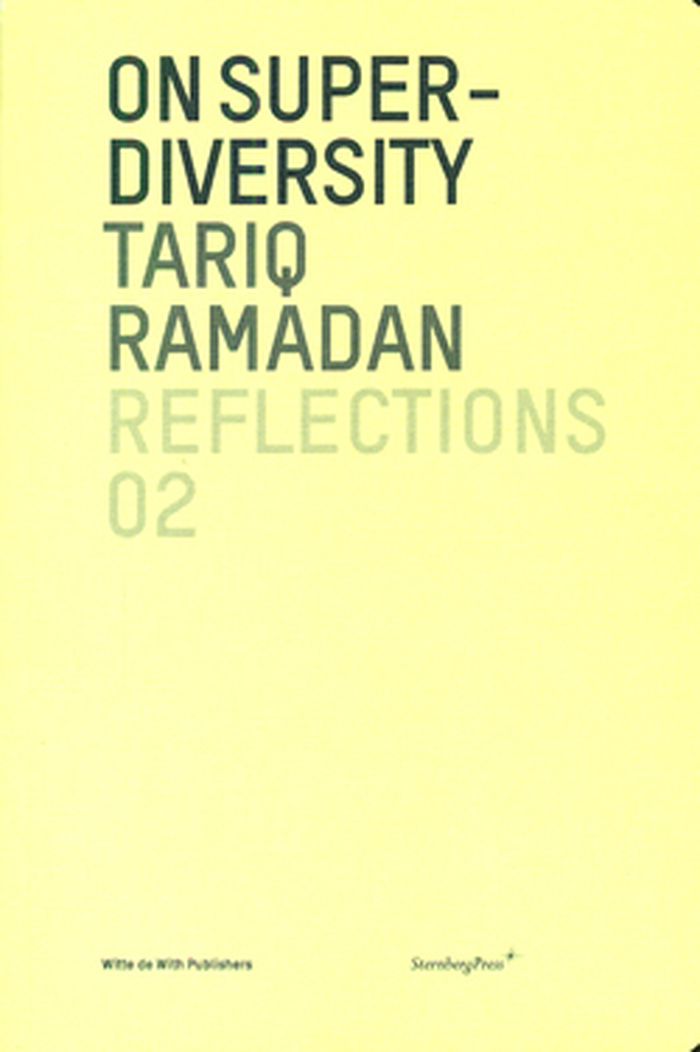
On super-diversity
Actions:
Price:
$24.95
(available to order)
Summary:
One of the greatest challenges for art and culture is to represent diversity. But what precisely does this term mean and why does it so often placate rather than produce what it names? Professor Steven Vertovec, Director of the Max-Planck-Institute for the Study of Religious and Ethnic Diversity (Göttingen, Germany) puts forward the notion of “super-diversity,” noting “the need to re-evaluate conceptions and policy measures surrounding diversity by way of moving beyond an ethno-focal understanding and adopting a multidimensional approach.” Developing this idea further, while aiming to question and complicate the focus on immigration in the current debate, the prolific and provocative scholar and activist Tariq Ramadan weighs in on the subject. In the resulting essay, translated into Dutch and Arabic, Professor Ramadan sets out an argument that foregrounds universalism as a necessary, if devalued, horizon and offers a critique of the uses and limits of dialogue and discourse within the day-to-day practice of super-diversity.
On super-diversity
Actions:
Price:
$24.95
(available to order)
Summary:
One of the greatest challenges for art and culture is to represent diversity. But what precisely does this term mean and why does it so often placate rather than produce what it names? Professor Steven Vertovec, Director of the Max-Planck-Institute for the Study of Religious and Ethnic Diversity (Göttingen, Germany) puts forward the notion of “super-diversity,” noting “the need to re-evaluate conceptions and policy measures surrounding diversity by way of moving beyond an ethno-focal understanding and adopting a multidimensional approach.” Developing this idea further, while aiming to question and complicate the focus on immigration in the current debate, the prolific and provocative scholar and activist Tariq Ramadan weighs in on the subject. In the resulting essay, translated into Dutch and Arabic, Professor Ramadan sets out an argument that foregrounds universalism as a necessary, if devalued, horizon and offers a critique of the uses and limits of dialogue and discourse within the day-to-day practice of super-diversity.
Form:
books
books
Publication:
April 2012
April 2012
Subject:
Critical Theory
Critical Theory
Form:
books
books
Actions:
Price:
$28.95
(available to order)
Summary:
The latest issue of the biannual publication from the public "art think-tank" Casco, based in The Netherlands, explores the notion of playfulness itself as a method and value in cultural practice, positioning it to contrast with fashionable ideologies like "lifelong learning" and "work as play." The publication addresses the impact of the notion of play and gaming methods(...)
$28.95
(available to order)
Summary:
The latest issue of the biannual publication from the public "art think-tank" Casco, based in The Netherlands, explores the notion of playfulness itself as a method and value in cultural practice, positioning it to contrast with fashionable ideologies like "lifelong learning" and "work as play." The publication addresses the impact of the notion of play and gaming methods(...)
Title:
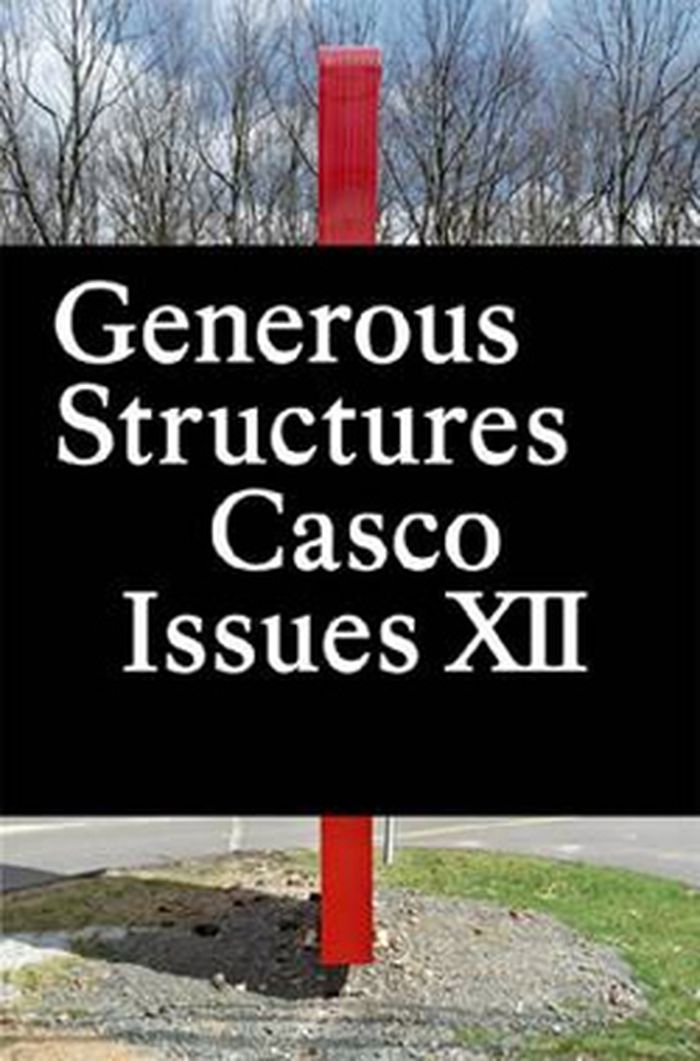
Casco issues XII : Generous structures
Actions:
Price:
$28.95
(available to order)
Summary:
The latest issue of the biannual publication from the public "art think-tank" Casco, based in The Netherlands, explores the notion of playfulness itself as a method and value in cultural practice, positioning it to contrast with fashionable ideologies like "lifelong learning" and "work as play." The publication addresses the impact of the notion of play and gaming methods in cultural work, [exploring connections between text and images and addressing the various research methods to question the historical shift in the concept of the game and playfulness.] Casco, Office for Art, Design and Theory, is devoted to studying art in the public realm, and the relation between art and the physical, social and political environment.
Casco issues XII : Generous structures
Actions:
Price:
$28.95
(available to order)
Summary:
The latest issue of the biannual publication from the public "art think-tank" Casco, based in The Netherlands, explores the notion of playfulness itself as a method and value in cultural practice, positioning it to contrast with fashionable ideologies like "lifelong learning" and "work as play." The publication addresses the impact of the notion of play and gaming methods in cultural work, [exploring connections between text and images and addressing the various research methods to question the historical shift in the concept of the game and playfulness.] Casco, Office for Art, Design and Theory, is devoted to studying art in the public realm, and the relation between art and the physical, social and political environment.
Form:
books
books
Publication:
April 2012
April 2012
Subject:
Critical Theory
Critical Theory
Form:
books
books
Actions:
Price:
$68.95
(available to order)
Summary:
The Auschwitz Museum was established in 1947 as a monument to the Polish resistance. In the late eighties Hans Citroen met Barbara Starzynska and he ended up visiting her relatives in Owicim, the city where his grandfather survived KZ Auschwitz. He noticed many incongruities that did not seem to disturb other visitors. Looking for an explanation, they talked with(...)
$68.95
(available to order)
Summary:
The Auschwitz Museum was established in 1947 as a monument to the Polish resistance. In the late eighties Hans Citroen met Barbara Starzynska and he ended up visiting her relatives in Owicim, the city where his grandfather survived KZ Auschwitz. He noticed many incongruities that did not seem to disturb other visitors. Looking for an explanation, they talked with(...)
Title:
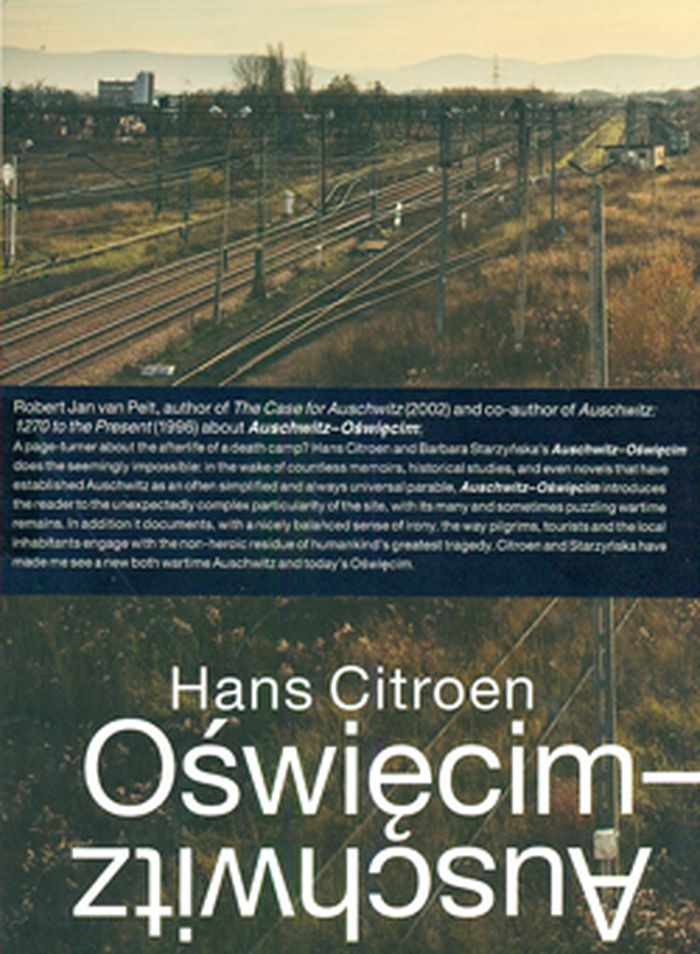
Auschwitz-Oswiecim: the hidden city in the East
Actions:
Price:
$68.95
(available to order)
Summary:
The Auschwitz Museum was established in 1947 as a monument to the Polish resistance. In the late eighties Hans Citroen met Barbara Starzynska and he ended up visiting her relatives in Owicim, the city where his grandfather survived KZ Auschwitz. He noticed many incongruities that did not seem to disturb other visitors. Looking for an explanation, they talked with archivists and curators and explored the sites many times. Their research covers mostly the years that followed the Holocaust. Bit by bit, they find a hidden city, Barbara as architect, Hans as artist. The story of the search reads like a novel and therefore is a substantial part of this photographic investigation. Also available as a German and a Dutch edition.
Auschwitz-Oswiecim: the hidden city in the East
Actions:
Price:
$68.95
(available to order)
Summary:
The Auschwitz Museum was established in 1947 as a monument to the Polish resistance. In the late eighties Hans Citroen met Barbara Starzynska and he ended up visiting her relatives in Owicim, the city where his grandfather survived KZ Auschwitz. He noticed many incongruities that did not seem to disturb other visitors. Looking for an explanation, they talked with archivists and curators and explored the sites many times. Their research covers mostly the years that followed the Holocaust. Bit by bit, they find a hidden city, Barbara as architect, Hans as artist. The story of the search reads like a novel and therefore is a substantial part of this photographic investigation. Also available as a German and a Dutch edition.
Form:
books
books
Publication:
April 2012
April 2012
Subject:
Architectural Theory
Architectural Theory
Form:
books
books
Title:
Robert Heinecken: copywork
Robert Heinecken: copywork
Actions:
Price:
$54.95
(available to order)
Summary:
Robert Heinecken (1931–2006), who headed the photo program at UCLA for three decades, was one of America’s most influential contemporary, conceptual photographers. Heinecken rarely used a camera; his definition of photography encompassed everything related to the photo, as his interest was on the relation of methods and formalism—often in an irreverent and humorous way—to(...)
$54.95
(available to order)
Summary:
Robert Heinecken (1931–2006), who headed the photo program at UCLA for three decades, was one of America’s most influential contemporary, conceptual photographers. Heinecken rarely used a camera; his definition of photography encompassed everything related to the photo, as his interest was on the relation of methods and formalism—often in an irreverent and humorous way—to(...)
Title:
Robert Heinecken: copywork
Actions:
Price:
$54.95
(available to order)
Summary:
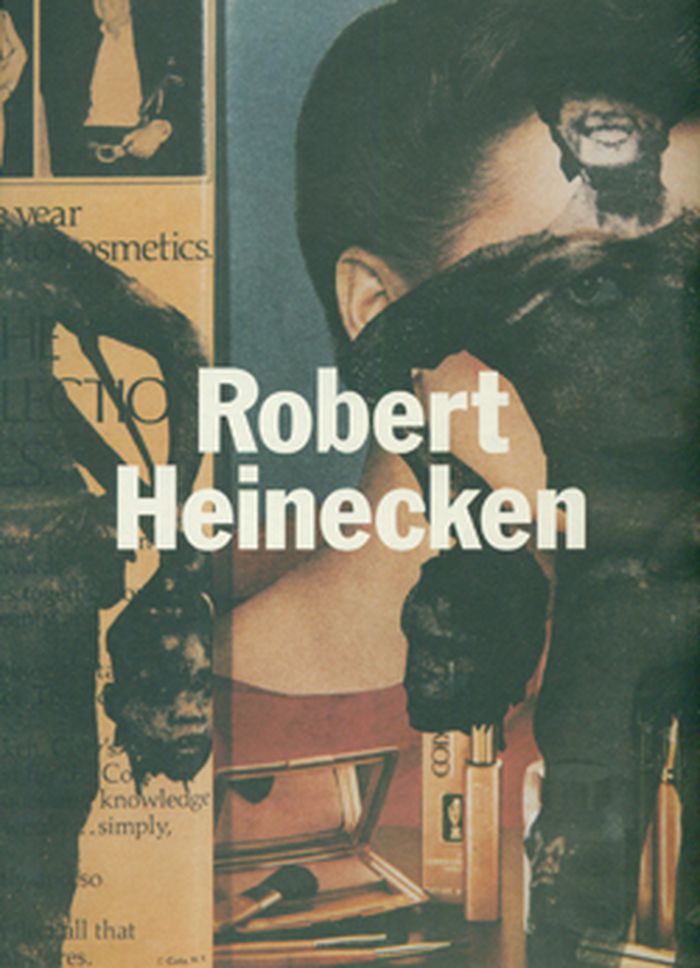
Robert Heinecken (1931–2006), who headed the photo program at UCLA for three decades, was one of America’s most influential contemporary, conceptual photographers. Heinecken rarely used a camera; his definition of photography encompassed everything related to the photo, as his interest was on the relation of methods and formalism—often in an irreverent and humorous way—to popular media. This comprehensive overview of Heinecken’s work from the 1960s through the 1990s features a complete reproduction of one of the artist’s best-known works: Are You Real series (1964–1968) in addition to his numerous forward-thinking bodies of work. Also includes extensive illustrations and writings that make this book indispensible to any art library, public or private.
Robert Heinecken: copywork
Actions:
Price:
$54.95
(available to order)
Summary:
Robert Heinecken (1931–2006), who headed the photo program at UCLA for three decades, was one of America’s most influential contemporary, conceptual photographers. Heinecken rarely used a camera; his definition of photography encompassed everything related to the photo, as his interest was on the relation of methods and formalism—often in an irreverent and humorous way—to popular media. This comprehensive overview of Heinecken’s work from the 1960s through the 1990s features a complete reproduction of one of the artist’s best-known works: Are You Real series (1964–1968) in addition to his numerous forward-thinking bodies of work. Also includes extensive illustrations and writings that make this book indispensible to any art library, public or private.
Form:
books
books
Publication:
April 2012
April 2012
Subject:
Photography monographs
Photography monographs
Form:
books
books
Title:
Reclaiming the street
Reclaiming the street
Actions:
Price:
$34.95
(available to order)
Summary:
The international architectural competition and publication ‘Reclaiming the Street’ are part of ‘Endless City’, a long-term project of Showroom MAMA in which the relationship between skateboard culture, public space and (visual) art is being investigated. The creativity with which the skaters 'use' the city and how they question (architectural) rules, offer new(...)
$34.95
(available to order)
Summary:
The international architectural competition and publication ‘Reclaiming the Street’ are part of ‘Endless City’, a long-term project of Showroom MAMA in which the relationship between skateboard culture, public space and (visual) art is being investigated. The creativity with which the skaters 'use' the city and how they question (architectural) rules, offer new(...)
Title:
Reclaiming the street
Actions:
Price:
$34.95
(available to order)
Summary:
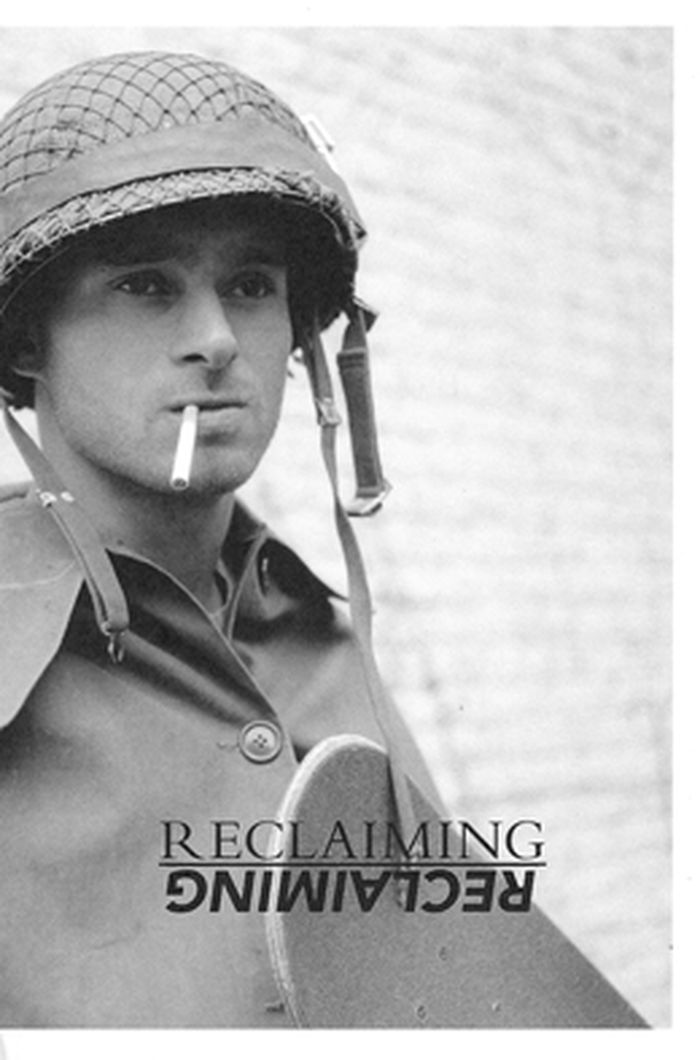
The international architectural competition and publication ‘Reclaiming the Street’ are part of ‘Endless City’, a long-term project of Showroom MAMA in which the relationship between skateboard culture, public space and (visual) art is being investigated. The creativity with which the skaters 'use' the city and how they question (architectural) rules, offer new perspectives on the design and use of public space by different groups of users. The call for ‘Reclaiming the Street’ was the design of an object or adaptation of urban space to be used by skateboarders and the general public, encouraging multiple uses. With a text by architectural historian Ian Borden and a chapter from Jocko Weyland’s ‘The Answer is Never’.
Reclaiming the street
Actions:
Price:
$34.95
(available to order)
Summary:
The international architectural competition and publication ‘Reclaiming the Street’ are part of ‘Endless City’, a long-term project of Showroom MAMA in which the relationship between skateboard culture, public space and (visual) art is being investigated. The creativity with which the skaters 'use' the city and how they question (architectural) rules, offer new perspectives on the design and use of public space by different groups of users. The call for ‘Reclaiming the Street’ was the design of an object or adaptation of urban space to be used by skateboarders and the general public, encouraging multiple uses. With a text by architectural historian Ian Borden and a chapter from Jocko Weyland’s ‘The Answer is Never’.
Form:
books
books
Publication:
April 2012
April 2012
Subject:
Public Space
Public Space
Form:
books
books
Title:
The transdisciplinary studio
The transdisciplinary studio
Actions:
Price:
$46.95
(available to order)
Summary:
We have entered a post-post-studio age, and find ourselves with a new studio model: the transdisciplinary. Artists and designers are now defined not by their discipline but by the fluidity with which their practices move between the fields of architecture, art, and design. This volume delves into four pioneering transdisciplinary studios — Jorge Pardo Sculpture,(...)
$46.95
(available to order)
Summary:
We have entered a post-post-studio age, and find ourselves with a new studio model: the transdisciplinary. Artists and designers are now defined not by their discipline but by the fluidity with which their practices move between the fields of architecture, art, and design. This volume delves into four pioneering transdisciplinary studios — Jorge Pardo Sculpture,(...)
Title:
The transdisciplinary studio
Actions:
Price:
$46.95
(available to order)
Summary:
We have entered a post-post-studio age, and find ourselves with a new studio model: the transdisciplinary. Artists and designers are now defined not by their discipline but by the fluidity with which their practices move between the fields of architecture, art, and design. This volume delves into four pioneering transdisciplinary studios — Jorge Pardo Sculpture, Konstantin Grcic Industrial Design, Studio Olafur Eliasson, and Åbäke — by observing and interviewing the practitioners and their assistants. A further series of interviews with curators, critics, anthropologists, designers, and artists serves to contextualize the transdisciplinary model now at the fore of creative practice. Including interviews with Jorge Pardo, Konstantin Grcic, Olafur Eliasson, and Åbäke; and Vito Acconci, Gui Bonsiepe, James Clifford, Dexter Sinister, Martino Gamper, Ryan Gander, Caroline Jones, Ronald Jones, Maria Lind, Alessandro Mendini, Rick Poynor, and Andrea Zittel. The Transdisciplinary Studio is the first volume of a series of books by Alex Coles on the expanded studio model and contemporary praxis.
The transdisciplinary studio
Actions:
Price:
$46.95
(available to order)
Summary:
We have entered a post-post-studio age, and find ourselves with a new studio model: the transdisciplinary. Artists and designers are now defined not by their discipline but by the fluidity with which their practices move between the fields of architecture, art, and design. This volume delves into four pioneering transdisciplinary studios — Jorge Pardo Sculpture, Konstantin Grcic Industrial Design, Studio Olafur Eliasson, and Åbäke — by observing and interviewing the practitioners and their assistants. A further series of interviews with curators, critics, anthropologists, designers, and artists serves to contextualize the transdisciplinary model now at the fore of creative practice. Including interviews with Jorge Pardo, Konstantin Grcic, Olafur Eliasson, and Åbäke; and Vito Acconci, Gui Bonsiepe, James Clifford, Dexter Sinister, Martino Gamper, Ryan Gander, Caroline Jones, Ronald Jones, Maria Lind, Alessandro Mendini, Rick Poynor, and Andrea Zittel. The Transdisciplinary Studio is the first volume of a series of books by Alex Coles on the expanded studio model and contemporary praxis.
Form:
books
books
Publication:
April 2012
April 2012
Subject:
Art Theory
Art Theory
Form:
books
books
Actions:
Price:
$32.95
(available to order)
Summary:
How do contemporary design practices engage with political and societal issues? Can design realize ideas that lead to significant change? Where would the change happen: in the design studio, on the factory floor, in exhibition settings or on the street? Some of the design world’s greatest practitioners, including architects, came together for a multi-faceted, three-year(...)
$32.95
(available to order)
Summary:
How do contemporary design practices engage with political and societal issues? Can design realize ideas that lead to significant change? Where would the change happen: in the design studio, on the factory floor, in exhibition settings or on the street? Some of the design world’s greatest practitioners, including architects, came together for a multi-faceted, three-year(...)
Title:
Design act: socially and politically engaged design today
Actions:
Price:
$32.95
(available to order)
Summary:
How do contemporary design practices engage with political and societal issues? Can design realize ideas that lead to significant change? Where would the change happen: in the design studio, on the factory floor, in exhibition settings or on the street? Some of the design world’s greatest practitioners, including architects, came together for a multi-faceted, three-year project sponsored by Iaspis. This book, the project’s culmination, comprises texts, interviews, drawings and other artwork in three sections: WHAT brings together contemporary and historical writings; HOW analyzes common issues and emerging tactics within socially and politically engaged design; and WHERE offers a broad perspective on new forms of design practice. Featuring facsimiles of 36 projects from the Design Act archive, this rich book is a must-have for designers who care about their role in the wider world.
Design act: socially and politically engaged design today
Actions:
Price:
$32.95
(available to order)
Summary:
How do contemporary design practices engage with political and societal issues? Can design realize ideas that lead to significant change? Where would the change happen: in the design studio, on the factory floor, in exhibition settings or on the street? Some of the design world’s greatest practitioners, including architects, came together for a multi-faceted, three-year project sponsored by Iaspis. This book, the project’s culmination, comprises texts, interviews, drawings and other artwork in three sections: WHAT brings together contemporary and historical writings; HOW analyzes common issues and emerging tactics within socially and politically engaged design; and WHERE offers a broad perspective on new forms of design practice. Featuring facsimiles of 36 projects from the Design Act archive, this rich book is a must-have for designers who care about their role in the wider world.
Form:
books
books
Publication:
April 2012
April 2012
Subject:
Design Theory
Design Theory
Form:
books
books
Price:
$24.95
(available to order)
Summary:
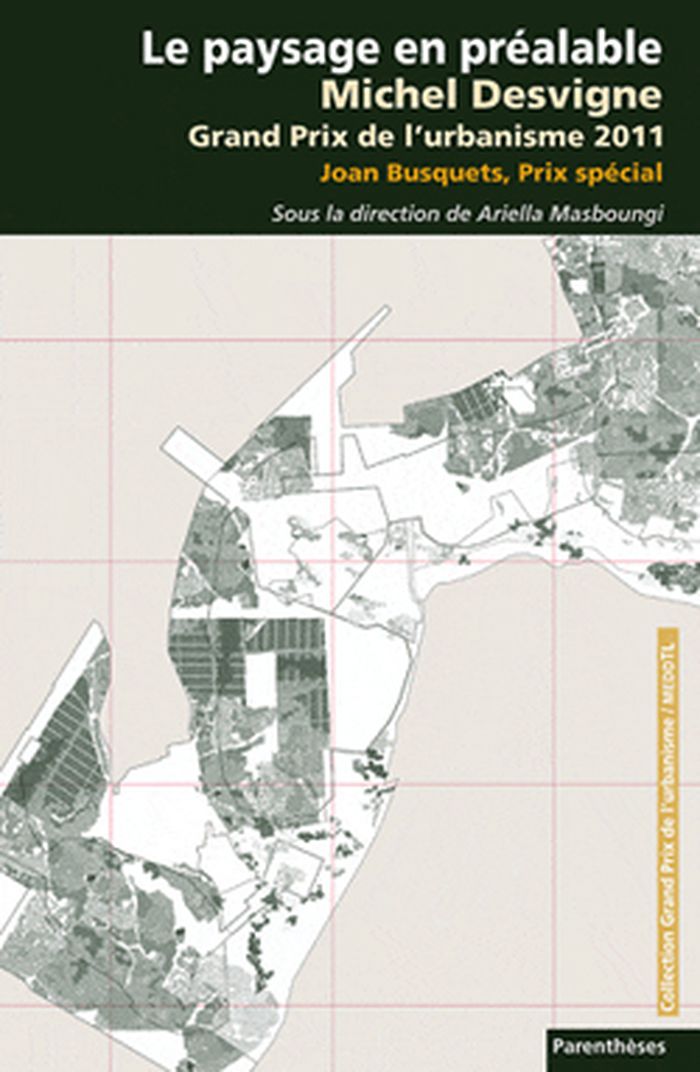
Pour Michel Desvigne, Grand Prix de l'urbanisme 2011, le paysage initie la recomposition urbaine, notamment celle des grands territoires, telle sa récente intervention sur le plateau de Saclay. Il remet au goût du jour les enseignements du plus grand paysagiste américain, Frederick Law Olmsted, pour refonder une pensée du projet durable à la bonne échelle, mêlant(...)
$24.95
(available to order)
Summary:
Pour Michel Desvigne, Grand Prix de l'urbanisme 2011, le paysage initie la recomposition urbaine, notamment celle des grands territoires, telle sa récente intervention sur le plateau de Saclay. Il remet au goût du jour les enseignements du plus grand paysagiste américain, Frederick Law Olmsted, pour refonder une pensée du projet durable à la bonne échelle, mêlant(...)
Title:
Le paysage en préalable : Michel Desvigne, Grand Prix de l'urbanisme 2011
Actions:
Price:
$24.95
(available to order)
Summary:
Pour Michel Desvigne, Grand Prix de l'urbanisme 2011, le paysage initie la recomposition urbaine, notamment celle des grands territoires, telle sa récente intervention sur le plateau de Saclay. Il remet au goût du jour les enseignements du plus grand paysagiste américain, Frederick Law Olmsted, pour refonder une pensée du projet durable à la bonne échelle, mêlant l'existant et l'artifice, réunissant les conditions du lien entre hommes, espaces et fonctions. De plus, il développe un mode d intervention multiscalaire : jardins, parcs (Millenium à Londres), plans directeurs (entrée de ville à Montpellier), recompositions territoriales (rive droite de la Garonne à Bordeaux), places urbaines (à Dallas, à Anvers, à Marseille) ou ensemble des espaces publics (Lyon Confluence). Joan Busquets, Prix spécial, élargit à l'échelle européenne l'expérience barcelonaise qui a fondé l'urbanisme sur la recomposition de l'espace public, incluant les infrastructures lourdes et la création de nouvelles centralités. Deux approches qui ouvrent la voie de l'urbanisme contemporain durable, posant le paysage en préalable.
Le paysage en préalable : Michel Desvigne, Grand Prix de l'urbanisme 2011
Actions:
Price:
$24.95
(available to order)
Summary:
Pour Michel Desvigne, Grand Prix de l'urbanisme 2011, le paysage initie la recomposition urbaine, notamment celle des grands territoires, telle sa récente intervention sur le plateau de Saclay. Il remet au goût du jour les enseignements du plus grand paysagiste américain, Frederick Law Olmsted, pour refonder une pensée du projet durable à la bonne échelle, mêlant l'existant et l'artifice, réunissant les conditions du lien entre hommes, espaces et fonctions. De plus, il développe un mode d intervention multiscalaire : jardins, parcs (Millenium à Londres), plans directeurs (entrée de ville à Montpellier), recompositions territoriales (rive droite de la Garonne à Bordeaux), places urbaines (à Dallas, à Anvers, à Marseille) ou ensemble des espaces publics (Lyon Confluence). Joan Busquets, Prix spécial, élargit à l'échelle européenne l'expérience barcelonaise qui a fondé l'urbanisme sur la recomposition de l'espace public, incluant les infrastructures lourdes et la création de nouvelles centralités. Deux approches qui ouvrent la voie de l'urbanisme contemporain durable, posant le paysage en préalable.
Form:
books
books
Publication:
March 2012
March 2012
Subject:
Urban Theory
Urban Theory


