


947 Results
Form:
journals and magazines
journals and magazines
Actions:
Price:
$46.95
(available in store)
Summary:
"Verb - conditioning" investigates the potential of architectural signification. As our ability to control the production of form and the creation of environments parallels that of natural processes, architecture is not only conceived as a platform for the development of human activity, but more and more as its generator and possibly also as its limiting framework. As(...)
$46.95
(available in store)
Summary:
"Verb - conditioning" investigates the potential of architectural signification. As our ability to control the production of form and the creation of environments parallels that of natural processes, architecture is not only conceived as a platform for the development of human activity, but more and more as its generator and possibly also as its limiting framework. As(...)
Subject:
Magazines
Magazines
Publication:
August 2005, Barcelona
August 2005, Barcelona
Title:
Verb - conditioning : the design of new atmospheres, effects and experiences
Actions:
Price:
$46.95
(available in store)
Summary:
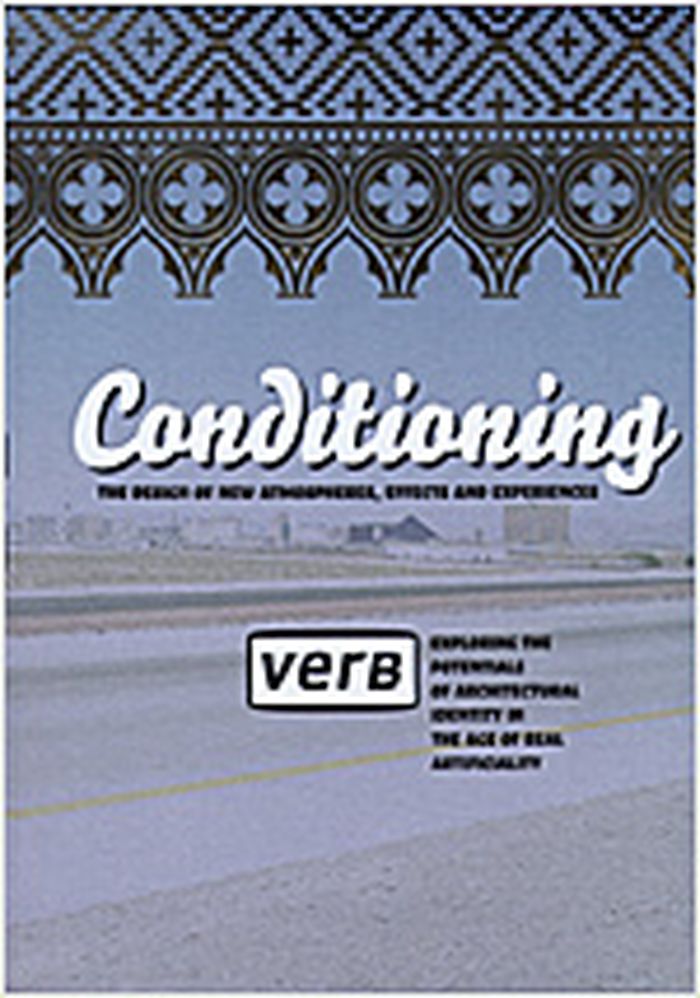
"Verb - conditioning" investigates the potential of architectural signification. As our ability to control the production of form and the creation of environments parallels that of natural processes, architecture is not only conceived as a platform for the development of human activity, but more and more as its generator and possibly also as its limiting framework. As in other industries ranging from computer applications to car manufacturing, mass-customized theming impregnates the way buildings are conceived and used. If this trend is inevitably linked to commercial success, what are the potentials for the discipline?
Verb - conditioning : the design of new atmospheres, effects and experiences
Actions:
Price:
$46.95
(available in store)
Summary:
"Verb - conditioning" investigates the potential of architectural signification. As our ability to control the production of form and the creation of environments parallels that of natural processes, architecture is not only conceived as a platform for the development of human activity, but more and more as its generator and possibly also as its limiting framework. As in other industries ranging from computer applications to car manufacturing, mass-customized theming impregnates the way buildings are conceived and used. If this trend is inevitably linked to commercial success, what are the potentials for the discipline?
Form:
journals and magazines
journals and magazines
Publication:
August 2005, Barcelona
August 2005, Barcelona
Subject:
Magazines
Magazines
Form:
books
books
Actions:
Price:
$45.00
(available to order)
Summary:
This book presents a terrestrial description of the Seagram Building. It aims to describe how humans and nature interact with the thin crust of the planet. Architecture reorganizes nature and society in particular ways that today demand overt attention and new methods of description. ''The immense material, energy and labor involved in building require a fresh(...)
$45.00
(available to order)
Summary:
This book presents a terrestrial description of the Seagram Building. It aims to describe how humans and nature interact with the thin crust of the planet. Architecture reorganizes nature and society in particular ways that today demand overt attention and new methods of description. ''The immense material, energy and labor involved in building require a fresh(...)
Title:
Unless: the Seagram building construction ecology
Actions:
Price:
$45.00
(available to order)
Summary:
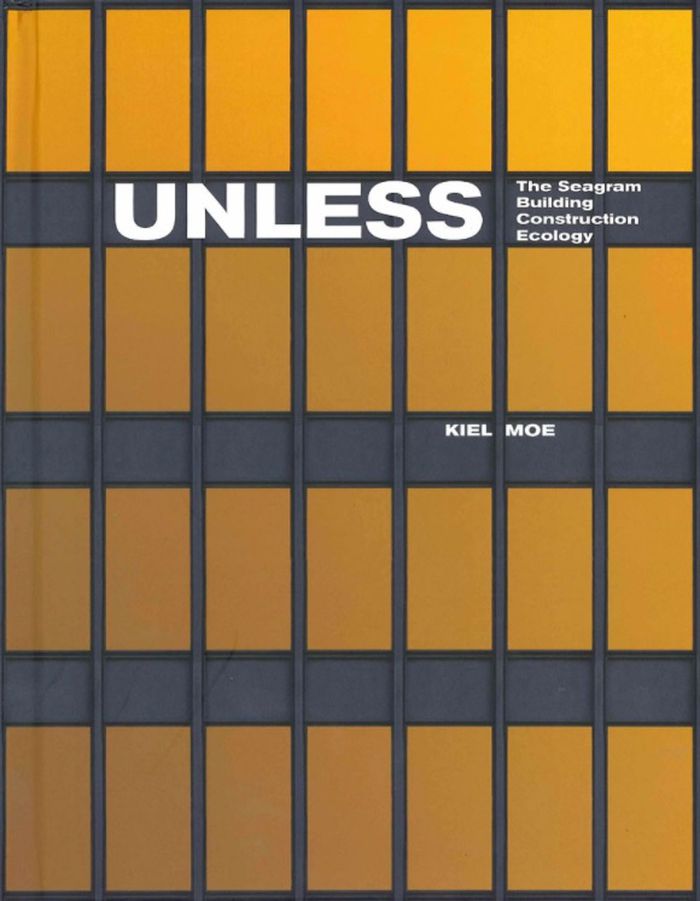
This book presents a terrestrial description of the Seagram Building. It aims to describe how humans and nature interact with the thin crust of the planet. Architecture reorganizes nature and society in particular ways that today demand overt attention and new methods of description. ''The immense material, energy and labor involved in building require a fresh interpretation that better situates the ecological and social potential of design. Architecture and society would benefit from alternative descriptions of building and architecture as terrestrial activities that help imagine how to maximize the impact of architecture on its environment. I argue that the enhancement of a particular building should be inextricable from the enhancement of its world-system and construction ecology. A 'beautiful' building engendered through the vulgarity of uneven exchanges and processes of underdevelopment is no longer a tenable conceit in such a framework. Design can and should evince the inherent solidarity and reciprocity of people, places and politics involved in building architecture.''
Unless: the Seagram building construction ecology
Actions:
Price:
$45.00
(available to order)
Summary:
This book presents a terrestrial description of the Seagram Building. It aims to describe how humans and nature interact with the thin crust of the planet. Architecture reorganizes nature and society in particular ways that today demand overt attention and new methods of description. ''The immense material, energy and labor involved in building require a fresh interpretation that better situates the ecological and social potential of design. Architecture and society would benefit from alternative descriptions of building and architecture as terrestrial activities that help imagine how to maximize the impact of architecture on its environment. I argue that the enhancement of a particular building should be inextricable from the enhancement of its world-system and construction ecology. A 'beautiful' building engendered through the vulgarity of uneven exchanges and processes of underdevelopment is no longer a tenable conceit in such a framework. Design can and should evince the inherent solidarity and reciprocity of people, places and politics involved in building architecture.''
Form:
books
books
Publication:
January 2021
January 2021
Subject:
Engineering Structures
Engineering Structures
Form:
books
books
Title:
Democracy and urban form
Democracy and urban form
Actions:
Price:
$36.95
(available in store)
Summary:
"Never have the potential political consequences of architecture been greater, and never has the political sensibility of architecture been less." This was the state of the discipline that social theorist and urban thinker Richard Sennett declared when he addressed an audience at the Harvard University Graduate School of Design in 1981. Over a series of six lectures,(...)
$36.95
(available in store)
Summary:
"Never have the potential political consequences of architecture been greater, and never has the political sensibility of architecture been less." This was the state of the discipline that social theorist and urban thinker Richard Sennett declared when he addressed an audience at the Harvard University Graduate School of Design in 1981. Over a series of six lectures,(...)
Title:
Democracy and urban form
Actions:
Price:
$36.95
(available in store)
Summary:
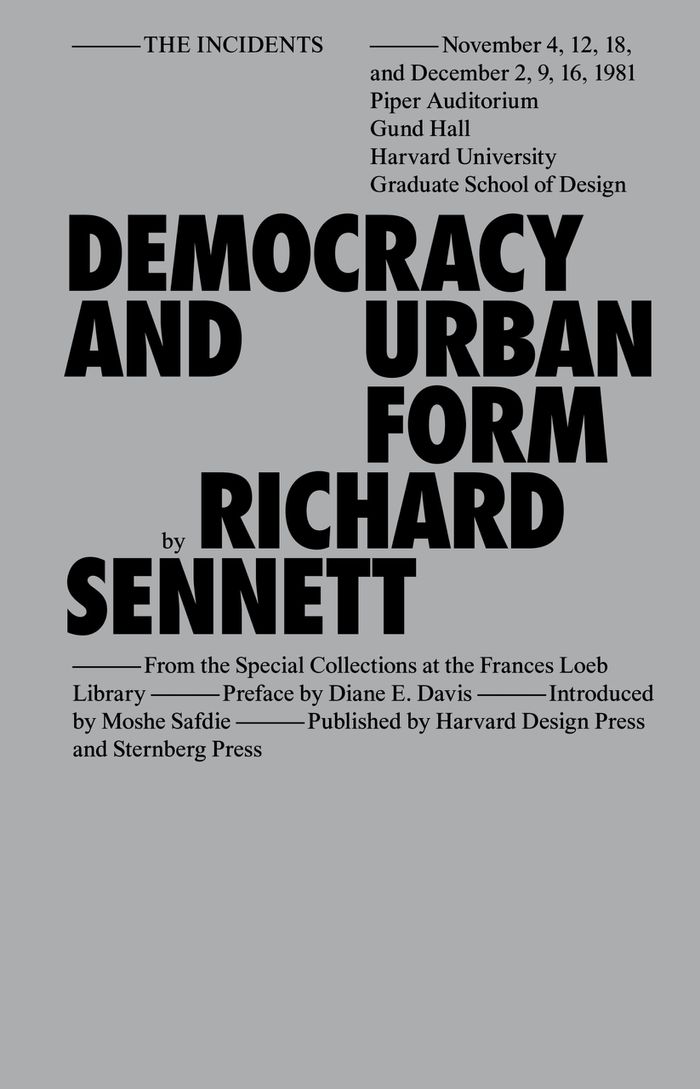
"Never have the potential political consequences of architecture been greater, and never has the political sensibility of architecture been less." This was the state of the discipline that social theorist and urban thinker Richard Sennett declared when he addressed an audience at the Harvard University Graduate School of Design in 1981. Over a series of six lectures, Sennett presented discourse as the foundation of democracy, and posited that our cities are uniquely positioned to either empower or constrict this discourse—and that the difference could lie in architecture and urban design. Now, over 40 years later, as political polarization persists and its consequences arise in both new and familiar ways, "Democracy and urban form" revisits questions that remain relevant: If discourse is the foundation of democracy, how can the design of our cities empower and enable discourse?
Democracy and urban form
Actions:
Price:
$36.95
(available in store)
Summary:
"Never have the potential political consequences of architecture been greater, and never has the political sensibility of architecture been less." This was the state of the discipline that social theorist and urban thinker Richard Sennett declared when he addressed an audience at the Harvard University Graduate School of Design in 1981. Over a series of six lectures, Sennett presented discourse as the foundation of democracy, and posited that our cities are uniquely positioned to either empower or constrict this discourse—and that the difference could lie in architecture and urban design. Now, over 40 years later, as political polarization persists and its consequences arise in both new and familiar ways, "Democracy and urban form" revisits questions that remain relevant: If discourse is the foundation of democracy, how can the design of our cities empower and enable discourse?
Form:
books
books
Publication:
November 2024
November 2024
Subject:
Urban Theory
Urban Theory
Form:
books
books
Actions:
Price:
$67.95
(available to order)
Summary:
Writing from inside the discipline of architecture, rather than from the more common extrapolations from the history of painting and philosophy, Alberto Pérez-Gómez and Louise Pelletier focus on the implications of the tool of perspective (and the hegemony of(...)
$67.95
(available to order)
Summary:
Writing from inside the discipline of architecture, rather than from the more common extrapolations from the history of painting and philosophy, Alberto Pérez-Gómez and Louise Pelletier focus on the implications of the tool of perspective (and the hegemony of(...)
Subject:
Architectural Theory
Architectural Theory
Publication:
October 2000, Cambridge, Mass.
October 2000, Cambridge, Mass.
Title:
Architectural representation and the perspective hinge
Actions:
Price:
$67.95
(available to order)
Summary:
Writing from inside the discipline of architecture, rather than from the more common extrapolations from the history of painting and philosophy, Alberto Pérez-Gómez and Louise Pelletier focus on the implications of the tool of perspective (and the hegemony of vision) for architectural representation. Their primary thesis is that tools of representation have a direct influence on the conceptual development of projects and generation of forms, and that there are alternatives to the reductive working methods of most contemporary practice. The book examines textual evidence across a broad historical period, concentrating on the relationship between drawing and architectural space in the period from the seventh century to the twentieth century. The book discusses such issues as optical correction and the nature of architectural drawing in selected treatises, revealing the complexity and potential contradiction inherent in any linear history of representation. The authors' ultimate aim is to probe the possibilities of the constructed world as a poetic translation, rather than prosaic transcription, of its representations. First published in cloth in 1997.
Architectural representation and the perspective hinge
Actions:
Price:
$67.95
(available to order)
Summary:
Writing from inside the discipline of architecture, rather than from the more common extrapolations from the history of painting and philosophy, Alberto Pérez-Gómez and Louise Pelletier focus on the implications of the tool of perspective (and the hegemony of vision) for architectural representation. Their primary thesis is that tools of representation have a direct influence on the conceptual development of projects and generation of forms, and that there are alternatives to the reductive working methods of most contemporary practice. The book examines textual evidence across a broad historical period, concentrating on the relationship between drawing and architectural space in the period from the seventh century to the twentieth century. The book discusses such issues as optical correction and the nature of architectural drawing in selected treatises, revealing the complexity and potential contradiction inherent in any linear history of representation. The authors' ultimate aim is to probe the possibilities of the constructed world as a poetic translation, rather than prosaic transcription, of its representations. First published in cloth in 1997.
Form:
books
books
Publication:
October 2000, Cambridge, Mass.
October 2000, Cambridge, Mass.
Subject:
Architectural Theory
Architectural Theory
Form:
books
books
Title:
A+U 563 08:17 Glass Facades
A+U 563 08:17 Glass Facades
Actions:
Price:
$53.50
(available in store)
Summary:
Modern glass facades are technically demanding and fascinating in design. Glass as a building material has diverse characteristics, even contrary on occasion, and architects are increasingly using the high design potential of fully glazed facades in representative building projects outside of the typical office typology. An essay by Christian Schittich opens an(...)
$53.50
(available in store)
Summary:
Modern glass facades are technically demanding and fascinating in design. Glass as a building material has diverse characteristics, even contrary on occasion, and architects are increasingly using the high design potential of fully glazed facades in representative building projects outside of the typical office typology. An essay by Christian Schittich opens an(...)
Title:
A+U 563 08:17 Glass Facades
Actions:
Price:
$53.50
(available in store)
Summary:
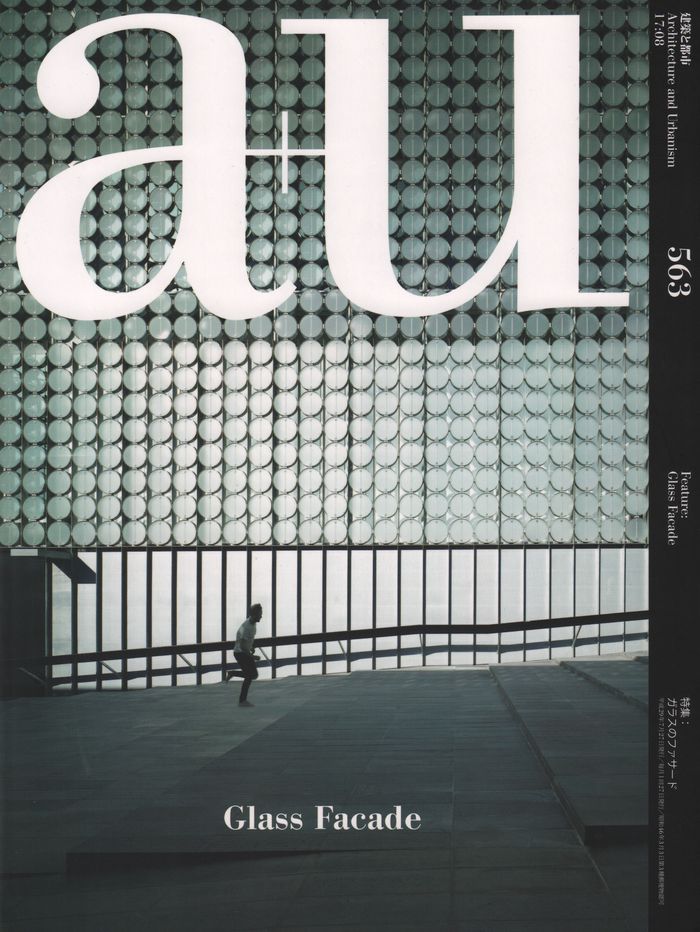
Modern glass facades are technically demanding and fascinating in design. Glass as a building material has diverse characteristics, even contrary on occasion, and architects are increasingly using the high design potential of fully glazed facades in representative building projects outside of the typical office typology. An essay by Christian Schittich opens an exploration of this transformative element of architecture through fourteen works designed by as many architects. Projects range from a Shanghai tea house by Atelier Deshaus and Mikkelsen Arkitekter’s Rambøll Headquarters in Copenhagen, to works by Atelier Kempe Thill, Wiel Arets, Pezo von Ellrichshausen and more.
A+U 563 08:17 Glass Facades
Actions:
Price:
$53.50
(available in store)
Summary:
Modern glass facades are technically demanding and fascinating in design. Glass as a building material has diverse characteristics, even contrary on occasion, and architects are increasingly using the high design potential of fully glazed facades in representative building projects outside of the typical office typology. An essay by Christian Schittich opens an exploration of this transformative element of architecture through fourteen works designed by as many architects. Projects range from a Shanghai tea house by Atelier Deshaus and Mikkelsen Arkitekter’s Rambøll Headquarters in Copenhagen, to works by Atelier Kempe Thill, Wiel Arets, Pezo von Ellrichshausen and more.
Form:
books
books
Publication:
August 2017
August 2017
Subject:
Magazines
Magazines
Form:
books
books
Title:
Concrete elegance one
Concrete elegance one
Actions:
Price:
$15.95
(available in store)
Summary:
Concrete has for many years been discovered as a versatile material suited to a wide range of applications from small scale artefacts and sculptures, domestic scale architecture through to multi-story buildings and landscapes, where the current generation of concretes offers greater potential than ever. This book was a series of lectures by designers and specialists which(...)
$15.95
(available in store)
Summary:
Concrete has for many years been discovered as a versatile material suited to a wide range of applications from small scale artefacts and sculptures, domestic scale architecture through to multi-story buildings and landscapes, where the current generation of concretes offers greater potential than ever. This book was a series of lectures by designers and specialists which(...)
Title:
Concrete elegance one
Actions:
Price:
$15.95
(available in store)
Summary:
Concrete has for many years been discovered as a versatile material suited to a wide range of applications from small scale artefacts and sculptures, domestic scale architecture through to multi-story buildings and landscapes, where the current generation of concretes offers greater potential than ever. This book was a series of lectures by designers and specialists which set out to celebrate inspirational and innovative uses of concrete. Concrete Elegance One documents some of the projects which form the backbone of these talks. The book highlights two particular projects expressing a renewed interest in concrete's plastic and aesthetic qualities that are present in architecture today, namely the Spiral Staircase in Copenhagen and the concrete arch of the Seonyu Bridge in Seoul, both of which demonstrate how ready mixed concrete and the right selection of formwork and placement techniques can produce award winning architecture at affordable prices.
Concrete elegance one
Actions:
Price:
$15.95
(available in store)
Summary:
Concrete has for many years been discovered as a versatile material suited to a wide range of applications from small scale artefacts and sculptures, domestic scale architecture through to multi-story buildings and landscapes, where the current generation of concretes offers greater potential than ever. This book was a series of lectures by designers and specialists which set out to celebrate inspirational and innovative uses of concrete. Concrete Elegance One documents some of the projects which form the backbone of these talks. The book highlights two particular projects expressing a renewed interest in concrete's plastic and aesthetic qualities that are present in architecture today, namely the Spiral Staircase in Copenhagen and the concrete arch of the Seonyu Bridge in Seoul, both of which demonstrate how ready mixed concrete and the right selection of formwork and placement techniques can produce award winning architecture at affordable prices.
Form:
books
books
Publication:
October 2006
October 2006
Subject:
Materials and Lighting
Materials and Lighting
Form:
books
books
Title:
Eco-operations
Eco-operations
Actions:
Price:
$88.00
(available to order)
Summary:
The climate change crisis has become part of aesthetic discourse and critical research in culture and the arts. Future-oriented, ecologically conceived possibilities for action are being explored by artists, curators, and scholars alike. eco-operations addresses these emerging aesthetic ecologies and new technologies of cooperation that both challenge and shape a(...)
$88.00
(available to order)
Summary:
The climate change crisis has become part of aesthetic discourse and critical research in culture and the arts. Future-oriented, ecologically conceived possibilities for action are being explored by artists, curators, and scholars alike. eco-operations addresses these emerging aesthetic ecologies and new technologies of cooperation that both challenge and shape a(...)
Title:
Eco-operations
Actions:
Price:
$88.00
(available to order)
Summary:
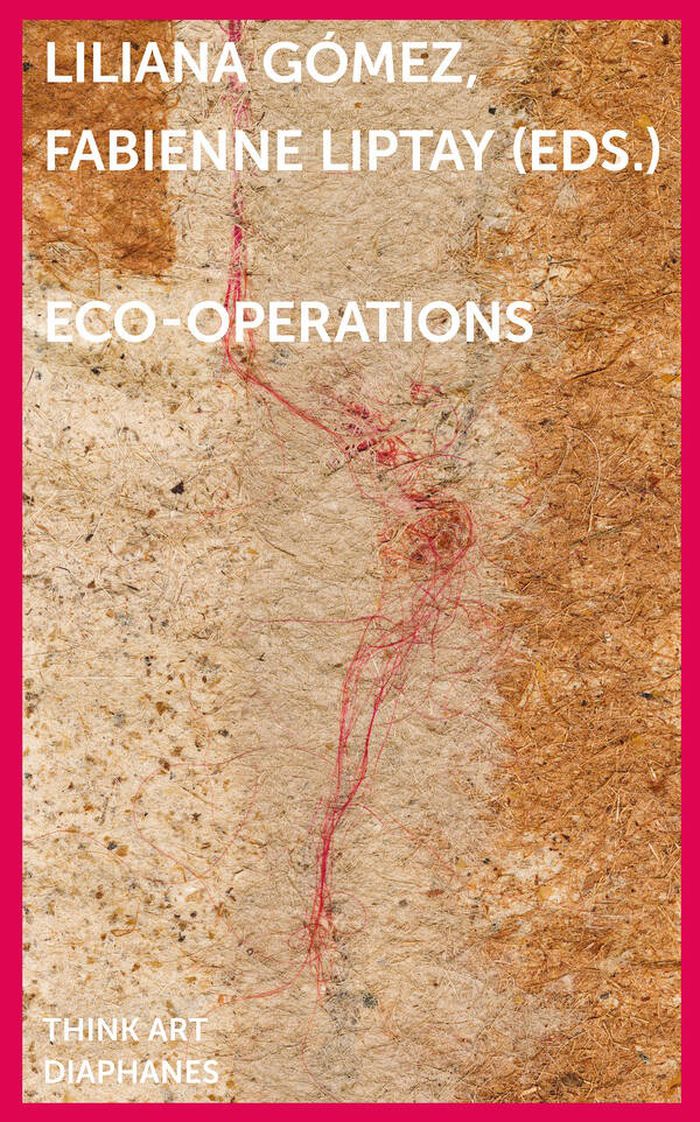
The climate change crisis has become part of aesthetic discourse and critical research in culture and the arts. Future-oriented, ecologically conceived possibilities for action are being explored by artists, curators, and scholars alike. eco-operations addresses these emerging aesthetic ecologies and new technologies of cooperation that both challenge and shape a sustainable future, foregrounding interruptions, ruptures, disconnections, dissonances, exclusions, and allochronism. Moving beyond the concepts of “flow” and “network” as a single, coherent (ecological or technological) system, "eco-operations" instead emphasizes the frictions within asynchronously running systems. The infrastructures and formats of artistic production and exhibition play a central role here, as they themselves constitute ecosystems that invite and regulate processes of sharing and exchange. Artists and activists are embedded in these ecosystems, in which they simultaneously intervene when searching for alternative ways of creating collaborative practice. Bringing together scholars, artists, writers, and curators, and working across a range of disciplines, "eco-operations" explores this field of tension between global and local ecologies and aims to speculate on where dissonances imply both creative potential and political challenges.
Eco-operations
Actions:
Price:
$88.00
(available to order)
Summary:
The climate change crisis has become part of aesthetic discourse and critical research in culture and the arts. Future-oriented, ecologically conceived possibilities for action are being explored by artists, curators, and scholars alike. eco-operations addresses these emerging aesthetic ecologies and new technologies of cooperation that both challenge and shape a sustainable future, foregrounding interruptions, ruptures, disconnections, dissonances, exclusions, and allochronism. Moving beyond the concepts of “flow” and “network” as a single, coherent (ecological or technological) system, "eco-operations" instead emphasizes the frictions within asynchronously running systems. The infrastructures and formats of artistic production and exhibition play a central role here, as they themselves constitute ecosystems that invite and regulate processes of sharing and exchange. Artists and activists are embedded in these ecosystems, in which they simultaneously intervene when searching for alternative ways of creating collaborative practice. Bringing together scholars, artists, writers, and curators, and working across a range of disciplines, "eco-operations" explores this field of tension between global and local ecologies and aims to speculate on where dissonances imply both creative potential and political challenges.
Form:
books
books
Publication:
March 2025
March 2025
Subject:
Architecture ecologies
Architecture ecologies
Form:
books
books
Actions:
Price:
$50.00
(available in store)
Summary:
When it comes to Jun Aoki’s projects related to art, regardless of the intended function, the architecture remains open to diverse uses, inviting relationships that have yet to be fully seen or defined. Aoki embraces ambiguity and contradictions, allowing for the coexistence of differing values and rhythms that each individual brings to the experience of art. The 25(...)
$50.00
(available in store)
Summary:
When it comes to Jun Aoki’s projects related to art, regardless of the intended function, the architecture remains open to diverse uses, inviting relationships that have yet to be fully seen or defined. Aoki embraces ambiguity and contradictions, allowing for the coexistence of differing values and rhythms that each individual brings to the experience of art. The 25(...)
Title:
A+U 657 06:25 : Jun Aoki Museum
Actions:
Price:
$50.00
(available in store)
Summary:
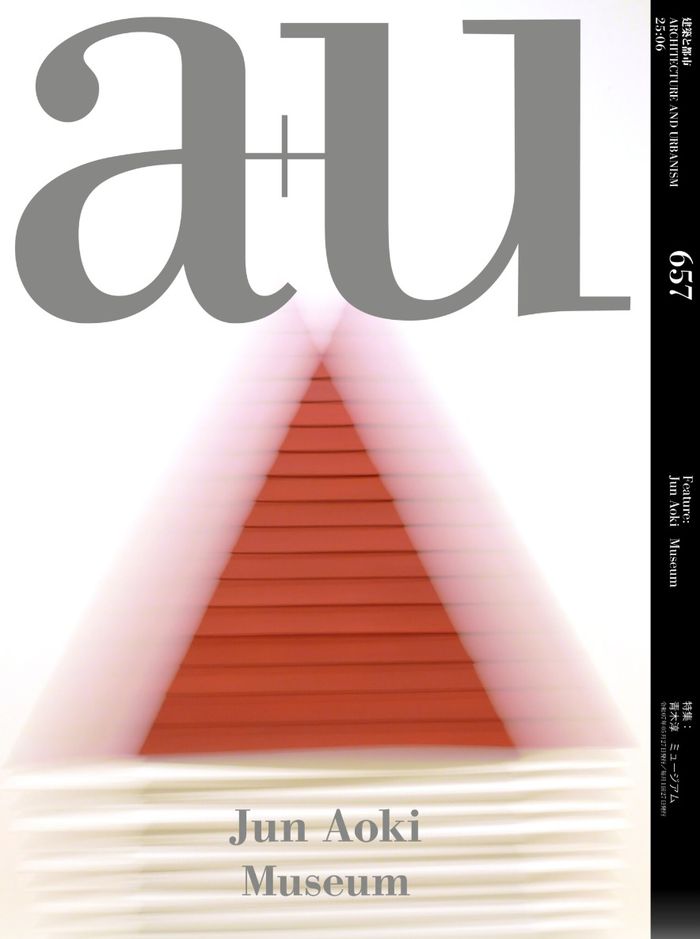
When it comes to Jun Aoki’s projects related to art, regardless of the intended function, the architecture remains open to diverse uses, inviting relationships that have yet to be fully seen or defined. Aoki embraces ambiguity and contradictions, allowing for the coexistence of differing values and rhythms that each individual brings to the experience of art. The 25 featured projects include public art museums, galleries, exhibition designs, and artworks. Each transforms into a unique spatial experience depending on the art it hosts, the people who visit, and its moment in time. With new essays and commentary by Aoki, this is a glimpse of architecture’s potential to suggest a freer future.
A+U 657 06:25 : Jun Aoki Museum
Actions:
Price:
$50.00
(available in store)
Summary:
When it comes to Jun Aoki’s projects related to art, regardless of the intended function, the architecture remains open to diverse uses, inviting relationships that have yet to be fully seen or defined. Aoki embraces ambiguity and contradictions, allowing for the coexistence of differing values and rhythms that each individual brings to the experience of art. The 25 featured projects include public art museums, galleries, exhibition designs, and artworks. Each transforms into a unique spatial experience depending on the art it hosts, the people who visit, and its moment in time. With new essays and commentary by Aoki, this is a glimpse of architecture’s potential to suggest a freer future.
Form:
books
books
Publication:
June 2025
June 2025
Subject:
Magazines
Magazines
Form:
books
books
Actions:
Price:
$48.95
(available to order)
Summary:
This book deals with the basics - landform, scales, gradient, interpolation, spot elevations, contour lines and cut and fill calculations - as well as delving into more specific topics such as lanscape stabilization, stormwater management and grading on the construction site. It reviews the potential of digital site modeling and its application to the actual staking out(...)
$48.95
(available to order)
Summary:
This book deals with the basics - landform, scales, gradient, interpolation, spot elevations, contour lines and cut and fill calculations - as well as delving into more specific topics such as lanscape stabilization, stormwater management and grading on the construction site. It reviews the potential of digital site modeling and its application to the actual staking out(...)
Title:
Grading for landscape architects and architects
Actions:
Price:
$48.95
(available to order)
Summary:
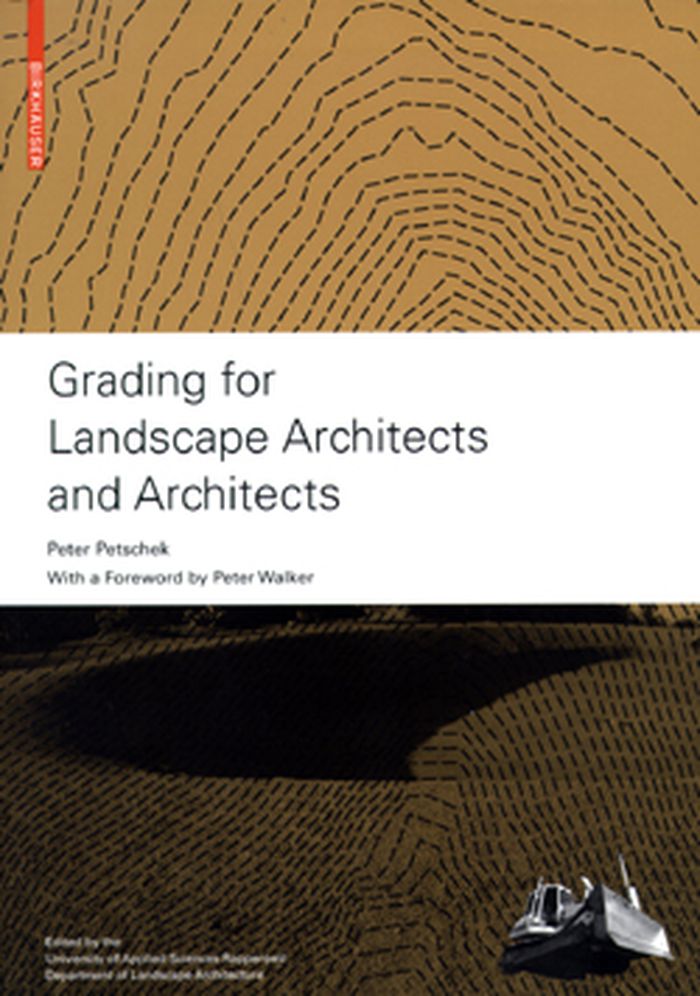
This book deals with the basics - landform, scales, gradient, interpolation, spot elevations, contour lines and cut and fill calculations - as well as delving into more specific topics such as lanscape stabilization, stormwater management and grading on the construction site. It reviews the potential of digital site modeling and its application to the actual staking out of sites and remote control systems for machinery. The book closes with a number a inspiring projects and a set of practical exercices, which will assist readers, landscape architects and architects alike, in becoming familiar with site grading as one of the most important design tools in landscape architecture.
Grading for landscape architects and architects
Actions:
Price:
$48.95
(available to order)
Summary:
This book deals with the basics - landform, scales, gradient, interpolation, spot elevations, contour lines and cut and fill calculations - as well as delving into more specific topics such as lanscape stabilization, stormwater management and grading on the construction site. It reviews the potential of digital site modeling and its application to the actual staking out of sites and remote control systems for machinery. The book closes with a number a inspiring projects and a set of practical exercices, which will assist readers, landscape architects and architects alike, in becoming familiar with site grading as one of the most important design tools in landscape architecture.
Form:
books
books
Publication:
July 2008, Basel, Boston, Berlin
July 2008, Basel, Boston, Berlin
Subject:
Landscape Theory
Landscape Theory
Form:
books
books
Title:
Infrastuctural monument
Infrastuctural monument
Actions:
Price:
$41.95
(available to order)
Summary:
Infrastructural Monument presents the proceedings of the first of two conferences organized by MIT's new Center for Advanced Urbanism around the biennial theme of infrastructure. Held in the spring of 2013, the "Infrastructural Monument" conference gathered designers, developers, policy experts, and scholars to address the potential to leverage infrastructure design(...)
$41.95
(available to order)
Summary:
Infrastructural Monument presents the proceedings of the first of two conferences organized by MIT's new Center for Advanced Urbanism around the biennial theme of infrastructure. Held in the spring of 2013, the "Infrastructural Monument" conference gathered designers, developers, policy experts, and scholars to address the potential to leverage infrastructure design(...)
Title:
Infrastuctural monument
Actions:
Price:
$41.95
(available to order)
Summary:
Infrastructural Monument presents the proceedings of the first of two conferences organized by MIT's new Center for Advanced Urbanism around the biennial theme of infrastructure. Held in the spring of 2013, the "Infrastructural Monument" conference gathered designers, developers, policy experts, and scholars to address the potential to leverage infrastructure design beyond the realm of transportation of goods and labor into the realm of culture, public space, architecture, and landscape form. In other words, can infrastructure transcend mere practicality and fulfill a role that is profoundly cultural? Can targeted infrastructure projects transform a city from a collection of fragments to one with a common and cohesive regional identity?
Infrastuctural monument
Actions:
Price:
$41.95
(available to order)
Summary:
Infrastructural Monument presents the proceedings of the first of two conferences organized by MIT's new Center for Advanced Urbanism around the biennial theme of infrastructure. Held in the spring of 2013, the "Infrastructural Monument" conference gathered designers, developers, policy experts, and scholars to address the potential to leverage infrastructure design beyond the realm of transportation of goods and labor into the realm of culture, public space, architecture, and landscape form. In other words, can infrastructure transcend mere practicality and fulfill a role that is profoundly cultural? Can targeted infrastructure projects transform a city from a collection of fragments to one with a common and cohesive regional identity?
Form:
books
books
Publication:
February 2016
February 2016
Subject:
Urban Theory
Urban Theory


