


886 Results
Form:
books
books
Actions:
Price:
$26.95
(available to order)
Summary:
The dream of scientific management was a rationalized machine world where life would approach the perfection of an assembly line. But since its early twentieth-century peak this dream has come to seem a dehumanizing nightmare. Henry Ford's assembly lines turned out a quarter of a million cars in 1914, but all of them were black. Forgotten has been the unparalleled new(...)
Title:
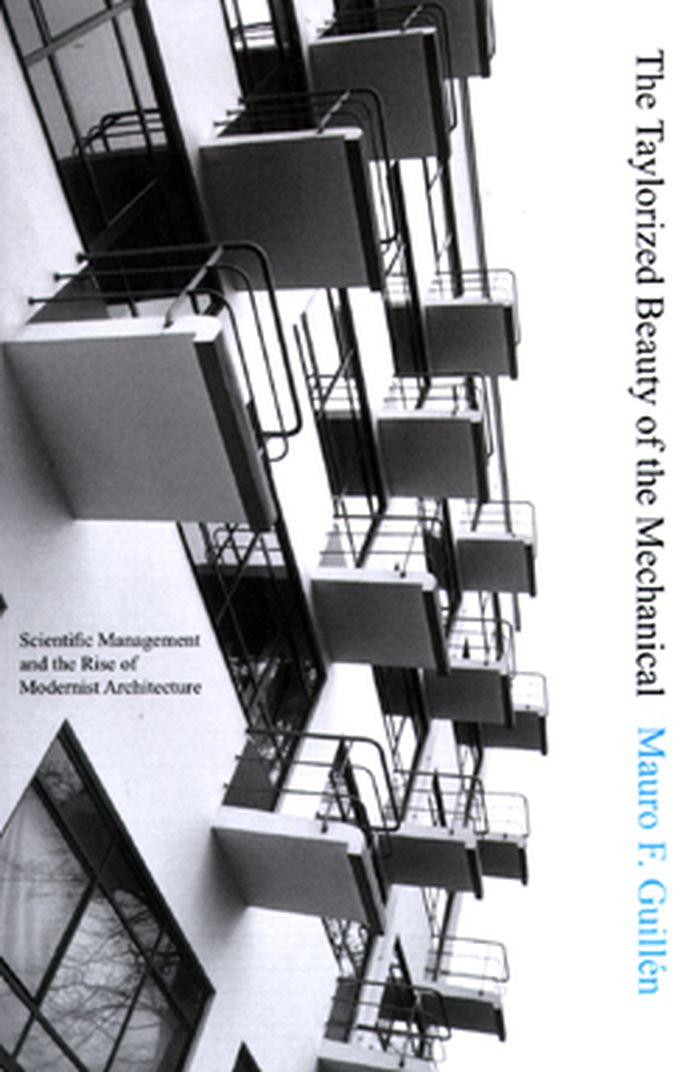
The taylorized beauty of the mechanical
Actions:
Price:
$26.95
(available to order)
Summary:
The dream of scientific management was a rationalized machine world where life would approach the perfection of an assembly line. But since its early twentieth-century peak this dream has come to seem a dehumanizing nightmare. Henry Ford's assembly lines turned out a quarter of a million cars in 1914, but all of them were black. Forgotten has been the unparalleled new aesthetic beauty once seen in the ideas of Ford and scientific management pioneer Frederick Winslow Taylor. In The Taylorized Beauty of the Mechanical, Mauro Guillén recovers this history and retells the story of the emergence of modernist architecture as a romance with the ideas of scientific management--one that permanently reshaped the profession of architecture. Modernist architecture's pioneers, Guillén shows, found in scientific management the promise of a new, functional, machine-like--and beautiful--architecture, and the prospect of a new role for the architect as technical professional and social reformer. Taylor and Ford had a signal influence on Bauhaus founder Walter Gropius and on Le Corbusier and his Towards a New Architecture, the most important manifesto of modernist architecture. Architects were so enamored with the ideas of scientific management that they adopted them even when there was no functional advantage to do so. Not a traditional architectural history but rather a sociological study of the profession of architecture during its early modernist period, The Taylorized Beauty of the Mechanical provides a new understanding of the degree to which modernist architecture emerged from a tradition of engineering and industrial management.
Form:
books
books
Publication:
December 2008, Princeton
December 2008, Princeton
Subject:
Architectural Theory
Architectural Theory
Form:
books
books
Title:
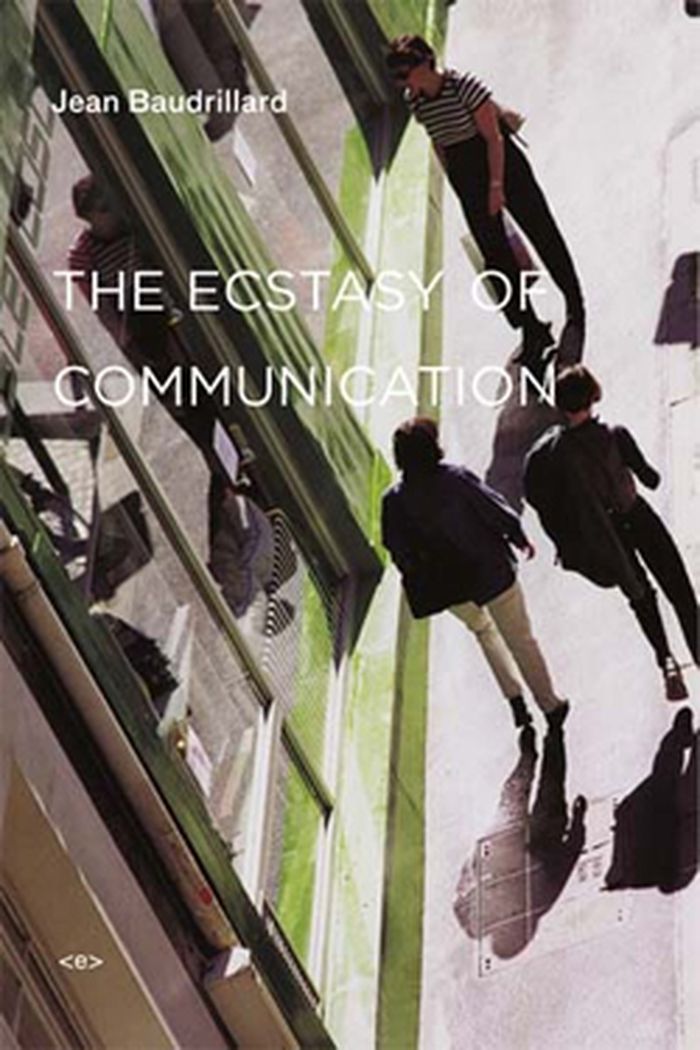
The ecstasy of communication
The ecstasy of communication
Actions:
Price:
$16.95
(available to order)
Summary:
First published in France in 1987, The Ecstasy of Communication was Baudrillard’s summarization of his work for a postdoctoral degree at the Sorbonne : a dense, poetically crystalline essay that boiled down two decades of radical, provocative theory into an aphoristically eloquent swan song to twentieth-century alienation. Baudrillard’s quixotic effort to be recognized by(...)
Title:
The ecstasy of communication
Actions:
Price:
$16.95
(available to order)
Summary:
First published in France in 1987, The Ecstasy of Communication was Baudrillard’s summarization of his work for a postdoctoral degree at the Sorbonne : a dense, poetically crystalline essay that boiled down two decades of radical, provocative theory into an aphoristically eloquent swan song to twentieth-century alienation. Baudrillard’s quixotic effort to be recognized by the French intellectual establishment may have been doomed to failure, but this text immediately became a pinnacle to his work, a mid-career assessment that looked both forward and back. By carefully distilling the most radical elements of his previous books, Baudrillard constructed the skeleton key to all of the work that was to come in the second half of his career, and set the scene for what he termed the “obscene”: a world in which alienation has been succeeded by ceaseless communication and information. The Ecstasy of Communication is a decisive, compact description of what it means to be “wired” in our braver-than-brave new world, where sexuality has been superseded by pornography, knowledge by information, hysteria by schizophrenia, subject by object, and violence by terror. The Ecstasy of Communication is an anti-manifesto that confronted and dispensed with such influences as Marshall McLuhan, Guy Debord, and Georges Bataille. It is an essential crib-book, lexicon, and companion piece to any and all of Baudrillard’s books. Twenty-five years after its original publication, it remains not only a prescient portrait of our contemporary condition, but also a dark mirror into which we have not yet dared to look.
Form:
books
books
Publication:
November 2012
November 2012
Subject:
Critical Theory
Critical Theory
Form:
books
books

Title:
Humans / Mike Mills
Humans / Mike Mills
Actions:
Price:
$20.00
(available in store)
Summary:
'Humans Manifesto. No plan survives first contact with the enemy. Sometimes being dumb is the only smart alternative. Shy people are secretly egoists. Nothing is real. Everything you see is a dream you project onto the world. Children live out their parents unconscious. The only animals that suffer from anxiety are the ones that associate with humans. I don’t(...)
Title:
Humans / Mike Mills
Actions:
Price:
$20.00
(available in store)
Summary:
'Humans Manifesto. No plan survives first contact with the enemy. Sometimes being dumb is the only smart alternative. Shy people are secretly egoists. Nothing is real. Everything you see is a dream you project onto the world. Children live out their parents unconscious. The only animals that suffer from anxiety are the ones that associate with humans. I don’t trust people who are very articulate. The only way to be sane is to embrace your insanity. When you feel guilty about being sad, remember Walt Disney was a manic depressive. Everything I said could be totally wrong.' Mills’ intent is not to make a statement but to ask questions, to make people more curious: “I hope the things I make can grow on people over time. At first it is just a drawing of cracks, then later, after living with the design you have more personal associations with it, it means more things, it becomes more emotional.” Mike Mills is widely renown as a graphic artist and filmmaker. He has been defined as one of the creative visionaries of our times, responsible for album covers and music videos for bands such as the Beastie Boys, Sonic Youth, Beck and Air. Mills has directed various commercials, music videos, and short films and his first feature film, Thumbsucker, adapted by Mills from the homonymous novel by Walter Kirn will be released this fall. As a graphic designer, Mills designed the famous X-Girl logo and shirts graphics, Kim Gordon and Daisy Von Furth’s clothing company, as well as skateboard graphics for Supreme, Stereo and Subliminal. For Marc Jacobs he designed scarves and fabrics, and other fashion related graphics for Esprit and The Gap
Form:
books
books
Publication:
January 2003, Zürich
January 2003, Zürich
Subject:
Graphic Design and Typography
Graphic Design and Typography
Form:
books
books
Actions:
Price:
$37.95
(available to order)
Summary:
The idea of fashion under socialism conjures up images of babushka headscarves and black market blue jeans. And yet, as Djurdja Bartlett shows in this groundbreaking book, the socialist East had an intimate relationship with fashion. Official antagonism—which cast fashion as frivolous and antirevolutionary—eventually gave way to grudging acceptance and creeping(...)
Title:
Fashion East : the spectre that haunted socialism
Actions:
Price:
$37.95
(available to order)
Summary:
The idea of fashion under socialism conjures up images of babushka headscarves and black market blue jeans. And yet, as Djurdja Bartlett shows in this groundbreaking book, the socialist East had an intimate relationship with fashion. Official antagonism—which cast fashion as frivolous and antirevolutionary—eventually gave way to grudging acceptance and creeping consumerism. Bartlett outlines three phases in socialist fashion, and illustrates them with abundant images from magazines of the period: postrevolutionary utopian dress, official state-sanctioned socialist fashion, and samizdat-style everyday fashion. Utopian dress, ranging from the geometric abstraction of the constructivists under Bolshevism in the Soviet Union to the no-frills desexualized uniform of a factory worker in Czechoslovakia, reflected the revolutionary urge for a clean break with the past. The highly centralized socialist fashion system, part of Stalinist industrialization, offered official prototypes of high fashion that were never available in stores—mythical images of smart and luxurious dresses that symbolized the economic progress that socialist regimes dreamed of. Everyday fashion, starting in the 1950s, was an unofficial, do-it-yourself enterprise: Western fashions obtained through semiclandestine channels or sewn at home. The state tolerated the demand for Western fashion, promising the burgeoning middle class consumer goods in exchange for political loyalty. Bartlett traces the progress of socialist fashion in the Soviet Union, Czechoslovakia, Hungary, East Germany, Poland, and Yugoslavia, drawing on state-sponsored socialist women’s magazines, etiquette books, socialist manuals on dress, private archives, and her own interviews with designers, fashion editors, and other key figures. Fashion, she suggests, with all its ephemerality and dynamism, was in perpetual conflict with the socialist regimes’ fear of change and need for control. It was, to echo the famous first sentence from the Communist Manifesto, the spectre that haunted socialism until the end.
Form:
books
books
Publication:
October 2010
October 2010
Subject:
Fashion Design
Fashion Design
Form:
books
books

Actions:
Price:
$64.00
(available to order)
Summary:
Kate Orff has an optimistic and transformative message about our world: we can bring together social and ecological systems to sustainably remake our cities and landscapes. Part monograph, part manual, part manifesto, ''Toward an Urban Ecology'' reconceives urban landscape design as a form of activism, demonstrating how to move beyond familiar and increasingly outmoded(...)
Title:
Toward an urban ecology: SCAPE / landscape architecture
Actions:
Price:
$64.00
(available to order)
Summary:
Kate Orff has an optimistic and transformative message about our world: we can bring together social and ecological systems to sustainably remake our cities and landscapes. Part monograph, part manual, part manifesto, ''Toward an Urban Ecology'' reconceives urban landscape design as a form of activism, demonstrating how to move beyond familiar and increasingly outmoded ways of thinking about environmental, urban, and social issues as separate domains; and advocating for the synthesis of practice to create a truly urban ecology.
Form:
books
books
Publication:
September 2016
September 2016
Subject:
Landscape Architecture, Monographs
Landscape Architecture, Monographs
Form:
books
books
Actions:
Price:
$43.50
(available to order)
Summary:
The manner in which global trends affect cities and increase the instability in local environments with their own dynamics, is like letting a rising river loose on a house. Global trends create urban flotsam. Urban flotsam and its complex dynamics form a second skin of the earth. How is this second skin visible and how can it be put to use in the quest for new urban(...)
Subject:
Urban Theory
Urban Theory
Publication:
October 1999, Rotterdam
October 1999, Rotterdam
Title:
Urban flotsam : stirring the city
Actions:
Price:
$43.50
(available to order)
Summary:
The manner in which global trends affect cities and increase the instability in local environments with their own dynamics, is like letting a rising river loose on a house. Global trends create urban flotsam. Urban flotsam and its complex dynamics form a second skin of the earth. How is this second skin visible and how can it be put to use in the quest for new urban planning tools and policies? Who gives it form and sustains its organization? 'Urban Flotsam' is a book that attempts to answer these questions through examples, but in doing so it postulates the need for a more consistent way of answering them. The book addresses this need through the formation of an outline for a methodology. This methodology consists of four major parts: 1. How to see manifestations of global influences on local environments? 2. How to model them? 3. How to develop and communicate scenarios on the basis of this knowledge? 4. How to implement scenarios? The book contains a manifesto for a general debate of these issues, a more poetic setting of the theme of the second skin of the earth as urban phenomenon, short theoretical introductions to individual issues, case studies undertaken in urban situations and didactic exercises to demonstrate the need for research in a pedagogical context. The book is the first major publication by Chora architecture and urbanism, an independent research laboratory. Chora has built up a body of knowledge and experience through workshops, commissions, teaching and self-initiated studies which has led to the formulation of the methodology and practice outlined in 'Urban Flotsam'. Chora postulates that drastic reforms or innovations are necessary within the practice and education of architecture, urban design and urban planning in order to meet the challenges of the second skin and the demands of its inhabitants. Together with the artist Jeanne van Heeswijk it calls for a new practice called 'urban curation'.
Form:
books
books
Publication:
October 1999, Rotterdam
October 1999, Rotterdam
Subject:
Urban Theory
Urban Theory


