


36154 Results
Form:
books
books

Actions:
Price:
$69.00
(available in store)
Summary:
Published to coincide with an exhibition at Musee de l'Elysee in autumn 2019 and generously illustrated, 'Jan Groover, Photographer: Laboratory of Forms' traces the artist's career from the beginnings in America to her late years in western France. Having started her career as a painter, when she turned to photography in the 1970s she developed a distinct artistic(...)
Title:
Jan Groover, photographer: a laboratory of forms
Actions:
Price:
$69.00
(available in store)
Summary:
Published to coincide with an exhibition at Musee de l'Elysee in autumn 2019 and generously illustrated, 'Jan Groover, Photographer: Laboratory of Forms' traces the artist's career from the beginnings in America to her late years in western France. Having started her career as a painter, when she turned to photography in the 1970s she developed a distinct artistic attitude that saw her amalgamate the disciplines of photography and painting. She was especially known for her carefully composed photographic still-lifes. Essays on her life and work, her significance as an artist, alongside a very personal contribution by her husband, French artist and critic Bruce Boice, complement the images.
Form:
books
books
Publication:
September 2019
September 2019
Subject:
Photography monographs
Photography monographs
Form:
books
books
Actions:
Price:
$48.95
(available to order)
Summary:
Food is a challenging subject. There is little consensus about how and what we should produce and consume. It is not even clear what food is or whether people have similar experiences of it. On one hand, food is recognized as a basic need, if not a basic right. On the other hand, it is hard to generalize about it given the wide range of practices and cuisines, and the(...)
Title:
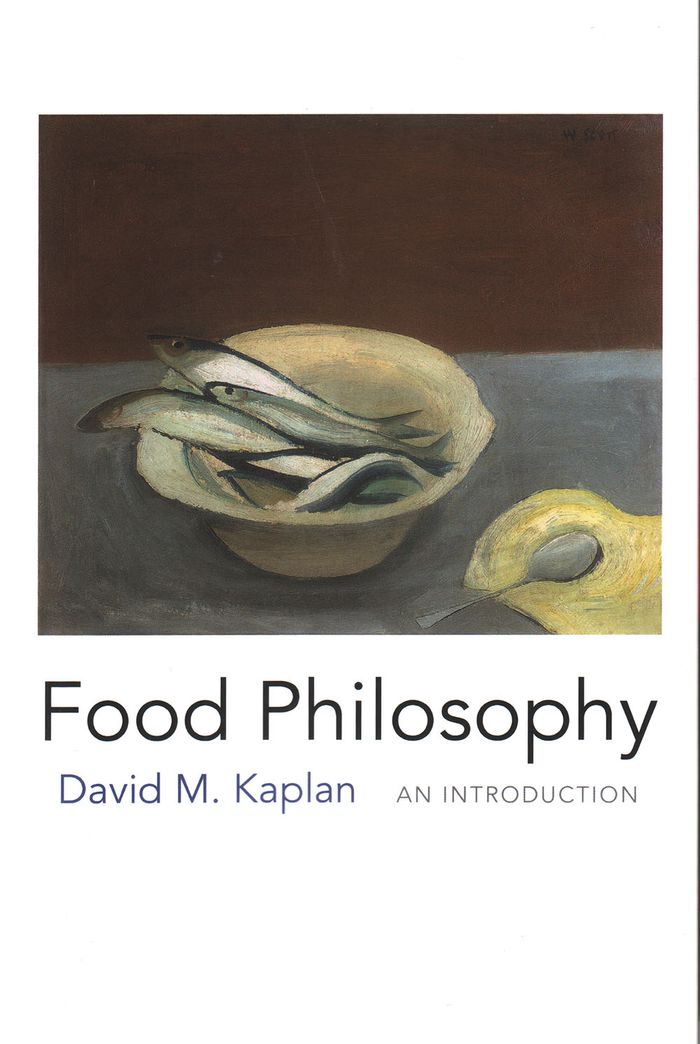
Food philosophy: an introduction
Actions:
Price:
$48.95
(available to order)
Summary:
Food is a challenging subject. There is little consensus about how and what we should produce and consume. It is not even clear what food is or whether people have similar experiences of it. On one hand, food is recognized as a basic need, if not a basic right. On the other hand, it is hard to generalize about it given the wide range of practices and cuisines, and the even wider range of tastes. This book is an introduction to the philosophical dimensions of food. David M. Kaplan examines the nature and meaning of food, how we experience it, the social role it plays, its moral and political dimensions, and how we judge it to be delicious or awful. He shows how the different branches of philosophy contribute to a broader understanding of food: what food is (metaphysics), how we experience food (epistemology), what taste in food is (aesthetics), how we should make and eat food (ethics), how governments should regulate food (political philosophy), and why food matters to us (existentialism).
Form:
books
books
Publication:
November 2019
November 2019
Subject:
Food
Food
Form:
books
books
Price:
$36.95
(available to order)
Summary:
What constitutes the social context of architecture? What kind of stories can be told about how lived experiences across global communities, cities, territories, and ecologies resonate with architectural and space-making practices? The 2019 Chicago Architecture Biennial explores the implications of architecture and the built environment as they relate to land, memory,(...)
Title:
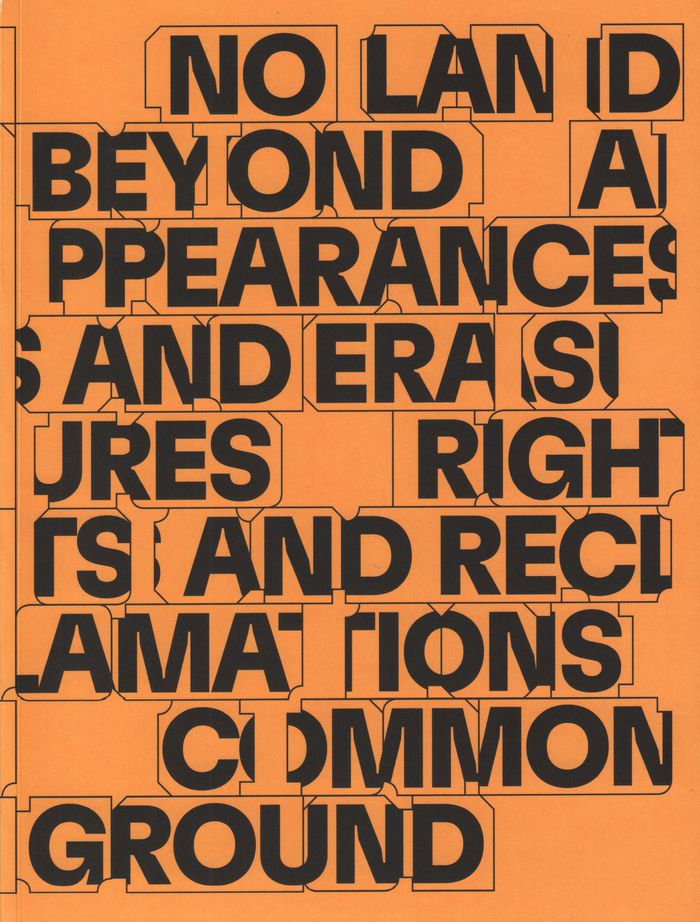
...And other such stories. 2019 Chicago Architecture Biennial
Actions:
Price:
$36.95
(available to order)
Summary:
What constitutes the social context of architecture? What kind of stories can be told about how lived experiences across global communities, cities, territories, and ecologies resonate with architectural and space-making practices? The 2019 Chicago Architecture Biennial explores the implications of architecture and the built environment as they relate to land, memory, rights, and civic participation — drawing buildings, planning, art, policy making, education, and activism into new conversations at global and civic scales.
Form:
books
books
Publication:
October 2019
October 2019
Subject:
Biennial
Biennial
Form:
books
books
Title:
Ways of knowing cities
Ways of knowing cities
Actions:
Price:
$35.95
(available to order)
Summary:
Technology mediates how we know and experience cities, and the nature of this mediation has always been deeply political. Today, the production and deployment of data is at the forefront of projects to grasp and reshape urban life. ''Ways of knowing cities'' considers the role of technology in generating, materializing, and contesting urban epistemologies- tracing an arc(...)
Title:
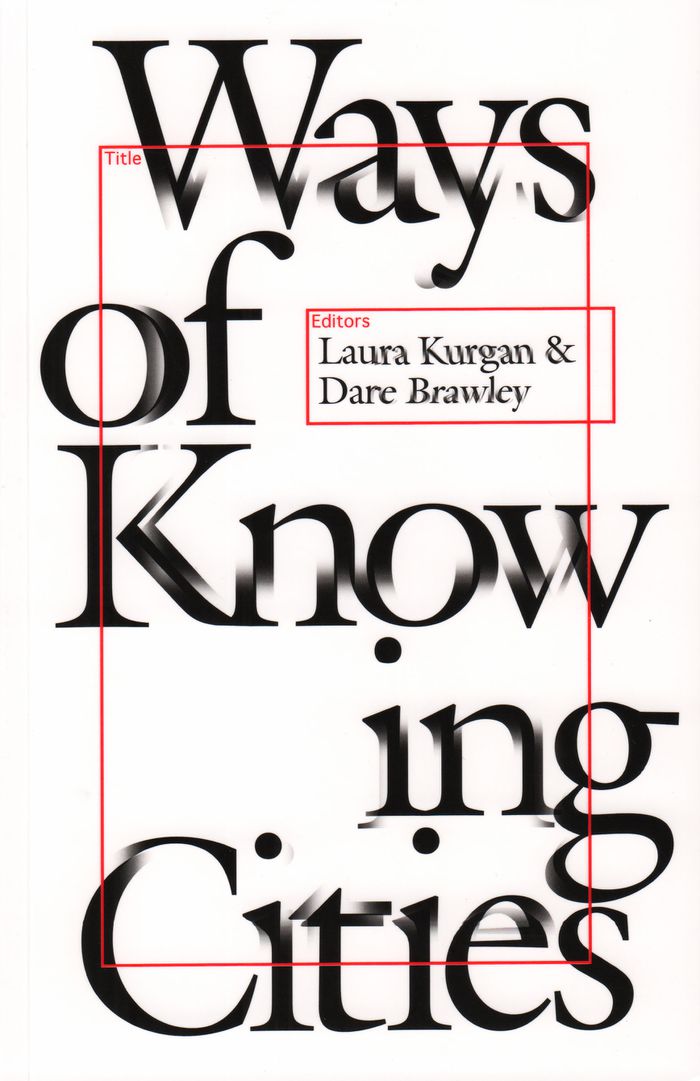
Ways of knowing cities
Actions:
Price:
$35.95
(available to order)
Summary:
Technology mediates how we know and experience cities, and the nature of this mediation has always been deeply political. Today, the production and deployment of data is at the forefront of projects to grasp and reshape urban life. ''Ways of knowing cities'' considers the role of technology in generating, materializing, and contesting urban epistemologies- tracing an arc from ubiquitous sites of ''smart'' urbanism, to discrete struggles over infrastructural governance, to forgotten histories of segregation now naturalized in urban algorithms, to exceptional territories of border policing. Bringing together architects, urbanists, artists, and scholars of critical migration studies, media theory, geography, anthropology, and literature, the essays stage a deeply interdisciplinary conversation, interrogating the ways in which certain ways of knowing are predicated on the erasure of others. In this opening, the book engages the information systems that structure urban space and social life in it, historically and in the present moment, to imagine alternative practices and generate new critical perspectives on spatial research.
Form:
books
books
Publication:
December 2019
December 2019
Subject:
Urban Theory
Urban Theory
Form:
books
books

Actions:
Price:
$24.95
(available to order)
Summary:
In the forty years since the first iteration of Venice Architecture Biennale, the field of architecture has seen a remarkable change in the role played by exhibition-making. While architecture and display have long been intertwined practices, a rapid proliferation of large-scale perennial exhibitions—particularly in the twenty-first century—has resulted in the biennial /(...)
Title:
Biennials / Triennials: conversations on the geography of itinerant display
Actions:
Price:
$24.95
(available to order)
Summary:
In the forty years since the first iteration of Venice Architecture Biennale, the field of architecture has seen a remarkable change in the role played by exhibition-making. While architecture and display have long been intertwined practices, a rapid proliferation of large-scale perennial exhibitions—particularly in the twenty-first century—has resulted in the biennial / triennial becoming an integral part of our discipline, a new geography of itinerant display that has profoundly altered the contours of architectural thought. Between format, space, and content, what are the various agencies and effects of these events? Biennials / Triennials asks these questions and others of a range of curatorial agents and visits crucial sites of recent exhibitions that reveal what is at stake in the newfound ubiquity of the architectural –ennial.
Form:
books
books
Publication:
October 2019
October 2019
Subject:
Biennial
Biennial
Form:
books
books
Actions:
Price:
$44.95
(available to order)
Summary:
The objects of architecture are not simply inert assemblies of material - they are complex entities that unfold their potential agencies (whether political, social, or environmental) in equally complex ways. Exploring these forms of architectural agency has in recent years been a central aspect of the work of Andrés Jaque and the Office for Political Innovation, who, in(...)
Title:
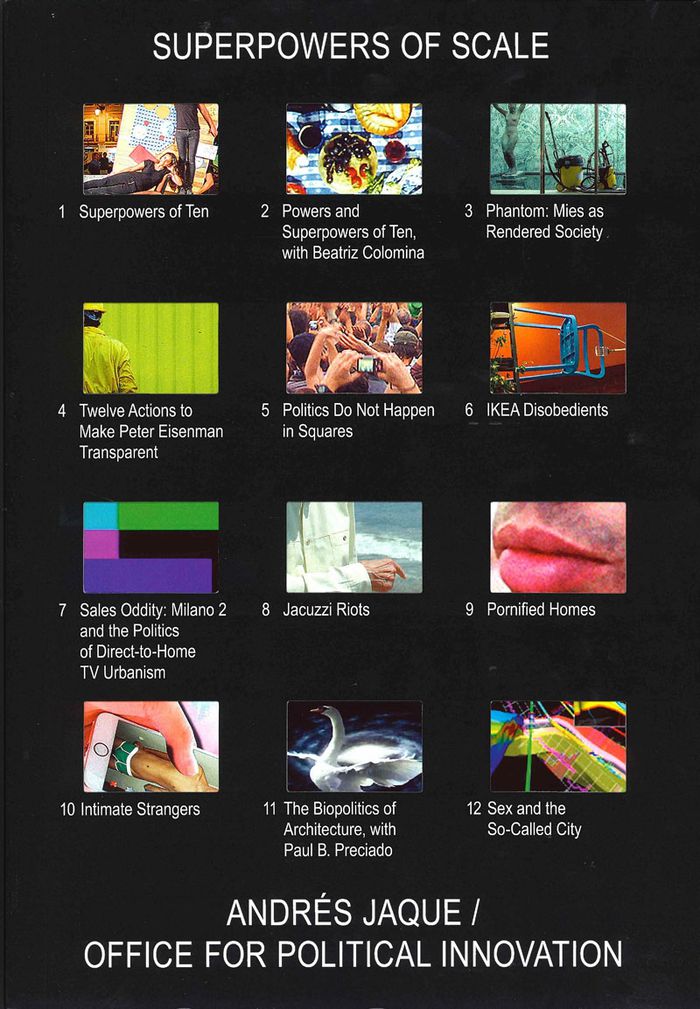
Superpowers of scale: Office for Political Innovation
Actions:
Price:
$44.95
(available to order)
Summary:
The objects of architecture are not simply inert assemblies of material - they are complex entities that unfold their potential agencies (whether political, social, or environmental) in equally complex ways. Exploring these forms of architectural agency has in recent years been a central aspect of the work of Andrés Jaque and the Office for Political Innovation, who, in addition to their built works, pursue a research practice through the many other media of architectural production. Their projects are reactive, intervening on what already exists to demonstrate how design, politics, and criticality operate across different scales and at the intersection of multiple realities. Jaque’s performances, videos, and installations—and this book, which collects a range of recent research projects—bring new subjects into the fold of architecture, focusing on alternative actors, distributions of power and representation, and the sociocultural effects of architecture. These episodes address ideas like genetic manipulation, the necessary requeering of dequeered spaces of online interaction, and the selling of modern architectural comforts in order to subvert the field from within and to contest capitalism's flattening-out of public life.
Form:
books
books
Publication:
March 2020
March 2020
Subject:
Architecture Monographs
Architecture Monographs
Form:
books
books
Actions:
Price:
$47.95
(available in store)
Summary:
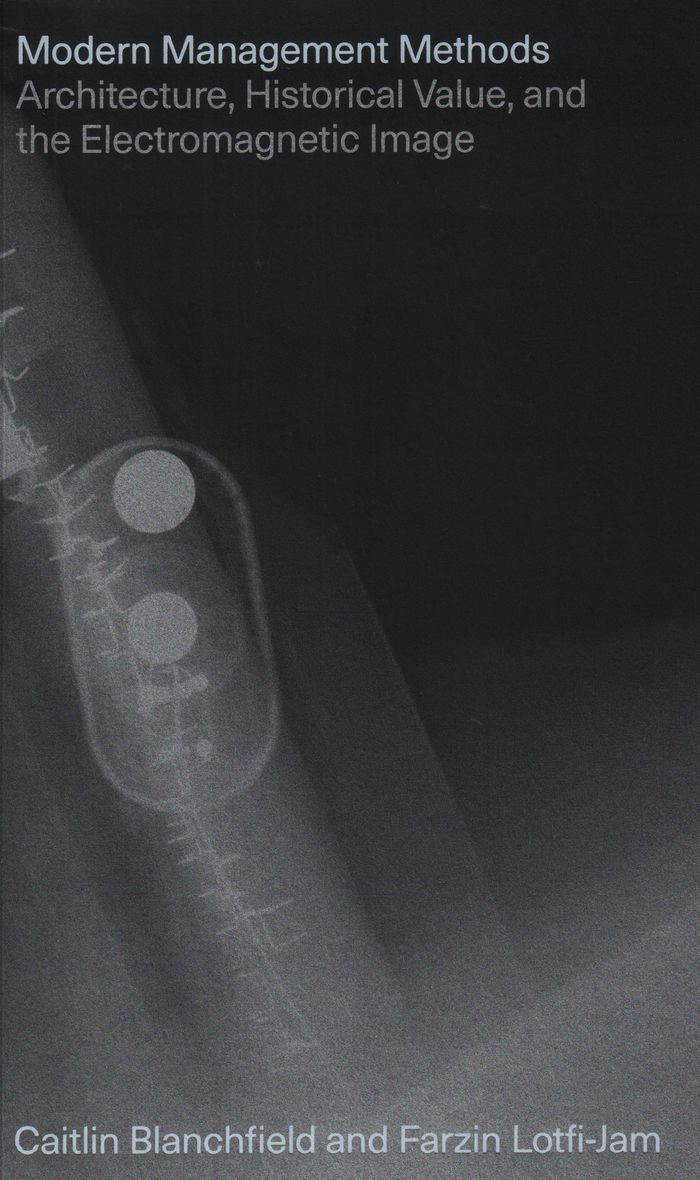
Modernists of the early twentieth century were transfixed by the X-ray—a means of seeing through skin into systems of bones and tissue. What, nearly a century later, can X-rays reveal about the systems of modernism itself? 'Modern Management Methods' asks how the value of a building is produced through instruments of expertise, management ideologies, and historical narratives.
Publication:
November 2019
November 2019
Title:
Modern management methods: architecture, historical value, and the electromagnetic image
Actions:
Price:
$47.95
(available in store)
Summary:
Modernists of the early twentieth century were transfixed by the X-ray—a means of seeing through skin into systems of bones and tissue. What, nearly a century later, can X-rays reveal about the systems of modernism itself? 'Modern Management Methods' asks how the value of a building is produced through instruments of expertise, management ideologies, and historical narratives.
Form:
books
books
Publication:
November 2019
November 2019
Form:
books
books
Actions:
Price:
$34.99
(available to order)
Summary:
Nothing is harder to do these days than nothing. But in a world where our value is determined by our 24/7 data productivity, doing nothing may be our most important form of resistance. So argues artist and critic Jenny Odell in this field guide to doing nothing (at least as capitalism defines it). Odell sees our attention as the most precious—and overdrawn—resource we(...)
Title:
How to do nothing: resisting the attention economy
Actions:
Price:
$34.99
(available to order)
Summary:
Nothing is harder to do these days than nothing. But in a world where our value is determined by our 24/7 data productivity, doing nothing may be our most important form of resistance. So argues artist and critic Jenny Odell in this field guide to doing nothing (at least as capitalism defines it). Odell sees our attention as the most precious—and overdrawn—resource we have. Once we can start paying a new kind of attention, she writes, we can undertake bolder forms of political action, reimagine humankind’s role in the environment, and arrive at more meaningful understandings of happiness and progress. Far from the simple anti-technology screed, or the back-to-nature meditation we read so often, ''How to do nothing'' is an action plan for thinking outside of capitalist narratives of efficiency and techno-determinism.
Form:
books
books
Publication:
April 2019
April 2019
Subject:
Critical Theory
Critical Theory
Form:
books
books

Title:
Le prisme / The prism
Le prisme / The prism
Actions:
Price:
$10.00
(available in store)
Summary:
La publication est composée de trois livrets qui correspondent chacun à une période des colonies marines italiennes. Elle inclut un texte et des images de l’artiste.
$10.00
(available in store)
Summary:
La publication est composée de trois livrets qui correspondent chacun à une période des colonies marines italiennes. Elle inclut un texte et des images de l’artiste.
Title:
Le prisme / The prism
Actions:
Price:
$10.00
(available in store)
Summary:
La publication est composée de trois livrets qui correspondent chacun à une période des colonies marines italiennes. Elle inclut un texte et des images de l’artiste.
Le prisme / The prism
Actions:
Price:
$10.00
(available in store)
Summary:
La publication est composée de trois livrets qui correspondent chacun à une période des colonies marines italiennes. Elle inclut un texte et des images de l’artiste.
Form:
books
books
Publication:
November 2018
November 2018
Subject:
Consignment
Consignment
Form:
books
books
Actions:
Price:
$58.95
(available to order)
Summary:
This pioneering volume explores the Arctic as an important and highly endangered archive of knowledge about natural as well as human history of the Anthropocene. Focusing on the Arctic as an archive means not only to investigate it as a place of human history and memory—of Arctic exploring, conquering, and colonizing—but to take into account also the specific(...)
Subject:
Environment and environmental theory
Environment and environmental theory
Publication:
January 2020
January 2020
Title:
Arctic archives: ice, memory and entropy
Actions:
Price:
$58.95
(available to order)
Summary:
This pioneering volume explores the Arctic as an important and highly endangered archive of knowledge about natural as well as human history of the Anthropocene. Focusing on the Arctic as an archive means not only to investigate it as a place of human history and memory—of Arctic exploring, conquering, and colonizing—but to take into account also the specific environmental conditions of the circumpolar region: ice and permafrost. These have allowed a huge natural archive to emerge, offering rich sources for natural scientists and historians alike. Examining the debate on the notion of ('natural') archive, the cultural semantics and historicity of the meaning of concepts like 'warm,' 'cold,' 'freezing,' and 'melting,' as well as various works of literature, art, and science on Arctic topics, this volume brings together literary scholars, historians of knowledge and philosophy, art historians, media theorists, and archivologists.
Form:
books
books
Publication:
January 2020
January 2020
Subject:
Environment and environmental theory
Environment and environmental theory


