


972 Results
Form:
books
books
Title:
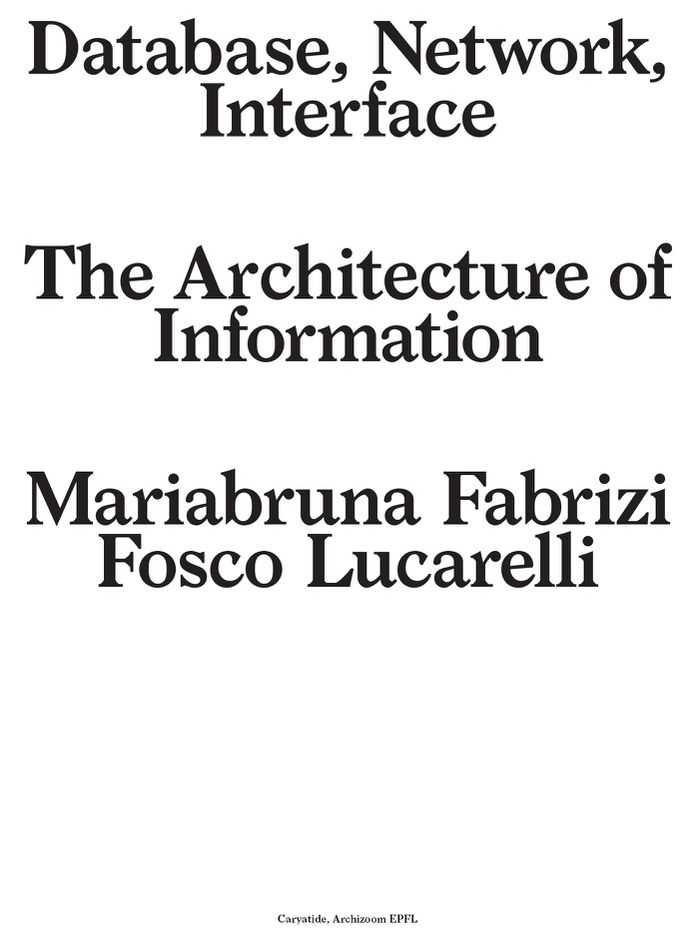
Database network interface
Database network interface
Actions:
Price:
$59.95
(available in store)
Summary:
Throughout human history, the library, the archive and the museum have embodied knowledge, information and collective culture to such an extent that it is possible to compare systems of information organisation with spatial and architectural typologies. The publication, conceived in the occasion of the exhibition at Archizoom (EPFL), dives into the relationship between(...)
Subject:
Archive, library and the digital
Archive, library and the digital
Publication:
October 2021
October 2021
Title:
Database network interface
Actions:
Price:
$59.95
(available in store)
Summary:
Throughout human history, the library, the archive and the museum have embodied knowledge, information and collective culture to such an extent that it is possible to compare systems of information organisation with spatial and architectural typologies. The publication, conceived in the occasion of the exhibition at Archizoom (EPFL), dives into the relationship between architectural and digital culture beyond the pure rhetoric of the digital turn and the digital as architectural style. The hypothesis is that the notions of "database", "network" and "interface"—common in the field of information technology—could be related to architectural issues of a formal, compositional or symbolic nature, of which spatial arrangements, plans or façades are the expression. In this sense, the publication presents a selection of case studies highlighting the possible links between digital and non-digital cultural projects and their architectural counterparts.
Form:
books
books
Publication:
October 2021
October 2021
Subject:
Archive, library and the digital
Archive, library and the digital
Form:
books
books

Title:
Data feminism
Data feminism
Actions:
Price:
$39.95
(available to order)
Summary:
Today, data science is a form of power. It has been used to expose injustice, improve health outcomes, and topple governments. But it has also been used to discriminate, police, and surveil. This potential for good, on the one hand, and harm, on the other, makes it essential to ask: Data science by whom? Data science for whom? Data science with whose interests in mind?(...)
Subject:
Archive, library and the digital
Archive, library and the digital
Publication:
March 2020
March 2020
Title:
Data feminism
Actions:
Price:
$39.95
(available to order)
Summary:
Today, data science is a form of power. It has been used to expose injustice, improve health outcomes, and topple governments. But it has also been used to discriminate, police, and surveil. This potential for good, on the one hand, and harm, on the other, makes it essential to ask: Data science by whom? Data science for whom? Data science with whose interests in mind? The narratives around big data and data science are overwhelmingly white, male, and techno-heroic. In ''Data feminism,'' Catherine D'Ignazio and Lauren Klein present a new way of thinking about data science and data ethics—one that is informed by intersectional feminist thought. Illustrating data feminism in action, D'Ignazio and Klein show how challenges to the male/female binary can help challenge other hierarchical (and empirically wrong) classification systems. They explain how, for example, an understanding of emotion can expand our ideas about effective data visualization, and how the concept of invisible labor can expose the significant human efforts required by our automated systems. And they show why the data never, ever ''speak for themselves.'' ''Data feminism'' offers strategies for data scientists seeking to learn how feminism can help them work toward justice, and for feminists who want to focus their efforts on the growing field of data science. But ''Data feminism'' is about much more than gender. It is about power, about who has it and who doesn't, and about how those differentials of power can be challenged and changed.
Form:
books
books
Publication:
March 2020
March 2020
Subject:
Archive, library and the digital
Archive, library and the digital
Form:
books
books
Title:
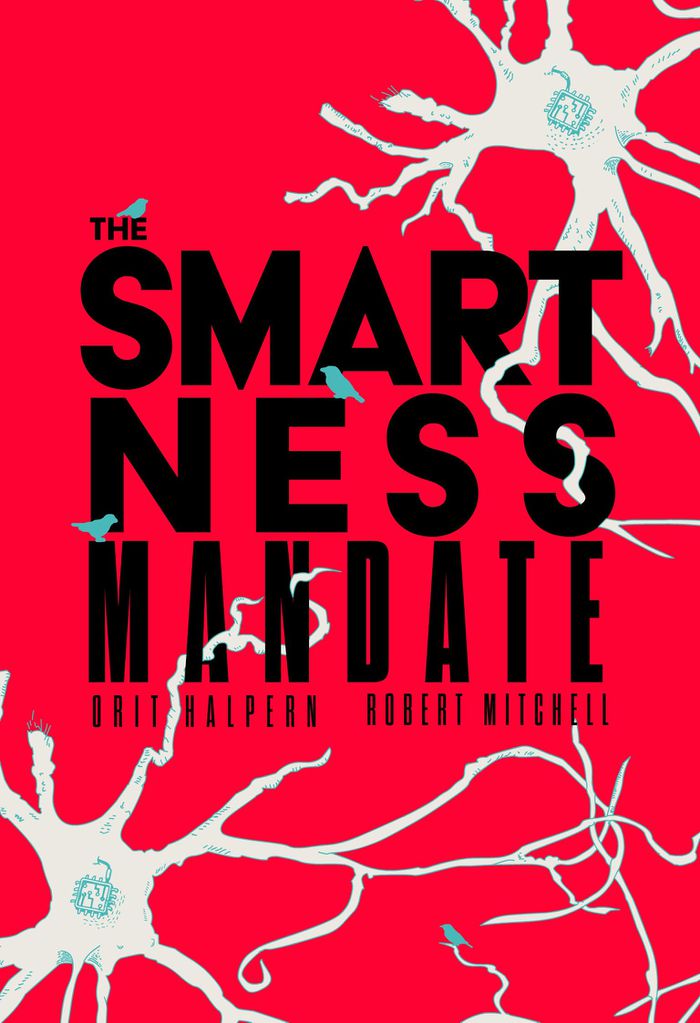
The smartness mandate
The smartness mandate
Actions:
Price:
$47.00
(available to order)
Summary:
In this book, the authors suggest that "smartness" is not primarily a technology, but rather an epistemology. Through this lens, they offer a critical exploration of the practices, technologies, and subjects that such an understanding relies upon—above all, artificial intelligence and machine learning. They approach these not simply as techniques for solving problems of(...)
Subject:
Archive, library and the digital
Archive, library and the digital
Publication:
December 2022
December 2022
Title:
The smartness mandate
Actions:
Price:
$47.00
(available to order)
Summary:
In this book, the authors suggest that "smartness" is not primarily a technology, but rather an epistemology. Through this lens, they offer a critical exploration of the practices, technologies, and subjects that such an understanding relies upon—above all, artificial intelligence and machine learning. They approach these not simply as techniques for solving problems of calculations, but rather as modes of managing life (human and other) in terms of neo-Darwinian evolution, distributed intelligences, and "resilience," all of which have serious implications for society, politics, and the environment.
Form:
books
books
Publication:
December 2022
December 2022
Subject:
Archive, library and the digital
Archive, library and the digital
Form:
books
books

Actions:
Price:
$47.00
(available to order)
Summary:
The only way to handle data responsibly, says Melanie Feinberg in this incisive work, is to take into account its human character. Though the data she discusses may seem familiar, close scrutiny shows it to be ambiguous, complicated, and uncertain: unruly. Drawing on the tools of information science, she uses everyday events to demonstrate a practical, critical, and(...)
Title:
Everyday adventures with unruly data
Actions:
Price:
$47.00
(available to order)
Summary:
The only way to handle data responsibly, says Melanie Feinberg in this incisive work, is to take into account its human character. Though the data she discusses may seem familiar, close scrutiny shows it to be ambiguous, complicated, and uncertain: unruly. Drawing on the tools of information science, she uses everyday events to demonstrate a practical, critical, and generative mode of thinking about data: its creation, management, aggregation, and use. As she reflects on the implications of commonplace events, Feinberg explicates fundamental concepts of data that reveal the many tiny design decisions—which may not even seem like design at all—that shape how data comes to be. Through the themes of serendipity, objectivity, equivalence, interoperability, taxonomy, labels, and locality, she illuminates the surprisingly pervasive role of data in our daily thoughts and lives.
Form:
books
books
Publication:
October 2022
October 2022
Subject:
Archive, library and the digital
Archive, library and the digital
Form:
books
books

Title:
DNA 14: Archives and Utopia
DNA 14: Archives and Utopia
Actions:
Price:
$21.00
(available in store)
Summary:
Traditional archivism runs the risk of perpetuating hegemonic ways of thinking by anticipating what will be of importance in the future through the framework of present-day realities and power structures. These genre-busting ruminations gather new methods for designing views of potential worlds and forms of archival activism.
Subject:
Archive, library and the digital
Archive, library and the digital
Publication:
December 2022
December 2022
Title:
DNA 14: Archives and Utopia
Actions:
Price:
$21.00
(available in store)
Summary:
Traditional archivism runs the risk of perpetuating hegemonic ways of thinking by anticipating what will be of importance in the future through the framework of present-day realities and power structures. These genre-busting ruminations gather new methods for designing views of potential worlds and forms of archival activism.
Form:
books
books
Publication:
December 2022
December 2022
Subject:
Archive, library and the digital
Archive, library and the digital
Form:
books
books
Title:
Module B. 2015/2019
Module B. 2015/2019
Actions:
Price:
$20.00
(available in store)
Summary:
MODULE B. interroge la bibliothèque en tant qu’espace de classement, de présentation et de collection d’un savoir personnel ou collectif. À l’ère du numérique, il s’agit aussi de dégager la signification de la bibliothèque, sa manière d’agencer un espace, sa définition matérielle et les formes de sa virtualisation. Lors de l’inauguration du projet MODULE B. en 2015, le(...)
Title:
Module B. 2015/2019
Actions:
Price:
$20.00
(available in store)
Summary:
MODULE B. interroge la bibliothèque en tant qu’espace de classement, de présentation et de collection d’un savoir personnel ou collectif. À l’ère du numérique, il s’agit aussi de dégager la signification de la bibliothèque, sa manière d’agencer un espace, sa définition matérielle et les formes de sa virtualisation. Lors de l’inauguration du projet MODULE B. en 2015, le visiteur était amené à remplir l’une des 16 fiches du répertoire créé pour l’occasion, portant chacune un intitulé différent, une interrogation particulière sur la définition d’une bibliothèque, à travers un prisme différent. Suite à l’exposition de Module B. à hon\ books en 2019, antoine lefebvre editions publie la collection des fiches recueillies par le collectif.
Form:
books
books
Publication:
October 2022
October 2022
Subject:
Archive, library and the digital
Archive, library and the digital
Form:
books
books

Price:
$25.00
(available to order)
Summary:
This volume explores the curious afterlives of the floppy disk in the 21st century through the work of those involved with the medium today. The book reflects on notions of obsolescence, media preservation and nostalgia, and challenges these by showing the endurance and versatility of this familiar piece of technology. From floppy filmmakers to floppy painters and beyond:(...)
Subject:
Archive, library and the digital
Archive, library and the digital
Publication:
November 2022
November 2022
Title:
Floppy disk fever: The curious afterlives of a flexible medium
Actions:
Price:
$25.00
(available to order)
Summary:
This volume explores the curious afterlives of the floppy disk in the 21st century through the work of those involved with the medium today. The book reflects on notions of obsolescence, media preservation and nostalgia, and challenges these by showing the endurance and versatility of this familiar piece of technology. From floppy filmmakers to floppy painters and beyond: what drives people to continue working with the medium that is typically deemed obsolete? What challenges and affordances does it provide? And what does the future hold in store for the familiar black square? By looking at the current presence of past technology we can assess our present-day situation and speculate on the future developments of our media landscape. After all, the technology of the past is also part of our future. This volume features interviews with key players in the contemporary floppy-disk world, including not only artists and filmmakers using floppy disks in their practice but also businessmen, archivists and museum proprietors working to preserve the medium.
Form:
books
books
Publication:
November 2022
November 2022
Subject:
Archive, library and the digital
Archive, library and the digital
Form:
journals and magazines
journals and magazines

Title:
AD 79:04 Digital cities
AD 79:04 Digital cities
Actions:
Price:
$54.00
(available to order)
Summary:
What is the impact of digital technologies on the design and analysis of cities? For the last 15 years, the profound impact of computer-aided techniques on architecture has been well charted. From the use of standard drafting packages to the more experimental use of generative design tools and parametric modelling, digital technologies have come to play a major role in(...)
Title:
AD 79:04 Digital cities
Actions:
Price:
$54.00
(available to order)
Summary:
What is the impact of digital technologies on the design and analysis of cities? For the last 15 years, the profound impact of computer-aided techniques on architecture has been well charted. From the use of standard drafting packages to the more experimental use of generative design tools and parametric modelling, digital technologies have come to play a major role in architectural production. But how are they helping architects and designers to operate at the urban scale? And how might they be changing the way in which we perceive and understand our cities?
Form:
journals and magazines
journals and magazines
Publication:
September 2009
September 2009
Form:
books
books

Actions:
Price:
$39.95
(available to order)
Summary:
Since the early twentieth century, contemporary art and art theory have creatively challenged the status of representation. During that time, the court of law has come to rely on a variety of new representational modes and technologies. The law is increasingly staged on a screen and the photographs, video documents, audio recordings used as evidence are not entirely(...)
Subject:
Archive, library and the digital
Archive, library and the digital
Publication:
January 2012
January 2012
Title:
A thousand eyes: media technology, law and esthetics
Actions:
Price:
$39.95
(available to order)
Summary:
Since the early twentieth century, contemporary art and art theory have creatively challenged the status of representation. During that time, the court of law has come to rely on a variety of new representational modes and technologies. The law is increasingly staged on a screen and the photographs, video documents, audio recordings used as evidence are not entirely distinct from their correlates in contemporary art, cinema and mass media. What questions of representation, judgment and justice cross borders between art and the law? Through the contribution of internationally renowned artists and scholars, this anthology explores how the aesthetics of new media technology and its spatial implementations affect the judicial system in relation to fundamental concepts such as truth and representation. Artistic contributions by John Baldessari, Dan Graham, Harun Farocki, Stan Douglas, Aernout Mik, Agency, Judy Radul, Renzo Martens, Ana Torfs, The Atlas Group, René Magritte, Model Court, Rana Hamadeh, Thomas Demand, Les Levine Essays by Julie A. Cassiday, Costas Douzinas, Piyel Haldar, Martin Jay, Peter Goodrich, Richard Mohr, Judy Radul, Avital Ronell, Eyal Sivan, Cornelia Vismann
Form:
books
books
Publication:
January 2012
January 2012
Subject:
Archive, library and the digital
Archive, library and the digital
Form:
books
books
Title:
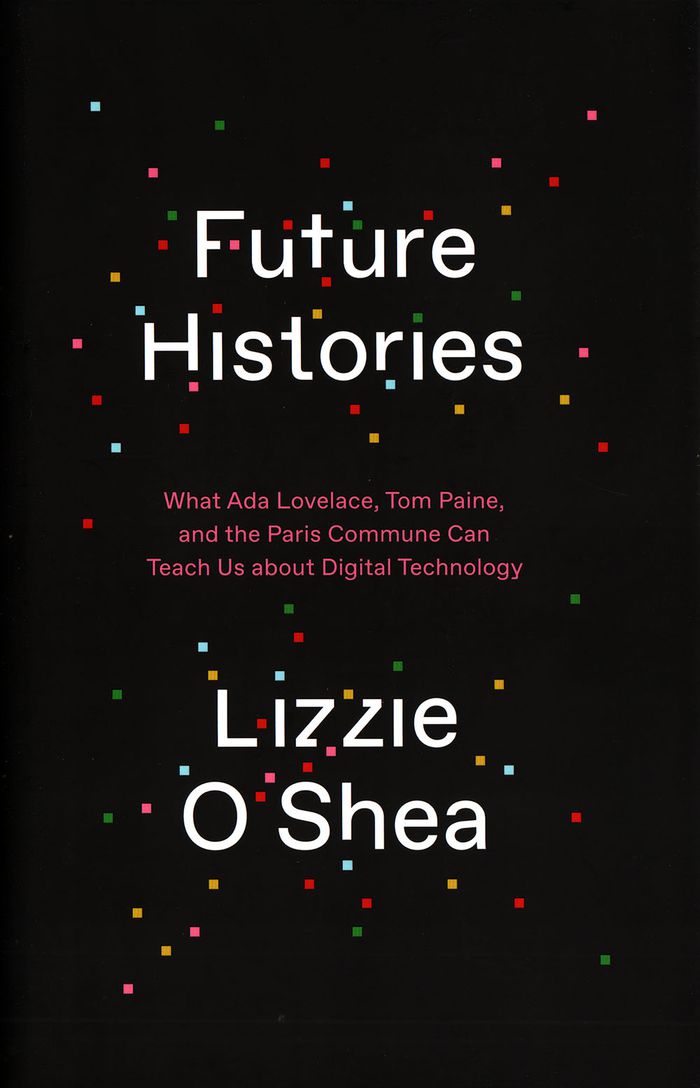
Future histories: What Ada Lovelace, Tom Paine, and the Paris Commune can teach us about digital
Future histories: What Ada Lovelace, Tom Paine, and the Paris Commune can teach us about digital
Actions:
Price:
$36.95
(available to order)
Summary:
When we talk about technology we always talk about tomorrow and the future - which makes it hard to figure out how to even get there. In "Future Histories", public interest lawyer and digital specialist Lizzie O'Shea argues that we need to stop looking forward and start looking backwards. Weaving together histories of computing and progressive social movements with modern(...)
Title:
Future histories: What Ada Lovelace, Tom Paine, and the Paris Commune can teach us about digital
Actions:
Price:
$36.95
(available to order)
Summary:
When we talk about technology we always talk about tomorrow and the future - which makes it hard to figure out how to even get there. In "Future Histories", public interest lawyer and digital specialist Lizzie O'Shea argues that we need to stop looking forward and start looking backwards. Weaving together histories of computing and progressive social movements with modern theories of the mind, society, and self, O'Shea constructs a "usable past" that can help us determine our digital future.
Form:
books
books
Publication:
May 2019
May 2019
Subject:
Archive, library and the digital
Archive, library and the digital


