


12071 Results
Form:
books
books
Price:
$20.00
(available in store)
Summary:
A l'occasion de l'exposition « La Maison Magique », les architectes de l'Atelier Bow-Wow (Yoshiharu Tsukamoto, Momoyo Kaijima et Yoichi Tamai) et Didier Fiuza Faustino ont choisit de travailler un matériau commun dans une logique de production cyclique. Ce matériau, le bois, utilisé dans la construction des deux architectures, est prélevé au Portugal et y sera réexpédié(...)
$20.00
(available in store)
Summary:
A l'occasion de l'exposition « La Maison Magique », les architectes de l'Atelier Bow-Wow (Yoshiharu Tsukamoto, Momoyo Kaijima et Yoichi Tamai) et Didier Fiuza Faustino ont choisit de travailler un matériau commun dans une logique de production cyclique. Ce matériau, le bois, utilisé dans la construction des deux architectures, est prélevé au Portugal et y sera réexpédié(...)
Subject:
Architecture Monographs
Architecture Monographs
Publication:
January 2017
January 2017
Title:
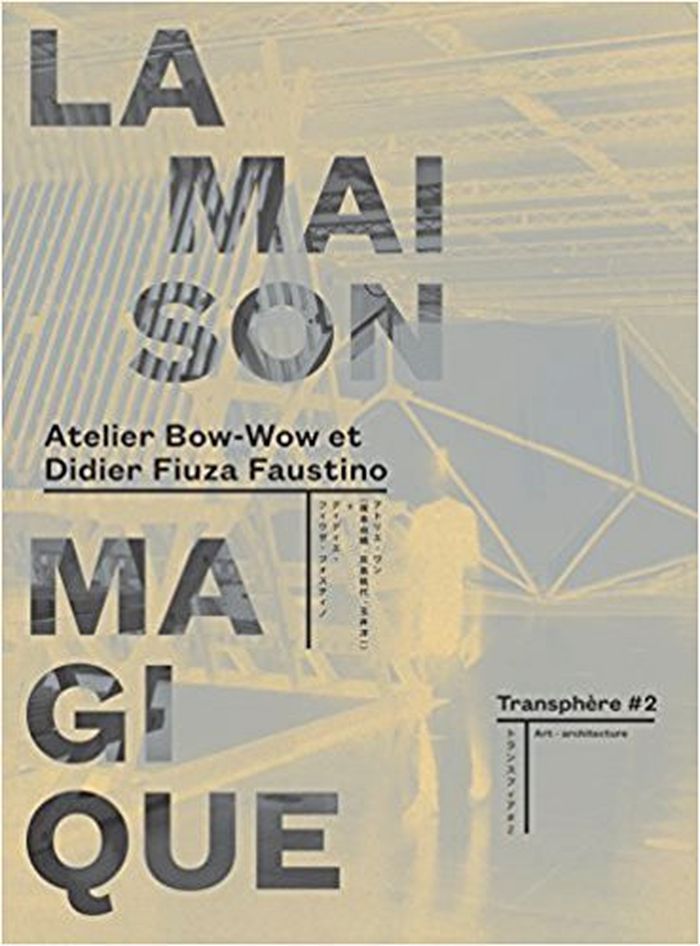
Transphère 02: La maison magique, Atelier Bow-Wow, Didier Fiuza Faustino
Actions:
Price:
$20.00
(available in store)
Summary:
A l'occasion de l'exposition « La Maison Magique », les architectes de l'Atelier Bow-Wow (Yoshiharu Tsukamoto, Momoyo Kaijima et Yoichi Tamai) et Didier Fiuza Faustino ont choisit de travailler un matériau commun dans une logique de production cyclique. Ce matériau, le bois, utilisé dans la construction des deux architectures, est prélevé au Portugal et y sera réexpédié dès la fin de l'exposition pour une deuxième vie. Bien que les architectes aient décidé de travailler cette même matière, les deux habitacles qu'ils présentent offrent aux visiteurs deux réflexions complémentaires. Le catalogue est illustré par une galerie de photographies de l'exposition et du making of de cette installation inédite composée de deux maisons, Chigi House et A home is not a hole. Les plans d'exécution de ces deux structures à la croisée de l'architecture et de l'art sont également reproduits.
Transphère 02: La maison magique, Atelier Bow-Wow, Didier Fiuza Faustino
Actions:
Price:
$20.00
(available in store)
Summary:
A l'occasion de l'exposition « La Maison Magique », les architectes de l'Atelier Bow-Wow (Yoshiharu Tsukamoto, Momoyo Kaijima et Yoichi Tamai) et Didier Fiuza Faustino ont choisit de travailler un matériau commun dans une logique de production cyclique. Ce matériau, le bois, utilisé dans la construction des deux architectures, est prélevé au Portugal et y sera réexpédié dès la fin de l'exposition pour une deuxième vie. Bien que les architectes aient décidé de travailler cette même matière, les deux habitacles qu'ils présentent offrent aux visiteurs deux réflexions complémentaires. Le catalogue est illustré par une galerie de photographies de l'exposition et du making of de cette installation inédite composée de deux maisons, Chigi House et A home is not a hole. Les plans d'exécution de ces deux structures à la croisée de l'architecture et de l'art sont également reproduits.
Form:
books
books
Publication:
January 2017
January 2017
Subject:
Architecture Monographs
Architecture Monographs
Form:
books
books
Actions:
Price:
$64.95
(available to order)
Summary:
"The space between" is the third part of the collected works of the legendary English Brutalist architects Alison (1928–93) and Peter Smithson (1923–2003), a complement to the volumes The Charged Void: Architecture and The Charged Void: Urbanism (respectively published in 2001 and 2005). While the Charged Void books dealt with both the built and unbuilt projects of the(...)
$64.95
(available to order)
Summary:
"The space between" is the third part of the collected works of the legendary English Brutalist architects Alison (1928–93) and Peter Smithson (1923–2003), a complement to the volumes The Charged Void: Architecture and The Charged Void: Urbanism (respectively published in 2001 and 2005). While the Charged Void books dealt with both the built and unbuilt projects of the(...)
Title:
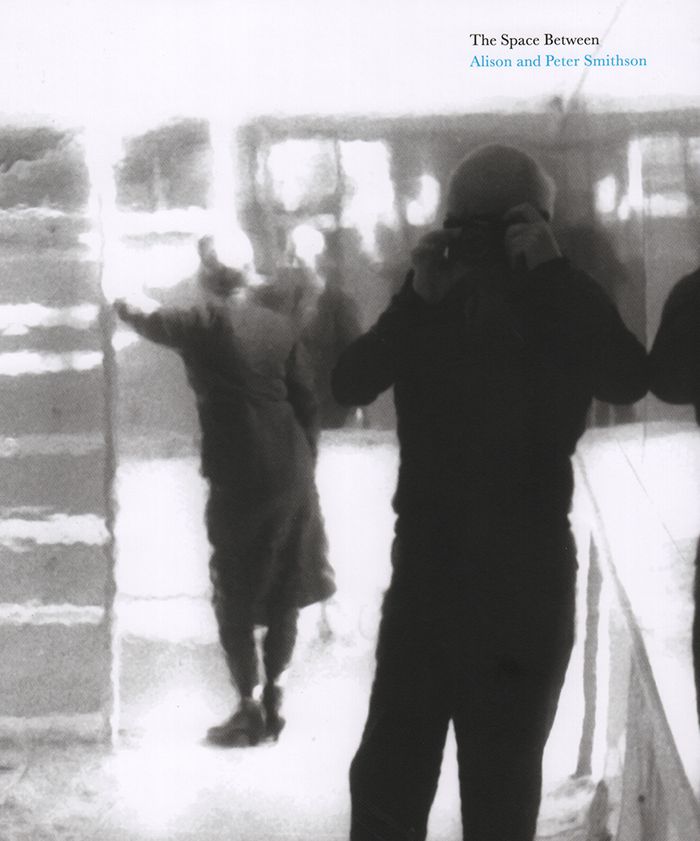
Alison and Peter Smithson: the space between
Actions:
Price:
$64.95
(available to order)
Summary:
"The space between" is the third part of the collected works of the legendary English Brutalist architects Alison (1928–93) and Peter Smithson (1923–2003), a complement to the volumes The Charged Void: Architecture and The Charged Void: Urbanism (respectively published in 2001 and 2005). While the Charged Void books dealt with both the built and unbuilt projects of the Smithsons, supplemented with brief commentary, The Space Between is a richly illustrated text book on the architects, with drawings and photographs mostly by the Smithsons themselves. It can be considered a summary of their thinking as architects that spans the entirety of their career, attempting to grasp the identity of places through the observation of everyday life, developing what they liked to call “a sensibility of place.”
Alison and Peter Smithson: the space between
Actions:
Price:
$64.95
(available to order)
Summary:
"The space between" is the third part of the collected works of the legendary English Brutalist architects Alison (1928–93) and Peter Smithson (1923–2003), a complement to the volumes The Charged Void: Architecture and The Charged Void: Urbanism (respectively published in 2001 and 2005). While the Charged Void books dealt with both the built and unbuilt projects of the Smithsons, supplemented with brief commentary, The Space Between is a richly illustrated text book on the architects, with drawings and photographs mostly by the Smithsons themselves. It can be considered a summary of their thinking as architects that spans the entirety of their career, attempting to grasp the identity of places through the observation of everyday life, developing what they liked to call “a sensibility of place.”
Form:
books
books
Publication:
May 2017
May 2017
Subject:
Architecture Monographs
Architecture Monographs
Form:
books
books
Actions:
Price:
$62.00
(available in store)
Summary:
In response to the theme of the 2016 Venice Biennial, Portugal presented a site-specific pavilion occupying an urban front in the midst of physical and social regeneration on Giudecca, an archipelago just south of Venice. The pavilion exhibited four works by Pritzger Prize winner Álvaro Siza (born 1933) on the theme of social housing Campo di Marte (Venice), Schilderswijk(...)
$62.00
(available in store)
Summary:
In response to the theme of the 2016 Venice Biennial, Portugal presented a site-specific pavilion occupying an urban front in the midst of physical and social regeneration on Giudecca, an archipelago just south of Venice. The pavilion exhibited four works by Pritzger Prize winner Álvaro Siza (born 1933) on the theme of social housing Campo di Marte (Venice), Schilderswijk(...)
Subject:
Architecture Monographs
Architecture Monographs
Publication:
February 2018
February 2018
Title:
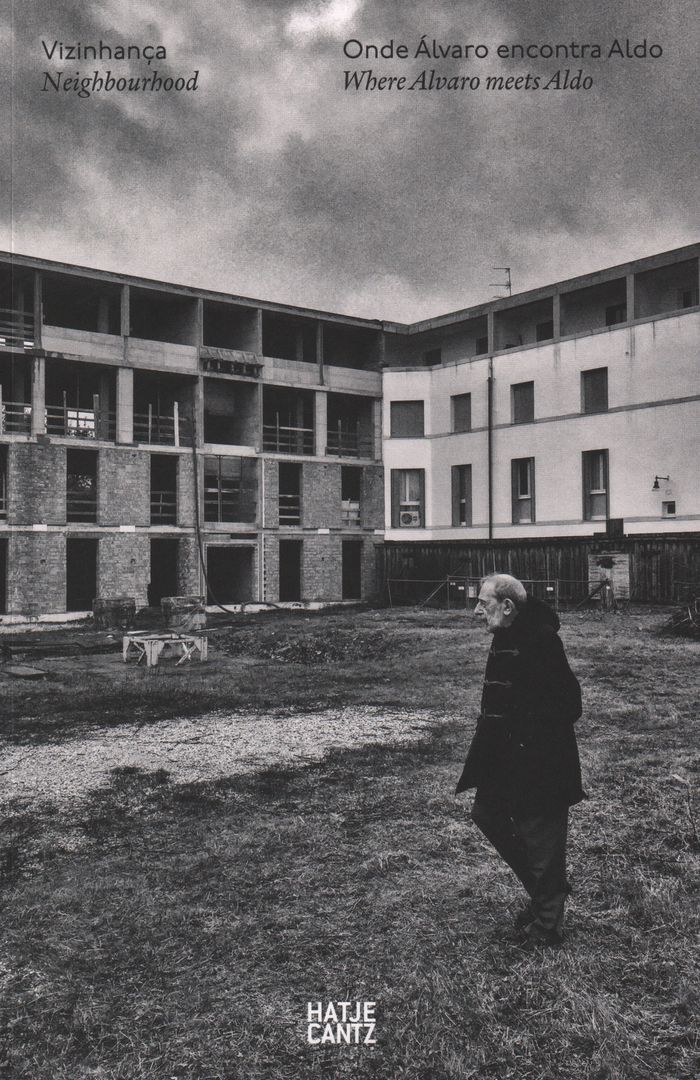
Alvaro Siza: Neighbourhood. Where Alvaro meets Aldo
Actions:
Price:
$62.00
(available in store)
Summary:
In response to the theme of the 2016 Venice Biennial, Portugal presented a site-specific pavilion occupying an urban front in the midst of physical and social regeneration on Giudecca, an archipelago just south of Venice. The pavilion exhibited four works by Pritzger Prize winner Álvaro Siza (born 1933) on the theme of social housing Campo di Marte (Venice), Schilderswijk (The Hague), Schlesisches Tor (Berlin) and Bairro da Bouça (Porto) revealing his collaborative experience with the local inhabitants and unique understanding of the European city and citizenship. These projects resulted in the creation of neighborhood spaces aimed at a more tolerant, multicultural society, a subject important to the current European political agenda. This book unveils the curatorial process and the display of these works in Venice. Included are images of Siza’s recent visits to the neighborhoods, plus a presentation of the changes triggered by immigration, ghettoization, gentrification and “touristification.”
Alvaro Siza: Neighbourhood. Where Alvaro meets Aldo
Actions:
Price:
$62.00
(available in store)
Summary:
In response to the theme of the 2016 Venice Biennial, Portugal presented a site-specific pavilion occupying an urban front in the midst of physical and social regeneration on Giudecca, an archipelago just south of Venice. The pavilion exhibited four works by Pritzger Prize winner Álvaro Siza (born 1933) on the theme of social housing Campo di Marte (Venice), Schilderswijk (The Hague), Schlesisches Tor (Berlin) and Bairro da Bouça (Porto) revealing his collaborative experience with the local inhabitants and unique understanding of the European city and citizenship. These projects resulted in the creation of neighborhood spaces aimed at a more tolerant, multicultural society, a subject important to the current European political agenda. This book unveils the curatorial process and the display of these works in Venice. Included are images of Siza’s recent visits to the neighborhoods, plus a presentation of the changes triggered by immigration, ghettoization, gentrification and “touristification.”
Form:
books
books
Publication:
February 2018
February 2018
Subject:
Architecture Monographs
Architecture Monographs
Form:
books
books
Title:
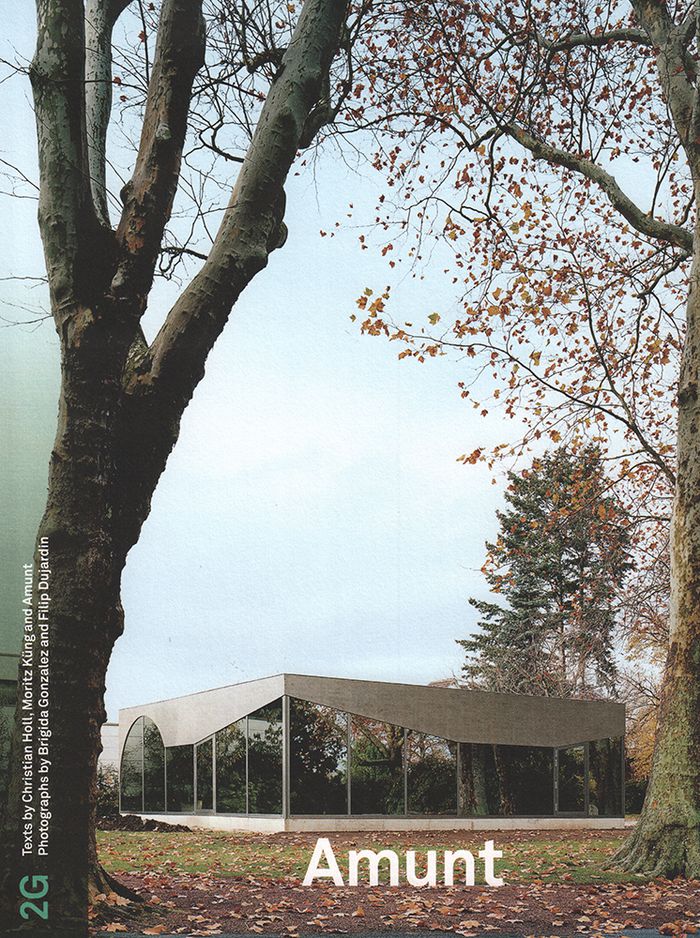
2G 75: Amunt
2G 75: Amunt
Actions:
Price:
$65.00
(available to order)
Summary:
Since 2010, German architects Sonja Nagel, Jan Theissen and Björn Martenson have collaborated under the name Amunt, producing mostly small houses, adaptations, extensions and spatial interventions. Amunt 2G offers insight into their multifaceted work.
$65.00
(available to order)
Summary:
Since 2010, German architects Sonja Nagel, Jan Theissen and Björn Martenson have collaborated under the name Amunt, producing mostly small houses, adaptations, extensions and spatial interventions. Amunt 2G offers insight into their multifaceted work.
Subject:
Architecture Monographs
Architecture Monographs
Publication:
July 2017
July 2017
Title:
2G 75: Amunt
Actions:
Price:
$65.00
(available to order)
Summary:
Since 2010, German architects Sonja Nagel, Jan Theissen and Björn Martenson have collaborated under the name Amunt, producing mostly small houses, adaptations, extensions and spatial interventions. Amunt 2G offers insight into their multifaceted work.
2G 75: Amunt
Actions:
Price:
$65.00
(available to order)
Summary:
Since 2010, German architects Sonja Nagel, Jan Theissen and Björn Martenson have collaborated under the name Amunt, producing mostly small houses, adaptations, extensions and spatial interventions. Amunt 2G offers insight into their multifaceted work.
Form:
books
books
Publication:
July 2017
July 2017
Subject:
Architecture Monographs
Architecture Monographs
Form:
books
books
Actions:
Price:
$50.00
(available to order)
Summary:
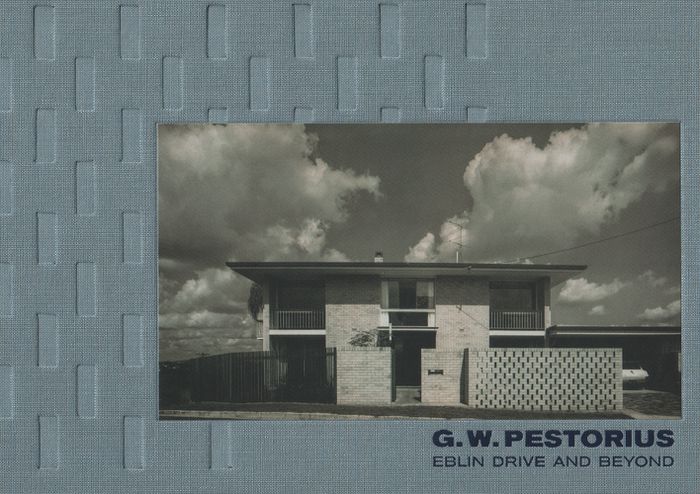
The first monograph on Brisbane-based architect Geoff Pestorius (1930–68), Eblin Drive and Beyond focuses primarily on Pestorius’ tour de force, the Sweeney House, though several other projects are featured. Bound in an embossed cloth cover, the volume is a gorgeous homage to Brisbane’s own Bauhaus.
$50.00
(available to order)
Summary:
The first monograph on Brisbane-based architect Geoff Pestorius (1930–68), Eblin Drive and Beyond focuses primarily on Pestorius’ tour de force, the Sweeney House, though several other projects are featured. Bound in an embossed cloth cover, the volume is a gorgeous homage to Brisbane’s own Bauhaus.
Title:
G. W. Pestorius: Eblin drive and beyond
Actions:
Price:
$50.00
(available to order)
Summary:
The first monograph on Brisbane-based architect Geoff Pestorius (1930–68), Eblin Drive and Beyond focuses primarily on Pestorius’ tour de force, the Sweeney House, though several other projects are featured. Bound in an embossed cloth cover, the volume is a gorgeous homage to Brisbane’s own Bauhaus.
G. W. Pestorius: Eblin drive and beyond
Actions:
Price:
$50.00
(available to order)
Summary:
The first monograph on Brisbane-based architect Geoff Pestorius (1930–68), Eblin Drive and Beyond focuses primarily on Pestorius’ tour de force, the Sweeney House, though several other projects are featured. Bound in an embossed cloth cover, the volume is a gorgeous homage to Brisbane’s own Bauhaus.
Form:
books
books
Publication:
July 2017
July 2017
Subject:
Architecture Monographs
Architecture Monographs
Form:
books
books
Actions:
Price:
$205.00
(available to order)
Summary:
This book presents projects that have been developed since the last comprehensive catalog Valerio Olgiati (first edition published by Verlag der Buchhandlung Walther Konig, 2008). They are planned, built or projects under construction from the period between 2009 and 2017. The order in which the projects apprear in the book corresponds to the chronology of the degign(...)
$205.00
(available to order)
Summary:
This book presents projects that have been developed since the last comprehensive catalog Valerio Olgiati (first edition published by Verlag der Buchhandlung Walther Konig, 2008). They are planned, built or projects under construction from the period between 2009 and 2017. The order in which the projects apprear in the book corresponds to the chronology of the degign(...)
Title:
Valerio Olgiati, Projects 2009-2017
Actions:
Price:
$205.00
(available to order)
Summary:
This book presents projects that have been developed since the last comprehensive catalog Valerio Olgiati (first edition published by Verlag der Buchhandlung Walther Konig, 2008). They are planned, built or projects under construction from the period between 2009 and 2017. The order in which the projects apprear in the book corresponds to the chronology of the degign date. All of the plans in the book are full-scale and are shown with dimensional lines. They are based on precise technical plans and backed with textures. They are detailed and contain all the information necessary to understand a building spatially and functionally.
Valerio Olgiati, Projects 2009-2017
Actions:
Price:
$205.00
(available to order)
Summary:
This book presents projects that have been developed since the last comprehensive catalog Valerio Olgiati (first edition published by Verlag der Buchhandlung Walther Konig, 2008). They are planned, built or projects under construction from the period between 2009 and 2017. The order in which the projects apprear in the book corresponds to the chronology of the degign date. All of the plans in the book are full-scale and are shown with dimensional lines. They are based on precise technical plans and backed with textures. They are detailed and contain all the information necessary to understand a building spatially and functionally.
Form:
books
books
Publication:
January 2018
January 2018
Subject:
Architecture Monographs
Architecture Monographs
Form:
books
books
Actions:
Price:
$85.00
(available to order)
Summary:
Celebrating thirty years of practice, this bilingual survey of recent projects includes BAM Downtown Brooklyn Cultural District, the Rutgers University master plan, Amparo Museum, Centro University, Universidad Panamericano, and a dozen others. With offices in Mexico and New York, TEN Arquitectos mines the forces---migration, trade, economic and information(...)
$85.00
(available to order)
Summary:
Celebrating thirty years of practice, this bilingual survey of recent projects includes BAM Downtown Brooklyn Cultural District, the Rutgers University master plan, Amparo Museum, Centro University, Universidad Panamericano, and a dozen others. With offices in Mexico and New York, TEN Arquitectos mines the forces---migration, trade, economic and information(...)
Title:
TEN Arquitectos / Enrique Norten
Actions:
Price:
$85.00
(available to order)
Summary:
Celebrating thirty years of practice, this bilingual survey of recent projects includes BAM Downtown Brooklyn Cultural District, the Rutgers University master plan, Amparo Museum, Centro University, Universidad Panamericano, and a dozen others. With offices in Mexico and New York, TEN Arquitectos mines the forces---migration, trade, economic and information networks'shaping our cities, creating bold forms that mark skylines and activate streets from Mexico City to Brooklyn. This book explores the firm's evolution as an international practice and the three "lines of investigation" that propel its work: architecture as public space, infrastructure, and territory.
TEN Arquitectos / Enrique Norten
Actions:
Price:
$85.00
(available to order)
Summary:
Celebrating thirty years of practice, this bilingual survey of recent projects includes BAM Downtown Brooklyn Cultural District, the Rutgers University master plan, Amparo Museum, Centro University, Universidad Panamericano, and a dozen others. With offices in Mexico and New York, TEN Arquitectos mines the forces---migration, trade, economic and information networks'shaping our cities, creating bold forms that mark skylines and activate streets from Mexico City to Brooklyn. This book explores the firm's evolution as an international practice and the three "lines of investigation" that propel its work: architecture as public space, infrastructure, and territory.
Form:
books
books
Publication:
December 2017
December 2017
Subject:
Architecture Monographs
Architecture Monographs
Form:
books
books
Actions:
Price:
$70.00
(available to order)
Summary:
This intimate portrait of eight houses by the Maine architect Carol A. Wilson illustrates how "local" is an idea as close to architecture as it is to food. Focusing on climate, seasons, views, local materials, the ecological history of building sites, and collaborations with local artisans, Wilson crafts exquisitely designed and built houses that celebrate the beauty of(...)
$70.00
(available to order)
Summary:
This intimate portrait of eight houses by the Maine architect Carol A. Wilson illustrates how "local" is an idea as close to architecture as it is to food. Focusing on climate, seasons, views, local materials, the ecological history of building sites, and collaborations with local artisans, Wilson crafts exquisitely designed and built houses that celebrate the beauty of(...)
Title:
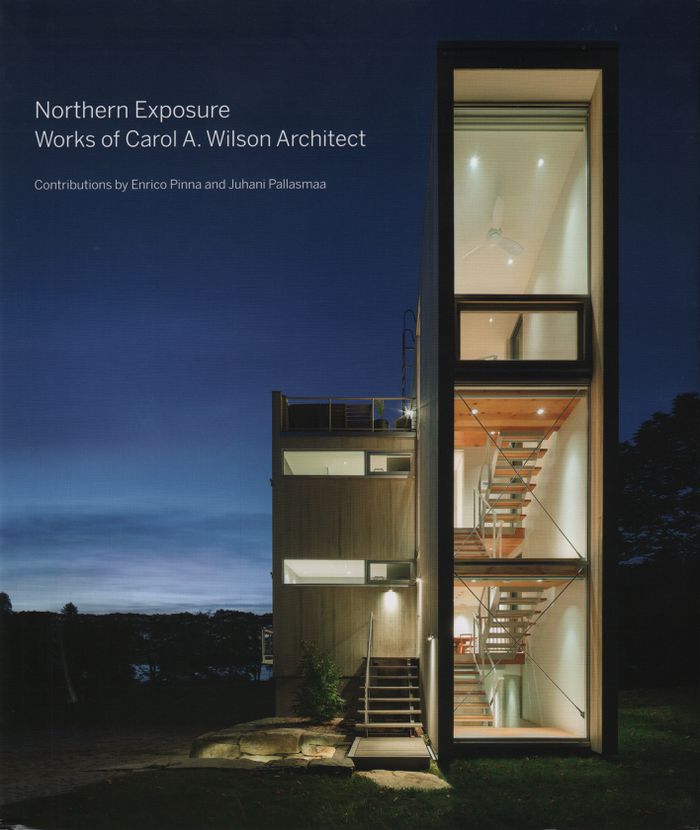
Northern exposure: works of Carol A. Wilson Architect
Actions:
Price:
$70.00
(available to order)
Summary:
This intimate portrait of eight houses by the Maine architect Carol A. Wilson illustrates how "local" is an idea as close to architecture as it is to food. Focusing on climate, seasons, views, local materials, the ecological history of building sites, and collaborations with local artisans, Wilson crafts exquisitely designed and built houses that celebrate the beauty of New England and the power of architecture to combine modern forms with a traditional built landscape. Following introductory texts by Enrico Pinna and Juhani Pallasmaa, and a conversation between Wilson and John Leroux, each project opens with a foldout of plans---transitioning from hand-drawn to computer-aided---and information about the house, before culminating in a selection of exterior, interior, and detail photographs. The book closes with an interview in twenty questions that elaborates on Wilson's working principles and the history of her studio for the past thirty years.
Northern exposure: works of Carol A. Wilson Architect
Actions:
Price:
$70.00
(available to order)
Summary:
This intimate portrait of eight houses by the Maine architect Carol A. Wilson illustrates how "local" is an idea as close to architecture as it is to food. Focusing on climate, seasons, views, local materials, the ecological history of building sites, and collaborations with local artisans, Wilson crafts exquisitely designed and built houses that celebrate the beauty of New England and the power of architecture to combine modern forms with a traditional built landscape. Following introductory texts by Enrico Pinna and Juhani Pallasmaa, and a conversation between Wilson and John Leroux, each project opens with a foldout of plans---transitioning from hand-drawn to computer-aided---and information about the house, before culminating in a selection of exterior, interior, and detail photographs. The book closes with an interview in twenty questions that elaborates on Wilson's working principles and the history of her studio for the past thirty years.
Form:
books
books
Publication:
October 2017
October 2017
Subject:
Architecture Monographs
Architecture Monographs
Form:
books
books
Price:
$51.95
(available in store)
Summary:
British architect Tony fretton (b. 1945) is internationally recognized for both his critical writing about architecture and his building and design projects. His first major building project was the Lisson Gallery in London in 1990, and his most recent are two apartment towers in Antwerp Harbor and the City Hall in Deinze, Belgium. from 1999 to 2013, fretton was a(...)
$51.95
(available in store)
Summary:
British architect Tony fretton (b. 1945) is internationally recognized for both his critical writing about architecture and his building and design projects. His first major building project was the Lisson Gallery in London in 1990, and his most recent are two apartment towers in Antwerp Harbor and the City Hall in Deinze, Belgium. from 1999 to 2013, fretton was a(...)
Subject:
Architecture Monographs
Architecture Monographs
Publication:
May 2018
May 2018
Title:
A E I OU: articles, essays, interviews and out-takes by Tony Fretton
Actions:
Price:
$51.95
(available in store)
Summary:
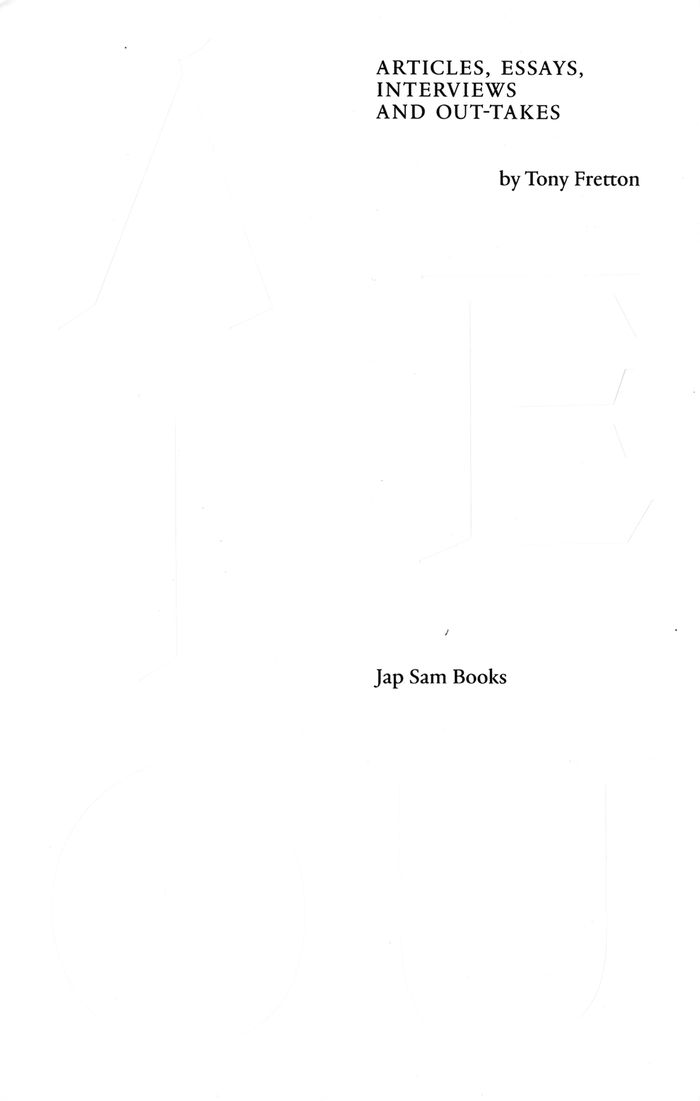
British architect Tony fretton (b. 1945) is internationally recognized for both his critical writing about architecture and his building and design projects. His first major building project was the Lisson Gallery in London in 1990, and his most recent are two apartment towers in Antwerp Harbor and the City Hall in Deinze, Belgium. from 1999 to 2013, fretton was a professor and chair of Architecture and Interiors at Delft University of Technology, the netherlands. He was also visiting professor at Harvard Graduate School of Design from 2005 to 2006. "A E I OU: Articles, Essays, Interviews and Out-takes" is his new collection of writing from 1986 to 2017.
A E I OU: articles, essays, interviews and out-takes by Tony Fretton
Actions:
Price:
$51.95
(available in store)
Summary:
British architect Tony fretton (b. 1945) is internationally recognized for both his critical writing about architecture and his building and design projects. His first major building project was the Lisson Gallery in London in 1990, and his most recent are two apartment towers in Antwerp Harbor and the City Hall in Deinze, Belgium. from 1999 to 2013, fretton was a professor and chair of Architecture and Interiors at Delft University of Technology, the netherlands. He was also visiting professor at Harvard Graduate School of Design from 2005 to 2006. "A E I OU: Articles, Essays, Interviews and Out-takes" is his new collection of writing from 1986 to 2017.
Form:
books
books
Publication:
May 2018
May 2018
Subject:
Architecture Monographs
Architecture Monographs
Form:
books
books
Actions:
Price:
$131.00
(available in store)
Summary:
Upon its publication by the MIT Press in 1972, "Learning from Las Vegas" was immediately influential and controversial. The authors made an argument that was revolutionary for its time—that the billboards and casinos of Las Vegas were worthy of architectural attention—and offered a challenge for contemporary architects obsessed with the heroic and monumental. The physical(...)
$131.00
(available in store)
Summary:
Upon its publication by the MIT Press in 1972, "Learning from Las Vegas" was immediately influential and controversial. The authors made an argument that was revolutionary for its time—that the billboards and casinos of Las Vegas were worthy of architectural attention—and offered a challenge for contemporary architects obsessed with the heroic and monumental. The physical(...)
Subject:
Architectural Theory
Architectural Theory
Publication:
September 2017
September 2017
Title:
Learning from Las Vegas, facsimile edition
Actions:
Price:
$131.00
(available in store)
Summary:
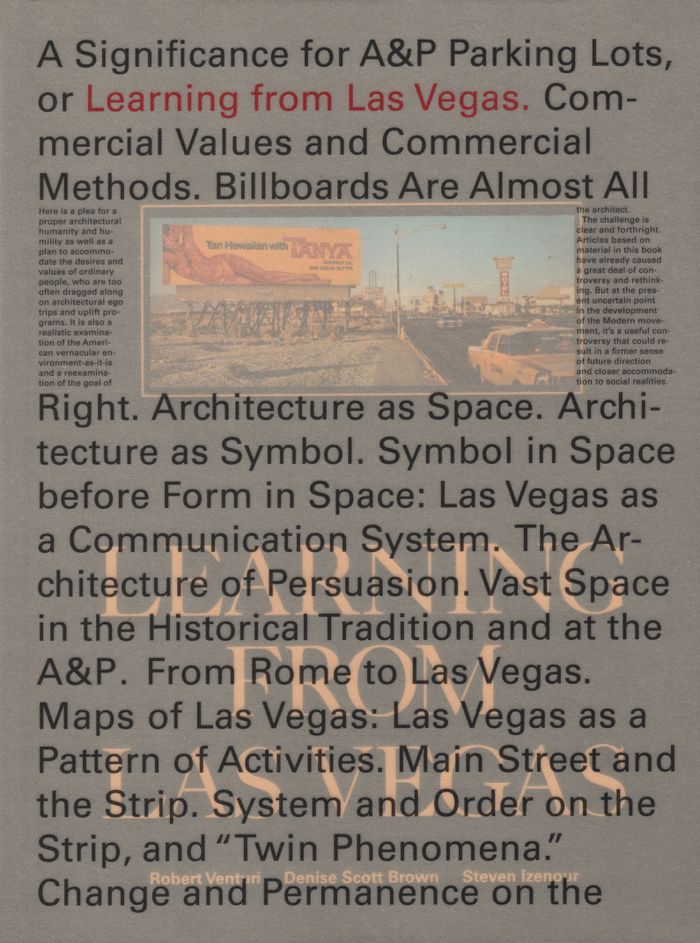
Upon its publication by the MIT Press in 1972, "Learning from Las Vegas" was immediately influential and controversial. The authors made an argument that was revolutionary for its time—that the billboards and casinos of Las Vegas were worthy of architectural attention—and offered a challenge for contemporary architects obsessed with the heroic and monumental. The physical book itself, designed by MIT’s iconic designer Muriel Cooper, was hailed as a masterpiece of modernist design, but the book’s design struck the authors as too monumental for a text that praised the ugly and ordinary over the heroic and monumental. The MIT Press published a revised version in 1977—a modest paperback that the authors felt was more in keeping with the argument of the book—and the original Cooper-designed book fell out of print and became a highly sought-after collectors’ item; it now sells for thousands of dollars in the rare book market, while the author-redesigned paperback has remained continuously in print at a price affordable to students. Now, decades after the original hardcover edition sold out, the MIT Press is publishing a facsimile edition of the original large-format Cooper-designed edition of Learning from Las Vegas, complete with translucent glassine wrap. This edition also features a spirited preface by Denise Scott Brown, looking back on the creation of the book and explaining her and Robert Venturi’s reservations about the original design.
Learning from Las Vegas, facsimile edition
Actions:
Price:
$131.00
(available in store)
Summary:
Upon its publication by the MIT Press in 1972, "Learning from Las Vegas" was immediately influential and controversial. The authors made an argument that was revolutionary for its time—that the billboards and casinos of Las Vegas were worthy of architectural attention—and offered a challenge for contemporary architects obsessed with the heroic and monumental. The physical book itself, designed by MIT’s iconic designer Muriel Cooper, was hailed as a masterpiece of modernist design, but the book’s design struck the authors as too monumental for a text that praised the ugly and ordinary over the heroic and monumental. The MIT Press published a revised version in 1977—a modest paperback that the authors felt was more in keeping with the argument of the book—and the original Cooper-designed book fell out of print and became a highly sought-after collectors’ item; it now sells for thousands of dollars in the rare book market, while the author-redesigned paperback has remained continuously in print at a price affordable to students. Now, decades after the original hardcover edition sold out, the MIT Press is publishing a facsimile edition of the original large-format Cooper-designed edition of Learning from Las Vegas, complete with translucent glassine wrap. This edition also features a spirited preface by Denise Scott Brown, looking back on the creation of the book and explaining her and Robert Venturi’s reservations about the original design.
Form:
books
books
Publication:
September 2017
September 2017
Subject:
Architectural Theory
Architectural Theory


