


3779 Results
Level of archival description:
Sub-series
Sub-series
Title:
Domestic Commissions
Domestic Commissions
Reference number:
CI001.S2.D2
Description:
Hubert and Charles Rohault de Fleury received domestic commissions for both urban housing -hôtel particuliers and apartment houses- and rural dwellings -châteaux, country houses and estates. Hubert also executed designs for furniture and garden pavilions. Hubert' work is characterized by restrained classical exteriors and luxurious Empire style interiors; both Charles' exteriors and interiors, especially those for Hôtels Sauvage and Soltykoff, reflect the exuberance of the Second Empire. The CCA albums include drawings from all stages of the design process but with an emphasis on design development drawings. Hubert's albums contain cost calculations and estimates, notes and letters. In general, the drawings by Charles are from a more developed phase of design than Hubert's; Hubert's commissions are more varied than Charles'. Charles' Hôtel Soltykoff (1854)(DR1974:0002:003:001-105) is exemplary of the Second Empire not only in its architectural language, programme and interior decoration, but also its use of mixed stone and iron construction. The album for Hôtel Soltykoff is one of the most comprehensive in the CCA collection. The drawings incorporate several phases of the design process from conceptual ideas to post-construction revisions. Numerous drawings for the structure and exterior ornamentation are included as well as drawings for the embellishment of the interior spaces. The interior drawings are especially interesting for evidence they provide of the palette of colours and ornamental motifs utilized in the Second Empire. Several prints (plates XIX - XXIII) in 'Oeuvre de C. Rohault de Fleury, architecte', which include general plans and elevations (few of which are included in the Hôtel Solytkoff album), are a useful complement to more specific drawings in the album. The Hôtel Sauvage (ca. 1862) album (DR1974:0002:006:001-024) - a set of 24 contract drawings- consists exclusively general plans, sections and elevations. This group of drawings give a good overall sense of both the interior and exterior. Hôtel Sauvage, like Hôtel Soltykoff is also typical of the Second Empire in style and programme. Château de Marcoussis (ca. 1861), for which a group of drawings were acquired in 1986, diverges somewhat in character from the other examples of Charles' domestic works represented in the CCA collection (DR1986:0379 - DR1986:0413). While most of the other houses are strictly classical in planning and design, for Château de Marcoussis, Charles adopted a more romantic asymmetrical château style design. The domestic commissions (1838-1856) in album, DR1974:0002:002:001-094, roughly fall into two categories. The first category consists of single residences - both town and country. The regimentation of plans and façades in the hôtel particular and country houses manifests the continued influence of Durand, yet Charles was also clearly affected by the Second Empire propensity for elaborate façade treatments with decoratively-shaped windows, complex mouldings and extensive rustication. The second category consists of urban apartment building with stores or occasionally offices on the ground floor, apartments, generally two per floor, above and often servants' rooms in the attic. These buildings are articulated in a restrained manner with mouldings, decorative ironwork and some stone ornament.
CI001.S2.D2
Description:
Hubert and Charles Rohault de Fleury received domestic commissions for both urban housing -hôtel particuliers and apartment houses- and rural dwellings -châteaux, country houses and estates. Hubert also executed designs for furniture and garden pavilions. Hubert' work is characterized by restrained classical exteriors and luxurious Empire style interiors; both Charles' exteriors and interiors, especially those for Hôtels Sauvage and Soltykoff, reflect the exuberance of the Second Empire. The CCA albums include drawings from all stages of the design process but with an emphasis on design development drawings. Hubert's albums contain cost calculations and estimates, notes and letters. In general, the drawings by Charles are from a more developed phase of design than Hubert's; Hubert's commissions are more varied than Charles'. Charles' Hôtel Soltykoff (1854)(DR1974:0002:003:001-105) is exemplary of the Second Empire not only in its architectural language, programme and interior decoration, but also its use of mixed stone and iron construction. The album for Hôtel Soltykoff is one of the most comprehensive in the CCA collection. The drawings incorporate several phases of the design process from conceptual ideas to post-construction revisions. Numerous drawings for the structure and exterior ornamentation are included as well as drawings for the embellishment of the interior spaces. The interior drawings are especially interesting for evidence they provide of the palette of colours and ornamental motifs utilized in the Second Empire. Several prints (plates XIX - XXIII) in 'Oeuvre de C. Rohault de Fleury, architecte', which include general plans and elevations (few of which are included in the Hôtel Solytkoff album), are a useful complement to more specific drawings in the album. The Hôtel Sauvage (ca. 1862) album (DR1974:0002:006:001-024) - a set of 24 contract drawings- consists exclusively general plans, sections and elevations. This group of drawings give a good overall sense of both the interior and exterior. Hôtel Sauvage, like Hôtel Soltykoff is also typical of the Second Empire in style and programme. Château de Marcoussis (ca. 1861), for which a group of drawings were acquired in 1986, diverges somewhat in character from the other examples of Charles' domestic works represented in the CCA collection (DR1986:0379 - DR1986:0413). While most of the other houses are strictly classical in planning and design, for Château de Marcoussis, Charles adopted a more romantic asymmetrical château style design. The domestic commissions (1838-1856) in album, DR1974:0002:002:001-094, roughly fall into two categories. The first category consists of single residences - both town and country. The regimentation of plans and façades in the hôtel particular and country houses manifests the continued influence of Durand, yet Charles was also clearly affected by the Second Empire propensity for elaborate façade treatments with decoratively-shaped windows, complex mouldings and extensive rustication. The second category consists of urban apartment building with stores or occasionally offices on the ground floor, apartments, generally two per floor, above and often servants' rooms in the attic. These buildings are articulated in a restrained manner with mouldings, decorative ironwork and some stone ornament.
People:
Date:
[between 1838 and 1861]
[between 1838 and 1861]
Title:
Domestic Commissions
CI001.S2.D2
Description:
Hubert and Charles Rohault de Fleury received domestic commissions for both urban housing -hôtel particuliers and apartment houses- and rural dwellings -châteaux, country houses and estates. Hubert also executed designs for furniture and garden pavilions. Hubert' work is characterized by restrained classical exteriors and luxurious Empire style interiors; both Charles' exteriors and interiors, especially those for Hôtels Sauvage and Soltykoff, reflect the exuberance of the Second Empire. The CCA albums include drawings from all stages of the design process but with an emphasis on design development drawings. Hubert's albums contain cost calculations and estimates, notes and letters. In general, the drawings by Charles are from a more developed phase of design than Hubert's; Hubert's commissions are more varied than Charles'. Charles' Hôtel Soltykoff (1854)(DR1974:0002:003:001-105) is exemplary of the Second Empire not only in its architectural language, programme and interior decoration, but also its use of mixed stone and iron construction. The album for Hôtel Soltykoff is one of the most comprehensive in the CCA collection. The drawings incorporate several phases of the design process from conceptual ideas to post-construction revisions. Numerous drawings for the structure and exterior ornamentation are included as well as drawings for the embellishment of the interior spaces. The interior drawings are especially interesting for evidence they provide of the palette of colours and ornamental motifs utilized in the Second Empire. Several prints (plates XIX - XXIII) in 'Oeuvre de C. Rohault de Fleury, architecte', which include general plans and elevations (few of which are included in the Hôtel Solytkoff album), are a useful complement to more specific drawings in the album. The Hôtel Sauvage (ca. 1862) album (DR1974:0002:006:001-024) - a set of 24 contract drawings- consists exclusively general plans, sections and elevations. This group of drawings give a good overall sense of both the interior and exterior. Hôtel Sauvage, like Hôtel Soltykoff is also typical of the Second Empire in style and programme. Château de Marcoussis (ca. 1861), for which a group of drawings were acquired in 1986, diverges somewhat in character from the other examples of Charles' domestic works represented in the CCA collection (DR1986:0379 - DR1986:0413). While most of the other houses are strictly classical in planning and design, for Château de Marcoussis, Charles adopted a more romantic asymmetrical château style design. The domestic commissions (1838-1856) in album, DR1974:0002:002:001-094, roughly fall into two categories. The first category consists of single residences - both town and country. The regimentation of plans and façades in the hôtel particular and country houses manifests the continued influence of Durand, yet Charles was also clearly affected by the Second Empire propensity for elaborate façade treatments with decoratively-shaped windows, complex mouldings and extensive rustication. The second category consists of urban apartment building with stores or occasionally offices on the ground floor, apartments, generally two per floor, above and often servants' rooms in the attic. These buildings are articulated in a restrained manner with mouldings, decorative ironwork and some stone ornament.
Domestic Commissions
CI001.S2.D2
Description:
Hubert and Charles Rohault de Fleury received domestic commissions for both urban housing -hôtel particuliers and apartment houses- and rural dwellings -châteaux, country houses and estates. Hubert also executed designs for furniture and garden pavilions. Hubert' work is characterized by restrained classical exteriors and luxurious Empire style interiors; both Charles' exteriors and interiors, especially those for Hôtels Sauvage and Soltykoff, reflect the exuberance of the Second Empire. The CCA albums include drawings from all stages of the design process but with an emphasis on design development drawings. Hubert's albums contain cost calculations and estimates, notes and letters. In general, the drawings by Charles are from a more developed phase of design than Hubert's; Hubert's commissions are more varied than Charles'. Charles' Hôtel Soltykoff (1854)(DR1974:0002:003:001-105) is exemplary of the Second Empire not only in its architectural language, programme and interior decoration, but also its use of mixed stone and iron construction. The album for Hôtel Soltykoff is one of the most comprehensive in the CCA collection. The drawings incorporate several phases of the design process from conceptual ideas to post-construction revisions. Numerous drawings for the structure and exterior ornamentation are included as well as drawings for the embellishment of the interior spaces. The interior drawings are especially interesting for evidence they provide of the palette of colours and ornamental motifs utilized in the Second Empire. Several prints (plates XIX - XXIII) in 'Oeuvre de C. Rohault de Fleury, architecte', which include general plans and elevations (few of which are included in the Hôtel Solytkoff album), are a useful complement to more specific drawings in the album. The Hôtel Sauvage (ca. 1862) album (DR1974:0002:006:001-024) - a set of 24 contract drawings- consists exclusively general plans, sections and elevations. This group of drawings give a good overall sense of both the interior and exterior. Hôtel Sauvage, like Hôtel Soltykoff is also typical of the Second Empire in style and programme. Château de Marcoussis (ca. 1861), for which a group of drawings were acquired in 1986, diverges somewhat in character from the other examples of Charles' domestic works represented in the CCA collection (DR1986:0379 - DR1986:0413). While most of the other houses are strictly classical in planning and design, for Château de Marcoussis, Charles adopted a more romantic asymmetrical château style design. The domestic commissions (1838-1856) in album, DR1974:0002:002:001-094, roughly fall into two categories. The first category consists of single residences - both town and country. The regimentation of plans and façades in the hôtel particular and country houses manifests the continued influence of Durand, yet Charles was also clearly affected by the Second Empire propensity for elaborate façade treatments with decoratively-shaped windows, complex mouldings and extensive rustication. The second category consists of urban apartment building with stores or occasionally offices on the ground floor, apartments, generally two per floor, above and often servants' rooms in the attic. These buildings are articulated in a restrained manner with mouldings, decorative ironwork and some stone ornament.
Level of archival description:
File 2
File 2
Date:
[between 1838 and 1861]
[between 1838 and 1861]
People:
Form:
events
events
Title:
Learning from... Bahrain
Learning from... Bahrain
Actions:
Description:
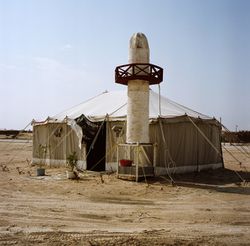
Noura al Sayeh presents the third lecture in the Learning From… the Middle East series. The presentation will survey the photographic documentation of the Bahrain coast by photographer Camille Zakharia. The urban transformations in the last 30 years have redrawn the Bahraini landscape and triggered the development of a contemporary vernacular culture. The presentation(...)
Noura al Sayeh presents the third lecture in the Learning From… the Middle East series. The presentation will survey the photographic documentation of the Bahrain coast by photographer Camille Zakharia. The urban transformations in the last 30 years have redrawn the Bahraini landscape and triggered the development of a contemporary vernacular culture. The presentation(...)
Location:
Paul-Desmarais Theatre
Paul-Desmarais Theatre
Date:
6 October 2011 , 7pm
6 October 2011 , 7pm
Title:
Learning from... Bahrain
Actions:
Description:
Noura al Sayeh presents the third lecture in the Learning From… the Middle East series. The presentation will survey the photographic documentation of the Bahrain coast by photographer Camille Zakharia. The urban transformations in the last 30 years have redrawn the Bahraini landscape and triggered the development of a contemporary vernacular culture. The presentation(...)
Learning from... Bahrain
Actions:
Description:
Noura al Sayeh presents the third lecture in the Learning From… the Middle East series. The presentation will survey the photographic documentation of the Bahrain coast by photographer Camille Zakharia. The urban transformations in the last 30 years have redrawn the Bahraini landscape and triggered the development of a contemporary vernacular culture. The presentation(...)
Form:
events
events
Date:
6 October 2011
7pm
6 October 2011
7pm
Location:
Paul-Desmarais Theatre
Paul-Desmarais Theatre
Form:
events
events
Title:
Echosystems
Echosystems
Actions:
Description:
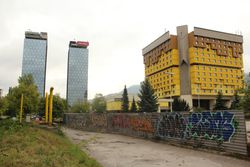
This public workshop aims to identify and document the distinct politics of the neighbourhood around the Canadian Centre for Architecture through an alternative methodology. Moderated by Léopold Lambert of Archipelago, this day of intensive reflection and polyphonic creation will address issues of the city through sound recordings. In response to distinct modes of(...)
This public workshop aims to identify and document the distinct politics of the neighbourhood around the Canadian Centre for Architecture through an alternative methodology. Moderated by Léopold Lambert of Archipelago, this day of intensive reflection and polyphonic creation will address issues of the city through sound recordings. In response to distinct modes of(...)
Date:
5 March 2016
5 March 2016
Title:
Echosystems
Actions:
Description:
This public workshop aims to identify and document the distinct politics of the neighbourhood around the Canadian Centre for Architecture through an alternative methodology. Moderated by Léopold Lambert of Archipelago, this day of intensive reflection and polyphonic creation will address issues of the city through sound recordings. In response to distinct modes of(...)
Echosystems
Actions:
Description:
This public workshop aims to identify and document the distinct politics of the neighbourhood around the Canadian Centre for Architecture through an alternative methodology. Moderated by Léopold Lambert of Archipelago, this day of intensive reflection and polyphonic creation will address issues of the city through sound recordings. In response to distinct modes of(...)
Form:
events
events
Date:
5 March 2016
5 March 2016
Form:
events
events
Title:
Learning from… Tokyo
Learning from… Tokyo
Actions:
Description:
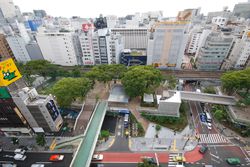
In this lecture entitled Tokyo Nine Flux, Yoshiharu Tsukamoto interprets urban space in Tokyo as a causal chain of responses to flux – natural phenomena such as earthquakes and typhoons that pose a constant threat to the city, and increases in population, traffic and waste. Yoshiharu Tsukamoto is co-founder, with Momoyo Kaijima, of the architectural studio Atelier(...)
In this lecture entitled Tokyo Nine Flux, Yoshiharu Tsukamoto interprets urban space in Tokyo as a causal chain of responses to flux – natural phenomena such as earthquakes and typhoons that pose a constant threat to the city, and increases in population, traffic and waste. Yoshiharu Tsukamoto is co-founder, with Momoyo Kaijima, of the architectural studio Atelier(...)
Location:
Paul Desmarais Theatre
Paul Desmarais Theatre
Date:
26 April 2007 , 7pm
26 April 2007 , 7pm
Title:
Learning from… Tokyo
Actions:
Description:
In this lecture entitled Tokyo Nine Flux, Yoshiharu Tsukamoto interprets urban space in Tokyo as a causal chain of responses to flux – natural phenomena such as earthquakes and typhoons that pose a constant threat to the city, and increases in population, traffic and waste. Yoshiharu Tsukamoto is co-founder, with Momoyo Kaijima, of the architectural studio Atelier(...)
Learning from… Tokyo
Actions:
Description:
In this lecture entitled Tokyo Nine Flux, Yoshiharu Tsukamoto interprets urban space in Tokyo as a causal chain of responses to flux – natural phenomena such as earthquakes and typhoons that pose a constant threat to the city, and increases in population, traffic and waste. Yoshiharu Tsukamoto is co-founder, with Momoyo Kaijima, of the architectural studio Atelier(...)
Form:
events
events
Date:
26 April 2007
7pm
26 April 2007
7pm
Location:
Paul Desmarais Theatre
Paul Desmarais Theatre
Form:
events
events
Title:
The Unschool
The Unschool
Actions:
Description:
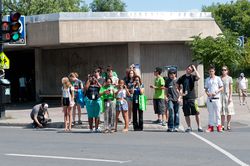
What could a school be? For a week over summer 2012, students of The Unschool explored the spaces in and around schools and pushed the limits of the camera as a social instrument with guest curator Monica Nouwens. Participants compared how people live in schools and cities, and how design can encourage and limit behaviours, relationships, and activities. “Could(...)
What could a school be? For a week over summer 2012, students of The Unschool explored the spaces in and around schools and pushed the limits of the camera as a social instrument with guest curator Monica Nouwens. Participants compared how people live in schools and cities, and how design can encourage and limit behaviours, relationships, and activities. “Could(...)
Date:
30 July 2012 to 3 August 2012
30 July 2012 to 3 August 2012
Title:
The Unschool
Actions:
Description:
What could a school be? For a week over summer 2012, students of The Unschool explored the spaces in and around schools and pushed the limits of the camera as a social instrument with guest curator Monica Nouwens. Participants compared how people live in schools and cities, and how design can encourage and limit behaviours, relationships, and activities. “Could(...)
The Unschool
Actions:
Description:
What could a school be? For a week over summer 2012, students of The Unschool explored the spaces in and around schools and pushed the limits of the camera as a social instrument with guest curator Monica Nouwens. Participants compared how people live in schools and cities, and how design can encourage and limit behaviours, relationships, and activities. “Could(...)
Form:
events
events
Date:
30 July 2012 to
3 August 2012
30 July 2012 to
3 August 2012
Form:
events
events

Title:
Learning from... Mumbai
Learning from... Mumbai
Actions:
Description:
Rahul Mehrotra presents a reading of Mumbai’s form as a symbol of India’s emerging urban culture. The lecture examines Mumbai, a megalopolis with more than 13 million inhabitants, as two distinct elements that occupy the same physical space. The first, the Static City, built of permanent materials like concrete, steel and brick, can be captured as a two-dimensional entity(...)
Rahul Mehrotra presents a reading of Mumbai’s form as a symbol of India’s emerging urban culture. The lecture examines Mumbai, a megalopolis with more than 13 million inhabitants, as two distinct elements that occupy the same physical space. The first, the Static City, built of permanent materials like concrete, steel and brick, can be captured as a two-dimensional entity(...)
Location:
Paul Desmarais Theatre
Paul Desmarais Theatre
Date:
9 April 2009
9 April 2009
Title:
Learning from... Mumbai
Actions:
Description:
Rahul Mehrotra presents a reading of Mumbai’s form as a symbol of India’s emerging urban culture. The lecture examines Mumbai, a megalopolis with more than 13 million inhabitants, as two distinct elements that occupy the same physical space. The first, the Static City, built of permanent materials like concrete, steel and brick, can be captured as a two-dimensional entity(...)
Learning from... Mumbai
Actions:
Description:
Rahul Mehrotra presents a reading of Mumbai’s form as a symbol of India’s emerging urban culture. The lecture examines Mumbai, a megalopolis with more than 13 million inhabitants, as two distinct elements that occupy the same physical space. The first, the Static City, built of permanent materials like concrete, steel and brick, can be captured as a two-dimensional entity(...)
Form:
events
events
Date:
9 April 2009
9 April 2009
Location:
Paul Desmarais Theatre
Paul Desmarais Theatre
Form:
archives
Level of archival description:
Fonds
archives
Level of archival description:
Fonds
Title:
Ábalos & Herreros fonds
Ábalos & Herreros fonds
Reference number:
AP164
Synopsis:
The Ábalos&Herreros fonds documents the activities of the architectural firm Ábalos&Herreros, founded by architects Iñaki Ábalos and Juan Herreros. The archive primarily consists of drawings, photographic materials and textual documentation, and covers the existance of the firm from 1985 to 2008. The concentration of the firm's work was produced in the city of Madrid and the Community of Madrid where the firm maintained its head office. However, the archive also documents projects for other Spanish autonomous communities as well as for other countries such as Portugal, Germany, the United States, and Brazil.
AP164
Synopsis:
The Ábalos&Herreros fonds documents the activities of the architectural firm Ábalos&Herreros, founded by architects Iñaki Ábalos and Juan Herreros. The archive primarily consists of drawings, photographic materials and textual documentation, and covers the existance of the firm from 1985 to 2008. The concentration of the firm's work was produced in the city of Madrid and the Community of Madrid where the firm maintained its head office. However, the archive also documents projects for other Spanish autonomous communities as well as for other countries such as Portugal, Germany, the United States, and Brazil.
People:
Date:
1920-2009
1920-2009
Title:
Ábalos & Herreros fonds
Actions:
AP164
Synopsis:
The Ábalos&Herreros fonds documents the activities of the architectural firm Ábalos&Herreros, founded by architects Iñaki Ábalos and Juan Herreros. The archive primarily consists of drawings, photographic materials and textual documentation, and covers the existance of the firm from 1985 to 2008. The concentration of the firm's work was produced in the city of Madrid and the Community of Madrid where the firm maintained its head office. However, the archive also documents projects for other Spanish autonomous communities as well as for other countries such as Portugal, Germany, the United States, and Brazil.
Ábalos & Herreros fonds
Actions:
AP164
Synopsis:
The Ábalos&Herreros fonds documents the activities of the architectural firm Ábalos&Herreros, founded by architects Iñaki Ábalos and Juan Herreros. The archive primarily consists of drawings, photographic materials and textual documentation, and covers the existance of the firm from 1985 to 2008. The concentration of the firm's work was produced in the city of Madrid and the Community of Madrid where the firm maintained its head office. However, the archive also documents projects for other Spanish autonomous communities as well as for other countries such as Portugal, Germany, the United States, and Brazil.
Form:
archives
Level of archival description:
Fonds
archives
Level of archival description:
Fonds
Date:
1920-2009
1920-2009
People:
Form:
events
events
Title:
Scouting Skateboard Sites
Scouting Skateboard Sites
Actions:
Description:
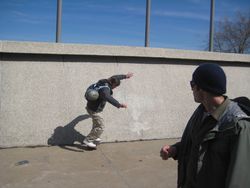
Skateboarder and landscape architect Mathieu Robichaud takes participants on a guided walk, analysing the skateboarding potential of urban spaces. Robichaud, of the firm Bloom Paysage, specialises in the design of skate parks. Inspired by the exhibition Actions: What You Can Do With the City (2008), the CCA hosts a series of workshops devoted to public actions in urban(...)
Skateboarder and landscape architect Mathieu Robichaud takes participants on a guided walk, analysing the skateboarding potential of urban spaces. Robichaud, of the firm Bloom Paysage, specialises in the design of skate parks. Inspired by the exhibition Actions: What You Can Do With the City (2008), the CCA hosts a series of workshops devoted to public actions in urban(...)
Date:
11 April 2009
11 April 2009
Title:
Scouting Skateboard Sites
Actions:
Description:
Skateboarder and landscape architect Mathieu Robichaud takes participants on a guided walk, analysing the skateboarding potential of urban spaces. Robichaud, of the firm Bloom Paysage, specialises in the design of skate parks. Inspired by the exhibition Actions: What You Can Do With the City (2008), the CCA hosts a series of workshops devoted to public actions in urban(...)
Scouting Skateboard Sites
Actions:
Description:
Skateboarder and landscape architect Mathieu Robichaud takes participants on a guided walk, analysing the skateboarding potential of urban spaces. Robichaud, of the firm Bloom Paysage, specialises in the design of skate parks. Inspired by the exhibition Actions: What You Can Do With the City (2008), the CCA hosts a series of workshops devoted to public actions in urban(...)
Form:
events
events
Date:
11 April 2009
11 April 2009
Form:
exhibitions
exhibitions
Actions:
Description:
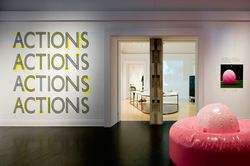
Seemingly common activities such as walking, playing, recycling, and gardening are pushed beyond their usual definition by the international architects, artists, and collectives featured in the exhibition. Their actions push against accepted norms of behaviour in cities, at times even challenging legal limitations. The individuals and groups employ a range of approaches(...)
Seemingly common activities such as walking, playing, recycling, and gardening are pushed beyond their usual definition by the international architects, artists, and collectives featured in the exhibition. Their actions push against accepted norms of behaviour in cities, at times even challenging legal limitations. The individuals and groups employ a range of approaches(...)
Location:
Main galleries
Main galleries
Date:
26 November 2008 to 19 April 2009
26 November 2008 to 19 April 2009
Title:
Actions: What You Can Do With the City
Actions:
Description:
Seemingly common activities such as walking, playing, recycling, and gardening are pushed beyond their usual definition by the international architects, artists, and collectives featured in the exhibition. Their actions push against accepted norms of behaviour in cities, at times even challenging legal limitations. The individuals and groups employ a range of approaches(...)
Actions: What You Can Do With the City
Actions:
Description:
Seemingly common activities such as walking, playing, recycling, and gardening are pushed beyond their usual definition by the international architects, artists, and collectives featured in the exhibition. Their actions push against accepted norms of behaviour in cities, at times even challenging legal limitations. The individuals and groups employ a range of approaches(...)
Form:
exhibitions
exhibitions
Date:
26 November 2008 to
19 April 2009
26 November 2008 to
19 April 2009
Location:
Main galleries
Main galleries
Form:
events
events
Title:
Visiting Scholar Seminar: Aglaya Glebova
Revolution on a Human Scale: Photography and Vkhutemas
Visiting Scholar Seminar: Aglaya Glebova
Revolution on a Human Scale: Photography and Vkhutemas
Actions:
Description:
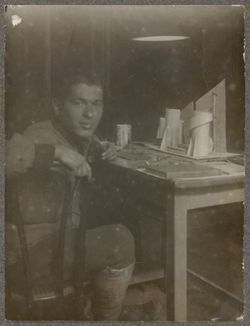
Visiting Scholar Aglaya Glebova presents her research: Vkhutemas, or Higher Art and Technical Studios, was a state-funded institute that sought to prepare a new generation of revolutionary artists and architects for the construction of a properly Soviet modernity. Dissolved under political pressure in 1930, the school never had a dedicated department of photography, but(...)
Visiting Scholar Aglaya Glebova presents her research: Vkhutemas, or Higher Art and Technical Studios, was a state-funded institute that sought to prepare a new generation of revolutionary artists and architects for the construction of a properly Soviet modernity. Dissolved under political pressure in 1930, the school never had a dedicated department of photography, but(...)
Location:
Shaughnessy House
Shaughnessy House
Date:
29 June 2017, 6pm
29 June 2017, 6pm
Title:
Visiting Scholar Seminar: Aglaya Glebova
Actions:
Description:
Visiting Scholar Aglaya Glebova presents her research: Vkhutemas, or Higher Art and Technical Studios, was a state-funded institute that sought to prepare a new generation of revolutionary artists and architects for the construction of a properly Soviet modernity. Dissolved under political pressure in 1930, the school never had a dedicated department of photography, but(...)
Visiting Scholar Seminar: Aglaya Glebova
Actions:
Description:
Visiting Scholar Aglaya Glebova presents her research: Vkhutemas, or Higher Art and Technical Studios, was a state-funded institute that sought to prepare a new generation of revolutionary artists and architects for the construction of a properly Soviet modernity. Dissolved under political pressure in 1930, the school never had a dedicated department of photography, but(...)
Form:
events
events
Date:
29 June 2017
6pm
29 June 2017
6pm
Location:
Shaughnessy House
Shaughnessy House


