


1139 Results
Form:
books
books
Subject:
Publication:
National Coronavirus Recovery Panel 2020
National Coronavirus Recovery Panel 2020
Form:
books
books
Publication:
National Coronavirus Recovery Panel 2020
National Coronavirus Recovery Panel 2020
Subject:
Form:
books
books
Actions:
Description:
1 online resource
Author:
Subject:
Publication:
[Place of publication not identified] : gta Verlag, 2022.
[Place of publication not identified] : gta Verlag, 2022.
Title:
Architecture of Counterrevolution: The French Army in Northern Algeria.
Actions:
Description:
1 online resource
Architecture of Counterrevolution: The French Army in Northern Algeria.
Actions:
Description:
1 online resource
Form:
books
books
Publication:
[Place of publication not identified] : gta Verlag, 2022.
[Place of publication not identified] : gta Verlag, 2022.
Author:
Subject:
Form:
books
books
Actions:
Holdings:
Description:
xi, 314 pages : illustrations, maps ; 24 cm.
Description:
xi, 314 pages : illustrations, maps ; 24 cm.
Author:
Subject:
Publication:
Syracuse, N.Y. : Syracuse University Press, 2007.
Syracuse, N.Y. : Syracuse University Press, 2007.
Title:
Tel Aviv : mythography of a city / Maoz Azaryahu.
Actions:
Holdings:
Description:
xi, 314 pages : illustrations, maps ; 24 cm.
Tel Aviv : mythography of a city / Maoz Azaryahu.
Actions:
Holdings:
Description:
xi, 314 pages : illustrations, maps ; 24 cm.
Form:
books
books
Publication:
Syracuse, N.Y. : Syracuse University Press, 2007.
Syracuse, N.Y. : Syracuse University Press, 2007.
Author:
Subject:
Form:
books
books
Actions:
Holdings:
Description:
316 pages : illustrations (some color), maps (some color) ; 16 cm.
Description:
316 pages : illustrations (some color), maps (some color) ; 16 cm.
Author:
Subject:
Publication:
London : Sternberg Press, [2023], [Cambridge, Mass.] : Distributed by MIT Press ; [United Kingdom] : Art Data, ©2023
London : Sternberg Press, [2023], [Cambridge, Mass.] : Distributed by MIT Press ; [United Kingdom] : Art Data, ©2023
Title:
Building carbon Europe / Dennis Pohl ; artwork by Armin Linke ; edited by Nikolaus Hirsch, Markus Miessen.
Actions:
Holdings:
Description:
316 pages : illustrations (some color), maps (some color) ; 16 cm.
Building carbon Europe / Dennis Pohl ; artwork by Armin Linke ; edited by Nikolaus Hirsch, Markus Miessen.
Actions:
Holdings:
Description:
316 pages : illustrations (some color), maps (some color) ; 16 cm.
Form:
books
books
Publication:
London : Sternberg Press, [2023], [Cambridge, Mass.] : Distributed by MIT Press ; [United Kingdom] : Art Data, ©2023
London : Sternberg Press, [2023], [Cambridge, Mass.] : Distributed by MIT Press ; [United Kingdom] : Art Data, ©2023
Author:
Subject:
Form:
books
books

Actions:
Price:
$80.00
(available to order)
Summary:
This book offers a portrait of the lives and struggles of Palestinians living in the occupied Palestinian territories on the West Bank, in particular the South Hebron Hills and the Jordan Valley. Among the topics highlighted are house demolitions; confrontations between Palestinian shepherds or farmers and Israeli settlers, soldiers, and police; the daily challenges of(...)
$80.00
(available to order)
Summary:
This book offers a portrait of the lives and struggles of Palestinians living in the occupied Palestinian territories on the West Bank, in particular the South Hebron Hills and the Jordan Valley. Among the topics highlighted are house demolitions; confrontations between Palestinian shepherds or farmers and Israeli settlers, soldiers, and police; the daily challenges of(...)
Title:
The bitter landscapes of Palestine
Actions:
Price:
$80.00
(available to order)
Summary:
This book offers a portrait of the lives and struggles of Palestinians living in the occupied Palestinian territories on the West Bank, in particular the South Hebron Hills and the Jordan Valley. Among the topics highlighted are house demolitions; confrontations between Palestinian shepherds or farmers and Israeli settlers, soldiers, and police; the daily challenges of sheer existence posed by the occupation system, intent on pushing Palestinians off their land; and the tenacity and courage that these conditions require. The book endeavors to impart to the reader a sense of the beauty of the landscape, the sound of the language, the taste of friendships, and the richness of a way of life that is threatened with extinction. Voices of activists, both Palestinian and Jewish, are also present. The introduction sets forth, in brief, the historical context that generated present realities in Palestine as well as the history of the authors’ partnership. The book’s viewpoint reflects many years of activism on the peace and human rights front in Palestine as well as an ongoing conversation between two authors who have experienced together the continually renewed astonishment that comes with such encounters.
The bitter landscapes of Palestine
Actions:
Price:
$80.00
(available to order)
Summary:
This book offers a portrait of the lives and struggles of Palestinians living in the occupied Palestinian territories on the West Bank, in particular the South Hebron Hills and the Jordan Valley. Among the topics highlighted are house demolitions; confrontations between Palestinian shepherds or farmers and Israeli settlers, soldiers, and police; the daily challenges of sheer existence posed by the occupation system, intent on pushing Palestinians off their land; and the tenacity and courage that these conditions require. The book endeavors to impart to the reader a sense of the beauty of the landscape, the sound of the language, the taste of friendships, and the richness of a way of life that is threatened with extinction. Voices of activists, both Palestinian and Jewish, are also present. The introduction sets forth, in brief, the historical context that generated present realities in Palestine as well as the history of the authors’ partnership. The book’s viewpoint reflects many years of activism on the peace and human rights front in Palestine as well as an ongoing conversation between two authors who have experienced together the continually renewed astonishment that comes with such encounters.
Form:
books
books
Publication:
July 2024
July 2024
Subject:
Theory of Photography
Theory of Photography
Form:
books
books
Actions:
Price:
$39.95
(available to order)
Summary:
What do you do if your alley is strewn with garbage after the sanitation truck comes through? Or if you’re tired of the rowdy teenagers next door keeping you up all night? Is there a vacant lot on your block accumulating weeds, needles, and litter? For a century, Chicagoans have joined block clubs to address problems like these that make daily life in the city a(...)
$39.95
(available to order)
Summary:
What do you do if your alley is strewn with garbage after the sanitation truck comes through? Or if you’re tired of the rowdy teenagers next door keeping you up all night? Is there a vacant lot on your block accumulating weeds, needles, and litter? For a century, Chicagoans have joined block clubs to address problems like these that make daily life in the city a(...)
Title:
Chicago's block clubs: how neighbors shape the city
Actions:
Price:
$39.95
(available to order)
Summary:
What do you do if your alley is strewn with garbage after the sanitation truck comes through? Or if you’re tired of the rowdy teenagers next door keeping you up all night? Is there a vacant lot on your block accumulating weeds, needles, and litter? For a century, Chicagoans have joined block clubs to address problems like these that make daily life in the city a nuisance. When neighbors work together in block clubs, playgrounds get built, local crime is monitored, streets are cleaned up, and every summer is marked by the festivities of day-long block parties. In Chicago’s Block Clubs, Amanda I. Seligman uncovers the history of the block club in Chicago—from its origins in the Urban League in the early 1900s through to the Chicago Police Department’s twenty-first-century community policing program. Recognizing that many neighborhood problems are too big for one resident to handle—but too small for the city to keep up with—city residents have for more than a century created clubs to establish and maintain their neighborhood’s particular social dynamics, quality of life, and appearance.
Chicago's block clubs: how neighbors shape the city
Actions:
Price:
$39.95
(available to order)
Summary:
What do you do if your alley is strewn with garbage after the sanitation truck comes through? Or if you’re tired of the rowdy teenagers next door keeping you up all night? Is there a vacant lot on your block accumulating weeds, needles, and litter? For a century, Chicagoans have joined block clubs to address problems like these that make daily life in the city a nuisance. When neighbors work together in block clubs, playgrounds get built, local crime is monitored, streets are cleaned up, and every summer is marked by the festivities of day-long block parties. In Chicago’s Block Clubs, Amanda I. Seligman uncovers the history of the block club in Chicago—from its origins in the Urban League in the early 1900s through to the Chicago Police Department’s twenty-first-century community policing program. Recognizing that many neighborhood problems are too big for one resident to handle—but too small for the city to keep up with—city residents have for more than a century created clubs to establish and maintain their neighborhood’s particular social dynamics, quality of life, and appearance.
Form:
books
books
Publication:
September 2016
September 2016
Subject:
Urban Theory
Urban Theory
Form:
books
books
Title:
Why the world does not exist
Why the world does not exist
Actions:
Price:
$28.00
(available to order)
Summary:
Where do we come from? Are we merely a cluster of elementary particles in a gigantic world receptacle? And what does it all mean? In this new book, the philosopher Markus Gabriel challenges our notion of what exists and what it means to exist. He questions the idea that there is a world that encompasses everything like a container life, the universe, and everything else.(...)
$28.00
(available to order)
Summary:
Where do we come from? Are we merely a cluster of elementary particles in a gigantic world receptacle? And what does it all mean? In this new book, the philosopher Markus Gabriel challenges our notion of what exists and what it means to exist. He questions the idea that there is a world that encompasses everything like a container life, the universe, and everything else.(...)
Title:
Why the world does not exist
Actions:
Price:
$28.00
(available to order)
Summary:
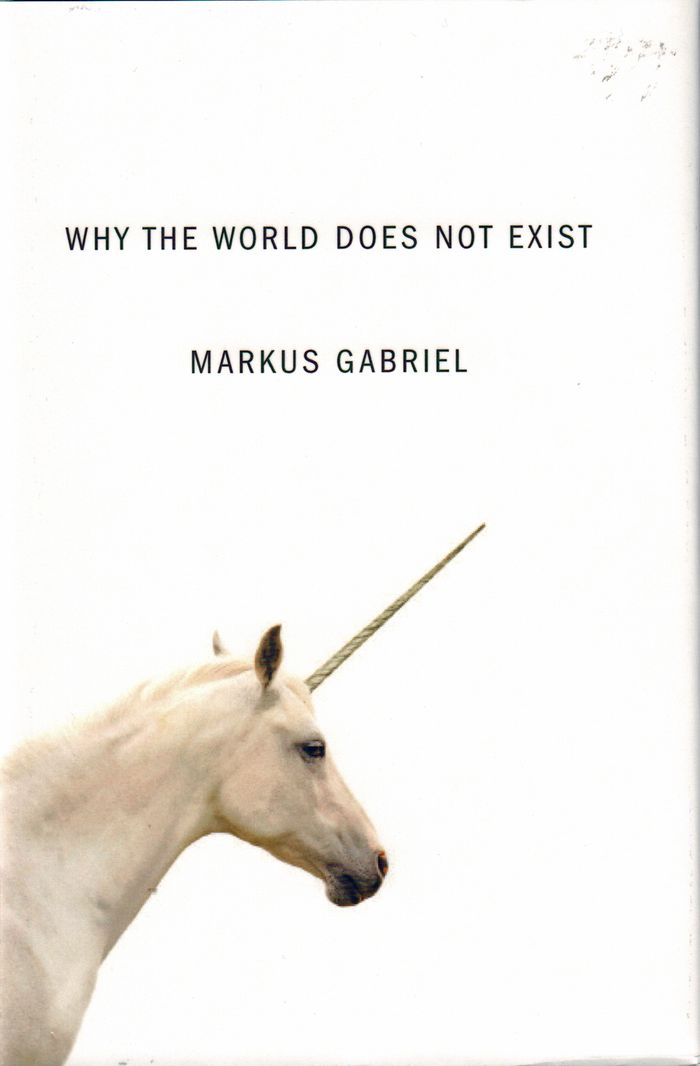
Where do we come from? Are we merely a cluster of elementary particles in a gigantic world receptacle? And what does it all mean? In this new book, the philosopher Markus Gabriel challenges our notion of what exists and what it means to exist. He questions the idea that there is a world that encompasses everything like a container life, the universe, and everything else. This all-inclusive being does not exist and cannot exist. For the world itself is not found in the world. And even when we think about the world, the world about which we think is obviously not identical with the world in which we think. For, as we are thinking about the world, this is only a very small event in the world. Besides this, there are still innumerable other objects and events: rain showers, toothaches and the World Cup. Drawing on the recent history of philosophy, Gabriel asserts that the world cannot exist at all, because it is not found in the world. Yet with the exception of the world, everything else exists; even unicorns on the far side of the moon wearing police uniforms.
Why the world does not exist
Actions:
Price:
$28.00
(available to order)
Summary:
Where do we come from? Are we merely a cluster of elementary particles in a gigantic world receptacle? And what does it all mean? In this new book, the philosopher Markus Gabriel challenges our notion of what exists and what it means to exist. He questions the idea that there is a world that encompasses everything like a container life, the universe, and everything else. This all-inclusive being does not exist and cannot exist. For the world itself is not found in the world. And even when we think about the world, the world about which we think is obviously not identical with the world in which we think. For, as we are thinking about the world, this is only a very small event in the world. Besides this, there are still innumerable other objects and events: rain showers, toothaches and the World Cup. Drawing on the recent history of philosophy, Gabriel asserts that the world cannot exist at all, because it is not found in the world. Yet with the exception of the world, everything else exists; even unicorns on the far side of the moon wearing police uniforms.
Form:
books
books
Publication:
June 2015
June 2015
Subject:
Critical Theory
Critical Theory
Form:
books
books
Price:
$26.95
(available to order)
Summary:
This new edition of Mike Davis’s work gives an update on Los Angeles as the city hits the 21st century. No metropolis has been more loved or more hated. To its official boosters, “Los Angeles brings it all together.” To detractors, LA is a sunlit mortuary where “you can rot without feeling it.” To Mike Davis, the author of this wide-ranging work of social history, Los(...)
$26.95
(available to order)
Summary:
This new edition of Mike Davis’s work gives an update on Los Angeles as the city hits the 21st century. No metropolis has been more loved or more hated. To its official boosters, “Los Angeles brings it all together.” To detractors, LA is a sunlit mortuary where “you can rot without feeling it.” To Mike Davis, the author of this wide-ranging work of social history, Los(...)
Title:
City of quartz : excavating the future in Los Angeles, new edition
Actions:
Price:
$26.95
(available to order)
Summary:
This new edition of Mike Davis’s work gives an update on Los Angeles as the city hits the 21st century. No metropolis has been more loved or more hated. To its official boosters, “Los Angeles brings it all together.” To detractors, LA is a sunlit mortuary where “you can rot without feeling it.” To Mike Davis, the author of this wide-ranging work of social history, Los Angeles is both utopia and dystopia, a place where the last Joshua trees are being plowed under to make room for model communities in the desert, where the rich have hired their own police to fend off street gangs, as well as armed Beirut militias. In "City of quartz", Davis reconstructs LA’s shadow history and dissects its ethereal economy. He tells us who has the power and how they hold on to it. He gives us a city of Dickensian extremes, Pynchonesque conspiracies, and a desperation straight out of Nathaniel West—a city in which we may glimpse our own future mirrored with terrifying clarity. In this new edition, Davis provides an update on the city’s current status.
City of quartz : excavating the future in Los Angeles, new edition
Actions:
Price:
$26.95
(available to order)
Summary:
This new edition of Mike Davis’s work gives an update on Los Angeles as the city hits the 21st century. No metropolis has been more loved or more hated. To its official boosters, “Los Angeles brings it all together.” To detractors, LA is a sunlit mortuary where “you can rot without feeling it.” To Mike Davis, the author of this wide-ranging work of social history, Los Angeles is both utopia and dystopia, a place where the last Joshua trees are being plowed under to make room for model communities in the desert, where the rich have hired their own police to fend off street gangs, as well as armed Beirut militias. In "City of quartz", Davis reconstructs LA’s shadow history and dissects its ethereal economy. He tells us who has the power and how they hold on to it. He gives us a city of Dickensian extremes, Pynchonesque conspiracies, and a desperation straight out of Nathaniel West—a city in which we may glimpse our own future mirrored with terrifying clarity. In this new edition, Davis provides an update on the city’s current status.
Form:
books
books
Publication:
September 2006, London, New York
September 2006, London, New York
Subject:
Urban Theory
Urban Theory
Form:
books
books
Price:
$38.95
(available in store)
Summary:
Comment, dans un paysage politique en ruines, reconstituer la vérité des faits ? La réponse d'Eyal Weizman tient en une formule-programme: "l'architecture forensique". Approche novatrice au carrefour de plusieurs disciplines, cette sorte d'architecture se soucie moins de construire des bâtiments que d'analyser des traces que porte le bâti afin de rétablir des vérités(...)
$38.95
(available in store)
Summary:
Comment, dans un paysage politique en ruines, reconstituer la vérité des faits ? La réponse d'Eyal Weizman tient en une formule-programme: "l'architecture forensique". Approche novatrice au carrefour de plusieurs disciplines, cette sorte d'architecture se soucie moins de construire des bâtiments que d'analyser des traces que porte le bâti afin de rétablir des vérités(...)
Title:
La vérité en ruines : Manifeste pour une architecture forensique
Actions:
Price:
$38.95
(available in store)
Summary:
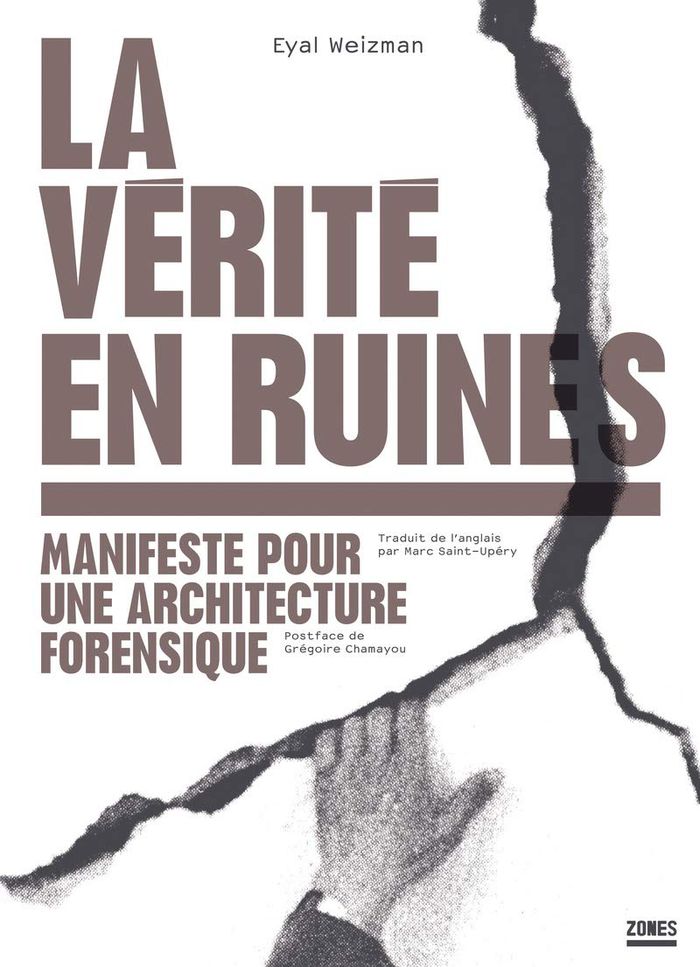
Comment, dans un paysage politique en ruines, reconstituer la vérité des faits ? La réponse d'Eyal Weizman tient en une formule-programme: "l'architecture forensique". Approche novatrice au carrefour de plusieurs disciplines, cette sorte d'architecture se soucie moins de construire des bâtiments que d'analyser des traces que porte le bâti afin de rétablir des vérités menacées. Impacts de balles, trous de missiles, ombres projetées sur les murs de corps annihilés par le souffle d'une explosion : l'architecture forensique consiste à faire parler ces indices. Si elle mobilise à cette fin des techniques en partie héritées de la médecine légale et de la police scientifique, c'est en les retournant contre la violence d'État, ses dénis et ses "fake news". Il s'agit donc d'une "contre-forensique" qui tente de se réapproprier les moyens de la preuve dans un contexte d'inégalité structurelle d'accès aux moyens de la manifestation de la vérité. Au fil des pages, cet ouvrage illustré offre un panorama saisissant des champs d'application de cette démarche, depuis le cas des frappes de drone au Pakistan, en Afghanistan et à Gaza, jusqu'à celui de la prison secrète de Saidnaya en Syrie, en passant par le camp de Staro Sajmiste, dans la région de Belgrade.
La vérité en ruines : Manifeste pour une architecture forensique
Actions:
Price:
$38.95
(available in store)
Summary:
Comment, dans un paysage politique en ruines, reconstituer la vérité des faits ? La réponse d'Eyal Weizman tient en une formule-programme: "l'architecture forensique". Approche novatrice au carrefour de plusieurs disciplines, cette sorte d'architecture se soucie moins de construire des bâtiments que d'analyser des traces que porte le bâti afin de rétablir des vérités menacées. Impacts de balles, trous de missiles, ombres projetées sur les murs de corps annihilés par le souffle d'une explosion : l'architecture forensique consiste à faire parler ces indices. Si elle mobilise à cette fin des techniques en partie héritées de la médecine légale et de la police scientifique, c'est en les retournant contre la violence d'État, ses dénis et ses "fake news". Il s'agit donc d'une "contre-forensique" qui tente de se réapproprier les moyens de la preuve dans un contexte d'inégalité structurelle d'accès aux moyens de la manifestation de la vérité. Au fil des pages, cet ouvrage illustré offre un panorama saisissant des champs d'application de cette démarche, depuis le cas des frappes de drone au Pakistan, en Afghanistan et à Gaza, jusqu'à celui de la prison secrète de Saidnaya en Syrie, en passant par le camp de Staro Sajmiste, dans la région de Belgrade.
Form:
books
books
Publication:
June 2021
June 2021
Subject:
Architectural Theory
Architectural Theory
Form:
books
books
Actions:
Price:
$27.95
(available in store)
Summary:
As London emerged from the devastation of the Second World War, planners and policymakers sought to rebuild the city in ways that would reshape the behavior of its citizens as much as it would its buildings and infrastructure—a program defined by a strong emphasis on civic order and conservative values of national community. One of the groups most significantly affected(...)
$27.95
(available in store)
Summary:
As London emerged from the devastation of the Second World War, planners and policymakers sought to rebuild the city in ways that would reshape the behavior of its citizens as much as it would its buildings and infrastructure—a program defined by a strong emphasis on civic order and conservative values of national community. One of the groups most significantly affected(...)
Title:
The spiv and the architect: unruly life in postwar London
Actions:
Price:
$27.95
(available in store)
Summary:
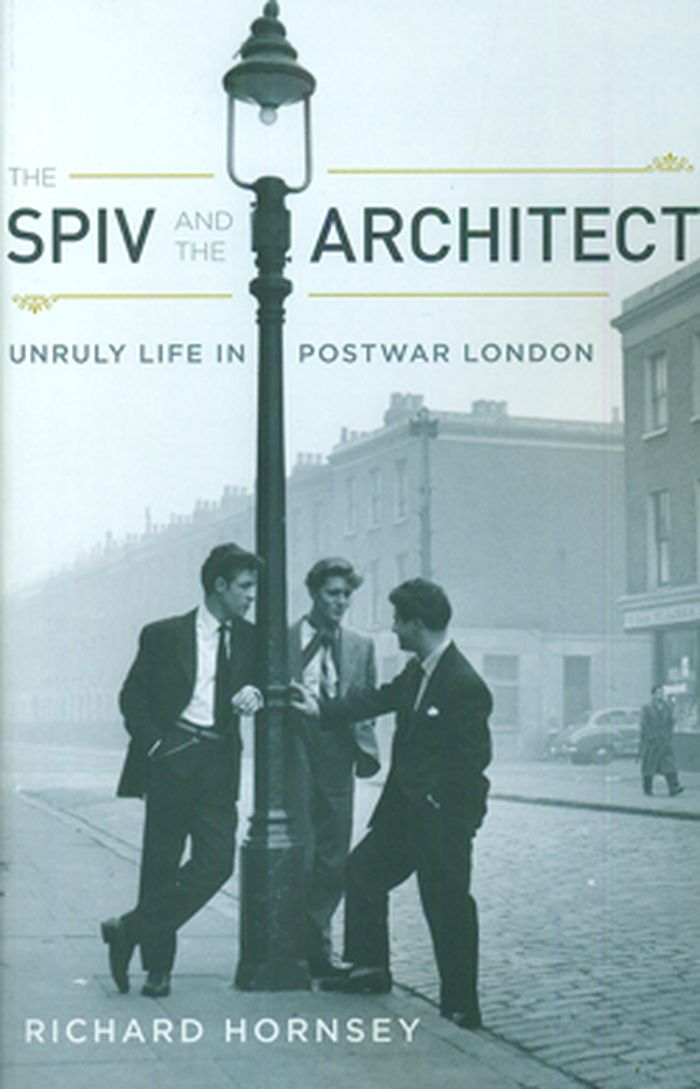
As London emerged from the devastation of the Second World War, planners and policymakers sought to rebuild the city in ways that would reshape the behavior of its citizens as much as it would its buildings and infrastructure—a program defined by a strong emphasis on civic order and conservative values of national community. One of the groups most significantly affected by this new, moralistic climate of reformation and renewal was queer men, whom the police, the media, and lawmakers targeted as an urgent urban problem by marking their lives and desires as criminal and deviant. Richard Hornsey examines how queer men legitimized, resisted, and reinvented this ambitious reconstruction program, which extended from the design of basic public spaces and municipal libraries to private living rooms and home decor. From their association with the urban stereotype of the spiv (slang for a young petty criminal who lived by his wits and shirked legitimate work) and vilification in the tabloids as perverts to the assimilated homosexuals within reformist psychology, Hornsey details how these efforts to transform London fundamentally restructured the experiences and identities of gay men in the city and throughout the country.
The spiv and the architect: unruly life in postwar London
Actions:
Price:
$27.95
(available in store)
Summary:
As London emerged from the devastation of the Second World War, planners and policymakers sought to rebuild the city in ways that would reshape the behavior of its citizens as much as it would its buildings and infrastructure—a program defined by a strong emphasis on civic order and conservative values of national community. One of the groups most significantly affected by this new, moralistic climate of reformation and renewal was queer men, whom the police, the media, and lawmakers targeted as an urgent urban problem by marking their lives and desires as criminal and deviant. Richard Hornsey examines how queer men legitimized, resisted, and reinvented this ambitious reconstruction program, which extended from the design of basic public spaces and municipal libraries to private living rooms and home decor. From their association with the urban stereotype of the spiv (slang for a young petty criminal who lived by his wits and shirked legitimate work) and vilification in the tabloids as perverts to the assimilated homosexuals within reformist psychology, Hornsey details how these efforts to transform London fundamentally restructured the experiences and identities of gay men in the city and throughout the country.
Form:
books
books
Publication:
April 2010
April 2010
Subject:
Gender Theory in Architecture
Gender Theory in Architecture


