


36239 Results
Form:
exhibitions
exhibitions
Title:
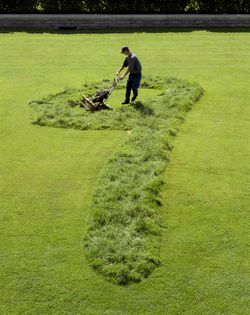
Mel Ziegler: Growing Concern
Mel Ziegler: Growing Concern
Actions:
Description:
The front garden is a sign, a place both public and private, conveying the convictions and values of the households they frame. Growing Concern, a grass relief in Baile Park by American artist Mel Ziegler (b.1956), represents the North American obsession with the lawn. The artist considers the cultural obsession with the growth of our lawns to be symbolic of the taming(...)
The front garden is a sign, a place both public and private, conveying the convictions and values of the households they frame. Growing Concern, a grass relief in Baile Park by American artist Mel Ziegler (b.1956), represents the North American obsession with the lawn. The artist considers the cultural obsession with the growth of our lawns to be symbolic of the taming(...)
Location:
Baile Park
Baile Park
Date:
16 June 1998 to 8 November 1998
16 June 1998 to 8 November 1998
Title:
Mel Ziegler: Growing Concern
Actions:
Description:
The front garden is a sign, a place both public and private, conveying the convictions and values of the households they frame. Growing Concern, a grass relief in Baile Park by American artist Mel Ziegler (b.1956), represents the North American obsession with the lawn. The artist considers the cultural obsession with the growth of our lawns to be symbolic of the taming(...)
Mel Ziegler: Growing Concern
Actions:
Description:
The front garden is a sign, a place both public and private, conveying the convictions and values of the households they frame. Growing Concern, a grass relief in Baile Park by American artist Mel Ziegler (b.1956), represents the North American obsession with the lawn. The artist considers the cultural obsession with the growth of our lawns to be symbolic of the taming(...)
Form:
exhibitions
exhibitions
Date:
16 June 1998 to
8 November 1998
16 June 1998 to
8 November 1998
Location:
Baile Park
Baile Park
Level of archival description:
Project
Project
Reference number:
AP164.S1.1995.D1
Description:
The project series documents the competition entry, design, and execution of the José Hierro public library in the Usera district, Madrid, Spain. Abalos & Herreros were invited to participate in the competition organised by Consejería de Educación y Cultura (Council for Education and Culture), of the Comunidad de Autónoma de Madrid, and their entry won. The firm worked in collaboration with architect Ángel S. Jaramillo and artist Peter Halley. The firm identified this project as number 94. In 2003, this project was a finalist at the 7th edition of the Bienal de Arquitectua Española and received a mention at the 17th edition of the Premios de Urbanismo, Arquitectura y Obra Publica 2003 from the Madrid City Council. Documenting the project are design development and working drawings, correspondence, notes, project descriptions, studies, specifications, photographic materials and a model.
AP164.S1.1995.D1
Description:
The project series documents the competition entry, design, and execution of the José Hierro public library in the Usera district, Madrid, Spain. Abalos & Herreros were invited to participate in the competition organised by Consejería de Educación y Cultura (Council for Education and Culture), of the Comunidad de Autónoma de Madrid, and their entry won. The firm worked in collaboration with architect Ángel S. Jaramillo and artist Peter Halley. The firm identified this project as number 94. In 2003, this project was a finalist at the 7th edition of the Bienal de Arquitectua Española and received a mention at the 17th edition of the Premios de Urbanismo, Arquitectura y Obra Publica 2003 from the Madrid City Council. Documenting the project are design development and working drawings, correspondence, notes, project descriptions, studies, specifications, photographic materials and a model.
People:
Date:
1995-2003
1995-2003
Title:
Biblioteca de Usera, Madrid, Spain (1995-2003)
Actions:
AP164.S1.1995.D1
Description:
The project series documents the competition entry, design, and execution of the José Hierro public library in the Usera district, Madrid, Spain. Abalos & Herreros were invited to participate in the competition organised by Consejería de Educación y Cultura (Council for Education and Culture), of the Comunidad de Autónoma de Madrid, and their entry won. The firm worked in collaboration with architect Ángel S. Jaramillo and artist Peter Halley. The firm identified this project as number 94. In 2003, this project was a finalist at the 7th edition of the Bienal de Arquitectua Española and received a mention at the 17th edition of the Premios de Urbanismo, Arquitectura y Obra Publica 2003 from the Madrid City Council. Documenting the project are design development and working drawings, correspondence, notes, project descriptions, studies, specifications, photographic materials and a model.
Biblioteca de Usera, Madrid, Spain (1995-2003)
Actions:
AP164.S1.1995.D1
Description:
The project series documents the competition entry, design, and execution of the José Hierro public library in the Usera district, Madrid, Spain. Abalos & Herreros were invited to participate in the competition organised by Consejería de Educación y Cultura (Council for Education and Culture), of the Comunidad de Autónoma de Madrid, and their entry won. The firm worked in collaboration with architect Ángel S. Jaramillo and artist Peter Halley. The firm identified this project as number 94. In 2003, this project was a finalist at the 7th edition of the Bienal de Arquitectua Española and received a mention at the 17th edition of the Premios de Urbanismo, Arquitectura y Obra Publica 2003 from the Madrid City Council. Documenting the project are design development and working drawings, correspondence, notes, project descriptions, studies, specifications, photographic materials and a model.
Level of archival description:
Project
Project
Date:
1995-2003
1995-2003
People:
Level of archival description:
Project
Project
Reference number:
AP164.S1.2000.D3
Description:
The project series documents the competition, design, and construction of a gymnastics pavillion in Retiro park for the Instituto Municipal de Deporte of Madrid, Spain. Abalos & Herreros were invited to enter this competition and won first prize in collaboration with Renata Sentkiewicz. The project includes changing rooms, offices and a gymnasium, and was integrated into the surrounding and growing vegetation of the park. The firm worked in collaboration with Fermina Garrido and Obiol y Moya. The firm identified this project as number 127. In 2004, the firm received the Public Initiative Award for this project at the 28th Premios de Urbanismo, Arquitectura y Obra Publica 2003 from the Madrid City Council. Documenting this project are presentation, design development and working drawings, correspondence, project descriptions, budgets, specifications, postcards, notes, and reference, graphic, photographic and digital materials.
AP164.S1.2000.D3
Description:
The project series documents the competition, design, and construction of a gymnastics pavillion in Retiro park for the Instituto Municipal de Deporte of Madrid, Spain. Abalos & Herreros were invited to enter this competition and won first prize in collaboration with Renata Sentkiewicz. The project includes changing rooms, offices and a gymnasium, and was integrated into the surrounding and growing vegetation of the park. The firm worked in collaboration with Fermina Garrido and Obiol y Moya. The firm identified this project as number 127. In 2004, the firm received the Public Initiative Award for this project at the 28th Premios de Urbanismo, Arquitectura y Obra Publica 2003 from the Madrid City Council. Documenting this project are presentation, design development and working drawings, correspondence, project descriptions, budgets, specifications, postcards, notes, and reference, graphic, photographic and digital materials.
People:
Date:
1989-2003
1989-2003
Title:
Pabellón de gimnasia en el parque del Retiro, Madrid, Spain (2000-2003)
Actions:
AP164.S1.2000.D3
Description:
The project series documents the competition, design, and construction of a gymnastics pavillion in Retiro park for the Instituto Municipal de Deporte of Madrid, Spain. Abalos & Herreros were invited to enter this competition and won first prize in collaboration with Renata Sentkiewicz. The project includes changing rooms, offices and a gymnasium, and was integrated into the surrounding and growing vegetation of the park. The firm worked in collaboration with Fermina Garrido and Obiol y Moya. The firm identified this project as number 127. In 2004, the firm received the Public Initiative Award for this project at the 28th Premios de Urbanismo, Arquitectura y Obra Publica 2003 from the Madrid City Council. Documenting this project are presentation, design development and working drawings, correspondence, project descriptions, budgets, specifications, postcards, notes, and reference, graphic, photographic and digital materials.
Pabellón de gimnasia en el parque del Retiro, Madrid, Spain (2000-2003)
Actions:
AP164.S1.2000.D3
Description:
The project series documents the competition, design, and construction of a gymnastics pavillion in Retiro park for the Instituto Municipal de Deporte of Madrid, Spain. Abalos & Herreros were invited to enter this competition and won first prize in collaboration with Renata Sentkiewicz. The project includes changing rooms, offices and a gymnasium, and was integrated into the surrounding and growing vegetation of the park. The firm worked in collaboration with Fermina Garrido and Obiol y Moya. The firm identified this project as number 127. In 2004, the firm received the Public Initiative Award for this project at the 28th Premios de Urbanismo, Arquitectura y Obra Publica 2003 from the Madrid City Council. Documenting this project are presentation, design development and working drawings, correspondence, project descriptions, budgets, specifications, postcards, notes, and reference, graphic, photographic and digital materials.
Level of archival description:
Project
Project
Date:
1989-2003
1989-2003
People:
Form:
events
events
Title:
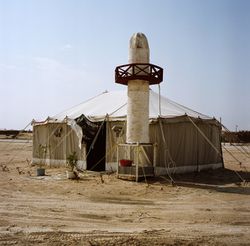
Learning from... Bahrain
Learning from... Bahrain
Actions:
Description:
Noura al Sayeh presents the third lecture in the Learning From… the Middle East series. The presentation will survey the photographic documentation of the Bahrain coast by photographer Camille Zakharia. The urban transformations in the last 30 years have redrawn the Bahraini landscape and triggered the development of a contemporary vernacular culture. The presentation(...)
Noura al Sayeh presents the third lecture in the Learning From… the Middle East series. The presentation will survey the photographic documentation of the Bahrain coast by photographer Camille Zakharia. The urban transformations in the last 30 years have redrawn the Bahraini landscape and triggered the development of a contemporary vernacular culture. The presentation(...)
Location:
Paul-Desmarais Theatre
Paul-Desmarais Theatre
Date:
6 October 2011 , 7pm
6 October 2011 , 7pm
Title:
Learning from... Bahrain
Actions:
Description:
Noura al Sayeh presents the third lecture in the Learning From… the Middle East series. The presentation will survey the photographic documentation of the Bahrain coast by photographer Camille Zakharia. The urban transformations in the last 30 years have redrawn the Bahraini landscape and triggered the development of a contemporary vernacular culture. The presentation(...)
Learning from... Bahrain
Actions:
Description:
Noura al Sayeh presents the third lecture in the Learning From… the Middle East series. The presentation will survey the photographic documentation of the Bahrain coast by photographer Camille Zakharia. The urban transformations in the last 30 years have redrawn the Bahraini landscape and triggered the development of a contemporary vernacular culture. The presentation(...)
Form:
events
events
Date:
6 October 2011
7pm
6 October 2011
7pm
Location:
Paul-Desmarais Theatre
Paul-Desmarais Theatre
Form:
events
events
Title:
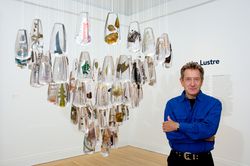
Gilles Clément
Gilles Clément
Actions:
Description:
French horticultural engineer and landscape architect Gilles Clément presents his projects and theories in the context of the CCA exhibition Environment: Approaches for Tomorrow (2006). The exhibition proposes a shift in perspective that takes the environment, and not human demands on the environment, as the starting point for reflection. Clément has designed numerous(...)
French horticultural engineer and landscape architect Gilles Clément presents his projects and theories in the context of the CCA exhibition Environment: Approaches for Tomorrow (2006). The exhibition proposes a shift in perspective that takes the environment, and not human demands on the environment, as the starting point for reflection. Clément has designed numerous(...)
Location:
Paul Desmarais Theatre
Paul Desmarais Theatre
Date:
19 October 2006
19 October 2006
Title:
Gilles Clément
Actions:
Description:
French horticultural engineer and landscape architect Gilles Clément presents his projects and theories in the context of the CCA exhibition Environment: Approaches for Tomorrow (2006). The exhibition proposes a shift in perspective that takes the environment, and not human demands on the environment, as the starting point for reflection. Clément has designed numerous(...)
Gilles Clément
Actions:
Description:
French horticultural engineer and landscape architect Gilles Clément presents his projects and theories in the context of the CCA exhibition Environment: Approaches for Tomorrow (2006). The exhibition proposes a shift in perspective that takes the environment, and not human demands on the environment, as the starting point for reflection. Clément has designed numerous(...)
Form:
events
events
Date:
19 October 2006
19 October 2006
Location:
Paul Desmarais Theatre
Paul Desmarais Theatre
Level of archival description:
Project
Project
Actions:
Reference number:
CI005.S1.1925.PR1
Description:
The Rotterdam building inspectorate, Bouwpolite & Woningdienst, rejected the original plans for the design of the Café de Unie by a private developer, and instead commissioned Oud, as municipal architect, to design the building on Calandplein. This design marked a departure for Oud from public and private buildings to the design of a commercial building. Oud's design incorporated advertisement from its conception as he designed a facade of boards, cement, and glass with an illuminated sign – this was in keeping with the contemporary aesthetic of De Stijl, which explored creative uses of advertisement. Oud designed the signs to be turned inward, to draw attention away from the surrounding buildings, and incorporated bright colours (Taverne et al. 2001, 342). Project series includes drawings of plans as well as photographs of exterior views and of the principal facade of the Café de Unie.
CI005.S1.1925.PR1
Description:
The Rotterdam building inspectorate, Bouwpolite & Woningdienst, rejected the original plans for the design of the Café de Unie by a private developer, and instead commissioned Oud, as municipal architect, to design the building on Calandplein. This design marked a departure for Oud from public and private buildings to the design of a commercial building. Oud's design incorporated advertisement from its conception as he designed a facade of boards, cement, and glass with an illuminated sign – this was in keeping with the contemporary aesthetic of De Stijl, which explored creative uses of advertisement. Oud designed the signs to be turned inward, to draw attention away from the surrounding buildings, and incorporated bright colours (Taverne et al. 2001, 342). Project series includes drawings of plans as well as photographs of exterior views and of the principal facade of the Café de Unie.
People:
Date:
1925
1925
Title:
Café de Unie, Rotterdam, Netherlands (1925)
Actions:
CI005.S1.1925.PR1
Description:
The Rotterdam building inspectorate, Bouwpolite & Woningdienst, rejected the original plans for the design of the Café de Unie by a private developer, and instead commissioned Oud, as municipal architect, to design the building on Calandplein. This design marked a departure for Oud from public and private buildings to the design of a commercial building. Oud's design incorporated advertisement from its conception as he designed a facade of boards, cement, and glass with an illuminated sign – this was in keeping with the contemporary aesthetic of De Stijl, which explored creative uses of advertisement. Oud designed the signs to be turned inward, to draw attention away from the surrounding buildings, and incorporated bright colours (Taverne et al. 2001, 342). Project series includes drawings of plans as well as photographs of exterior views and of the principal facade of the Café de Unie.
Café de Unie, Rotterdam, Netherlands (1925)
Actions:
CI005.S1.1925.PR1
Description:
The Rotterdam building inspectorate, Bouwpolite & Woningdienst, rejected the original plans for the design of the Café de Unie by a private developer, and instead commissioned Oud, as municipal architect, to design the building on Calandplein. This design marked a departure for Oud from public and private buildings to the design of a commercial building. Oud's design incorporated advertisement from its conception as he designed a facade of boards, cement, and glass with an illuminated sign – this was in keeping with the contemporary aesthetic of De Stijl, which explored creative uses of advertisement. Oud designed the signs to be turned inward, to draw attention away from the surrounding buildings, and incorporated bright colours (Taverne et al. 2001, 342). Project series includes drawings of plans as well as photographs of exterior views and of the principal facade of the Café de Unie.
Level of archival description:
project
project
Date:
1925
1925
People:
Level of archival description:
Project
Project
Reference number:
CI005.S1.1925.PR3
Description:
Because of the shortage of social housing for low income families in Rotterdam, the city commissioned the Kiefhoek housing scheme and invited Oud to assist with designing the dwellings. The plans underwent several revisions: it was reduced from the planned construction of 300 buildings in 1925, to 291 dwellings in 1928. The revised complex consisted of two units of shops and dwellings and one dwelling with a hotwater boiler, as well as two warehouses. Oud revised the plans to accommodate 300 dwellings on the chosen site, incorporating existing features, such as the church and public garden, into the site. The site features two symmetric and curved shops facing the central estate street (Taverne et al. 2001, 274-277). Project series includes drawings of plans for site and units as well as photographs of exterior and interior views of Kiefhoek Workers' housing.
CI005.S1.1925.PR3
Description:
Because of the shortage of social housing for low income families in Rotterdam, the city commissioned the Kiefhoek housing scheme and invited Oud to assist with designing the dwellings. The plans underwent several revisions: it was reduced from the planned construction of 300 buildings in 1925, to 291 dwellings in 1928. The revised complex consisted of two units of shops and dwellings and one dwelling with a hotwater boiler, as well as two warehouses. Oud revised the plans to accommodate 300 dwellings on the chosen site, incorporating existing features, such as the church and public garden, into the site. The site features two symmetric and curved shops facing the central estate street (Taverne et al. 2001, 274-277). Project series includes drawings of plans for site and units as well as photographs of exterior and interior views of Kiefhoek Workers' housing.
People:
Date:
1925-1930
1925-1930
Title:
Kiefhoek Workers' Housing, Rotterdam, Netherlands (1925-1930)
Actions:
CI005.S1.1925.PR3
Description:
Because of the shortage of social housing for low income families in Rotterdam, the city commissioned the Kiefhoek housing scheme and invited Oud to assist with designing the dwellings. The plans underwent several revisions: it was reduced from the planned construction of 300 buildings in 1925, to 291 dwellings in 1928. The revised complex consisted of two units of shops and dwellings and one dwelling with a hotwater boiler, as well as two warehouses. Oud revised the plans to accommodate 300 dwellings on the chosen site, incorporating existing features, such as the church and public garden, into the site. The site features two symmetric and curved shops facing the central estate street (Taverne et al. 2001, 274-277). Project series includes drawings of plans for site and units as well as photographs of exterior and interior views of Kiefhoek Workers' housing.
Kiefhoek Workers' Housing, Rotterdam, Netherlands (1925-1930)
Actions:
CI005.S1.1925.PR3
Description:
Because of the shortage of social housing for low income families in Rotterdam, the city commissioned the Kiefhoek housing scheme and invited Oud to assist with designing the dwellings. The plans underwent several revisions: it was reduced from the planned construction of 300 buildings in 1925, to 291 dwellings in 1928. The revised complex consisted of two units of shops and dwellings and one dwelling with a hotwater boiler, as well as two warehouses. Oud revised the plans to accommodate 300 dwellings on the chosen site, incorporating existing features, such as the church and public garden, into the site. The site features two symmetric and curved shops facing the central estate street (Taverne et al. 2001, 274-277). Project series includes drawings of plans for site and units as well as photographs of exterior and interior views of Kiefhoek Workers' housing.
Level of archival description:
project
project
Date:
1925-1930
1925-1930
People:
Form:
drawings
drawings
Actions:
Reference number:
ARCH274217
Description:
Includes a presentation book and unbound presentation drawings, including elevations, plans, sections, schemas and renderings. Contains as well a few maps. The book presented a few propositions and some of them are based on previous projects, like the public library in Usera, the general services building for the Universidad de Extremadura in Mérida and the administrative building for the Ministry of the Interior, in Madrid, Spain.
ARCH274217
Description:
Includes a presentation book and unbound presentation drawings, including elevations, plans, sections, schemas and renderings. Contains as well a few maps. The book presented a few propositions and some of them are based on previous projects, like the public library in Usera, the general services building for the Universidad de Extremadura in Mérida and the administrative building for the Ministry of the Interior, in Madrid, Spain.
People:
Date:
between 2003 and 2006
between 2003 and 2006
Title:
Portfolio containing presentation drawings for the project Laboratorios de ciencias moleculares para la Universidad de Puerto Rico, San Juan, Puerto Rico
Actions:
ARCH274217
Description:
Includes a presentation book and unbound presentation drawings, including elevations, plans, sections, schemas and renderings. Contains as well a few maps. The book presented a few propositions and some of them are based on previous projects, like the public library in Usera, the general services building for the Universidad de Extremadura in Mérida and the administrative building for the Ministry of the Interior, in Madrid, Spain.
Portfolio containing presentation drawings for the project Laboratorios de ciencias moleculares para la Universidad de Puerto Rico, San Juan, Puerto Rico
Actions:
ARCH274217
Description:
Includes a presentation book and unbound presentation drawings, including elevations, plans, sections, schemas and renderings. Contains as well a few maps. The book presented a few propositions and some of them are based on previous projects, like the public library in Usera, the general services building for the Universidad de Extremadura in Mérida and the administrative building for the Ministry of the Interior, in Madrid, Spain.
Form:
drawings
drawings
Date:
between 2003 and 2006
between 2003 and 2006
People:
Level of archival description:
Series
Series
Reference number:
AP179.S3
Description:
Series 3, Tongxian Art Center, Beijing, 2000 – 2007, documents the development of a multiphase project for a public arts complex thirty miles from Beijing. Phases are distinguished when possible. Phase I of the project is the gatehouse (realized), which consists of housing and studio space for artists-in-residence. It is conceived as a brick monolith that has been shrink-wrapped or vacuumed into its shape – a metaphor for the optimization of the building’s limited space. Regional materials are incorporated through the use of local brick and native chudumu wood on the exterior. The gatehouse was completed in 2003. Phase II of the project is the art center (unrealized), which consists of public spaces, sculpture courts, administrative spaces and infrastructural needs of the institution, connected through a series of alleyways. The layout is organized to maximize interaction between inhabitants while maintaining a level of privacy. In addition to phases I and II, records in the series document a design referred to as Tongxian Gatekeeper (unrealized). Drawings, circa 2006, illustrate a building to house animals and agriculture in the southwest corner of the Tongxian Art complex grounds. The series contains sketches, drawings and reprographic copies from pre-design to construction stages of the project, two models including a wood model of the art center and a cardboard model of the gatekeeper wall, and photographic materials. The series also contains textual documents including correspondence with on-site project coordinator Timothy Clark, as well as meeting agendas, project schedules, agreements and proposals, and other project documentation. Digital material includes photographs of construction, CAD drawings, renderings, e-mail, and a video featuring the project team. The majority of material in the series relates to phase I of the project, the gatehouse. Some files include documentation about the involvement of contemporary artist Ai Wei Wei in a supervisory role for the project.
AP179.S3
Description:
Series 3, Tongxian Art Center, Beijing, 2000 – 2007, documents the development of a multiphase project for a public arts complex thirty miles from Beijing. Phases are distinguished when possible. Phase I of the project is the gatehouse (realized), which consists of housing and studio space for artists-in-residence. It is conceived as a brick monolith that has been shrink-wrapped or vacuumed into its shape – a metaphor for the optimization of the building’s limited space. Regional materials are incorporated through the use of local brick and native chudumu wood on the exterior. The gatehouse was completed in 2003. Phase II of the project is the art center (unrealized), which consists of public spaces, sculpture courts, administrative spaces and infrastructural needs of the institution, connected through a series of alleyways. The layout is organized to maximize interaction between inhabitants while maintaining a level of privacy. In addition to phases I and II, records in the series document a design referred to as Tongxian Gatekeeper (unrealized). Drawings, circa 2006, illustrate a building to house animals and agriculture in the southwest corner of the Tongxian Art complex grounds. The series contains sketches, drawings and reprographic copies from pre-design to construction stages of the project, two models including a wood model of the art center and a cardboard model of the gatekeeper wall, and photographic materials. The series also contains textual documents including correspondence with on-site project coordinator Timothy Clark, as well as meeting agendas, project schedules, agreements and proposals, and other project documentation. Digital material includes photographs of construction, CAD drawings, renderings, e-mail, and a video featuring the project team. The majority of material in the series relates to phase I of the project, the gatehouse. Some files include documentation about the involvement of contemporary artist Ai Wei Wei in a supervisory role for the project.
People:
Date:
2000 - 2007
2000 - 2007
Title:
Tongxian Art Center, Beijing, China (2000 - 2007)
Actions:
AP179.S3
Description:
Series 3, Tongxian Art Center, Beijing, 2000 – 2007, documents the development of a multiphase project for a public arts complex thirty miles from Beijing. Phases are distinguished when possible. Phase I of the project is the gatehouse (realized), which consists of housing and studio space for artists-in-residence. It is conceived as a brick monolith that has been shrink-wrapped or vacuumed into its shape – a metaphor for the optimization of the building’s limited space. Regional materials are incorporated through the use of local brick and native chudumu wood on the exterior. The gatehouse was completed in 2003. Phase II of the project is the art center (unrealized), which consists of public spaces, sculpture courts, administrative spaces and infrastructural needs of the institution, connected through a series of alleyways. The layout is organized to maximize interaction between inhabitants while maintaining a level of privacy. In addition to phases I and II, records in the series document a design referred to as Tongxian Gatekeeper (unrealized). Drawings, circa 2006, illustrate a building to house animals and agriculture in the southwest corner of the Tongxian Art complex grounds. The series contains sketches, drawings and reprographic copies from pre-design to construction stages of the project, two models including a wood model of the art center and a cardboard model of the gatekeeper wall, and photographic materials. The series also contains textual documents including correspondence with on-site project coordinator Timothy Clark, as well as meeting agendas, project schedules, agreements and proposals, and other project documentation. Digital material includes photographs of construction, CAD drawings, renderings, e-mail, and a video featuring the project team. The majority of material in the series relates to phase I of the project, the gatehouse. Some files include documentation about the involvement of contemporary artist Ai Wei Wei in a supervisory role for the project.
Tongxian Art Center, Beijing, China (2000 - 2007)
Actions:
AP179.S3
Description:
Series 3, Tongxian Art Center, Beijing, 2000 – 2007, documents the development of a multiphase project for a public arts complex thirty miles from Beijing. Phases are distinguished when possible. Phase I of the project is the gatehouse (realized), which consists of housing and studio space for artists-in-residence. It is conceived as a brick monolith that has been shrink-wrapped or vacuumed into its shape – a metaphor for the optimization of the building’s limited space. Regional materials are incorporated through the use of local brick and native chudumu wood on the exterior. The gatehouse was completed in 2003. Phase II of the project is the art center (unrealized), which consists of public spaces, sculpture courts, administrative spaces and infrastructural needs of the institution, connected through a series of alleyways. The layout is organized to maximize interaction between inhabitants while maintaining a level of privacy. In addition to phases I and II, records in the series document a design referred to as Tongxian Gatekeeper (unrealized). Drawings, circa 2006, illustrate a building to house animals and agriculture in the southwest corner of the Tongxian Art complex grounds. The series contains sketches, drawings and reprographic copies from pre-design to construction stages of the project, two models including a wood model of the art center and a cardboard model of the gatekeeper wall, and photographic materials. The series also contains textual documents including correspondence with on-site project coordinator Timothy Clark, as well as meeting agendas, project schedules, agreements and proposals, and other project documentation. Digital material includes photographs of construction, CAD drawings, renderings, e-mail, and a video featuring the project team. The majority of material in the series relates to phase I of the project, the gatehouse. Some files include documentation about the involvement of contemporary artist Ai Wei Wei in a supervisory role for the project.
Level of archival description:
Series
Series
Date:
2000 - 2007
2000 - 2007
People:
Form:
textual records
textual records
Reference number:
ARCH153562
Description:
Blackboard Outline, October 2 1970, with handwritten notes on Susan's and Stan's outlines Duarte Cabral de Mello, September 23 1970 Peter Wolf, September 2, 1970 Czarnowski, October 1 1970 S. Anderson, October 2 1970 G.A. Gale, October 2 1970 Meeting, September 18 1970 October 6 : a) Uses of street; b) Street as symbol; c) Public-Private; d) Stress; e) Physical properties
ARCH153562
Description:
Blackboard Outline, October 2 1970, with handwritten notes on Susan's and Stan's outlines Duarte Cabral de Mello, September 23 1970 Peter Wolf, September 2, 1970 Czarnowski, October 1 1970 S. Anderson, October 2 1970 G.A. Gale, October 2 1970 Meeting, September 18 1970 October 6 : a) Uses of street; b) Street as symbol; c) Public-Private; d) Stress; e) Physical properties
People:
Date:
1970
1970
Title:
HUD team reports (IAUS “Street” project), 1970
Actions:
ARCH153562
Description:
Blackboard Outline, October 2 1970, with handwritten notes on Susan's and Stan's outlines Duarte Cabral de Mello, September 23 1970 Peter Wolf, September 2, 1970 Czarnowski, October 1 1970 S. Anderson, October 2 1970 G.A. Gale, October 2 1970 Meeting, September 18 1970 October 6 : a) Uses of street; b) Street as symbol; c) Public-Private; d) Stress; e) Physical properties
HUD team reports (IAUS “Street” project), 1970
Actions:
ARCH153562
Description:
Blackboard Outline, October 2 1970, with handwritten notes on Susan's and Stan's outlines Duarte Cabral de Mello, September 23 1970 Peter Wolf, September 2, 1970 Czarnowski, October 1 1970 S. Anderson, October 2 1970 G.A. Gale, October 2 1970 Meeting, September 18 1970 October 6 : a) Uses of street; b) Street as symbol; c) Public-Private; d) Stress; e) Physical properties
Form:
textual records
textual records
Date:
1970
1970
People:


