


931 Results
Form:
books
books
Price:
$52.00
(available to order)
Summary:
Getting the picture, constructing (and deconstructing) the picture, finding the picture, viewing the picture, being in the picture , changing the pictures --these are all phrases that apply to the fascinating world of 'putting people in the picture' in visual research within the Social Sciences. Putting People in the Picture: Visual Methodologies for Social Change focuses(...)
Subject:
Theory of Photography
Theory of Photography
Publication:
May 2008, Rotterdam
May 2008, Rotterdam
Title:
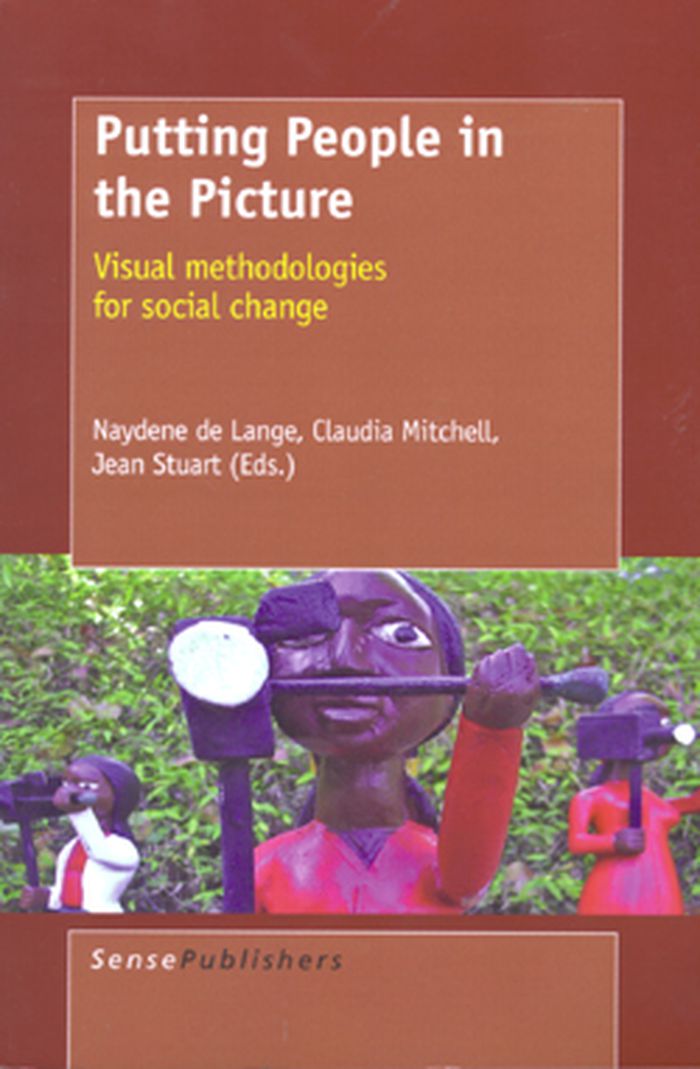
Putting people in the picture: visual methodologies for social change
Actions:
Price:
$52.00
(available to order)
Summary:
Getting the picture, constructing (and deconstructing) the picture, finding the picture, viewing the picture, being in the picture , changing the pictures --these are all phrases that apply to the fascinating world of 'putting people in the picture' in visual research within the Social Sciences. Putting People in the Picture: Visual Methodologies for Social Change focuses on the ways in which researchers, practitioners and activists are using such techniques as photo voice, collaborative video, drawings and other visual and arts-based tools as modes of inquiry, as modes of representation and as modes of disseminating findings in social research. The various chapters address methodological, analytical, interpretive, aesthetic, technical and ethical concerns in using visual methodologies in work with young people, teachers, community health care workers -- and even the self-as-researcher. The range of issues addressed in the work is broad, and includes work in the areas of HIV & AIDS, schooling, poverty, gender violence, race, and children's visions for the future. While the studies are situated within a variety of social contexts, the focus is primarily on work in Southern Africa. The book takes up some of the theoretical and practical challenges offered by Visual Sociology, Image- based Research, Media Studies, Rural Development, and Community-based and Participatory Research, and in so doing offers audiences an array of visual approaches to studying and bringing about social change.
Form:
books
books
Publication:
May 2008, Rotterdam
May 2008, Rotterdam
Subject:
Theory of Photography
Theory of Photography
Form:
books
books
Actions:
Price:
$45.00
(available to order)
Summary:
Contemporary artist Roni Horn first visited Iceland in 1975 at the age of nineteen, and since then, the island’s treeless expanse has had an enduring hold on Horn’s creative work. Through a series of remarkable and poetic reflections, vignettes, episodes, and illustrated essays, ''Island zombie'' distills the artist’s lifelong experience of Iceland’s natural environment.(...)
Title:
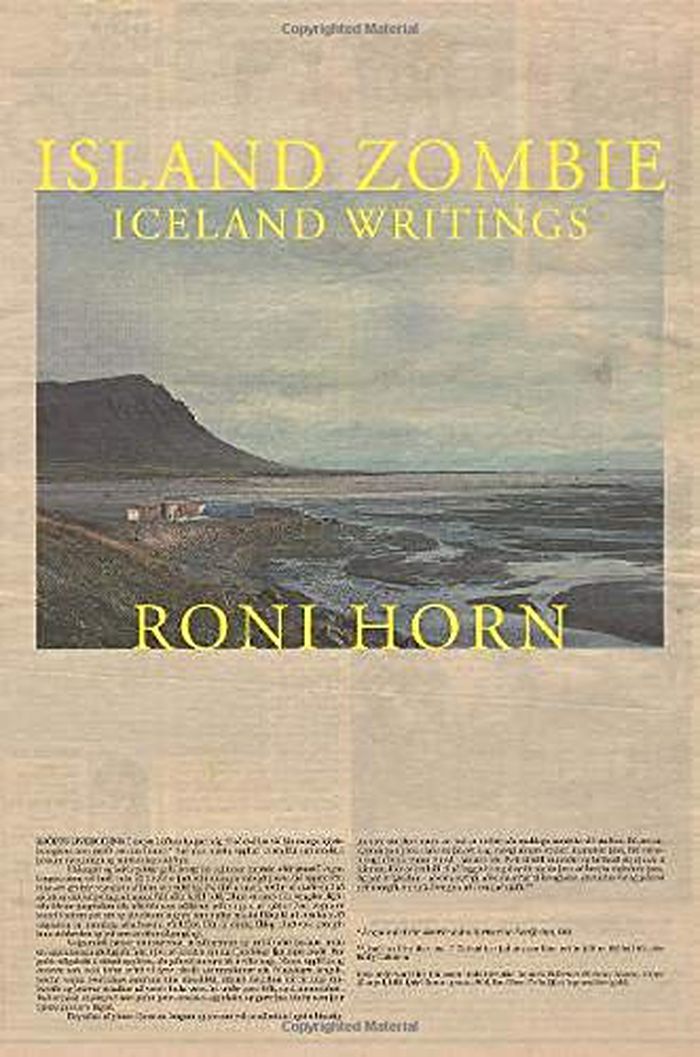
Island zombie: Iceland writings
Actions:
Price:
$45.00
(available to order)
Summary:
Contemporary artist Roni Horn first visited Iceland in 1975 at the age of nineteen, and since then, the island’s treeless expanse has had an enduring hold on Horn’s creative work. Through a series of remarkable and poetic reflections, vignettes, episodes, and illustrated essays, ''Island zombie'' distills the artist’s lifelong experience of Iceland’s natural environment. Together, these pieces offer an unforgettable exploration of the indefinable and inescapable force of remote, elemental places, and provide a sustained look at how an island and its atmosphere can take possession of the innermost self. ''Island zombie'' is a meditation on being present. It vividly conveys Horn’s experiences, from the deeply profound to the joyful and absurd. Through powerful evocations of the changing weather and other natural phenomena- the violence of the wind, the often aggressive birds, the imposing influence of glaciers, and the ubiquitous presence of water in all its variety- we come to understand the author’s abiding need for Iceland, a place uniquely essential to Horn’s creative and spiritual life. The dramatic surroundings provoke examinations of self-sufficiency and isolation, and these ruminations summon a range of cultural companions, including El Greco, Emily Dickinson, Judy Garland, Wallace Stevens, Edgar Allan Poe, William Morris, and Rachel Carson. While brilliantly portraying nature’s sublime energy, Horn also confronts issues of consumption, destruction, and loss, as the industrial and man-made encroach on Icelandic wilderness.
Form:
books
books
Publication:
December 2020
December 2020
Form:
books
books

Title:
Capitalisme carcéral
Capitalisme carcéral
Actions:
Price:
$21.95
(available in store)
Summary:
Dans son livre « Capitalisme carcéral, » Jackie Wang examine le fonctionnement actuel du capitalisme aux États-Unis illustrant divers aspects du continuum carcéral comme la biopolitique de la délinquance juvénile, le profilage racial, la police prédatrice, la gouvernance cybernétique et le maintien de l’ordre algorithmique. Comment un réseau carcéral et des appareils de(...)
Title:
Capitalisme carcéral
Actions:
Price:
$21.95
(available in store)
Summary:
Dans son livre « Capitalisme carcéral, » Jackie Wang examine le fonctionnement actuel du capitalisme aux États-Unis illustrant divers aspects du continuum carcéral comme la biopolitique de la délinquance juvénile, le profilage racial, la police prédatrice, la gouvernance cybernétique et le maintien de l’ordre algorithmique. Comment un réseau carcéral et des appareils de répression policiers s’articulent-ils à la violence de l'économie et du racisme? S’agit-il de la continuation directe, sous un autre visage, du système d’esclavage qui perdura jusqu’au XIXe siècle et sur lequel se sont fondés les États-Unis d’Amérique? Est-ce un système de gestion des populations « surnuméraires » déclassées de leur position dans la hiérarchie sociale? Est-ce que les dispositifs policiers qui strient les espaces urbains ne seraient que d’autres moyens d’extraire de la valeur afin de garantir, à travers les mille et une infractions qu’ils répriment et le fermage d'amendes, la santé financière de l’État? De la privatisation des prisons et des agences de sécurité jusqu’au développement massif d’une industrie technosécuritaire en passant par les algorithmes de reconnaissance faciale et le quadrillage GPS des villes qui les transforment en véritables prisons à ciel ouvert, cet ensemble d’hypothèses nous fait plonger au cœur de l’enfer du capitalisme américain, de ses logiques totalitaires et sécuritaires et de ses processus de racialisation des corps.
Form:
books
books
Publication:
January 2021
January 2021
Subject:
Social
Social
Form:
books
books

Actions:
Price:
$39.95
(available to order)
Summary:
In this contribution to contemporary media studies, acclaimed theorist Francesco Casetti advances a provocative hypothesis: instead of being prostheses that expand or extend our perceptions, modern screen-based media are in fact apparatuses that shelter and protect us from exposure to the world. Rather than bringing us closer to external reality, dominant forms of visual(...)
Title:
Screening fears: On protective media
Actions:
Price:
$39.95
(available to order)
Summary:
In this contribution to contemporary media studies, acclaimed theorist Francesco Casetti advances a provocative hypothesis: instead of being prostheses that expand or extend our perceptions, modern screen-based media are in fact apparatuses that shelter and protect us from exposure to the world. Rather than bringing us closer to external reality, dominant forms of visual media function as barriers or enclosures that defend against the apparent threats and dangers that seem increasingly to surround us. Working with an original historical overview that begins with the Phantasmagoria of the late eighteenth century, then the shared interior spaces of the movie theater in the early to mid-twentieth century, and finally the solitary digital milieus of the present, Casetti traces the outlines of the protective 'bubbles' that disconnect us from our immediate surroundings. To be provided with a shield of immunity to the hazards and uncertainties of the world while experiencing them at a safe remove might seem a positive development. But, he asks, what if these media, instead of providing invulnerability, ensnare individuals in a suffocating enclosure? What if, in their effort to keep reality under control, they exercise a violence equal to that of the dangers they resist? In a dialectical exercise, and through a vivid range of cultural artifacts, ''Screening fears'' traces the emergence of modern protective media and the way they changed our forms of mediation with the world in which we live.
Form:
books
books
Publication:
August 2023
August 2023
Subject:
Critical Theory
Critical Theory
Form:
books
books
Actions:
Price:
$43.95
(available to order)
Summary:
More than twenty years ago, a New Jersey artist started a project for the Philadelphia Anti-Graffiti Network that encouraged young people to paint murals on a few buildings around the city. Jane Golden could not have known that the Mural Arts Program (MAP) would become the nation's largest public art program and a model for programs throughout the country. With more than(...)
Subject:
Public Space
Public Space
Publication:
October 2006, Philadelphia
October 2006, Philadelphia
Title:
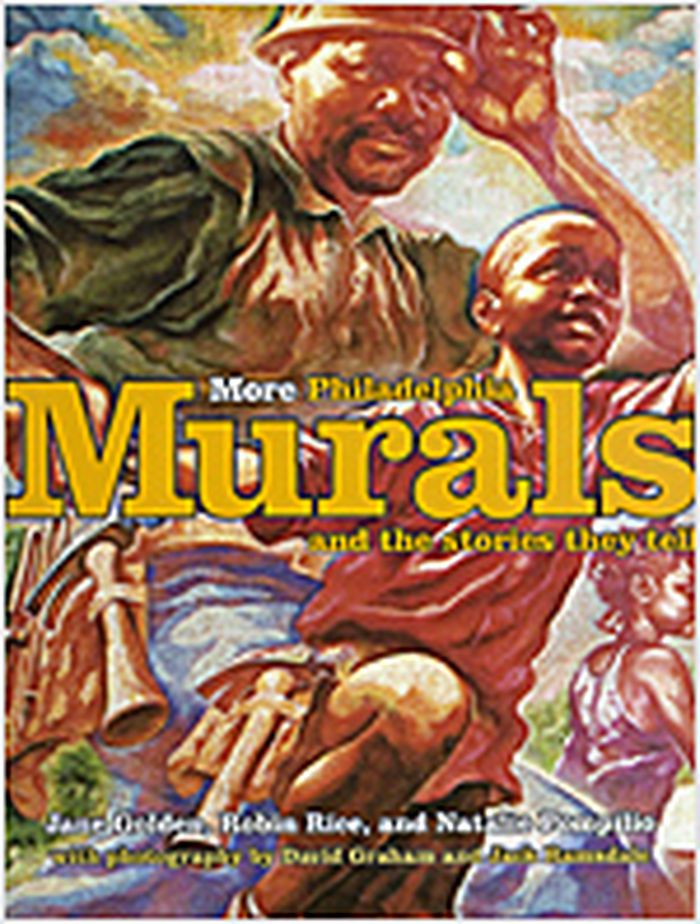
More Philadelphia murals and the story they tell
Actions:
Price:
$43.95
(available to order)
Summary:
More than twenty years ago, a New Jersey artist started a project for the Philadelphia Anti-Graffiti Network that encouraged young people to paint murals on a few buildings around the city. Jane Golden could not have known that the Mural Arts Program (MAP) would become the nation's largest public art program and a model for programs throughout the country. With more than 2600 murals throughout Philadelphia, the program has brightened the lives of countless residents and tourists while providing a creative outlet for an astounding array of artists. MAP now works with more than 3000 students around the city, engaging them in a curriculum that teaches not only artistic skills but civic engagement and personal responsibility. "More Philadelphia murals and the stories they tell", a sequel to "Philadelphia murals and the stories they tell", shares with the earlier work its beautiful color photography, along with profiles of the artists. Featured here is the remarkable story of an unlikely artistic collaboration — between boys who live in a residential facility, a community in the Kensington section of Philadelphia, and men who are incarcerated in a maximum-security state correctional facility. The 1/8 of a mile long mural they created, about balanced and restorative justice, was intended to help the young men give something back to a community they had harmed and help the community wrestle with issues around crime and violence. In the process of creating the mural, it became a life-changing experience for all involved.
Form:
books
books
Publication:
October 2006, Philadelphia
October 2006, Philadelphia
Subject:
Public Space
Public Space
Form:
books
books

Title:
Défaire le genre
Défaire le genre
Actions:
Price:
$41.95
(available in store)
Summary:
« Faire » son genre implique parfois de défaire les normes dominantes de l’existence sociale. La politique de la subversion qu’esquisse Judith Butler ouvre moins la perspective d’une abolition du genre que celle d’un monde dans lequel le genre serait « défait », dans lequel les normes du genre joueraient tout autrement. Ce livre s’inscrit dans une démarche(...)
Title:
Défaire le genre
Actions:
Price:
$41.95
(available in store)
Summary:
« Faire » son genre implique parfois de défaire les normes dominantes de l’existence sociale. La politique de la subversion qu’esquisse Judith Butler ouvre moins la perspective d’une abolition du genre que celle d’un monde dans lequel le genre serait « défait », dans lequel les normes du genre joueraient tout autrement. Ce livre s’inscrit dans une démarche indissociablement théorique et pratique : il s’agit, en s’appuyant sur les théories féministe et queer, de faire la genèse de la production du genre et de travailler à défaire l’emprise des formes de normalisation qui rendent certaines vies invivables, ou difficilement vivables, en les excluant du domaine du possible et du pensable. Par cette critique des normes qui gouvernent le genre avec plus ou moins de succès, il s’agit de dégager les conditions de la perpétuation ou de la production de formes de vie plus vivables, plus désirables et moins soumises à la violence. Judith Butler s’attache notamment à mettre en évidence les contradictions auxquelles sont confrontés ceux et celles qui s’efforcent de penser et transformer le genre. Sans prétendre toujours dépasser ces contradictions, elle suggère la possibilité de les traiter politiquement : « La critique des normes de genre doit se situer dans le contexte des vies telles qu’elles sont vécues et doit être guidée par la question de savoir ce qui permet de maximiser les chances d’une vie vivable et de minimiser la possibilité d’une vie insupportable ou même d’une mort sociale ou littérale. »
Form:
books
books
Publication:
June 2023
June 2023
Subject:
Social
Social
Form:
books
books
Title:
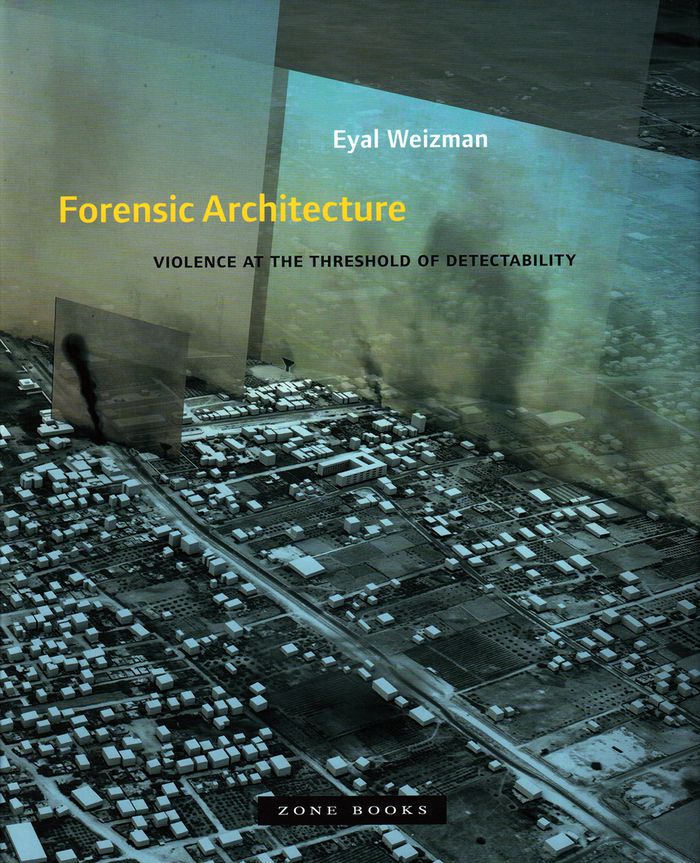
Forensic architecture
Forensic architecture
Actions:
Price:
$49.95
(available to order)
Summary:
In recent years, the group Forensic Architecture began using novel research methods to undertake a series of investigations into human rights abuses. Today, the group provides crucial evidence for international courts and works with a wide range of activist groups, NGOs, Amnesty International, and the UN. Forensic Architecture has not only shed new light on human rights(...)
Title:
Forensic architecture
Actions:
Price:
$49.95
(available to order)
Summary:
In recent years, the group Forensic Architecture began using novel research methods to undertake a series of investigations into human rights abuses. Today, the group provides crucial evidence for international courts and works with a wide range of activist groups, NGOs, Amnesty International, and the UN. Forensic Architecture has not only shed new light on human rights violations and state crimes across the globe, but has also created a new form of investigative practice that bears its name. The group uses architecture as an optical device to investigate armed conflicts and environmental destruction, as well as to cross-reference a variety of evidence sources, such as new media, remote sensing, material analysis, witness testimony, and crowd-sourcing. In "Forensic architecture", Eyal Weizman, the group’s founder, provides, for the first time, an in-depth introduction to the history, practice, assumptions, potentials, and double binds of this practice. The book includes an extensive array of images, maps, and detailed documentation that records the intricate work the group has performed. Traversing multiple scales and durations, the case studies in this volume include the analysis of the shrapnel fragments in a room struck by drones in Pakistan, the reconstruction of a contested shooting in the West Bank, the architectural recreation of a secret Syrian detention center from the memory of its survivors, a blow-by-blow account of a day-long battle in Gaza, and an investigation of environmental violence and climate change in the Guatemalan highlands and elsewhere.
Form:
books
books
Publication:
April 2017
April 2017
Subject:
Architectural Theory
Architectural Theory
Form:
books
books
Actions:
Price:
$49.95
(available in store)
Summary:
Point Saint-Charles, a historically white working-class neighbourhood with a strong Irish and French presence, and Little Burgundy, a multiracial neighbourhood that is home to the city’s English-speaking Black community, face each other across Montreal’s Lachine Canal, once an artery around which work and industry in Montreal were clustered and by which these two(...)
Title:
Deindustrializing Montreal: entangled histories of race, residence, and class
Actions:
Price:
$49.95
(available in store)
Summary:
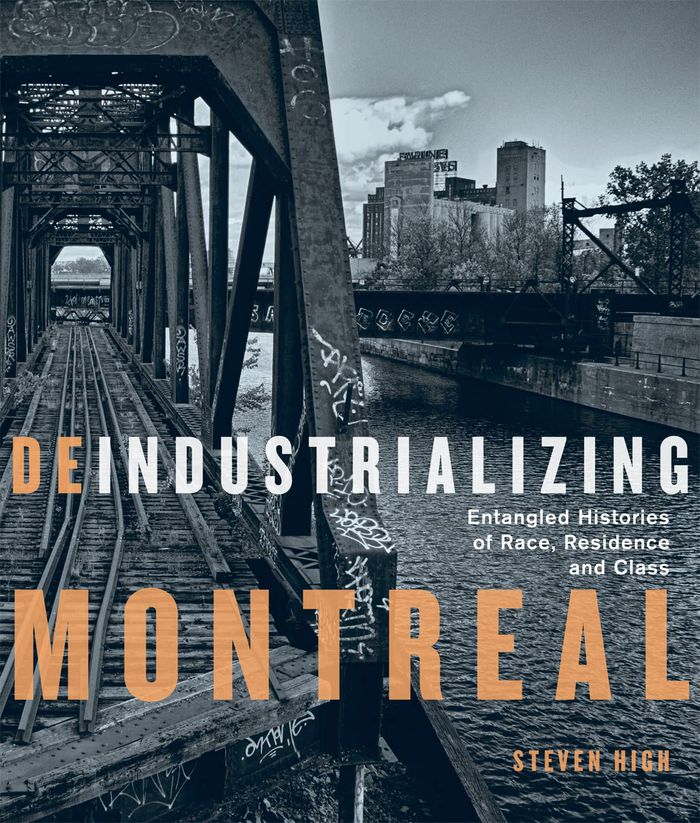
Point Saint-Charles, a historically white working-class neighbourhood with a strong Irish and French presence, and Little Burgundy, a multiracial neighbourhood that is home to the city’s English-speaking Black community, face each other across Montreal’s Lachine Canal, once an artery around which work and industry in Montreal were clustered and by which these two communities were formed and divided. ''Deindustrializing Montreal'' challenges the deepening divergence of class and race analysis by recognizing the intimate relationship between capitalism, class struggles, and racial inequality. Fundamentally, deindustrialization is a process of physical and social ruination as well as part of a wider political project that leaves working-class communities impoverished and demoralized. The structural violence of capitalism occurs gradually and out of sight, but it doesn’t play out the same for everyone. Point Saint-Charles was left to rot until it was revalorized by gentrification, whereas Little Burgundy was torn apart by urban renewal and highway construction. This historical divergence had profound consequences in how urban change has been experienced, understood, and remembered. Drawing extensive interviews, a massive and varied archive of imagery, and original photography by David Lewis into a complex chorus, Steven High brings these communities to life, tracing their history from their earliest years to their decline and their current reality. He extends the analysis of deindustrialization, often focused on single-industry towns, to cities that have seemingly made the post-industrial transition.
Form:
books
books
Publication:
May 2022
May 2022
Subject:
Architecture de Montréal
Architecture de Montréal
Form:
books
books
Title:
The ecstasy of communication
The ecstasy of communication
Actions:
Price:
$16.95
(available to order)
Summary:
First published in France in 1987, The Ecstasy of Communication was Baudrillard’s summarization of his work for a postdoctoral degree at the Sorbonne : a dense, poetically crystalline essay that boiled down two decades of radical, provocative theory into an aphoristically eloquent swan song to twentieth-century alienation. Baudrillard’s quixotic effort to be recognized by(...)
Title:
The ecstasy of communication
Actions:
Price:
$16.95
(available to order)
Summary:
First published in France in 1987, The Ecstasy of Communication was Baudrillard’s summarization of his work for a postdoctoral degree at the Sorbonne : a dense, poetically crystalline essay that boiled down two decades of radical, provocative theory into an aphoristically eloquent swan song to twentieth-century alienation. Baudrillard’s quixotic effort to be recognized by the French intellectual establishment may have been doomed to failure, but this text immediately became a pinnacle to his work, a mid-career assessment that looked both forward and back. By carefully distilling the most radical elements of his previous books, Baudrillard constructed the skeleton key to all of the work that was to come in the second half of his career, and set the scene for what he termed the “obscene”: a world in which alienation has been succeeded by ceaseless communication and information. The Ecstasy of Communication is a decisive, compact description of what it means to be “wired” in our braver-than-brave new world, where sexuality has been superseded by pornography, knowledge by information, hysteria by schizophrenia, subject by object, and violence by terror. The Ecstasy of Communication is an anti-manifesto that confronted and dispensed with such influences as Marshall McLuhan, Guy Debord, and Georges Bataille. It is an essential crib-book, lexicon, and companion piece to any and all of Baudrillard’s books. Twenty-five years after its original publication, it remains not only a prescient portrait of our contemporary condition, but also a dark mirror into which we have not yet dared to look.
Form:
books
books
Publication:
November 2012
November 2012
Subject:
Critical Theory
Critical Theory
Form:
books
books
Actions:
Price:
$29.95
(available to order)
Summary:
In this publication, the Indonesian architectural and urban historian Abidin Kusno explores the connections between the built environment and political consciousness in Indonesia during the colonial and postcolonial eras. Focusing primarily on Jakarta, he describes how perceptions of the past, anxieties about the rapid pace of change in the present, and hopes for the(...)
Title:
The appearances of memory : mnemonic practices of architecture and urban form in Indonesia
Actions:
Price:
$29.95
(available to order)
Summary:
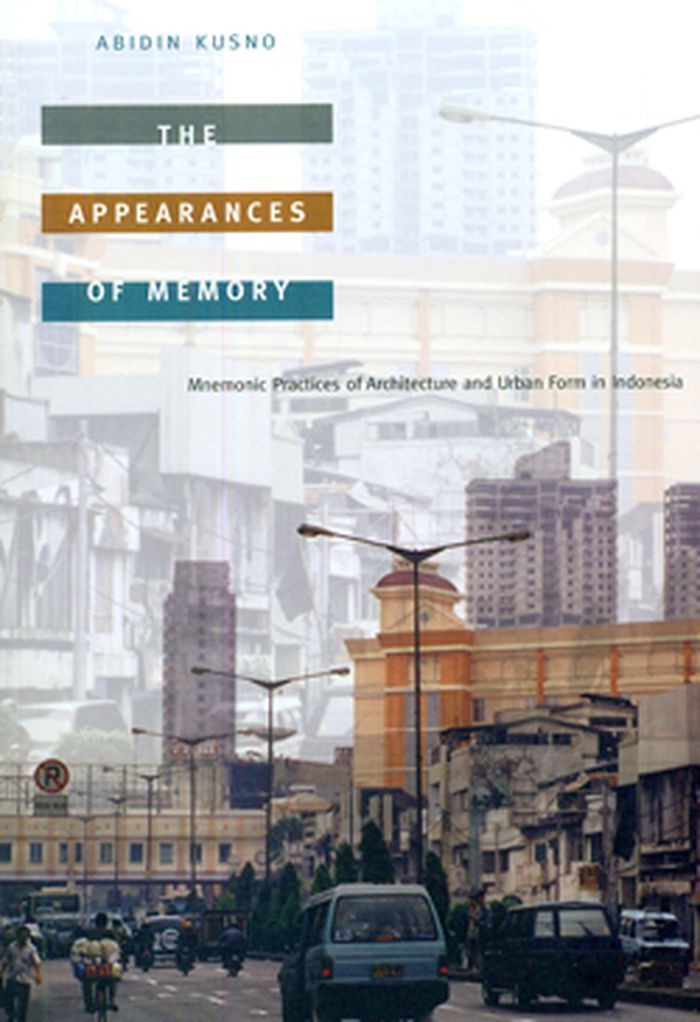
In this publication, the Indonesian architectural and urban historian Abidin Kusno explores the connections between the built environment and political consciousness in Indonesia during the colonial and postcolonial eras. Focusing primarily on Jakarta, he describes how perceptions of the past, anxieties about the rapid pace of change in the present, and hopes for the future have been embodied in architecture and urban space at different historical moments. He argues that the built environment serves as a reminder of the practices of the past and an instantiation of the desire to remake oneself within, as well as beyond, one’s particular time and place. Addressing developments in Indonesia since the fall of President Suharto’s regime in 1998, Kusno delves into such topics as the domestication of traumatic violence and the restoration of order in the urban space, the intense interest in urban history in contemporary Indonesia, and the implications of "superblocks", large urban complexes consisting of residences, offices, shops, and entertainment venues. Moving farther back in time, he examines how Indonesian architects reinvented colonial architectural styles to challenge the political culture of the state, how colonial structures such as railway and commercial buildings created a new, politically charged cognitive map of cities in Java in the early twentieth century, and how the Dutch, in attempting to quell dissent, imposed a distinctive urban visual order in the 1930s. Finally, the present and the past meet in his long-term considerations of how Java has responded to the global flow of Islamic architecture, and how the meanings of Indonesian gatehouses have changed and persisted over time.
Form:
books
books
Publication:
April 2010
April 2010
Subject:
History until 1900, Asia
History until 1900, Asia


