


929 Results
Form:
books
books

Actions:
Price:
$62.00
(available to order)
Summary:
Kara Walker is among the most complex and prolific American artists of her generation. Over the past decade, she has gained international recognition for her room-sized tableaux, which depict historical narratives haunted by sexuality, violence and subjugation and are made using the paradoxically genteel eighteenth-century art of cut-paper silhouettes. Set in the(...)
$62.00
(available to order)
Summary:
Kara Walker is among the most complex and prolific American artists of her generation. Over the past decade, she has gained international recognition for her room-sized tableaux, which depict historical narratives haunted by sexuality, violence and subjugation and are made using the paradoxically genteel eighteenth-century art of cut-paper silhouettes. Set in the(...)
Title:
Kara Walker : my complement, my enevy, my oppressor, my love
Actions:
Price:
$62.00
(available to order)
Summary:
Kara Walker is among the most complex and prolific American artists of her generation. Over the past decade, she has gained international recognition for her room-sized tableaux, which depict historical narratives haunted by sexuality, violence and subjugation and are made using the paradoxically genteel eighteenth-century art of cut-paper silhouettes. Set in the antebellum American South, Walker's compositions play off of stereotypes to portray, often grotesquely, life on the plantation, where masters, mistresses and slave men, women and children enact a subverted version of the past in an attempt to reconfigure their status and representation. Over the years, the artist has used drawing, painting, colored-light projections, writing, shadow puppetry, and, most recently, film animation to narrate her tales of romance, sadism, oppression and liberation. Her scenarios thwart conventional readings of a cohesive national history and expose the collective, and ongoing, psychological injury caused by the tragic legacy of slavery. Deploying an acidic sense of humor, Walker examines the dialectics of pleasure and danger, guilt and fulfillment, desire and fear, race and class. This landmark publication, which is sure to win international design awards, accompanies Walker's first major American museum survey. It features critical essays by Philippe Vergne, Sander L. Gilman, Thomas McEvilley, Robert Storr and Kevin Young, as well as an illustrated lexicon of recurring themes and motifs in the artist's most influential installations by Yasmil Raymond, more than 200 full-color images, an extensive exhibition history and bibliography, and a 36-page insert by the artist.
Kara Walker : my complement, my enevy, my oppressor, my love
Actions:
Price:
$62.00
(available to order)
Summary:
Kara Walker is among the most complex and prolific American artists of her generation. Over the past decade, she has gained international recognition for her room-sized tableaux, which depict historical narratives haunted by sexuality, violence and subjugation and are made using the paradoxically genteel eighteenth-century art of cut-paper silhouettes. Set in the antebellum American South, Walker's compositions play off of stereotypes to portray, often grotesquely, life on the plantation, where masters, mistresses and slave men, women and children enact a subverted version of the past in an attempt to reconfigure their status and representation. Over the years, the artist has used drawing, painting, colored-light projections, writing, shadow puppetry, and, most recently, film animation to narrate her tales of romance, sadism, oppression and liberation. Her scenarios thwart conventional readings of a cohesive national history and expose the collective, and ongoing, psychological injury caused by the tragic legacy of slavery. Deploying an acidic sense of humor, Walker examines the dialectics of pleasure and danger, guilt and fulfillment, desire and fear, race and class. This landmark publication, which is sure to win international design awards, accompanies Walker's first major American museum survey. It features critical essays by Philippe Vergne, Sander L. Gilman, Thomas McEvilley, Robert Storr and Kevin Young, as well as an illustrated lexicon of recurring themes and motifs in the artist's most influential installations by Yasmil Raymond, more than 200 full-color images, an extensive exhibition history and bibliography, and a 36-page insert by the artist.
Form:
books
books
Publication:
March 2007, Minneapolis
March 2007, Minneapolis
Subject:
Contemporary Art Monographs
Contemporary Art Monographs
Form:
books
books
Actions:
Price:
$29.95
(available to order)
Summary:
In this publication, the Indonesian architectural and urban historian Abidin Kusno explores the connections between the built environment and political consciousness in Indonesia during the colonial and postcolonial eras. Focusing primarily on Jakarta, he describes how perceptions of the past, anxieties about the rapid pace of change in the present, and hopes for the(...)
$29.95
(available to order)
Summary:
In this publication, the Indonesian architectural and urban historian Abidin Kusno explores the connections between the built environment and political consciousness in Indonesia during the colonial and postcolonial eras. Focusing primarily on Jakarta, he describes how perceptions of the past, anxieties about the rapid pace of change in the present, and hopes for the(...)
Title:
The appearances of memory : mnemonic practices of architecture and urban form in Indonesia
Actions:
Price:
$29.95
(available to order)
Summary:
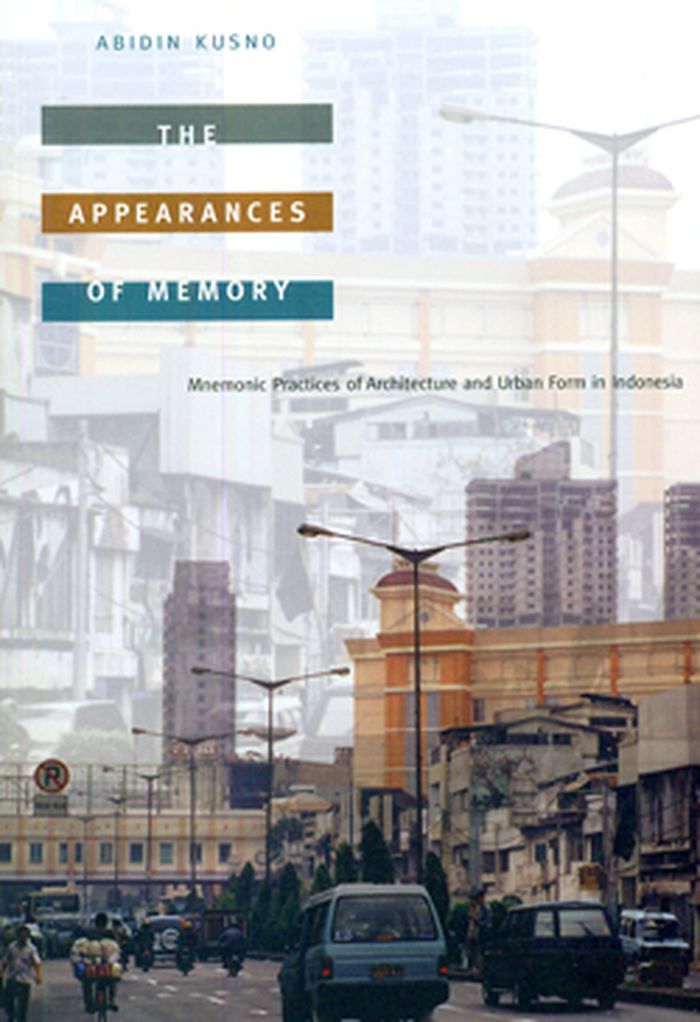
In this publication, the Indonesian architectural and urban historian Abidin Kusno explores the connections between the built environment and political consciousness in Indonesia during the colonial and postcolonial eras. Focusing primarily on Jakarta, he describes how perceptions of the past, anxieties about the rapid pace of change in the present, and hopes for the future have been embodied in architecture and urban space at different historical moments. He argues that the built environment serves as a reminder of the practices of the past and an instantiation of the desire to remake oneself within, as well as beyond, one’s particular time and place. Addressing developments in Indonesia since the fall of President Suharto’s regime in 1998, Kusno delves into such topics as the domestication of traumatic violence and the restoration of order in the urban space, the intense interest in urban history in contemporary Indonesia, and the implications of "superblocks", large urban complexes consisting of residences, offices, shops, and entertainment venues. Moving farther back in time, he examines how Indonesian architects reinvented colonial architectural styles to challenge the political culture of the state, how colonial structures such as railway and commercial buildings created a new, politically charged cognitive map of cities in Java in the early twentieth century, and how the Dutch, in attempting to quell dissent, imposed a distinctive urban visual order in the 1930s. Finally, the present and the past meet in his long-term considerations of how Java has responded to the global flow of Islamic architecture, and how the meanings of Indonesian gatehouses have changed and persisted over time.
The appearances of memory : mnemonic practices of architecture and urban form in Indonesia
Actions:
Price:
$29.95
(available to order)
Summary:
In this publication, the Indonesian architectural and urban historian Abidin Kusno explores the connections between the built environment and political consciousness in Indonesia during the colonial and postcolonial eras. Focusing primarily on Jakarta, he describes how perceptions of the past, anxieties about the rapid pace of change in the present, and hopes for the future have been embodied in architecture and urban space at different historical moments. He argues that the built environment serves as a reminder of the practices of the past and an instantiation of the desire to remake oneself within, as well as beyond, one’s particular time and place. Addressing developments in Indonesia since the fall of President Suharto’s regime in 1998, Kusno delves into such topics as the domestication of traumatic violence and the restoration of order in the urban space, the intense interest in urban history in contemporary Indonesia, and the implications of "superblocks", large urban complexes consisting of residences, offices, shops, and entertainment venues. Moving farther back in time, he examines how Indonesian architects reinvented colonial architectural styles to challenge the political culture of the state, how colonial structures such as railway and commercial buildings created a new, politically charged cognitive map of cities in Java in the early twentieth century, and how the Dutch, in attempting to quell dissent, imposed a distinctive urban visual order in the 1930s. Finally, the present and the past meet in his long-term considerations of how Java has responded to the global flow of Islamic architecture, and how the meanings of Indonesian gatehouses have changed and persisted over time.
Form:
books
books
Publication:
April 2010
April 2010
Subject:
History until 1900, Asia
History until 1900, Asia
Form:
books
books
Title:
The ecstasy of communication
The ecstasy of communication
Actions:
Price:
$16.95
(available to order)
Summary:
First published in France in 1987, The Ecstasy of Communication was Baudrillard’s summarization of his work for a postdoctoral degree at the Sorbonne : a dense, poetically crystalline essay that boiled down two decades of radical, provocative theory into an aphoristically eloquent swan song to twentieth-century alienation. Baudrillard’s quixotic effort to be recognized by(...)
$16.95
(available to order)
Summary:
First published in France in 1987, The Ecstasy of Communication was Baudrillard’s summarization of his work for a postdoctoral degree at the Sorbonne : a dense, poetically crystalline essay that boiled down two decades of radical, provocative theory into an aphoristically eloquent swan song to twentieth-century alienation. Baudrillard’s quixotic effort to be recognized by(...)
Title:
The ecstasy of communication
Actions:
Price:
$16.95
(available to order)
Summary:
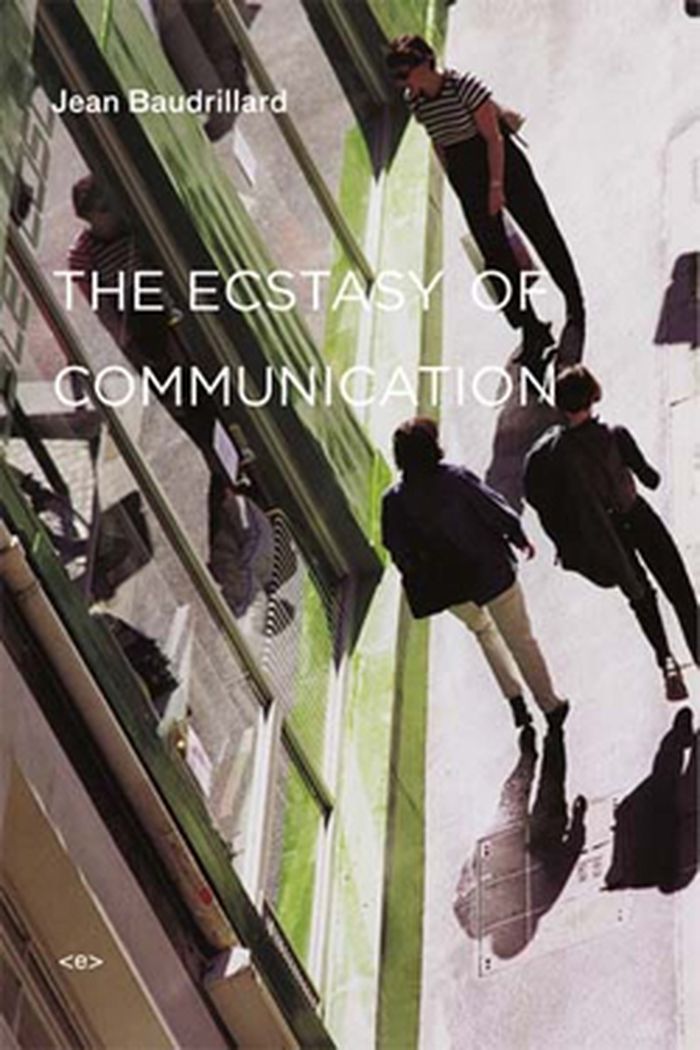
First published in France in 1987, The Ecstasy of Communication was Baudrillard’s summarization of his work for a postdoctoral degree at the Sorbonne : a dense, poetically crystalline essay that boiled down two decades of radical, provocative theory into an aphoristically eloquent swan song to twentieth-century alienation. Baudrillard’s quixotic effort to be recognized by the French intellectual establishment may have been doomed to failure, but this text immediately became a pinnacle to his work, a mid-career assessment that looked both forward and back. By carefully distilling the most radical elements of his previous books, Baudrillard constructed the skeleton key to all of the work that was to come in the second half of his career, and set the scene for what he termed the “obscene”: a world in which alienation has been succeeded by ceaseless communication and information. The Ecstasy of Communication is a decisive, compact description of what it means to be “wired” in our braver-than-brave new world, where sexuality has been superseded by pornography, knowledge by information, hysteria by schizophrenia, subject by object, and violence by terror. The Ecstasy of Communication is an anti-manifesto that confronted and dispensed with such influences as Marshall McLuhan, Guy Debord, and Georges Bataille. It is an essential crib-book, lexicon, and companion piece to any and all of Baudrillard’s books. Twenty-five years after its original publication, it remains not only a prescient portrait of our contemporary condition, but also a dark mirror into which we have not yet dared to look.
The ecstasy of communication
Actions:
Price:
$16.95
(available to order)
Summary:
First published in France in 1987, The Ecstasy of Communication was Baudrillard’s summarization of his work for a postdoctoral degree at the Sorbonne : a dense, poetically crystalline essay that boiled down two decades of radical, provocative theory into an aphoristically eloquent swan song to twentieth-century alienation. Baudrillard’s quixotic effort to be recognized by the French intellectual establishment may have been doomed to failure, but this text immediately became a pinnacle to his work, a mid-career assessment that looked both forward and back. By carefully distilling the most radical elements of his previous books, Baudrillard constructed the skeleton key to all of the work that was to come in the second half of his career, and set the scene for what he termed the “obscene”: a world in which alienation has been succeeded by ceaseless communication and information. The Ecstasy of Communication is a decisive, compact description of what it means to be “wired” in our braver-than-brave new world, where sexuality has been superseded by pornography, knowledge by information, hysteria by schizophrenia, subject by object, and violence by terror. The Ecstasy of Communication is an anti-manifesto that confronted and dispensed with such influences as Marshall McLuhan, Guy Debord, and Georges Bataille. It is an essential crib-book, lexicon, and companion piece to any and all of Baudrillard’s books. Twenty-five years after its original publication, it remains not only a prescient portrait of our contemporary condition, but also a dark mirror into which we have not yet dared to look.
Form:
books
books
Publication:
November 2012
November 2012
Subject:
Critical Theory
Critical Theory
Form:
books
books
Actions:
Price:
$51.95
(available to order)
Summary:
Plus de huit personnes sur dix habitent en ville. Pour autant, la connaissent-elles ? Ne reste-t-elle pas synonyme d'idées reçues anonymat, violence, abondance côtoyant la grande pauvreté ? Certes elle est tout cela, mais aussi l'organisation humaine la plus aboutie et la plus complexe. Urbanistes, architectes, ingénieurs, sociologues, nombreuses sont les professions au(...)
$51.95
(available to order)
Summary:
Plus de huit personnes sur dix habitent en ville. Pour autant, la connaissent-elles ? Ne reste-t-elle pas synonyme d'idées reçues anonymat, violence, abondance côtoyant la grande pauvreté ? Certes elle est tout cela, mais aussi l'organisation humaine la plus aboutie et la plus complexe. Urbanistes, architectes, ingénieurs, sociologues, nombreuses sont les professions au(...)
Title:
Villes de papier : une anthologie de poétique urbaine
Actions:
Price:
$51.95
(available to order)
Summary:
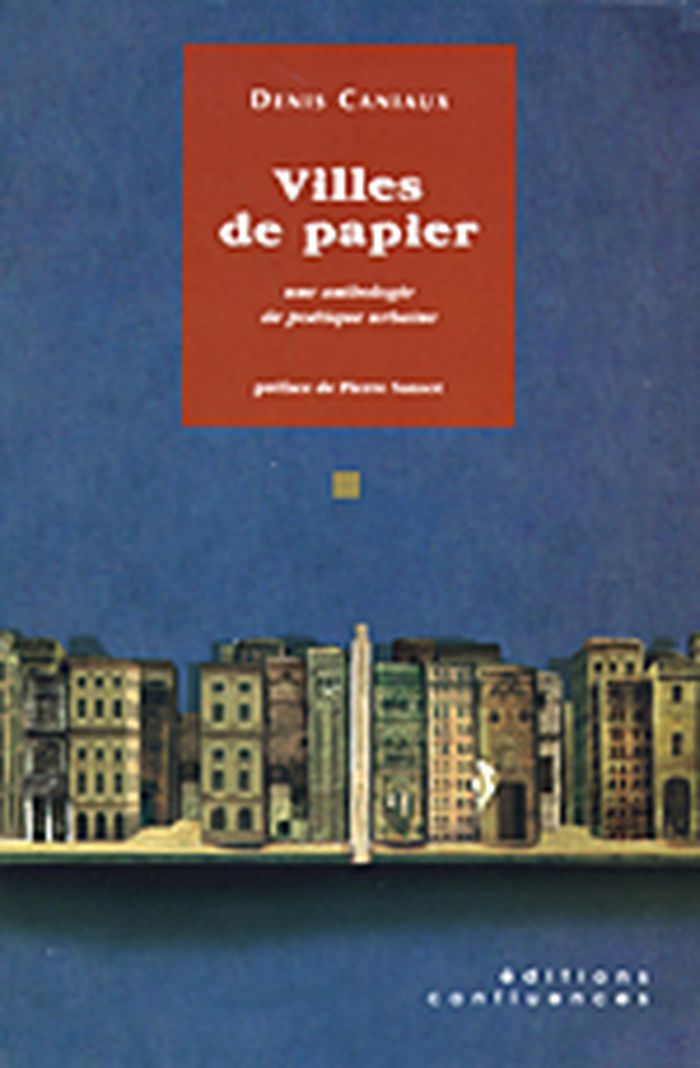
Plus de huit personnes sur dix habitent en ville. Pour autant, la connaissent-elles ? Ne reste-t-elle pas synonyme d'idées reçues anonymat, violence, abondance côtoyant la grande pauvreté ? Certes elle est tout cela, mais aussi l'organisation humaine la plus aboutie et la plus complexe. Urbanistes, architectes, ingénieurs, sociologues, nombreuses sont les professions au chevet de la ville, priorité publique depuis plus de vingt-cinq ans. Ont-elles pour autant le monopole des discours pertinents sur la ville ? "je sais gré à Denis Caniaux de nous rappeler qu'une ville [...] se parcourt, qu'elle se découvre, qu'elle est pour nous une source de joies et de peines [...] De là de longs paragraphes consacrés à la ville rêvée, à la ville arpentée, à la ville explorée" : dans la préface qu'il donne à Villes de papier, Pierre Sansot insiste sur le fait que romanciers et poètes se révèlent souvent de remarquables analystes urbains et que leurs textes éclairent d'un jour original les questions sur la ville. La "poétique urbaine" ainsi ne pourrait-elle pas enrichir la "politique de la ville" ? Cette anthologie, plus de 50 auteurs du monde entier, plus de 130 extraits d'œuvres, du XIXe siècle à nos jours, nous invite à réenchanter notre vision de la ville, pour mieux la changer au quotidien. Elle nous propose une déambulation littéraire dans une, comédie urbaine, de Baudelaire à Guillevic, de Hugo à Gracq, de Vargas Llosa à Calvino, de Fernand Léger à Chamoiseau ou Valabrègue, en passant par Auster, Fallet, Dürrenmatt ou Kadaré. Un véritable ouvrage de référence pour tous ceux qui s'intéressent de près ou de loin à la ville.
Villes de papier : une anthologie de poétique urbaine
Actions:
Price:
$51.95
(available to order)
Summary:
Plus de huit personnes sur dix habitent en ville. Pour autant, la connaissent-elles ? Ne reste-t-elle pas synonyme d'idées reçues anonymat, violence, abondance côtoyant la grande pauvreté ? Certes elle est tout cela, mais aussi l'organisation humaine la plus aboutie et la plus complexe. Urbanistes, architectes, ingénieurs, sociologues, nombreuses sont les professions au chevet de la ville, priorité publique depuis plus de vingt-cinq ans. Ont-elles pour autant le monopole des discours pertinents sur la ville ? "je sais gré à Denis Caniaux de nous rappeler qu'une ville [...] se parcourt, qu'elle se découvre, qu'elle est pour nous une source de joies et de peines [...] De là de longs paragraphes consacrés à la ville rêvée, à la ville arpentée, à la ville explorée" : dans la préface qu'il donne à Villes de papier, Pierre Sansot insiste sur le fait que romanciers et poètes se révèlent souvent de remarquables analystes urbains et que leurs textes éclairent d'un jour original les questions sur la ville. La "poétique urbaine" ainsi ne pourrait-elle pas enrichir la "politique de la ville" ? Cette anthologie, plus de 50 auteurs du monde entier, plus de 130 extraits d'œuvres, du XIXe siècle à nos jours, nous invite à réenchanter notre vision de la ville, pour mieux la changer au quotidien. Elle nous propose une déambulation littéraire dans une, comédie urbaine, de Baudelaire à Guillevic, de Hugo à Gracq, de Vargas Llosa à Calvino, de Fernand Léger à Chamoiseau ou Valabrègue, en passant par Auster, Fallet, Dürrenmatt ou Kadaré. Un véritable ouvrage de référence pour tous ceux qui s'intéressent de près ou de loin à la ville.
Form:
books
books
Publication:
March 2004, Bordeaux
March 2004, Bordeaux
Subject:
Urban Theory
Urban Theory
Form:
journals and magazines
journals and magazines
Actions:
Price:
$16.95
(available in store)
Summary:
With this issue, the funambulist offers a critique of their own framework of knowledge production. The concept of “Global South” has been turned into a handy word to lazily designate two-thirds of the world’s earthly area and 90% of its population, thus flattening the millions of specificities that characterize this grouping. It also often embodies an entity that only(...)
$16.95
(available in store)
Summary:
With this issue, the funambulist offers a critique of their own framework of knowledge production. The concept of “Global South” has been turned into a handy word to lazily designate two-thirds of the world’s earthly area and 90% of its population, thus flattening the millions of specificities that characterize this grouping. It also often embodies an entity that only(...)
Title:
The Funambulist 66: Beyond the global South
Actions:
Price:
$16.95
(available in store)
Summary:
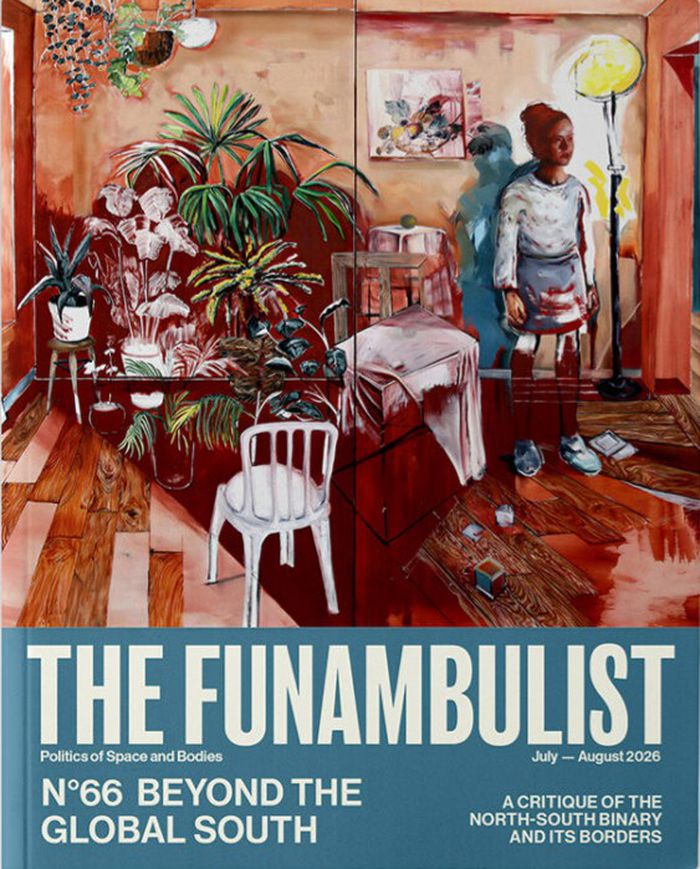
With this issue, the funambulist offers a critique of their own framework of knowledge production. The concept of “Global South” has been turned into a handy word to lazily designate two-thirds of the world’s earthly area and 90% of its population, thus flattening the millions of specificities that characterize this grouping. It also often embodies an entity that only exists dependent on its alter ego, the Global North. As such, it denies any form of agency to the peoples designated as “the South” independently from their relationship to the “North,” as we examine in the case of the war in the eastern Congo (Josaphat Musamba). The South/North binary also designates borders as lines (rather than as regimes operating on both sides of these lines) and essentializes the difference between sides. Can Blackness and Indigeneity in Abya Yala be read without a fundamental split at the settler colonial line that separates North and Central-South Americas (Ashley Ngozi Agbasoga)? Can 20th century Korea’s history show us that the line that currently separates the north (usually presented as part of the Global South) and the south (usually presented as part of the Global North) particularly illustrates the North/South framework’s lack of complexity (Lina Eunji Chang and Andrei-Sergei Kim)? What kind of colonial violence the Non-Aligned Movement invisibilizes in West Papua (Quito Swan), in Kashmir (Choakkeladd) or Western Sahara (Buhari Lehbib) and, in contrast, what kind of solidarities it allowed from Yugoslavia (Dubravka Sekulic and Sanja Horvatincic)? And, crucially, how can we honor the complexity of politics by being able to hold two contradictory truths together as Micol Meghnagi reminds us in the context of Gaddafi’s Libya and Pan-Arabism.
The Funambulist 66: Beyond the global South
Actions:
Price:
$16.95
(available in store)
Summary:
With this issue, the funambulist offers a critique of their own framework of knowledge production. The concept of “Global South” has been turned into a handy word to lazily designate two-thirds of the world’s earthly area and 90% of its population, thus flattening the millions of specificities that characterize this grouping. It also often embodies an entity that only exists dependent on its alter ego, the Global North. As such, it denies any form of agency to the peoples designated as “the South” independently from their relationship to the “North,” as we examine in the case of the war in the eastern Congo (Josaphat Musamba). The South/North binary also designates borders as lines (rather than as regimes operating on both sides of these lines) and essentializes the difference between sides. Can Blackness and Indigeneity in Abya Yala be read without a fundamental split at the settler colonial line that separates North and Central-South Americas (Ashley Ngozi Agbasoga)? Can 20th century Korea’s history show us that the line that currently separates the north (usually presented as part of the Global South) and the south (usually presented as part of the Global North) particularly illustrates the North/South framework’s lack of complexity (Lina Eunji Chang and Andrei-Sergei Kim)? What kind of colonial violence the Non-Aligned Movement invisibilizes in West Papua (Quito Swan), in Kashmir (Choakkeladd) or Western Sahara (Buhari Lehbib) and, in contrast, what kind of solidarities it allowed from Yugoslavia (Dubravka Sekulic and Sanja Horvatincic)? And, crucially, how can we honor the complexity of politics by being able to hold two contradictory truths together as Micol Meghnagi reminds us in the context of Gaddafi’s Libya and Pan-Arabism.
Form:
journals and magazines
journals and magazines
Publication:
July 2026
July 2026
Subject:
Magazines
Magazines
Form:
books
books
Price:
$37.50
(available to order)
Summary:
Although the seemingly apocalyptic scale of the World Trade Center disaster continues to haunt people across the globe, it is only the most recent example of a city tragically wounded. Cities are, in fact, perpetually caught up in cycles of degeneration and renewal. As with the WTC, from time to time these cycles are severely ruptured by a sudden, unpredictable event.(...)
$37.50
(available to order)
Summary:
Although the seemingly apocalyptic scale of the World Trade Center disaster continues to haunt people across the globe, it is only the most recent example of a city tragically wounded. Cities are, in fact, perpetually caught up in cycles of degeneration and renewal. As with the WTC, from time to time these cycles are severely ruptured by a sudden, unpredictable event.(...)
Title:
Wounded cities : destruction and reconstruction in a globalized world
Actions:
Price:
$37.50
(available to order)
Summary:
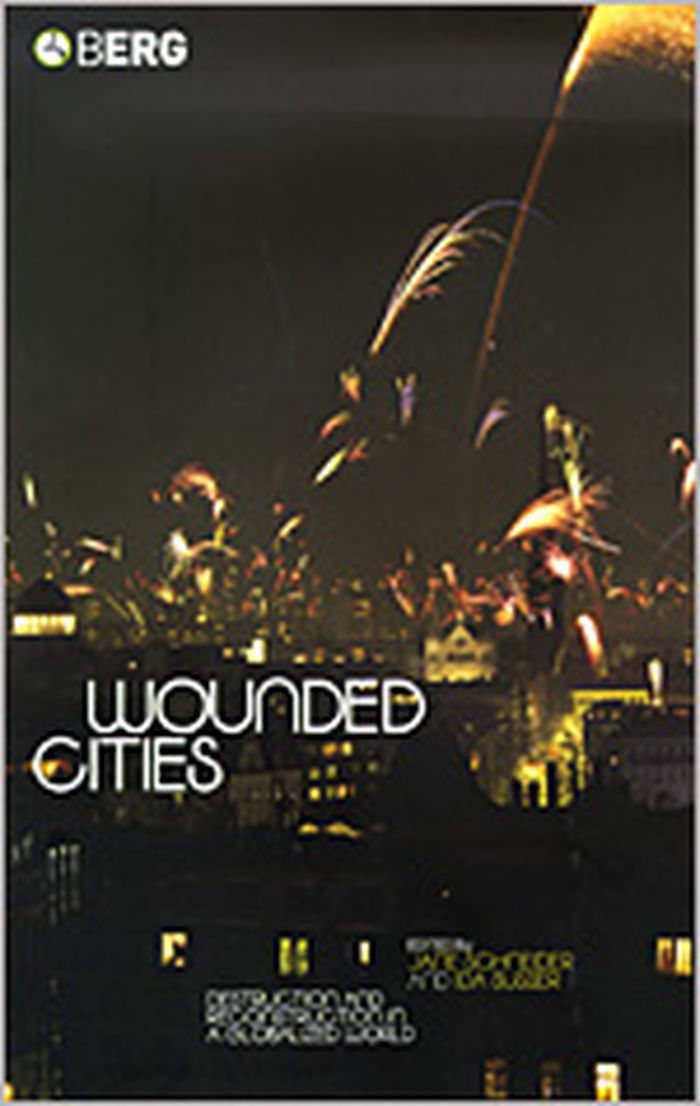
Although the seemingly apocalyptic scale of the World Trade Center disaster continues to haunt people across the globe, it is only the most recent example of a city tragically wounded. Cities are, in fact, perpetually caught up in cycles of degeneration and renewal. As with the WTC, from time to time these cycles are severely ruptured by a sudden, unpredictable event. In the wake of recent terrorist activities, this timely book explores how urban populations are affected by "wounds" inflicted through violence, civil wars, overbuilding, drug trafficking, and the collapse of infrastructures, as well as "natural" disasters such as earthquakes. Mexico City, New York, Beirut, Belfast, Bangkok and Baghdad are just a few examples of cities riddled with problems that undermine, on a daily basis, the quality of urban life. What does it mean for urban dwellers when the infrastructure of a city collapses – transport, communication grids, heat, light, roads, water, and sanitation? What are the effects of foreign investment and huge construction projects on urban populations and how does this change the "look" and character of a city? How does drug trafficking intersect with class, race, and gender, and what impact does it have on vulnerable urban communities? How do political corruption and mafia networks distort the built environment? Drawing on in-depth case studies from across the globe, this book answers these intriguing questions through its rigorous consideration of changing global and national contexts, social movements, and corrosive urban events. Adopting a "grass roots up" approach, it places emphasis on people’s experiences of uneven development and inequality, their engagement with memory in the face of continual change, and the relevance of political activism to bettering their lives. It is especially attentive to the historical interaction of particular cities with wider political and economic forces, as these interactions have shaped local governance over time. Imagining each city as a "body politic", the authors consider its capacity both to mediate local conflict and to broach the healing of wounds.
Wounded cities : destruction and reconstruction in a globalized world
Actions:
Price:
$37.50
(available to order)
Summary:
Although the seemingly apocalyptic scale of the World Trade Center disaster continues to haunt people across the globe, it is only the most recent example of a city tragically wounded. Cities are, in fact, perpetually caught up in cycles of degeneration and renewal. As with the WTC, from time to time these cycles are severely ruptured by a sudden, unpredictable event. In the wake of recent terrorist activities, this timely book explores how urban populations are affected by "wounds" inflicted through violence, civil wars, overbuilding, drug trafficking, and the collapse of infrastructures, as well as "natural" disasters such as earthquakes. Mexico City, New York, Beirut, Belfast, Bangkok and Baghdad are just a few examples of cities riddled with problems that undermine, on a daily basis, the quality of urban life. What does it mean for urban dwellers when the infrastructure of a city collapses – transport, communication grids, heat, light, roads, water, and sanitation? What are the effects of foreign investment and huge construction projects on urban populations and how does this change the "look" and character of a city? How does drug trafficking intersect with class, race, and gender, and what impact does it have on vulnerable urban communities? How do political corruption and mafia networks distort the built environment? Drawing on in-depth case studies from across the globe, this book answers these intriguing questions through its rigorous consideration of changing global and national contexts, social movements, and corrosive urban events. Adopting a "grass roots up" approach, it places emphasis on people’s experiences of uneven development and inequality, their engagement with memory in the face of continual change, and the relevance of political activism to bettering their lives. It is especially attentive to the historical interaction of particular cities with wider political and economic forces, as these interactions have shaped local governance over time. Imagining each city as a "body politic", the authors consider its capacity both to mediate local conflict and to broach the healing of wounds.
Form:
books
books
Publication:
August 2003, Oxford
August 2003, Oxford
Subject:
Urban Theory
Urban Theory
Form:
journals and magazines
journals and magazines
Actions:
Price:
$16.95
(available in store)
Summary:
Dans ce numéro, le Funambuliste propose une critique de leur propre cadre de production des connaissances. Ils ont constaté à quel point le concept de « Sud global » s’est transformé en un terme commode permettant de désigner sans plus de réflexion les deux tiers de la superficie terrestre et 90 % de la population mondiale, effaçant ainsi les millions de spécificités qui(...)
$16.95
(available in store)
Summary:
Dans ce numéro, le Funambuliste propose une critique de leur propre cadre de production des connaissances. Ils ont constaté à quel point le concept de « Sud global » s’est transformé en un terme commode permettant de désigner sans plus de réflexion les deux tiers de la superficie terrestre et 90 % de la population mondiale, effaçant ainsi les millions de spécificités qui(...)
Title:
The Funambulist 66 : Au-delà du sud global
Actions:
Price:
$16.95
(available in store)
Summary:
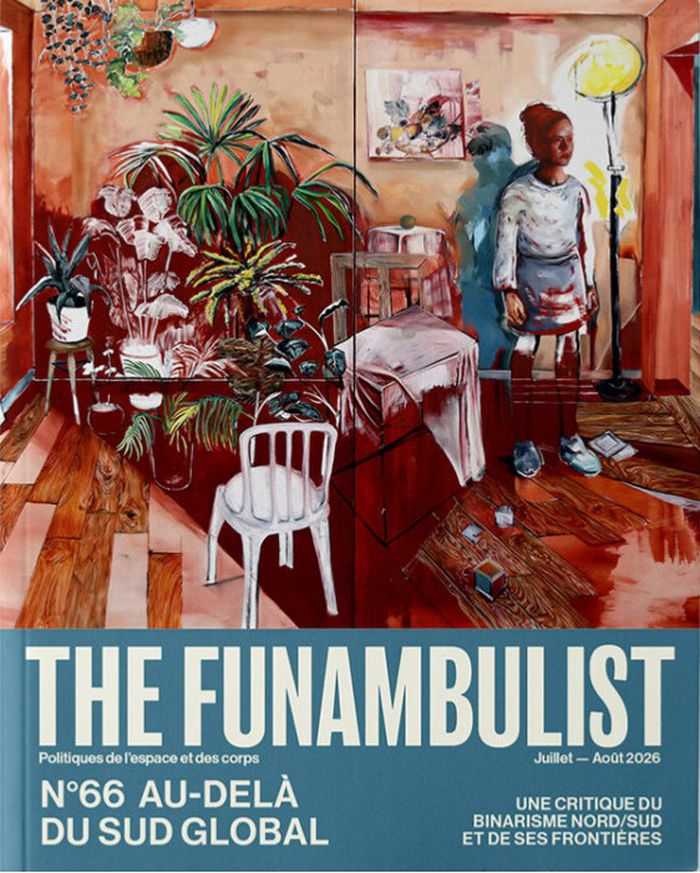
Dans ce numéro, le Funambuliste propose une critique de leur propre cadre de production des connaissances. Ils ont constaté à quel point le concept de « Sud global » s’est transformé en un terme commode permettant de désigner sans plus de réflexion les deux tiers de la superficie terrestre et 90 % de la population mondiale, effaçant ainsi les millions de spécificités qui caractérisent ce regroupement. Il incarne également souvent une entité qui n’existe qu’en dépendance de son alter ego, le Nord global. À ce titre, il nie toute forme d’agentivité aux peuples désignés comme « le Sud » indépendamment de leur relation au « Nord », comme nous l’examinons dans le cas de la guerre dans l’est du Congo (Josaphat Musamba). Le binarisme Sud/Nord désigne également les frontières comme des lignes (plutôt que comme des régimes opérant de part et d’autre de ces lignes) et essentialise la différence entre les deux côtés. Peut-on appréhender la noirceur et l’autochtonie en Abya Yala sans une scission fondamentale au niveau de la ligne coloniale qui sépare l’Amérique du Nord de l’Amérique centrale et du Sud (Ashley Ngozi Agbasoga) ? L’histoire de la Corée du 20e siècle peut-elle nous montrer que la ligne qui sépare actuellement le Nord (généralement présenté comme faisant partie du Sud global) et le Sud (généralement présenté comme faisant partie du Nord global) illustre particulièrement le manque de complexité du cadre Nord/Sud (Lina Eunji Chang et Andrei-Sergei Kim) ? Quel type de violence coloniale le Mouvement des pays non alignés rend-il invisible en Papouasie occidentale (Quito Swan), au Cachemire (Choakkeladd) ou au Sahara occidental (Buhari Lehbib) et, à l’inverse, quel type de solidarités a-t-il permis depuis la Yougoslavie (Dubravka Sekulic et Sanja Horvatincic) ? Et, surtout, comment pouvons-nous rendre justice à la complexité de nos politiques en étant capables de concilier deux vérités contradictoires, comme nous le rappelle Micol Meghnagi dans le contexte de la Libye de Kadhafi et du panarabisme ? Quant à l’illustration de couverture, il s’agit d’une peinture de l’artiste parisienne guyanaise Johanna Mirabel.
The Funambulist 66 : Au-delà du sud global
Actions:
Price:
$16.95
(available in store)
Summary:
Dans ce numéro, le Funambuliste propose une critique de leur propre cadre de production des connaissances. Ils ont constaté à quel point le concept de « Sud global » s’est transformé en un terme commode permettant de désigner sans plus de réflexion les deux tiers de la superficie terrestre et 90 % de la population mondiale, effaçant ainsi les millions de spécificités qui caractérisent ce regroupement. Il incarne également souvent une entité qui n’existe qu’en dépendance de son alter ego, le Nord global. À ce titre, il nie toute forme d’agentivité aux peuples désignés comme « le Sud » indépendamment de leur relation au « Nord », comme nous l’examinons dans le cas de la guerre dans l’est du Congo (Josaphat Musamba). Le binarisme Sud/Nord désigne également les frontières comme des lignes (plutôt que comme des régimes opérant de part et d’autre de ces lignes) et essentialise la différence entre les deux côtés. Peut-on appréhender la noirceur et l’autochtonie en Abya Yala sans une scission fondamentale au niveau de la ligne coloniale qui sépare l’Amérique du Nord de l’Amérique centrale et du Sud (Ashley Ngozi Agbasoga) ? L’histoire de la Corée du 20e siècle peut-elle nous montrer que la ligne qui sépare actuellement le Nord (généralement présenté comme faisant partie du Sud global) et le Sud (généralement présenté comme faisant partie du Nord global) illustre particulièrement le manque de complexité du cadre Nord/Sud (Lina Eunji Chang et Andrei-Sergei Kim) ? Quel type de violence coloniale le Mouvement des pays non alignés rend-il invisible en Papouasie occidentale (Quito Swan), au Cachemire (Choakkeladd) ou au Sahara occidental (Buhari Lehbib) et, à l’inverse, quel type de solidarités a-t-il permis depuis la Yougoslavie (Dubravka Sekulic et Sanja Horvatincic) ? Et, surtout, comment pouvons-nous rendre justice à la complexité de nos politiques en étant capables de concilier deux vérités contradictoires, comme nous le rappelle Micol Meghnagi dans le contexte de la Libye de Kadhafi et du panarabisme ? Quant à l’illustration de couverture, il s’agit d’une peinture de l’artiste parisienne guyanaise Johanna Mirabel.
Form:
journals and magazines
journals and magazines
Publication:
July 2026
July 2026
Subject:
Magazines
Magazines
Form:
books
books
Price:
$32.95
(available to order)
Summary:
A billion people, roughly half of all city dwellers in the developing world, live in squatter settlements. The most famous of these settlements are the favelas of Rio de Janeiro, which have existed for more than half a century and continue to outpace the rest of the city in growth. Janice Perlman's "The Myth of Marginality" was the first in-depth account of life in the(...)
$32.95
(available to order)
Summary:
A billion people, roughly half of all city dwellers in the developing world, live in squatter settlements. The most famous of these settlements are the favelas of Rio de Janeiro, which have existed for more than half a century and continue to outpace the rest of the city in growth. Janice Perlman's "The Myth of Marginality" was the first in-depth account of life in the(...)
Title:
Favela : four decades of living on the edge in Rio de Janeiro
Actions:
Price:
$32.95
(available to order)
Summary:
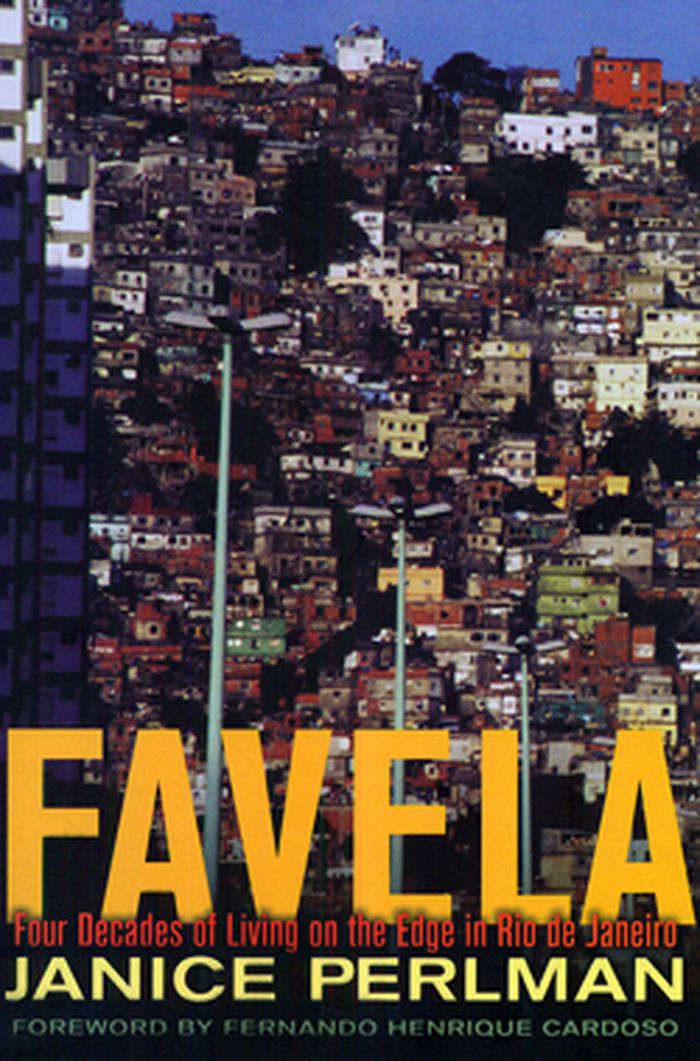
A billion people, roughly half of all city dwellers in the developing world, live in squatter settlements. The most famous of these settlements are the favelas of Rio de Janeiro, which have existed for more than half a century and continue to outpace the rest of the city in growth. Janice Perlman's "The Myth of Marginality" was the first in-depth account of life in the favelas, and it is considered one of the most important books in global urban studies in the last 30 years. Now, in "Favela", Perlman carries that story forward to the present. Re-interviewing many longtime favela residents whom she had first met in 1969 - as well as their children and grandchildren - Perlman offers the only long-term perspective available on the favelados as they struggle for a better life. Perlman discovers that much has changed in three decades, but while educational levels have risen, democracy has replaced dictatorship, and material conditions have improved, many residents feel marginalized more than ever. The greatest change is the explosion of drug and arms trade and the high incidence of fatal violence that has resulted. Almost one in five people report that a member of their family has been a victim of homicide. Yet the greatest challenge of all is job creation - decent work for decent pay. If unemployment and under-paid employment are not addressed, she argues, all other efforts - from housing to policing to community development - will fail to resolve the fundamental issues. A revealing study of the giant slums of Rio de Janeiro and of the vibrant communities of migrants who have risked everything to come to the city to provide more opportunities for their children, this book yields insights that apply to the entire global South, from Mexico City to Cairo, and from Mumbai to Lagos. Favela offers a long-term look at one of the great challenges facing the modern world - perhaps the major challenge of the twenty-first century.
Favela : four decades of living on the edge in Rio de Janeiro
Actions:
Price:
$32.95
(available to order)
Summary:
A billion people, roughly half of all city dwellers in the developing world, live in squatter settlements. The most famous of these settlements are the favelas of Rio de Janeiro, which have existed for more than half a century and continue to outpace the rest of the city in growth. Janice Perlman's "The Myth of Marginality" was the first in-depth account of life in the favelas, and it is considered one of the most important books in global urban studies in the last 30 years. Now, in "Favela", Perlman carries that story forward to the present. Re-interviewing many longtime favela residents whom she had first met in 1969 - as well as their children and grandchildren - Perlman offers the only long-term perspective available on the favelados as they struggle for a better life. Perlman discovers that much has changed in three decades, but while educational levels have risen, democracy has replaced dictatorship, and material conditions have improved, many residents feel marginalized more than ever. The greatest change is the explosion of drug and arms trade and the high incidence of fatal violence that has resulted. Almost one in five people report that a member of their family has been a victim of homicide. Yet the greatest challenge of all is job creation - decent work for decent pay. If unemployment and under-paid employment are not addressed, she argues, all other efforts - from housing to policing to community development - will fail to resolve the fundamental issues. A revealing study of the giant slums of Rio de Janeiro and of the vibrant communities of migrants who have risked everything to come to the city to provide more opportunities for their children, this book yields insights that apply to the entire global South, from Mexico City to Cairo, and from Mumbai to Lagos. Favela offers a long-term look at one of the great challenges facing the modern world - perhaps the major challenge of the twenty-first century.
Form:
books
books
Publication:
June 2010
June 2010
Subject:
Urban Theory
Urban Theory
Form:
books
books
Actions:
Price:
$59.95
(available to order)
Summary:
The book reproduces a series of the collages made by David Wild. Their subject is modern architecture in the first half of the twentieth century: in the Netherlands, in Russia, and in the work of Le Corbusier. The method of the book is to show a collage on a right-hand page; then on the facing page is a (...)
$59.95
(available to order)
Summary:
The book reproduces a series of the collages made by David Wild. Their subject is modern architecture in the first half of the twentieth century: in the Netherlands, in Russia, and in the work of Le Corbusier. The method of the book is to show a collage on a right-hand page; then on the facing page is a (...)
Title:
Fragments of utopia: collage reflections of heroic modernism
Actions:
Price:
$59.95
(available to order)
Summary:
The book reproduces a series of the collages made by David Wild. Their subject is modern architecture in the first half of the twentieth century: in the Netherlands, in Russia, and in the work of Le Corbusier. The method of the book is to show a collage on a right-hand page; then on the facing page is a prose commentary by Wild and supporting smaller images. Introducing the book, David Wild explains that the impulse for this work lies in the aftermath of a fire in his house: his scorched books lent themselves to collage. He goes on to sketch the cultural-political climate in Britain over the last 40 years: the backdrop to his work as an architect and (less directly) to this book. In the opening section on the Netherlands, the leading theme is an architecture of social equity and continuity. Rooted in old cultural traditions, and in the particular ‘football-pitch’ landscape of the country, modern architecture could realise some of its dreams in everyday buildings. Postage stamps play an active part in many of the book’s collages, and especially in this section: the design of stamps flourished in the Netherlands, through the enlightened patronage of the Dutch post office — with several architects designing stamps too. Politics and history come to prominence in the Russian section, as a motivating force in the work of the early 1920s, and then as a heavy burden — with the onset of totalitarian control and repression. At the centre of the discussion here is the architecture of constructivism: formally brilliant, but with a clear social programme. Flight and the exploration of space are recurring topics in this section, as another and particularly Russian dimension of utopian striving The work of Le Corbusier, in Europe, North and South America, Russia and India, is treated in the third section. Le Corbusier is presented as a brilliant artist, a master architect of the greatest skill and the greatest ambition — and without scruple in pursuing commissions. The images and text follow him into the years after the Second World War, culminating in the work in India. Here there is a vision of another kind of politics, of co-operation and non-violence.
Fragments of utopia: collage reflections of heroic modernism
Actions:
Price:
$59.95
(available to order)
Summary:
The book reproduces a series of the collages made by David Wild. Their subject is modern architecture in the first half of the twentieth century: in the Netherlands, in Russia, and in the work of Le Corbusier. The method of the book is to show a collage on a right-hand page; then on the facing page is a prose commentary by Wild and supporting smaller images. Introducing the book, David Wild explains that the impulse for this work lies in the aftermath of a fire in his house: his scorched books lent themselves to collage. He goes on to sketch the cultural-political climate in Britain over the last 40 years: the backdrop to his work as an architect and (less directly) to this book. In the opening section on the Netherlands, the leading theme is an architecture of social equity and continuity. Rooted in old cultural traditions, and in the particular ‘football-pitch’ landscape of the country, modern architecture could realise some of its dreams in everyday buildings. Postage stamps play an active part in many of the book’s collages, and especially in this section: the design of stamps flourished in the Netherlands, through the enlightened patronage of the Dutch post office — with several architects designing stamps too. Politics and history come to prominence in the Russian section, as a motivating force in the work of the early 1920s, and then as a heavy burden — with the onset of totalitarian control and repression. At the centre of the discussion here is the architecture of constructivism: formally brilliant, but with a clear social programme. Flight and the exploration of space are recurring topics in this section, as another and particularly Russian dimension of utopian striving The work of Le Corbusier, in Europe, North and South America, Russia and India, is treated in the third section. Le Corbusier is presented as a brilliant artist, a master architect of the greatest skill and the greatest ambition — and without scruple in pursuing commissions. The images and text follow him into the years after the Second World War, culminating in the work in India. Here there is a vision of another kind of politics, of co-operation and non-violence.
Form:
books
books
Publication:
January 1900, London
January 1900, London
Subject:
Graphic Designers, Monographs
Graphic Designers, Monographs


