


13794 Results
Form:
books
books
Actions:
Price:
$37.95
(available to order)
Summary:
Cet ouvrage propose quatorze portraits et réflexions sur des architectes de renom que l'auteur a eu le privilège de rencontrer et de côtoyer. Mêlant les réflexions générales sur leurs œuvres à ses souvenirs et impressions personnelles, il offre un livre à la fois savant et vivant, construit et habité, qui restitue les débats, visions et réalisations des années 1952 à 2005.
$37.95
(available to order)
Summary:
Cet ouvrage propose quatorze portraits et réflexions sur des architectes de renom que l'auteur a eu le privilège de rencontrer et de côtoyer. Mêlant les réflexions générales sur leurs œuvres à ses souvenirs et impressions personnelles, il offre un livre à la fois savant et vivant, construit et habité, qui restitue les débats, visions et réalisations des années 1952 à 2005.
Title:
Réfléchissements : rencontres d'architectes
Actions:
Price:
$37.95
(available to order)
Summary:
Cet ouvrage propose quatorze portraits et réflexions sur des architectes de renom que l'auteur a eu le privilège de rencontrer et de côtoyer. Mêlant les réflexions générales sur leurs œuvres à ses souvenirs et impressions personnelles, il offre un livre à la fois savant et vivant, construit et habité, qui restitue les débats, visions et réalisations des années 1952 à 2005.
Réfléchissements : rencontres d'architectes
Actions:
Price:
$37.95
(available to order)
Summary:
Cet ouvrage propose quatorze portraits et réflexions sur des architectes de renom que l'auteur a eu le privilège de rencontrer et de côtoyer. Mêlant les réflexions générales sur leurs œuvres à ses souvenirs et impressions personnelles, il offre un livre à la fois savant et vivant, construit et habité, qui restitue les débats, visions et réalisations des années 1952 à 2005.
Form:
books
books
Publication:
November 2006, Gollion
November 2006, Gollion
Subject:
Architectural Theory
Architectural Theory
Form:
books
books
Actions:
Price:
$54.95
(available in store)
Summary:
Cet ouvrage exauce enfin le vœu de Le Corbusier de voir éditées les six conférences qu'il prononça à Rio de Janeiro en août 1936. Après les dix conférences de Buenos Aires, en 1929, publiées dans Précisions sur un état présent de l'architecture et de l'urbanisme (1930), cet inédit est le deuxième recueil de conférences de l'architecte. Et, comme ce fut le cas à Alger,(...)
$54.95
(available in store)
Summary:
Cet ouvrage exauce enfin le vœu de Le Corbusier de voir éditées les six conférences qu'il prononça à Rio de Janeiro en août 1936. Après les dix conférences de Buenos Aires, en 1929, publiées dans Précisions sur un état présent de l'architecture et de l'urbanisme (1930), cet inédit est le deuxième recueil de conférences de l'architecte. Et, comme ce fut le cas à Alger,(...)
Title:
Le Corbusier : conférences de Rio - 1936
Actions:
Price:
$54.95
(available in store)
Summary:
Cet ouvrage exauce enfin le vœu de Le Corbusier de voir éditées les six conférences qu'il prononça à Rio de Janeiro en août 1936. Après les dix conférences de Buenos Aires, en 1929, publiées dans Précisions sur un état présent de l'architecture et de l'urbanisme (1930), cet inédit est le deuxième recueil de conférences de l'architecte. Et, comme ce fut le cas à Alger, Moscou, Bruxelles, Athènes, Paris, Stockholm, Rome, Buenos Aires, São Paulo ou Montevideo, ces conférences jouèrent un rôle central dans la propagation de ses idées sur l'architecture et l'urbanisme. L'importance de ce recueil tient au fait qu'il permet de mesurer le chemin parcouru par Le Corbusier entre 1929 et 1936, l'évolution de sa " technique " de conférencier - comme il la nomme - et celle de ses idées au cours de ces années particulièrement critiques pour l'Europe et pour le monde. Enfin, à travers les propos transcrits, la reproduction des dessins et des projections, on peut non seulement suivre la manière dont Le Corbusier transmettait son message, mais aussi reconstituer le temps et le rythme des conférences, les commentaires qu'il improvisait en restituent l'ambiance et les moments d'intensité.
Le Corbusier : conférences de Rio - 1936
Actions:
Price:
$54.95
(available in store)
Summary:
Cet ouvrage exauce enfin le vœu de Le Corbusier de voir éditées les six conférences qu'il prononça à Rio de Janeiro en août 1936. Après les dix conférences de Buenos Aires, en 1929, publiées dans Précisions sur un état présent de l'architecture et de l'urbanisme (1930), cet inédit est le deuxième recueil de conférences de l'architecte. Et, comme ce fut le cas à Alger, Moscou, Bruxelles, Athènes, Paris, Stockholm, Rome, Buenos Aires, São Paulo ou Montevideo, ces conférences jouèrent un rôle central dans la propagation de ses idées sur l'architecture et l'urbanisme. L'importance de ce recueil tient au fait qu'il permet de mesurer le chemin parcouru par Le Corbusier entre 1929 et 1936, l'évolution de sa " technique " de conférencier - comme il la nomme - et celle de ses idées au cours de ces années particulièrement critiques pour l'Europe et pour le monde. Enfin, à travers les propos transcrits, la reproduction des dessins et des projections, on peut non seulement suivre la manière dont Le Corbusier transmettait son message, mais aussi reconstituer le temps et le rythme des conférences, les commentaires qu'il improvisait en restituent l'ambiance et les moments d'intensité.
Form:
books
books
Publication:
September 2006, Paris
September 2006, Paris
Subject:
Architectural Theory
Architectural Theory
Form:
books
books
Actions:
Price:
$59.95
(available to order)
Summary:
This anthology brings together the best papers from the first ten years of "The Journal of Architecture", published together for the first time in a single volume. Covering a wide range of topics of central importance to architecture today, the papers also address the related topics to which architecture and architectural studies are inextricably linked. The invited(...)
$59.95
(available to order)
Summary:
This anthology brings together the best papers from the first ten years of "The Journal of Architecture", published together for the first time in a single volume. Covering a wide range of topics of central importance to architecture today, the papers also address the related topics to which architecture and architectural studies are inextricably linked. The invited(...)
Subject:
Architectural Theory
Architectural Theory
Publication:
August 2006, London, New York
August 2006, London, New York
Title:
Narrating architecture : a retrospective anthology
Actions:
Price:
$59.95
(available to order)
Summary:
This anthology brings together the best papers from the first ten years of "The Journal of Architecture", published together for the first time in a single volume. Covering a wide range of topics of central importance to architecture today, the papers also address the related topics to which architecture and architectural studies are inextricably linked. The invited authors draw on sociology, philosophy, cultural studies and the sciences to round out the collection and highlight the breadth and vitality of modern architectural studies, offering perspectives from different disciplines as well as different corners of the globe.
Narrating architecture : a retrospective anthology
Actions:
Price:
$59.95
(available to order)
Summary:
This anthology brings together the best papers from the first ten years of "The Journal of Architecture", published together for the first time in a single volume. Covering a wide range of topics of central importance to architecture today, the papers also address the related topics to which architecture and architectural studies are inextricably linked. The invited authors draw on sociology, philosophy, cultural studies and the sciences to round out the collection and highlight the breadth and vitality of modern architectural studies, offering perspectives from different disciplines as well as different corners of the globe.
Form:
books
books
Publication:
August 2006, London, New York
August 2006, London, New York
Subject:
Architectural Theory
Architectural Theory
Form:
books
books
Title:
Inquiry by design
Inquiry by design
Actions:
Price:
$37.95
(available to order)
Summary:
INQUIRY BY DESIGN lays out fundamental theoretical approaches to design and research as well as practical research methods applicable to planning, programming, and evaluating physical environments. It systematically describes basic methods of research and how to apply them and shows how collaboration between designers and researchers leads to greater design creativity.
$37.95
(available to order)
Summary:
INQUIRY BY DESIGN lays out fundamental theoretical approaches to design and research as well as practical research methods applicable to planning, programming, and evaluating physical environments. It systematically describes basic methods of research and how to apply them and shows how collaboration between designers and researchers leads to greater design creativity.
Title:
Inquiry by design
Actions:
Price:
$37.95
(available to order)
Summary:
INQUIRY BY DESIGN lays out fundamental theoretical approaches to design and research as well as practical research methods applicable to planning, programming, and evaluating physical environments. It systematically describes basic methods of research and how to apply them and shows how collaboration between designers and researchers leads to greater design creativity.
Inquiry by design
Actions:
Price:
$37.95
(available to order)
Summary:
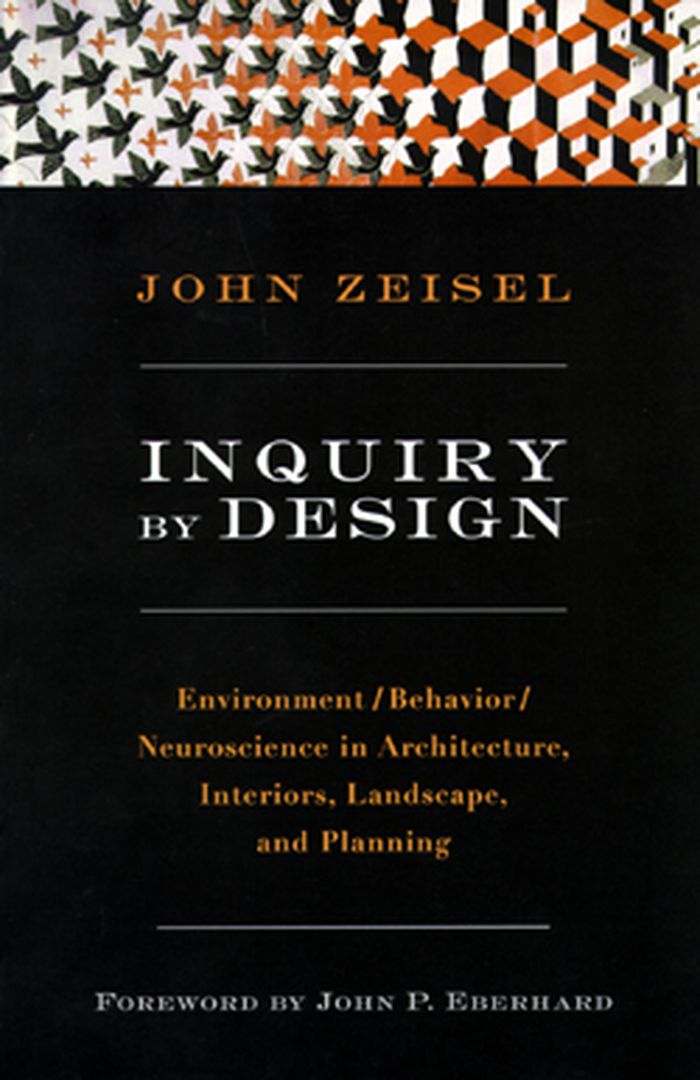
INQUIRY BY DESIGN lays out fundamental theoretical approaches to design and research as well as practical research methods applicable to planning, programming, and evaluating physical environments. It systematically describes basic methods of research and how to apply them and shows how collaboration between designers and researchers leads to greater design creativity.
Form:
books
books
Publication:
January 2006, New York, London
January 2006, New York, London
Subject:
Design Theory
Design Theory
Form:
books
books
Actions:
Price:
$43.95
(available to order)
Summary:
The contributors announce the demise of the city of broad shoulders and the transformation of its physical, social, cultural, and economic institutions into a new Chicago. In this book, twenty scholars, journalists, and activists, relying on data from the 2000 census and many years of direct experience with the city, identify five converging forces in American(...)
$43.95
(available to order)
Summary:
The contributors announce the demise of the city of broad shoulders and the transformation of its physical, social, cultural, and economic institutions into a new Chicago. In this book, twenty scholars, journalists, and activists, relying on data from the 2000 census and many years of direct experience with the city, identify five converging forces in American(...)
Subject:
Urban Theory
Urban Theory
Publication:
September 2006, Philadelphia
September 2006, Philadelphia
Title:
The new Chicago : a social and cultural analysis
Actions:
Price:
$43.95
(available to order)
Summary:
The contributors announce the demise of the city of broad shoulders and the transformation of its physical, social, cultural, and economic institutions into a new Chicago. In this book, twenty scholars, journalists, and activists, relying on data from the 2000 census and many years of direct experience with the city, identify five converging forces in American urbanization which are reshaping this storied metropolis. The twenty-six essays included here analyze Chicago by way of globalization and its impact on the contemporary city; economic restructuring; the evolution of machine-style politics into managerial politics; physical transformations of the central city and its suburbs; and race relations in a multicultural era. In elaborating on the effects of these broad forces, contributors detail the role of eight significant racial, ethnic, and immigrant communities in shaping the character of the new Chicago and present ten case studies of innovative governmental, grassroots, and civic action. Edited by John P. Koval, Larry Bennett, Michael I. J. Bennett, Fassil Demissie, Roberta Garner and Kiljoong Kim.
The new Chicago : a social and cultural analysis
Actions:
Price:
$43.95
(available to order)
Summary:
The contributors announce the demise of the city of broad shoulders and the transformation of its physical, social, cultural, and economic institutions into a new Chicago. In this book, twenty scholars, journalists, and activists, relying on data from the 2000 census and many years of direct experience with the city, identify five converging forces in American urbanization which are reshaping this storied metropolis. The twenty-six essays included here analyze Chicago by way of globalization and its impact on the contemporary city; economic restructuring; the evolution of machine-style politics into managerial politics; physical transformations of the central city and its suburbs; and race relations in a multicultural era. In elaborating on the effects of these broad forces, contributors detail the role of eight significant racial, ethnic, and immigrant communities in shaping the character of the new Chicago and present ten case studies of innovative governmental, grassroots, and civic action. Edited by John P. Koval, Larry Bennett, Michael I. J. Bennett, Fassil Demissie, Roberta Garner and Kiljoong Kim.
Form:
books
books
Publication:
September 2006, Philadelphia
September 2006, Philadelphia
Subject:
Urban Theory
Urban Theory
Form:
books
books
Actions:
Price:
$56.50
(available to order)
Summary:
The Housing Divide examines the generational patterns in New York City's housing market and neighborhoods along the lines of race and ethnicity. The book provides an in-depth analysis of many immigrant groups in New York, especially providing an understanding of the opportunities and discriminatory practices at work from one generation to the next. Through a careful read(...)
$56.50
(available to order)
Summary:
The Housing Divide examines the generational patterns in New York City's housing market and neighborhoods along the lines of race and ethnicity. The book provides an in-depth analysis of many immigrant groups in New York, especially providing an understanding of the opportunities and discriminatory practices at work from one generation to the next. Through a careful read(...)
Subject:
Urban Theory
Urban Theory
Publication:
December 2006, New York / London
December 2006, New York / London
Title:
The housing divide : how generations of immigrants fare in New York's housing market
Actions:
Price:
$56.50
(available to order)
Summary:
The Housing Divide examines the generational patterns in New York City's housing market and neighborhoods along the lines of race and ethnicity. The book provides an in-depth analysis of many immigrant groups in New York, especially providing an understanding of the opportunities and discriminatory practices at work from one generation to the next. Through a careful read of such factors as home ownership, housing quality, and neighborhood rates of crime, welfare enrollment, teenage pregnancy, and educational achievement, Emily Rosenbaum and Samantha Friedman provide a detailed portrait of neighborhood life and socio-economic status for the immigrants of New York. The book paints an important, if disturbing, picture. The authors argue that not only are Blacks—regardless of generation—disadvantaged relative to members of other racial/ethnic groups in their ability to obtain housing in high-quality neighborhoods, but that housing and neighborhood conditions actually decline over generations. Rosenbaum and Friedman's findings suggest that the future of racial inequality in this country will increasingly isolate Blacks from all other groups. In other words, the "color line" may be shifting from a line separating Blacks from Whites to one separating Blacks from all non-Blacks.
The housing divide : how generations of immigrants fare in New York's housing market
Actions:
Price:
$56.50
(available to order)
Summary:
The Housing Divide examines the generational patterns in New York City's housing market and neighborhoods along the lines of race and ethnicity. The book provides an in-depth analysis of many immigrant groups in New York, especially providing an understanding of the opportunities and discriminatory practices at work from one generation to the next. Through a careful read of such factors as home ownership, housing quality, and neighborhood rates of crime, welfare enrollment, teenage pregnancy, and educational achievement, Emily Rosenbaum and Samantha Friedman provide a detailed portrait of neighborhood life and socio-economic status for the immigrants of New York. The book paints an important, if disturbing, picture. The authors argue that not only are Blacks—regardless of generation—disadvantaged relative to members of other racial/ethnic groups in their ability to obtain housing in high-quality neighborhoods, but that housing and neighborhood conditions actually decline over generations. Rosenbaum and Friedman's findings suggest that the future of racial inequality in this country will increasingly isolate Blacks from all other groups. In other words, the "color line" may be shifting from a line separating Blacks from Whites to one separating Blacks from all non-Blacks.
Form:
books
books
Publication:
December 2006, New York / London
December 2006, New York / London
Subject:
Urban Theory
Urban Theory
Form:
books
books
Title:
On touching - Jean-Luc Nancy
On touching - Jean-Luc Nancy
Actions:
Price:
$25.95
(available to order)
Summary:
Using the philosophy of Jean-Luc Nancy as an anchoring point, Jacques Derrida in this book conducts a profound review of the philosophy of the sense of touch, from Plato and Aristotle to Jean-Luc Nancy, whose ground-breaking book Corpus he discusses in detail. Emmanuel Levinas, Maurice Merleau-Ponty, Edmund Husserl, Didier Franck, Martin Heidegger, Francoise Dastur, and(...)
$25.95
(available to order)
Summary:
Using the philosophy of Jean-Luc Nancy as an anchoring point, Jacques Derrida in this book conducts a profound review of the philosophy of the sense of touch, from Plato and Aristotle to Jean-Luc Nancy, whose ground-breaking book Corpus he discusses in detail. Emmanuel Levinas, Maurice Merleau-Ponty, Edmund Husserl, Didier Franck, Martin Heidegger, Francoise Dastur, and(...)
Title:
On touching - Jean-Luc Nancy
Actions:
Price:
$25.95
(available to order)
Summary:
Using the philosophy of Jean-Luc Nancy as an anchoring point, Jacques Derrida in this book conducts a profound review of the philosophy of the sense of touch, from Plato and Aristotle to Jean-Luc Nancy, whose ground-breaking book Corpus he discusses in detail. Emmanuel Levinas, Maurice Merleau-Ponty, Edmund Husserl, Didier Franck, Martin Heidegger, Francoise Dastur, and Jean-Louis Chrétien are discussed, as are René Descartes, Diderot, Maine de Biran, Félix Ravaisson, Immanuel Kant, Sigmund Freud, and others. The scope of Derrida’s deliberations makes this book a virtual encyclopedia of the philosophy of touch (and the body). Derrida gives special consideration to the thinking of touch in Christianity and, in discussing Jean-Luc Nancy’s essay “Deconstruction of Christianity,” devotes a section of the book to the sense of touch in the Gospels. Another section concentrates on “the flesh,” as treated by Merleau-Ponty and others in his wake. Derrida’s critique of intuitionism, notably in the phenomenological tradition, is one of the guiding threads of the book.
On touching - Jean-Luc Nancy
Actions:
Price:
$25.95
(available to order)
Summary:
Using the philosophy of Jean-Luc Nancy as an anchoring point, Jacques Derrida in this book conducts a profound review of the philosophy of the sense of touch, from Plato and Aristotle to Jean-Luc Nancy, whose ground-breaking book Corpus he discusses in detail. Emmanuel Levinas, Maurice Merleau-Ponty, Edmund Husserl, Didier Franck, Martin Heidegger, Francoise Dastur, and Jean-Louis Chrétien are discussed, as are René Descartes, Diderot, Maine de Biran, Félix Ravaisson, Immanuel Kant, Sigmund Freud, and others. The scope of Derrida’s deliberations makes this book a virtual encyclopedia of the philosophy of touch (and the body). Derrida gives special consideration to the thinking of touch in Christianity and, in discussing Jean-Luc Nancy’s essay “Deconstruction of Christianity,” devotes a section of the book to the sense of touch in the Gospels. Another section concentrates on “the flesh,” as treated by Merleau-Ponty and others in his wake. Derrida’s critique of intuitionism, notably in the phenomenological tradition, is one of the guiding threads of the book.
Form:
books
books
Publication:
January 2004, Stanford
January 2004, Stanford
Subject:
Critical Theory
Critical Theory
Form:
books
books
Actions:
Price:
$28.95
(available to order)
Summary:
The shift in the ideological winds toward a "free-market" economy has brought profound effects in urban areas. "The neoliberal city" presents an overview of the effect of these changes on today's cities. The term "neoliberalism" was originally used in reference to a set of practices that first-world institutions like the IMF and World Bank impose on third-world countries(...)
$28.95
(available to order)
Summary:
The shift in the ideological winds toward a "free-market" economy has brought profound effects in urban areas. "The neoliberal city" presents an overview of the effect of these changes on today's cities. The term "neoliberalism" was originally used in reference to a set of practices that first-world institutions like the IMF and World Bank impose on third-world countries(...)
Title:
The neoliberal city : governance, ideology, and development in american urbanism
Actions:
Price:
$28.95
(available to order)
Summary:
The shift in the ideological winds toward a "free-market" economy has brought profound effects in urban areas. "The neoliberal city" presents an overview of the effect of these changes on today's cities. The term "neoliberalism" was originally used in reference to a set of practices that first-world institutions like the IMF and World Bank impose on third-world countries and cities. The support of unimpeded trade and individual freedoms and the discouragement of state regulation and social spending are the putative centerpieces of this vision. More and more, though, people have come to recognize that first-world cities are undergoing the same processes. In "The neoliberal city", Jason Hackworth argues that neoliberal policies are in fact having a profound effect on the nature and direction of urbanization in the United States and other wealthy countries, and that much can be learned from studying its effect. He explores the impact that neoliberalism has had on three aspects of urbanization in the United States: governance, urban form, and social movements. The American inner city is seen as a crucial battle zone for the wider neoliberal transition primarily because it embodies neoliberalism's antithesis, Keynesian egalitarian liberalism. Focusing on issues such as gentrification in New York City; public-housing policy in New York, Chicago, and Seattle; downtown redevelopment in Phoenix; and urban-landscape change in New Brunswick, N.J., Hackworth shows us how material and symbolic changes to institutions, neighborhoods, and entire urban regions can be traced in part to the rise of neoliberalism.
The neoliberal city : governance, ideology, and development in american urbanism
Actions:
Price:
$28.95
(available to order)
Summary:
The shift in the ideological winds toward a "free-market" economy has brought profound effects in urban areas. "The neoliberal city" presents an overview of the effect of these changes on today's cities. The term "neoliberalism" was originally used in reference to a set of practices that first-world institutions like the IMF and World Bank impose on third-world countries and cities. The support of unimpeded trade and individual freedoms and the discouragement of state regulation and social spending are the putative centerpieces of this vision. More and more, though, people have come to recognize that first-world cities are undergoing the same processes. In "The neoliberal city", Jason Hackworth argues that neoliberal policies are in fact having a profound effect on the nature and direction of urbanization in the United States and other wealthy countries, and that much can be learned from studying its effect. He explores the impact that neoliberalism has had on three aspects of urbanization in the United States: governance, urban form, and social movements. The American inner city is seen as a crucial battle zone for the wider neoliberal transition primarily because it embodies neoliberalism's antithesis, Keynesian egalitarian liberalism. Focusing on issues such as gentrification in New York City; public-housing policy in New York, Chicago, and Seattle; downtown redevelopment in Phoenix; and urban-landscape change in New Brunswick, N.J., Hackworth shows us how material and symbolic changes to institutions, neighborhoods, and entire urban regions can be traced in part to the rise of neoliberalism.
Form:
books
books
Publication:
December 2006, Ithaca, London
December 2006, Ithaca, London
Subject:
Urban Theory
Urban Theory
Form:
books
books
Actions:
Price:
$49.95
(available to order)
Summary:
Descartes believed that his analytic model applied to all fields of research and that all branches of science lead to truth. His many analogies with literature and art notwithstanding, Descartes offers an entry into knowledge that fails nevertheless to take into account how in the seventeenth century Dutch painters such as Vermeer similarly order a view of the world by(...)
$49.95
(available to order)
Summary:
Descartes believed that his analytic model applied to all fields of research and that all branches of science lead to truth. His many analogies with literature and art notwithstanding, Descartes offers an entry into knowledge that fails nevertheless to take into account how in the seventeenth century Dutch painters such as Vermeer similarly order a view of the world by(...)
Title:
Tables of knowledge : Descartes in Vermeer's studio
Actions:
Price:
$49.95
(available to order)
Summary:
Descartes believed that his analytic model applied to all fields of research and that all branches of science lead to truth. His many analogies with literature and art notwithstanding, Descartes offers an entry into knowledge that fails nevertheless to take into account how in the seventeenth century Dutch painters such as Vermeer similarly order a view of the world by concentrating on the properties of individual objects. Descartes's celebrated scientific method offers a protocol for conducting experiments; Harriet Stone argues that this method can also serve as a guide for classifying the findings obtained from experiments. Tables of Knowledge shows that Dutch genre paintings and still lifes enact in visual form a process of recording information similar to that of science, with intriguing results. Stone investigates such diverse topics as seventeenth-century advances in optics and the attendant explosion of data about the natural world; the proliferation of material goods in prosperous Dutch homes; and the compelling realism of Golden Age paintings. Vermeer and his contemporaries, she contends, transform a potentially threatening consumerism into the viewer's aesthetic pleasure. The artists' depictions of rooms where framed images and maps adorn walls and where fruit, shimmering glassware, gold pieces, and other precious items are set out on tables constitute an inventory of middle-class life. Appealing to both the eye and the mind, Dutch paintings convey meaning by accentuating the luxury of objects displayed in all their specificity. While not without its voyeuristic, sensual, and even lascivious overtones, art offered the Dutch, who labored under the moral austerity of the Protestant Church, a way of bearing witness to ordinary experience that was unmistakably satisfying and surprisingly Cartesian.
Tables of knowledge : Descartes in Vermeer's studio
Actions:
Price:
$49.95
(available to order)
Summary:
Descartes believed that his analytic model applied to all fields of research and that all branches of science lead to truth. His many analogies with literature and art notwithstanding, Descartes offers an entry into knowledge that fails nevertheless to take into account how in the seventeenth century Dutch painters such as Vermeer similarly order a view of the world by concentrating on the properties of individual objects. Descartes's celebrated scientific method offers a protocol for conducting experiments; Harriet Stone argues that this method can also serve as a guide for classifying the findings obtained from experiments. Tables of Knowledge shows that Dutch genre paintings and still lifes enact in visual form a process of recording information similar to that of science, with intriguing results. Stone investigates such diverse topics as seventeenth-century advances in optics and the attendant explosion of data about the natural world; the proliferation of material goods in prosperous Dutch homes; and the compelling realism of Golden Age paintings. Vermeer and his contemporaries, she contends, transform a potentially threatening consumerism into the viewer's aesthetic pleasure. The artists' depictions of rooms where framed images and maps adorn walls and where fruit, shimmering glassware, gold pieces, and other precious items are set out on tables constitute an inventory of middle-class life. Appealing to both the eye and the mind, Dutch paintings convey meaning by accentuating the luxury of objects displayed in all their specificity. While not without its voyeuristic, sensual, and even lascivious overtones, art offered the Dutch, who labored under the moral austerity of the Protestant Church, a way of bearing witness to ordinary experience that was unmistakably satisfying and surprisingly Cartesian.
Form:
books
books
Publication:
July 2006, Ithaca
July 2006, Ithaca
Subject:
Architectural Theory
Architectural Theory
Form:
books
books

Actions:
Price:
$56.50
(available to order)
Summary:
Landscape ecology focuses on spatial heterogeneity, or the idea that where things are and where they are in relation to other things can have important consequences for a wide range of phenomena. Landscape ecology integrates humans with natural ecosystems and brings a spatial perspective to such fields as natural resource management, conservation, and urban planning.(...)
$56.50
(available to order)
Summary:
Landscape ecology focuses on spatial heterogeneity, or the idea that where things are and where they are in relation to other things can have important consequences for a wide range of phenomena. Landscape ecology integrates humans with natural ecosystems and brings a spatial perspective to such fields as natural resource management, conservation, and urban planning.(...)
Subject:
Landscape Theory
Landscape Theory
Publication:
September 2006, New York / Chichester
September 2006, New York / Chichester
Title:
Foundation papers in landscape ecology
Actions:
Price:
$56.50
(available to order)
Summary:
Landscape ecology focuses on spatial heterogeneity, or the idea that where things are and where they are in relation to other things can have important consequences for a wide range of phenomena. Landscape ecology integrates humans with natural ecosystems and brings a spatial perspective to such fields as natural resource management, conservation, and urban planning. The thirty-seven papers included in this volume present the origins and development of landscape ecology and encompass a variety of perspectives, approaches, and geographies. The editors begin with articles that illuminate the discipline's diverse scientific foundations, such as L. S. Berg's keystone paper outlining a geoecological analysis based on soil science, physical geography, and geology. Next they include selections exemplifying landscape ecologists' growing awareness of spatial pattern, the different ways they incorporated scale into their work, the progression of landscape ecology from a qualitative to a quantitative discipline, and how concepts from landscape ecology have come to permeate ecological research and influence land-use policy, conservation practices, landscape architecture, and geography. Together these articles provide a solid introduction to what is now widely recognized as an important area of research and application that encourages new ways of thinking about natural and human-dominated ecosystems.
Foundation papers in landscape ecology
Actions:
Price:
$56.50
(available to order)
Summary:
Landscape ecology focuses on spatial heterogeneity, or the idea that where things are and where they are in relation to other things can have important consequences for a wide range of phenomena. Landscape ecology integrates humans with natural ecosystems and brings a spatial perspective to such fields as natural resource management, conservation, and urban planning. The thirty-seven papers included in this volume present the origins and development of landscape ecology and encompass a variety of perspectives, approaches, and geographies. The editors begin with articles that illuminate the discipline's diverse scientific foundations, such as L. S. Berg's keystone paper outlining a geoecological analysis based on soil science, physical geography, and geology. Next they include selections exemplifying landscape ecologists' growing awareness of spatial pattern, the different ways they incorporated scale into their work, the progression of landscape ecology from a qualitative to a quantitative discipline, and how concepts from landscape ecology have come to permeate ecological research and influence land-use policy, conservation practices, landscape architecture, and geography. Together these articles provide a solid introduction to what is now widely recognized as an important area of research and application that encourages new ways of thinking about natural and human-dominated ecosystems.
Form:
books
books
Publication:
September 2006, New York / Chichester
September 2006, New York / Chichester
Subject:
Landscape Theory
Landscape Theory


