


13794 Results
Form:
books
books
Price:
$51.50
(available in store)
Summary:
The city of Homs, like so many places in Syria, has suffered mass destruction since the war began in 2011. So far, the architectural response to the crisis has focused on ''cultural heritage'', ancient architecture, and the external displacement of refugees, often neglecting the everyday lives of Syrians and the buildings that make up their homes and communities. In(...)
$51.50
(available in store)
Summary:
The city of Homs, like so many places in Syria, has suffered mass destruction since the war began in 2011. So far, the architectural response to the crisis has focused on ''cultural heritage'', ancient architecture, and the external displacement of refugees, often neglecting the everyday lives of Syrians and the buildings that make up their homes and communities. In(...)
Title:
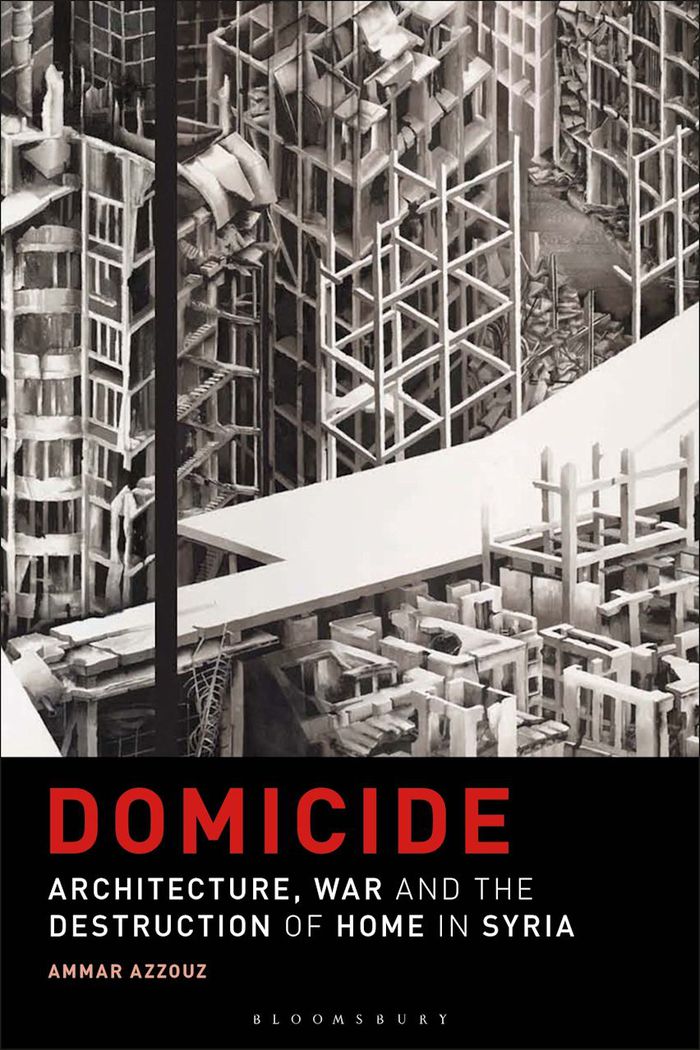
Domicide: Architecture, war and the destruction of home in Syria
Actions:
Price:
$51.50
(available in store)
Summary:
The city of Homs, like so many places in Syria, has suffered mass destruction since the war began in 2011. So far, the architectural response to the crisis has focused on ''cultural heritage'', ancient architecture, and the external displacement of refugees, often neglecting the everyday lives of Syrians and the buildings that make up their homes and communities. In ''Domicide'', Ammar Azzouz uses the notion of the 'home' to address the destruction in cities like Homs, the displacement of Syrian people both externally and internally, and to explore how cities can be rebuilt without causing further damage to the communities that live there. Drawing on interviews with those working in the built environment professions, both inside and outside of Syria, but also Syrians from other backgrounds who have become architects in their own way as they were forced to repair and rebuild their homes by themselves, Domicide offers fresh insight into the role of the architect during time of war, and explores how the future reconstruction of cities should mirror the wants and needs, the traditions and ways of living, of local communities. Focusing on Homs but offering a blueprint for other urban areas of conflict across Syria and the wider world, the book is essential reading for researchers in architecture, urban planning, heritage studies and conflict studies.
Domicide: Architecture, war and the destruction of home in Syria
Actions:
Price:
$51.50
(available in store)
Summary:
The city of Homs, like so many places in Syria, has suffered mass destruction since the war began in 2011. So far, the architectural response to the crisis has focused on ''cultural heritage'', ancient architecture, and the external displacement of refugees, often neglecting the everyday lives of Syrians and the buildings that make up their homes and communities. In ''Domicide'', Ammar Azzouz uses the notion of the 'home' to address the destruction in cities like Homs, the displacement of Syrian people both externally and internally, and to explore how cities can be rebuilt without causing further damage to the communities that live there. Drawing on interviews with those working in the built environment professions, both inside and outside of Syria, but also Syrians from other backgrounds who have become architects in their own way as they were forced to repair and rebuild their homes by themselves, Domicide offers fresh insight into the role of the architect during time of war, and explores how the future reconstruction of cities should mirror the wants and needs, the traditions and ways of living, of local communities. Focusing on Homs but offering a blueprint for other urban areas of conflict across Syria and the wider world, the book is essential reading for researchers in architecture, urban planning, heritage studies and conflict studies.
Form:
books
books
Publication:
January 2025
January 2025
Subject:
Architectural Theory
Architectural Theory
Form:
books
books
Actions:
Price:
$63.00
(available in store)
Summary:
Despite growing calls for global architectural histories, the historiography of modern architecture remains depicted predominantly by Western figures, narratives, and experiences. This publication takes a different approach by uncovering previously overlooked histories and contributions that shaped the Arab world’s modern built environment. It considers projects from the(...)
$63.00
(available in store)
Summary:
Despite growing calls for global architectural histories, the historiography of modern architecture remains depicted predominantly by Western figures, narratives, and experiences. This publication takes a different approach by uncovering previously overlooked histories and contributions that shaped the Arab world’s modern built environment. It considers projects from the(...)
Title:
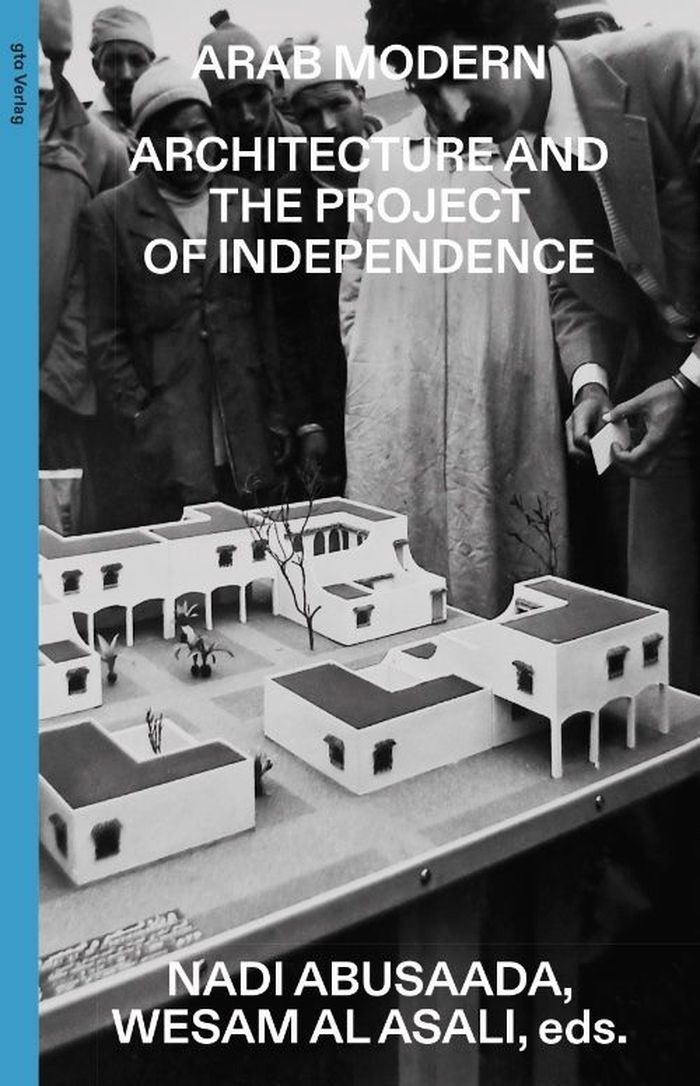
Arab modern: Architecture and the project of independence
Actions:
Price:
$63.00
(available in store)
Summary:
Despite growing calls for global architectural histories, the historiography of modern architecture remains depicted predominantly by Western figures, narratives, and experiences. This publication takes a different approach by uncovering previously overlooked histories and contributions that shaped the Arab world’s modern built environment. It considers projects from the Arabian Gulf, the Levant, and North Africa during a critical moment when several Arab countries were entering a new phases of post-colonial nation-building. From both within and outside the architectural profession, a multifaceted exchange of ideas informed architectural thinking in the wake of independence.
Arab modern: Architecture and the project of independence
Actions:
Price:
$63.00
(available in store)
Summary:
Despite growing calls for global architectural histories, the historiography of modern architecture remains depicted predominantly by Western figures, narratives, and experiences. This publication takes a different approach by uncovering previously overlooked histories and contributions that shaped the Arab world’s modern built environment. It considers projects from the Arabian Gulf, the Levant, and North Africa during a critical moment when several Arab countries were entering a new phases of post-colonial nation-building. From both within and outside the architectural profession, a multifaceted exchange of ideas informed architectural thinking in the wake of independence.
Form:
books
books
Publication:
March 2025
March 2025
Subject:
Architectural Theory
Architectural Theory
Form:
books
books
Actions:
Price:
$48.99
(available in store)
Summary:
From 1970 until 1987, Gilles Deleuze held a weekly seminar at the Experimental University of Vincennes and, starting in 1980, at Saint-Denis. In the spring of 1981, he began a series of eight seminars on painting and its intersections with philosophy. The recorded sessions, newly transcribed and translated into English, are now available in their entirety for the first(...)
$48.99
(available in store)
Summary:
From 1970 until 1987, Gilles Deleuze held a weekly seminar at the Experimental University of Vincennes and, starting in 1980, at Saint-Denis. In the spring of 1981, he began a series of eight seminars on painting and its intersections with philosophy. The recorded sessions, newly transcribed and translated into English, are now available in their entirety for the first(...)
Title:
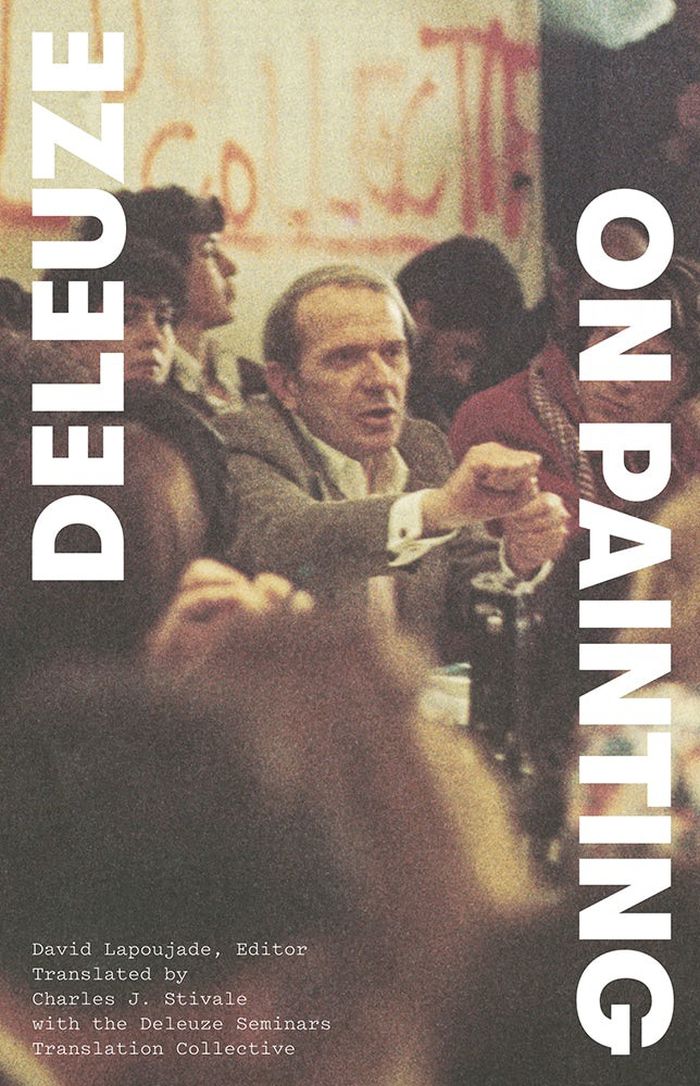
On painting: Courses March - June 1981
Actions:
Price:
$48.99
(available in store)
Summary:
From 1970 until 1987, Gilles Deleuze held a weekly seminar at the Experimental University of Vincennes and, starting in 1980, at Saint-Denis. In the spring of 1981, he began a series of eight seminars on painting and its intersections with philosophy. The recorded sessions, newly transcribed and translated into English, are now available in their entirety for the first time. Extensively annotated by philosopher David Lapoujade, On Painting illuminates Deleuze’s thinking on artistic creation, significantly extending the lines of thought in his book Francis Bacon. Through paintings and writing by Rembrandt, Delacroix, Turner, Cézanne, Van Gogh, Klee, Pollock, and Bacon, Deleuze explores the creative process, from chaos to the pictorial fact. The introduction and use of color feature prominently as Deleuze elaborates on artistic and philosophical concepts such as the diagram, modulation, code, and the digital and the analogical. Through this scrutiny, he raises a series of profound and stimulating questions for his students: How does a painter ward off grayness and attain color? What is a line without contour? Why paint at all?
On painting: Courses March - June 1981
Actions:
Price:
$48.99
(available in store)
Summary:
From 1970 until 1987, Gilles Deleuze held a weekly seminar at the Experimental University of Vincennes and, starting in 1980, at Saint-Denis. In the spring of 1981, he began a series of eight seminars on painting and its intersections with philosophy. The recorded sessions, newly transcribed and translated into English, are now available in their entirety for the first time. Extensively annotated by philosopher David Lapoujade, On Painting illuminates Deleuze’s thinking on artistic creation, significantly extending the lines of thought in his book Francis Bacon. Through paintings and writing by Rembrandt, Delacroix, Turner, Cézanne, Van Gogh, Klee, Pollock, and Bacon, Deleuze explores the creative process, from chaos to the pictorial fact. The introduction and use of color feature prominently as Deleuze elaborates on artistic and philosophical concepts such as the diagram, modulation, code, and the digital and the analogical. Through this scrutiny, he raises a series of profound and stimulating questions for his students: How does a painter ward off grayness and attain color? What is a line without contour? Why paint at all?
Form:
books
books
Publication:
August 2025
August 2025
Subject:
Art Theory
Art Theory
Form:
books
books
Price:
$34.99
(available in store)
Summary:
''Fortress Power'' presents a genealogy of fortification as a material and political technology intent on obstruction, tracing its implementation across battlefields, borders, and urban environments. Drawing on the influential work of philosophers Michel Foucault and Giorgio Agamben, Derek S. Denman places the fortress alongside the archetypes of the prison and the camp,(...)
$34.99
(available in store)
Summary:
''Fortress Power'' presents a genealogy of fortification as a material and political technology intent on obstruction, tracing its implementation across battlefields, borders, and urban environments. Drawing on the influential work of philosophers Michel Foucault and Giorgio Agamben, Derek S. Denman places the fortress alongside the archetypes of the prison and the camp,(...)
Title:
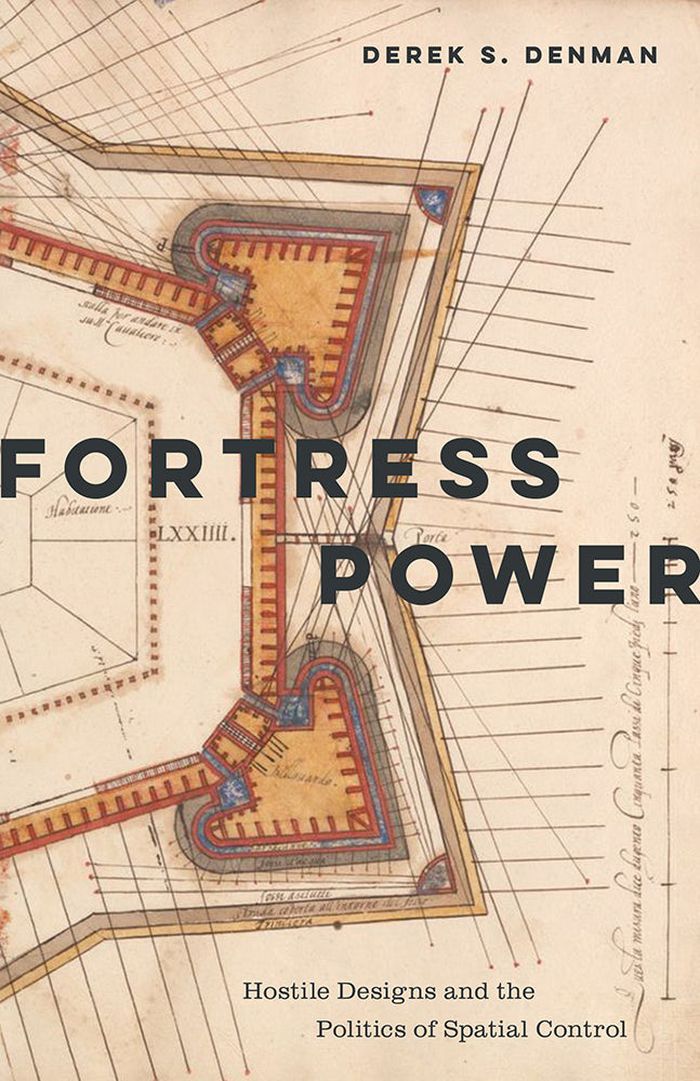
Fortress power: Hostile designs and the politics of spatial control
Actions:
Price:
$34.99
(available in store)
Summary:
''Fortress Power'' presents a genealogy of fortification as a material and political technology intent on obstruction, tracing its implementation across battlefields, borders, and urban environments. Drawing on the influential work of philosophers Michel Foucault and Giorgio Agamben, Derek S. Denman places the fortress alongside the archetypes of the prison and the camp, citing them as paradigmatic of how space is transformed into a tool of domination and control. Focusing on the defensive architecture of bastion fortresses, urban design, and border landscapes, ''Fortress Power'' charts the rise of a form of governance grounded in hostility, extending the scope of its subject from a piece of military construction to a much broader political concept. Detailing how power manifests in everything from city centers to international boundaries, the book analyzes the logic of fortification as it moves through various contexts in the advancement of surveillance, exploitation, warfare, and political authority.
Fortress power: Hostile designs and the politics of spatial control
Actions:
Price:
$34.99
(available in store)
Summary:
''Fortress Power'' presents a genealogy of fortification as a material and political technology intent on obstruction, tracing its implementation across battlefields, borders, and urban environments. Drawing on the influential work of philosophers Michel Foucault and Giorgio Agamben, Derek S. Denman places the fortress alongside the archetypes of the prison and the camp, citing them as paradigmatic of how space is transformed into a tool of domination and control. Focusing on the defensive architecture of bastion fortresses, urban design, and border landscapes, ''Fortress Power'' charts the rise of a form of governance grounded in hostility, extending the scope of its subject from a piece of military construction to a much broader political concept. Detailing how power manifests in everything from city centers to international boundaries, the book analyzes the logic of fortification as it moves through various contexts in the advancement of surveillance, exploitation, warfare, and political authority.
Form:
books
books
Publication:
July 2025
July 2025
Subject:
Architectural Theory
Architectural Theory
Form:
books
books
Actions:
Price:
$41.99
(available to order)
Summary:
In Nairobi’s underserved neighborhoods, “hustle” has emerged as both a vital survival strategy and a way of life for youth. Exploring the multiple meanings and manifestations of the hustle economy across different scenarios of provisioning, distribution, exchange, learning, and mobilizing, ''Hustle Urbanism'' draws on more than a decade of ethnographic engagement to(...)
$41.99
(available to order)
Summary:
In Nairobi’s underserved neighborhoods, “hustle” has emerged as both a vital survival strategy and a way of life for youth. Exploring the multiple meanings and manifestations of the hustle economy across different scenarios of provisioning, distribution, exchange, learning, and mobilizing, ''Hustle Urbanism'' draws on more than a decade of ethnographic engagement to(...)
Title:
Hustle urbanism: Making life work in Nairobi
Actions:
Price:
$41.99
(available to order)
Summary:
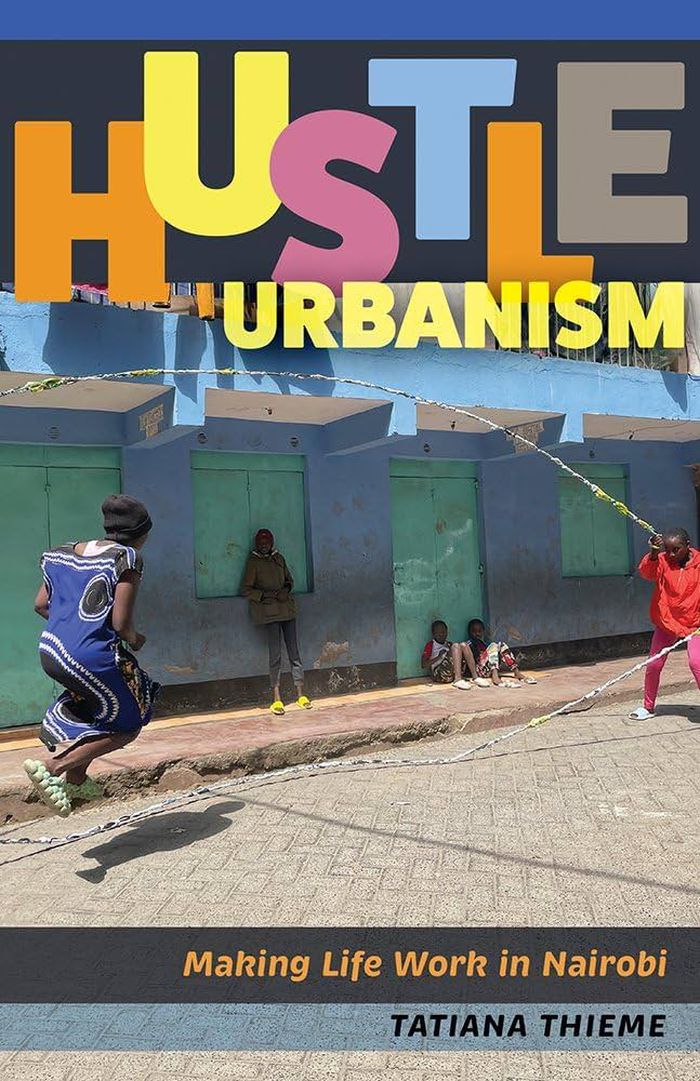
In Nairobi’s underserved neighborhoods, “hustle” has emerged as both a vital survival strategy and a way of life for youth. Exploring the multiple meanings and manifestations of the hustle economy across different scenarios of provisioning, distribution, exchange, learning, and mobilizing, ''Hustle Urbanism'' draws on more than a decade of ethnographic engagement to center the logics, perspectives, and inventive strategies of a group of youth who constantly navigate job scarcity, inadequate basic services, and climate-induced harms. Tatiana Thieme shows how young people develop tools of resistance against the legacies of colonial violence and uneven urban development while carving out spaces of opportunity for themselves and their peers. The stories she includes bring thick ethnographic detail and longitudinal perspective to the lives and livelihoods of youth whose diverse skill sets and knowledges span from circular economies and eco-activism to hip hop and local leadership. Filling a significant gap in both existing scholarship and popular discussion, ''Hustle Urbanism'' offers critical theorization of precarious urban environments and the affirmative modes of making life work in the city against the odds.
Hustle urbanism: Making life work in Nairobi
Actions:
Price:
$41.99
(available to order)
Summary:
In Nairobi’s underserved neighborhoods, “hustle” has emerged as both a vital survival strategy and a way of life for youth. Exploring the multiple meanings and manifestations of the hustle economy across different scenarios of provisioning, distribution, exchange, learning, and mobilizing, ''Hustle Urbanism'' draws on more than a decade of ethnographic engagement to center the logics, perspectives, and inventive strategies of a group of youth who constantly navigate job scarcity, inadequate basic services, and climate-induced harms. Tatiana Thieme shows how young people develop tools of resistance against the legacies of colonial violence and uneven urban development while carving out spaces of opportunity for themselves and their peers. The stories she includes bring thick ethnographic detail and longitudinal perspective to the lives and livelihoods of youth whose diverse skill sets and knowledges span from circular economies and eco-activism to hip hop and local leadership. Filling a significant gap in both existing scholarship and popular discussion, ''Hustle Urbanism'' offers critical theorization of precarious urban environments and the affirmative modes of making life work in the city against the odds.
Form:
books
books
Publication:
June 2025
June 2025
Subject:
Urban Theory
Urban Theory
Form:
books
books
Actions:
Price:
$48.99
(available in store)
Summary:
Along with the rise of Mussolini’s fascist regime, the interwar years in Italy also saw the widespread development of its modernist interior design and furnishing practices. While the regime’s politics were overtly manifest in monumental government architecture, ''Furnishing Fascism'' examines the subtler yet effective role of household goods and decor in the cultivation(...)
$48.99
(available in store)
Summary:
Along with the rise of Mussolini’s fascist regime, the interwar years in Italy also saw the widespread development of its modernist interior design and furnishing practices. While the regime’s politics were overtly manifest in monumental government architecture, ''Furnishing Fascism'' examines the subtler yet effective role of household goods and decor in the cultivation(...)
Title:
Furnishing fascism: Modernist design and politics in Italy
Actions:
Price:
$48.99
(available in store)
Summary:
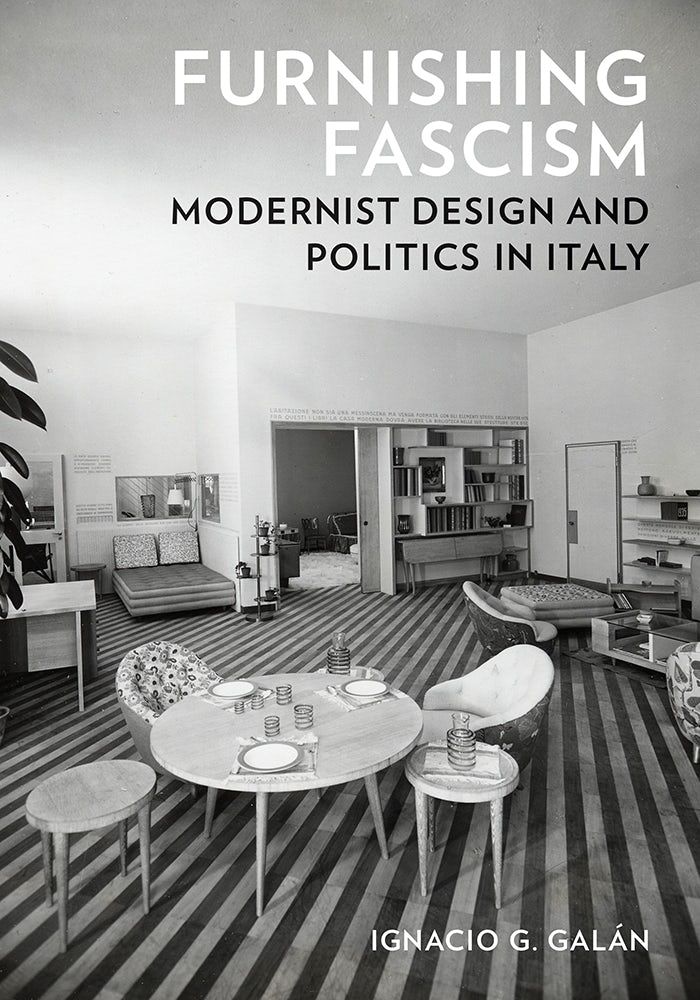
Along with the rise of Mussolini’s fascist regime, the interwar years in Italy also saw the widespread development of its modernist interior design and furnishing practices. While the regime’s politics were overtly manifest in monumental government architecture, ''Furnishing Fascism'' examines the subtler yet effective role of household goods and decor in the cultivation of Italy’s exclusionary sense of national identity. Presenting a fresh look at the work of various architects and designers, including iconic figures such as Gio Ponti and Carlo Enrico Rava, Ignacio G. Galán explores how seemingly neutral products of everyday life contributed to the propagation of fascist ideology. Through extensive promotion in popular magazines and department stores, on the film sets of Cinecittà Studios, and throughout the country’s colonial territories, Italy’s modernist design practices were part of a larger political project that aimed to produce a totalizing image of cultural hegemony.
Furnishing fascism: Modernist design and politics in Italy
Actions:
Price:
$48.99
(available in store)
Summary:
Along with the rise of Mussolini’s fascist regime, the interwar years in Italy also saw the widespread development of its modernist interior design and furnishing practices. While the regime’s politics were overtly manifest in monumental government architecture, ''Furnishing Fascism'' examines the subtler yet effective role of household goods and decor in the cultivation of Italy’s exclusionary sense of national identity. Presenting a fresh look at the work of various architects and designers, including iconic figures such as Gio Ponti and Carlo Enrico Rava, Ignacio G. Galán explores how seemingly neutral products of everyday life contributed to the propagation of fascist ideology. Through extensive promotion in popular magazines and department stores, on the film sets of Cinecittà Studios, and throughout the country’s colonial territories, Italy’s modernist design practices were part of a larger political project that aimed to produce a totalizing image of cultural hegemony.
Form:
books
books
Publication:
May 2025
May 2025
Subject:
Architectural Theory
Architectural Theory
Form:
books
books
Title:
The racial cage
The racial cage
Actions:
Price:
$13.99
(available in store)
Summary:
"The racial cage" delivers a spirited and polyvocal analysis of how race is materialized through both metaphorical and literal cages. It theorizes the cage, fence, dragnet, and tube as material–semiotic sites for racialization and for iteratively redefining the human–animal boundary. A collaborative conversation across continents, this work examines the racial cage as an(...)
$13.99
(available in store)
Summary:
"The racial cage" delivers a spirited and polyvocal analysis of how race is materialized through both metaphorical and literal cages. It theorizes the cage, fence, dragnet, and tube as material–semiotic sites for racialization and for iteratively redefining the human–animal boundary. A collaborative conversation across continents, this work examines the racial cage as an(...)
Subject:
Critical Theory
Critical Theory
Publication:
July 2025
July 2025
Title:
The racial cage
Actions:
Price:
$13.99
(available in store)
Summary:
"The racial cage" delivers a spirited and polyvocal analysis of how race is materialized through both metaphorical and literal cages. It theorizes the cage, fence, dragnet, and tube as material–semiotic sites for racialization and for iteratively redefining the human–animal boundary. A collaborative conversation across continents, this work examines the racial cage as an important part of the practice of social division and bodily containment. The deeply considered result is an empirical and theoretical approach to biohumanities that productively interrogates its linkages to critical theories of race and racism.
The racial cage
Actions:
Price:
$13.99
(available in store)
Summary:
"The racial cage" delivers a spirited and polyvocal analysis of how race is materialized through both metaphorical and literal cages. It theorizes the cage, fence, dragnet, and tube as material–semiotic sites for racialization and for iteratively redefining the human–animal boundary. A collaborative conversation across continents, this work examines the racial cage as an important part of the practice of social division and bodily containment. The deeply considered result is an empirical and theoretical approach to biohumanities that productively interrogates its linkages to critical theories of race and racism.
Form:
books
books
Publication:
July 2025
July 2025
Subject:
Critical Theory
Critical Theory
Form:
books
books
Title:
Coralations
Coralations
Actions:
Price:
$13.99
(available in store)
Summary:
"Coralations" is a philosophical exploration of the media that come into focus when we shift our attention from the highly recognizable coral of the tropics. Focusing on soft corals and deep-water corals leads to different narratives about climate change and involves different analogies to media. Through thought-provoking analyses of photography, science fiction, visual(...)
$13.99
(available in store)
Summary:
"Coralations" is a philosophical exploration of the media that come into focus when we shift our attention from the highly recognizable coral of the tropics. Focusing on soft corals and deep-water corals leads to different narratives about climate change and involves different analogies to media. Through thought-provoking analyses of photography, science fiction, visual(...)
Title:
Coralations
Actions:
Price:
$13.99
(available in store)
Summary:
"Coralations" is a philosophical exploration of the media that come into focus when we shift our attention from the highly recognizable coral of the tropics. Focusing on soft corals and deep-water corals leads to different narratives about climate change and involves different analogies to media. Through thought-provoking analyses of photography, science fiction, visual art, and scientific images, Melody Jue renews our curiosity and broadens our understanding of corals beyond the dominant narratives about their endangerment. "Coralations" shows how paying attention to particular corals can change what we take for granted.
Coralations
Actions:
Price:
$13.99
(available in store)
Summary:
"Coralations" is a philosophical exploration of the media that come into focus when we shift our attention from the highly recognizable coral of the tropics. Focusing on soft corals and deep-water corals leads to different narratives about climate change and involves different analogies to media. Through thought-provoking analyses of photography, science fiction, visual art, and scientific images, Melody Jue renews our curiosity and broadens our understanding of corals beyond the dominant narratives about their endangerment. "Coralations" shows how paying attention to particular corals can change what we take for granted.
Form:
books
books
Publication:
February 2025
February 2025
Subject:
Critical Theory
Critical Theory
Form:
books
books
Price:
$54.95
(available to order)
Summary:
Le logement se fait rare : l'accession à la propriété se complexifie, l'offre de location est de plus en plus contrainte, la demande de logement social n'a jamais été aussi forte. Depuis le début du siècle, la crise du logement est devenue systémique. Cette réalité, relayée par les médias et le débat public, est vécue par des millions de personnes dont le parcours(...)
$54.95
(available to order)
Summary:
Le logement se fait rare : l'accession à la propriété se complexifie, l'offre de location est de plus en plus contrainte, la demande de logement social n'a jamais été aussi forte. Depuis le début du siècle, la crise du logement est devenue systémique. Cette réalité, relayée par les médias et le débat public, est vécue par des millions de personnes dont le parcours(...)
Subject:
Urban Theory
Urban Theory
Publication:
December 2024
December 2024
Title:
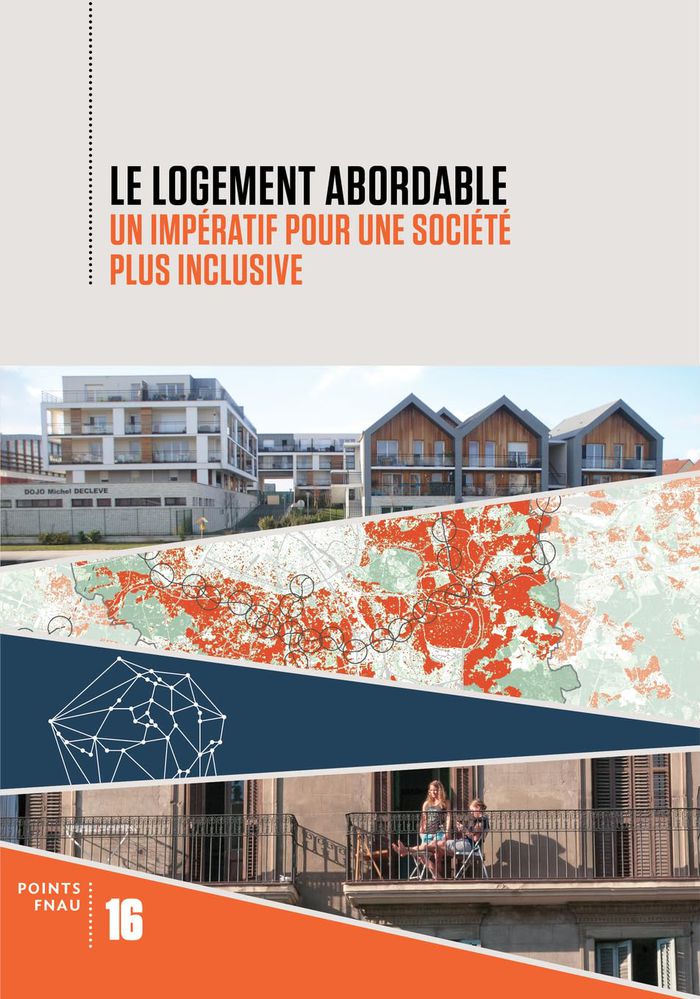
Le logement abordable: Un impératif pour une société plus inclusive
Actions:
Price:
$54.95
(available to order)
Summary:
Le logement se fait rare : l'accession à la propriété se complexifie, l'offre de location est de plus en plus contrainte, la demande de logement social n'a jamais été aussi forte. Depuis le début du siècle, la crise du logement est devenue systémique. Cette réalité, relayée par les médias et le débat public, est vécue par des millions de personnes dont le parcours résidentiel est ralenti. Les plus vulnérables sont les étudiants et les jeunes actifs, les personnes âgées et, bien entendu, les ménages précaires confrontés au mal-logement. Face au défi de procurer un toit abordable à tous, les politiques locales du logement, en lien avec les stratégies nationales, sont en première ligne. L'équation n'est pas simple : il s'agit de développer une pensée fine et adéquate de l'aménagement des territoires et des manières de l'habiter, tout en intégrant une logique de sobriété foncière et de respect de l'environnement. Cela demande inventivité et audace.
Le logement abordable: Un impératif pour une société plus inclusive
Actions:
Price:
$54.95
(available to order)
Summary:
Le logement se fait rare : l'accession à la propriété se complexifie, l'offre de location est de plus en plus contrainte, la demande de logement social n'a jamais été aussi forte. Depuis le début du siècle, la crise du logement est devenue systémique. Cette réalité, relayée par les médias et le débat public, est vécue par des millions de personnes dont le parcours résidentiel est ralenti. Les plus vulnérables sont les étudiants et les jeunes actifs, les personnes âgées et, bien entendu, les ménages précaires confrontés au mal-logement. Face au défi de procurer un toit abordable à tous, les politiques locales du logement, en lien avec les stratégies nationales, sont en première ligne. L'équation n'est pas simple : il s'agit de développer une pensée fine et adéquate de l'aménagement des territoires et des manières de l'habiter, tout en intégrant une logique de sobriété foncière et de respect de l'environnement. Cela demande inventivité et audace.
Form:
books
books
Publication:
December 2024
December 2024
Subject:
Urban Theory
Urban Theory
Form:
books
books

Actions:
Price:
$25.00
(available in store)
Summary:
In these six essays, Mitch Speed plumbs the ambivalences that at once fuel and plague art. Written over the last fifteen years, in parallel to Speed’s work as an art critic, the essays forward ways of writing, which might be better equipped to trace art’s role in life, from personal intricacies to looming political questions. Each piece proceeds through a specific theme,(...)
$25.00
(available in store)
Summary:
In these six essays, Mitch Speed plumbs the ambivalences that at once fuel and plague art. Written over the last fifteen years, in parallel to Speed’s work as an art critic, the essays forward ways of writing, which might be better equipped to trace art’s role in life, from personal intricacies to looming political questions. Each piece proceeds through a specific theme,(...)
Title:
Closeness eats time: Six essays inside art
Actions:
Price:
$25.00
(available in store)
Summary:
In these six essays, Mitch Speed plumbs the ambivalences that at once fuel and plague art. Written over the last fifteen years, in parallel to Speed’s work as an art critic, the essays forward ways of writing, which might be better equipped to trace art’s role in life, from personal intricacies to looming political questions. Each piece proceeds through a specific theme, for example: the art world’s relationship to socioeconomic injustice, the beguiling return of found objects to contemporary art, the devolution of art criticism into a branch of the communications industry, and how we can better understand art’s meanings, by attending closely to the words of the people who make it.
Closeness eats time: Six essays inside art
Actions:
Price:
$25.00
(available in store)
Summary:
In these six essays, Mitch Speed plumbs the ambivalences that at once fuel and plague art. Written over the last fifteen years, in parallel to Speed’s work as an art critic, the essays forward ways of writing, which might be better equipped to trace art’s role in life, from personal intricacies to looming political questions. Each piece proceeds through a specific theme, for example: the art world’s relationship to socioeconomic injustice, the beguiling return of found objects to contemporary art, the devolution of art criticism into a branch of the communications industry, and how we can better understand art’s meanings, by attending closely to the words of the people who make it.
Form:
books
books
Publication:
March 2025
March 2025
Subject:
Art Theory
Art Theory


