


992 Results
Form:
books
books
Actions:
Price:
$49.95
(available to order)
Summary:
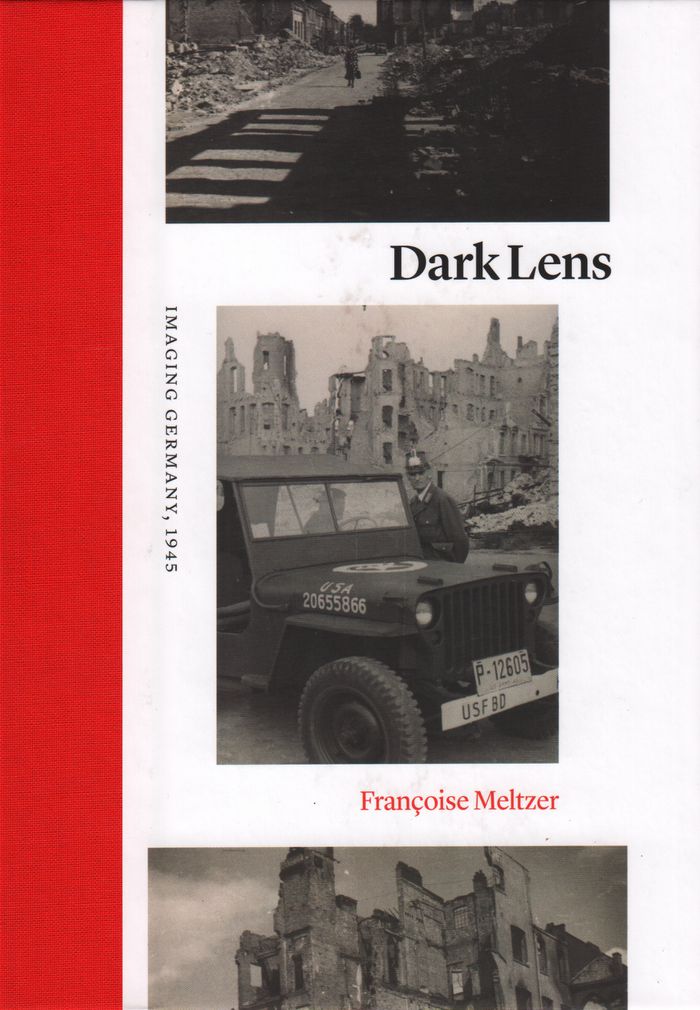
The ruins of war have long held the power to stupefy and appall. Can such ruins ever be persuasively depicted and comprehended? Can images of them force us to identify with the suffering of the enemy and raise uncomfortable questions about forgiveness and revenge? Françoise Meltzer explores those questions in Dark Lens, which uses the images of war ruins in Nazi(...)
Title:
Dark lens: imaging Germany, 1945
Actions:
Price:
$49.95
(available to order)
Summary:
The ruins of war have long held the power to stupefy and appall. Can such ruins ever be persuasively depicted and comprehended? Can images of them force us to identify with the suffering of the enemy and raise uncomfortable questions about forgiveness and revenge? Françoise Meltzer explores those questions in Dark Lens, which uses the images of war ruins in Nazi Germany to investigate problems of aestheticization, the representation of catastrophe, and the targeting of civilians in war. Through texts that give accounts of bombed-out towns in Germany in the last years of the war, painters’ attempts to depict the destruction, and her own mother’s photographs taken in Berlin and other cities in 1945, Meltzer asks if any medium offers a direct experience of war ruins for the viewer. Ultimately, she concludes that while the viewer cannot help reimaging the devastation through the lenses of history, aestheticization, or voyeurism, these images at least allow us to approach the reality of ruins and grasp the larger issue of targeting civilians in modern warfare for what it is.
Form:
books
books
Publication:
September 2019
September 2019
Subject:
Theory of Photography
Theory of Photography
Form:
books
books

Actions:
Price:
$36.95
(available to order)
Summary:
Dans une indifférence quasi générale, notre planète entre dans une phase d'extinction de masse causée par l'homme, la sixième depuis que la vie s'est diversifiée sur Terre il y a de cela 500 millions d'années. Surexploitation des ressources, surconsommation, suroffre, surcapacités technologiques, changement climatique, déforestation... les hommes se livrent à une(...)
Title:
Biodiversité: vers une sixième extinction de masse
Actions:
Price:
$36.95
(available to order)
Summary:
Dans une indifférence quasi générale, notre planète entre dans une phase d'extinction de masse causée par l'homme, la sixième depuis que la vie s'est diversifiée sur Terre il y a de cela 500 millions d'années. Surexploitation des ressources, surconsommation, suroffre, surcapacités technologiques, changement climatique, déforestation... les hommes se livrent à une destruction massive des écosystèmes à l'échelle planétaire, et notre mode de développement condamne probablement une espèce toutes les 20 minutes. Quels sont les mécanismes et les causes principales de l'extinction des espèces ? Que peut-on attendre des agendas politiques ? Faut-il promouvoir une écologie de combat ou une écologie de la réconciliation qui replace l'homme au sein de la nature ? Comment éviter ou limiter cette sixième extinction ? Pour comprendre les enjeux de cette crise majeure, un écologue, un biologiste marin, un spécialiste en gestion et économie de l'environnement et une philosophe de l'environnement nous invitent à leur table. Au fil de leurs connaissances, de leurs craintes mais aussi de leurs espoirs, ils nous apportent un éclairage scientifique et citoyen sur la sixième extinction de masse, la première de l'Anthropocène.
Form:
books
books
Publication:
December 2014
December 2014
Subject:
Green Architecture
Green Architecture
Form:
books
books

Actions:
Price:
$27.95
(available to order)
Summary:
A quoi ressemblera Paris en 2050 ? Cet album insolite nous emmène en balade dans la capitale du futur... Place de l'Hôtel de ville se trouve désormais l'attraction préférée des enfants : un gruyère géant à explorer et à escalader. Attention à ne pas disparaître dans les trous ! Île Saint-Louis : une gigantesque pieuvre y a fait son nid. Elle dévore quelques touristes, à(...)
Title:
Paris 2050 : almanach d'anticipation
Actions:
Price:
$27.95
(available to order)
Summary:
A quoi ressemblera Paris en 2050 ? Cet album insolite nous emmène en balade dans la capitale du futur... Place de l'Hôtel de ville se trouve désormais l'attraction préférée des enfants : un gruyère géant à explorer et à escalader. Attention à ne pas disparaître dans les trous ! Île Saint-Louis : une gigantesque pieuvre y a fait son nid. Elle dévore quelques touristes, à l'occasion. Métro Montparnasse : désormais station fantôme, pour les visiteurs en quête d'émotions fortes car, depuis l'attentat au gaz, seuls des zombies y rôderaient encore... Les Parisiens se déplacent en bus Mammouth à six étages, en avion supersonique ou en Lamantins pour voguer sur la Seine. Au printemps, la mode est au scaphandre, idéal pour résister aux pollens transgéniques. Quartiers, monuments, moyens de transport, manifestations culturelles, gadgets avant-gardistes : voici le portrait complet d'un mode de vie parisien fantasmé, en résonance parfois ironique avec notre société actuelle. Des images qui mettent en scène un Paris onirique et menacé par la destruction, jouant sur le mystère et la nostalgie qui font l'identité de cette ville mythique.
Form:
books
books
Publication:
January 2013
January 2013
Subject:
Children's Books
Children's Books
Form:
books
books
Price:
$32.00
(available to order)
Summary:
''Resisting eviction'' centres tenant organizing in its investigation of gentrification, eviction and the financialization of rental housing. Andrew Crosby argues that racial discrimination, property relations and settler colonialism inform contemporary urban (re)development efforts and impacts affordable housing loss. How can the City of Ottawa aspire to become ''North(...)
Title:
Resisting eviction: Domicide and the financialization of rental housing
Actions:
Price:
$32.00
(available to order)
Summary:
''Resisting eviction'' centres tenant organizing in its investigation of gentrification, eviction and the financialization of rental housing. Andrew Crosby argues that racial discrimination, property relations and settler colonialism inform contemporary urban (re)development efforts and impacts affordable housing loss. How can the City of Ottawa aspire to become ''North America’s most liveable mid-sized city'' while large-scale, demolition-driven evictions displace hundreds of people and destroy a community? Troubling discourses of urban liveability, revitalization and improvement, Crosby examines the deliberate destruction of home—domicide—and tenant resistance in the Heron Gate neighbourhood in Ottawa, on unceded Algonquin land. Heron Gate is a large rental neighbourhood owned by one multi-billion-dollar real estate investment firm. Around 800 people—predominantly lower-income, racialized households—have been demovicted and displaced from the neighbourhood since 2016, leading to the emergence of the Herongate Tenant Coalition to fight the evictions and confront the landlord-developer. This case study is meticulously documented through political activist ethnography, making this book a brilliant example of ethical engagement and methodological integrity.
Form:
books
books
Publication:
October 2023
October 2023
Subject:
Humans and cities
Humans and cities
Form:
books
books

Actions:
Price:
$20.00
(available in store)
Summary:
Banality is a style of experience often indicated by variations of the statement, ''nothing is happening.'' When you are ''doing nothing,'' the life you are living appears as both ordinary and impassive. In the present moment, these qualities also come to describe the endurance of structures of impoverishment, disenfranchisement, criminalization, and environmental(...)
Title:
Dead time : Intolerable images and the politics of banality
Actions:
Price:
$20.00
(available in store)
Summary:
Banality is a style of experience often indicated by variations of the statement, ''nothing is happening.'' When you are ''doing nothing,'' the life you are living appears as both ordinary and impassive. In the present moment, these qualities also come to describe the endurance of structures of impoverishment, disenfranchisement, criminalization, and environmental destruction that form the background and backbone of the current political-economic system, so that '''doing politics'' often comes to mean interrupting banality. Offering new ways of conceiving the notions of inactionability and intractability that attend to these structures, Devin Wangert forwards banality as a concept capable of both adequately describing those structures as inactionable or impossible situations and of identifying affinities between forms of livelihood that go on living in and responding to those situations. He suggests that repertoires of thinking and acting which were historically posed in opposition to banality and understood as responsible for creating change come instead to actively produce impossible situations as banal and posit banality as an obstacle to political subjectivity, thought, and action.
Form:
books
books
Publication:
September 2023
September 2023
Subject:
Critical Theory
Critical Theory
Form:
books
books

Actions:
Price:
$64.95
(available to order)
Summary:
Dans l’ouvrage « Atlas des sites archéologiques menacés – patrimoine à protéger », des scientifiques ont minutieusement sélectionné un éventail de trente-cinq sites archéologiques témoins de l’histoire des sociétés du passé à travers le monde. Ils nous invitent à découvrir leur importance sociétale et culturelle, à prendre la mesure des risques de destruction et l’urgence(...)
Title:
Atlas des sites archéologiques : Patrimoine à protéger
Actions:
Price:
$64.95
(available to order)
Summary:
Dans l’ouvrage « Atlas des sites archéologiques menacés – patrimoine à protéger », des scientifiques ont minutieusement sélectionné un éventail de trente-cinq sites archéologiques témoins de l’histoire des sociétés du passé à travers le monde. Ils nous invitent à découvrir leur importance sociétale et culturelle, à prendre la mesure des risques de destruction et l’urgence de les protéger et conserver. Aujourd’hui, les changements planétaires accélèrent l’altération de nombreux sites : montée des eaux et inondations ou sécheresses et incendies, sans oublier toutes les autres pressions anthropiques : urbanisation, travaux d’aménagement, tourisme de masse, conflits guerriers, etc. La vulnérabilité qui menace le patrimoine archéologique mondial est désormais reconnue par les États et les organisations internationales qui légifèrent pour le protéger : devant les dangers qui planent sur certains sites, la mobilisation s’organise. Cet Atlas illustré nous invite au cœur des plus emblématiques vestiges mondiaux et dévoile les acquis récents de la recherche en matière de patrimoine ancien en danger. Par la redécouverte de ces sites porteurs de la mémoire de l’humanité, les auteurs nous alertent sur ces risques pour préserver le patrimoine et le transmettre aux générations futures.
Form:
books
books
Publication:
October 2023
October 2023
Form:
books
books
Actions:
Price:
$39.99
(available in store)
Summary:
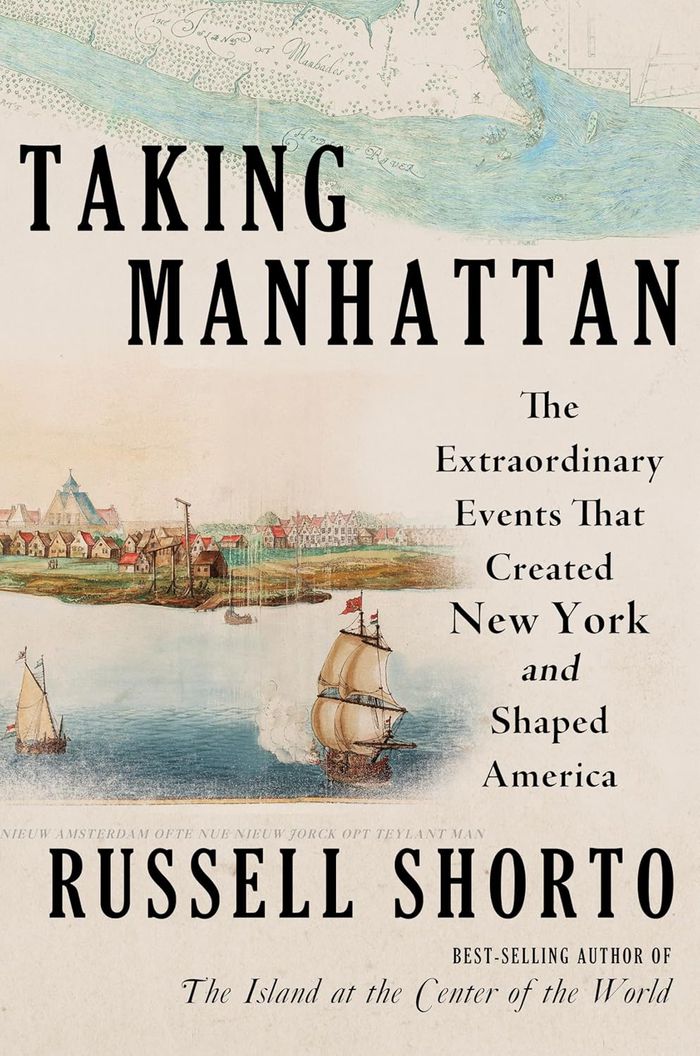
In 1664, England decided to invade the Dutch-controlled city of New Amsterdam on Manhattan Island. Charles II and his brother, the Duke of York, had dreams of empire, and their archrivals, the Dutch, were in the way. But Richard Nicolls, the military officer who led the English flotilla bent on destruction, changed his strategy once he encountered Peter Stuyvesant, New(...)
Title:
Taking Manhattan: The extraordinary events that created New York and shaped America
Actions:
Price:
$39.99
(available in store)
Summary:
In 1664, England decided to invade the Dutch-controlled city of New Amsterdam on Manhattan Island. Charles II and his brother, the Duke of York, had dreams of empire, and their archrivals, the Dutch, were in the way. But Richard Nicolls, the military officer who led the English flotilla bent on destruction, changed his strategy once he encountered Peter Stuyvesant, New Netherland’s canny director general. Bristling with vibrant characters, "Taking Manhattan" reveals the founding of New York to be an invention, the result of creative negotiations that would blend the multiethnic, capitalistic society of New Amsterdam with the power of the rising English empire. But the birth of what might be termed the first modern city is also a story of the brutal dispossession of Native Americans and of the roots of American slavery. The book draws from newly translated materials and illuminates neglected histories—of religious refugees, Indigenous tribes, and free and enslaved Africans. "Taking Manhattan" tells the riveting story of the birth of New York City as a center of capitalism and pluralism, a foundation from which America would rise.
Form:
books
books
Publication:
March 2025
March 2025
Subject:
History until 1900, North America
History until 1900, North America
Form:
books
books

Title:
Futur ancestral
Futur ancestral
Actions:
Price:
$20.95
(available in store)
Summary:
La crise écologique a modifié les termes du dialogue entre Modernes et peuples autochtones. À la promesse d’un futur débarrassé de la misère à grand renfort de prouesses technologiques, nous découvrons un monde diminué dans toutes ses formes de diversités, qui nous a rendu aveugles à ce qui nous entoure. Aujourd’hui des voix émergent qui font entendre des cosmovisions(...)
Title:
Futur ancestral
Actions:
Price:
$20.95
(available in store)
Summary:
La crise écologique a modifié les termes du dialogue entre Modernes et peuples autochtones. À la promesse d’un futur débarrassé de la misère à grand renfort de prouesses technologiques, nous découvrons un monde diminué dans toutes ses formes de diversités, qui nous a rendu aveugles à ce qui nous entoure. Aujourd’hui des voix émergent qui font entendre des cosmovisions différentes, parmi lesquelles se trouve l’insistante et poétique parole d’Ailton Krenak. Dans cet ouvrage, il part en quête de la force des pensées et pratiques autochtones?: Que devient l’expérience du monde lorsque l’on considère les fleuves et les montagnes comme des entités vivantes? Que signifie reforester nos imaginaires et réinventer la séparation entre ville et forêt? Comment réactiver la florestania, cette idée née de l’alliance des peuples de la forêt amazonienne pour combattre sa destruction? Pour Ailton Krenak s’il y a un futur à imaginer, il est ancestral, car il est déjà présent dans tous les milieux de vie, qu’il appartient, à celles et ceux qui les partagent, de défendre.
Form:
books
books
Publication:
June 2025
June 2025
Subject:
Environment and environmental theory
Environment and environmental theory
Form:
books
books
Actions:
Price:
$29.95
(available to order)
Summary:
The Cold War was the war that never happened. Nonetheless, it spurred the most significant buildup of military contingency this country has ever known: from the bunkers of Greenbrier, West Virginia, to the "proving grounds" of Nevada, where entire cities were built only to be vaporized. The Cold War was waged on a territory that knew no boundaries but left few traces.(...)
Title:
Survival city : adventures among the ruins of atomic America
Actions:
Price:
$29.95
(available to order)
Summary:
The Cold War was the war that never happened. Nonetheless, it spurred the most significant buildup of military contingency this country has ever known: from the bunkers of Greenbrier, West Virginia, to the "proving grounds" of Nevada, where entire cities were built only to be vaporized. The Cold War was waged on a territory that knew no boundaries but left few traces. In this fascinating--and at turns frightening and comical--travelogue to the hidden battlefields of the Cold War, Tom Vanderbilt travels the Interstate (itself a product of the Cold War) to uncover the sites of Cold War architecture and reflect on their lasting heritage. In the process, Vanderbilt shows us what the Cold War landscape looked like, how architecture tried to adapt to the threat of mass destruction, how cities coped with the knowledge that they were nuclear targets, and finally what remains of the Cold War theater today, both its visible and invisible legacies. Ultimately, Vanderbilt gives us a deep look into our cultural soul, the dreams and fears that drove us for the last half of the 20th century.
Form:
books
books
Publication:
March 2002, New York
March 2002, New York
Subject:
Architectural Theory
Architectural Theory
Form:
books
books

Actions:
Price:
$64.95
(available to order)
Summary:
Dans ce dernier volume de sa trilogie, "Écumes - sphérologie plurielle", Peter Sloterdijk part à la découverte de la structure alvéolaire qui permet aux êtres humains de coexister dans les sociétés modernes. Il y souligne le rôle de l'élément aérien, notamment dans les nouvelles techniques de destruction et d'extermination, développe une théorie des îles et de "(...)
Title:
Écumes sphères III - sphérologie plurielle
Actions:
Price:
$64.95
(available to order)
Summary:
Dans ce dernier volume de sa trilogie, "Écumes - sphérologie plurielle", Peter Sloterdijk part à la découverte de la structure alvéolaire qui permet aux êtres humains de coexister dans les sociétés modernes. Il y souligne le rôle de l'élément aérien, notamment dans les nouvelles techniques de destruction et d'extermination, développe une théorie des îles et de " l'insulation " humaine, se penche sur le phénomène de la cohabitation des " machines célibataires " vivant en cellules juxtaposées, ou encore sur le phénomène de la " serre ", fabrication artificielle d'un milieu atmosphérique. En cela, il répond à la question de la nature du lien qui fait tenir le sujet dans ce que la sociologie nomme traditionnellement " société ". Peter Sloterdijk entre avec ce volume dans une phase d'observation de la civilisation contemporaine, dont il rattache l'évolution aux premiers mythes de l'écume, entre autres la naissance d'Aphrodite. Cette forme de pensée sereine - en bulles, en écumes - rend compte de la pluralité des approches et inventions du monde. De même, elle formule une interprétation philosophique et anthropologique de l'individualisme qui, en créant une atmosphère de liberté, dépasse les définitions entendues.
Form:
books
books
Publication:
March 2005, Paris
March 2005, Paris
Subject:
Critical Theory
Critical Theory


