


19531 Results
Form:
exhibitions
exhibitions
Description:
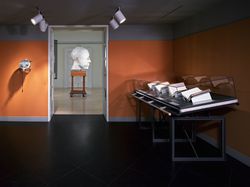
Meditations on Piero presents contemporary sculptures by British/Canadian artist Geoffrey Smedley alongside over thirty rare books from the fifteenth to the eighteenth centuries. The sculptures draw their inspiration from a series of drawings of the human head by the great Italian Renaissance artist Piero della Francesca. The exhibition relates these drawings and(...)
Meditations on Piero presents contemporary sculptures by British/Canadian artist Geoffrey Smedley alongside over thirty rare books from the fifteenth to the eighteenth centuries. The sculptures draw their inspiration from a series of drawings of the human head by the great Italian Renaissance artist Piero della Francesca. The exhibition relates these drawings and(...)
Location:
Octagonal gallery
Octagonal gallery
Date:
2 May 2001 to 16 September 2001
2 May 2001 to 16 September 2001
Title:
Meditations on Piero
Actions:
Description:
Meditations on Piero presents contemporary sculptures by British/Canadian artist Geoffrey Smedley alongside over thirty rare books from the fifteenth to the eighteenth centuries. The sculptures draw their inspiration from a series of drawings of the human head by the great Italian Renaissance artist Piero della Francesca. The exhibition relates these drawings and(...)
Meditations on Piero
Actions:
Description:
Meditations on Piero presents contemporary sculptures by British/Canadian artist Geoffrey Smedley alongside over thirty rare books from the fifteenth to the eighteenth centuries. The sculptures draw their inspiration from a series of drawings of the human head by the great Italian Renaissance artist Piero della Francesca. The exhibition relates these drawings and(...)
Form:
exhibitions
exhibitions
Date:
2 May 2001 to
16 September 2001
2 May 2001 to
16 September 2001
Location:
Octagonal gallery
Octagonal gallery
Form:
films
films
Title:
With an Acre
With an Acre
Actions:
Description:
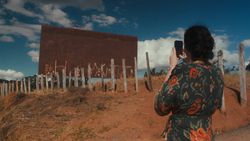
With an Acre is the third chapter of Groundwork, a three-part film and exhibition series exploring the conceptual development and field research of contemporary architects cultivating alternative modes of practice.
With an Acre is the third chapter of Groundwork, a three-part film and exhibition series exploring the conceptual development and field research of contemporary architects cultivating alternative modes of practice.
Date:
2025
2025
Title:
With an Acre
Actions:
Description:
With an Acre is the third chapter of Groundwork, a three-part film and exhibition series exploring the conceptual development and field research of contemporary architects cultivating alternative modes of practice.
With an Acre
Actions:
Description:
With an Acre is the third chapter of Groundwork, a three-part film and exhibition series exploring the conceptual development and field research of contemporary architects cultivating alternative modes of practice.
Form:
films
films
Date:
2025
2025
Form:
exhibitions
exhibitions
Title:
Naoya Hatakeyama: Scales
Naoya Hatakeyama: Scales
Actions:
Description:
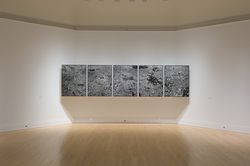
The work of Japanese artist Naoya Hatakeyama is concerned largely with the relationship between nature and cities. Comissioned by the CCA, the three series of photographs comprising Scales capture existing architectural models of New York City and Tokyo in a way that challenges notions of scale and the perception of reality. Naoya Hatakeyama: Scales is the fourth and(...)
The work of Japanese artist Naoya Hatakeyama is concerned largely with the relationship between nature and cities. Comissioned by the CCA, the three series of photographs comprising Scales capture existing architectural models of New York City and Tokyo in a way that challenges notions of scale and the perception of reality. Naoya Hatakeyama: Scales is the fourth and(...)
Location:
Octagonal gallery
Octagonal gallery
Date:
27 September 2007 to 3 February 2008
27 September 2007 to 3 February 2008
Title:
Naoya Hatakeyama: Scales
Actions:
Description:
The work of Japanese artist Naoya Hatakeyama is concerned largely with the relationship between nature and cities. Comissioned by the CCA, the three series of photographs comprising Scales capture existing architectural models of New York City and Tokyo in a way that challenges notions of scale and the perception of reality. Naoya Hatakeyama: Scales is the fourth and(...)
Naoya Hatakeyama: Scales
Actions:
Description:
The work of Japanese artist Naoya Hatakeyama is concerned largely with the relationship between nature and cities. Comissioned by the CCA, the three series of photographs comprising Scales capture existing architectural models of New York City and Tokyo in a way that challenges notions of scale and the perception of reality. Naoya Hatakeyama: Scales is the fourth and(...)
Form:
exhibitions
exhibitions
Date:
27 September 2007 to
3 February 2008
27 September 2007 to
3 February 2008
Location:
Octagonal gallery
Octagonal gallery
Form:
events
events
Title:
Open House for Students
Open House for Students
Actions:
Description:
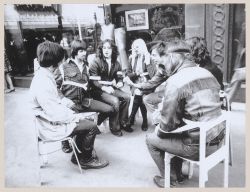
Join us on 24 September for an evening of conversation and discovery with our teams from Programs, Publications, Research, Digital, Public, and the Collection. Learn how we work, what we create, and most importantly, what the CCA can offer you.
Join us on 24 September for an evening of conversation and discovery with our teams from Programs, Publications, Research, Digital, Public, and the Collection. Learn how we work, what we create, and most importantly, what the CCA can offer you.
Date:
24 September 2026, 6pm to 8:30pm
24 September 2026, 6pm to 8:30pm
Title:
Open House for Students
Actions:
Description:
Join us on 24 September for an evening of conversation and discovery with our teams from Programs, Publications, Research, Digital, Public, and the Collection. Learn how we work, what we create, and most importantly, what the CCA can offer you.
Open House for Students
Actions:
Description:
Join us on 24 September for an evening of conversation and discovery with our teams from Programs, Publications, Research, Digital, Public, and the Collection. Learn how we work, what we create, and most importantly, what the CCA can offer you.
Form:
events
events
Date:
24 September 2026
6pm to 8:30pm
24 September 2026
6pm to 8:30pm
Form:
photographs
photographs
Actions:
Reference number:
ARCH256259
Description:
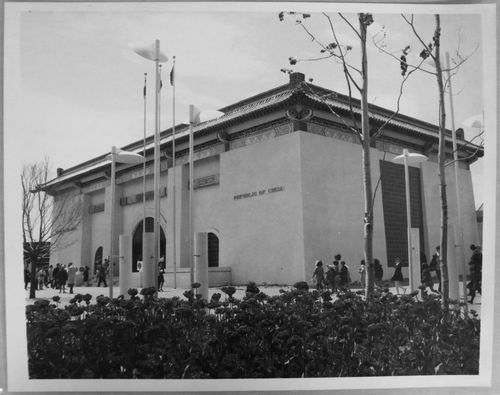
"Le Pavillon de la République de Chine à l'Expo 67 ...... Le Pavillon de la République de Chine exprime on ne peut mieux le sourire et la grâce de l'Orient. L'architecture traditionnelle du bâtiment renferme des éléments d'expositions qui veulent illustrer le rôle de ce pays sur la Terre des Hommes. / Republic of China Pavilion at Expo 67 ..... The two-stories Chinese pavilion on Ile Sainte-Hélène features the traditional architecture of that country. A display of world famous Chinese handicraft work is a special attraction."--Description.
ARCH256259
Description:
"Le Pavillon de la République de Chine à l'Expo 67 ...... Le Pavillon de la République de Chine exprime on ne peut mieux le sourire et la grâce de l'Orient. L'architecture traditionnelle du bâtiment renferme des éléments d'expositions qui veulent illustrer le rôle de ce pays sur la Terre des Hommes. / Republic of China Pavilion at Expo 67 ..... The two-stories Chinese pavilion on Ile Sainte-Hélène features the traditional architecture of that country. A display of world famous Chinese handicraft work is a special attraction."--Description.
People:
Date:
1967
1967
Title:
View of the Chinese Pavilion, Expo 67, Montréal, Québec
Actions:
ARCH256259
Description:
"Le Pavillon de la République de Chine à l'Expo 67 ...... Le Pavillon de la République de Chine exprime on ne peut mieux le sourire et la grâce de l'Orient. L'architecture traditionnelle du bâtiment renferme des éléments d'expositions qui veulent illustrer le rôle de ce pays sur la Terre des Hommes. / Republic of China Pavilion at Expo 67 ..... The two-stories Chinese pavilion on Ile Sainte-Hélène features the traditional architecture of that country. A display of world famous Chinese handicraft work is a special attraction."--Description.
View of the Chinese Pavilion, Expo 67, Montréal, Québec
Actions:
ARCH256259
Description:
"Le Pavillon de la République de Chine à l'Expo 67 ...... Le Pavillon de la République de Chine exprime on ne peut mieux le sourire et la grâce de l'Orient. L'architecture traditionnelle du bâtiment renferme des éléments d'expositions qui veulent illustrer le rôle de ce pays sur la Terre des Hommes. / Republic of China Pavilion at Expo 67 ..... The two-stories Chinese pavilion on Ile Sainte-Hélène features the traditional architecture of that country. A display of world famous Chinese handicraft work is a special attraction."--Description.
Form:
photographs
photographs
Date:
1967
1967
People:
Form:
events
events
Title:
Speed and its Limits
Speed and its Limits
Actions:
Description:
Speed and its Limits explores the pivotal role played by speed in modern life: from art to architecture and urbanism to graphics and design to economics to the material culture of the eras of industry and information. A colloquium organised by the CCA, in collaboration with the Wolfsonian-Florida International University and Stanford Humanities Lab, in preparation for the(...)
Speed and its Limits explores the pivotal role played by speed in modern life: from art to architecture and urbanism to graphics and design to economics to the material culture of the eras of industry and information. A colloquium organised by the CCA, in collaboration with the Wolfsonian-Florida International University and Stanford Humanities Lab, in preparation for the(...)
Location:
Paul Desmarais Theatre
Paul Desmarais Theatre
Date:
21 June 2008, 9am - 5pm
21 June 2008, 9am - 5pm
Title:
Speed and its Limits
Actions:
Description:
Speed and its Limits explores the pivotal role played by speed in modern life: from art to architecture and urbanism to graphics and design to economics to the material culture of the eras of industry and information. A colloquium organised by the CCA, in collaboration with the Wolfsonian-Florida International University and Stanford Humanities Lab, in preparation for the(...)
Speed and its Limits
Actions:
Description:
Speed and its Limits explores the pivotal role played by speed in modern life: from art to architecture and urbanism to graphics and design to economics to the material culture of the eras of industry and information. A colloquium organised by the CCA, in collaboration with the Wolfsonian-Florida International University and Stanford Humanities Lab, in preparation for the(...)
Form:
events
events
Date:
21 June 2008
9am - 5pm
21 June 2008
9am - 5pm
Location:
Paul Desmarais Theatre
Paul Desmarais Theatre
Actions:
Reference number:
PH1986:0900.01
Description:
Album PH1986:0900.01 comprises 92 photographs of fountains, monuments, tombs, vases, models and studies by architect Michel Roux-Spitz. Subjects include: Monument aux Séminaristes français morts à la guerre, Séminaire Français à Rome (1922); Monument aux Morts de Lyon; Monument aux héros de Dixmude à Pierrefeu (Var) (1925); Monument Bokanowski à Toul (1924); Monument aux Morts de Thizy; Monument de la Victoire; Tombeau au cimetière Montparnasse à Paris; Tombeau de la famille Garin à Cholet; Tombeau de la famille Vetter à Lyon (1920-1923); Tombeau Redon; Tombeau de la famille Barral à Lyon; Tombeau de la famille Barras (sic) à Lyon; Monument au poète Camille Roy et à la Chanson Lyonnaise (1924); Fontaine Leriche; Fontaine avec sculpture de Cassou; Fontaine Cours La Reine à l'Exposition des Arts décoratifs 1925 à Paris; Tombeau du Cimetière du Village à l'Exposition des Arts décoratifs 1925 à Paris; Tombeau de la famille Robin. Artists mentioned are the sculptors Delamarre, Renard, C. Cassou, Martial, Leriche, a mosaic by Bouquet, ironwork by Szetlak and lighting by Perzel.
PH1986:0900.01
Description:
Album PH1986:0900.01 comprises 92 photographs of fountains, monuments, tombs, vases, models and studies by architect Michel Roux-Spitz. Subjects include: Monument aux Séminaristes français morts à la guerre, Séminaire Français à Rome (1922); Monument aux Morts de Lyon; Monument aux héros de Dixmude à Pierrefeu (Var) (1925); Monument Bokanowski à Toul (1924); Monument aux Morts de Thizy; Monument de la Victoire; Tombeau au cimetière Montparnasse à Paris; Tombeau de la famille Garin à Cholet; Tombeau de la famille Vetter à Lyon (1920-1923); Tombeau Redon; Tombeau de la famille Barral à Lyon; Tombeau de la famille Barras (sic) à Lyon; Monument au poète Camille Roy et à la Chanson Lyonnaise (1924); Fontaine Leriche; Fontaine avec sculpture de Cassou; Fontaine Cours La Reine à l'Exposition des Arts décoratifs 1925 à Paris; Tombeau du Cimetière du Village à l'Exposition des Arts décoratifs 1925 à Paris; Tombeau de la famille Robin. Artists mentioned are the sculptors Delamarre, Renard, C. Cassou, Martial, Leriche, a mosaic by Bouquet, ironwork by Szetlak and lighting by Perzel.
People:
Subject:
architecture, ornament, sculpture
architecture, ornament, sculpture
Date:
1920-1925
1920-1925
Title:
Fontaines - Monuments - Tombeaux - Vases - 1920-1925
Actions:
PH1986:0900.01
Description:
Album PH1986:0900.01 comprises 92 photographs of fountains, monuments, tombs, vases, models and studies by architect Michel Roux-Spitz. Subjects include: Monument aux Séminaristes français morts à la guerre, Séminaire Français à Rome (1922); Monument aux Morts de Lyon; Monument aux héros de Dixmude à Pierrefeu (Var) (1925); Monument Bokanowski à Toul (1924); Monument aux Morts de Thizy; Monument de la Victoire; Tombeau au cimetière Montparnasse à Paris; Tombeau de la famille Garin à Cholet; Tombeau de la famille Vetter à Lyon (1920-1923); Tombeau Redon; Tombeau de la famille Barral à Lyon; Tombeau de la famille Barras (sic) à Lyon; Monument au poète Camille Roy et à la Chanson Lyonnaise (1924); Fontaine Leriche; Fontaine avec sculpture de Cassou; Fontaine Cours La Reine à l'Exposition des Arts décoratifs 1925 à Paris; Tombeau du Cimetière du Village à l'Exposition des Arts décoratifs 1925 à Paris; Tombeau de la famille Robin. Artists mentioned are the sculptors Delamarre, Renard, C. Cassou, Martial, Leriche, a mosaic by Bouquet, ironwork by Szetlak and lighting by Perzel.
Fontaines - Monuments - Tombeaux - Vases - 1920-1925
Actions:
PH1986:0900.01
Description:
Album PH1986:0900.01 comprises 92 photographs of fountains, monuments, tombs, vases, models and studies by architect Michel Roux-Spitz. Subjects include: Monument aux Séminaristes français morts à la guerre, Séminaire Français à Rome (1922); Monument aux Morts de Lyon; Monument aux héros de Dixmude à Pierrefeu (Var) (1925); Monument Bokanowski à Toul (1924); Monument aux Morts de Thizy; Monument de la Victoire; Tombeau au cimetière Montparnasse à Paris; Tombeau de la famille Garin à Cholet; Tombeau de la famille Vetter à Lyon (1920-1923); Tombeau Redon; Tombeau de la famille Barral à Lyon; Tombeau de la famille Barras (sic) à Lyon; Monument au poète Camille Roy et à la Chanson Lyonnaise (1924); Fontaine Leriche; Fontaine avec sculpture de Cassou; Fontaine Cours La Reine à l'Exposition des Arts décoratifs 1925 à Paris; Tombeau du Cimetière du Village à l'Exposition des Arts décoratifs 1925 à Paris; Tombeau de la famille Robin. Artists mentioned are the sculptors Delamarre, Renard, C. Cassou, Martial, Leriche, a mosaic by Bouquet, ironwork by Szetlak and lighting by Perzel.
Date:
1920-1925
1920-1925
People:
Subject:
architecture, ornament, sculpture
architecture, ornament, sculpture
Form:
textual records, photographs
textual records, photographs
Actions:
Reference number:
ARCH169200
Description:
5 feuillets: Correspondance relative à une demande de subvention au Ministère des affaires culturelles du Québec 6 au 13 mai 1988 28 feuillets: Demande de bourse 35,5 x 21,5 cm 21 feuillets: Présentation de l'exposition "À table" 2 dessins conceptuels encre sur papier calque jaune 18 x 25 cm 2 montages d'illustrations photocopies, montés sur papier format lettre et colorié au crayon de couleur par Jacques Rousseau 6 factures 1 carte d'affaire
ARCH169200
Description:
5 feuillets: Correspondance relative à une demande de subvention au Ministère des affaires culturelles du Québec 6 au 13 mai 1988 28 feuillets: Demande de bourse 35,5 x 21,5 cm 21 feuillets: Présentation de l'exposition "À table" 2 dessins conceptuels encre sur papier calque jaune 18 x 25 cm 2 montages d'illustrations photocopies, montés sur papier format lettre et colorié au crayon de couleur par Jacques Rousseau 6 factures 1 carte d'affaire
People:
Title:
Correspondance relative à une demande de subvention au Ministère des affaires culturelles du Québec, et vue de l'installation à table
Actions:
ARCH169200
Description:
5 feuillets: Correspondance relative à une demande de subvention au Ministère des affaires culturelles du Québec 6 au 13 mai 1988 28 feuillets: Demande de bourse 35,5 x 21,5 cm 21 feuillets: Présentation de l'exposition "À table" 2 dessins conceptuels encre sur papier calque jaune 18 x 25 cm 2 montages d'illustrations photocopies, montés sur papier format lettre et colorié au crayon de couleur par Jacques Rousseau 6 factures 1 carte d'affaire
Correspondance relative à une demande de subvention au Ministère des affaires culturelles du Québec, et vue de l'installation à table
Actions:
ARCH169200
Description:
5 feuillets: Correspondance relative à une demande de subvention au Ministère des affaires culturelles du Québec 6 au 13 mai 1988 28 feuillets: Demande de bourse 35,5 x 21,5 cm 21 feuillets: Présentation de l'exposition "À table" 2 dessins conceptuels encre sur papier calque jaune 18 x 25 cm 2 montages d'illustrations photocopies, montés sur papier format lettre et colorié au crayon de couleur par Jacques Rousseau 6 factures 1 carte d'affaire
Form:
textual records, photographs
textual records, photographs
People:
Form:
photographs
photographs
Actions:
Reference number:
ARCH256151
Description:
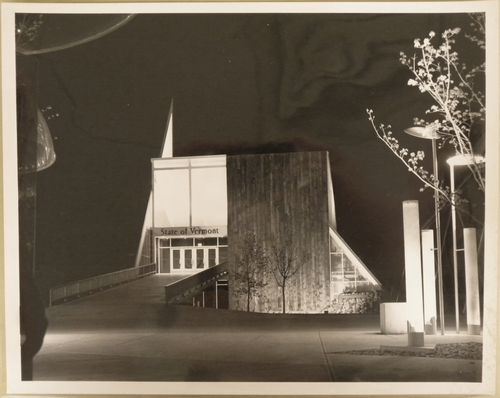
"Le pavillon de l'Etat du Vermont à l'Expo 67, symbolise le caractère de cet Etat des Montagnes Vertes. Les éléments d'exposition expriment la tradition d'intégrité et d'indépendance de l'Etat. On y voit également une statue de Samuel de Champlain, haute de 12 pieds, (environ 3.5m) commémorant le quatrième centenaire de la naissance de l'explorateur. / The pavilion of the State of Vermont at Expo 67, has exhibits that deal with the history, tradition and attractions of Vermont. The pavilion features a 12-foot statue of the explorer, Samuel de Champlain."--Description.
ARCH256151
Description:
"Le pavillon de l'Etat du Vermont à l'Expo 67, symbolise le caractère de cet Etat des Montagnes Vertes. Les éléments d'exposition expriment la tradition d'intégrité et d'indépendance de l'Etat. On y voit également une statue de Samuel de Champlain, haute de 12 pieds, (environ 3.5m) commémorant le quatrième centenaire de la naissance de l'explorateur. / The pavilion of the State of Vermont at Expo 67, has exhibits that deal with the history, tradition and attractions of Vermont. The pavilion features a 12-foot statue of the explorer, Samuel de Champlain."--Description.
People:
Date:
1967
1967
Title:
Night view of the Vermont's Pavilion, Expo 67, Montréal, Québec
Actions:
ARCH256151
Description:
"Le pavillon de l'Etat du Vermont à l'Expo 67, symbolise le caractère de cet Etat des Montagnes Vertes. Les éléments d'exposition expriment la tradition d'intégrité et d'indépendance de l'Etat. On y voit également une statue de Samuel de Champlain, haute de 12 pieds, (environ 3.5m) commémorant le quatrième centenaire de la naissance de l'explorateur. / The pavilion of the State of Vermont at Expo 67, has exhibits that deal with the history, tradition and attractions of Vermont. The pavilion features a 12-foot statue of the explorer, Samuel de Champlain."--Description.
Night view of the Vermont's Pavilion, Expo 67, Montréal, Québec
Actions:
ARCH256151
Description:
"Le pavillon de l'Etat du Vermont à l'Expo 67, symbolise le caractère de cet Etat des Montagnes Vertes. Les éléments d'exposition expriment la tradition d'intégrité et d'indépendance de l'Etat. On y voit également une statue de Samuel de Champlain, haute de 12 pieds, (environ 3.5m) commémorant le quatrième centenaire de la naissance de l'explorateur. / The pavilion of the State of Vermont at Expo 67, has exhibits that deal with the history, tradition and attractions of Vermont. The pavilion features a 12-foot statue of the explorer, Samuel de Champlain."--Description.
Form:
photographs
photographs
Date:
1967
1967
People:
Form:
exhibitions
exhibitions
Description:
A revolutionary approach to the relationship between building and landscape, which shaped them together according to peculiarly American ideals, is the subject of Frank Lloyd Wright: Designs for an American Landscape, 1922–1932. In this exhibition, the CCA reconstructs five unbuilt, visionary projects that imagined nothing less than a new American landscape, integrating(...)
A revolutionary approach to the relationship between building and landscape, which shaped them together according to peculiarly American ideals, is the subject of Frank Lloyd Wright: Designs for an American Landscape, 1922–1932. In this exhibition, the CCA reconstructs five unbuilt, visionary projects that imagined nothing less than a new American landscape, integrating(...)
Location:
Main galleries
Main galleries
Date:
18 June 1996 to 29 September 1996
18 June 1996 to 29 September 1996
Title:
Frank Lloyd Wright: Designs for an American Landscape, 1922-1932
Actions:
Description:
A revolutionary approach to the relationship between building and landscape, which shaped them together according to peculiarly American ideals, is the subject of Frank Lloyd Wright: Designs for an American Landscape, 1922–1932. In this exhibition, the CCA reconstructs five unbuilt, visionary projects that imagined nothing less than a new American landscape, integrating(...)
Frank Lloyd Wright: Designs for an American Landscape, 1922-1932
Actions:
Description:
A revolutionary approach to the relationship between building and landscape, which shaped them together according to peculiarly American ideals, is the subject of Frank Lloyd Wright: Designs for an American Landscape, 1922–1932. In this exhibition, the CCA reconstructs five unbuilt, visionary projects that imagined nothing less than a new American landscape, integrating(...)
Form:
exhibitions
exhibitions
Date:
18 June 1996 to
29 September 1996
18 June 1996 to
29 September 1996
Location:
Main galleries
Main galleries


