


1144 Results
Form:
books
books
Title:
La violence des villes
La violence des villes
Actions:
Price:
$20.00
(available to order)
Summary:
Au Nord comme au Sud, nous aimons les grandes villes, mais nous n'en aimons pas la violence. Une tendance lourde est d'en attribuer les causes aux habitants les plus pauvres, puis d'adopter, pour les combattre, des stratégies sécuritaires : nos sociétés se transforment vite en sociétés de la peur. L'urbanisme, déjà, divise l'espace en forteresses et bidonvilles. On ne(...)
Subject:
Urban Theory
Urban Theory
Publication:
September 2005, Paris, Tunis, Abidjan, Montréal, Lausanne, Conakry
September 2005, Paris, Tunis, Abidjan, Montréal, Lausanne, Conakry
Title:
La violence des villes
Actions:
Price:
$20.00
(available to order)
Summary:
Au Nord comme au Sud, nous aimons les grandes villes, mais nous n'en aimons pas la violence. Une tendance lourde est d'en attribuer les causes aux habitants les plus pauvres, puis d'adopter, pour les combattre, des stratégies sécuritaires : nos sociétés se transforment vite en sociétés de la peur. L'urbanisme, déjà, divise l'espace en forteresses et bidonvilles. On ne peut pas continuer à penser l'urbanisation depuis les commissariats de police : une lecture alternative des phénomènes de violence et d'insécurité urbaines est nécessaire. Elle ne peut se faire qu'en les resituant dans le contexte de la violence de l'urbanisation et de la globalisation. En prenant en compte, aussi, le point de vue des pauvres et en privilégiant, d'entre les pauvres, les «méchants», les outsiders, les illégaux, les bandits, les membres des gangs. Quand tout paraît fermé, la «vision du pauvre» ouvre des pistes pour une pacification des territoires urbains. Contre l'actuelle dérive sécuritaire, un dialogue créatif s'impose avec ceux que le pouvoir diabolise. Ce livre s'adresse à tous ceux qui cherchent à saisir le sens de la ville, ceux qu'elle effraie et ceux qui l'aiment et ne veulent pas y renoncer, mais également aux habitants des quartiers extrêmes, même s'ils sont pauvres et «méchants», même si la ville les détruit plus qu'elle ne les protège. Pour reconstruire des villes habitables, il faut désobéir aux modèles.
Form:
books
books
Publication:
September 2005, Paris, Tunis, Abidjan, Montréal, Lausanne, Conakry
September 2005, Paris, Tunis, Abidjan, Montréal, Lausanne, Conakry
Subject:
Urban Theory
Urban Theory
Form:
books
books

Title:
Capitalisme carcéral
Capitalisme carcéral
Actions:
Price:
$21.95
(available in store)
Summary:
Dans son livre « Capitalisme carcéral, » Jackie Wang examine le fonctionnement actuel du capitalisme aux États-Unis illustrant divers aspects du continuum carcéral comme la biopolitique de la délinquance juvénile, le profilage racial, la police prédatrice, la gouvernance cybernétique et le maintien de l’ordre algorithmique. Comment un réseau carcéral et des appareils de(...)
Title:
Capitalisme carcéral
Actions:
Price:
$21.95
(available in store)
Summary:
Dans son livre « Capitalisme carcéral, » Jackie Wang examine le fonctionnement actuel du capitalisme aux États-Unis illustrant divers aspects du continuum carcéral comme la biopolitique de la délinquance juvénile, le profilage racial, la police prédatrice, la gouvernance cybernétique et le maintien de l’ordre algorithmique. Comment un réseau carcéral et des appareils de répression policiers s’articulent-ils à la violence de l'économie et du racisme? S’agit-il de la continuation directe, sous un autre visage, du système d’esclavage qui perdura jusqu’au XIXe siècle et sur lequel se sont fondés les États-Unis d’Amérique? Est-ce un système de gestion des populations « surnuméraires » déclassées de leur position dans la hiérarchie sociale? Est-ce que les dispositifs policiers qui strient les espaces urbains ne seraient que d’autres moyens d’extraire de la valeur afin de garantir, à travers les mille et une infractions qu’ils répriment et le fermage d'amendes, la santé financière de l’État? De la privatisation des prisons et des agences de sécurité jusqu’au développement massif d’une industrie technosécuritaire en passant par les algorithmes de reconnaissance faciale et le quadrillage GPS des villes qui les transforment en véritables prisons à ciel ouvert, cet ensemble d’hypothèses nous fait plonger au cœur de l’enfer du capitalisme américain, de ses logiques totalitaires et sécuritaires et de ses processus de racialisation des corps.
Form:
books
books
Publication:
January 2021
January 2021
Subject:
Social
Social
Form:
books
books
Actions:
Holdings:
Description:
71 pages : illustrations, plans ; 23 cm
Description:
71 pages : illustrations, plans ; 23 cm
Author:
Subject:
Publication:
Berlin, Germany : Los Angeles, Calif. : Errant Bodies Press : New York : Distributed by DAP, 2009.
Berlin, Germany : Los Angeles, Calif. : Errant Bodies Press : New York : Distributed by DAP, 2009.
Title:
What remains of a building divided into equal parts and distributed for reconfiguration / edited by Ken Ehrlich & Brandon LaBelle.
Actions:
Holdings:
Description:
71 pages : illustrations, plans ; 23 cm
What remains of a building divided into equal parts and distributed for reconfiguration / edited by Ken Ehrlich & Brandon LaBelle.
Actions:
Holdings:
Description:
71 pages : illustrations, plans ; 23 cm
Form:
books
books
Publication:
Berlin, Germany : Los Angeles, Calif. : Errant Bodies Press : New York : Distributed by DAP, 2009.
Berlin, Germany : Los Angeles, Calif. : Errant Bodies Press : New York : Distributed by DAP, 2009.
Author:
Subject:
Form:
books
books
Actions:
Holdings:
Description:
xviii, 285 pages : illustrations, map ; 23 cm
Description:
xviii, 285 pages : illustrations, map ; 23 cm
Author:
Subject:
Publication:
Oxford : Clarendon Press ; New York : Oxford University Press, 1990.
Oxford : Clarendon Press ; New York : Oxford University Press, 1990.
Title:
Tackling the inner cities : the 1980s reviewed, prospects for the 1990s / edited by Susanne MacGregor and Ben Pimlott.
Actions:
Holdings:
Description:
xviii, 285 pages : illustrations, map ; 23 cm
Tackling the inner cities : the 1980s reviewed, prospects for the 1990s / edited by Susanne MacGregor and Ben Pimlott.
Actions:
Holdings:
Description:
xviii, 285 pages : illustrations, map ; 23 cm
Form:
books
books
Publication:
Oxford : Clarendon Press ; New York : Oxford University Press, 1990.
Oxford : Clarendon Press ; New York : Oxford University Press, 1990.
Author:
Subject:
Form:
books
books
Actions:
Holdings:
Description:
141 pages : chiefly illustrations (chiefly color) ; 24 cm
Description:
141 pages : chiefly illustrations (chiefly color) ; 24 cm
Author:
Subject:
Publication:
Barcelona (Spain) : Monsa, 2022., ©2022
Barcelona (Spain) : Monsa, 2022., ©2022
Title:
Off grid getaways : organic architecture / project director Anna Minguet ; art director & layout Eva Minguet.
Actions:
Holdings:
Description:
141 pages : chiefly illustrations (chiefly color) ; 24 cm
Off grid getaways : organic architecture / project director Anna Minguet ; art director & layout Eva Minguet.
Actions:
Holdings:
Description:
141 pages : chiefly illustrations (chiefly color) ; 24 cm
Form:
books
books
Publication:
Barcelona (Spain) : Monsa, 2022., ©2022
Barcelona (Spain) : Monsa, 2022., ©2022
Author:
Subject:
Form:
books
books
Actions:
Price:
$99.95
(available to order)
Summary:
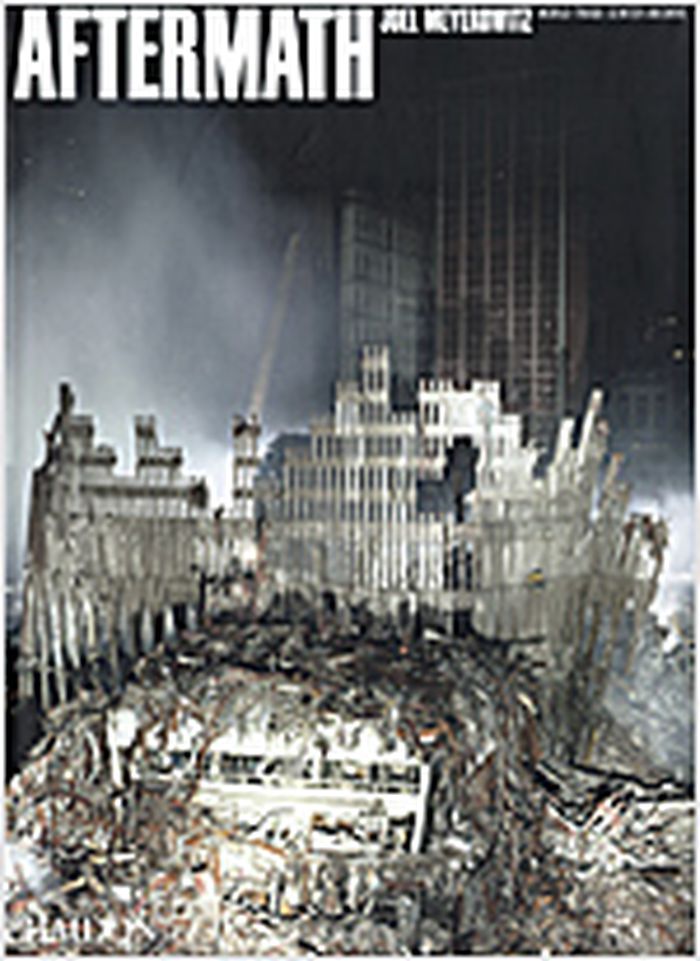
After the destruction of the World Trade Center in New York on September 11th 2001, the photographer Joel Meyerowitz felt compelled to visit the site. On his return Meyerowitz soon made his way to the scene where, upon raising his camera, he was reminded by a police officer that this was a crime scene and that no photographs were allowed. Meyerowitz duly left the scene(...)
Subject:
Architecture since 1900, Europe
Architecture since 1900, Europe
Publication:
September 2006, London
September 2006, London
Title:
Aftermath : world trade center archive
Actions:
Price:
$99.95
(available to order)
Summary:
After the destruction of the World Trade Center in New York on September 11th 2001, the photographer Joel Meyerowitz felt compelled to visit the site. On his return Meyerowitz soon made his way to the scene where, upon raising his camera, he was reminded by a police officer that this was a crime scene and that no photographs were allowed. Meyerowitz duly left the scene but within a few blocks the officer’s reminder had turned into consciousness. To Meyerowitz, ‘no photographs meant no history’ and he decided at that moment to find a way in and make an archive for the City of New York. Within days he had established strong links with many of the firefighters, policemen and construction workers contributing to the clean up. With their assistance he became the only photographer to be granted unimpeded access to Ground Zero. Once there he systematically began to document the wreckage followed by the necessary demolition, excavation and removal of tens of thousands of tonnes of debris that would transform the site from one of total devastation to level ground. Soon after the Museum of the City of New York officially engaged Meyerowitz to create an archive of the destruction and recovery at Ground Zero. The 9/11 Photographic Archive numbers in excess of 5,000 images and will become part of the permanent collections of the Museum of the City of New York.
Form:
books
books
Publication:
September 2006, London
September 2006, London
Subject:
Architecture since 1900, Europe
Architecture since 1900, Europe
Form:
books
books
Actions:
Holdings:
Description:
vii, 229 pages : illustrations ; 28 cm.
Description:
vii, 229 pages : illustrations ; 28 cm.
Author:
Subject:
Publication:
Washington, D.C. : World Bank, ©1985.
Washington, D.C. : World Bank, ©1985.
Title:
Urban housing in India / Devendra B. Gupta.
Actions:
Holdings:
Description:
vii, 229 pages : illustrations ; 28 cm.
Urban housing in India / Devendra B. Gupta.
Actions:
Holdings:
Description:
vii, 229 pages : illustrations ; 28 cm.
Form:
books
books
Publication:
Washington, D.C. : World Bank, ©1985.
Washington, D.C. : World Bank, ©1985.
Author:
Subject:
Form:
books
books
Actions:
Holdings:
Description:
128 pages : color illustrations, color maps ; 25 cm
Description:
128 pages : color illustrations, color maps ; 25 cm
Author:
Subject:
Publication:
Berkeley : University of California Press, ©2011.
Berkeley : University of California Press, ©2011.
Title:
The atlas of climate change : mapping the world's greatest challenge / Kirstin Dow and Thomas E. Downing.
Actions:
Holdings:
Description:
128 pages : color illustrations, color maps ; 25 cm
The atlas of climate change : mapping the world's greatest challenge / Kirstin Dow and Thomas E. Downing.
Actions:
Holdings:
Description:
128 pages : color illustrations, color maps ; 25 cm
Form:
books
books
Publication:
Berkeley : University of California Press, ©2011.
Berkeley : University of California Press, ©2011.
Author:
Subject:
Form:
books
books
Holdings:
Description:
xvii, 221 pages : illustrations, maps ; 26 cm
Description:
xvii, 221 pages : illustrations, maps ; 26 cm
Author:
Subject:
Publication:
Seattle : University of Washington Press, ©2002.
Seattle : University of Washington Press, ©2002.
Title:
Repairing the American metropolis / Douglas S. Kelbaugh.
Actions:
Holdings:
Description:
xvii, 221 pages : illustrations, maps ; 26 cm
Repairing the American metropolis / Douglas S. Kelbaugh.
Actions:
Holdings:
Description:
xvii, 221 pages : illustrations, maps ; 26 cm
Form:
books
books
Publication:
Seattle : University of Washington Press, ©2002.
Seattle : University of Washington Press, ©2002.
Author:
Subject:
Form:
books
books
Actions:
Price:
$38.95
(available to order)
Summary:
In the middle of the night they quickly build houses and seize land before the police destroy their fragile homes. They're squatters, families that risk the wrath of governments and property owners by building dwellings on land they don't own, and they represent one out of every ten people on the planet. Investigative journalist Robert Neuwirth lived among squatter(...)
Title:
Shadow cities: a billion squatters, a new urban world
Actions:
Price:
$38.95
(available to order)
Summary:
In the middle of the night they quickly build houses and seize land before the police destroy their fragile homes. They're squatters, families that risk the wrath of governments and property owners by building dwellings on land they don't own, and they represent one out of every ten people on the planet. Investigative journalist Robert Neuwirth lived among squatter communities from Rio to Bombay to Nairobi to Istanbul to give us an impassioned, inside view of squatter life and a glimpse into the urban future. He met people in Nairobi who built homes with their bare hands, Turkish families who plot land invasions, and children in Rio whose parents justify outfoxing the authorities as the only path to a better life. And he shows us that in cities like Rio, squatter settlements have become decent places to live for formerly landless people. Tracing the notion of private property from the enclosure movement in Europe to the settlement of the U.S., Neuwirth shows how squatting rights may actually be seen as more "natural" than the current laws practiced in the U.S. In almost every country of the developing world, the most active builders are squatters, creating complex local economies with high rises, shopping strips, banks, and self-government. As they invent new social structures, Neuwirth argues, squatters are at the forefront of the worldwide movement to develop new visions of what constitutes property and community.
Form:
books
books
Publication:
December 2004, New York
December 2004, New York
Subject:
Urban Theory
Urban Theory


