


10284 Results
Form:
books
books
Actions:
Price:
$34.00
(available to order)
Summary:
The open terrain of new media is closing fast. Market concentration, legal consolidation and tightening governmental control have effectively ended the myth of the free and open networks. In Delusive Spaces, Eric Kluitenberg takes a critical position that retains a utopian potential for emerging media cultures. The book investigates the archeology of media and machine,(...)
$34.00
(available to order)
Summary:
The open terrain of new media is closing fast. Market concentration, legal consolidation and tightening governmental control have effectively ended the myth of the free and open networks. In Delusive Spaces, Eric Kluitenberg takes a critical position that retains a utopian potential for emerging media cultures. The book investigates the archeology of media and machine,(...)
Title:
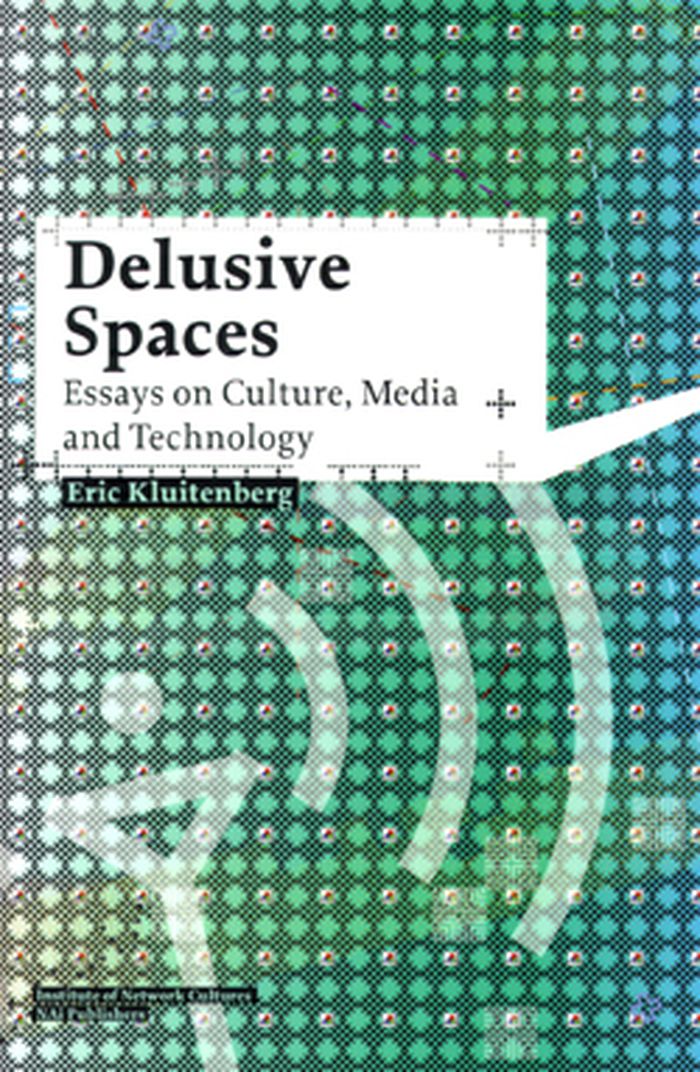
Delusive spaces: essays on culture, media and technology
Actions:
Price:
$34.00
(available to order)
Summary:
The open terrain of new media is closing fast. Market concentration, legal consolidation and tightening governmental control have effectively ended the myth of the free and open networks. In Delusive Spaces, Eric Kluitenberg takes a critical position that retains a utopian potential for emerging media cultures. The book investigates the archeology of media and machine, mapping the different methods and metaphors that speak about technology. Returning to the present, Kluitenberg discusses the cultural use of new media in an age of post-governmental politics. Delusive Spaces concludes with the impossibility of representation. Going beyond the obvious delusions of the 'new' and the 'free', Kluitenberg theorizes artistic practices and European cultural policies, demonstrating a provocative engagement with the utopian dimension of technology. Eric Kluitenberg is a Dutch media theorist, writer and organizer. Since the late 1980s, he has been involved in numerous international projects in the field of electronic art, media culture, and information politics. Kluitenberg heads the media program at De Balie, Centre for Culture and Politics in Amsterdam. He is the editor of the Book of Imaginary Media (NAi Publishers, 2006) and the theme issue Hybrid Space of Open, journal on art and the public domain (2007).
Delusive spaces: essays on culture, media and technology
Actions:
Price:
$34.00
(available to order)
Summary:
The open terrain of new media is closing fast. Market concentration, legal consolidation and tightening governmental control have effectively ended the myth of the free and open networks. In Delusive Spaces, Eric Kluitenberg takes a critical position that retains a utopian potential for emerging media cultures. The book investigates the archeology of media and machine, mapping the different methods and metaphors that speak about technology. Returning to the present, Kluitenberg discusses the cultural use of new media in an age of post-governmental politics. Delusive Spaces concludes with the impossibility of representation. Going beyond the obvious delusions of the 'new' and the 'free', Kluitenberg theorizes artistic practices and European cultural policies, demonstrating a provocative engagement with the utopian dimension of technology. Eric Kluitenberg is a Dutch media theorist, writer and organizer. Since the late 1980s, he has been involved in numerous international projects in the field of electronic art, media culture, and information politics. Kluitenberg heads the media program at De Balie, Centre for Culture and Politics in Amsterdam. He is the editor of the Book of Imaginary Media (NAi Publishers, 2006) and the theme issue Hybrid Space of Open, journal on art and the public domain (2007).
Form:
books
books
Publication:
April 2008, Rotterdam
April 2008, Rotterdam
Subject:
Epistemology
Epistemology
Form:
books
books
Actions:
Price:
$30.00
(available to order)
Summary:
We owe our idea of the contemporary exhibition to Harald Szeemann--the first of the jet-setting international curators. From 1961 to 1969, he was Curator of the Kunsthalle Bern, where in 1968 he had the foresight to give Christo and Jeanne-Claude the opportunity to wrap the entire museum building. Szeemann's groundbreaking 1969 exhibition When Attitudes Become Form, also(...)
$30.00
(available to order)
Summary:
We owe our idea of the contemporary exhibition to Harald Szeemann--the first of the jet-setting international curators. From 1961 to 1969, he was Curator of the Kunsthalle Bern, where in 1968 he had the foresight to give Christo and Jeanne-Claude the opportunity to wrap the entire museum building. Szeemann's groundbreaking 1969 exhibition When Attitudes Become Form, also(...)
Subject:
Museology
Museology
Publication:
March 2008, Berlin, Dijon, New York, Manchester
March 2008, Berlin, Dijon, New York, Manchester
Title:
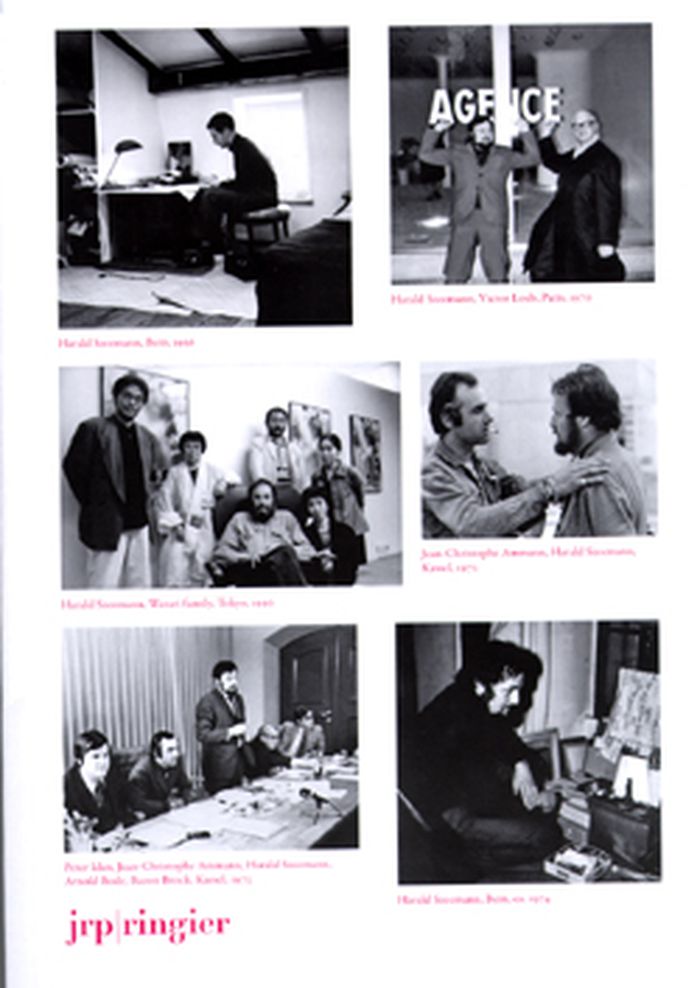
Harald Szeemann Individual Methodology
Actions:
Price:
$30.00
(available to order)
Summary:
We owe our idea of the contemporary exhibition to Harald Szeemann--the first of the jet-setting international curators. From 1961 to 1969, he was Curator of the Kunsthalle Bern, where in 1968 he had the foresight to give Christo and Jeanne-Claude the opportunity to wrap the entire museum building. Szeemann's groundbreaking 1969 exhibition When Attitudes Become Form, also at the Kunsthalle, introduced European audiences to artists like Joseph Beuys, Eva Hesse, Richard Serra and Lawrence Weiner. It also introduced the now-commonplace practice of curating an exhibition around a theme. Since Szeemann's death in 2005, there has been research underway at his archive in Tessin, Switzerland. An invaluable resource, this volume provides access to previously unpublished plans, documents and photographs from the archive, along with important essays by Hal Foster and Jean-Marc Poinsot. There is also an informative interview with Tobia Bezzola--curator at the Kunsthauz Zurich and Szeemann's collaborator for many years. Two of Szeemann's most ambitious exhibitions are presented as case studies: Documenta V (1972) and L'Autre, the 4th Lyon Biennial (1997). A biography, an illustrated chronology of Szeemann's exhibitions and a selection of his writings complete this exhaustive survey.
Harald Szeemann Individual Methodology
Actions:
Price:
$30.00
(available to order)
Summary:
We owe our idea of the contemporary exhibition to Harald Szeemann--the first of the jet-setting international curators. From 1961 to 1969, he was Curator of the Kunsthalle Bern, where in 1968 he had the foresight to give Christo and Jeanne-Claude the opportunity to wrap the entire museum building. Szeemann's groundbreaking 1969 exhibition When Attitudes Become Form, also at the Kunsthalle, introduced European audiences to artists like Joseph Beuys, Eva Hesse, Richard Serra and Lawrence Weiner. It also introduced the now-commonplace practice of curating an exhibition around a theme. Since Szeemann's death in 2005, there has been research underway at his archive in Tessin, Switzerland. An invaluable resource, this volume provides access to previously unpublished plans, documents and photographs from the archive, along with important essays by Hal Foster and Jean-Marc Poinsot. There is also an informative interview with Tobia Bezzola--curator at the Kunsthauz Zurich and Szeemann's collaborator for many years. Two of Szeemann's most ambitious exhibitions are presented as case studies: Documenta V (1972) and L'Autre, the 4th Lyon Biennial (1997). A biography, an illustrated chronology of Szeemann's exhibitions and a selection of his writings complete this exhaustive survey.
Form:
books
books
Publication:
March 2008, Berlin, Dijon, New York, Manchester
March 2008, Berlin, Dijon, New York, Manchester
Subject:
Museology
Museology
Form:
books
books
Title:
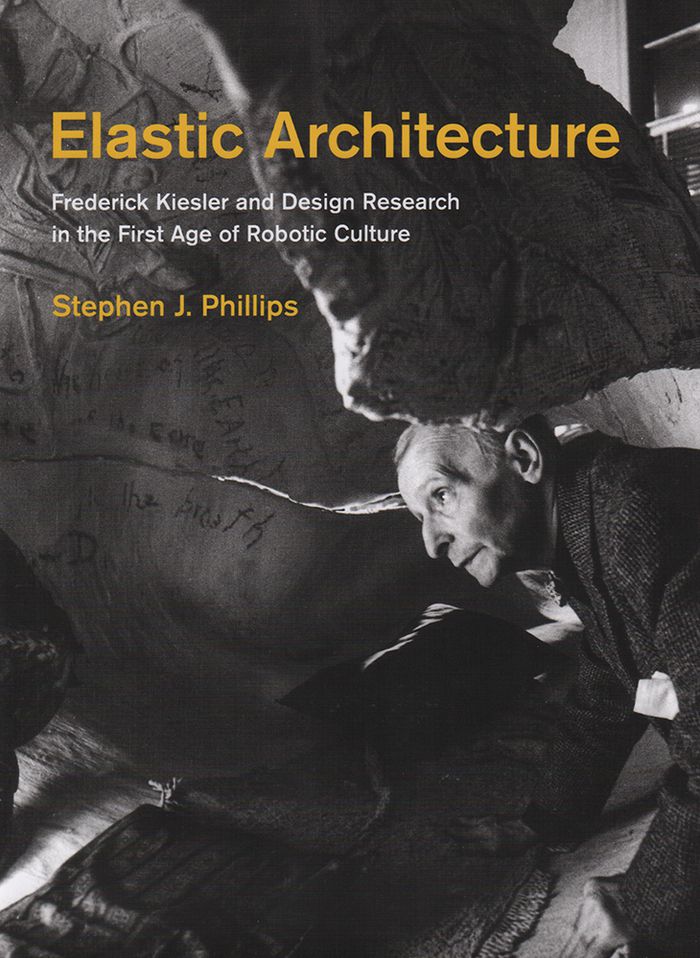
Elastic architecture: Frederick Kiesler and design research in the first age of robotic culture
Elastic architecture: Frederick Kiesler and design research in the first age of robotic culture
Actions:
Price:
$42.95
(available to order)
Summary:
In 1960, architect Philip Johnson championed Frederick Kiesler, calling him “the greatest non-building architect of our time.” Kiesler’s ideas were difficult to construct, but as Johnson believed, “enormous” and “profound.” Kiesler (1890–1965) went against the grain of the accepted modern style, rejecting rectilinear glass and steel in favor of more organic forms and(...)
$42.95
(available to order)
Summary:
In 1960, architect Philip Johnson championed Frederick Kiesler, calling him “the greatest non-building architect of our time.” Kiesler’s ideas were difficult to construct, but as Johnson believed, “enormous” and “profound.” Kiesler (1890–1965) went against the grain of the accepted modern style, rejecting rectilinear glass and steel in favor of more organic forms and(...)
Title:
Elastic architecture: Frederick Kiesler and design research in the first age of robotic culture
Actions:
Price:
$42.95
(available to order)
Summary:
In 1960, architect Philip Johnson championed Frederick Kiesler, calling him “the greatest non-building architect of our time.” Kiesler’s ideas were difficult to construct, but as Johnson believed, “enormous” and “profound.” Kiesler (1890–1965) went against the grain of the accepted modern style, rejecting rectilinear glass and steel in favor of more organic forms and flexible structures that could respond to the ever-changing needs of the body in motion. In Elastic Architecture, Stephen Phillips offers the first in-depth exploration of Kiesler’s innovative and multidisciplinary research and design practice. Exploring Kiesler’s formative relationships with the European avant-garde, Phillips shows how Kiesler found inspiration in the plastic arts, experimental theater, early animation, and automatons to develop and refine his spatial concept of the Endless. Moving from Europe to New York in the 1920s, Kiesler applied these radical Dadaist, constructivist, and surrealist practices to his urban display projects, which included shop windows for Saks Fifth Avenue. After launching his innovative Design Correlation Laboratory at Columbia and Yale, Kiesler went on to invent new houses, theaters, and galleries that were meant to move, shift, and adapt to evolutionary changes occurring within the natural and built environment.
Elastic architecture: Frederick Kiesler and design research in the first age of robotic culture
Actions:
Price:
$42.95
(available to order)
Summary:
In 1960, architect Philip Johnson championed Frederick Kiesler, calling him “the greatest non-building architect of our time.” Kiesler’s ideas were difficult to construct, but as Johnson believed, “enormous” and “profound.” Kiesler (1890–1965) went against the grain of the accepted modern style, rejecting rectilinear glass and steel in favor of more organic forms and flexible structures that could respond to the ever-changing needs of the body in motion. In Elastic Architecture, Stephen Phillips offers the first in-depth exploration of Kiesler’s innovative and multidisciplinary research and design practice. Exploring Kiesler’s formative relationships with the European avant-garde, Phillips shows how Kiesler found inspiration in the plastic arts, experimental theater, early animation, and automatons to develop and refine his spatial concept of the Endless. Moving from Europe to New York in the 1920s, Kiesler applied these radical Dadaist, constructivist, and surrealist practices to his urban display projects, which included shop windows for Saks Fifth Avenue. After launching his innovative Design Correlation Laboratory at Columbia and Yale, Kiesler went on to invent new houses, theaters, and galleries that were meant to move, shift, and adapt to evolutionary changes occurring within the natural and built environment.
Form:
books
books
Publication:
March 2017
March 2017
Subject:
Architectural Theory
Architectural Theory
Form:
books
books
Actions:
Price:
$54.95
(available to order)
Summary:
Swiss artist, architect, designer, typographer, and theorist Max Bill (1908–94) was one of the most important exponents of concrete and constructive art and a key figure in European applied arts and design history. Educated by such prominent teachers as Paul Klee, Wassily Kandisky, and Walter Gropius at the Bauhaus, at the start of his career in the 1930s. In the 1950s he(...)
$54.95
(available to order)
Summary:
Swiss artist, architect, designer, typographer, and theorist Max Bill (1908–94) was one of the most important exponents of concrete and constructive art and a key figure in European applied arts and design history. Educated by such prominent teachers as Paul Klee, Wassily Kandisky, and Walter Gropius at the Bauhaus, at the start of his career in the 1930s. In the 1950s he(...)
Title:
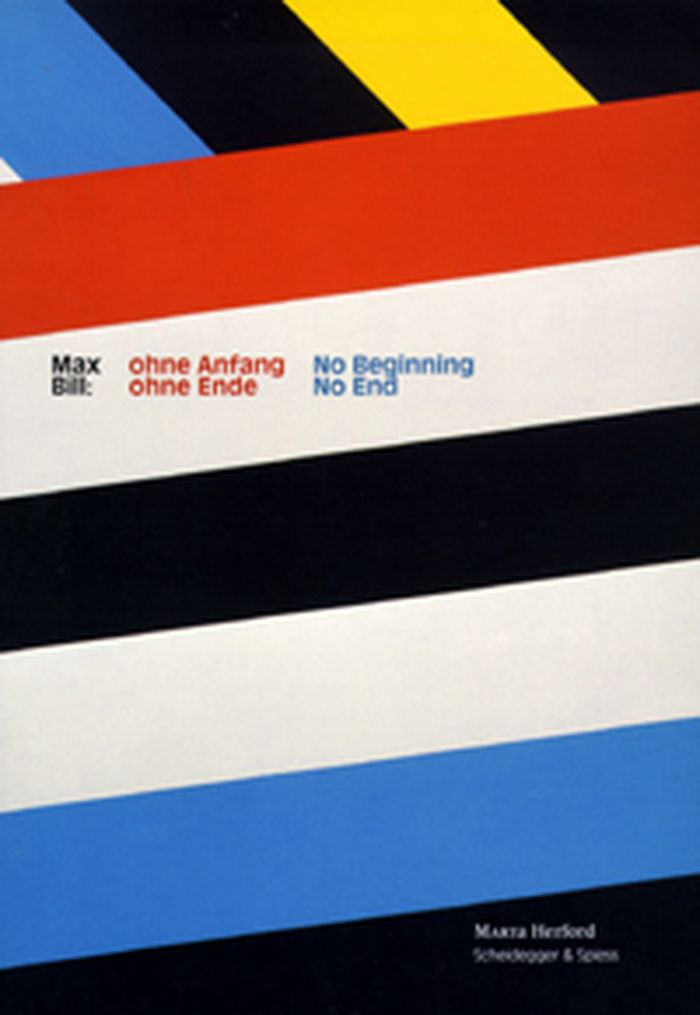
Max Bill: No Beginning No End
Actions:
Price:
$54.95
(available to order)
Summary:
Swiss artist, architect, designer, typographer, and theorist Max Bill (1908–94) was one of the most important exponents of concrete and constructive art and a key figure in European applied arts and design history. Educated by such prominent teachers as Paul Klee, Wassily Kandisky, and Walter Gropius at the Bauhaus, at the start of his career in the 1930s. In the 1950s he teamed up with Inge Scholl and Otl Aicher to found the legendary Ulm College of Design in Ulm, Germany, of which he became the first director. In his work, Max Bill carried on the legacy of the Bauhaus, both as an artist and a teacher, and made a decisive and lasting contribution to twentieth-century cultural life. Max Bill accompanies an exhibition at the Museum MARTa Herford in Herford, Germany, held to mark the centenary of this exceptional artist. The exhibition displays Bill’s wide-ranging work, and it also sets him in the context of his cultural milieu by featuring works by his contemporaries, such as Kurt Schwitters, Wassily Kandinsky, and Donald Judd. Accompanying essays investigate Bill’s influence on other artists and the lasting importance of his oeuvre in the present.
Max Bill: No Beginning No End
Actions:
Price:
$54.95
(available to order)
Summary:
Swiss artist, architect, designer, typographer, and theorist Max Bill (1908–94) was one of the most important exponents of concrete and constructive art and a key figure in European applied arts and design history. Educated by such prominent teachers as Paul Klee, Wassily Kandisky, and Walter Gropius at the Bauhaus, at the start of his career in the 1930s. In the 1950s he teamed up with Inge Scholl and Otl Aicher to found the legendary Ulm College of Design in Ulm, Germany, of which he became the first director. In his work, Max Bill carried on the legacy of the Bauhaus, both as an artist and a teacher, and made a decisive and lasting contribution to twentieth-century cultural life. Max Bill accompanies an exhibition at the Museum MARTa Herford in Herford, Germany, held to mark the centenary of this exceptional artist. The exhibition displays Bill’s wide-ranging work, and it also sets him in the context of his cultural milieu by featuring works by his contemporaries, such as Kurt Schwitters, Wassily Kandinsky, and Donald Judd. Accompanying essays investigate Bill’s influence on other artists and the lasting importance of his oeuvre in the present.
Form:
books
books
Publication:
April 2008, Zürich
April 2008, Zürich
Subject:
Graphic Designers, Monographs
Graphic Designers, Monographs
Form:
books
books
Actions:
Price:
$84.50
(available to order)
Summary:
"Crafting a Modern World" is the first comprehensive book in English on Antonin and Noémi Raymond, a duo that creatively transformed design from 1917 to 1966. Best known for a series of finely detailed structures built in Japan during the 1930s, the Raymonds had prolific careers that included designs for factories, office buildings, churches, and schools as well as(...)
$84.50
(available to order)
Summary:
"Crafting a Modern World" is the first comprehensive book in English on Antonin and Noémi Raymond, a duo that creatively transformed design from 1917 to 1966. Best known for a series of finely detailed structures built in Japan during the 1930s, the Raymonds had prolific careers that included designs for factories, office buildings, churches, and schools as well as(...)
Subject:
Architecture Monographs
Architecture Monographs
Publication:
September 2006, New York
September 2006, New York
Title:
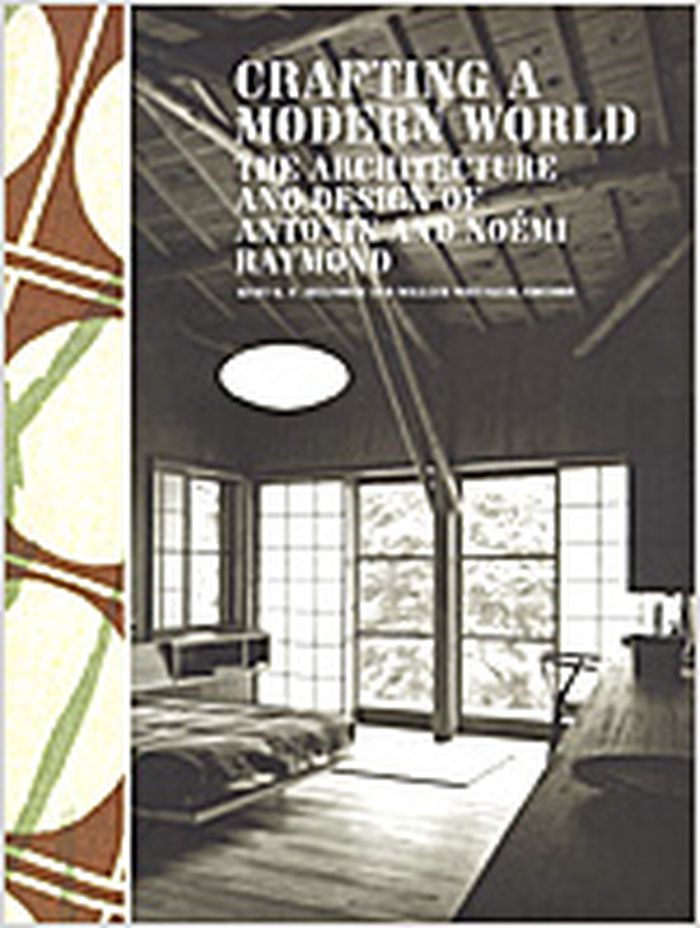
Crafting a modern world : the architecture and design of Antonin and Noémi Raymond
Actions:
Price:
$84.50
(available to order)
Summary:
"Crafting a Modern World" is the first comprehensive book in English on Antonin and Noémi Raymond, a duo that creatively transformed design from 1917 to 1966. Best known for a series of finely detailed structures built in Japan during the 1930s, the Raymonds had prolific careers that included designs for factories, office buildings, churches, and schools as well as furniture, fabrics, and graphic design. The Raymonds combined their European modern roots with the vernacular craft traditions they discovered in regions as diverse as Japan, India, and rural Pennsylvania. They also collaborated with some of the twentieth century's leading thinkers and artists, including Frank Lloyd Wright, Cass Gilbert, Isamu Noguchi, George Nakashima, and Fernand Léger. Inspired by the conventions of traditional Japanese buildings, they brought a high level of attention to craft to all their work, from churches in Chicago and Karuizawa to the Tokyo Tennis Club, the Pacific Cable Company Station in Guam, the Golconde Dormitory in India, and houses throughout the northeastern U.S., including their own modernist interventions at a rural farmhouse in New Hope, Pennsylvania. Four essays round out this examination of the Raymonds' careers.
Crafting a modern world : the architecture and design of Antonin and Noémi Raymond
Actions:
Price:
$84.50
(available to order)
Summary:
"Crafting a Modern World" is the first comprehensive book in English on Antonin and Noémi Raymond, a duo that creatively transformed design from 1917 to 1966. Best known for a series of finely detailed structures built in Japan during the 1930s, the Raymonds had prolific careers that included designs for factories, office buildings, churches, and schools as well as furniture, fabrics, and graphic design. The Raymonds combined their European modern roots with the vernacular craft traditions they discovered in regions as diverse as Japan, India, and rural Pennsylvania. They also collaborated with some of the twentieth century's leading thinkers and artists, including Frank Lloyd Wright, Cass Gilbert, Isamu Noguchi, George Nakashima, and Fernand Léger. Inspired by the conventions of traditional Japanese buildings, they brought a high level of attention to craft to all their work, from churches in Chicago and Karuizawa to the Tokyo Tennis Club, the Pacific Cable Company Station in Guam, the Golconde Dormitory in India, and houses throughout the northeastern U.S., including their own modernist interventions at a rural farmhouse in New Hope, Pennsylvania. Four essays round out this examination of the Raymonds' careers.
Form:
books
books
Publication:
September 2006, New York
September 2006, New York
Subject:
Architecture Monographs
Architecture Monographs
Form:
books
books
Actions:
Price:
$107.00
(available to order)
Summary:
Helmut Jahn´s latest buildings are the result of interdisciplinary thinking taken a step further: they represent a symbiotic collaboration between architecture, engineering and building technology. The credo of this form of architecture engineering is transparency, openness and inner flexibility, and instrumental in its development are among others, Helmut Jahn, Werner(...)
$107.00
(available to order)
Summary:
Helmut Jahn´s latest buildings are the result of interdisciplinary thinking taken a step further: they represent a symbiotic collaboration between architecture, engineering and building technology. The credo of this form of architecture engineering is transparency, openness and inner flexibility, and instrumental in its development are among others, Helmut Jahn, Werner(...)
Subject:
Architecture Monographs
Architecture Monographs
Publication:
September 2002, Basel
September 2002, Basel
Title:
Helmut Jahn : architecture engineering
Actions:
Price:
$107.00
(available to order)
Summary:
Helmut Jahn´s latest buildings are the result of interdisciplinary thinking taken a step further: they represent a symbiotic collaboration between architecture, engineering and building technology. The credo of this form of architecture engineering is transparency, openness and inner flexibility, and instrumental in its development are among others, Helmut Jahn, Werner Sobek and Matthias Schuler. This innovative team has taken up the challenge of turning optimum technical solutions into intelligent and resource-saving constructions, creating internationally acclaimed architecture of the very highest technical and aesthetical quality: "Modern buildings make the highest demands of technology. And it is not the architect who fulfils them but the engineer" (Helmut Jahn) This volume documents in detail a large number of recent projects in Europe, the USA and Asia by Helmut Jahn, Werner Sobek and Matthias Schuler including the European Union Headquarters in Charlemagne, Munich Airport Center, the Sony Centre in Berlin, the airport Cologne/Bonn, office buildings for the Deutsch Post in Bonn, Shanghai International Expo Centre, Bishopsgate (London), MANN (Chicago), New Bangkok International Airport, Illinois Institute of Technology Campus Center, and Shenzhen Convention and Exhibit Center.
Helmut Jahn : architecture engineering
Actions:
Price:
$107.00
(available to order)
Summary:
Helmut Jahn´s latest buildings are the result of interdisciplinary thinking taken a step further: they represent a symbiotic collaboration between architecture, engineering and building technology. The credo of this form of architecture engineering is transparency, openness and inner flexibility, and instrumental in its development are among others, Helmut Jahn, Werner Sobek and Matthias Schuler. This innovative team has taken up the challenge of turning optimum technical solutions into intelligent and resource-saving constructions, creating internationally acclaimed architecture of the very highest technical and aesthetical quality: "Modern buildings make the highest demands of technology. And it is not the architect who fulfils them but the engineer" (Helmut Jahn) This volume documents in detail a large number of recent projects in Europe, the USA and Asia by Helmut Jahn, Werner Sobek and Matthias Schuler including the European Union Headquarters in Charlemagne, Munich Airport Center, the Sony Centre in Berlin, the airport Cologne/Bonn, office buildings for the Deutsch Post in Bonn, Shanghai International Expo Centre, Bishopsgate (London), MANN (Chicago), New Bangkok International Airport, Illinois Institute of Technology Campus Center, and Shenzhen Convention and Exhibit Center.
Form:
books
books
Publication:
September 2002, Basel
September 2002, Basel
Subject:
Architecture Monographs
Architecture Monographs
Form:
books
books
Title:
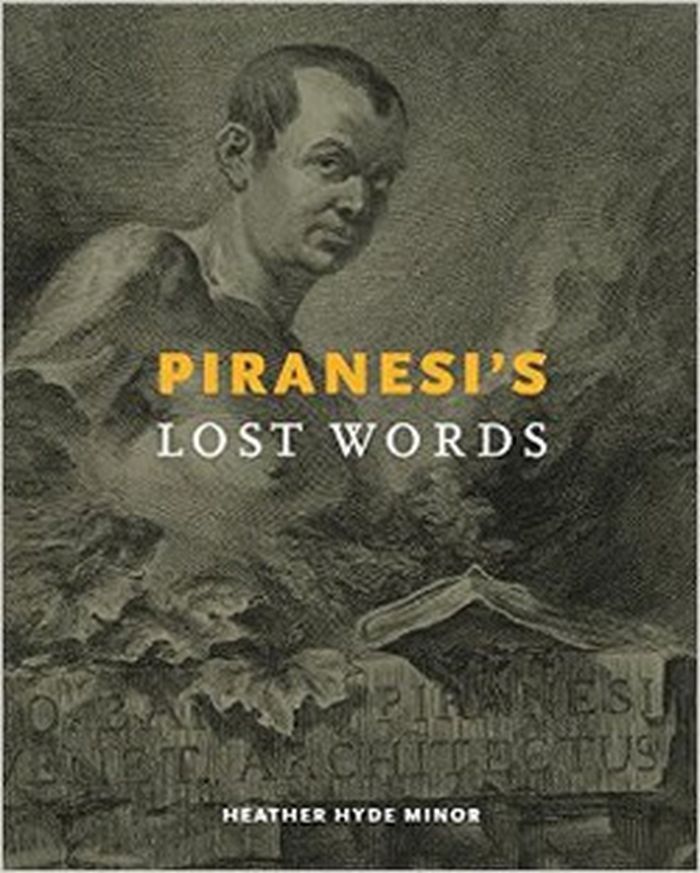
Piranesi's lost words
Piranesi's lost words
Actions:
Price:
$106.95
(available to order)
Summary:
Eighteenth-century european artist Giovanni Battista Piranesi was more than an artist; he was an engraver and printmaker, architect, antiquities dealer, archaeologist, draftsman, publisher, bookseller, and author. In Piranesi’s Lost Words, Heather Hyde Minor considers Piranesi the author and publisher, focusing on his major publications from 1756 to his death in 1778.(...)
$106.95
(available to order)
Summary:
Eighteenth-century european artist Giovanni Battista Piranesi was more than an artist; he was an engraver and printmaker, architect, antiquities dealer, archaeologist, draftsman, publisher, bookseller, and author. In Piranesi’s Lost Words, Heather Hyde Minor considers Piranesi the author and publisher, focusing on his major publications from 1756 to his death in 1778.(...)
Title:
Piranesi's lost words
Actions:
Price:
$106.95
(available to order)
Summary:
Eighteenth-century european artist Giovanni Battista Piranesi was more than an artist; he was an engraver and printmaker, architect, antiquities dealer, archaeologist, draftsman, publisher, bookseller, and author. In Piranesi’s Lost Words, Heather Hyde Minor considers Piranesi the author and publisher, focusing on his major publications from 1756 to his death in 1778. Piranesi designed and manufactured twelve beautiful, large-format books combining visual and verbal content over the course of his lifetime. While the images from these books have been widely studied, they are usually considered in isolation from the texts in which they originally appeared. This study reunites Piranesi’s texts and images, interpreting them in conjunction as composite art. Minor shows how this composite art demonstrates Piranesi’s ability for interpreting the classical world and its remains—and how his books offer a critique of both the Enlightenment project of creating an epistemology of the classical past and how eighteenth-century scholars explicated this past. Piranesi’s books, Minor argues, were integral to the emergence of the modern discipline of art history. Using new, previously unpublished archival material, Piranesi’s Lost Words refines our understanding of Piranesi’s works and the eighteenth-century context in which they were created.
Piranesi's lost words
Actions:
Price:
$106.95
(available to order)
Summary:
Eighteenth-century european artist Giovanni Battista Piranesi was more than an artist; he was an engraver and printmaker, architect, antiquities dealer, archaeologist, draftsman, publisher, bookseller, and author. In Piranesi’s Lost Words, Heather Hyde Minor considers Piranesi the author and publisher, focusing on his major publications from 1756 to his death in 1778. Piranesi designed and manufactured twelve beautiful, large-format books combining visual and verbal content over the course of his lifetime. While the images from these books have been widely studied, they are usually considered in isolation from the texts in which they originally appeared. This study reunites Piranesi’s texts and images, interpreting them in conjunction as composite art. Minor shows how this composite art demonstrates Piranesi’s ability for interpreting the classical world and its remains—and how his books offer a critique of both the Enlightenment project of creating an epistemology of the classical past and how eighteenth-century scholars explicated this past. Piranesi’s books, Minor argues, were integral to the emergence of the modern discipline of art history. Using new, previously unpublished archival material, Piranesi’s Lost Words refines our understanding of Piranesi’s works and the eighteenth-century context in which they were created.
Form:
books
books
Publication:
November 2015
November 2015
Subject:
History until 1900, Greece
History until 1900, Greece
Form:
books
books

Actions:
Price:
$48.00
(available in store)
Summary:
Centering on a notion of nomadic space, this publication offers the first in-depth overview of the projects, photo archives, and architectural investigations of Sámi architect and artist Joar Nango, and includes a series of essays and conversations with long-time collaborators and discussion partners. Conceived as platforms that consciously create autonomous spaces in(...)
$48.00
(available in store)
Summary:
Centering on a notion of nomadic space, this publication offers the first in-depth overview of the projects, photo archives, and architectural investigations of Sámi architect and artist Joar Nango, and includes a series of essays and conversations with long-time collaborators and discussion partners. Conceived as platforms that consciously create autonomous spaces in(...)
Subject:
Contemporary Art Monographs
Contemporary Art Monographs
Publication:
April 2024
April 2024
Title:
Joar Nango: Girjegumpi, The Sámi Architectural Library
Actions:
Price:
$48.00
(available in store)
Summary:
Centering on a notion of nomadic space, this publication offers the first in-depth overview of the projects, photo archives, and architectural investigations of Sámi architect and artist Joar Nango, and includes a series of essays and conversations with long-time collaborators and discussion partners. Conceived as platforms that consciously create autonomous spaces in which Sámi and indigenous cultures can grow, Nango's projects seek encounters and open processes, developing new forms of expression and alliance with non-Sámi contexts. Often developed in collaboration with practitioners from a range of fields including architecture, art, theory, and crafts, Nango's practice operates between institutional and public spaces. Featured projects include ongoing discursive social platforms such as the mobile Sámi architecture library Girjegumpi, a series of films and conversations titled ''Post-Capitalist Architecture TV'', image archives documenting contemporary expressions of Sámi architectural principles in Northern Scandinavia and beyond, and European Everything, first presented at documenta 14, for which Nango traveled by van along the borders of Europe from his home in Tromsø, Northern Norway to Athens in Greece, mapping the fringe and the excluded of this political and cultural terrain.
Joar Nango: Girjegumpi, The Sámi Architectural Library
Actions:
Price:
$48.00
(available in store)
Summary:
Centering on a notion of nomadic space, this publication offers the first in-depth overview of the projects, photo archives, and architectural investigations of Sámi architect and artist Joar Nango, and includes a series of essays and conversations with long-time collaborators and discussion partners. Conceived as platforms that consciously create autonomous spaces in which Sámi and indigenous cultures can grow, Nango's projects seek encounters and open processes, developing new forms of expression and alliance with non-Sámi contexts. Often developed in collaboration with practitioners from a range of fields including architecture, art, theory, and crafts, Nango's practice operates between institutional and public spaces. Featured projects include ongoing discursive social platforms such as the mobile Sámi architecture library Girjegumpi, a series of films and conversations titled ''Post-Capitalist Architecture TV'', image archives documenting contemporary expressions of Sámi architectural principles in Northern Scandinavia and beyond, and European Everything, first presented at documenta 14, for which Nango traveled by van along the borders of Europe from his home in Tromsø, Northern Norway to Athens in Greece, mapping the fringe and the excluded of this political and cultural terrain.
Form:
books
books
Publication:
April 2024
April 2024
Subject:
Contemporary Art Monographs
Contemporary Art Monographs
Form:
books
books
Actions:
Holdings:
Description:
2 volumes ; 21 cm.
Description:
2 volumes ; 21 cm.
Author:
Subject:
Publication:
Cambridge, Massachusetts ; London, England : Harvard University Press, 2005-2016.
Cambridge, Massachusetts ; London, England : Harvard University Press, 2005-2016.
Title:
Italy illuminated / Biondo Flavio ; edited and translated by Jeffrey A. White.
Actions:
Holdings:
Description:
2 volumes ; 21 cm.
Italy illuminated / Biondo Flavio ; edited and translated by Jeffrey A. White.
Actions:
Holdings:
Description:
2 volumes ; 21 cm.
Form:
books
books
Publication:
Cambridge, Massachusetts ; London, England : Harvard University Press, 2005-2016.
Cambridge, Massachusetts ; London, England : Harvard University Press, 2005-2016.
Author:
Subject:
Form:
books
books
Actions:
Holdings:
Description:
315 pages : illustrations (some color) ; 32 cm
Description:
315 pages : illustrations (some color) ; 32 cm
Author:
Subject:
Publication:
New York : Abrams, 1980.
New York : Abrams, 1980.
Title:
Art Deco / Victor Arwas ; [editor, Frank Russell].
Actions:
Holdings:
Description:
315 pages : illustrations (some color) ; 32 cm
Art Deco / Victor Arwas ; [editor, Frank Russell].
Actions:
Holdings:
Description:
315 pages : illustrations (some color) ; 32 cm
Form:
books
books
Publication:
New York : Abrams, 1980.
New York : Abrams, 1980.
Author:
Subject:


