


9543 Results
Form:
books
books
Actions:
Holdings:
Description:
320 pages : illustrations (some color) ; 30 cm
Description:
320 pages : illustrations (some color) ; 30 cm
Author:
Subject:
Publication:
New York : Van Nostrand Reinhold, ©1978.
New York : Van Nostrand Reinhold, ©1978.
Title:
The Encyclopedia of decorative arts, 1890-1940 / edited by Philippe Garner.
Actions:
Holdings:
Description:
320 pages : illustrations (some color) ; 30 cm
The Encyclopedia of decorative arts, 1890-1940 / edited by Philippe Garner.
Actions:
Holdings:
Description:
320 pages : illustrations (some color) ; 30 cm
Form:
books
books
Publication:
New York : Van Nostrand Reinhold, ©1978.
New York : Van Nostrand Reinhold, ©1978.
Author:
Subject:
Form:
books
books
Actions:
Description:
1 online resource.
Author:
Subject:
Publication:
[Place of publication not identified] : Printed Matter, 2010.
[Place of publication not identified] : Printed Matter, 2010.
Title:
The New American Dream: Something for Everyone [The Behavioral Guide to a Luxurious Home].
Actions:
Description:
1 online resource.
The New American Dream: Something for Everyone [The Behavioral Guide to a Luxurious Home].
Actions:
Description:
1 online resource.
Form:
books
books
Publication:
[Place of publication not identified] : Printed Matter, 2010.
[Place of publication not identified] : Printed Matter, 2010.
Author:
Subject:
Form:
books
books
Actions:
Holdings:
Description:
xv, 400 pages : illustrations ; 26 cm
Description:
xv, 400 pages : illustrations ; 26 cm
Author:
Subject:
Publication:
Cambridge [England] ; New York, NY, USA : Cambridge University Press, 1992.
Cambridge [England] ; New York, NY, USA : Cambridge University Press, 1992.
Title:
Public space / Stephen Carr [and others].
Actions:
Holdings:
Description:
xv, 400 pages : illustrations ; 26 cm
Public space / Stephen Carr [and others].
Actions:
Holdings:
Description:
xv, 400 pages : illustrations ; 26 cm
Form:
books
books
Publication:
Cambridge [England] ; New York, NY, USA : Cambridge University Press, 1992.
Cambridge [England] ; New York, NY, USA : Cambridge University Press, 1992.
Author:
Subject:
Form:
books
books
Actions:
Holdings:
Description:
202 pages : illustrations ; 31 cm
Description:
202 pages : illustrations ; 31 cm
Author:
Subject:
Publication:
London : T. Telford, 1983.
London : T. Telford, 1983.
Title:
Highway investment in developing countries.
Actions:
Holdings:
Description:
202 pages : illustrations ; 31 cm
Highway investment in developing countries.
Actions:
Holdings:
Description:
202 pages : illustrations ; 31 cm
Form:
books
books
Publication:
London : T. Telford, 1983.
London : T. Telford, 1983.
Author:
Subject:
Form:
books
books

Actions:
Price:
$54.50
(available to order)
Summary:
In this book, editors Lisa Parks and Nicole Starosielski use the term "media infrastructure" to signal a shift in critical focus and approach that questions the international telecommunication network as a given. Contributors instead confront vital questions concerning the multiple and hybrid forms networks take, the different ways they are imagined and engaged with by(...)
$54.50
(available to order)
Summary:
In this book, editors Lisa Parks and Nicole Starosielski use the term "media infrastructure" to signal a shift in critical focus and approach that questions the international telecommunication network as a given. Contributors instead confront vital questions concerning the multiple and hybrid forms networks take, the different ways they are imagined and engaged with by(...)
Title:
Signal traffic: critical studies of media infrastructures
Actions:
Price:
$54.50
(available to order)
Summary:
In this book, editors Lisa Parks and Nicole Starosielski use the term "media infrastructure" to signal a shift in critical focus and approach that questions the international telecommunication network as a given. Contributors instead confront vital questions concerning the multiple and hybrid forms networks take, the different ways they are imagined and engaged with by publics around the world, their local effects, and what human beings experience when a network fails.
Signal traffic: critical studies of media infrastructures
Actions:
Price:
$54.50
(available to order)
Summary:
In this book, editors Lisa Parks and Nicole Starosielski use the term "media infrastructure" to signal a shift in critical focus and approach that questions the international telecommunication network as a given. Contributors instead confront vital questions concerning the multiple and hybrid forms networks take, the different ways they are imagined and engaged with by publics around the world, their local effects, and what human beings experience when a network fails.
Form:
books
books
Publication:
June 2015
June 2015
Subject:
Digital Architecture
Digital Architecture
Form:
books
books
Actions:
Holdings:
Description:
342 pages : illustrations (some color) ; 31 cm.
Description:
342 pages : illustrations (some color) ; 31 cm.
Author:
Subject:
Publication:
Houston : Menil Collection ; New Haven, Conn. : Distributed by Yale University Press, 2010.
Houston : Menil Collection ; New Haven, Conn. : Distributed by Yale University Press, 2010.
Title:
Art and activism : projects of John and Dominique de Menil / edited by Josef Helfenstein and Laureen Schipsi ; [essays by] Suzanne Deal Booth [and others].
Actions:
Holdings:
Description:
342 pages : illustrations (some color) ; 31 cm.
Art and activism : projects of John and Dominique de Menil / edited by Josef Helfenstein and Laureen Schipsi ; [essays by] Suzanne Deal Booth [and others].
Actions:
Holdings:
Description:
342 pages : illustrations (some color) ; 31 cm.
Form:
books
books
Publication:
Houston : Menil Collection ; New Haven, Conn. : Distributed by Yale University Press, 2010.
Houston : Menil Collection ; New Haven, Conn. : Distributed by Yale University Press, 2010.
Author:
Subject:
Form:
books
books
Title:
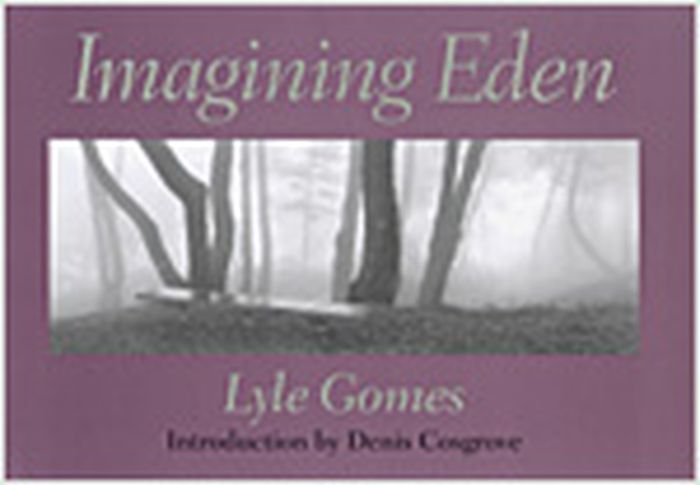
Lyle Gomes : imagining Eden
Lyle Gomes : imagining Eden
Actions:
Price:
$10.00
(available to order)
Summary:
What did Eden look like? In "Imagining Eden", the photographer Lyle Gomes observes landscapes that represent the idea of locus amoenus—the pleasant place. The tradition of locus amoenus goes back to the idyllic descriptions of fictional locations, often called Arcadia, in the writings of Sappho, Apollonius, and Virgil, in the imagined period of the Golden Age. We also(...)
$10.00
(available to order)
Summary:
What did Eden look like? In "Imagining Eden", the photographer Lyle Gomes observes landscapes that represent the idea of locus amoenus—the pleasant place. The tradition of locus amoenus goes back to the idyllic descriptions of fictional locations, often called Arcadia, in the writings of Sappho, Apollonius, and Virgil, in the imagined period of the Golden Age. We also(...)
Subject:
sale books
sale books
Publication:
November 2005, Charlottesville, London
November 2005, Charlottesville, London
Title:
Lyle Gomes : imagining Eden
Actions:
Price:
$10.00
(available to order)
Summary:
What did Eden look like? In "Imagining Eden", the photographer Lyle Gomes observes landscapes that represent the idea of locus amoenus—the pleasant place. The tradition of locus amoenus goes back to the idyllic descriptions of fictional locations, often called Arcadia, in the writings of Sappho, Apollonius, and Virgil, in the imagined period of the Golden Age. We also recognize this concept in Eden, of course, where it suggests a loss that still haunts our imaginations. It is an idea distinctly different from that of wilderness, for we feel protected in these places—even provided for, though there is no sign of toil. The chance that this Eden might somehow be regained gives the concept its consolatory power. For fifteen years, Gomes has traveled across America and Europe to find examples of this enduring ideal of place in parks, English gardens, even golf courses. Gomes’s search took him to Mount Auburn cemetery, Central Park, Monticello, the San Francisco Presidio, villa gardens near Italy’s Lake Como, Melbourne Hall in Derbyshire, and private gardens such as Biltmore and Dumbarton Oaks. "Imagining Eden" includes an introductory essay in which the landscape historian Denis Cosgrove explores how the concept of the locus amoenus relates to Gomes’s work, and the photographs are accompanied by an evocative selection of quotes by the various settings designers and by inspired observers. The book concludes with an extensive interview in which Gomes discusses how he balances craft and inspiration, the role of research in preparing a shoot, his preference for black-and-white over color (“I was completely, and immediately, enamored with the silver image”), and a sense of discovery as a chief motivation in all his work.
Lyle Gomes : imagining Eden
Actions:
Price:
$10.00
(available to order)
Summary:
What did Eden look like? In "Imagining Eden", the photographer Lyle Gomes observes landscapes that represent the idea of locus amoenus—the pleasant place. The tradition of locus amoenus goes back to the idyllic descriptions of fictional locations, often called Arcadia, in the writings of Sappho, Apollonius, and Virgil, in the imagined period of the Golden Age. We also recognize this concept in Eden, of course, where it suggests a loss that still haunts our imaginations. It is an idea distinctly different from that of wilderness, for we feel protected in these places—even provided for, though there is no sign of toil. The chance that this Eden might somehow be regained gives the concept its consolatory power. For fifteen years, Gomes has traveled across America and Europe to find examples of this enduring ideal of place in parks, English gardens, even golf courses. Gomes’s search took him to Mount Auburn cemetery, Central Park, Monticello, the San Francisco Presidio, villa gardens near Italy’s Lake Como, Melbourne Hall in Derbyshire, and private gardens such as Biltmore and Dumbarton Oaks. "Imagining Eden" includes an introductory essay in which the landscape historian Denis Cosgrove explores how the concept of the locus amoenus relates to Gomes’s work, and the photographs are accompanied by an evocative selection of quotes by the various settings designers and by inspired observers. The book concludes with an extensive interview in which Gomes discusses how he balances craft and inspiration, the role of research in preparing a shoot, his preference for black-and-white over color (“I was completely, and immediately, enamored with the silver image”), and a sense of discovery as a chief motivation in all his work.
Form:
books
books
Publication:
November 2005, Charlottesville, London
November 2005, Charlottesville, London
Subject:
sale books
sale books
Form:
journals and magazines
journals and magazines
Title:
Open 6 (in)security
Open 6 (in)security
Actions:
Price:
$36.00
(available to order)
Summary:
There is a yearning for security in today's public domain. The individual and the community are increasingly demanding protection from and control over the space, themselves and others. A society of control is looming, but one lacking a clear idea about the nature and the origin of its underlying fears. This cahier examines the consequences of the current preoccupation(...)
$36.00
(available to order)
Summary:
There is a yearning for security in today's public domain. The individual and the community are increasingly demanding protection from and control over the space, themselves and others. A society of control is looming, but one lacking a clear idea about the nature and the origin of its underlying fears. This cahier examines the consequences of the current preoccupation(...)
Subject:
Magazines
Magazines
Publication:
August 2004, Rotterdam
August 2004, Rotterdam
Title:
Open 6 (in)security
Actions:
Price:
$36.00
(available to order)
Summary:
There is a yearning for security in today's public domain. The individual and the community are increasingly demanding protection from and control over the space, themselves and others. A society of control is looming, but one lacking a clear idea about the nature and the origin of its underlying fears. This cahier examines the consequences of the current preoccupation with security for the public space and the visual arts. What are the implications for the functioning of the public domain, for its arrangement, design and experience? And how does this influence the task and perception of art? From art, architecture, philosophy and politics come theoretical and practical scenarios, proposals and visions that expose something of today's security paradigm, advocate alternative (conceptual) models or offer insights into the current ethics and aesthetics of security. Gijs van Oenen subjects the 'new securityscape' to a critical analysis. Lieven De Cauter digs into the various strata of the new fear. Sean Snyder presents images from his Temporary Occupation project. Thomas Y. Levin looks at how artists deal with surveillance in the public space. Sven Lütticken reflects on the concept of a 'human park' in philosophy, art and media. Harm Tilman focuses on architecture in a society of control. Mark Wigley analyses the issue of security in relation to the World Trade Center buildings in New York. Hans Boutellier wishes art would apply the brakes to the security Utopia. Jouke Kleerebezem calls for vigilance in the information society. Willem van Weelden discusses the project in Kanaleneiland, Utrecht. Q.S. Serafijn shows multiple dimensions of the interactive D-Tower in Doetinchem. Mark Wigley dissects the abode of the Unabomber.
Open 6 (in)security
Actions:
Price:
$36.00
(available to order)
Summary:
There is a yearning for security in today's public domain. The individual and the community are increasingly demanding protection from and control over the space, themselves and others. A society of control is looming, but one lacking a clear idea about the nature and the origin of its underlying fears. This cahier examines the consequences of the current preoccupation with security for the public space and the visual arts. What are the implications for the functioning of the public domain, for its arrangement, design and experience? And how does this influence the task and perception of art? From art, architecture, philosophy and politics come theoretical and practical scenarios, proposals and visions that expose something of today's security paradigm, advocate alternative (conceptual) models or offer insights into the current ethics and aesthetics of security. Gijs van Oenen subjects the 'new securityscape' to a critical analysis. Lieven De Cauter digs into the various strata of the new fear. Sean Snyder presents images from his Temporary Occupation project. Thomas Y. Levin looks at how artists deal with surveillance in the public space. Sven Lütticken reflects on the concept of a 'human park' in philosophy, art and media. Harm Tilman focuses on architecture in a society of control. Mark Wigley analyses the issue of security in relation to the World Trade Center buildings in New York. Hans Boutellier wishes art would apply the brakes to the security Utopia. Jouke Kleerebezem calls for vigilance in the information society. Willem van Weelden discusses the project in Kanaleneiland, Utrecht. Q.S. Serafijn shows multiple dimensions of the interactive D-Tower in Doetinchem. Mark Wigley dissects the abode of the Unabomber.
Form:
journals and magazines
journals and magazines
Publication:
August 2004, Rotterdam
August 2004, Rotterdam
Subject:
Magazines
Magazines
Form:
books
books
Price:
$58.95
(available to order)
Summary:
The Pan Am Building and the reaction to it signalled the end of an era. Begun when the modernist aesthetic and the architectural star system ruled architectural theory and practice, the completed building became a symbol of modernism's fall from grace. In “The Pan Am Building and the Shattering of the Modernist Dream”, Meredith Clausen tells the story as both history and(...)
$58.95
(available to order)
Summary:
The Pan Am Building and the reaction to it signalled the end of an era. Begun when the modernist aesthetic and the architectural star system ruled architectural theory and practice, the completed building became a symbol of modernism's fall from grace. In “The Pan Am Building and the Shattering of the Modernist Dream”, Meredith Clausen tells the story as both history and(...)
Subject:
Architecture since 1900, Europe
Architecture since 1900, Europe
Publication:
December 2004, Cambridge, Mass.
December 2004, Cambridge, Mass.
Title:
The Pan Am building and the shattering of the modernist dream
Actions:
Price:
$58.95
(available to order)
Summary:
The Pan Am Building and the reaction to it signalled the end of an era. Begun when the modernist aesthetic and the architectural star system ruled architectural theory and practice, the completed building became a symbol of modernism's fall from grace. In “The Pan Am Building and the Shattering of the Modernist Dream”, Meredith Clausen tells the story as both history and cautionary tale -- a case study of how not to plan and execute a large-scale urban project that seems especially relevant in light of the World Trade Center and the ongoing discussions over what should be built in its place. The Pan Am Building was despised by many as soon as the plans were announced in 1958. The star power of the celebrity architects -- those deans of modernism, Walter Gropius and Pietro Belluschi -- overrode critics' objections. When construction was completed in 1963, it became more than an architectural question; this "mute, massive, over-scaled octagonal slab," as Clausen describes it, built over Grand Central Terminal, blocked the view down Park Avenue, created deep shadows where there had been sunlight, and poured 25,000 office workers on the sidewalks each morning and evening. As Clausen tells it, the story of the building -- which was undistinguished architecturally but important because of its location and its moment in history -- encompasses the end of modernism's social idealism, the decline of Gropius's and Belluschi's reputations, the victory of private interests over public good, the revival of architectural criticism in the press (both Ada Louise Huxtable and Jane Jacobs emerged as prominent and influential critics), the birth of the historic preservation movement, and the changing culture and politics of New York City.
The Pan Am building and the shattering of the modernist dream
Actions:
Price:
$58.95
(available to order)
Summary:
The Pan Am Building and the reaction to it signalled the end of an era. Begun when the modernist aesthetic and the architectural star system ruled architectural theory and practice, the completed building became a symbol of modernism's fall from grace. In “The Pan Am Building and the Shattering of the Modernist Dream”, Meredith Clausen tells the story as both history and cautionary tale -- a case study of how not to plan and execute a large-scale urban project that seems especially relevant in light of the World Trade Center and the ongoing discussions over what should be built in its place. The Pan Am Building was despised by many as soon as the plans were announced in 1958. The star power of the celebrity architects -- those deans of modernism, Walter Gropius and Pietro Belluschi -- overrode critics' objections. When construction was completed in 1963, it became more than an architectural question; this "mute, massive, over-scaled octagonal slab," as Clausen describes it, built over Grand Central Terminal, blocked the view down Park Avenue, created deep shadows where there had been sunlight, and poured 25,000 office workers on the sidewalks each morning and evening. As Clausen tells it, the story of the building -- which was undistinguished architecturally but important because of its location and its moment in history -- encompasses the end of modernism's social idealism, the decline of Gropius's and Belluschi's reputations, the victory of private interests over public good, the revival of architectural criticism in the press (both Ada Louise Huxtable and Jane Jacobs emerged as prominent and influential critics), the birth of the historic preservation movement, and the changing culture and politics of New York City.
Form:
books
books
Publication:
December 2004, Cambridge, Mass.
December 2004, Cambridge, Mass.
Subject:
Architecture since 1900, Europe
Architecture since 1900, Europe
Form:
books
books
Price:
$97.95
(available to order)
Summary:
Set amid the imperial extravagances of the American Renaissance to the Roaring Twenties (1890-1935), an era redolent with the well-publicized achievements of such famed designers as Stanford White, Richard Morris Hunt, Carrère & Hastings, and John Russell Pope, it astounds one to learn that the one authentic genius among them was a publicity-shy Philadelphian without any(...)
$97.95
(available to order)
Summary:
Set amid the imperial extravagances of the American Renaissance to the Roaring Twenties (1890-1935), an era redolent with the well-publicized achievements of such famed designers as Stanford White, Richard Morris Hunt, Carrère & Hastings, and John Russell Pope, it astounds one to learn that the one authentic genius among them was a publicity-shy Philadelphian without any(...)
Title:
American Splendor : the residential architecture of Horace Trumbauer
Actions:
Price:
$97.95
(available to order)
Summary:
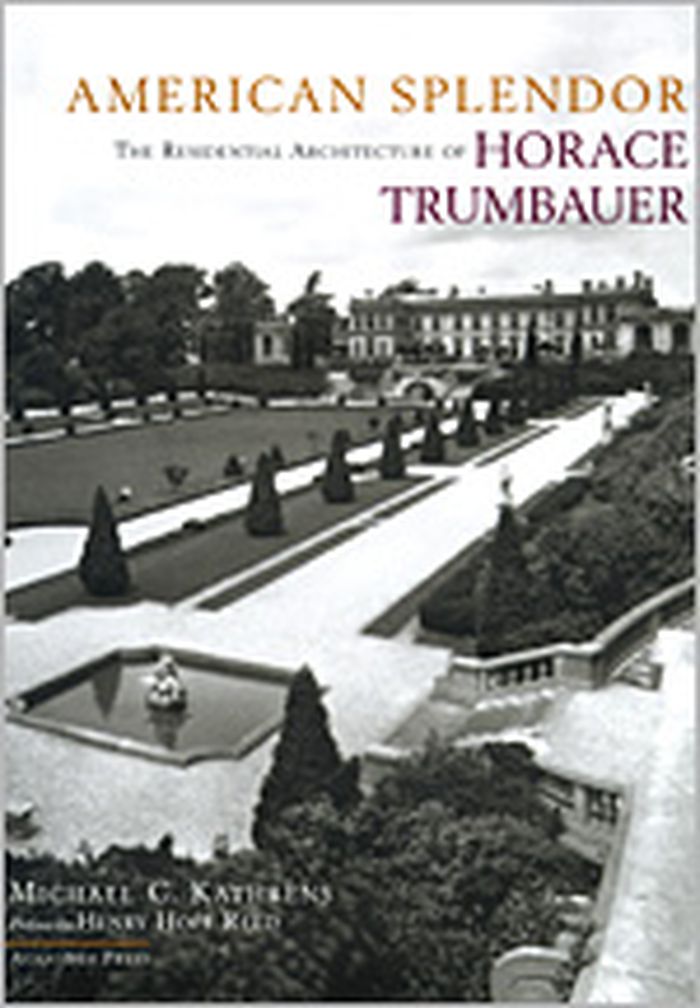
Set amid the imperial extravagances of the American Renaissance to the Roaring Twenties (1890-1935), an era redolent with the well-publicized achievements of such famed designers as Stanford White, Richard Morris Hunt, Carrère & Hastings, and John Russell Pope, it astounds one to learn that the one authentic genius among them was a publicity-shy Philadelphian without any kind of social connections whose formal education did not extend beyond the 10th grade. Yet the supremacy of Horace Trumbauer in the field of classically-inspired residential design is acknowledged by such diverse voices as art connoisseur Joseph Duveen, modernist icon Philip Johnson, and author Aldous Huxley. "American Splendor: The Residential Architecture of Horace Trumbauer," will place the achievements of this master creator of the American Great House before a wider and more discerning public. Working with clients whose names comprise a veritable who's who of America's industrial and financial moguls, Trumbauer's prodigious body of work graced both the exclusive enclaves of Newport, Rhode Island, Long Island, Philadelphia's Main Line and Elkins Park, and the vaunted precincts of New York's Fifth Avenue and Washington DC's Embassy Row. Allied with the finest landscape designers and interior decorators of his time, Trumbauer's elegant mansions represent the ultimate expression of a nation's ambition for grandeur and supremacy since those of the Italian Renaissance. Devoid of any wish for personal fame or artistic recognition, he hoped that his work would ultimately speak for itself. As "American Splendor: The Residential Architecture of Horace Trumbauer" demonstrates, it most certainly and eloquently does. In this first monograph on Horace Trumbauer, American Splendor introduces the genius of this American master architect to the world.
American Splendor : the residential architecture of Horace Trumbauer
Actions:
Price:
$97.95
(available to order)
Summary:
Set amid the imperial extravagances of the American Renaissance to the Roaring Twenties (1890-1935), an era redolent with the well-publicized achievements of such famed designers as Stanford White, Richard Morris Hunt, Carrère & Hastings, and John Russell Pope, it astounds one to learn that the one authentic genius among them was a publicity-shy Philadelphian without any kind of social connections whose formal education did not extend beyond the 10th grade. Yet the supremacy of Horace Trumbauer in the field of classically-inspired residential design is acknowledged by such diverse voices as art connoisseur Joseph Duveen, modernist icon Philip Johnson, and author Aldous Huxley. "American Splendor: The Residential Architecture of Horace Trumbauer," will place the achievements of this master creator of the American Great House before a wider and more discerning public. Working with clients whose names comprise a veritable who's who of America's industrial and financial moguls, Trumbauer's prodigious body of work graced both the exclusive enclaves of Newport, Rhode Island, Long Island, Philadelphia's Main Line and Elkins Park, and the vaunted precincts of New York's Fifth Avenue and Washington DC's Embassy Row. Allied with the finest landscape designers and interior decorators of his time, Trumbauer's elegant mansions represent the ultimate expression of a nation's ambition for grandeur and supremacy since those of the Italian Renaissance. Devoid of any wish for personal fame or artistic recognition, he hoped that his work would ultimately speak for itself. As "American Splendor: The Residential Architecture of Horace Trumbauer" demonstrates, it most certainly and eloquently does. In this first monograph on Horace Trumbauer, American Splendor introduces the genius of this American master architect to the world.
Form:
books
books
Publication:
January 1900, New York
January 1900, New York
Subject:
History until 1900
History until 1900


