


10284 Results
Form:
books
books
Actions:
Holdings:
Description:
523 pages : illustrations (chiefly color), plans ; 34 cm
Description:
523 pages : illustrations (chiefly color), plans ; 34 cm
Author:
Subject:
Publication:
Basel ; Boston : Birkhäuser, ©2005.
Basel ; Boston : Birkhäuser, ©2005.
Title:
Bothe Richter Teherani / Klaus-Dieter Weiss.
Actions:
Holdings:
Description:
523 pages : illustrations (chiefly color), plans ; 34 cm
Bothe Richter Teherani / Klaus-Dieter Weiss.
Actions:
Holdings:
Description:
523 pages : illustrations (chiefly color), plans ; 34 cm
Form:
books
books
Publication:
Basel ; Boston : Birkhäuser, ©2005.
Basel ; Boston : Birkhäuser, ©2005.
Author:
Subject:
Form:
books
books
Actions:
Holdings:
Description:
vii, 208 pages : illustrations (chiefly color), plans ; 23 x 25 cm
Description:
vii, 208 pages : illustrations (chiefly color), plans ; 23 x 25 cm
Author:
Subject:
Publication:
Farnham, Surrey, England : Ashgate, [2016], ©2016
Farnham, Surrey, England : Ashgate, [2016], ©2016
Title:
Pietro Porcinai and the landscape of modern Italy / edited by Marc Treib & Luigi Latini.
Actions:
Holdings:
Description:
vii, 208 pages : illustrations (chiefly color), plans ; 23 x 25 cm
Pietro Porcinai and the landscape of modern Italy / edited by Marc Treib & Luigi Latini.
Actions:
Holdings:
Description:
vii, 208 pages : illustrations (chiefly color), plans ; 23 x 25 cm
Form:
books
books
Publication:
Farnham, Surrey, England : Ashgate, [2016], ©2016
Farnham, Surrey, England : Ashgate, [2016], ©2016
Author:
Subject:
Form:
books
books
Actions:
Holdings:
Description:
470 pages : illustrations (some color) ; 25 cm
Description:
470 pages : illustrations (some color) ; 25 cm
Author:
Subject:
Publication:
Minneapolis, MN : University Of Minnesota Press, 2018., ©2018
Minneapolis, MN : University Of Minnesota Press, 2018., ©2018
Title:
Dia-logos : Ramon Llull's method of thought and artistic practice / edited by Amador Vega, Peter Weibel, Siegfried Zielinski.
Actions:
Holdings:
Description:
470 pages : illustrations (some color) ; 25 cm
Dia-logos : Ramon Llull's method of thought and artistic practice / edited by Amador Vega, Peter Weibel, Siegfried Zielinski.
Actions:
Holdings:
Description:
470 pages : illustrations (some color) ; 25 cm
Form:
books
books
Publication:
Minneapolis, MN : University Of Minnesota Press, 2018., ©2018
Minneapolis, MN : University Of Minnesota Press, 2018., ©2018
Author:
Subject:
Form:
books
books
Actions:
Holdings:
Description:
463 pages : illustrations ; 22 cm
Description:
463 pages : illustrations ; 22 cm
Author:
Subject:
Publication:
Berlin : Jovis, ©2012.
Berlin : Jovis, ©2012.
Title:
Second hand spaces : recycling sites undergoing urban transformation = Über das Recyceln von Orten im städtischen Wandel / [edited by] Michael Ziehl [and others].
Actions:
Holdings:
Description:
463 pages : illustrations ; 22 cm
Second hand spaces : recycling sites undergoing urban transformation = Über das Recyceln von Orten im städtischen Wandel / [edited by] Michael Ziehl [and others].
Actions:
Holdings:
Description:
463 pages : illustrations ; 22 cm
Form:
books
books
Publication:
Berlin : Jovis, ©2012.
Berlin : Jovis, ©2012.
Author:
Subject:
Form:
books
books
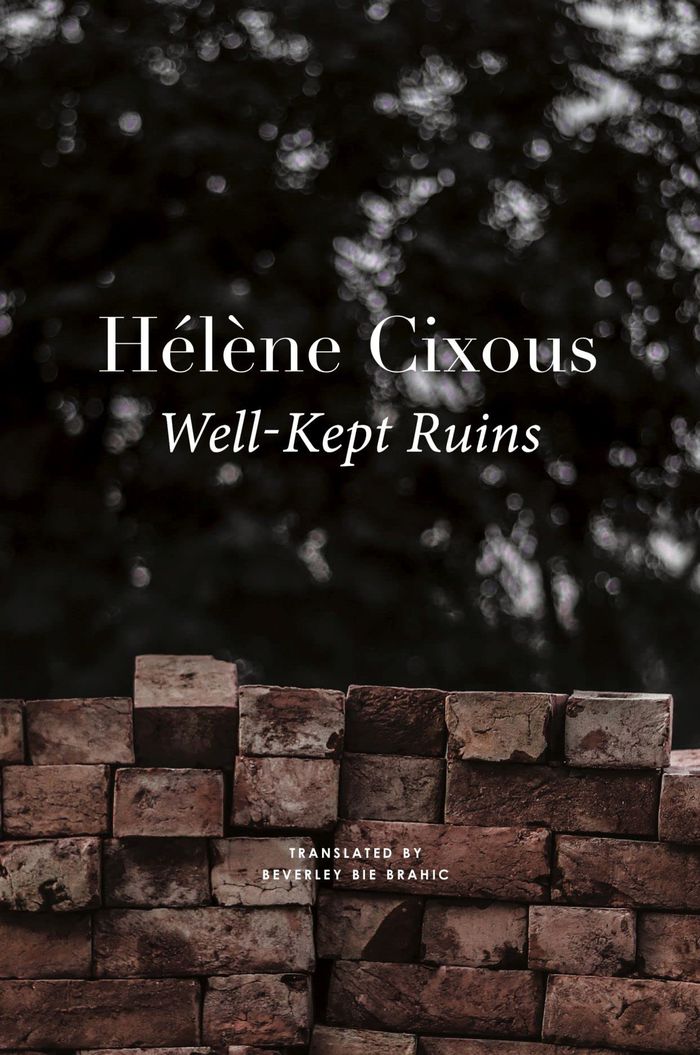
Title:
Well-kept ruins
Well-kept ruins
Actions:
Price:
$33.95
(available to order)
Summary:
In the Lower Saxony region of northwestern Germany sits the city of Osnabrück. This is where, in 1648, the Peace of Westphalia was signed, bringing the Thirty Years’ War and one of the most calamitous periods of European history to an end. But the city was later to witness another calamity. Today, as one walks through Old Synagogue Street in a rich neighborhood of(...)
$33.95
(available to order)
Summary:
In the Lower Saxony region of northwestern Germany sits the city of Osnabrück. This is where, in 1648, the Peace of Westphalia was signed, bringing the Thirty Years’ War and one of the most calamitous periods of European history to an end. But the city was later to witness another calamity. Today, as one walks through Old Synagogue Street in a rich neighborhood of(...)
Title:
Well-kept ruins
Actions:
Price:
$33.95
(available to order)
Summary:
In the Lower Saxony region of northwestern Germany sits the city of Osnabrück. This is where, in 1648, the Peace of Westphalia was signed, bringing the Thirty Years’ War and one of the most calamitous periods of European history to an end. But the city was later to witness another calamity. Today, as one walks through Old Synagogue Street in a rich neighborhood of Osnabrück, one might miss noticing a pile of pale stones held together by chicken wire that sits between two fashionable homes. These are the well-kept ruins from behind which stares a gaping space—a place of memory and oblivion. Four polished plaques tell the tale of the horror-filled night of November 9, 1938—today known as Kristallnacht—when the synagogue that had stood on this spot was desecrated, looted, set on fire, and eventually demolished by Hitler’s forces. On the same day, ninety parishioners were imprisoned by the Gestapo and eventually sent to the Buchenwald concentration camp. Osnabrück was also home to Eve Klein, a member of the city’s early-twentieth-century Jewish community and the mother of author Hélène Cixous. In Well-Kept Ruins, Cixous returns to the historic city in 2019 and reflects on the remains of the synagogue that “express the life lost, the life kept.” Walking the streets of the city, plumbing the depths of the past along with her own family’s history, looking deep into the future, and punctuating her poetic prose with haunting photographs, Cixous explores the ruins at the heart of humanity. Part memoir, part philosophical meditation, ''Well-kept ruins'' is a genre-defying and timely reflection of the contemporary human condition.
Well-kept ruins
Actions:
Price:
$33.95
(available to order)
Summary:
In the Lower Saxony region of northwestern Germany sits the city of Osnabrück. This is where, in 1648, the Peace of Westphalia was signed, bringing the Thirty Years’ War and one of the most calamitous periods of European history to an end. But the city was later to witness another calamity. Today, as one walks through Old Synagogue Street in a rich neighborhood of Osnabrück, one might miss noticing a pile of pale stones held together by chicken wire that sits between two fashionable homes. These are the well-kept ruins from behind which stares a gaping space—a place of memory and oblivion. Four polished plaques tell the tale of the horror-filled night of November 9, 1938—today known as Kristallnacht—when the synagogue that had stood on this spot was desecrated, looted, set on fire, and eventually demolished by Hitler’s forces. On the same day, ninety parishioners were imprisoned by the Gestapo and eventually sent to the Buchenwald concentration camp. Osnabrück was also home to Eve Klein, a member of the city’s early-twentieth-century Jewish community and the mother of author Hélène Cixous. In Well-Kept Ruins, Cixous returns to the historic city in 2019 and reflects on the remains of the synagogue that “express the life lost, the life kept.” Walking the streets of the city, plumbing the depths of the past along with her own family’s history, looking deep into the future, and punctuating her poetic prose with haunting photographs, Cixous explores the ruins at the heart of humanity. Part memoir, part philosophical meditation, ''Well-kept ruins'' is a genre-defying and timely reflection of the contemporary human condition.
Form:
books
books
Publication:
December 2022
December 2022
Subject:
Literature and poetry
Literature and poetry
Form:
books
books
Actions:
Price:
$64.95
(available to order)
Summary:
''Duodji Reader'' is a selection of twelve essays on duodji by Sámi duojárat and writers from the past 60 years. The craft practices of Indigenous peoples from all over the world have been getting increased attention and appreciation globally over the last few decades. It has also become a topic that has occupied its fair share of discourse in academia and in art(...)
$64.95
(available to order)
Summary:
''Duodji Reader'' is a selection of twelve essays on duodji by Sámi duojárat and writers from the past 60 years. The craft practices of Indigenous peoples from all over the world have been getting increased attention and appreciation globally over the last few decades. It has also become a topic that has occupied its fair share of discourse in academia and in art(...)
Title:
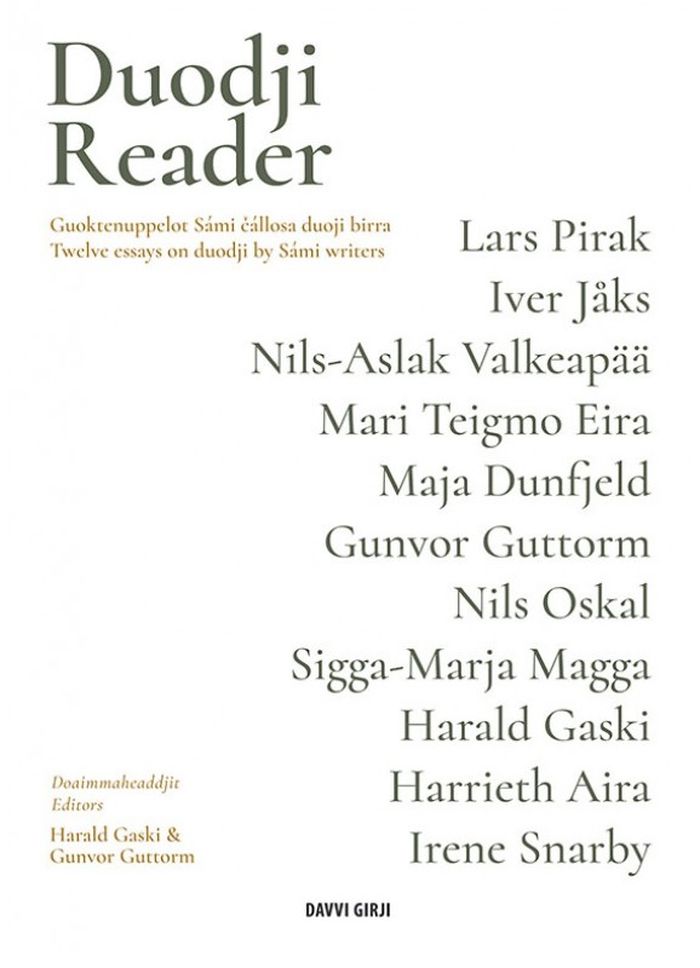
Duodji reader: Twelve essays on duodji by Sámi writers
Actions:
Price:
$64.95
(available to order)
Summary:
''Duodji Reader'' is a selection of twelve essays on duodji by Sámi duojárat and writers from the past 60 years. The craft practices of Indigenous peoples from all over the world have been getting increased attention and appreciation globally over the last few decades. It has also become a topic that has occupied its fair share of discourse in academia and in art education. As a contribution to this interest in Indigenous art and crafts practices, we offer this book on Sámi duodji. Duodji is the artistic crafts form of the Indigenous people of the European Arctic. Duodji refers not only to the end result, the finished object itself, but also describes the whole process - from the incipient idea to the final product. Duodji demonstrates a holistic circle of creation, how nature and humans collaborate in recognising, visualising, and shaping items that serve the need for both practical use and aesthetic form. ''Duodji reader: Twelve essays on duodji by Sámi writers'' is produced by Sámi Allaskuvla and Norwegian Crafts. The publication is edited by the professors Gunvor Guttorm and Harald Gaski, and contains essays from eleven prominent Sámi scholars, duojárat, and writers from North, South, and Lule Sámi areas. The essays are presented in Lule, South or North Sámi as well as in English. The publication also contains a wide-ranging selection of photographs of duodji by more than thirty contemporary duojárat. The book is well-suited both as background and text material for education in crafts, as well as a resource for the theory and practice of Sámi duodji as an Indigenous art form with long roots in the Arctic North.
Duodji reader: Twelve essays on duodji by Sámi writers
Actions:
Price:
$64.95
(available to order)
Summary:
''Duodji Reader'' is a selection of twelve essays on duodji by Sámi duojárat and writers from the past 60 years. The craft practices of Indigenous peoples from all over the world have been getting increased attention and appreciation globally over the last few decades. It has also become a topic that has occupied its fair share of discourse in academia and in art education. As a contribution to this interest in Indigenous art and crafts practices, we offer this book on Sámi duodji. Duodji is the artistic crafts form of the Indigenous people of the European Arctic. Duodji refers not only to the end result, the finished object itself, but also describes the whole process - from the incipient idea to the final product. Duodji demonstrates a holistic circle of creation, how nature and humans collaborate in recognising, visualising, and shaping items that serve the need for both practical use and aesthetic form. ''Duodji reader: Twelve essays on duodji by Sámi writers'' is produced by Sámi Allaskuvla and Norwegian Crafts. The publication is edited by the professors Gunvor Guttorm and Harald Gaski, and contains essays from eleven prominent Sámi scholars, duojárat, and writers from North, South, and Lule Sámi areas. The essays are presented in Lule, South or North Sámi as well as in English. The publication also contains a wide-ranging selection of photographs of duodji by more than thirty contemporary duojárat. The book is well-suited both as background and text material for education in crafts, as well as a resource for the theory and practice of Sámi duodji as an Indigenous art form with long roots in the Arctic North.
Form:
books
books
Publication:
February 2022
February 2022
Subject:
Art Theory
Art Theory
Form:
books
books

Actions:
Price:
$53.95
(available to order)
Summary:
Dóra Maurer (born 1937, lives in Budapest) is considered a prominent figure on the Hungarian neo-avant-garde scene. She is one of the artists who have been taking progressive paths outside of Hungary’ s official state cultural policies since the 1960s. Her work in the mediums of print making, photographs, film, performance art, and painting features a conceptual(...)
$53.95
(available to order)
Summary:
Dóra Maurer (born 1937, lives in Budapest) is considered a prominent figure on the Hungarian neo-avant-garde scene. She is one of the artists who have been taking progressive paths outside of Hungary’ s official state cultural policies since the 1960s. Her work in the mediums of print making, photographs, film, performance art, and painting features a conceptual(...)
Subject:
Contemporary Art Monographs
Contemporary Art Monographs
Publication:
October 2023
October 2023
Title:
Dóra Maurer: See like this and see differently
Actions:
Price:
$53.95
(available to order)
Summary:
Dóra Maurer (born 1937, lives in Budapest) is considered a prominent figure on the Hungarian neo-avant-garde scene. She is one of the artists who have been taking progressive paths outside of Hungary’ s official state cultural policies since the 1960s. Her work in the mediums of print making, photographs, film, performance art, and painting features a conceptual approach. Major aspects are perception, movement, displacement, and transformation. In the early years of West-Germany, abstract art was introduced as a political new beginning in that it represented the so-called open society. Accordingly, numerous collections in German museums are oriented toward this, including the one at the Kunsthalle Bielefeld, whose building was designed by the US-American architect Philip Johnson. While abstract art in the West was considered " free of ideologies " and instrumentalized as such, abstraction in countries such as Hungary, which was part of the Eastern bloc at the time, certainly had an “ oppositional” connotation. Due to both the non-representational nature of her works as well as her contacts and travels in the West prior to 1989 (permitted thanks to her Hungarian-Austrian dual citizenship), Maurer occupies a special position within the Hungarian art world, which in those days was mainly dominated by Socialist Realism. In her experiments in photography and film in the 1970s, as well as in her abstract, geometric works based on a process of displacement, there are obvious parallels to Western European and US-American post-war art. In fact, however, her oeuvre is inconceivable without her experience of life under the official Hungarian system during the socialist period.
Dóra Maurer: See like this and see differently
Actions:
Price:
$53.95
(available to order)
Summary:
Dóra Maurer (born 1937, lives in Budapest) is considered a prominent figure on the Hungarian neo-avant-garde scene. She is one of the artists who have been taking progressive paths outside of Hungary’ s official state cultural policies since the 1960s. Her work in the mediums of print making, photographs, film, performance art, and painting features a conceptual approach. Major aspects are perception, movement, displacement, and transformation. In the early years of West-Germany, abstract art was introduced as a political new beginning in that it represented the so-called open society. Accordingly, numerous collections in German museums are oriented toward this, including the one at the Kunsthalle Bielefeld, whose building was designed by the US-American architect Philip Johnson. While abstract art in the West was considered " free of ideologies " and instrumentalized as such, abstraction in countries such as Hungary, which was part of the Eastern bloc at the time, certainly had an “ oppositional” connotation. Due to both the non-representational nature of her works as well as her contacts and travels in the West prior to 1989 (permitted thanks to her Hungarian-Austrian dual citizenship), Maurer occupies a special position within the Hungarian art world, which in those days was mainly dominated by Socialist Realism. In her experiments in photography and film in the 1970s, as well as in her abstract, geometric works based on a process of displacement, there are obvious parallels to Western European and US-American post-war art. In fact, however, her oeuvre is inconceivable without her experience of life under the official Hungarian system during the socialist period.
Form:
books
books
Publication:
October 2023
October 2023
Subject:
Contemporary Art Monographs
Contemporary Art Monographs
Form:
books
books
Actions:
Price:
$32.50
(available to order)
Summary:
Who are you? And how can you prove it? How were individuals described and identified by people who had never seen them before, in the centuries before photography and fingerprinting, in a world without centralized administrations, where names and addresses were constantly changing? In "Who are you?", Valentin Groebner traces the early modern European history of(...)
$32.50
(available to order)
Summary:
Who are you? And how can you prove it? How were individuals described and identified by people who had never seen them before, in the centuries before photography and fingerprinting, in a world without centralized administrations, where names and addresses were constantly changing? In "Who are you?", Valentin Groebner traces the early modern European history of(...)
Title:
Who are you? : identification, deception, and surveillance in early modern Europe
Actions:
Price:
$32.50
(available to order)
Summary:
Who are you? And how can you prove it? How were individuals described and identified by people who had never seen them before, in the centuries before photography and fingerprinting, in a world without centralized administrations, where names and addresses were constantly changing? In "Who are you?", Valentin Groebner traces the early modern European history of identification practices and identity papers. The documents, seals, stamps, and signatures were — and are — powerful tools that created the double of a person in writ and bore the indelible signs of bureaucratic authenticity. Ultimately, as Groebner lucidly explains, they revealed as much about their makers’ illustory fantasies as they did about their bearers’ actual identity. The bureaucratic desire to register and control the population created, from the sixteenth century onward, an intricate administrative system for tracking individual identities. Most important, the proof of one’s identity was intimately linked and determined by the identification papers the authorities demanded and endlessly supplied. At the same time, these papers and practices gave birth to two uncanny doppelgängers of administrative identity procedures : the spy who craftily forged official documents and passports, and the impostor who dissimulated and mimed any individual he so disired. Through careful research and powerful narrative, Groebner recounts the complicated and bizarre stories of the many ways in which identities were stolen, created, and doubled. Groebner argues that identity papers cannot be interpreted literally as pure and simple documents. They are themselves pieces of history, histories of individuals and individuality, papers that both document and transform their owner’s identity — from Renaissance vagrants and gypsies to the illegal immigrants of today who remain "sans papiers", without papers.
Who are you? : identification, deception, and surveillance in early modern Europe
Actions:
Price:
$32.50
(available to order)
Summary:
Who are you? And how can you prove it? How were individuals described and identified by people who had never seen them before, in the centuries before photography and fingerprinting, in a world without centralized administrations, where names and addresses were constantly changing? In "Who are you?", Valentin Groebner traces the early modern European history of identification practices and identity papers. The documents, seals, stamps, and signatures were — and are — powerful tools that created the double of a person in writ and bore the indelible signs of bureaucratic authenticity. Ultimately, as Groebner lucidly explains, they revealed as much about their makers’ illustory fantasies as they did about their bearers’ actual identity. The bureaucratic desire to register and control the population created, from the sixteenth century onward, an intricate administrative system for tracking individual identities. Most important, the proof of one’s identity was intimately linked and determined by the identification papers the authorities demanded and endlessly supplied. At the same time, these papers and practices gave birth to two uncanny doppelgängers of administrative identity procedures : the spy who craftily forged official documents and passports, and the impostor who dissimulated and mimed any individual he so disired. Through careful research and powerful narrative, Groebner recounts the complicated and bizarre stories of the many ways in which identities were stolen, created, and doubled. Groebner argues that identity papers cannot be interpreted literally as pure and simple documents. They are themselves pieces of history, histories of individuals and individuality, papers that both document and transform their owner’s identity — from Renaissance vagrants and gypsies to the illegal immigrants of today who remain "sans papiers", without papers.
Form:
books
books
Publication:
March 2007, New York
March 2007, New York
Subject:
Architectural Theory
Architectural Theory
Form:
books
books
Title:
The Manifesta decade : debates on contemporary art exhibitions and biennials in post-wall Europe
The Manifesta decade : debates on contemporary art exhibitions and biennials in post-wall Europe
Actions:
Price:
$43.95
(available to order)
Summary:
Manifesta, the first itinerant European biennial for contemporary art, emerged in a post-wall, globalizing Europe. Founded in 1993, it organized traveling exhibitions aimed at providing a new framework for cultural exchange and collaboration between artists and curators from across the continent. "The Manifesta decade" marks Manifesta's ten years of exhibits with original(...)
$43.95
(available to order)
Summary:
Manifesta, the first itinerant European biennial for contemporary art, emerged in a post-wall, globalizing Europe. Founded in 1993, it organized traveling exhibitions aimed at providing a new framework for cultural exchange and collaboration between artists and curators from across the continent. "The Manifesta decade" marks Manifesta's ten years of exhibits with original(...)
Subject:
Museology
Museology
Publication:
September 2005, Cambridge, Mass.
September 2005, Cambridge, Mass.
Title:
The Manifesta decade : debates on contemporary art exhibitions and biennials in post-wall Europe
Actions:
Price:
$43.95
(available to order)
Summary:
Manifesta, the first itinerant European biennial for contemporary art, emerged in a post-wall, globalizing Europe. Founded in 1993, it organized traveling exhibitions aimed at providing a new framework for cultural exchange and collaboration between artists and curators from across the continent. "The Manifesta decade" marks Manifesta's ten years of exhibits with original essays, unpublished images, and texts that not only document the different Manifesta exhibits but also examine the cultural, curatorial, and political terrain of the Europe from which they sprang. Including contributions from philosophers, historians, and anthropologists, interviews with architect Rem Koolhaas and historian Jacques Le Goff, and essays by such curators and writers as Okwui Enwezor, Boris Groys, Maria Hlavajova, and Hans Ulrich Obrist, the collection traces the cultural and political developments of Europe in the 1990s. It reflects the debates incited by exhibitions such as "Magiciens de la terre", Documenta, and "After the wall" and explores the changing roles of curators and artists in the new geo-political context. The issues discussed include the effect of communism's collapse on Eastern Europe, the role of biennials in the context of globalization, and the ephemerality of exhibitions versus the permanence of the museum. The book's second section traces the history of Manifesta, from its conceptual foundations and contributions to artistic practices of the 1990s to the relationship of a roving biennial to themes of multiculturalism, migration and diaspora. At a moment when biennials continue to proliferate worldwide, "The Manifesta decade" takes Manifesta as a case study to look critically at the landscape from which new exhibition paradigms have emerged. The book's 100 images, both color and black and white, include unpublished installation shots of each Manifesta exhibition.
The Manifesta decade : debates on contemporary art exhibitions and biennials in post-wall Europe
Actions:
Price:
$43.95
(available to order)
Summary:
Manifesta, the first itinerant European biennial for contemporary art, emerged in a post-wall, globalizing Europe. Founded in 1993, it organized traveling exhibitions aimed at providing a new framework for cultural exchange and collaboration between artists and curators from across the continent. "The Manifesta decade" marks Manifesta's ten years of exhibits with original essays, unpublished images, and texts that not only document the different Manifesta exhibits but also examine the cultural, curatorial, and political terrain of the Europe from which they sprang. Including contributions from philosophers, historians, and anthropologists, interviews with architect Rem Koolhaas and historian Jacques Le Goff, and essays by such curators and writers as Okwui Enwezor, Boris Groys, Maria Hlavajova, and Hans Ulrich Obrist, the collection traces the cultural and political developments of Europe in the 1990s. It reflects the debates incited by exhibitions such as "Magiciens de la terre", Documenta, and "After the wall" and explores the changing roles of curators and artists in the new geo-political context. The issues discussed include the effect of communism's collapse on Eastern Europe, the role of biennials in the context of globalization, and the ephemerality of exhibitions versus the permanence of the museum. The book's second section traces the history of Manifesta, from its conceptual foundations and contributions to artistic practices of the 1990s to the relationship of a roving biennial to themes of multiculturalism, migration and diaspora. At a moment when biennials continue to proliferate worldwide, "The Manifesta decade" takes Manifesta as a case study to look critically at the landscape from which new exhibition paradigms have emerged. The book's 100 images, both color and black and white, include unpublished installation shots of each Manifesta exhibition.
Form:
books
books
Publication:
September 2005, Cambridge, Mass.
September 2005, Cambridge, Mass.
Subject:
Museology
Museology
Form:
books
books
Actions:
Price:
$39.95
(available to order)
Summary:
For generations, our remote ancestors have been cast as primitive and childlike--either free and equal innocents, or thuggish and warlike. Civilization, we are told, could only be achieved by sacrificing those original freedoms, or alternatively, by taming our baser instincts. Graeber and Wengrow show how such theories first emerged in the eighteenth century as a(...)
$39.95
(available to order)
Summary:
For generations, our remote ancestors have been cast as primitive and childlike--either free and equal innocents, or thuggish and warlike. Civilization, we are told, could only be achieved by sacrificing those original freedoms, or alternatively, by taming our baser instincts. Graeber and Wengrow show how such theories first emerged in the eighteenth century as a(...)
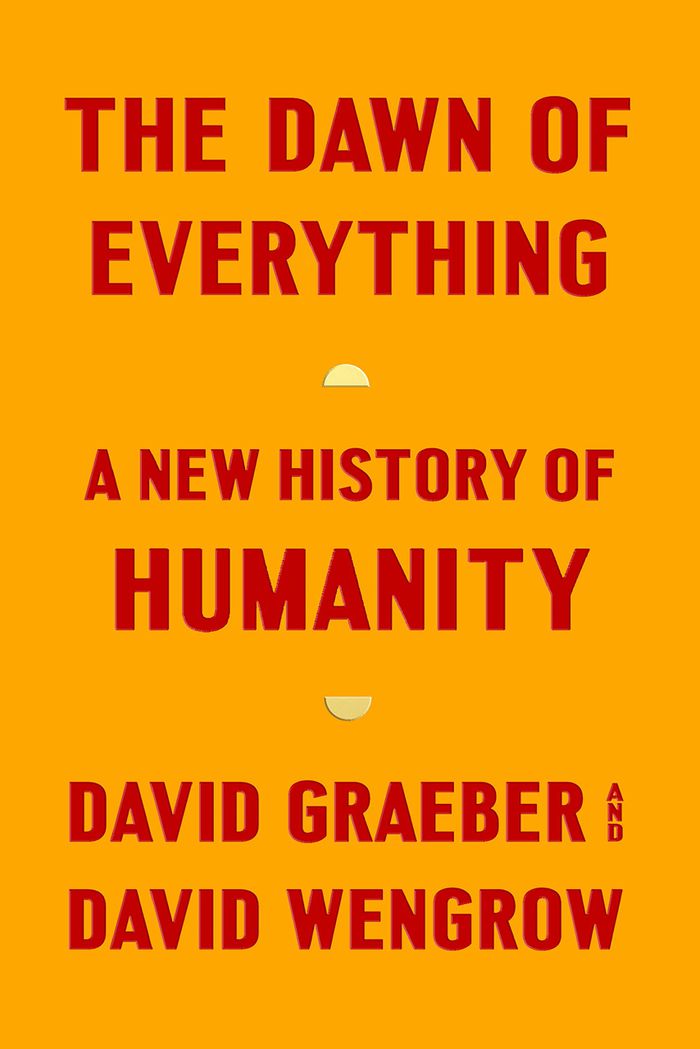
Title:
The dawn of everything: a new history of humanity
Actions:
Price:
$39.95
(available to order)
Summary:
For generations, our remote ancestors have been cast as primitive and childlike--either free and equal innocents, or thuggish and warlike. Civilization, we are told, could only be achieved by sacrificing those original freedoms, or alternatively, by taming our baser instincts. Graeber and Wengrow show how such theories first emerged in the eighteenth century as a conservative reaction to powerful critiques of European society posed by Indigenous observers and intellectuals. Revisiting this encounter has startling implications for how we make sense of human history today, including the origins of farming, property, cities, democracy, slavery, and civilization itself. Drawing on path-breaking research in archaeology and anthropology, the authors show how history becomes a far more interesting place once we learn to throw off our conceptual shackles and perceive what's really there. If humans did not spend 95% of their evolutionary past in tiny bands of hunter-gatherers, what were they doing all that time? If agriculture, and cities, did not mean a plunge into hierarchy and domination, then what kinds of social and economic organization did they lead to? What was really happening during the periods that we usually describe as the emergence of "the state"? The answers are often unexpected, and suggest that the course of human history may be less set in stone, and more full of playful, hopeful possibilities, than we tend to assume. ''The dawn of everything'' fundamentally transforms our understanding of the human past and offers a path toward imagining new forms of freedom, new ways of organizing society. This is a monumental book of formidable intellectual range, animated by curiosity, moral vision, and a faith in the power of direct action.
The dawn of everything: a new history of humanity
Actions:
Price:
$39.95
(available to order)
Summary:
For generations, our remote ancestors have been cast as primitive and childlike--either free and equal innocents, or thuggish and warlike. Civilization, we are told, could only be achieved by sacrificing those original freedoms, or alternatively, by taming our baser instincts. Graeber and Wengrow show how such theories first emerged in the eighteenth century as a conservative reaction to powerful critiques of European society posed by Indigenous observers and intellectuals. Revisiting this encounter has startling implications for how we make sense of human history today, including the origins of farming, property, cities, democracy, slavery, and civilization itself. Drawing on path-breaking research in archaeology and anthropology, the authors show how history becomes a far more interesting place once we learn to throw off our conceptual shackles and perceive what's really there. If humans did not spend 95% of their evolutionary past in tiny bands of hunter-gatherers, what were they doing all that time? If agriculture, and cities, did not mean a plunge into hierarchy and domination, then what kinds of social and economic organization did they lead to? What was really happening during the periods that we usually describe as the emergence of "the state"? The answers are often unexpected, and suggest that the course of human history may be less set in stone, and more full of playful, hopeful possibilities, than we tend to assume. ''The dawn of everything'' fundamentally transforms our understanding of the human past and offers a path toward imagining new forms of freedom, new ways of organizing society. This is a monumental book of formidable intellectual range, animated by curiosity, moral vision, and a faith in the power of direct action.
Form:
books
books
Publication:
October 2021
October 2021
Subject:
Social
Social


