


19531 Results
Form:
exhibitions
exhibitions
Location:
Octagonal gallery
Octagonal gallery
Date:
27 September 2019 to 19 January 2020
27 September 2019 to 19 January 2020
Form:
exhibitions
exhibitions
Date:
27 September 2019 to
19 January 2020
27 September 2019 to
19 January 2020
Location:
Octagonal gallery
Octagonal gallery
Form:
exhibitions
exhibitions
Location:
Octagonal gallery
Octagonal gallery
Date:
7 February 2020 to 4 October 2020
7 February 2020 to 4 October 2020
Form:
exhibitions
exhibitions
Date:
7 February 2020 to
4 October 2020
7 February 2020 to
4 October 2020
Location:
Octagonal gallery
Octagonal gallery
Form:
exhibitions
exhibitions
Location:
Octagonal gallery
Octagonal gallery
Date:
7 June 2019 to 8 September 2019
7 June 2019 to 8 September 2019
Form:
exhibitions
exhibitions
Date:
7 June 2019 to
8 September 2019
7 June 2019 to
8 September 2019
Location:
Octagonal gallery
Octagonal gallery
Form:
events
events
Description:
Join us Wednesday November 20 from 4–7 pm to honour the women who planned and designed our built environment. This event is free and open to the public.
Join us Wednesday November 20 from 4–7 pm to honour the women who planned and designed our built environment. This event is free and open to the public.
Location:
Study Room
Study Room
Date:
20 November 2024, 4pm to 7pm
20 November 2024, 4pm to 7pm
Title:
Wiki Edit-a-thon: Foregrounding Canadian Women Architects
Actions:
Description:
Join us Wednesday November 20 from 4–7 pm to honour the women who planned and designed our built environment. This event is free and open to the public.
Wiki Edit-a-thon: Foregrounding Canadian Women Architects
Actions:
Description:
Join us Wednesday November 20 from 4–7 pm to honour the women who planned and designed our built environment. This event is free and open to the public.
Form:
events
events
Date:
20 November 2024
4pm to 7pm
20 November 2024
4pm to 7pm
Location:
Study Room
Study Room
Form:
events
events

Actions:
Description:
To coincide with the opening of our exhibition To Build Law, we invite you to a roundtable on renovation and rehabilitation policies in Canada. Olaf Grawert, Alina Kolar (bplus.xyz), and Juliette Cook (Ha/f Climate Design) will discuss the economic, environmental, and legal challenges of renovation.
To coincide with the opening of our exhibition To Build Law, we invite you to a roundtable on renovation and rehabilitation policies in Canada. Olaf Grawert, Alina Kolar (bplus.xyz), and Juliette Cook (Ha/f Climate Design) will discuss the economic, environmental, and legal challenges of renovation.
Location:
Shaughnessy House Keyword(s):
renovation and rehabilitation policies in Canada, roundtable, economic, environmental, and legal challenges of renovation
Shaughnessy House Keyword(s):
renovation and rehabilitation policies in Canada, roundtable, economic, environmental, and legal challenges of renovation
Date:
11 December 2024, 6pm
11 December 2024, 6pm
Title:
Tear Down or Repair
Actions:
Description:
To coincide with the opening of our exhibition To Build Law, we invite you to a roundtable on renovation and rehabilitation policies in Canada. Olaf Grawert, Alina Kolar (bplus.xyz), and Juliette Cook (Ha/f Climate Design) will discuss the economic, environmental, and legal challenges of renovation.
Tear Down or Repair
Actions:
Description:
To coincide with the opening of our exhibition To Build Law, we invite you to a roundtable on renovation and rehabilitation policies in Canada. Olaf Grawert, Alina Kolar (bplus.xyz), and Juliette Cook (Ha/f Climate Design) will discuss the economic, environmental, and legal challenges of renovation.
Form:
events
events
Date:
11 December 2024
6pm
11 December 2024
6pm
Location:
Shaughnessy House Keyword(s):
renovation and rehabilitation policies in Canada, roundtable, economic, environmental, and legal challenges of renovation
Shaughnessy House Keyword(s):
renovation and rehabilitation policies in Canada, roundtable, economic, environmental, and legal challenges of renovation
Form:
exhibitions
exhibitions
Actions:
Description:
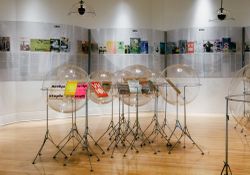
Coined in the early twentieth century to designate progressive literary journals, the term “little magazine” was remobilized during the 1960s to grapple with the contemporary proliferation of independent architectural periodicals that appeared in response to the political, social, and artistic changes of the period. Clip/Stamp/Fold 2 investigates how a diverse group of(...)
Coined in the early twentieth century to designate progressive literary journals, the term “little magazine” was remobilized during the 1960s to grapple with the contemporary proliferation of independent architectural periodicals that appeared in response to the political, social, and artistic changes of the period. Clip/Stamp/Fold 2 investigates how a diverse group of(...)
Location:
Octagonal gallery and library rotunda
Octagonal gallery and library rotunda
Date:
12 April 2007 to 9 September 2007
12 April 2007 to 9 September 2007
Title:
Clip/Stamp/Fold 2: The Radical Architecture of Little Magazines 196X - 197X
Actions:
Description:
Coined in the early twentieth century to designate progressive literary journals, the term “little magazine” was remobilized during the 1960s to grapple with the contemporary proliferation of independent architectural periodicals that appeared in response to the political, social, and artistic changes of the period. Clip/Stamp/Fold 2 investigates how a diverse group of(...)
Clip/Stamp/Fold 2: The Radical Architecture of Little Magazines 196X - 197X
Actions:
Description:
Coined in the early twentieth century to designate progressive literary journals, the term “little magazine” was remobilized during the 1960s to grapple with the contemporary proliferation of independent architectural periodicals that appeared in response to the political, social, and artistic changes of the period. Clip/Stamp/Fold 2 investigates how a diverse group of(...)
Form:
exhibitions
exhibitions
Date:
12 April 2007 to
9 September 2007
12 April 2007 to
9 September 2007
Location:
Octagonal gallery and library rotunda
Octagonal gallery and library rotunda
Form:
events
events
Description:
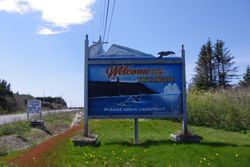
Iceberg Alley is an area that extends from the western coast of Greenland to Baffin Island and further south past the Grand Banks of Newfoundland. Over the past two decades, its icebergs have become a sought after commodity in the production of vodka, beer, and luxury-branded waters. By drawing on historical research and fieldwork across communities in Iceberg Alley,(...)
Iceberg Alley is an area that extends from the western coast of Greenland to Baffin Island and further south past the Grand Banks of Newfoundland. Over the past two decades, its icebergs have become a sought after commodity in the production of vodka, beer, and luxury-branded waters. By drawing on historical research and fieldwork across communities in Iceberg Alley,(...)
Location:
Paul Demarais Theatre
Paul Demarais Theatre
Date:
24 November 2016, 6pm
24 November 2016, 6pm
Title:
Iceberg Alley, Climate Change, and Canada’s Grey Resources
Actions:
Description:
Iceberg Alley is an area that extends from the western coast of Greenland to Baffin Island and further south past the Grand Banks of Newfoundland. Over the past two decades, its icebergs have become a sought after commodity in the production of vodka, beer, and luxury-branded waters. By drawing on historical research and fieldwork across communities in Iceberg Alley,(...)
Iceberg Alley, Climate Change, and Canada’s Grey Resources
Actions:
Description:
Iceberg Alley is an area that extends from the western coast of Greenland to Baffin Island and further south past the Grand Banks of Newfoundland. Over the past two decades, its icebergs have become a sought after commodity in the production of vodka, beer, and luxury-branded waters. By drawing on historical research and fieldwork across communities in Iceberg Alley,(...)
Form:
events
events
Date:
24 November 2016
6pm
24 November 2016
6pm
Location:
Paul Demarais Theatre
Paul Demarais Theatre
Form:
exhibitions
exhibitions
Actions:
Description:
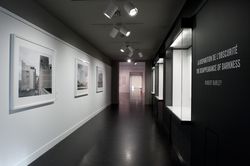
The exhibition Robert Burley: The Disappearance of Darkness presents a series of photographs by Canadian artist Robert Burley, documenting the decline of traditional photographic equipment manufacturing brought on by new technologies. Since 2005, digital photographic technology has increasingly displaced its analog predecessor, resulting in a plummeting demand for(...)
The exhibition Robert Burley: The Disappearance of Darkness presents a series of photographs by Canadian artist Robert Burley, documenting the decline of traditional photographic equipment manufacturing brought on by new technologies. Since 2005, digital photographic technology has increasingly displaced its analog predecessor, resulting in a plummeting demand for(...)
Location:
Hall cases
Hall cases
Date:
11 September 2009 to 15 November 2009
11 September 2009 to 15 November 2009
Title:
Robert Burley: The Disappearance of Darkness
Actions:
Description:
The exhibition Robert Burley: The Disappearance of Darkness presents a series of photographs by Canadian artist Robert Burley, documenting the decline of traditional photographic equipment manufacturing brought on by new technologies. Since 2005, digital photographic technology has increasingly displaced its analog predecessor, resulting in a plummeting demand for(...)
Robert Burley: The Disappearance of Darkness
Actions:
Description:
The exhibition Robert Burley: The Disappearance of Darkness presents a series of photographs by Canadian artist Robert Burley, documenting the decline of traditional photographic equipment manufacturing brought on by new technologies. Since 2005, digital photographic technology has increasingly displaced its analog predecessor, resulting in a plummeting demand for(...)
Form:
exhibitions
exhibitions
Date:
11 September 2009 to
15 November 2009
11 September 2009 to
15 November 2009
Location:
Hall cases
Hall cases
Form:
films
films
Title:
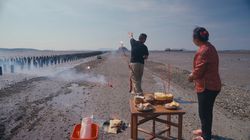
Into the Island
Into the Island
Actions:
Description:
Into the Island follows Xu Tiantian of DnA in her discovery of essential elements, pressure points, and issues on the destabilizing terrain that is the ocean and its delicate ecosystem of Meizhou Island. It is the first chapter in a three part film and exhibition series, Groundwork.
Into the Island follows Xu Tiantian of DnA in her discovery of essential elements, pressure points, and issues on the destabilizing terrain that is the ocean and its delicate ecosystem of Meizhou Island. It is the first chapter in a three part film and exhibition series, Groundwork.
Date:
2024
2024
Title:
Into the Island
Actions:
Description:
Into the Island follows Xu Tiantian of DnA in her discovery of essential elements, pressure points, and issues on the destabilizing terrain that is the ocean and its delicate ecosystem of Meizhou Island. It is the first chapter in a three part film and exhibition series, Groundwork.
Into the Island
Actions:
Description:
Into the Island follows Xu Tiantian of DnA in her discovery of essential elements, pressure points, and issues on the destabilizing terrain that is the ocean and its delicate ecosystem of Meizhou Island. It is the first chapter in a three part film and exhibition series, Groundwork.
Form:
films
films
Date:
2024 to
2024
2024 to
2024
Level of archival description:
Series
Series
Title:
Œuvres du prix de Rome
Œuvres du prix de Rome
Actions:
Reference number:
AP066.S4
Description:
Cette série rassemble les documents produits par Jacques Rousseau dans le cadre du Prix de Rome (1988), soit: les esquisses préparatoires et les gravures blanches (sans encre) qui illustrent un projet de "Nouveau-Port" pour Montréal, et les dessins à la craie sèche sur papier intitulés "Mémoire virtuelle ...". On y retrouve également des avenues de projet qui n'ont pas été développées, "Étude du flanc est du Mont-Royal" et projet de "Boucliers de papier", et des documents issus de l'exposition intitulée Montréal vue de Rome présentée à la Maison Coloniale en mai 1990. Le dossier contient des dessins, des documents textuels, des documents photographiques et un artéfact. Description du projet par l'architecte: "Amorcé en 1985, lors de la consultation publique concernant le Vieux-Port de Montréal, "le projet du Nouveau Port" complète son cycle alors que je séjourne à Rome à titre de Prix de Rome du Conseil des Arts du Canada. Prétexte par excellence pour réfléchir sur l'espoir et la transformation de Montréal, le sujet du Nouveau Port m'est apparu comme le moyen d'informer une approche de la transformation de la ville. J'ai pensé le projet possible, nécessaire même et j'ai plongé." Jacques Rousseau, "Le projet du Nouveau Port", ARQ : Architecture-Québec, nº 67, p. 30.
AP066.S4
Description:
Cette série rassemble les documents produits par Jacques Rousseau dans le cadre du Prix de Rome (1988), soit: les esquisses préparatoires et les gravures blanches (sans encre) qui illustrent un projet de "Nouveau-Port" pour Montréal, et les dessins à la craie sèche sur papier intitulés "Mémoire virtuelle ...". On y retrouve également des avenues de projet qui n'ont pas été développées, "Étude du flanc est du Mont-Royal" et projet de "Boucliers de papier", et des documents issus de l'exposition intitulée Montréal vue de Rome présentée à la Maison Coloniale en mai 1990. Le dossier contient des dessins, des documents textuels, des documents photographiques et un artéfact. Description du projet par l'architecte: "Amorcé en 1985, lors de la consultation publique concernant le Vieux-Port de Montréal, "le projet du Nouveau Port" complète son cycle alors que je séjourne à Rome à titre de Prix de Rome du Conseil des Arts du Canada. Prétexte par excellence pour réfléchir sur l'espoir et la transformation de Montréal, le sujet du Nouveau Port m'est apparu comme le moyen d'informer une approche de la transformation de la ville. J'ai pensé le projet possible, nécessaire même et j'ai plongé." Jacques Rousseau, "Le projet du Nouveau Port", ARQ : Architecture-Québec, nº 67, p. 30.
People:
Date:
1987-1990
1987-1990
Title:
Œuvres du prix de Rome
Actions:
AP066.S4
Description:
Cette série rassemble les documents produits par Jacques Rousseau dans le cadre du Prix de Rome (1988), soit: les esquisses préparatoires et les gravures blanches (sans encre) qui illustrent un projet de "Nouveau-Port" pour Montréal, et les dessins à la craie sèche sur papier intitulés "Mémoire virtuelle ...". On y retrouve également des avenues de projet qui n'ont pas été développées, "Étude du flanc est du Mont-Royal" et projet de "Boucliers de papier", et des documents issus de l'exposition intitulée Montréal vue de Rome présentée à la Maison Coloniale en mai 1990. Le dossier contient des dessins, des documents textuels, des documents photographiques et un artéfact. Description du projet par l'architecte: "Amorcé en 1985, lors de la consultation publique concernant le Vieux-Port de Montréal, "le projet du Nouveau Port" complète son cycle alors que je séjourne à Rome à titre de Prix de Rome du Conseil des Arts du Canada. Prétexte par excellence pour réfléchir sur l'espoir et la transformation de Montréal, le sujet du Nouveau Port m'est apparu comme le moyen d'informer une approche de la transformation de la ville. J'ai pensé le projet possible, nécessaire même et j'ai plongé." Jacques Rousseau, "Le projet du Nouveau Port", ARQ : Architecture-Québec, nº 67, p. 30.
Œuvres du prix de Rome
Actions:
AP066.S4
Description:
Cette série rassemble les documents produits par Jacques Rousseau dans le cadre du Prix de Rome (1988), soit: les esquisses préparatoires et les gravures blanches (sans encre) qui illustrent un projet de "Nouveau-Port" pour Montréal, et les dessins à la craie sèche sur papier intitulés "Mémoire virtuelle ...". On y retrouve également des avenues de projet qui n'ont pas été développées, "Étude du flanc est du Mont-Royal" et projet de "Boucliers de papier", et des documents issus de l'exposition intitulée Montréal vue de Rome présentée à la Maison Coloniale en mai 1990. Le dossier contient des dessins, des documents textuels, des documents photographiques et un artéfact. Description du projet par l'architecte: "Amorcé en 1985, lors de la consultation publique concernant le Vieux-Port de Montréal, "le projet du Nouveau Port" complète son cycle alors que je séjourne à Rome à titre de Prix de Rome du Conseil des Arts du Canada. Prétexte par excellence pour réfléchir sur l'espoir et la transformation de Montréal, le sujet du Nouveau Port m'est apparu comme le moyen d'informer une approche de la transformation de la ville. J'ai pensé le projet possible, nécessaire même et j'ai plongé." Jacques Rousseau, "Le projet du Nouveau Port", ARQ : Architecture-Québec, nº 67, p. 30.
Level of archival description:
Série 4
Série 4
Date:
1987-1990
1987-1990
People:


