


13794 Results
Form:
books
books
Title:
La ville au cinéma
La ville au cinéma
Actions:
Price:
$90.00
(available to order)
Summary:
Ce volume explore pour la première fois de façon systématique en langue française la représentation de la ville à l’écran. Plus de 85 auteurs, universitaires cinéphiles et critiques internationaux, ont rédigé cette « biographie croisée » de la ville et du cinéma. Cette encyclopédie est construite en cinq parties : « Filmer, montrer, représenter » (Lumière, Décor,(...)
$90.00
(available to order)
Summary:
Ce volume explore pour la première fois de façon systématique en langue française la représentation de la ville à l’écran. Plus de 85 auteurs, universitaires cinéphiles et critiques internationaux, ont rédigé cette « biographie croisée » de la ville et du cinéma. Cette encyclopédie est construite en cinq parties : « Filmer, montrer, représenter » (Lumière, Décor,(...)
Title:
La ville au cinéma
Actions:
Price:
$90.00
(available to order)
Summary:
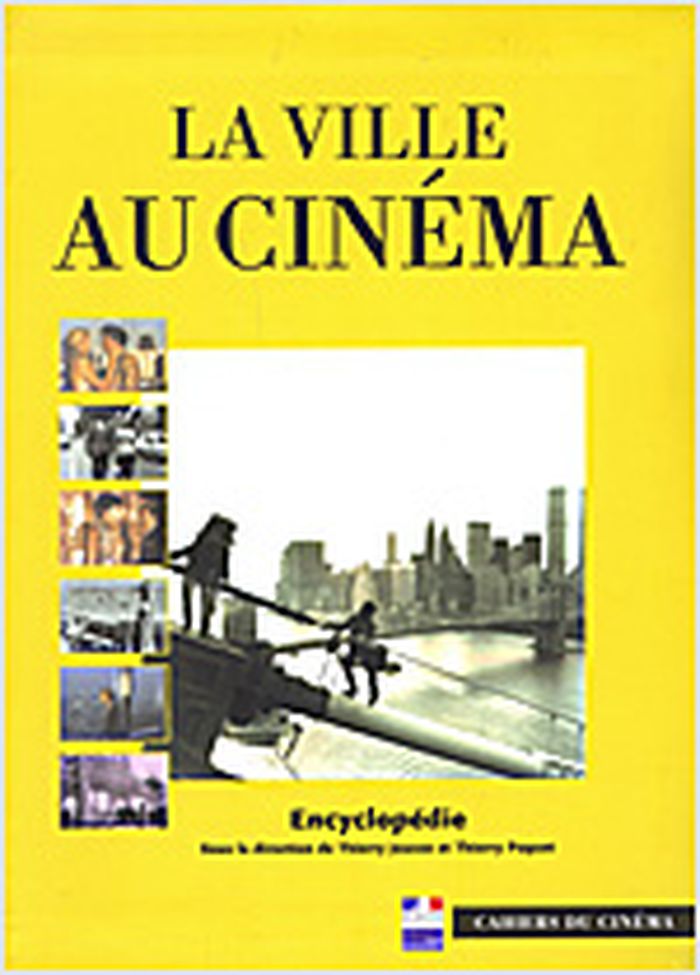
Ce volume explore pour la première fois de façon systématique en langue française la représentation de la ville à l’écran. Plus de 85 auteurs, universitaires cinéphiles et critiques internationaux, ont rédigé cette « biographie croisée » de la ville et du cinéma. Cette encyclopédie est construite en cinq parties : « Filmer, montrer, représenter » (Lumière, Décor, Histoire, Montage, Musique de film...) ; « Genres et écoles » (Film noir, Science-fiction, Banlieue, Western...) ; Lieux et personnages (30 courts textes personnels d’Aéroport à Voisinage) ; Villes cinématographiques (55 portraits d’Abidjan à Washington, en passant par Buenos Aires, New York, Taipei...) et 50 cinéastes urbains (50 notices biographiques de Woody Allen à Wong Kar-wai).
La ville au cinéma
Actions:
Price:
$90.00
(available to order)
Summary:
Ce volume explore pour la première fois de façon systématique en langue française la représentation de la ville à l’écran. Plus de 85 auteurs, universitaires cinéphiles et critiques internationaux, ont rédigé cette « biographie croisée » de la ville et du cinéma. Cette encyclopédie est construite en cinq parties : « Filmer, montrer, représenter » (Lumière, Décor, Histoire, Montage, Musique de film...) ; « Genres et écoles » (Film noir, Science-fiction, Banlieue, Western...) ; Lieux et personnages (30 courts textes personnels d’Aéroport à Voisinage) ; Villes cinématographiques (55 portraits d’Abidjan à Washington, en passant par Buenos Aires, New York, Taipei...) et 50 cinéastes urbains (50 notices biographiques de Woody Allen à Wong Kar-wai).
Form:
books
books
Publication:
November 2005, Paris
November 2005, Paris
Subject:
Urban Theory
Urban Theory
Form:
books
books
Actions:
Price:
$35.00
(available in store)
Summary:
The rise of the perfect lawn represents one of the most profound transformations in the history of the American landscape. Today the lawn is one of America's leading "crops," outstripping cotton in acres by a factor of two. "American green", Ted Steinberg's exposé of this phenomenon, traces the history of the lawn from its explosion in the postwar suburban community of(...)
$35.00
(available in store)
Summary:
The rise of the perfect lawn represents one of the most profound transformations in the history of the American landscape. Today the lawn is one of America's leading "crops," outstripping cotton in acres by a factor of two. "American green", Ted Steinberg's exposé of this phenomenon, traces the history of the lawn from its explosion in the postwar suburban community of(...)
Title:
American green : the obsessive quest for the perfect lawn
Actions:
Price:
$35.00
(available in store)
Summary:
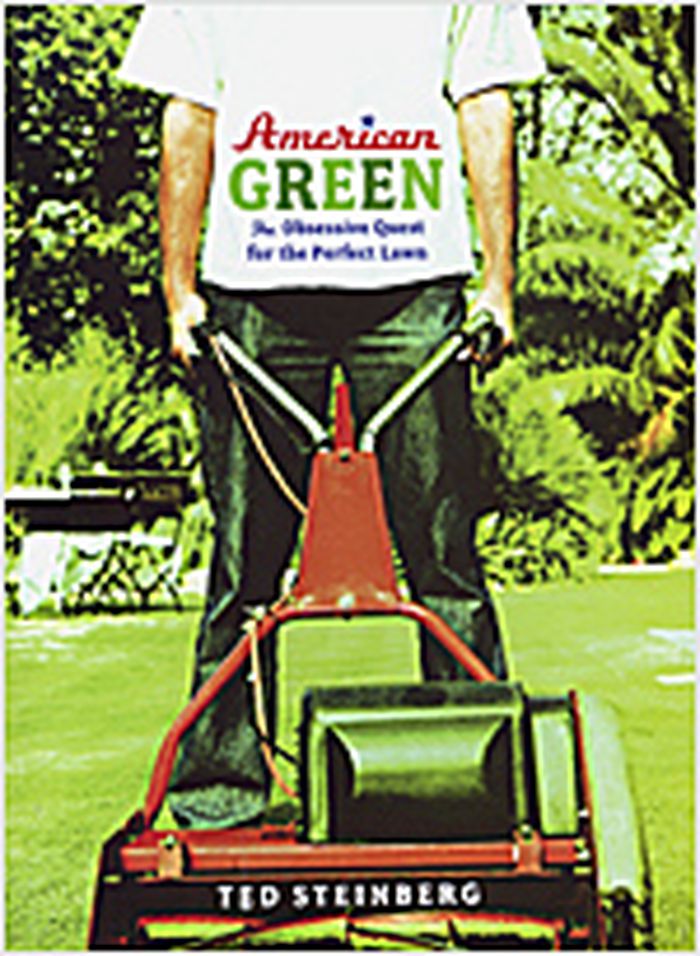
The rise of the perfect lawn represents one of the most profound transformations in the history of the American landscape. Today the lawn is one of America's leading "crops," outstripping cotton in acres by a factor of two. "American green", Ted Steinberg's exposé of this phenomenon, traces the history of the lawn from its explosion in the postwar suburban community of Levittown—just miles from where Steinberg grew up—to the present love affair with turf colorants, leaf blowers, and riding mowers. For half a century, Americans have been on a quest for the greenest, weed-free, ultra-trim turf imaginable. But perfection has its costs. Blending muckraking journalism and social history, Steinberg looks at both the lighter and the darker side of the all-American landscape, from mower accidents and pesticide poisonings to lawnmower racing and the man so addicted to perfection that he re-created Augusta's 12th hole in his backyard.
American green : the obsessive quest for the perfect lawn
Actions:
Price:
$35.00
(available in store)
Summary:
The rise of the perfect lawn represents one of the most profound transformations in the history of the American landscape. Today the lawn is one of America's leading "crops," outstripping cotton in acres by a factor of two. "American green", Ted Steinberg's exposé of this phenomenon, traces the history of the lawn from its explosion in the postwar suburban community of Levittown—just miles from where Steinberg grew up—to the present love affair with turf colorants, leaf blowers, and riding mowers. For half a century, Americans have been on a quest for the greenest, weed-free, ultra-trim turf imaginable. But perfection has its costs. Blending muckraking journalism and social history, Steinberg looks at both the lighter and the darker side of the all-American landscape, from mower accidents and pesticide poisonings to lawnmower racing and the man so addicted to perfection that he re-created Augusta's 12th hole in his backyard.
Form:
books
books
Publication:
March 2006, New York
March 2006, New York
Subject:
Landscape Theory
Landscape Theory
Form:
books
books
Actions:
Price:
$44.50
(available to order)
Summary:
L’originalité même de cet ouvrage précis, documenté, neuf dans le champ de la critique architecturale, tient en sa capacité à démontrer que le lieu – c’est-à-dire l’espace singulier – a été travaillé et transformé par l’architecture à travers l’histoire, les cultures et les styles de toutes les époques, de tous les pays. Le lieu qui n’est jamais neutre permet, et mieux(...)
$44.50
(available to order)
Summary:
L’originalité même de cet ouvrage précis, documenté, neuf dans le champ de la critique architecturale, tient en sa capacité à démontrer que le lieu – c’est-à-dire l’espace singulier – a été travaillé et transformé par l’architecture à travers l’histoire, les cultures et les styles de toutes les époques, de tous les pays. Le lieu qui n’est jamais neutre permet, et mieux(...)
Subject:
Architectural Theory
Architectural Theory
Publication:
January 1900, Paris
January 1900, Paris
Title:
Édifier : l'architecture et le lieu
Actions:
Price:
$44.50
(available to order)
Summary:
L’originalité même de cet ouvrage précis, documenté, neuf dans le champ de la critique architecturale, tient en sa capacité à démontrer que le lieu – c’est-à-dire l’espace singulier – a été travaillé et transformé par l’architecture à travers l’histoire, les cultures et les styles de toutes les époques, de tous les pays. Le lieu qui n’est jamais neutre permet, et mieux encore favorise, promeut un projet d’espace qui trouve dans l’architecture une résolution stable à travers la production et la cristallisation d’une forme lorsque celle-ci s’associe sur la durée à ses environnements naturel et social. « Le lieu est un espace inscrit, qualifié, valorisé. » Au moment où les villes historiques semblent vouées à disparaître dans des agglomérations qui ne sont plus des lieux parce qu’y vivre ensemble devient impossible, ces dernières « expriment » l’absence du projet par lequel elles se sont extraites du vide, se sont développées et se sont étendues sur un vaste territoire par la puissance (symbolique, imaginaire…) issue de la volonté d’édifier. Loin de ressasser un passé désormais révolu, défait par les coups de boutoir d’une modernité aujourd’hui dévastatrice, les auteurs ont pointé la radicalité du phénomène de destruction du projet de la ville en tant que lieu propre de l’édifier. Grâce à une recherche féconde menée depuis plusieurs années, à une grande érudition, et à un savoir puisant ses exemples dans le patrimoine architectural mondial, ils nous invitent à considérer l’édifier comme une dimension essentielle de notre existence.
Édifier : l'architecture et le lieu
Actions:
Price:
$44.50
(available to order)
Summary:
L’originalité même de cet ouvrage précis, documenté, neuf dans le champ de la critique architecturale, tient en sa capacité à démontrer que le lieu – c’est-à-dire l’espace singulier – a été travaillé et transformé par l’architecture à travers l’histoire, les cultures et les styles de toutes les époques, de tous les pays. Le lieu qui n’est jamais neutre permet, et mieux encore favorise, promeut un projet d’espace qui trouve dans l’architecture une résolution stable à travers la production et la cristallisation d’une forme lorsque celle-ci s’associe sur la durée à ses environnements naturel et social. « Le lieu est un espace inscrit, qualifié, valorisé. » Au moment où les villes historiques semblent vouées à disparaître dans des agglomérations qui ne sont plus des lieux parce qu’y vivre ensemble devient impossible, ces dernières « expriment » l’absence du projet par lequel elles se sont extraites du vide, se sont développées et se sont étendues sur un vaste territoire par la puissance (symbolique, imaginaire…) issue de la volonté d’édifier. Loin de ressasser un passé désormais révolu, défait par les coups de boutoir d’une modernité aujourd’hui dévastatrice, les auteurs ont pointé la radicalité du phénomène de destruction du projet de la ville en tant que lieu propre de l’édifier. Grâce à une recherche féconde menée depuis plusieurs années, à une grande érudition, et à un savoir puisant ses exemples dans le patrimoine architectural mondial, ils nous invitent à considérer l’édifier comme une dimension essentielle de notre existence.
Form:
books
books
Publication:
January 1900, Paris
January 1900, Paris
Subject:
Architectural Theory
Architectural Theory
Form:
books
books
Actions:
Price:
$34.95
(available to order)
Summary:
In "Jane Jacobs : urban visionary", journalist Alice Sparberg Alexiou deconstructs Jane Jacobs’ richly packed life of ideas and social action, offering a fluid and engaging synthesis of meticulously researched observation and analysis. Alexiou traces Jacobs’ move from Scranton, Pennsylvania, to New York City and the controversy that erupted when she dared to take on(...)
$34.95
(available to order)
Summary:
In "Jane Jacobs : urban visionary", journalist Alice Sparberg Alexiou deconstructs Jane Jacobs’ richly packed life of ideas and social action, offering a fluid and engaging synthesis of meticulously researched observation and analysis. Alexiou traces Jacobs’ move from Scranton, Pennsylvania, to New York City and the controversy that erupted when she dared to take on(...)
Title:
Jane Jacobs : urban visionary
Actions:
Price:
$34.95
(available to order)
Summary:
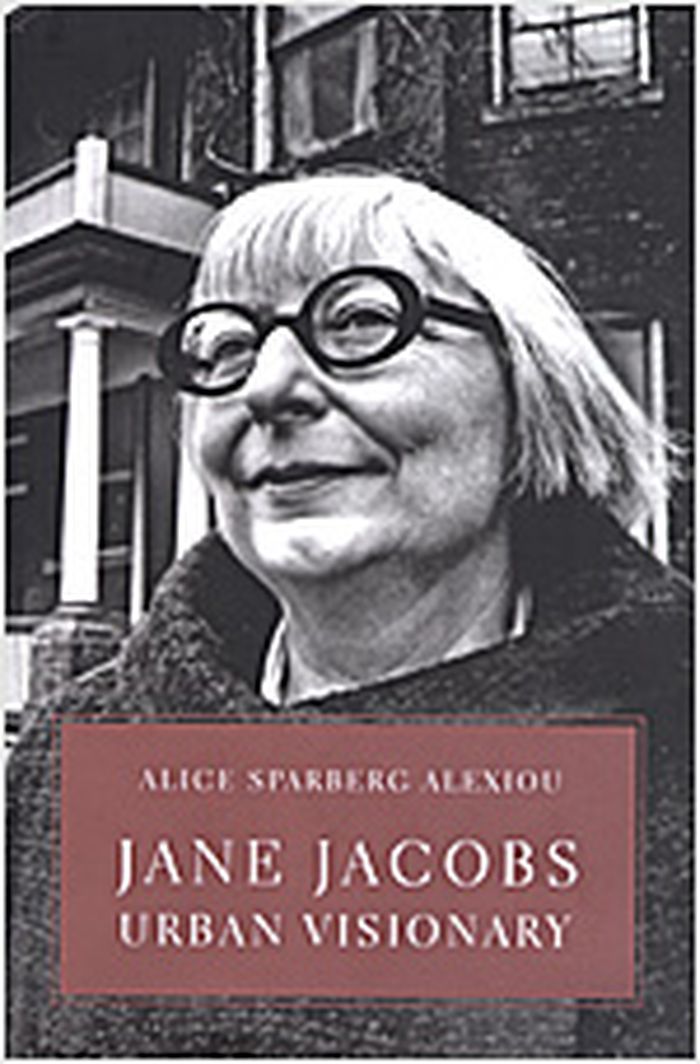
In "Jane Jacobs : urban visionary", journalist Alice Sparberg Alexiou deconstructs Jane Jacobs’ richly packed life of ideas and social action, offering a fluid and engaging synthesis of meticulously researched observation and analysis. Alexiou traces Jacobs’ move from Scranton, Pennsylvania, to New York City and the controversy that erupted when she dared to take on conventional urban planning wisdom with her classic "Death and life". She protested then-current urban renewal practices and championed the "sidewalk ballet" — the fragile meeting of buildings, streets and people — threatened by the building of highways and the tearing down of working neighbourhoods. Jacobs moved to Canada in the late 1960s and embarke on Toronto-saving campaigns, helping to preserve Old City Hall and Union Station. She was also instrumental in preventing the construction of the Spadina Expressway, which would have cut a swath through Toronto’s Annex and other essential neighbourhoods.
Jane Jacobs : urban visionary
Actions:
Price:
$34.95
(available to order)
Summary:
In "Jane Jacobs : urban visionary", journalist Alice Sparberg Alexiou deconstructs Jane Jacobs’ richly packed life of ideas and social action, offering a fluid and engaging synthesis of meticulously researched observation and analysis. Alexiou traces Jacobs’ move from Scranton, Pennsylvania, to New York City and the controversy that erupted when she dared to take on conventional urban planning wisdom with her classic "Death and life". She protested then-current urban renewal practices and championed the "sidewalk ballet" — the fragile meeting of buildings, streets and people — threatened by the building of highways and the tearing down of working neighbourhoods. Jacobs moved to Canada in the late 1960s and embarke on Toronto-saving campaigns, helping to preserve Old City Hall and Union Station. She was also instrumental in preventing the construction of the Spadina Expressway, which would have cut a swath through Toronto’s Annex and other essential neighbourhoods.
Form:
books
books
Publication:
February 2006, Toronto
February 2006, Toronto
Subject:
Urban Theory
Urban Theory
Form:
books
books
Title:
Text on text
Text on text
Actions:
Price:
$37.50
(available to order)
Summary:
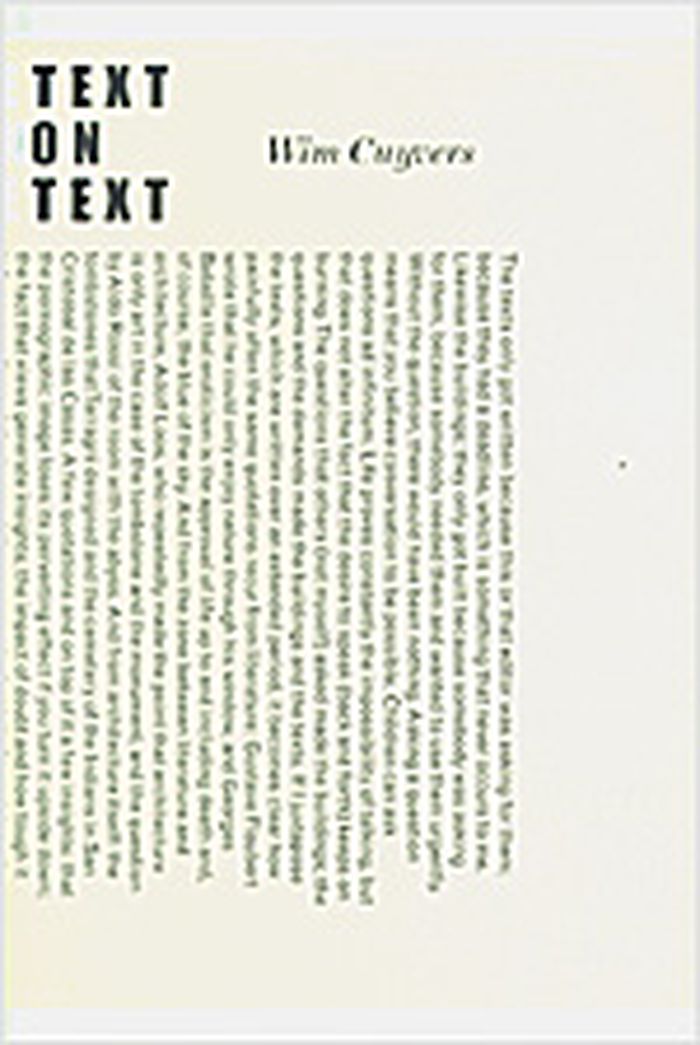
Belgian architect Wim Cuyvers considers architecture not as a goal but more as a tool with which a result can be reached. This publication, with a glow in the dark cover, presents a collection of his writings from the last five years, that introduce us to his manner of looking at architecture, his literary inspirations and his passions.
$37.50
(available to order)
Summary:
Belgian architect Wim Cuyvers considers architecture not as a goal but more as a tool with which a result can be reached. This publication, with a glow in the dark cover, presents a collection of his writings from the last five years, that introduce us to his manner of looking at architecture, his literary inspirations and his passions.
Title:
Text on text
Actions:
Price:
$37.50
(available to order)
Summary:
Belgian architect Wim Cuyvers considers architecture not as a goal but more as a tool with which a result can be reached. This publication, with a glow in the dark cover, presents a collection of his writings from the last five years, that introduce us to his manner of looking at architecture, his literary inspirations and his passions.
Text on text
Actions:
Price:
$37.50
(available to order)
Summary:
Belgian architect Wim Cuyvers considers architecture not as a goal but more as a tool with which a result can be reached. This publication, with a glow in the dark cover, presents a collection of his writings from the last five years, that introduce us to his manner of looking at architecture, his literary inspirations and his passions.
Form:
books
books
Publication:
January 1900, The Hague
January 1900, The Hague
Subject:
Architectural Theory
Architectural Theory
Form:
books
books
Actions:
Price:
$30.00
(available to order)
Summary:
Urban parks such as New York City's Central park provide vital public spaces where city dwellers of all races and classes can mingle safely while enjoying a variety of recreations. By coming together in these relaxed settings, different groups become comfortable with each other, thereby strengthening their communities and the democratic fabric of society. But just the(...)
$30.00
(available to order)
Summary:
Urban parks such as New York City's Central park provide vital public spaces where city dwellers of all races and classes can mingle safely while enjoying a variety of recreations. By coming together in these relaxed settings, different groups become comfortable with each other, thereby strengthening their communities and the democratic fabric of society. But just the(...)
Subject:
Landscape Theory
Landscape Theory
Publication:
November 2005, Austin
November 2005, Austin
Title:
Rethinking urban parks : public space and cultural diversity
Actions:
Price:
$30.00
(available to order)
Summary:
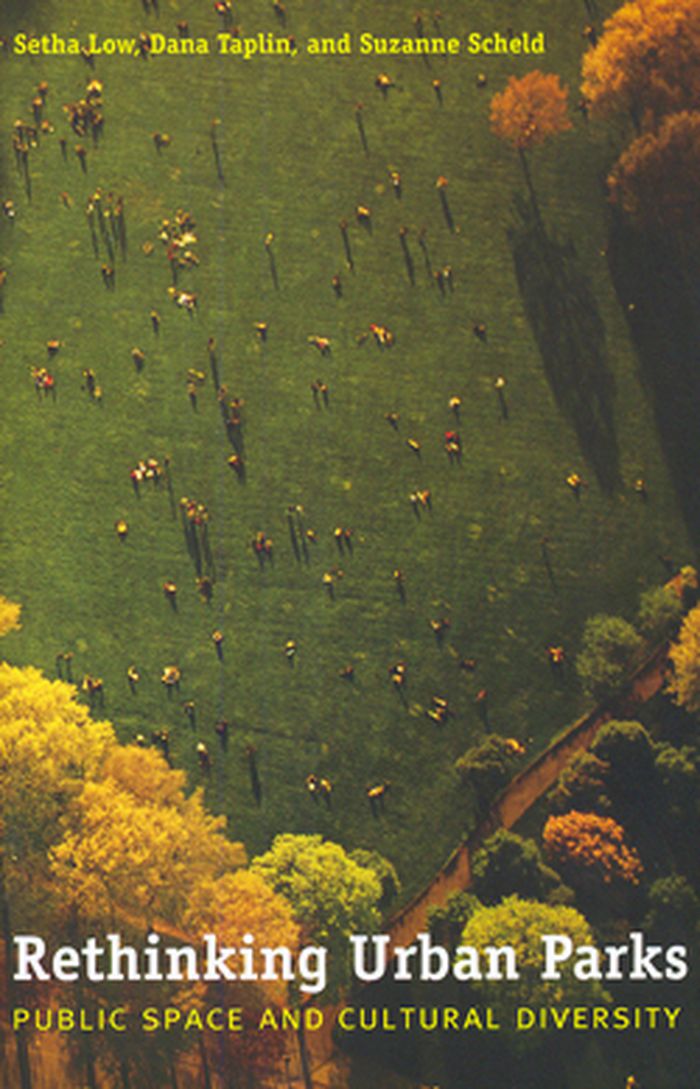
Urban parks such as New York City's Central park provide vital public spaces where city dwellers of all races and classes can mingle safely while enjoying a variety of recreations. By coming together in these relaxed settings, different groups become comfortable with each other, thereby strengthening their communities and the democratic fabric of society. But just the opposite happens when, by design or in ignorance, parks are made inhospitable to certain groups of people. This pathfinding book argues that cultural diversity should be a key goal in designing and maintaining urban parks. Using case studies of New York City's Prospect park, Orchard beach in Pelham Bay park, and Jacob Riis park in the Gateway national recreation area, as well as New York's Ellis Island bridge proposal and Philadelphia's Independence national historical park, the authors identify specific ways to promote, maintain, and manage cultural diversity in urban parks. They also uncover the factors that can limit park use, including historical interpretive materials that ignore the contributions of different ethnic groups, high entrance or access fees, park usage rules that restrict ethnic activities, and park "restorations" that focus only on historical or aesthetic values. With the wealth of data in this book, urban planners, park professionals, and all concerned citizens will have the tools to create and maintain public parks that serve the needs and interests of all the public.
Rethinking urban parks : public space and cultural diversity
Actions:
Price:
$30.00
(available to order)
Summary:
Urban parks such as New York City's Central park provide vital public spaces where city dwellers of all races and classes can mingle safely while enjoying a variety of recreations. By coming together in these relaxed settings, different groups become comfortable with each other, thereby strengthening their communities and the democratic fabric of society. But just the opposite happens when, by design or in ignorance, parks are made inhospitable to certain groups of people. This pathfinding book argues that cultural diversity should be a key goal in designing and maintaining urban parks. Using case studies of New York City's Prospect park, Orchard beach in Pelham Bay park, and Jacob Riis park in the Gateway national recreation area, as well as New York's Ellis Island bridge proposal and Philadelphia's Independence national historical park, the authors identify specific ways to promote, maintain, and manage cultural diversity in urban parks. They also uncover the factors that can limit park use, including historical interpretive materials that ignore the contributions of different ethnic groups, high entrance or access fees, park usage rules that restrict ethnic activities, and park "restorations" that focus only on historical or aesthetic values. With the wealth of data in this book, urban planners, park professionals, and all concerned citizens will have the tools to create and maintain public parks that serve the needs and interests of all the public.
Form:
books
books
Publication:
November 2005, Austin
November 2005, Austin
Subject:
Landscape Theory
Landscape Theory
Form:
books
books
Price:
$56.50
(available to order)
Summary:
Shopping was as important in the Renaissance as it is today. This fascinating and original book breaks new ground in the area of Renaissance material culture, focusing on the marketplace and such related topics as middle-class to courtly consumption, the provision of foodstuffs, and the acquisition of antiquities and holy relics. The book investigates how men and women of(...)
$56.50
(available to order)
Summary:
Shopping was as important in the Renaissance as it is today. This fascinating and original book breaks new ground in the area of Renaissance material culture, focusing on the marketplace and such related topics as middle-class to courtly consumption, the provision of foodstuffs, and the acquisition of antiquities and holy relics. The book investigates how men and women of(...)
Title:
Shopping in the Renaissance : consumer cultures in Italy 1400-1600
Actions:
Price:
$56.50
(available to order)
Summary:
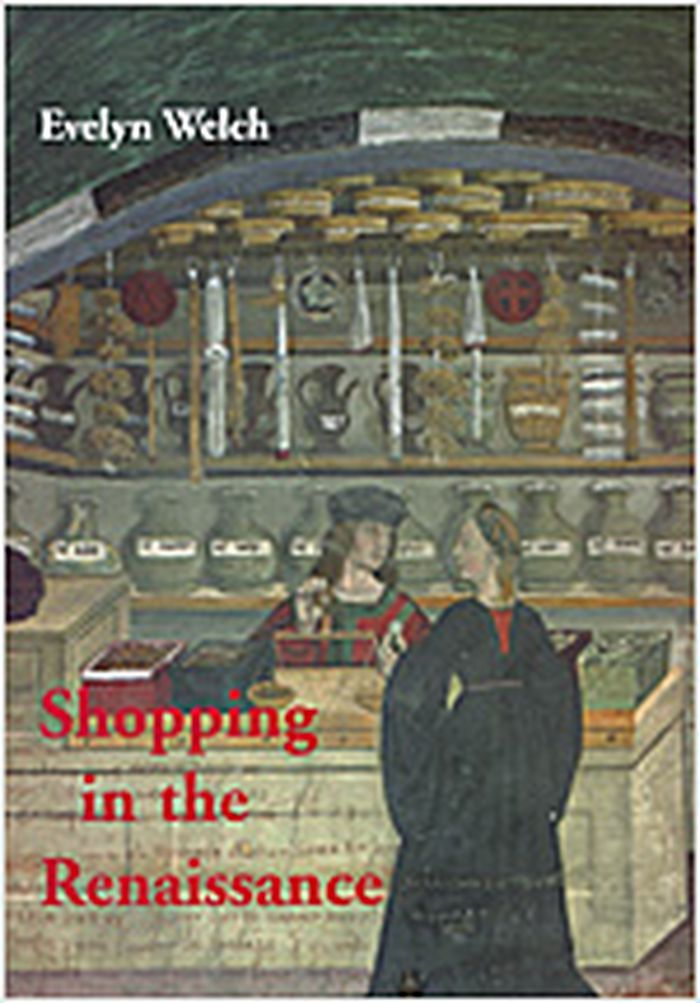
Shopping was as important in the Renaissance as it is today. This fascinating and original book breaks new ground in the area of Renaissance material culture, focusing on the marketplace and such related topics as middle-class to courtly consumption, the provision of foodstuffs, and the acquisition of antiquities and holy relics. The book investigates how men and women of different social classes went to the streets, squares, and shops to buy goods they needed and wanted on a daily—or a once-in-a-lifetime—basis, during the Renaissance period.
Shopping in the Renaissance : consumer cultures in Italy 1400-1600
Actions:
Price:
$56.50
(available to order)
Summary:
Shopping was as important in the Renaissance as it is today. This fascinating and original book breaks new ground in the area of Renaissance material culture, focusing on the marketplace and such related topics as middle-class to courtly consumption, the provision of foodstuffs, and the acquisition of antiquities and holy relics. The book investigates how men and women of different social classes went to the streets, squares, and shops to buy goods they needed and wanted on a daily—or a once-in-a-lifetime—basis, during the Renaissance period.
Form:
books
books
Publication:
January 1900, New Haven
January 1900, New Haven
Subject:
Architectural Theory
Architectural Theory
Form:
books
books

Title:
Utopias and architecture
Utopias and architecture
Actions:
Price:
$68.50
(available to order)
Summary:
Utopian thought, though commonly characterized as projecting a future without a past, depends on golden models for re-invention of what is. Through a detailed and innovative re-assessment of the work of three architects who sought to represent a utopian content in their work and a consideration of the thoughts of a range of leading writers, Coleman offers the reader a (...)
$68.50
(available to order)
Summary:
Utopian thought, though commonly characterized as projecting a future without a past, depends on golden models for re-invention of what is. Through a detailed and innovative re-assessment of the work of three architects who sought to represent a utopian content in their work and a consideration of the thoughts of a range of leading writers, Coleman offers the reader a (...)
Title:
Utopias and architecture
Actions:
Price:
$68.50
(available to order)
Summary:
Utopian thought, though commonly characterized as projecting a future without a past, depends on golden models for re-invention of what is. Through a detailed and innovative re-assessment of the work of three architects who sought to represent a utopian content in their work and a consideration of the thoughts of a range of leading writers, Coleman offers the reader a perspective of idealism in architectural design. With unparalleled depth and focus of vision on the work of Le Corbusier, Louis I Kahn and Aldo Van Eyck, this book persuasively challenges predominant assumptions in current architectural discourse, forging a new approach to the invention of welcoming built environments and transcending the limitations of both the postmodern and hyper-modern stance and orthodox modernist architecture.
Utopias and architecture
Actions:
Price:
$68.50
(available to order)
Summary:
Utopian thought, though commonly characterized as projecting a future without a past, depends on golden models for re-invention of what is. Through a detailed and innovative re-assessment of the work of three architects who sought to represent a utopian content in their work and a consideration of the thoughts of a range of leading writers, Coleman offers the reader a perspective of idealism in architectural design. With unparalleled depth and focus of vision on the work of Le Corbusier, Louis I Kahn and Aldo Van Eyck, this book persuasively challenges predominant assumptions in current architectural discourse, forging a new approach to the invention of welcoming built environments and transcending the limitations of both the postmodern and hyper-modern stance and orthodox modernist architecture.
Form:
books
books
Publication:
October 2005, New York
October 2005, New York
Subject:
Architectural Theory
Architectural Theory
Form:
books
books
Actions:
Price:
$61.50
(available to order)
Summary:
Showing how "New Urbanism" is simply American urbanism as it has been evolving since the nineteenth century, this is a history not of what has been achieved but rather of what planners have sought to achieve--a history of the quest for good cities. In her survey of the last hundred or so years of urbanist ideals, the author identifies four approaches to city-making,(...)
$61.50
(available to order)
Summary:
Showing how "New Urbanism" is simply American urbanism as it has been evolving since the nineteenth century, this is a history not of what has been achieved but rather of what planners have sought to achieve--a history of the quest for good cities. In her survey of the last hundred or so years of urbanist ideals, the author identifies four approaches to city-making,(...)
Title:
New urbanism & american planning
Actions:
Price:
$61.50
(available to order)
Summary:
Showing how "New Urbanism" is simply American urbanism as it has been evolving since the nineteenth century, this is a history not of what has been achieved but rather of what planners have sought to achieve--a history of the quest for good cities. In her survey of the last hundred or so years of urbanist ideals, the author identifies four approaches to city-making, which she terms "cultures": incrementalism, plan-making, planned communities, and regionalism. She shows how these cultures connect, overlap, and conflict one with another and how most of the ideas about building better settlements are so recurrent. She concludes with an assessment of the successes and failures of the four cultures and the need to integrate these ideas as a means to promoting good urbanism in America.
New urbanism & american planning
Actions:
Price:
$61.50
(available to order)
Summary:
Showing how "New Urbanism" is simply American urbanism as it has been evolving since the nineteenth century, this is a history not of what has been achieved but rather of what planners have sought to achieve--a history of the quest for good cities. In her survey of the last hundred or so years of urbanist ideals, the author identifies four approaches to city-making, which she terms "cultures": incrementalism, plan-making, planned communities, and regionalism. She shows how these cultures connect, overlap, and conflict one with another and how most of the ideas about building better settlements are so recurrent. She concludes with an assessment of the successes and failures of the four cultures and the need to integrate these ideas as a means to promoting good urbanism in America.
Form:
books
books
Publication:
September 2005, New York
September 2005, New York
Subject:
Urban Theory
Urban Theory
Form:
books
books
Title:
The global cities reader
The global cities reader
Actions:
Price:
$59.95
(available to order)
Summary:
During the last decade, research on global cities has exploded throughout the social sciences. It has now become one of the most exciting, if controversial approaches to the study of urban life today. Fifty generous selections, including contributions from John Friedmann, Michael Peter Smith, Saskia Sassen, Peter Taylor, Manuel Castells, and Anthony King, explore the(...)
$59.95
(available to order)
Summary:
During the last decade, research on global cities has exploded throughout the social sciences. It has now become one of the most exciting, if controversial approaches to the study of urban life today. Fifty generous selections, including contributions from John Friedmann, Michael Peter Smith, Saskia Sassen, Peter Taylor, Manuel Castells, and Anthony King, explore the(...)
Title:
The global cities reader
Actions:
Price:
$59.95
(available to order)
Summary:
During the last decade, research on global cities has exploded throughout the social sciences. It has now become one of the most exciting, if controversial approaches to the study of urban life today. Fifty generous selections, including contributions from John Friedmann, Michael Peter Smith, Saskia Sassen, Peter Taylor, Manuel Castells, and Anthony King, explore the interrelationships between cities and globalization. The seven sections with accompanying editorial introductions guide the student through the key theoretical, methodological, and empirical debates. "The global cities reader" explores the major foundations and intellectual influences of research on globalized urbanization. Classic and contemporary case studies of globalizing cities from Europe, North America and East Asia as well as from emerging world city regions of the global South are presented. The political and cultural dimensions of global city formation are examined in separate sections. The reader concludes by examining the refinement and critique of global cities research in the last fifteen years.
The global cities reader
Actions:
Price:
$59.95
(available to order)
Summary:
During the last decade, research on global cities has exploded throughout the social sciences. It has now become one of the most exciting, if controversial approaches to the study of urban life today. Fifty generous selections, including contributions from John Friedmann, Michael Peter Smith, Saskia Sassen, Peter Taylor, Manuel Castells, and Anthony King, explore the interrelationships between cities and globalization. The seven sections with accompanying editorial introductions guide the student through the key theoretical, methodological, and empirical debates. "The global cities reader" explores the major foundations and intellectual influences of research on globalized urbanization. Classic and contemporary case studies of globalizing cities from Europe, North America and East Asia as well as from emerging world city regions of the global South are presented. The political and cultural dimensions of global city formation are examined in separate sections. The reader concludes by examining the refinement and critique of global cities research in the last fifteen years.
Form:
books
books
Publication:
November 2005, London, New York
November 2005, London, New York
Subject:
Urban Theory
Urban Theory


