


9995 Results
Form:
books
books
Title:
Alvar Aalto apartments
Alvar Aalto apartments
Actions:
Price:
$77.95
(available to order)
Summary:
Alvar Aalto Apartments opens views into Aalto’s ideals about dwelling. The internal organisation of an apartment, the relationship of the home to the outside world, the movement from one space to another and the “city on the hill” were all issues of importance in Aalto’s deliberations, as he tried to solve the problematics of dwelling. The book presents ten apartment(...)
Subject:
Architecture Monographs
Architecture Monographs
Publication:
June 2004, Helsinki
June 2004, Helsinki
Title:
Alvar Aalto apartments
Actions:
Price:
$77.95
(available to order)
Summary:
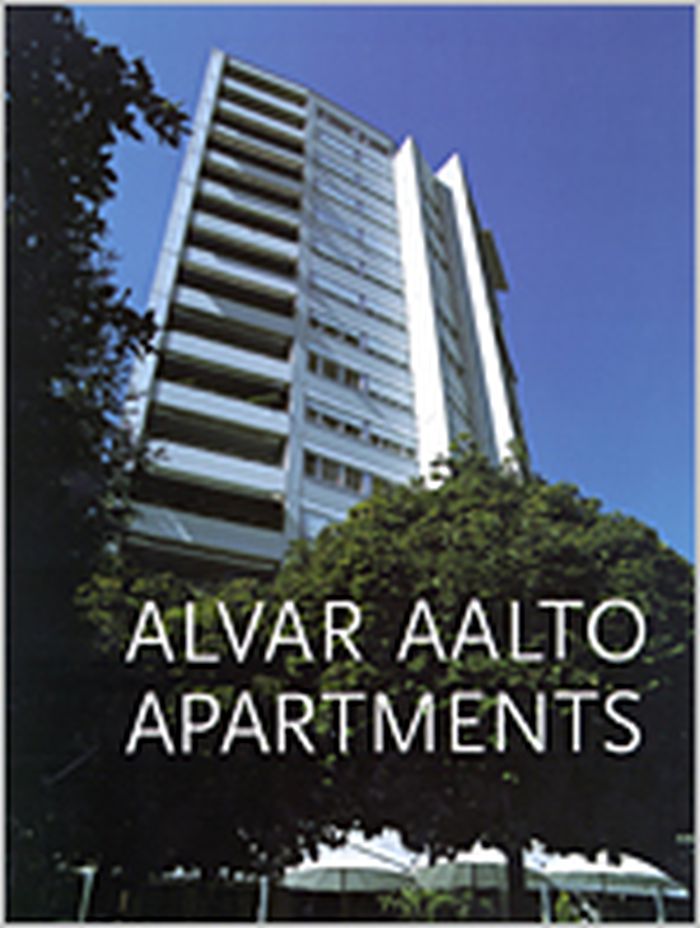
Alvar Aalto Apartments opens views into Aalto’s ideals about dwelling. The internal organisation of an apartment, the relationship of the home to the outside world, the movement from one space to another and the “city on the hill” were all issues of importance in Aalto’s deliberations, as he tried to solve the problematics of dwelling. The book presents ten apartment blocks and two student dormitories by Aalto built in Finland, Sweden, Germany, Switzerland and the United States, from the 1920s to the end of the 1960s: Aira Building Railway officials’ housing, Jyväskylä, Finland, ROT houses, ‘Slope-door houses’, Sunila, Finland Standard terrace housing, Kauttua, Finland, Baker House, Senior Dormitory, Massachusetts Institute of Technology, Cambridge, USA, National Pensions Institute employee housing, Helsinki, Finland, Hansaviertel apartment building, Berlin, Germany, Housing and business complex, ‘Sundh Centre’, Avesta, Sweden, Korkalovaara apartment buildings, Rovaniemi, Finland, Neue Vahr apartment building, Bremen, Germany, Harjuviita apartment buildings, Tapiola, Espoo, Finland, Student housing, Helsinki University of Technology, Otaniemi, Espoo, Finland, Schönbühl apartment building, Lucerne, Switzerland.
Form:
books
books
Publication:
June 2004, Helsinki
June 2004, Helsinki
Subject:
Architecture Monographs
Architecture Monographs
Form:
books
books
Actions:
Price:
$82.00
(available to order)
Summary:
The renaissance of wood in architecture began in the early 1990s following the Earth Summit in Rio de Janeiro. A lively interest in sustainable materials made wood particularly attractive and it became an important feature in the developing global ecology. Wood as a building material for the home has become independent from the aesthetic designs of a well-known Swedish(...)
Title:
Wood houses : spaces for contemporary living and working
Actions:
Price:
$82.00
(available to order)
Summary:
The renaissance of wood in architecture began in the early 1990s following the Earth Summit in Rio de Janeiro. A lively interest in sustainable materials made wood particularly attractive and it became an important feature in the developing global ecology. Wood as a building material for the home has become independent from the aesthetic designs of a well-known Swedish furniture chain, and it now stands for a healthy interior environment, free of harmful toxic substances, with naturally balanced humidity and comfortable, regulated temperatures. This volume documents in full technical detail some 25 timber buildings in three main areas: residential buildings, holiday homes, and living and working. The individual projects cover a large range of sizes, budgets, and types of construction, and they also show wood in combination with such materials as stone, concrete, and steel. The featured work comes from Germany, Austria, Switzerland, France, Belgium, Finland, Ireland, USA, Canada, China, Australia and Brazil, and the architects include Philip Gumuchdjian, Mario Botta, Kengo Kuma and Baumschlager + Eberle.
Form:
books
books
Publication:
October 2004, Basel
October 2004, Basel
Subject:
Timber Construction
Timber Construction
Form:
books
books

Price:
$38.50
(available to order)
Summary:
Recalling the short-lived Bureau de recherches surréalistes of 1924–1925 - part information centre and ‘public relations’ office, and part surrealist archive - Mark Dion has trawled the Manchester Museum’s own collections and found the raw material for this book and a new installation in the museum. Museums’ attempts to classify and present the world in miniature(...)
Title:
Bureau of the Centre for the Study of Surrealism and its Legacy
Actions:
Price:
$38.50
(available to order)
Summary:
Recalling the short-lived Bureau de recherches surréalistes of 1924–1925 - part information centre and ‘public relations’ office, and part surrealist archive - Mark Dion has trawled the Manchester Museum’s own collections and found the raw material for this book and a new installation in the museum. Museums’ attempts to classify and present the world in miniature inevitably mean that much of their collections are forgotten and marginalized. Renowned for his work exploring taxonomy, archaeology and ecology, Mark Dion in his "Bureau" documents his opportunistic encounters with the Museum of Manchester’s neglected drawers and overlooked recesses that are home to redundant labels, orphaned mounts, defunct teaching models, botanical freaks, Egyptian fakes and the minutiae that have fallen through the cracks of museum practice and lain abandoned. Dion’s "Bureau of the Centre for the Study of Surrealism and its Legacy" is both a repository for the detritus of museum life and a working process, classifying the museum’s un-classifiable whilst exploring the bureaucratic workings of the institution.
Form:
books
books
Publication:
April 2005, London
April 2005, London
Subject:
Contemporary Art Monographs
Contemporary Art Monographs
Form:
books
books
Price:
$51.00
(available to order)
Summary:
In 1965, leading Swiss furniture company USM patented its signature modular furniture system, USM Haller. This flexible storage solution for both home and office was inspired by Fritz Haller’s modular architecture and designed for infinite reuse and reconfiguration. Considered a design classic, USM Haller is included in the collections of major museums including MoMA and(...)
Title:
Rethinking the modular: adaptable systems in architecture and design
Actions:
Price:
$51.00
(available to order)
Summary:
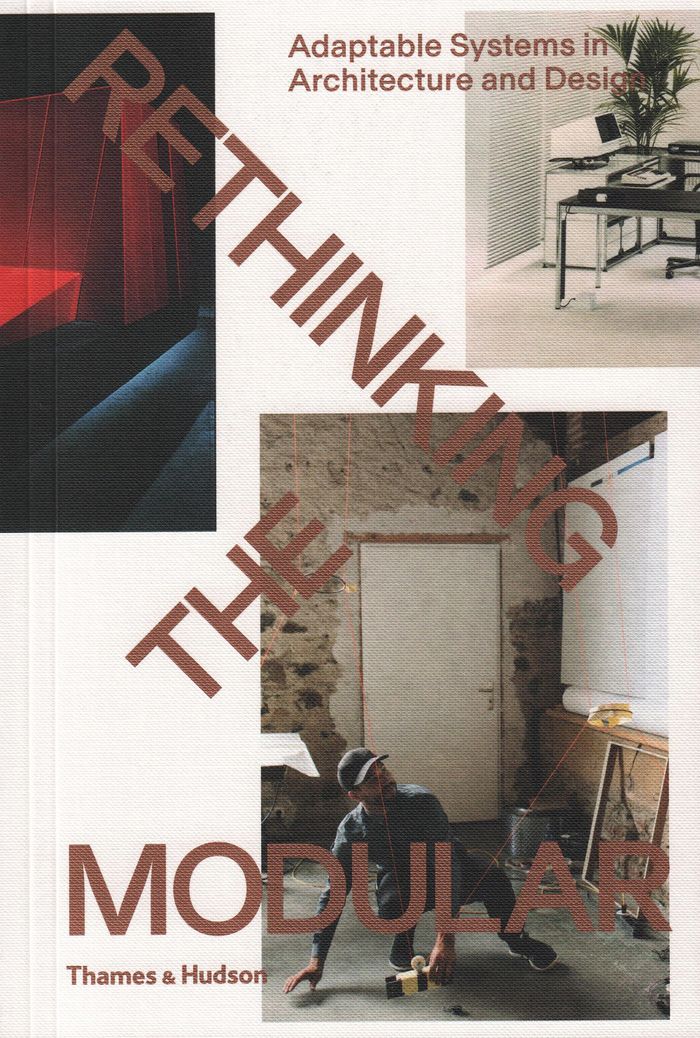
In 1965, leading Swiss furniture company USM patented its signature modular furniture system, USM Haller. This flexible storage solution for both home and office was inspired by Fritz Haller’s modular architecture and designed for infinite reuse and reconfiguration. Considered a design classic, USM Haller is included in the collections of major museums including MoMA and the Cooper-Hewitt National Design Museum. Released as part of USM’s fiftieth-anniversary celebration of this iconic furniture design, Rethink the Modular examines the role of unit-based systems in the wider context of architecture and design. It combines previously published writings, specially commissioned essays from thinkers and innovators John Thackara and Rick Poyner, and interviews with leading figures in the design world that explain how the concept of the modular influences their work. Interspersed with visual material, the texts reveal the many possibilities created by balancing structure with flexibility, and seek to redefine the place of modularity in modern design history.
Form:
books
books
Publication:
July 2016
July 2016
Subject:
Industrial Design
Industrial Design
Form:
books
books

Title:
Fear, reverence, terror
Fear, reverence, terror
Actions:
Price:
$55.50
(available to order)
Summary:
We are surrounded by images, fairly drowning in them. From our cell phones to our computers, from our televisions at home to the screens that light up while we wait in the grocery store checkout line, images of all kinds are seducing us, commanding us to buy!, scaring us, dazzling us. "Fear, reverence, terror" invites us to look at images slowly, with the help of a few(...)
Title:
Fear, reverence, terror
Actions:
Price:
$55.50
(available to order)
Summary:
We are surrounded by images, fairly drowning in them. From our cell phones to our computers, from our televisions at home to the screens that light up while we wait in the grocery store checkout line, images of all kinds are seducing us, commanding us to buy!, scaring us, dazzling us. "Fear, reverence, terror" invites us to look at images slowly, with the help of a few examples: Picasso’s Guernica, the “Lord Kitchener wants you” World War I recruitment poster, Jacques-Louis David’s Marat, the frontispiece of Thomas Hobbes’s Leviathan, a cup of gilded silver with scenes from the conquest of the New World. Are these political images, Carlo Ginzburg asks? Yes, because every image is, in a sense, political—an instrument of power. Tacitus once wrote, unforgettably, that we are enslaved by lies of which we ourselves are the authors. Is it possible to break this bond? Fear, Reverence, Terror will answer this question.
Form:
books
books
Publication:
August 2017
August 2017
Subject:
Art Theory
Art Theory
Form:
books
books
Actions:
Price:
$23.95
(available to order)
Summary:
Some thousands of years ago, the world was home to an immense variety of large mammals. From wooly mammoths and saber-toothed tigers to giant ground sloths and armadillos the size of automobiles, these spectacular creatures roamed freely. Then human beings arrived. Devouring their way down the food chain as they spread across the planet, they began a process of voracious(...)
Title:
Extinction: a radical history
Actions:
Price:
$23.95
(available to order)
Summary:
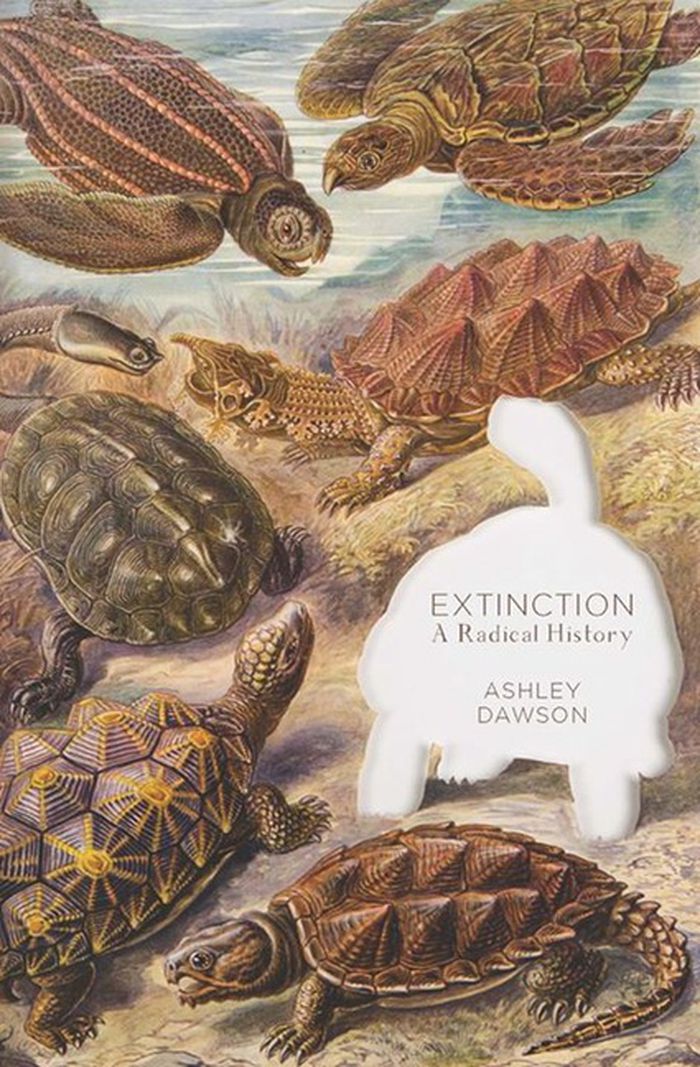
Some thousands of years ago, the world was home to an immense variety of large mammals. From wooly mammoths and saber-toothed tigers to giant ground sloths and armadillos the size of automobiles, these spectacular creatures roamed freely. Then human beings arrived. Devouring their way down the food chain as they spread across the planet, they began a process of voracious extinction that has continued to the present. For Ashley Dawson, this is the product of a global attack on the commons, the great trove of air, water, plants and creatures, as well as collectively created cultural forms such as language, that have been regarded traditionally as the inheritance of humanity as a whole. This attack has its genesis in the need for capital to expand relentlessly into all spheres of life. Extinction, Dawson argues, cannot be understood in isolation from a critique of our economic system. To achieve this we need to transgress the boundaries between science, environmentalism and radical politics.
Form:
books
books
Publication:
July 2016
July 2016
Subject:
Environment and environmental theory
Environment and environmental theory
Form:
books
books
Title:
Burt Glinn: Cuba 1959
Burt Glinn: Cuba 1959
Actions:
Price:
$78.00
(available to order)
Summary:
New Year’s Eve, 1958, 10pm: Magnum photographer Burt Glinn is at a black-tie party in New York when he hears news that dictator Fulgencio Batista has fled Cuba. By 7 am the next morning, he is in Havana in a cab, telling the driver: "take me to the revolution." Such photojournalistic fervor allowed Glinn to be in the middle of the action to capture the Cuban Revolution as(...)
Title:
Burt Glinn: Cuba 1959
Actions:
Price:
$78.00
(available to order)
Summary:
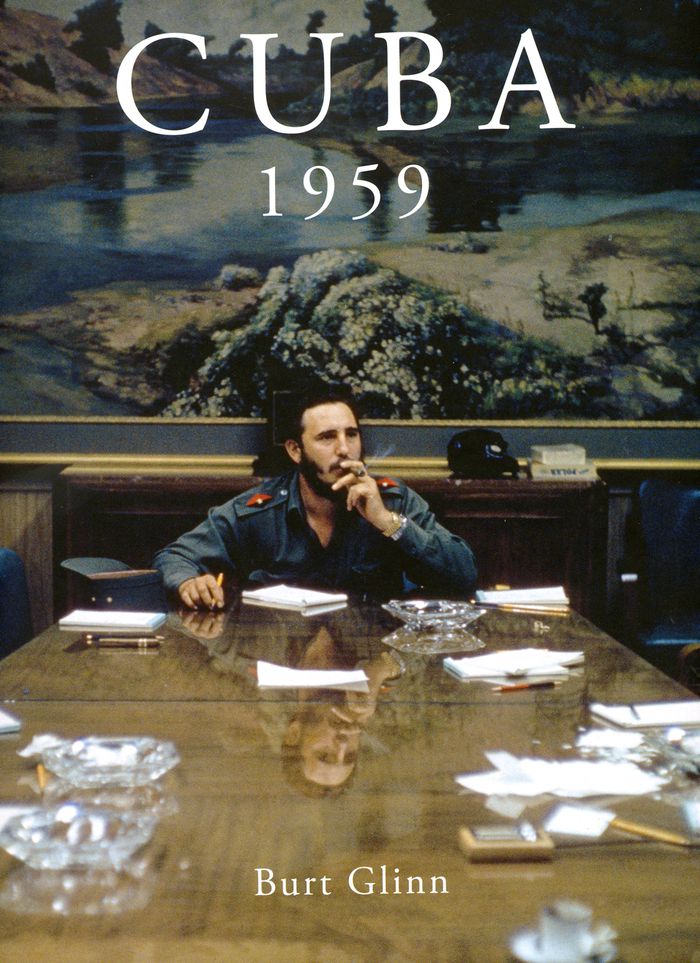
New Year’s Eve, 1958, 10pm: Magnum photographer Burt Glinn is at a black-tie party in New York when he hears news that dictator Fulgencio Batista has fled Cuba. By 7 am the next morning, he is in Havana in a cab, telling the driver: "take me to the revolution." Such photojournalistic fervor allowed Glinn to be in the middle of the action to capture the Cuban Revolution as it unfolded on the ground. As Glinn said, “I could get up as close as I wanted.” His magnificent photographs convey the revolutionary idealism, mayhem and excitement of that moment in history. This volume includes some of Glinn’s most iconic Cuban photographs, as well as unseen shots, in both black and white and color, from gunshots being fired, confusion on the streets, the rounding up of the Batista Secret Police, spontaneous gatherings, embracing revolutionaries returning home to mothers, and, of course, Fidel Castro’s triumphant entrance into Havana.
Form:
books
books
Publication:
October 2015
October 2015
Subject:
Photography monographs
Photography monographs
Form:
books
books

Title:
Siri Aurdal
Siri Aurdal
Actions:
Price:
$40.00
(available to order)
Summary:
Norwegian artist Siri Aurdal (born 1937) achieved prominence in her home country during the 1960s and ’70s with works that encouraged public participation. An interest in mathematics moved Aurdal to devise modular forms that could be reconceived for a range of sites, not only in the galleries and museums where they were initially exhibited. These works included(...)
Title:
Siri Aurdal
Actions:
Price:
$40.00
(available to order)
Summary:
Norwegian artist Siri Aurdal (born 1937) achieved prominence in her home country during the 1960s and ’70s with works that encouraged public participation. An interest in mathematics moved Aurdal to devise modular forms that could be reconceived for a range of sites, not only in the galleries and museums where they were initially exhibited. These works included installations made of common materials like Plexiglas or large-scale sinusoidal sculptures made of industrial tubes. The reproductions in this artist’s book include installation views, slides, drawings, collages, portraits and ephemera from the 1960s to 2016, highlighting many pieces that have never been exhibited or are no longer in existence. Aurdal collaborated with Norwegian artist Eline Mugaas on an exhibition at Kunstnernes Hus, and Mugaas extended their collaboration into book form, assembling this catalogue-cum-artist’s book. It gives a kaleidoscopic representation of Aurdal’s past ventures, her archive and her current studio work, lyrically arranged by Mugaas.
Form:
books
books
Publication:
August 2016
August 2016
Subject:
Contemporary Art Monographs
Contemporary Art Monographs
Form:
books
books
Actions:
Price:
$19.95
(available to order)
Summary:
RB Kitaj started painting The Architects in August of 1979 to celebrate the remodelling of his home by MJ Long. Painted largely without the models themselves present, this portrait of his friends against the backdrop of the stepped bookcase designed for him by MJ marks a transition in Kitaj’s development as an artist. Breaking with his earlier graphic work, Kitaj(...)
Title:
Kitaj: the architects Colin St John Wilson and MJ Long
Actions:
Price:
$19.95
(available to order)
Summary:
RB Kitaj started painting The Architects in August of 1979 to celebrate the remodelling of his home by MJ Long. Painted largely without the models themselves present, this portrait of his friends against the backdrop of the stepped bookcase designed for him by MJ marks a transition in Kitaj’s development as an artist. Breaking with his earlier graphic work, Kitaj experimented with technique in search of a renewed artistic vision, arriving at an awkwardness of composition reminiscent of Manet and a colouration inspired by van Gogh. Kitaj: The Architects collects the diary entries of his subjects through each sitting session, from the first preliminary sketches to the final delivery of the painting in late 1981. Providing a revealing insight into Kitaj’s artistic method, Colin St John Wilson and his wife MJ Long’s observations capture the creative process through the explorations of initial ideas, happy accidents, compositional struggles and dissatisfactions, to the finished artefact.
Form:
books
books
Publication:
February 2008, London
February 2008, London
Subject:
Contemporary Art Monographs
Contemporary Art Monographs
Form:
journals and magazines
journals and magazines
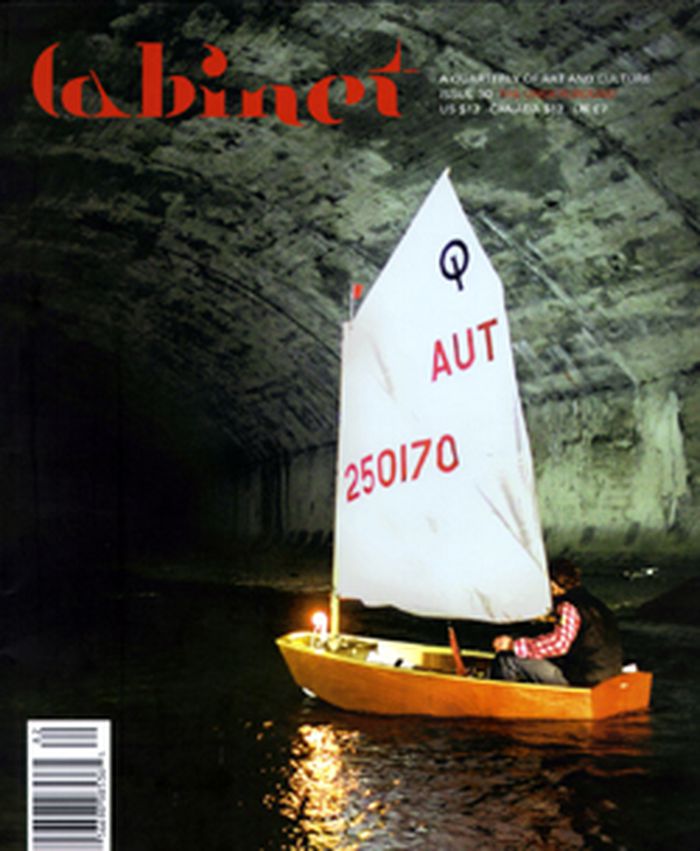
Title:
Cabinet 30: The Underground
Cabinet 30: The Underground
Actions:
Price:
$13.00
(available in store)
Summary:
Site of hidden infrastructure, source of material and energy, home to clandestine activity, buried landscape of darkness and silence: the physical and emotional space of the underground is at once prosaic and uncanny, rich with both functional potential and metaphorical meaning. Cabinet issue 30, with its special section on The Underground, features Irene Cheng on Thomas(...)
Title:
Cabinet 30: The Underground
Actions:
Price:
$13.00
(available in store)
Summary:
Site of hidden infrastructure, source of material and energy, home to clandestine activity, buried landscape of darkness and silence: the physical and emotional space of the underground is at once prosaic and uncanny, rich with both functional potential and metaphorical meaning. Cabinet issue 30, with its special section on The Underground, features Irene Cheng on Thomas W. Knox's 1876 book Underground, or Life Below the Surface and the vogue for underground tourism; an interview with Michel Siffre, a scientist who spent six months isolated in utter darkness in a cave; Jeffrey Kastner on the metaphor of the mole in revolutionary texts; and essays on the evolution of the mining industry, subterranean storage and political resistance movements. Elsewhere in the issue: Christopher Turner on the history of Day-glo; Christine Wertheim on the fabricated Australian Modernist poet Ern Malley; Tirdad Zolghadr on in-flight magazines; and Moyra Davey on the color maroon. This issue also features artist projects by Josiah McElheny and San Keller.
Form:
journals and magazines
journals and magazines
Publication:
September 2008, Brooklyn
September 2008, Brooklyn
Subject:
Magazines
Magazines


