


36173 Results
Form:
books
books
Actions:
Price:
$37.99
(available to order)
Summary:
Grounding its analysis in regional political economy and neighborhood-based ethnography, 'Cyclescapes of the Unequal City' uses the bicycle as a lens to view major shifts in today’s American city. It addresses a growing interest in bicycling as an urban economic and environmental strategy, its role in the politics of gentrification, and efforts to build more diverse(...)
$37.99
(available to order)
Summary:
Grounding its analysis in regional political economy and neighborhood-based ethnography, 'Cyclescapes of the Unequal City' uses the bicycle as a lens to view major shifts in today’s American city. It addresses a growing interest in bicycling as an urban economic and environmental strategy, its role in the politics of gentrification, and efforts to build more diverse(...)
Title:
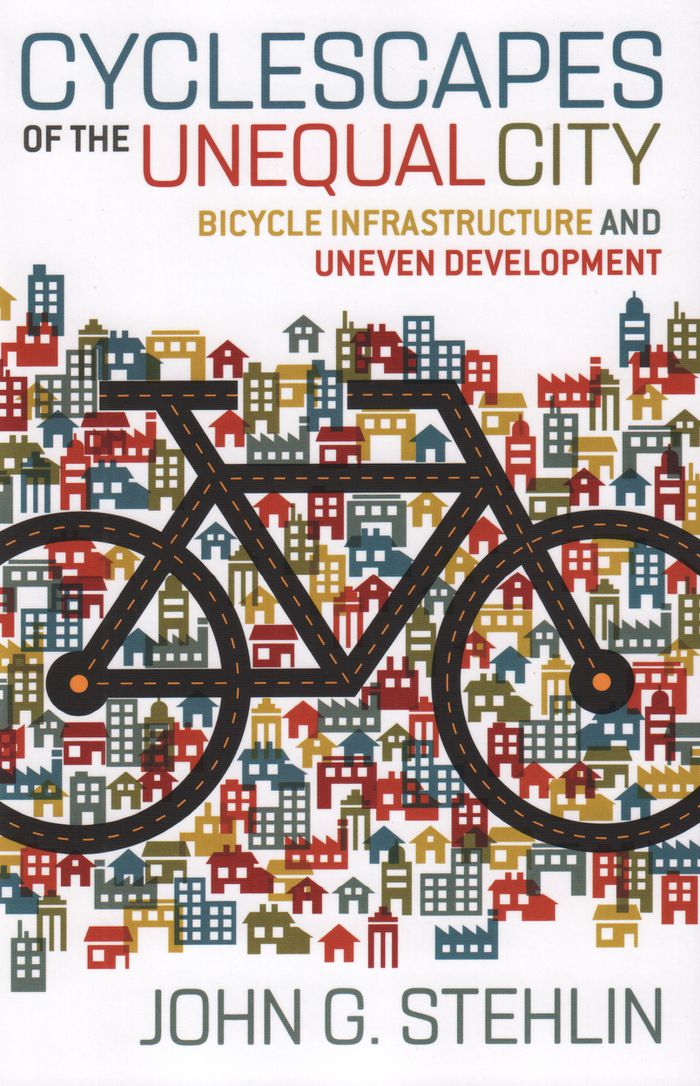
Cyclescapes of the unequal city: bicycle infrastructure and unven development
Actions:
Price:
$37.99
(available to order)
Summary:
Grounding its analysis in regional political economy and neighborhood-based ethnography, 'Cyclescapes of the Unequal City' uses the bicycle as a lens to view major shifts in today’s American city. It addresses a growing interest in bicycling as an urban economic and environmental strategy, its role in the politics of gentrification, and efforts to build more diverse coalitions of bicycle advocates.
Cyclescapes of the unequal city: bicycle infrastructure and unven development
Actions:
Price:
$37.99
(available to order)
Summary:
Grounding its analysis in regional political economy and neighborhood-based ethnography, 'Cyclescapes of the Unequal City' uses the bicycle as a lens to view major shifts in today’s American city. It addresses a growing interest in bicycling as an urban economic and environmental strategy, its role in the politics of gentrification, and efforts to build more diverse coalitions of bicycle advocates.
Form:
books
books
Publication:
March 2019
March 2019
Subject:
Urban Theory
Urban Theory
Form:
books
books

Actions:
Price:
$28.99
(available to order)
Summary:
Technology has become the architect of our intimacies. Online, we fall prey to the illusion of companionship, gathering thousands of Twitter and Facebook friends, and confusing tweets and wall posts with authentic communication. But this relentless connection leads to a new solitude. We turn to new technology to fill the void, but as MIT technology and society specialist(...)
$28.99
(available to order)
Summary:
Technology has become the architect of our intimacies. Online, we fall prey to the illusion of companionship, gathering thousands of Twitter and Facebook friends, and confusing tweets and wall posts with authentic communication. But this relentless connection leads to a new solitude. We turn to new technology to fill the void, but as MIT technology and society specialist(...)
Title:
Alone together: why we expect more from technology and less from each other
Actions:
Price:
$28.99
(available to order)
Summary:
Technology has become the architect of our intimacies. Online, we fall prey to the illusion of companionship, gathering thousands of Twitter and Facebook friends, and confusing tweets and wall posts with authentic communication. But this relentless connection leads to a new solitude. We turn to new technology to fill the void, but as MIT technology and society specialist Sherry Turkle argues, as technology ramps up, our emotional lives ramp down. Even the presence of sociable robots in our lives that pretend to demonstrate empathy makes us feel more isolated, as Turkle explains in a new introduction updating the book to the present day. ''Alone Together'' is the result of Turkle's nearly fifteen-year exploration of our lives on the digital terrain.
Alone together: why we expect more from technology and less from each other
Actions:
Price:
$28.99
(available to order)
Summary:
Technology has become the architect of our intimacies. Online, we fall prey to the illusion of companionship, gathering thousands of Twitter and Facebook friends, and confusing tweets and wall posts with authentic communication. But this relentless connection leads to a new solitude. We turn to new technology to fill the void, but as MIT technology and society specialist Sherry Turkle argues, as technology ramps up, our emotional lives ramp down. Even the presence of sociable robots in our lives that pretend to demonstrate empathy makes us feel more isolated, as Turkle explains in a new introduction updating the book to the present day. ''Alone Together'' is the result of Turkle's nearly fifteen-year exploration of our lives on the digital terrain.
Form:
books
books
Publication:
November 2017
November 2017
Form:
books
books
Title:
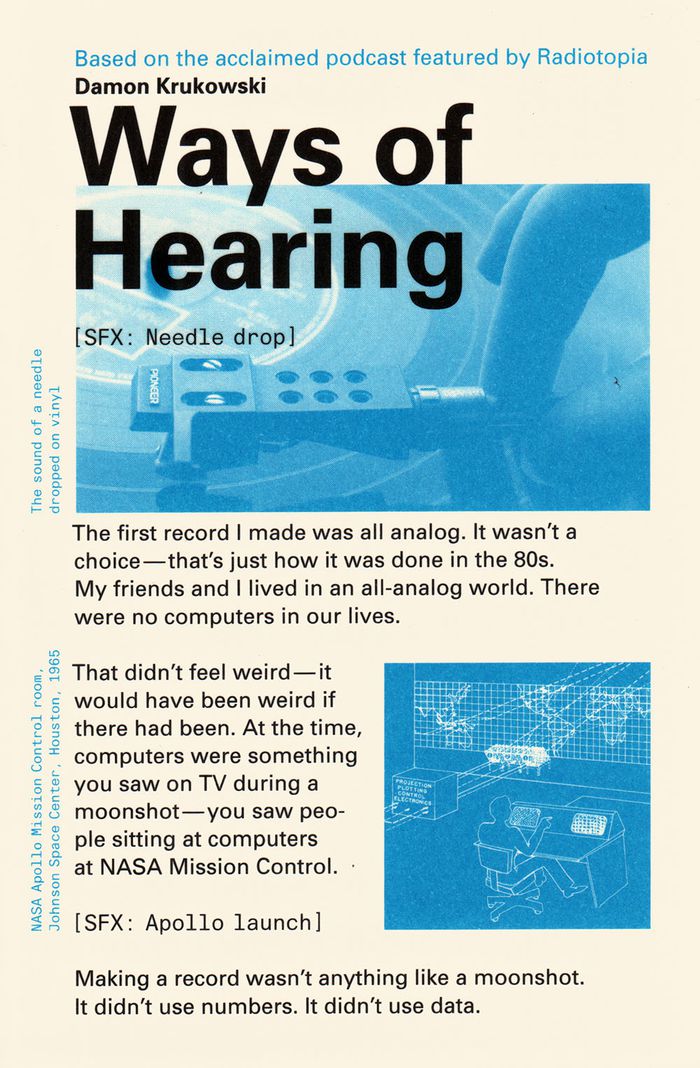
Ways of hearing
Ways of hearing
Actions:
Price:
$29.95
(available to order)
Summary:
In this book, Damon Krukowski examines how the switch from analog to digital audio is changing our perceptions of time, space, love, money, and power. In ''Ways of Hearing''- modeled on ''Ways of Seeing,'' John Berger's influential 1972 book on visual culture- Krukowski offers readers a set of tools for critical listening in the digital age. Just as ''Ways of Seeing''(...)
$29.95
(available to order)
Summary:
In this book, Damon Krukowski examines how the switch from analog to digital audio is changing our perceptions of time, space, love, money, and power. In ''Ways of Hearing''- modeled on ''Ways of Seeing,'' John Berger's influential 1972 book on visual culture- Krukowski offers readers a set of tools for critical listening in the digital age. Just as ''Ways of Seeing''(...)
Title:
Ways of hearing
Actions:
Price:
$29.95
(available to order)
Summary:
In this book, Damon Krukowski examines how the switch from analog to digital audio is changing our perceptions of time, space, love, money, and power. In ''Ways of Hearing''- modeled on ''Ways of Seeing,'' John Berger's influential 1972 book on visual culture- Krukowski offers readers a set of tools for critical listening in the digital age. Just as ''Ways of Seeing'' began as a BBC television series, ''Ways of Hearing'' is based on a six-part podcast produced for the groundbreaking public radio podcast network Radiotopia. Inventive uses of text and design help bring the message beyond the range of earbuds.
Ways of hearing
Actions:
Price:
$29.95
(available to order)
Summary:
In this book, Damon Krukowski examines how the switch from analog to digital audio is changing our perceptions of time, space, love, money, and power. In ''Ways of Hearing''- modeled on ''Ways of Seeing,'' John Berger's influential 1972 book on visual culture- Krukowski offers readers a set of tools for critical listening in the digital age. Just as ''Ways of Seeing'' began as a BBC television series, ''Ways of Hearing'' is based on a six-part podcast produced for the groundbreaking public radio podcast network Radiotopia. Inventive uses of text and design help bring the message beyond the range of earbuds.
Form:
books
books
Publication:
April 2019
April 2019
Subject:
Acoustics
Acoustics
Form:
books
books

Title:
Atlas of poetic zoology
Atlas of poetic zoology
Actions:
Price:
$32.00
(available to order)
Summary:
This ''Atlas of Poetic Zoology'' leads readers into a world of wonders where turtles fly under the sea, lizards walk on water, insects impersonate flowers, birds don't fly, frogs come back from the dead, and virgin sharks give birth. Animals, writes Emmanuelle Pouydebat, are lyric poets; they discover and shape the world when they sing, dance, explore, and reproduce. The(...)
$32.00
(available to order)
Summary:
This ''Atlas of Poetic Zoology'' leads readers into a world of wonders where turtles fly under the sea, lizards walk on water, insects impersonate flowers, birds don't fly, frogs come back from the dead, and virgin sharks give birth. Animals, writes Emmanuelle Pouydebat, are lyric poets; they discover and shape the world when they sing, dance, explore, and reproduce. The(...)
Title:
Atlas of poetic zoology
Actions:
Price:
$32.00
(available to order)
Summary:
This ''Atlas of Poetic Zoology'' leads readers into a world of wonders where turtles fly under the sea, lizards walk on water, insects impersonate flowers, birds don't fly, frogs come back from the dead, and virgin sharks give birth. Animals, writes Emmanuelle Pouydebat, are lyric poets; they discover and shape the world when they sing, dance, explore, and reproduce. The animal kingdom has been evolving for 700,000 million years, weathering many crises of extinction; this book allows us to draw inspiration from animals' enduring vitality.
Atlas of poetic zoology
Actions:
Price:
$32.00
(available to order)
Summary:
This ''Atlas of Poetic Zoology'' leads readers into a world of wonders where turtles fly under the sea, lizards walk on water, insects impersonate flowers, birds don't fly, frogs come back from the dead, and virgin sharks give birth. Animals, writes Emmanuelle Pouydebat, are lyric poets; they discover and shape the world when they sing, dance, explore, and reproduce. The animal kingdom has been evolving for 700,000 million years, weathering many crises of extinction; this book allows us to draw inspiration from animals' enduring vitality.
Form:
books
books
Publication:
May 2019
May 2019
Subject:
Landscape Theory
Landscape Theory
Form:
books
books
Actions:
Price:
$39.95
(available to order)
Summary:
Failure is an inevitable part of any creative practice. As game designers, John Sharp and Colleen Macklin have grappled with crises of creativity, false starts, and bad outcomes. Their tool for coping with the many varieties of failure: "iteration", the cyclical process of conceptualizing, prototyping, testing, and evaluating. Sharp and Macklin have found that(...)
$39.95
(available to order)
Summary:
Failure is an inevitable part of any creative practice. As game designers, John Sharp and Colleen Macklin have grappled with crises of creativity, false starts, and bad outcomes. Their tool for coping with the many varieties of failure: "iteration", the cyclical process of conceptualizing, prototyping, testing, and evaluating. Sharp and Macklin have found that(...)
Title:
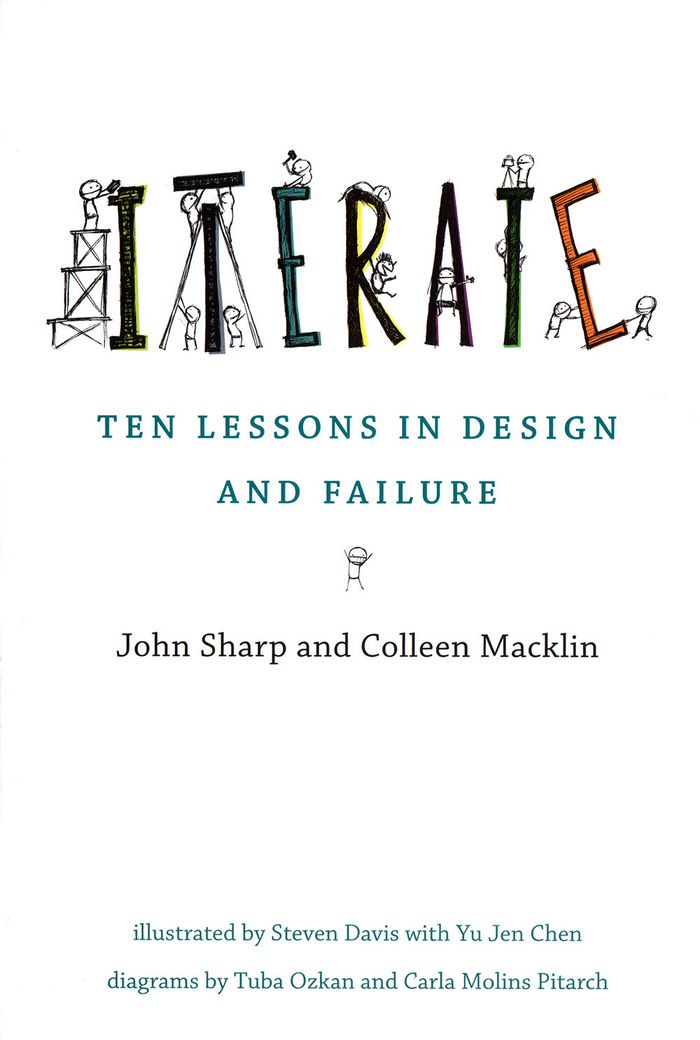
Iterate: ten lessons in design and failure
Actions:
Price:
$39.95
(available to order)
Summary:
Failure is an inevitable part of any creative practice. As game designers, John Sharp and Colleen Macklin have grappled with crises of creativity, false starts, and bad outcomes. Their tool for coping with the many varieties of failure: "iteration", the cyclical process of conceptualizing, prototyping, testing, and evaluating. Sharp and Macklin have found that failure—often hidden, covered up, a source of embarrassment—is the secret ingredient of iterative creative process. In "Iterate", they explain how to fail better.
Iterate: ten lessons in design and failure
Actions:
Price:
$39.95
(available to order)
Summary:
Failure is an inevitable part of any creative practice. As game designers, John Sharp and Colleen Macklin have grappled with crises of creativity, false starts, and bad outcomes. Their tool for coping with the many varieties of failure: "iteration", the cyclical process of conceptualizing, prototyping, testing, and evaluating. Sharp and Macklin have found that failure—often hidden, covered up, a source of embarrassment—is the secret ingredient of iterative creative process. In "Iterate", they explain how to fail better.
Form:
books
books
Publication:
May 2019
May 2019
Subject:
Design Theory
Design Theory
Form:
books
books
Actions:
Price:
$32.00
(available to order)
Summary:
Metcalfe follows a slice of New York pizza and a club sandwich through the food supply chain; considers local foods, global foods, and food deserts; investigates the processing, packaging, and storage of food; explores the transportation networks that connect farm to plate; and explains how food can be tracked using sensors and the Internet of Things. Future food may be(...)
$32.00
(available to order)
Summary:
Metcalfe follows a slice of New York pizza and a club sandwich through the food supply chain; considers local foods, global foods, and food deserts; investigates the processing, packaging, and storage of food; explores the transportation networks that connect farm to plate; and explains how food can be tracked using sensors and the Internet of Things. Future food may be(...)
Title:
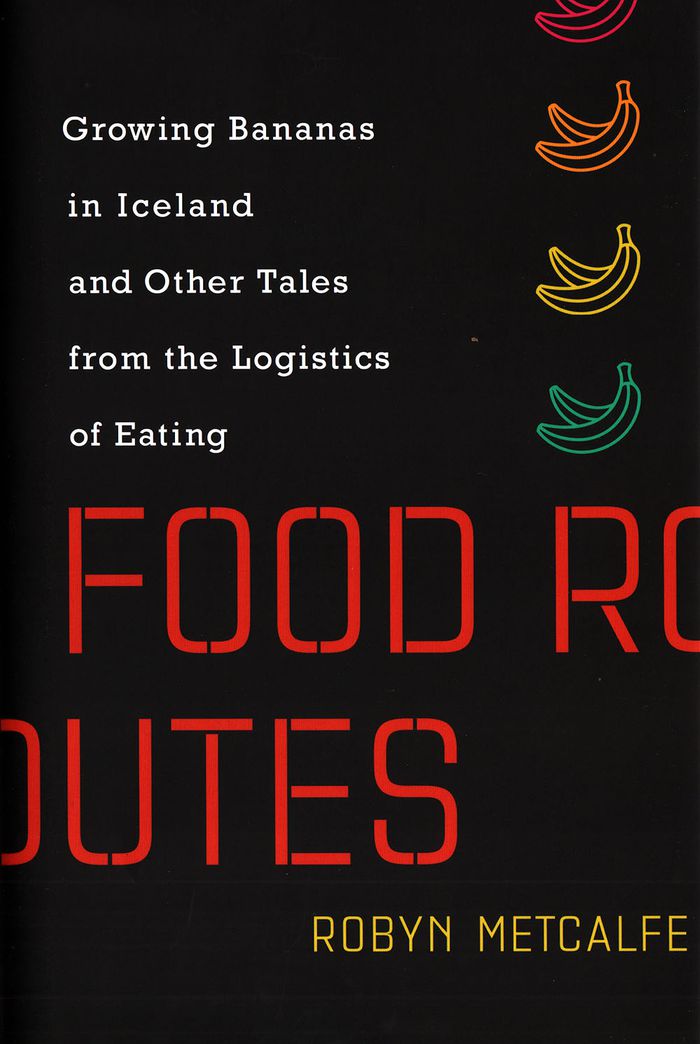
Food routes: growing bananas in Iceland and other tales from the logistics of eating
Actions:
Price:
$32.00
(available to order)
Summary:
Metcalfe follows a slice of New York pizza and a club sandwich through the food supply chain; considers local foods, global foods, and food deserts; investigates the processing, packaging, and storage of food; explores the transportation networks that connect farm to plate; and explains how food can be tracked using sensors and the Internet of Things. Future food may be engineered, networked, and nearly independent of crops grown in fields. New technologies can make the food system more efficient—but at what cost to our traditionally close relationship with food?
Food routes: growing bananas in Iceland and other tales from the logistics of eating
Actions:
Price:
$32.00
(available to order)
Summary:
Metcalfe follows a slice of New York pizza and a club sandwich through the food supply chain; considers local foods, global foods, and food deserts; investigates the processing, packaging, and storage of food; explores the transportation networks that connect farm to plate; and explains how food can be tracked using sensors and the Internet of Things. Future food may be engineered, networked, and nearly independent of crops grown in fields. New technologies can make the food system more efficient—but at what cost to our traditionally close relationship with food?
Form:
books
books
Publication:
March 2019
March 2019
Subject:
Food
Food
Form:
books
books
Actions:
Price:
$77.95
(available to order)
Summary:
Gyorgy Kepes (1906–2001) was the last disciple of Bauhaus modernism, an acolyte of László Moholy-Nagy and a self-styled revolutionary artist. But by midcentury, transplanted to America, Kepes found he was trapped in the military-industrial-aesthetic complex. In this first book-length study of Kepes, John Blakinger argues that Kepes, by opening the research laboratory to(...)
$77.95
(available to order)
Summary:
Gyorgy Kepes (1906–2001) was the last disciple of Bauhaus modernism, an acolyte of László Moholy-Nagy and a self-styled revolutionary artist. But by midcentury, transplanted to America, Kepes found he was trapped in the military-industrial-aesthetic complex. In this first book-length study of Kepes, John Blakinger argues that Kepes, by opening the research laboratory to(...)
Publication:
June 2019
June 2019
Title:
Gyorgy Kepes: undreaming the Bauhaus
Actions:
Price:
$77.95
(available to order)
Summary:
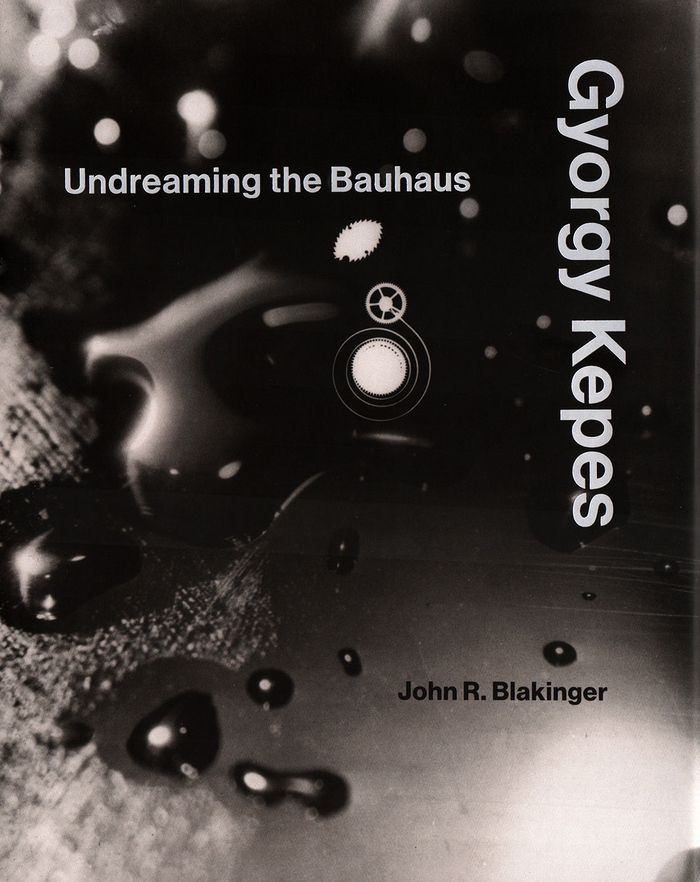
Gyorgy Kepes (1906–2001) was the last disciple of Bauhaus modernism, an acolyte of László Moholy-Nagy and a self-styled revolutionary artist. But by midcentury, transplanted to America, Kepes found he was trapped in the military-industrial-aesthetic complex. In this first book-length study of Kepes, John Blakinger argues that Kepes, by opening the research laboratory to the arts, established a new paradigm for creative practice: the artist as technocrat. First at Chicago's New Bauhaus and then for many years at MIT, Kepes pioneered interdisciplinary collaboration between the arts and sciences- what he termed “interthinking” and “interseeing.” Kepes and his colleagues, ranging from metallurgists to mathematicians, became part of an important but little-explored constellation: the Cold War avant-garde.
Gyorgy Kepes: undreaming the Bauhaus
Actions:
Price:
$77.95
(available to order)
Summary:
Gyorgy Kepes (1906–2001) was the last disciple of Bauhaus modernism, an acolyte of László Moholy-Nagy and a self-styled revolutionary artist. But by midcentury, transplanted to America, Kepes found he was trapped in the military-industrial-aesthetic complex. In this first book-length study of Kepes, John Blakinger argues that Kepes, by opening the research laboratory to the arts, established a new paradigm for creative practice: the artist as technocrat. First at Chicago's New Bauhaus and then for many years at MIT, Kepes pioneered interdisciplinary collaboration between the arts and sciences- what he termed “interthinking” and “interseeing.” Kepes and his colleagues, ranging from metallurgists to mathematicians, became part of an important but little-explored constellation: the Cold War avant-garde.
Form:
books
books
Publication:
June 2019
June 2019
Form:
books
books
Actions:
Price:
$32.00
(available to order)
Summary:
Walter Benjamin was a man of letters, an art critic, an essayist, a translator, a philosopher, a collector, and an urban flâneur. In his writings, he ambles, samples, and explores. With "Walter Benjamin Reimagined", Frances Cannon offers a visual and literary response to Benjamin's work. With detailed and dreamlike pen-and-ink drawings and hand-lettered text, Cannon gives(...)
$32.00
(available to order)
Summary:
Walter Benjamin was a man of letters, an art critic, an essayist, a translator, a philosopher, a collector, and an urban flâneur. In his writings, he ambles, samples, and explores. With "Walter Benjamin Reimagined", Frances Cannon offers a visual and literary response to Benjamin's work. With detailed and dreamlike pen-and-ink drawings and hand-lettered text, Cannon gives(...)
Title:
Walter Benjamin reimagined: a graphic translation of poetry, prose, aphorisms and dreams
Actions:
Price:
$32.00
(available to order)
Summary:
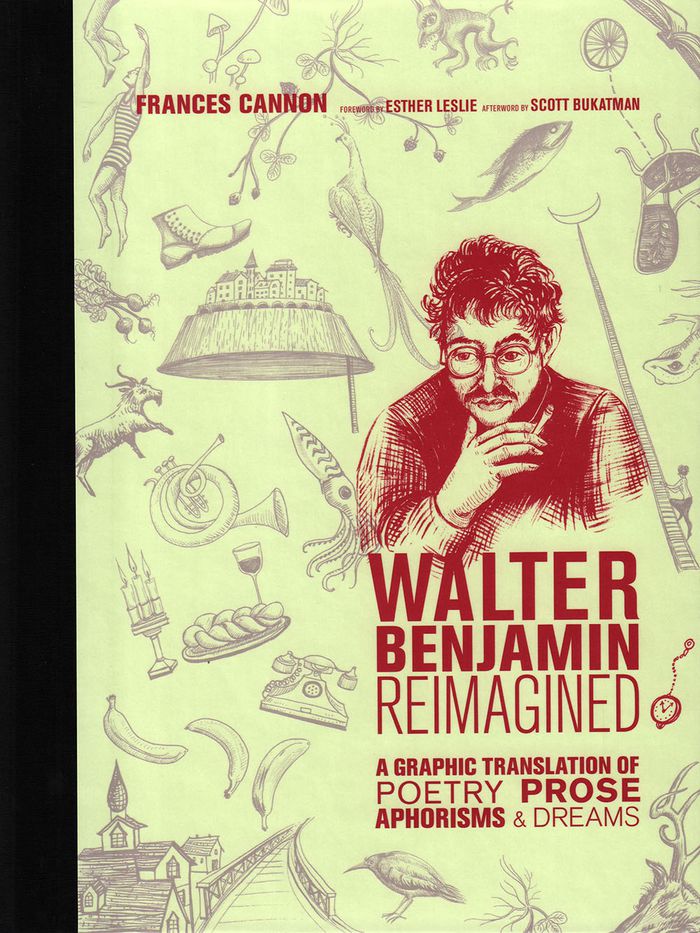
Walter Benjamin was a man of letters, an art critic, an essayist, a translator, a philosopher, a collector, and an urban flâneur. In his writings, he ambles, samples, and explores. With "Walter Benjamin Reimagined", Frances Cannon offers a visual and literary response to Benjamin's work. With detailed and dreamlike pen-and-ink drawings and hand-lettered text, Cannon gives readers an illuminated tour of Walter Benjamin's thoughts—a graphic translation, an encyclopedia of fragments.
Walter Benjamin reimagined: a graphic translation of poetry, prose, aphorisms and dreams
Actions:
Price:
$32.00
(available to order)
Summary:
Walter Benjamin was a man of letters, an art critic, an essayist, a translator, a philosopher, a collector, and an urban flâneur. In his writings, he ambles, samples, and explores. With "Walter Benjamin Reimagined", Frances Cannon offers a visual and literary response to Benjamin's work. With detailed and dreamlike pen-and-ink drawings and hand-lettered text, Cannon gives readers an illuminated tour of Walter Benjamin's thoughts—a graphic translation, an encyclopedia of fragments.
Form:
books
books
Publication:
May 2019
May 2019
Subject:
Illustration
Illustration
Form:
books
books
Price:
$25.50
(available to order)
Summary:
Everybody eats. We may even consider ourselves experts on the topic, or at least Instagram experts. But are we aware that the shrimp in our freezer may be farmed and frozen in Vietnam, the grapes in our fruit bowl shipped from Chile, and the coffee in our coffee maker grown in Nicaragua, roasted in Germany, and distributed in Canada? In this volume, food writer and(...)
$25.50
(available to order)
Summary:
Everybody eats. We may even consider ourselves experts on the topic, or at least Instagram experts. But are we aware that the shrimp in our freezer may be farmed and frozen in Vietnam, the grapes in our fruit bowl shipped from Chile, and the coffee in our coffee maker grown in Nicaragua, roasted in Germany, and distributed in Canada? In this volume, food writer and(...)
Title:
Food
Actions:
Price:
$25.50
(available to order)
Summary:
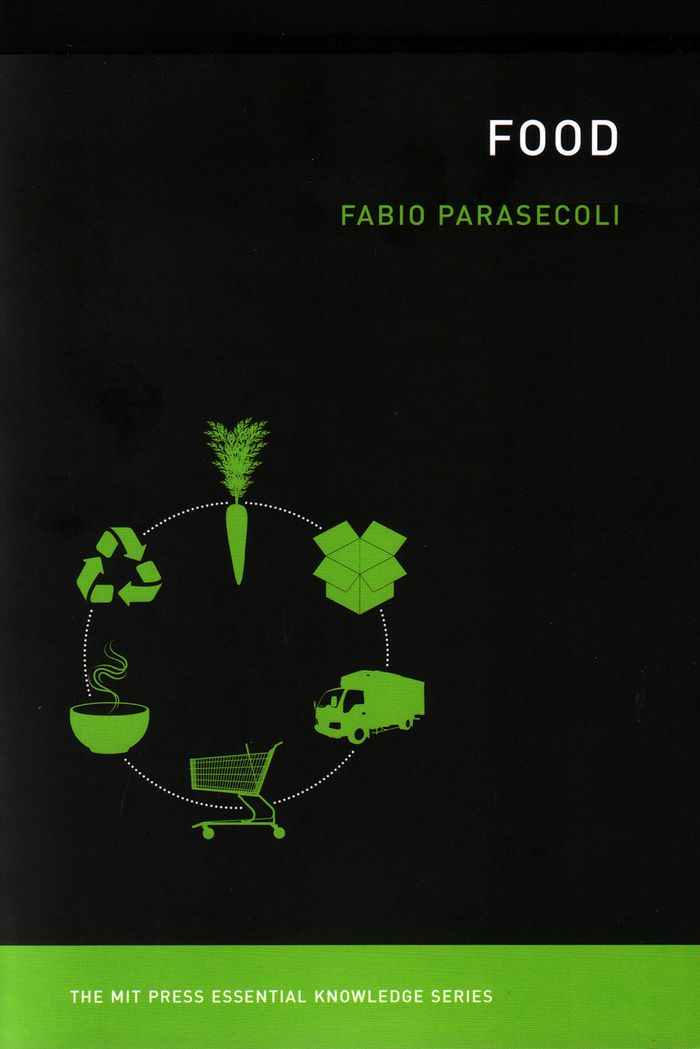
Everybody eats. We may even consider ourselves experts on the topic, or at least Instagram experts. But are we aware that the shrimp in our freezer may be farmed and frozen in Vietnam, the grapes in our fruit bowl shipped from Chile, and the coffee in our coffee maker grown in Nicaragua, roasted in Germany, and distributed in Canada? In this volume, food writer and scholar Fabio Parasecoli offers a consumer's guide to the food system, from local to global.
Food
Actions:
Price:
$25.50
(available to order)
Summary:
Everybody eats. We may even consider ourselves experts on the topic, or at least Instagram experts. But are we aware that the shrimp in our freezer may be farmed and frozen in Vietnam, the grapes in our fruit bowl shipped from Chile, and the coffee in our coffee maker grown in Nicaragua, roasted in Germany, and distributed in Canada? In this volume, food writer and scholar Fabio Parasecoli offers a consumer's guide to the food system, from local to global.
Form:
books
books
Publication:
March 2019
March 2019
Subject:
Food
Food
Form:
books
books
Actions:
Price:
$23.95
(available to order)
Summary:
We have been told that we are living in the Anthropocene, a geological era shaped by humans rather than by nature. In ''Enlivenment,'' German philosopher Andreas Weber presents an alternative understanding of our relationship with nature, arguing not that humans control nature but that humans and nature exist in a commons of mutual transformation. There is no nature–human(...)
$23.95
(available to order)
Summary:
We have been told that we are living in the Anthropocene, a geological era shaped by humans rather than by nature. In ''Enlivenment,'' German philosopher Andreas Weber presents an alternative understanding of our relationship with nature, arguing not that humans control nature but that humans and nature exist in a commons of mutual transformation. There is no nature–human(...)
Title:
Enlivenment: toward a poetics for the anthropocene
Actions:
Price:
$23.95
(available to order)
Summary:
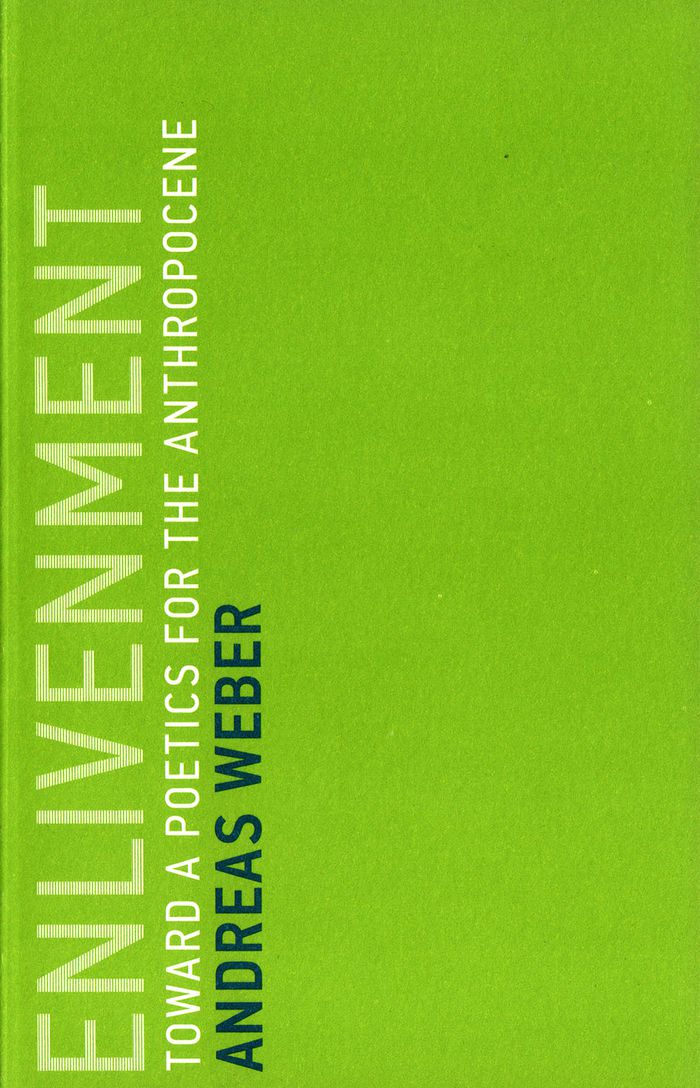
We have been told that we are living in the Anthropocene, a geological era shaped by humans rather than by nature. In ''Enlivenment,'' German philosopher Andreas Weber presents an alternative understanding of our relationship with nature, arguing not that humans control nature but that humans and nature exist in a commons of mutual transformation. There is no nature–human dualism, he contends, because the fundamental dimension of existence is shared in what he calls "aliveness." All subjectivity is intersubjectivity. Self is self-through-other. Seeing all beings in a common household of matter, desire, and imagination, an economy of metabolic and economic transformation, is ''enlivenment.'' This perspective allows us to move beyond Enlightenment-style thinking that strips material reality of any subjectivity.
Enlivenment: toward a poetics for the anthropocene
Actions:
Price:
$23.95
(available to order)
Summary:
We have been told that we are living in the Anthropocene, a geological era shaped by humans rather than by nature. In ''Enlivenment,'' German philosopher Andreas Weber presents an alternative understanding of our relationship with nature, arguing not that humans control nature but that humans and nature exist in a commons of mutual transformation. There is no nature–human dualism, he contends, because the fundamental dimension of existence is shared in what he calls "aliveness." All subjectivity is intersubjectivity. Self is self-through-other. Seeing all beings in a common household of matter, desire, and imagination, an economy of metabolic and economic transformation, is ''enlivenment.'' This perspective allows us to move beyond Enlightenment-style thinking that strips material reality of any subjectivity.
Form:
books
books
Publication:
March 2019
March 2019
Subject:
Environment and environmental theory
Environment and environmental theory


