


12071 Results
Form:
books
books

Actions:
Price:
$24.00
(available to order)
Summary:
This volume endeavors to identify, classify and distinguish those qualities that characterize effective or inspired residential architecture from the nonfunctional--or those houses that simply exhibit bad taste or judgment. Berlin- based architect Oda Pälmke lends perspective with concrete, nondogmatic commentary.
Title:
Typen: good, bad and ugly houses
Actions:
Price:
$24.00
(available to order)
Summary:
This volume endeavors to identify, classify and distinguish those qualities that characterize effective or inspired residential architecture from the nonfunctional--or those houses that simply exhibit bad taste or judgment. Berlin- based architect Oda Pälmke lends perspective with concrete, nondogmatic commentary.
Form:
books
books
Publication:
March 2009, Berlin
March 2009, Berlin
Subject:
Residential Architecture
Residential Architecture
Form:
books
books

Actions:
Price:
$18.95
(available to order)
Summary:
Cities generate a disproportionate amount of Canada’s wealth and are home to the majority of the population, yet they have no means to control their own destinies. Alan Broadbent suggests that the problem is a slavish devotion to a constitutional structure and a federal government that is ignorant of how crucial large cities are to our national prosperity and heritage.
Title:
Urban nation : why we need to give power back to the cities to make Canada strong
Actions:
Price:
$18.95
(available to order)
Summary:
Cities generate a disproportionate amount of Canada’s wealth and are home to the majority of the population, yet they have no means to control their own destinies. Alan Broadbent suggests that the problem is a slavish devotion to a constitutional structure and a federal government that is ignorant of how crucial large cities are to our national prosperity and heritage.
Form:
books
books
Publication:
March 2009, Toronto
March 2009, Toronto
Subject:
Architecture in Canada
Architecture in Canada
Form:
books
books
Price:
$32.95
(available to order)
Summary:
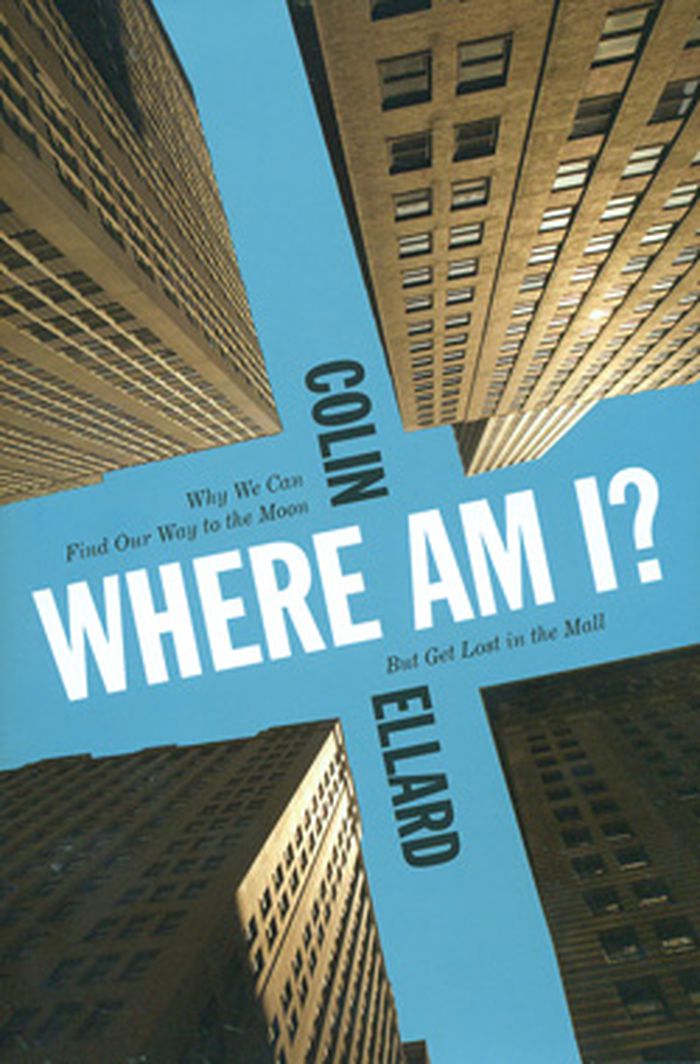
How do you get from here to there? Where is there? Psychologist Colin Ellard demonstrates that navigating through space is both complex and utterly fascinating. Beginning with the neurological and muscular coordination involved in the simple act of reaching for an object, he then investigates our interaction with space--how near and distant landmarks, for example, are(...)
Title:
Where am I? why we can find our way to the moon but get lost in the mall
Actions:
Price:
$32.95
(available to order)
Summary:
How do you get from here to there? Where is there? Psychologist Colin Ellard demonstrates that navigating through space is both complex and utterly fascinating. Beginning with the neurological and muscular coordination involved in the simple act of reaching for an object, he then investigates our interaction with space--how near and distant landmarks, for example, are used differently in navigation. From the complex behaviour of insects to the epic journeys of sea turtles, from the subtle knowledge of the environment demonstrated by such famed navigators as the Inuit and South Pacific sailors to the conceptual worlds of cyberspace, Where Am I? reveals just how deeply our unique relationship with space defines what it means to be human.
Form:
books
books
Publication:
April 2009, Toronto
April 2009, Toronto
Subject:
Architectural Theory
Architectural Theory
Form:
books
books
Actions:
Price:
$43.95
(available to order)
Summary:
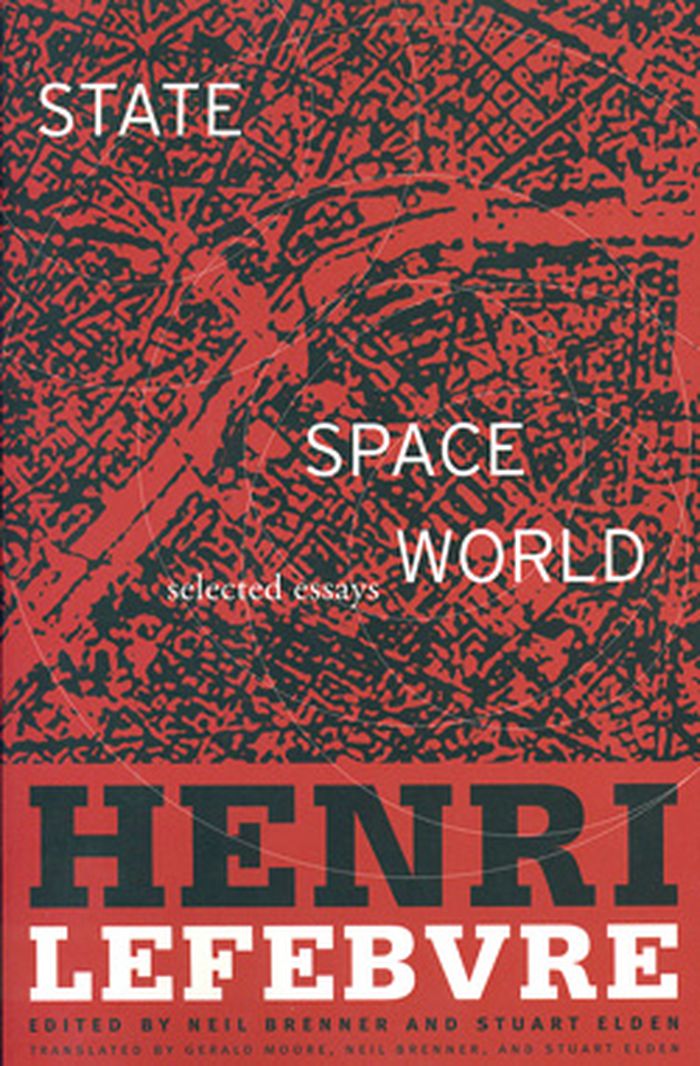
One of the most influential Marxist theorists of the twentieth century, Henri Lefebvre pioneered the study of the modern state in an age of accelerating global economic integration and fragmentation. Shortly after the 1974 publication of his landmark book The Production of Space, Henri Lefebvre embarked on one of the most ambitious projects of his career: a consideration(...)
Title:
State, space, world, selected essays
Actions:
Price:
$43.95
(available to order)
Summary:
One of the most influential Marxist theorists of the twentieth century, Henri Lefebvre pioneered the study of the modern state in an age of accelerating global economic integration and fragmentation. Shortly after the 1974 publication of his landmark book The Production of Space, Henri Lefebvre embarked on one of the most ambitious projects of his career: a consideration of the history and geographies of the modern state through a monumental study that linked several disciplines, including political science, sociology, geography, and history. State, Space, World collects a series of Lefebvre’s key writings on the state from this period. Making available in English for the first time the as-yet-unexplored political aspect of Lefebvre’s work, it contains essays on philosophy, political theory, state formation, spatial planning, and globalization, as well as provocative reflections on the possibilities and limits of grassroots democracy under advanced capitalism.
Form:
books
books
Publication:
March 2009, Minneapolis
March 2009, Minneapolis
Subject:
Architectural Theory
Architectural Theory
Form:
books
books

Actions:
Price:
$22.25
(available to order)
Summary:
In this book the author offers a critical, philosophical, and historical inquiry into the characteristics and consequences of this consumer subculture. For Azuma, one of Japan’s leading public intellectuals, otaku culture mirrors the transformations of postwar Japanese society and the nature of human behavior in the postmodern era. He traces otaku’s ascendancy to the(...)
Title:
Otaku: Japan's Database Animals
Actions:
Price:
$22.25
(available to order)
Summary:
In this book the author offers a critical, philosophical, and historical inquiry into the characteristics and consequences of this consumer subculture. For Azuma, one of Japan’s leading public intellectuals, otaku culture mirrors the transformations of postwar Japanese society and the nature of human behavior in the postmodern era. He traces otaku’s ascendancy to the distorted conditions created in Japan by the country’s phenomenal postwar modernization, its inability to come to terms with its defeat in the Second World War, and America’s subsequent cultural invasion. More broadly, Azuma argues that the consumption behavior of otaku is representative of the postmodern consumption of culture in general, which sacrifices the search for greater significance to almost animalistic instant gratification.
Form:
books
books
Publication:
March 2009, Minnneapolis
March 2009, Minnneapolis
Subject:
Architectural Theory
Architectural Theory
Form:
books
books

Actions:
Price:
$25.00
(available to order)
Summary:
In this publication, Edgerton retells the fascinating story of how perspective emerged in early fifteenth-century Florence, growing out of an artistic and religious context in which devout Christians longed for divine presence in their daily lives. And yet, ironically, its discovery would have a profound effect not only on the history of art but on the history of science(...)
Title:
The mirror, the window, and the telescope : how Renaissance linear perspective changed our vision of the universe
Actions:
Price:
$25.00
(available to order)
Summary:
In this publication, Edgerton retells the fascinating story of how perspective emerged in early fifteenth-century Florence, growing out of an artistic and religious context in which devout Christians longed for divine presence in their daily lives. And yet, ironically, its discovery would have a profound effect not only on the history of art but on the history of science and technology, ultimately undermining the very medieval Christian cosmic view that gave rise to it in the first place.
Form:
books
books
Publication:
February 2009, Ithaca, London
February 2009, Ithaca, London
Subject:
Architectural Theory
Architectural Theory
Form:
books
books

Title:
North of 53 degrees
North of 53 degrees
Actions:
Price:
$27.00
(available to order)
Summary:
'Saints and sinners, whores and housewives, swindlers and laborers alike attempted a hasty adjustment to novel conditions in a land that seemed strange and forbidding', writes William R. Hunt in his narrative history of Alaska mining. Hunt offers an exciting anecdotal account that follows hungry prospectors, canny shopkeepers, hopeful hangers-on, and crafty lawyers(...)
Title:
North of 53 degrees
Actions:
Price:
$27.00
(available to order)
Summary:
'Saints and sinners, whores and housewives, swindlers and laborers alike attempted a hasty adjustment to novel conditions in a land that seemed strange and forbidding', writes William R. Hunt in his narrative history of Alaska mining. Hunt offers an exciting anecdotal account that follows hungry prospectors, canny shopkeepers, hopeful hangers-on, and crafty lawyers through the gold mining camps and temporary towns of nineteenth-century Alaska. Hunt has hiked and mined many of the same claims he writes about in the book, and North of 53[degrees] offers a rare glimpse into far-flung communities from Skagway to the Yukon to the deep interior of Alaska to the Iditarod and Nome on the Bering Sea.
Form:
books
books
Publication:
April 2009
April 2009
Subject:
Architecture in Canada
Architecture in Canada
Form:
books
books

Actions:
Price:
$39.99
(available to order)
Summary:
At the opening of the nineteenth century, publishing houses in London, New York, Paris, Stuttgart, and Berlin produced books in ever greater numbers. But it was not just the advent of mass printing that created the era's 'bookish' culture. According to Andrew Piper, romantic writers played a crucial role in adjusting readers to this increasingly international and(...)
Title:
Dreaming in books: the making of the bibliographic imagination in the romantic age
Actions:
Price:
$39.99
(available to order)
Summary:
At the opening of the nineteenth century, publishing houses in London, New York, Paris, Stuttgart, and Berlin produced books in ever greater numbers. But it was not just the advent of mass printing that created the era's 'bookish' culture. According to Andrew Piper, romantic writers played a crucial role in adjusting readers to this increasingly international and overflowing literary environment. Learning how to use and want books occurred through more than the technological, commercial, or legal conditions that made the growing proliferation of books possible; the making of such bibliographic fantasies was importantly a product of the symbolic operations contained within books as well. Examining novels, critical editions, gift books, translations, and illustrated books, as well as the communities who made them, "Dreaming in Books" tells a wide-ranging story of the book's identity at the turn of the nineteenth century. In so doing, it shows how many of the most pressing modern communicative concerns are not unique to the digital age but emerged with a particular sense of urgency during the bookish upheavals of the romantic era. In revisiting the book's rise through the prism of romantic literature, Piper aims to revise our assumptions about romanticism, the medium of the printed book, and, ultimately, the future of the book in our so-called digital age.
Form:
books
books
Publication:
April 2009
April 2009
Subject:
Architectural Theory
Architectural Theory
Form:
books
books

Price:
$34.95
(available to order)
Summary:
What would the world be like if there were no places? Our lives are so place-oriented that we cannot begin to comprehend the loss of locality. Indeed, the space we occupy has much to do with what and who we are. Yet, despite the pervasiveness of place in our everyday lives, philosophers have neglected it. Since its publication in 1993, Getting Back into Place has been(...)
Title:
Getting back into place: toward a renewed understanding of the place-world
Actions:
Price:
$34.95
(available to order)
Summary:
What would the world be like if there were no places? Our lives are so place-oriented that we cannot begin to comprehend the loss of locality. Indeed, the space we occupy has much to do with what and who we are. Yet, despite the pervasiveness of place in our everyday lives, philosophers have neglected it. Since its publication in 1993, Getting Back into Place has been recognized as a pioneering study of the importance of place in people's lives. This edition includes new material that reflects on the development of the field of environmental philosophy and presents Edward S. Casey's current thinking on place and home in our increasingly troubled world.
Form:
books
books
Publication:
May 2009
May 2009
Subject:
Architectural Theory
Architectural Theory
Form:
books
books

Price:
$155.00
(available in store)
Summary:
Written by the leading authorities on the architect, this book adopts a similar approach to that employed by Palladio in his own writing, with an emphasis on the tangible and practical aspects of life and work. Following this it is divided in three parts: 1. His buildings, documented in 22 chapters, richly illustrated with carefully reproduced original drawings,(...)
Subject:
Architecture Monographs
Architecture Monographs
Publication:
February 2009, London
February 2009, London
Title:
Palladio
Actions:
Price:
$155.00
(available in store)
Summary:
Written by the leading authorities on the architect, this book adopts a similar approach to that employed by Palladio in his own writing, with an emphasis on the tangible and practical aspects of life and work. Following this it is divided in three parts: 1. His buildings, documented in 22 chapters, richly illustrated with carefully reproduced original drawings, photographs, and floor plans. 2. His ideas and writings (with essays by Howard Burns, Guido and Maria Beltramini, and others). 3. The people who played a part in the development of both, including chapters on Vincenzo Scamozzi, Inigo Jones, Richard Boyle, and others. Followed by a bibliography, a glossary of architectural terms and Italian words, and an index.
Form:
books
books
Publication:
February 2009, London
February 2009, London
Subject:
Architecture Monographs
Architecture Monographs


