


1009 Results
Form:
books
books
Title:
And if I devoted my life to one of its feathers? Aesthetic responses to extraction, accumulation
And if I devoted my life to one of its feathers? Aesthetic responses to extraction, accumulation
Actions:
Price:
$27.00
(available to order)
Summary:
“And if I devoted my life to one of its feathers?” wrote the Chilean poet, artist, and feminist activist Cecilia Vicuña in the early 1970s. Vicuña countered anthropocentric and hetero-patriarchal urges with healing and appreciation, reviving the aesthetic and spiritual bonds between human and more-than-human entities and worlds. Revolving around this vision of(...)
$27.00
(available to order)
Summary:
“And if I devoted my life to one of its feathers?” wrote the Chilean poet, artist, and feminist activist Cecilia Vicuña in the early 1970s. Vicuña countered anthropocentric and hetero-patriarchal urges with healing and appreciation, reviving the aesthetic and spiritual bonds between human and more-than-human entities and worlds. Revolving around this vision of(...)
Title:
And if I devoted my life to one of its feathers? Aesthetic responses to extraction, accumulation
Actions:
Price:
$27.00
(available to order)
Summary:
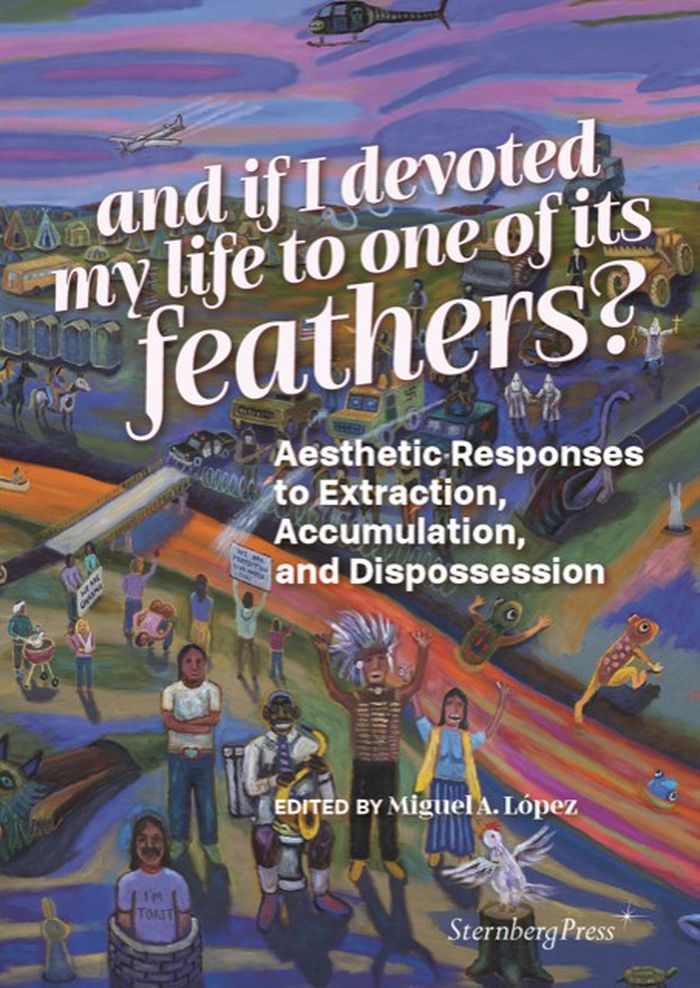
“And if I devoted my life to one of its feathers?” wrote the Chilean poet, artist, and feminist activist Cecilia Vicuña in the early 1970s. Vicuña countered anthropocentric and hetero-patriarchal urges with healing and appreciation, reviving the aesthetic and spiritual bonds between human and more-than-human entities and worlds. Revolving around this vision of interconnectivity, this book, which accompanies a joint exhibition of the same name of Kunsthalle Wien and Wiener Festwochen, seeks to create a collective dialogue around unequal distribution of power, sovereignty, and social and ecological justice. The exhibited works and written contributions reflect on the rationale of exploitation, the fast-paced mining of raw materials, and environmental destruction as a colonial legacy. They deconstruct Western anthropocentric models and enduring colonial and racist discourses, trace the stories of indigenous struggles for collective survival, and celebrate encounters defined by solidarity in their resistance to capitalist extraction, misogyny, imperialist violence, and dispossession.
And if I devoted my life to one of its feathers? Aesthetic responses to extraction, accumulation
Actions:
Price:
$27.00
(available to order)
Summary:
“And if I devoted my life to one of its feathers?” wrote the Chilean poet, artist, and feminist activist Cecilia Vicuña in the early 1970s. Vicuña countered anthropocentric and hetero-patriarchal urges with healing and appreciation, reviving the aesthetic and spiritual bonds between human and more-than-human entities and worlds. Revolving around this vision of interconnectivity, this book, which accompanies a joint exhibition of the same name of Kunsthalle Wien and Wiener Festwochen, seeks to create a collective dialogue around unequal distribution of power, sovereignty, and social and ecological justice. The exhibited works and written contributions reflect on the rationale of exploitation, the fast-paced mining of raw materials, and environmental destruction as a colonial legacy. They deconstruct Western anthropocentric models and enduring colonial and racist discourses, trace the stories of indigenous struggles for collective survival, and celebrate encounters defined by solidarity in their resistance to capitalist extraction, misogyny, imperialist violence, and dispossession.
Form:
books
books
Publication:
April 2023
April 2023
Subject:
Art Theory
Art Theory
Form:
books
books

Actions:
Price:
$29.95
(available in store)
Summary:
The world is in the midst of a storm that has shaped the history of modernity along a double fracture: on the one hand, an environmental fracture driven by a technocratic and capitalist civilization that led to the ongoing devastation of the Earth’s ecosystems and its human and non-human communities and, on the other, a colonial fracture instilled by Western colonization(...)
$29.95
(available in store)
Summary:
The world is in the midst of a storm that has shaped the history of modernity along a double fracture: on the one hand, an environmental fracture driven by a technocratic and capitalist civilization that led to the ongoing devastation of the Earth’s ecosystems and its human and non-human communities and, on the other, a colonial fracture instilled by Western colonization(...)
Title:
Decolonial ecology: thinking from the Caribbean world
Actions:
Price:
$29.95
(available in store)
Summary:
The world is in the midst of a storm that has shaped the history of modernity along a double fracture: on the one hand, an environmental fracture driven by a technocratic and capitalist civilization that led to the ongoing devastation of the Earth’s ecosystems and its human and non-human communities and, on the other, a colonial fracture instilled by Western colonization and imperialism that resulted in racial slavery and the domination of indigenous peoples and women in particular. In this important new book, Malcom Ferdinand challenges this double fracture, thinking from the Caribbean world. Here, the slave ship reveals the inequalities that continue during the storm: some are shackled inside the hold and even thrown overboard at the first gusts of wind. Drawing on empirical and theoretical work in the Caribbean, Ferdinand conceptualizes a decolonial ecology that holds protecting the environment together with the political struggles against (post)colonial domination, structural racism, and misogynistic practices.
Decolonial ecology: thinking from the Caribbean world
Actions:
Price:
$29.95
(available in store)
Summary:
The world is in the midst of a storm that has shaped the history of modernity along a double fracture: on the one hand, an environmental fracture driven by a technocratic and capitalist civilization that led to the ongoing devastation of the Earth’s ecosystems and its human and non-human communities and, on the other, a colonial fracture instilled by Western colonization and imperialism that resulted in racial slavery and the domination of indigenous peoples and women in particular. In this important new book, Malcom Ferdinand challenges this double fracture, thinking from the Caribbean world. Here, the slave ship reveals the inequalities that continue during the storm: some are shackled inside the hold and even thrown overboard at the first gusts of wind. Drawing on empirical and theoretical work in the Caribbean, Ferdinand conceptualizes a decolonial ecology that holds protecting the environment together with the political struggles against (post)colonial domination, structural racism, and misogynistic practices.
Form:
books
books
Publication:
September 2022
September 2022
Subject:
Environment and environmental theory
Environment and environmental theory
Form:
books
books
Actions:
Price:
$86.00
(available in store)
Summary:
In recent years, philosophy and art have testified to how anthropocentrism has culturally impoverished our world, leading to the wide destruction of habitats and ecosystems. In this book, Giovanni Aloi and Michael Marder show that the field of critical plant studies can make an important contribution, offering a slew of possibilities for scientific research, local(...)
$86.00
(available in store)
Summary:
In recent years, philosophy and art have testified to how anthropocentrism has culturally impoverished our world, leading to the wide destruction of habitats and ecosystems. In this book, Giovanni Aloi and Michael Marder show that the field of critical plant studies can make an important contribution, offering a slew of possibilities for scientific research, local(...)
Subject:
Environment and environmental theory
Environment and environmental theory
Publication:
July 2023
July 2023
Title:
Vegetal entwinements in philosophy and art
Actions:
Price:
$86.00
(available in store)
Summary:
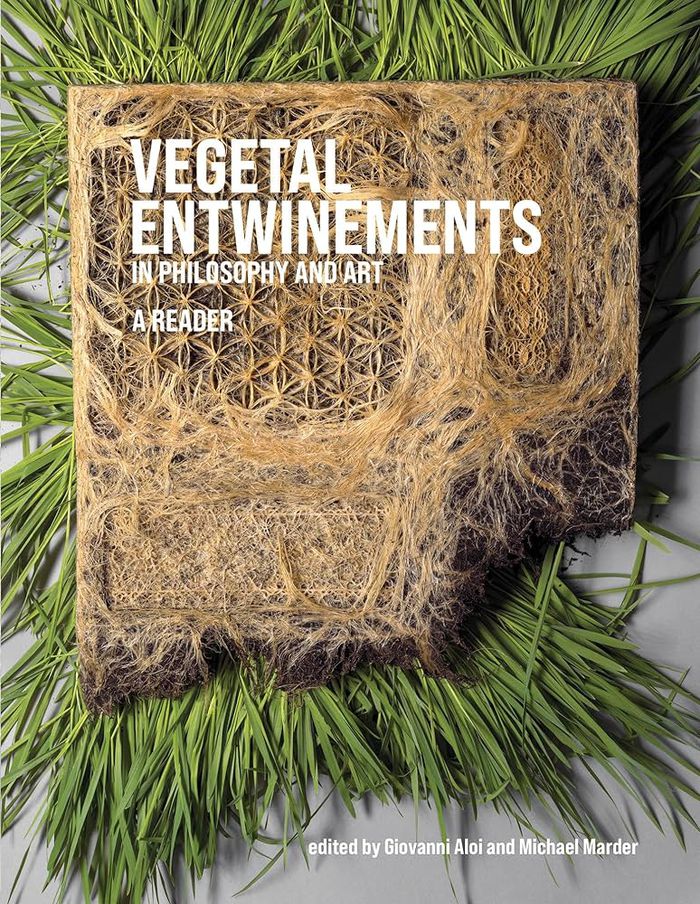
In recent years, philosophy and art have testified to how anthropocentrism has culturally impoverished our world, leading to the wide destruction of habitats and ecosystems. In this book, Giovanni Aloi and Michael Marder show that the field of critical plant studies can make an important contribution, offering a slew of possibilities for scientific research, local traditions, Indigenous knowledge, history, geography, anthropology, philosophy, and aesthetics to intersect, inform one another, and lead interdisciplinary and transcultural dialogues. "Vegetal entwinements in philosophy and art" considers such topics as the presence of plants in the history of philosophy, the shifting status of plants in various traditions, what it means to make art with growing life-forms, and whether or not plants have moral standing. In an experimental vegetal arrangement, the reader presents some of the most influential writing on plants, philosophy, and the arts, together with provocative new contributions, as well as interviews with groundbreaking contemporary artists whose work has greatly enhanced our appreciation of vegetal being.
Vegetal entwinements in philosophy and art
Actions:
Price:
$86.00
(available in store)
Summary:
In recent years, philosophy and art have testified to how anthropocentrism has culturally impoverished our world, leading to the wide destruction of habitats and ecosystems. In this book, Giovanni Aloi and Michael Marder show that the field of critical plant studies can make an important contribution, offering a slew of possibilities for scientific research, local traditions, Indigenous knowledge, history, geography, anthropology, philosophy, and aesthetics to intersect, inform one another, and lead interdisciplinary and transcultural dialogues. "Vegetal entwinements in philosophy and art" considers such topics as the presence of plants in the history of philosophy, the shifting status of plants in various traditions, what it means to make art with growing life-forms, and whether or not plants have moral standing. In an experimental vegetal arrangement, the reader presents some of the most influential writing on plants, philosophy, and the arts, together with provocative new contributions, as well as interviews with groundbreaking contemporary artists whose work has greatly enhanced our appreciation of vegetal being.
Form:
books
books
Publication:
July 2023
July 2023
Subject:
Environment and environmental theory
Environment and environmental theory
Form:
books
books
Price:
$32.50
(available to order)
Summary:
In this book, Lance Freeman sets out to answer a seemingly simple question : how does gentrification actually affect residents of neighborhoods in transition? To find out, Freeman does what no scholar before him has done. He interviews the indigenous residents of two predominantly black neighborhoods that are in the process of gentrification: Harlem and Clinton Hill,(...)
$32.50
(available to order)
Summary:
In this book, Lance Freeman sets out to answer a seemingly simple question : how does gentrification actually affect residents of neighborhoods in transition? To find out, Freeman does what no scholar before him has done. He interviews the indigenous residents of two predominantly black neighborhoods that are in the process of gentrification: Harlem and Clinton Hill,(...)
Title:
There goes the 'hood : views of gentrification from the ground up
Actions:
Price:
$32.50
(available to order)
Summary:
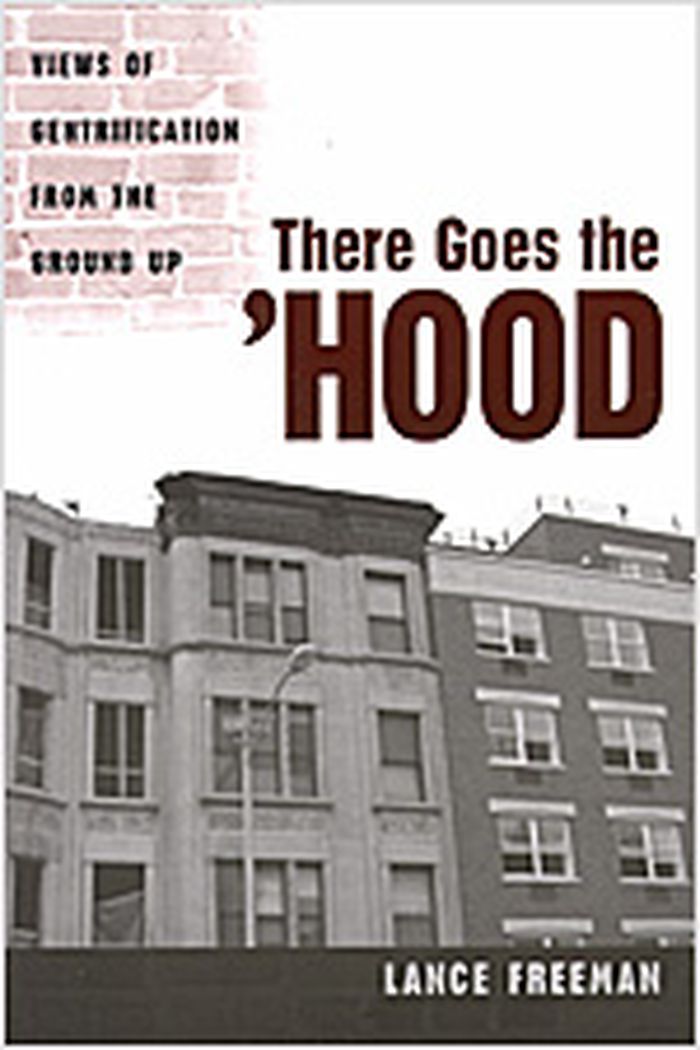
In this book, Lance Freeman sets out to answer a seemingly simple question : how does gentrification actually affect residents of neighborhoods in transition? To find out, Freeman does what no scholar before him has done. He interviews the indigenous residents of two predominantly black neighborhoods that are in the process of gentrification: Harlem and Clinton Hill, Brooklyn. By listening closely to what people tell him, he creates a more nuanced picture of the impacts of gentrification on the perceptions, attitudes and behaviors of the people who stay in their neighborhoods. Freeman describes the theoretical and planning/policy implications of his findings, both for New York City and for any gentrifying urban area. There Goes the 'Hood provides a more complete, and complicated, understanding of the gentrification process, highlighting the reactions of long-term residents. It suggests new ways of limiting gentrification's negative effects and of creating more positive experiences for newcomers and natives alike.
There goes the 'hood : views of gentrification from the ground up
Actions:
Price:
$32.50
(available to order)
Summary:
In this book, Lance Freeman sets out to answer a seemingly simple question : how does gentrification actually affect residents of neighborhoods in transition? To find out, Freeman does what no scholar before him has done. He interviews the indigenous residents of two predominantly black neighborhoods that are in the process of gentrification: Harlem and Clinton Hill, Brooklyn. By listening closely to what people tell him, he creates a more nuanced picture of the impacts of gentrification on the perceptions, attitudes and behaviors of the people who stay in their neighborhoods. Freeman describes the theoretical and planning/policy implications of his findings, both for New York City and for any gentrifying urban area. There Goes the 'Hood provides a more complete, and complicated, understanding of the gentrification process, highlighting the reactions of long-term residents. It suggests new ways of limiting gentrification's negative effects and of creating more positive experiences for newcomers and natives alike.
Form:
books
books
Publication:
June 2006, Philadelphia
June 2006, Philadelphia
Subject:
Urban Theory
Urban Theory
Form:
books
books

Actions:
Price:
$49.95
(available to order)
Summary:
When it comes to architecture, Switzerland wields an international influence that belies its small geographic size. Such prominent figures as Herzog & de Meuron and Peter Zumthor lead a chorus of innovative new voices emanating from this mountainous nation where craftsmanship, simple beauty, and environmental sensitivity have always been prized values. "Swiss Made"(...)
$49.95
(available to order)
Summary:
When it comes to architecture, Switzerland wields an international influence that belies its small geographic size. Such prominent figures as Herzog & de Meuron and Peter Zumthor lead a chorus of innovative new voices emanating from this mountainous nation where craftsmanship, simple beauty, and environmental sensitivity have always been prized values. "Swiss Made"(...)
Subject:
Architecture since 1900, Europe
Architecture since 1900, Europe
Publication:
October 2003, New York
October 2003, New York
Title:
Swiss made : new architecture from Switzerland
Actions:
Price:
$49.95
(available to order)
Summary:
When it comes to architecture, Switzerland wields an international influence that belies its small geographic size. Such prominent figures as Herzog & de Meuron and Peter Zumthor lead a chorus of innovative new voices emanating from this mountainous nation where craftsmanship, simple beauty, and environmental sensitivity have always been prized values. "Swiss Made" presents the work of the celebrated studios and architects at the forefront of Swiss design, much of which has never been seen before in the United States. In his introduction, historian Steven Spier provides an overview of Swiss architecture and considers the cultural attitudes that have fostered such refined buildings. Critic Martin Tschantz assesses the Swiss tradition of integrating progressive design, indigenous building techniques, and advanced engineering systems. The photographs by Christian Richters are supplemented by drawings and plans of the many projects included in this volume. "Swiss Made" features the work of: Burkhalter & Sumi, Diener & Diener, Gigon & Guyer, Herzog & de Meuron, Peter Märkli, Peter Zumthor, and many others.
Swiss made : new architecture from Switzerland
Actions:
Price:
$49.95
(available to order)
Summary:
When it comes to architecture, Switzerland wields an international influence that belies its small geographic size. Such prominent figures as Herzog & de Meuron and Peter Zumthor lead a chorus of innovative new voices emanating from this mountainous nation where craftsmanship, simple beauty, and environmental sensitivity have always been prized values. "Swiss Made" presents the work of the celebrated studios and architects at the forefront of Swiss design, much of which has never been seen before in the United States. In his introduction, historian Steven Spier provides an overview of Swiss architecture and considers the cultural attitudes that have fostered such refined buildings. Critic Martin Tschantz assesses the Swiss tradition of integrating progressive design, indigenous building techniques, and advanced engineering systems. The photographs by Christian Richters are supplemented by drawings and plans of the many projects included in this volume. "Swiss Made" features the work of: Burkhalter & Sumi, Diener & Diener, Gigon & Guyer, Herzog & de Meuron, Peter Märkli, Peter Zumthor, and many others.
Form:
books
books
Publication:
October 2003, New York
October 2003, New York
Subject:
Architecture since 1900, Europe
Architecture since 1900, Europe
Form:
books
books
Price:
$25.95
(available to order)
Summary:
An energizing case for hope about the climate, from Rebecca Solnit ("the voice of the resistance"—New York Times), climate activist Thelma Young Lutunatabua, and a chorus of voices calling on us to rise to the moment. "Not too late" brings strong climate voices from around the world to address the political, scientific, social, and emotional dimensions of the most(...)
$25.95
(available to order)
Summary:
An energizing case for hope about the climate, from Rebecca Solnit ("the voice of the resistance"—New York Times), climate activist Thelma Young Lutunatabua, and a chorus of voices calling on us to rise to the moment. "Not too late" brings strong climate voices from around the world to address the political, scientific, social, and emotional dimensions of the most(...)
Title:
Not too late: Changing the climate Story from Despair to Possibility
Actions:
Price:
$25.95
(available to order)
Summary:
An energizing case for hope about the climate, from Rebecca Solnit ("the voice of the resistance"—New York Times), climate activist Thelma Young Lutunatabua, and a chorus of voices calling on us to rise to the moment. "Not too late" brings strong climate voices from around the world to address the political, scientific, social, and emotional dimensions of the most urgent issue human beings have ever faced. Accessible, encouraging, and engaging, it's an invitation to everyone to understand the issue more deeply, participate more boldly, and imagine the future more creatively. In concise, illuminating essays and interviews, "Not too late" features the voices of Indigenous activists, such as Guam-based attorney and writer Julian Aguon; climate scientists, among them Jacquelyn Gill and Edward Carr; artists, such as Marshall Islands poet and activist Kathy Jeñtil-Kijiner; and longtime organizers, including "The Tyranny of Oil" author Antonia Juhasz and Emergent Strategy author adrienne maree brown.
Not too late: Changing the climate Story from Despair to Possibility
Actions:
Price:
$25.95
(available to order)
Summary:
An energizing case for hope about the climate, from Rebecca Solnit ("the voice of the resistance"—New York Times), climate activist Thelma Young Lutunatabua, and a chorus of voices calling on us to rise to the moment. "Not too late" brings strong climate voices from around the world to address the political, scientific, social, and emotional dimensions of the most urgent issue human beings have ever faced. Accessible, encouraging, and engaging, it's an invitation to everyone to understand the issue more deeply, participate more boldly, and imagine the future more creatively. In concise, illuminating essays and interviews, "Not too late" features the voices of Indigenous activists, such as Guam-based attorney and writer Julian Aguon; climate scientists, among them Jacquelyn Gill and Edward Carr; artists, such as Marshall Islands poet and activist Kathy Jeñtil-Kijiner; and longtime organizers, including "The Tyranny of Oil" author Antonia Juhasz and Emergent Strategy author adrienne maree brown.
Form:
books
books
Publication:
April 2023
April 2023
Subject:
Environment and environmental theory
Environment and environmental theory
Form:
books
books

Actions:
Price:
$75.00
(available in store)
Summary:
Dorothea Lange (1895–1965) aimed to make pictures that were, in her words, ''important and useful.'' Her decades-long investigation of how photography could articulate people’s core values and sense of self helped to expand our current understanding of portraiture and the meaning of documentary practice. Lange’s sensitive portraits showing the common humanity of often(...)
$75.00
(available in store)
Summary:
Dorothea Lange (1895–1965) aimed to make pictures that were, in her words, ''important and useful.'' Her decades-long investigation of how photography could articulate people’s core values and sense of self helped to expand our current understanding of portraiture and the meaning of documentary practice. Lange’s sensitive portraits showing the common humanity of often(...)
Subject:
Photography monographs
Photography monographs
Publication:
November 2023
November 2023
Title:
Dorothea Lange: Seeing people
Actions:
Price:
$75.00
(available in store)
Summary:
Dorothea Lange (1895–1965) aimed to make pictures that were, in her words, ''important and useful.'' Her decades-long investigation of how photography could articulate people’s core values and sense of self helped to expand our current understanding of portraiture and the meaning of documentary practice. Lange’s sensitive portraits showing the common humanity of often marginalized people were pivotal to public understanding of vast social problems in the twentieth century. Compassion guided Lange’s early portraits of Indigenous people in Arizona and New Mexico from the 1920s and 1930s, as well as her depictions of striking workers, migrant farmers, rural African Americans, Japanese Americans in internment camps, and the people she met while traveling in Europe, Asia, and Latin America. Drawing on new research, the authors look at Lange’s roots in studio portraiture and demonstrate how her influential and widely seen photographs addressed issues of identity as well as social, economic, and racial inequalities—topics that remain as relevant for our times as they were for hers.
Dorothea Lange: Seeing people
Actions:
Price:
$75.00
(available in store)
Summary:
Dorothea Lange (1895–1965) aimed to make pictures that were, in her words, ''important and useful.'' Her decades-long investigation of how photography could articulate people’s core values and sense of self helped to expand our current understanding of portraiture and the meaning of documentary practice. Lange’s sensitive portraits showing the common humanity of often marginalized people were pivotal to public understanding of vast social problems in the twentieth century. Compassion guided Lange’s early portraits of Indigenous people in Arizona and New Mexico from the 1920s and 1930s, as well as her depictions of striking workers, migrant farmers, rural African Americans, Japanese Americans in internment camps, and the people she met while traveling in Europe, Asia, and Latin America. Drawing on new research, the authors look at Lange’s roots in studio portraiture and demonstrate how her influential and widely seen photographs addressed issues of identity as well as social, economic, and racial inequalities—topics that remain as relevant for our times as they were for hers.
Form:
books
books
Publication:
November 2023
November 2023
Subject:
Photography monographs
Photography monographs
Form:
books
books
Actions:
Price:
$29.95
(available to order)
Summary:
Lake Ontario has profoundly influenced the historical evolution of North America. For centuries it has enabled and enriched the societies that crowded its edges, from fertile agricultural landscapes to energy production systems to sprawling cities. In "The lives of Lake Ontario" Daniel Macfarlane details the lake’s relationship with the Indigenous nations, settler(...)
$29.95
(available to order)
Summary:
Lake Ontario has profoundly influenced the historical evolution of North America. For centuries it has enabled and enriched the societies that crowded its edges, from fertile agricultural landscapes to energy production systems to sprawling cities. In "The lives of Lake Ontario" Daniel Macfarlane details the lake’s relationship with the Indigenous nations, settler(...)
Title:
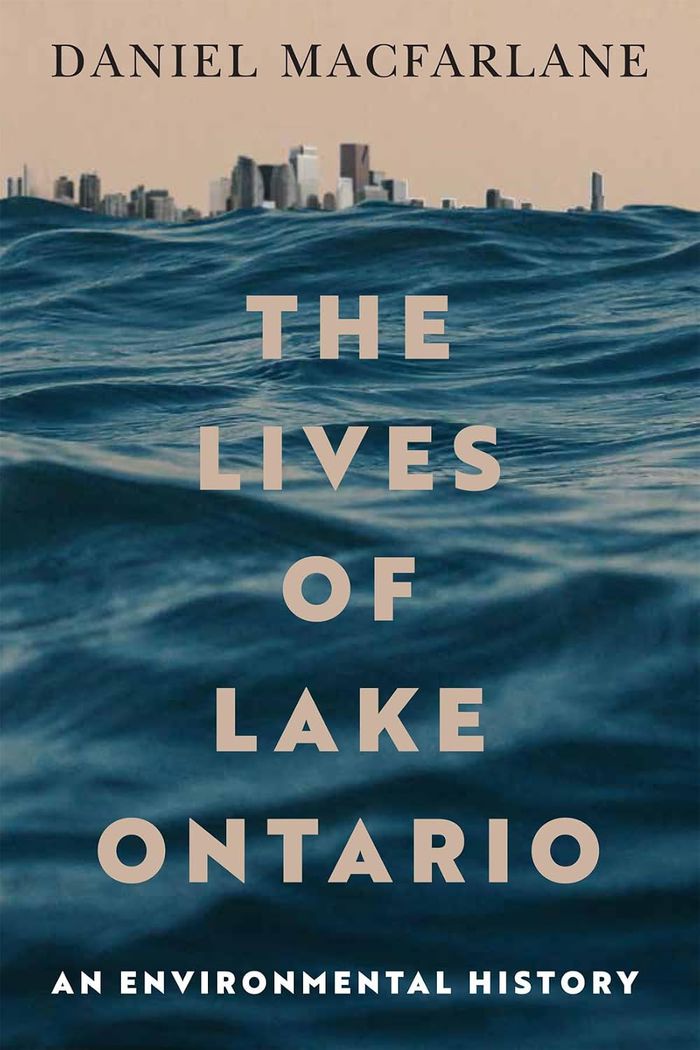
The lives of Lake Ontario: An environmental history
Actions:
Price:
$29.95
(available to order)
Summary:
Lake Ontario has profoundly influenced the historical evolution of North America. For centuries it has enabled and enriched the societies that crowded its edges, from fertile agricultural landscapes to energy production systems to sprawling cities. In "The lives of Lake Ontario" Daniel Macfarlane details the lake’s relationship with the Indigenous nations, settler cultures, and modern countries that have occupied its shores. He examines the myriad ways Canada and the United States have used and abused this resource: through dams and canals, drinking water and sewage, trash and pollution, fish and foreign species, industry and manufacturing, urbanization and infrastructure, population growth and biodiversity loss. Serving as both bridge and buffer between the two countries, Lake Ontario came to host Canada’s largest megalopolis. Yet its transborder exploitation exacted a tremendous ecological cost, leading people to abandon the lake. Innovative regulations in the later twentieth century, such as the Great Lakes Water Quality Agreements, have partially improved Lake Ontario’s health.
The lives of Lake Ontario: An environmental history
Actions:
Price:
$29.95
(available to order)
Summary:
Lake Ontario has profoundly influenced the historical evolution of North America. For centuries it has enabled and enriched the societies that crowded its edges, from fertile agricultural landscapes to energy production systems to sprawling cities. In "The lives of Lake Ontario" Daniel Macfarlane details the lake’s relationship with the Indigenous nations, settler cultures, and modern countries that have occupied its shores. He examines the myriad ways Canada and the United States have used and abused this resource: through dams and canals, drinking water and sewage, trash and pollution, fish and foreign species, industry and manufacturing, urbanization and infrastructure, population growth and biodiversity loss. Serving as both bridge and buffer between the two countries, Lake Ontario came to host Canada’s largest megalopolis. Yet its transborder exploitation exacted a tremendous ecological cost, leading people to abandon the lake. Innovative regulations in the later twentieth century, such as the Great Lakes Water Quality Agreements, have partially improved Lake Ontario’s health.
Form:
books
books
Publication:
March 2026
March 2026
Subject:
Architecture in Canada
Architecture in Canada
Form:
books
books
Actions:
Price:
$75.00
(available to order)
Summary:
The classical architectural and planning schemes conceived by Canada’s Anglo-settler elite in the early twentieth century embodied a prescriptive vision of power and grandeur for the country and its people on a scale almost unimaginable today. This provocative collection of essays examines the classical design precepts that shaped much of Canada’s built environment –(...)
$75.00
(available to order)
Summary:
The classical architectural and planning schemes conceived by Canada’s Anglo-settler elite in the early twentieth century embodied a prescriptive vision of power and grandeur for the country and its people on a scale almost unimaginable today. This provocative collection of essays examines the classical design precepts that shaped much of Canada’s built environment –(...)
Title:
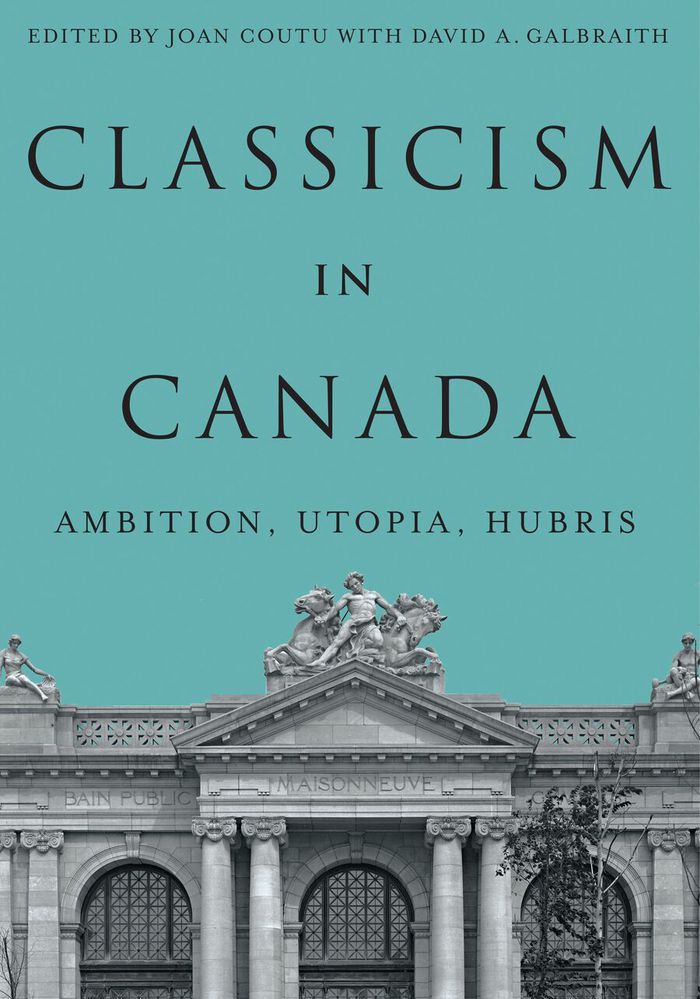
Classicism in Canada: Ambition, utopia, hubris
Actions:
Price:
$75.00
(available to order)
Summary:
The classical architectural and planning schemes conceived by Canada’s Anglo-settler elite in the early twentieth century embodied a prescriptive vision of power and grandeur for the country and its people on a scale almost unimaginable today. This provocative collection of essays examines the classical design precepts that shaped much of Canada’s built environment – leaving an imprint for how we continue to experience place today. "Classicism in Canada" brings together essays by planning, architectural, art, political, and social historians. Drawing on primary sources and the physical sites themselves, the contributors probe the meaning of a style that melded the École des Beaux-Arts with the sensibilities of the City Beautiful movement and that was rooted in assumptions about order and historical continuity. The transformation of built space and land was motivated by pragmatism, aesthetics, and an ideological infrastructure that reverberated with utopian zeal as much as it was driven by racial discrimination and Indigenous erasure.
Classicism in Canada: Ambition, utopia, hubris
Actions:
Price:
$75.00
(available to order)
Summary:
The classical architectural and planning schemes conceived by Canada’s Anglo-settler elite in the early twentieth century embodied a prescriptive vision of power and grandeur for the country and its people on a scale almost unimaginable today. This provocative collection of essays examines the classical design precepts that shaped much of Canada’s built environment – leaving an imprint for how we continue to experience place today. "Classicism in Canada" brings together essays by planning, architectural, art, political, and social historians. Drawing on primary sources and the physical sites themselves, the contributors probe the meaning of a style that melded the École des Beaux-Arts with the sensibilities of the City Beautiful movement and that was rooted in assumptions about order and historical continuity. The transformation of built space and land was motivated by pragmatism, aesthetics, and an ideological infrastructure that reverberated with utopian zeal as much as it was driven by racial discrimination and Indigenous erasure.
Form:
books
books
Publication:
August 2026
August 2026
Subject:
Architecture in Canada
Architecture in Canada
Form:
books
books
Price:
$33.95
(available in store)
Summary:
There is widespread consensus that we are living at the end—of democracy, of liberalism, of capitalism, of a healthy planet, of the Holocene, of civilization as we know it. In this book, drawing on radical futurisms and visions of justice-to-come emerging from the traditions of the oppressed—Indigenous, African-American, multispecies, anti-capitalist—as materialized in(...)
$33.95
(available in store)
Summary:
There is widespread consensus that we are living at the end—of democracy, of liberalism, of capitalism, of a healthy planet, of the Holocene, of civilization as we know it. In this book, drawing on radical futurisms and visions of justice-to-come emerging from the traditions of the oppressed—Indigenous, African-American, multispecies, anti-capitalist—as materialized in(...)
Title:
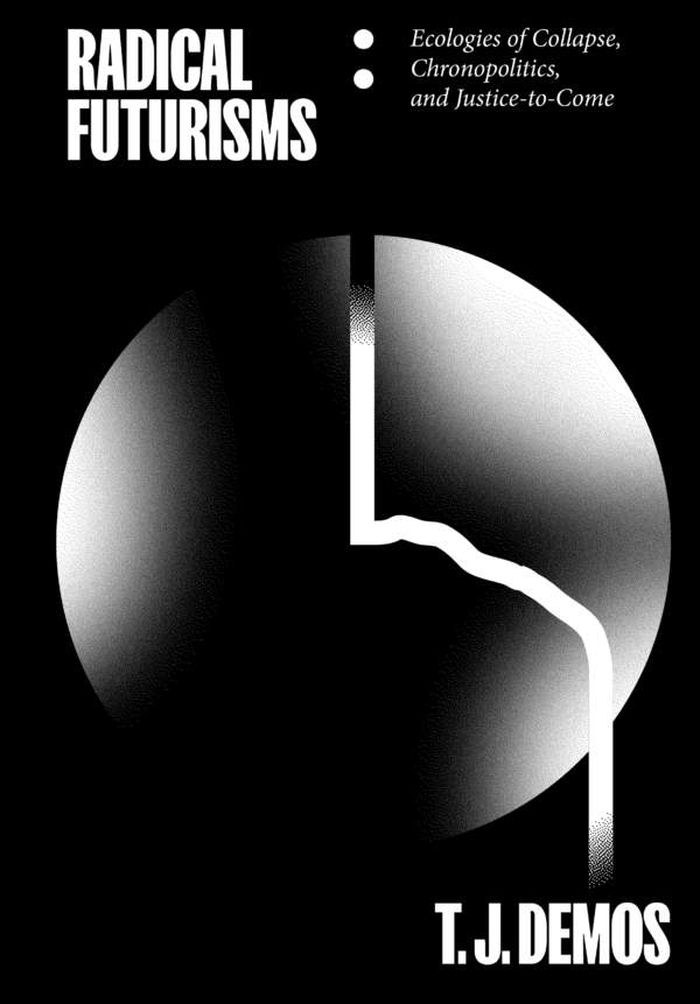
Radical futurisms: Ecologies of collapse/chronopolitics/justice to come
Actions:
Price:
$33.95
(available in store)
Summary:
There is widespread consensus that we are living at the end—of democracy, of liberalism, of capitalism, of a healthy planet, of the Holocene, of civilization as we know it. In this book, drawing on radical futurisms and visions of justice-to-come emerging from the traditions of the oppressed—Indigenous, African-American, multispecies, anti-capitalist—as materialized in experimental visual cultural, new media, aesthetic practices, and social movements, T. J. Demos poses speculative questions about what comes after end-of-world narratives. He argues that it's as vital to defeat fatalistic nihilism as it is to defeat the false solutions of green capitalism and algorithmic governance. How might we decolonize the future, and cultivate an emancipated chronopolitics in relation to an undetermined not-yet? If we are to avoid climate emergency's cooptation by technofixes, and the defuturing of multitudes by xenophobic eco-fascism, Demos argues, we must cultivate visions of just futurity and multispecies flourishing.
Radical futurisms: Ecologies of collapse/chronopolitics/justice to come
Actions:
Price:
$33.95
(available in store)
Summary:
There is widespread consensus that we are living at the end—of democracy, of liberalism, of capitalism, of a healthy planet, of the Holocene, of civilization as we know it. In this book, drawing on radical futurisms and visions of justice-to-come emerging from the traditions of the oppressed—Indigenous, African-American, multispecies, anti-capitalist—as materialized in experimental visual cultural, new media, aesthetic practices, and social movements, T. J. Demos poses speculative questions about what comes after end-of-world narratives. He argues that it's as vital to defeat fatalistic nihilism as it is to defeat the false solutions of green capitalism and algorithmic governance. How might we decolonize the future, and cultivate an emancipated chronopolitics in relation to an undetermined not-yet? If we are to avoid climate emergency's cooptation by technofixes, and the defuturing of multitudes by xenophobic eco-fascism, Demos argues, we must cultivate visions of just futurity and multispecies flourishing.
Form:
books
books
Publication:
May 2023
May 2023
Subject:
Architecture ecologies
Architecture ecologies


