


1059 Results
Form:
books
books
Price:
$46.95
(available to order)
Summary:
Jack Burnham is one of the few critics and theorists alive today who can claim to have radically altered the way we think about works of art. Burnham’s use of the term “system” (borrowed from theoretical biology) in his 1968 essay “System Aesthetics” announced the relational character of conceptual art and newer research-based projects. Trained as an art historian,(...)
$46.95
(available to order)
Summary:
Jack Burnham is one of the few critics and theorists alive today who can claim to have radically altered the way we think about works of art. Burnham’s use of the term “system” (borrowed from theoretical biology) in his 1968 essay “System Aesthetics” announced the relational character of conceptual art and newer research-based projects. Trained as an art historian,(...)
Title:
Dissolve into comprenhension: writings and interviews, 1964-2004
Actions:
Price:
$46.95
(available to order)
Summary:
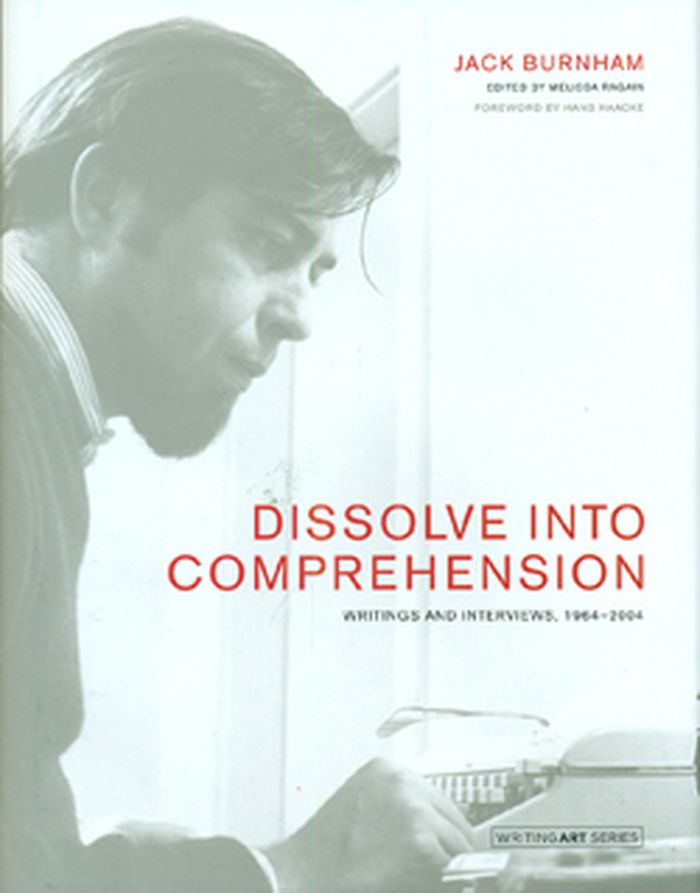
Jack Burnham is one of the few critics and theorists alive today who can claim to have radically altered the way we think about works of art. Burnham’s use of the term “system” (borrowed from theoretical biology) in his 1968 essay “System Aesthetics” announced the relational character of conceptual art and newer research-based projects. Trained as an art historian, Burnham was also a sculptor. His first book, Beyond Modern Sculpture (1968), established him as a leading commentator on art and technology. A postformalist pioneer, an influential figure in new media art history, an early champion of conceptual and ecological art, and the curator of the first exhibition of digital art, Burnham is long overdue for reevaluation. This book offers that opportunity by collecting a substantial and varied selection of his hard-to-find texts, some published here for the first time.
Dissolve into comprenhension: writings and interviews, 1964-2004
Actions:
Price:
$46.95
(available to order)
Summary:
Jack Burnham is one of the few critics and theorists alive today who can claim to have radically altered the way we think about works of art. Burnham’s use of the term “system” (borrowed from theoretical biology) in his 1968 essay “System Aesthetics” announced the relational character of conceptual art and newer research-based projects. Trained as an art historian, Burnham was also a sculptor. His first book, Beyond Modern Sculpture (1968), established him as a leading commentator on art and technology. A postformalist pioneer, an influential figure in new media art history, an early champion of conceptual and ecological art, and the curator of the first exhibition of digital art, Burnham is long overdue for reevaluation. This book offers that opportunity by collecting a substantial and varied selection of his hard-to-find texts, some published here for the first time.
Form:
books
books
Publication:
August 2015
August 2015
Subject:
Art Theory
Art Theory
Form:
books
books
Actions:
Price:
$50.95
(available to order)
Summary:
This new edition of The Photographic Image in Digital Culture explores the condition of photography after some 20 years of remediation and transformation by digital technology. Through ten especially commissioned essays, by some of the leading scholars in the field of contemporary photography studies, a range of key topics are discussed including: the meaning of(...)
$50.95
(available to order)
Summary:
This new edition of The Photographic Image in Digital Culture explores the condition of photography after some 20 years of remediation and transformation by digital technology. Through ten especially commissioned essays, by some of the leading scholars in the field of contemporary photography studies, a range of key topics are discussed including: the meaning of(...)
Title:
The photographic image in digital culture
Actions:
Price:
$50.95
(available to order)
Summary:
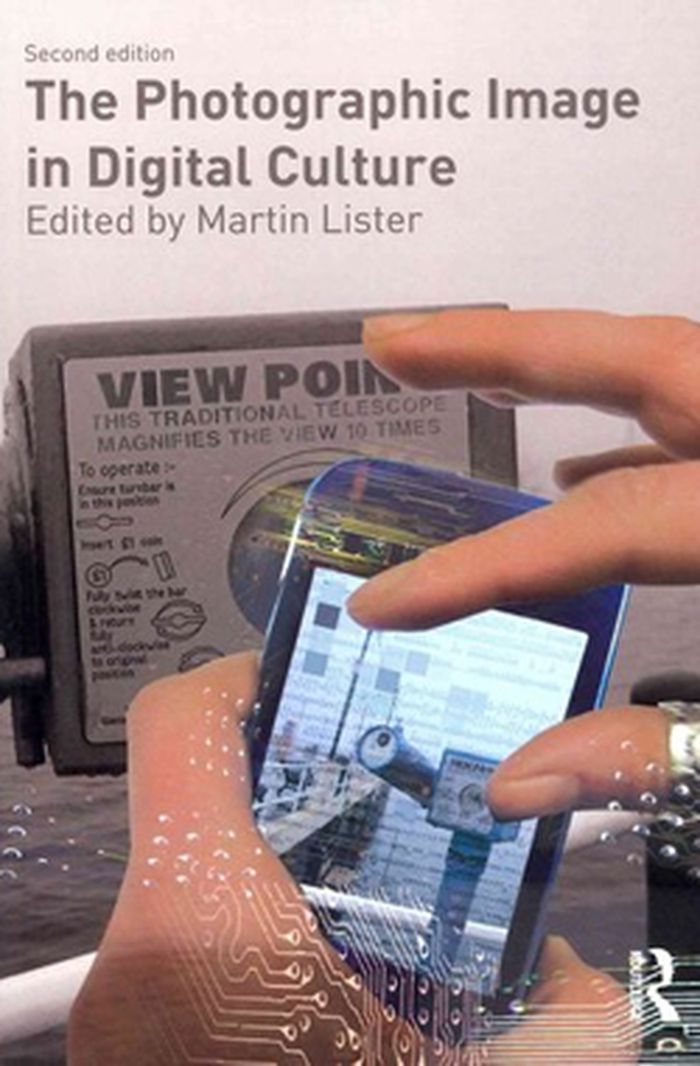
This new edition of The Photographic Image in Digital Culture explores the condition of photography after some 20 years of remediation and transformation by digital technology. Through ten especially commissioned essays, by some of the leading scholars in the field of contemporary photography studies, a range of key topics are discussed including: the meaning of software in the production of photograph; the nature of networked photographs; the screen as the site of photographic display; the simulation of photography in the videogame; photography, ubiquitous computing and technologies of ambient intelligence; developments in vernacular photography and social media; the photograph and the digital archive; the curation and exhibition of the networked photograph; the dominance of the image bank in commercial and advertising photography; the complexities of citizen photojournalism.
The photographic image in digital culture
Actions:
Price:
$50.95
(available to order)
Summary:
This new edition of The Photographic Image in Digital Culture explores the condition of photography after some 20 years of remediation and transformation by digital technology. Through ten especially commissioned essays, by some of the leading scholars in the field of contemporary photography studies, a range of key topics are discussed including: the meaning of software in the production of photograph; the nature of networked photographs; the screen as the site of photographic display; the simulation of photography in the videogame; photography, ubiquitous computing and technologies of ambient intelligence; developments in vernacular photography and social media; the photograph and the digital archive; the curation and exhibition of the networked photograph; the dominance of the image bank in commercial and advertising photography; the complexities of citizen photojournalism.
Form:
books
books
Publication:
October 2013
October 2013
Subject:
Theory of Photography
Theory of Photography
Form:
books
books
Actions:
Price:
$33.95
(available to order)
Summary:
Since its publication in 1936, Walter Benjamin's "Artwork" essay has become a canonical text about the status and place of the fine arts in modern mass culture. Benjamin was especially concerned with the ability of new technologies--notably film, sound recording, and photography--to reproduce works of art in great number. Benjamin could not have foreseen the explosion of(...)
$33.95
(available to order)
Summary:
Since its publication in 1936, Walter Benjamin's "Artwork" essay has become a canonical text about the status and place of the fine arts in modern mass culture. Benjamin was especially concerned with the ability of new technologies--notably film, sound recording, and photography--to reproduce works of art in great number. Benjamin could not have foreseen the explosion of(...)
Subject:
Architectural Theory
Architectural Theory
Publication:
July 2003, Stanford
July 2003, Stanford
Title:
Mapping Benjamin : the work of art in the digital age
Actions:
Price:
$33.95
(available to order)
Summary:
Since its publication in 1936, Walter Benjamin's "Artwork" essay has become a canonical text about the status and place of the fine arts in modern mass culture. Benjamin was especially concerned with the ability of new technologies--notably film, sound recording, and photography--to reproduce works of art in great number. Benjamin could not have foreseen the explosion of imagery and media that has occurred during the past fifty years. Does Benjamin's famous essay still speak to this new situation? That is the question posed by the editors of this book to a wide range of leading scholars and thinkers across a spectrum of disciplines in the humanities. The essays gathered here do not hazard a univocal reply to that question; rather they offer a rich, wide-ranging critique of Benjamin's position that refracts and reflects contemporary thinking about the ethical, political, and aesthetic implications of life in the digital age.
Mapping Benjamin : the work of art in the digital age
Actions:
Price:
$33.95
(available to order)
Summary:
Since its publication in 1936, Walter Benjamin's "Artwork" essay has become a canonical text about the status and place of the fine arts in modern mass culture. Benjamin was especially concerned with the ability of new technologies--notably film, sound recording, and photography--to reproduce works of art in great number. Benjamin could not have foreseen the explosion of imagery and media that has occurred during the past fifty years. Does Benjamin's famous essay still speak to this new situation? That is the question posed by the editors of this book to a wide range of leading scholars and thinkers across a spectrum of disciplines in the humanities. The essays gathered here do not hazard a univocal reply to that question; rather they offer a rich, wide-ranging critique of Benjamin's position that refracts and reflects contemporary thinking about the ethical, political, and aesthetic implications of life in the digital age.
Form:
books
books
Publication:
July 2003, Stanford
July 2003, Stanford
Subject:
Architectural Theory
Architectural Theory
Form:
books
books
Actions:
Price:
$45.00
(available in store)
Summary:
The question Are We Human? is both urgent and ancient. Beatriz Colomina and Mark Wigley offer a multi-layered exploration of the intimate relationship between human and design and rethink the philosophy of design in a multi-dimensional exploration from the very ?rst tools and ornaments to the constant buzz of social media. The average day involves the experience of(...)
$45.00
(available in store)
Summary:
The question Are We Human? is both urgent and ancient. Beatriz Colomina and Mark Wigley offer a multi-layered exploration of the intimate relationship between human and design and rethink the philosophy of design in a multi-dimensional exploration from the very ?rst tools and ornaments to the constant buzz of social media. The average day involves the experience of(...)
Title:
Are we human? The design of the species: 2 seconds, 2 days, 2 years, 200 years, 200,00 years. Istanbul Design Biennal 2016
Actions:
Price:
$45.00
(available in store)
Summary:
The question Are We Human? is both urgent and ancient. Beatriz Colomina and Mark Wigley offer a multi-layered exploration of the intimate relationship between human and design and rethink the philosophy of design in a multi-dimensional exploration from the very ?rst tools and ornaments to the constant buzz of social media. The average day involves the experience of thousands of layers of design that reach to outside space but also reach deep into our bodies and brains. Even the planet itself has been completely encrusted by design as a geological layer. There is no longer an outside to the world of design. Colomina’s and Wigley’s field notes offer an archaeology of the way design has gone viral and is now bigger than the world. They range across the last few hundred thousand years and the last few seconds to scrutinize the uniquely plastic relation between brain and artifact.
Are we human? The design of the species: 2 seconds, 2 days, 2 years, 200 years, 200,00 years. Istanbul Design Biennal 2016
Actions:
Price:
$45.00
(available in store)
Summary:
The question Are We Human? is both urgent and ancient. Beatriz Colomina and Mark Wigley offer a multi-layered exploration of the intimate relationship between human and design and rethink the philosophy of design in a multi-dimensional exploration from the very ?rst tools and ornaments to the constant buzz of social media. The average day involves the experience of thousands of layers of design that reach to outside space but also reach deep into our bodies and brains. Even the planet itself has been completely encrusted by design as a geological layer. There is no longer an outside to the world of design. Colomina’s and Wigley’s field notes offer an archaeology of the way design has gone viral and is now bigger than the world. They range across the last few hundred thousand years and the last few seconds to scrutinize the uniquely plastic relation between brain and artifact.
Form:
books
books
Publication:
October 2016
October 2016
Subject:
Design Theory
Design Theory
Form:
books
books
Title:
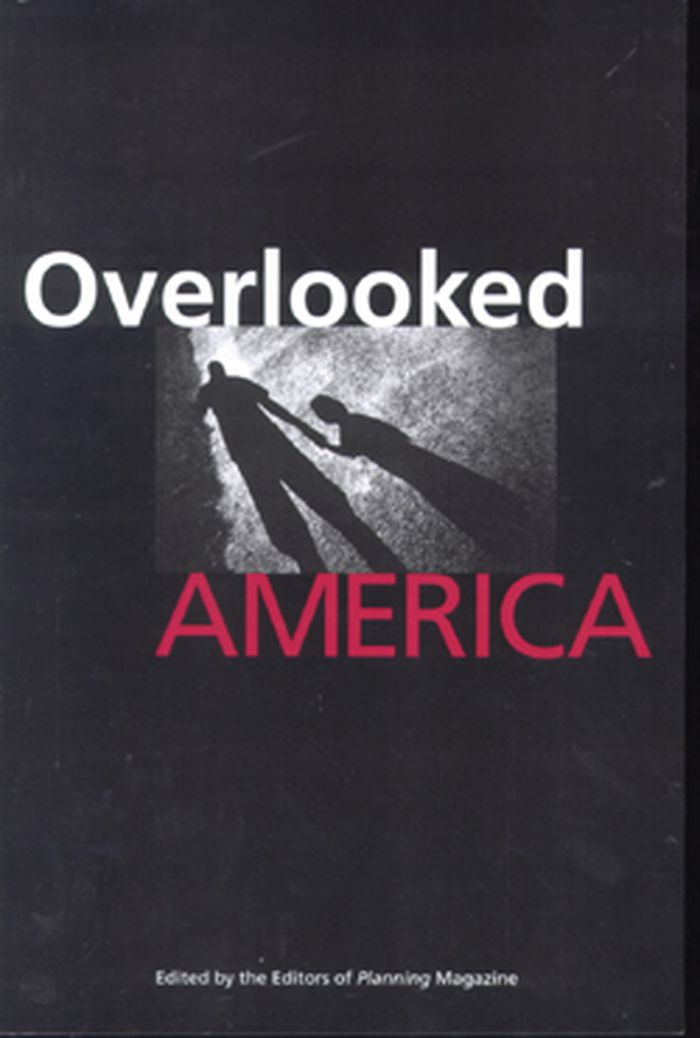
Overlooked america
Overlooked america
Actions:
Price:
$49.95
(available to order)
Summary:
In the aftermath of Hurricane Katrina, America was horrified by an onslaught of media accounts about those left stranded, homeless, or dead in New Orleans. And as further investigation made clear, residents of impoverished neighborhoods were the most vulnerable to disaster. In short, they were overlooked - much like the homeless, jobless, poor, and disabled victims of the(...)
$49.95
(available to order)
Summary:
In the aftermath of Hurricane Katrina, America was horrified by an onslaught of media accounts about those left stranded, homeless, or dead in New Orleans. And as further investigation made clear, residents of impoverished neighborhoods were the most vulnerable to disaster. In short, they were overlooked - much like the homeless, jobless, poor, and disabled victims of the(...)
Title:
Overlooked america
Actions:
Price:
$49.95
(available to order)
Summary:
In the aftermath of Hurricane Katrina, America was horrified by an onslaught of media accounts about those left stranded, homeless, or dead in New Orleans. And as further investigation made clear, residents of impoverished neighborhoods were the most vulnerable to disaster. In short, they were overlooked - much like the homeless, jobless, poor, and disabled victims of the everyday disasters of poverty and neglect whose lives are explored in "Overlooked America".A compilation of articles published in "Planning" magazine between 2006 and 2008, this eye-opening anthology offers a fresh look at how planners and communities affect the everyday lives of marginalized citizens. Featuring on-the-ground perspectives and expert interpretations, "Overlooked America" tackles a broad range of social problems to ask why a nation replete with resources is home to so many needy individuals and families. This ambitious volume is both a chronicle of systemic disaster and a plea for change.
Overlooked america
Actions:
Price:
$49.95
(available to order)
Summary:
In the aftermath of Hurricane Katrina, America was horrified by an onslaught of media accounts about those left stranded, homeless, or dead in New Orleans. And as further investigation made clear, residents of impoverished neighborhoods were the most vulnerable to disaster. In short, they were overlooked - much like the homeless, jobless, poor, and disabled victims of the everyday disasters of poverty and neglect whose lives are explored in "Overlooked America".A compilation of articles published in "Planning" magazine between 2006 and 2008, this eye-opening anthology offers a fresh look at how planners and communities affect the everyday lives of marginalized citizens. Featuring on-the-ground perspectives and expert interpretations, "Overlooked America" tackles a broad range of social problems to ask why a nation replete with resources is home to so many needy individuals and families. This ambitious volume is both a chronicle of systemic disaster and a plea for change.
Form:
books
books
Publication:
August 2008, Chicago, Washington
August 2008, Chicago, Washington
Subject:
Urban Theory
Urban Theory
Form:
books
books
Actions:
Price:
$53.95
(available to order)
Summary:
An essay collection exploring the board game's relationship to the built environment, revealing the unexpected ways that play reflects perceptions of space. Although board games are often recreational objects, their mythologies and infrastructure do not exist in a vacuum—rather, they echo and reproduce prevalent cultural landscapes. This thesis forms the throughline of(...)
$53.95
(available to order)
Summary:
An essay collection exploring the board game's relationship to the built environment, revealing the unexpected ways that play reflects perceptions of space. Although board games are often recreational objects, their mythologies and infrastructure do not exist in a vacuum—rather, they echo and reproduce prevalent cultural landscapes. This thesis forms the throughline of(...)
Title:
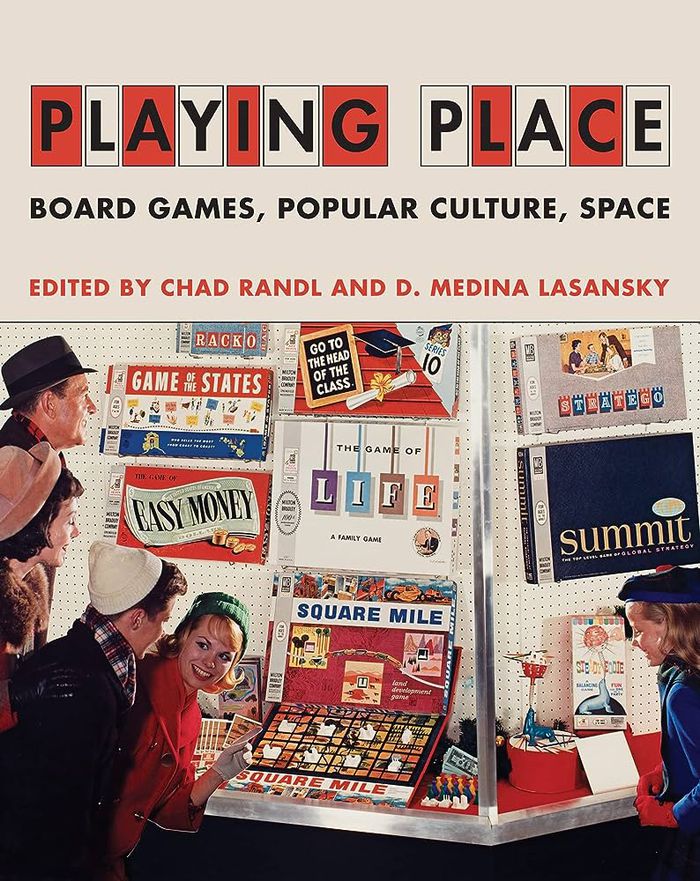
Playing place: Board games, popular culture, space
Actions:
Price:
$53.95
(available to order)
Summary:
An essay collection exploring the board game's relationship to the built environment, revealing the unexpected ways that play reflects perceptions of space. Although board games are often recreational objects, their mythologies and infrastructure do not exist in a vacuum—rather, they echo and reproduce prevalent cultural landscapes. This thesis forms the throughline of pieces reflecting on subjects as diverse as the rigidly gendered fantasies of classic mass-market games; the imperial convictions embedded in games that position player-protagonists as conquerors establishing dominion over their “discoveries”; and even the uncanny prescience of games that have players responding to a global pandemic. Representing a thrilling convergence of historiography, architectural history, and media studies scholarship, Playing Place suggests not only that tabletop games should be taken seriously but also that the medium itself is uniquely capable of facilitating our critical consideration of structures that are often taken for granted.
Playing place: Board games, popular culture, space
Actions:
Price:
$53.95
(available to order)
Summary:
An essay collection exploring the board game's relationship to the built environment, revealing the unexpected ways that play reflects perceptions of space. Although board games are often recreational objects, their mythologies and infrastructure do not exist in a vacuum—rather, they echo and reproduce prevalent cultural landscapes. This thesis forms the throughline of pieces reflecting on subjects as diverse as the rigidly gendered fantasies of classic mass-market games; the imperial convictions embedded in games that position player-protagonists as conquerors establishing dominion over their “discoveries”; and even the uncanny prescience of games that have players responding to a global pandemic. Representing a thrilling convergence of historiography, architectural history, and media studies scholarship, Playing Place suggests not only that tabletop games should be taken seriously but also that the medium itself is uniquely capable of facilitating our critical consideration of structures that are often taken for granted.
Form:
books
books
Publication:
August 2023
August 2023
Subject:
Architectural Theory
Architectural Theory
Form:
books
books
Actions:
Price:
$67.99
(available to order)
Summary:
Access and accessibility are central themes in architecture and urbanism. The goal is to make buildings accessible both horizontally and vertically, as well as to provide them with technical infrastructure. But the aim is also to ensure the accessibility of whole streets, routes, parks, and squares, and even entire cities and regions. Today, access is a key concept in the(...)
$67.99
(available to order)
Summary:
Access and accessibility are central themes in architecture and urbanism. The goal is to make buildings accessible both horizontally and vertically, as well as to provide them with technical infrastructure. But the aim is also to ensure the accessibility of whole streets, routes, parks, and squares, and even entire cities and regions. Today, access is a key concept in the(...)
Title:
Access for all : approaches to the built environment
Actions:
Price:
$67.99
(available to order)
Summary:
Access and accessibility are central themes in architecture and urbanism. The goal is to make buildings accessible both horizontally and vertically, as well as to provide them with technical infrastructure. But the aim is also to ensure the accessibility of whole streets, routes, parks, and squares, and even entire cities and regions. Today, access is a key concept in the most disparate areas of life. Thus, it is also a matter of access to knowledge and education, access to knowledge media like the Internet, access to healthcare, access to languages, etc. In thirteen articles, this book deals with this world of access in architecture, city planning, and neighboring fields. Topics include ensuring the accessibility of entire urban areas, renewing that of areas that were previously utilized differently, including the general populace in concept planning, and how architecture can help provide access to a better quality of life.
Access for all : approaches to the built environment
Actions:
Price:
$67.99
(available to order)
Summary:
Access and accessibility are central themes in architecture and urbanism. The goal is to make buildings accessible both horizontally and vertically, as well as to provide them with technical infrastructure. But the aim is also to ensure the accessibility of whole streets, routes, parks, and squares, and even entire cities and regions. Today, access is a key concept in the most disparate areas of life. Thus, it is also a matter of access to knowledge and education, access to knowledge media like the Internet, access to healthcare, access to languages, etc. In thirteen articles, this book deals with this world of access in architecture, city planning, and neighboring fields. Topics include ensuring the accessibility of entire urban areas, renewing that of areas that were previously utilized differently, including the general populace in concept planning, and how architecture can help provide access to a better quality of life.
Form:
books
books
Publication:
November 2009
November 2009
Subject:
Urban Theory
Urban Theory
Form:
books
books
Title:
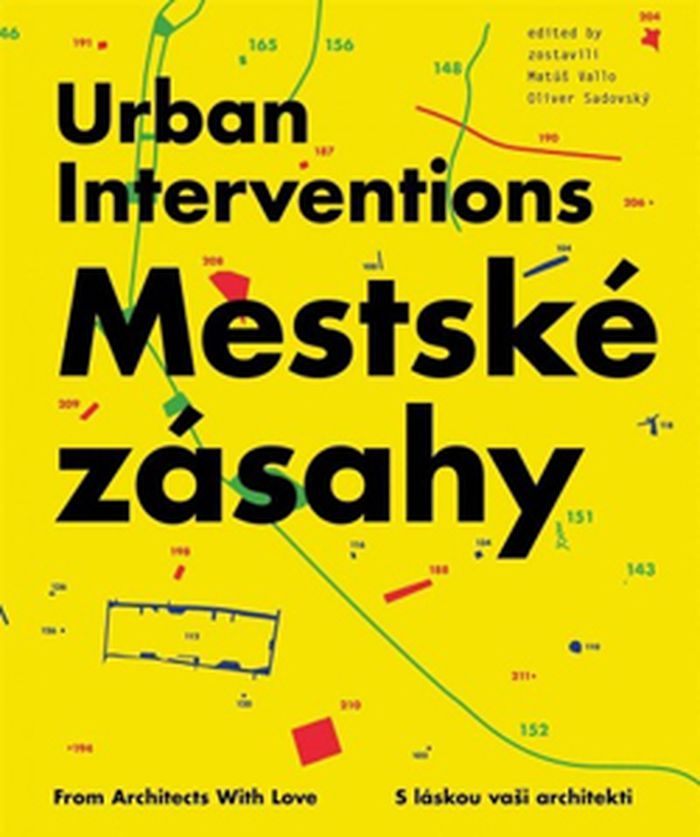
Urban interventions
Urban interventions
Actions:
Price:
$53.95
(available to order)
Summary:
A three-year enterprise is charted in this volume that chronicles the editors’ survey of their architectural colleagues, which asked them to identify problems in their cities and seek solutions for them. This series of projects received considerable public attention and media and the study digs deeper, exploring new possibilities for dialogue regarding public space that(...)
$53.95
(available to order)
Summary:
A three-year enterprise is charted in this volume that chronicles the editors’ survey of their architectural colleagues, which asked them to identify problems in their cities and seek solutions for them. This series of projects received considerable public attention and media and the study digs deeper, exploring new possibilities for dialogue regarding public space that(...)
Title:
Urban interventions
Actions:
Price:
$53.95
(available to order)
Summary:
A three-year enterprise is charted in this volume that chronicles the editors’ survey of their architectural colleagues, which asked them to identify problems in their cities and seek solutions for them. This series of projects received considerable public attention and media and the study digs deeper, exploring new possibilities for dialogue regarding public space that exists between the triumvirate of architects, municipal officials, and the general public. The collected interviews focus mainly on exhibitions in major cities such as Bratislava in Slovakia or Prague and Brno in the Czech Republic, as well as blogs and presentations surrounding individual projects. Illustrating these projects as processes that can bring about significant progress in the field, this discussion divides its content between the texts of the featured architects and the details of the 60 projects in question. This edition is written in both English and Slovak.
Urban interventions
Actions:
Price:
$53.95
(available to order)
Summary:
A three-year enterprise is charted in this volume that chronicles the editors’ survey of their architectural colleagues, which asked them to identify problems in their cities and seek solutions for them. This series of projects received considerable public attention and media and the study digs deeper, exploring new possibilities for dialogue regarding public space that exists between the triumvirate of architects, municipal officials, and the general public. The collected interviews focus mainly on exhibitions in major cities such as Bratislava in Slovakia or Prague and Brno in the Czech Republic, as well as blogs and presentations surrounding individual projects. Illustrating these projects as processes that can bring about significant progress in the field, this discussion divides its content between the texts of the featured architects and the details of the 60 projects in question. This edition is written in both English and Slovak.
Form:
books
books
Publication:
April 2012
April 2012
Subject:
Urban Theory
Urban Theory
Form:
books
books
Actions:
Price:
$24.95
(available to order)
Summary:
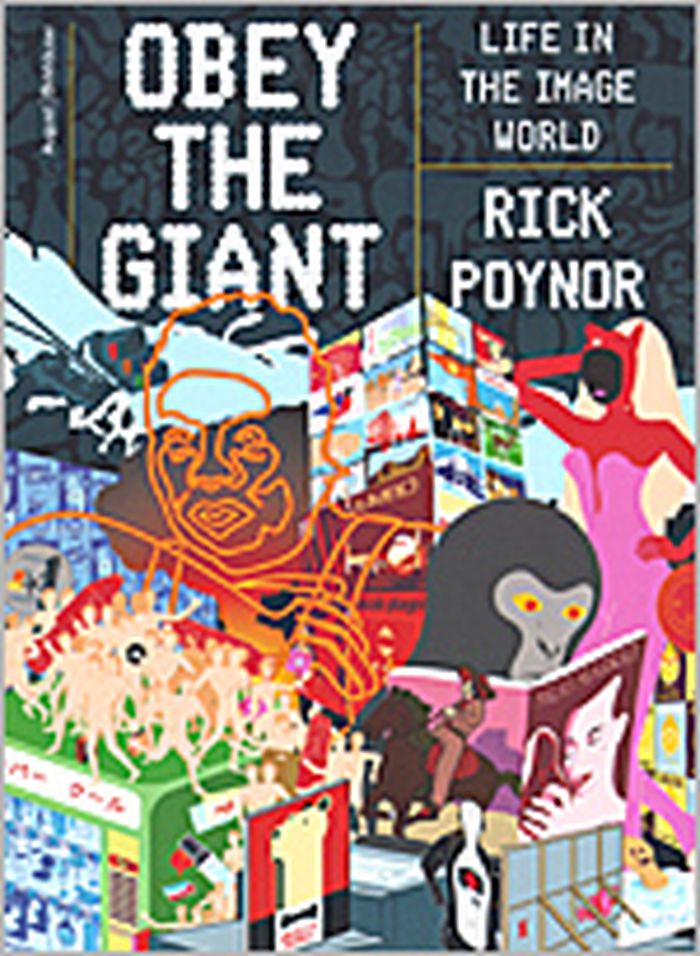
In the twenty-first century, commerce and culture are ever more closely entwined. This new collection of essays by design critic Rick Poynor takes a searching look at visual culture to discover the reality beneath the ultra-seductive surfaces. Poynor explores the thinking behind the emerging resistance to commercial rhetoric among designers, and offers critical insights(...)
$24.95
(available to order)
Summary:
In the twenty-first century, commerce and culture are ever more closely entwined. This new collection of essays by design critic Rick Poynor takes a searching look at visual culture to discover the reality beneath the ultra-seductive surfaces. Poynor explores the thinking behind the emerging resistance to commercial rhetoric among designers, and offers critical insights(...)
Title:
Obey the giant : life in the image world
Actions:
Price:
$24.95
(available to order)
Summary:
In the twenty-first century, commerce and culture are ever more closely entwined. This new collection of essays by design critic Rick Poynor takes a searching look at visual culture to discover the reality beneath the ultra-seductive surfaces. Poynor explores the thinking behind the emerging resistance to commercial rhetoric among designers, and offers critical insights into the changing dialogue between advertising and design. Other essays address the topics of visual journalism; brands as religion; the new solipsism; graphic memes; the pleasures of imperfect design; and the poverty of “cool”. Around the world, many are now waking up to the dominance of huge corporations – invariably expressed by visual means. This pointed and provocative counterblast arrives at a moment when critical responses are vital if this mono-culture is to be challenged. It offers inspirational evidence of alternative ways of engaging with design, and it will appeal to any reader with a questioning interest in design, advertising, cultural studies, media studies, and the visual arts.
Obey the giant : life in the image world
Actions:
Price:
$24.95
(available to order)
Summary:
In the twenty-first century, commerce and culture are ever more closely entwined. This new collection of essays by design critic Rick Poynor takes a searching look at visual culture to discover the reality beneath the ultra-seductive surfaces. Poynor explores the thinking behind the emerging resistance to commercial rhetoric among designers, and offers critical insights into the changing dialogue between advertising and design. Other essays address the topics of visual journalism; brands as religion; the new solipsism; graphic memes; the pleasures of imperfect design; and the poverty of “cool”. Around the world, many are now waking up to the dominance of huge corporations – invariably expressed by visual means. This pointed and provocative counterblast arrives at a moment when critical responses are vital if this mono-culture is to be challenged. It offers inspirational evidence of alternative ways of engaging with design, and it will appeal to any reader with a questioning interest in design, advertising, cultural studies, media studies, and the visual arts.
Form:
books
books
Publication:
December 2001, London
December 2001, London
Subject:
Design Theory
Design Theory
Form:
books
books
Actions:
Price:
$22.99
(available to order)
Summary:
What is the first thing to learn in art school? "Art can be anything." The second thing? "Learn to draw." With "101 things to learn in art school," artist and teacher Kit White delivers and develops such lessons, striking an instructive balance between technical advice and sage concepts. These 101 maxims, meditations, and demonstrations offer both a toolkit of ideas for(...)
$22.99
(available to order)
Summary:
What is the first thing to learn in art school? "Art can be anything." The second thing? "Learn to draw." With "101 things to learn in art school," artist and teacher Kit White delivers and develops such lessons, striking an instructive balance between technical advice and sage concepts. These 101 maxims, meditations, and demonstrations offer both a toolkit of ideas for(...)
Title:
101 things to learn in art school, revised
Actions:
Price:
$22.99
(available to order)
Summary:
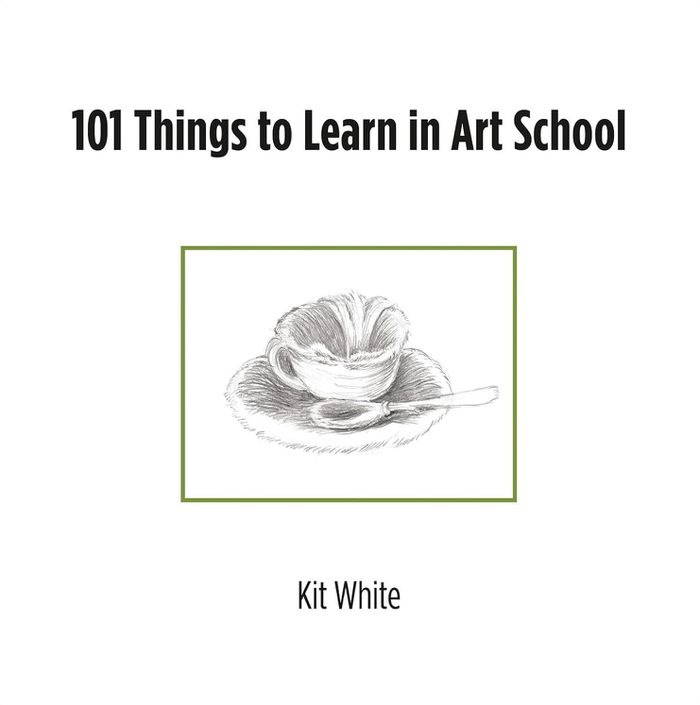
What is the first thing to learn in art school? "Art can be anything." The second thing? "Learn to draw." With "101 things to learn in art school," artist and teacher Kit White delivers and develops such lessons, striking an instructive balance between technical advice and sage concepts. These 101 maxims, meditations, and demonstrations offer both a toolkit of ideas for the art student and a set of guiding principles for the artist. Complementing each of the 101 succinct texts is an equally expressive drawing by the artist, often based on a historical or contemporary work of art, offering a visual correlative to the written thought. "Art can be anything" is illustrated by a drawing of Duchamp’s famous urinal; a description of chiaroscuro art is illuminated by an image "after Caravaggio"; a lesson on time and media is accompanied by a view of a Jenny Holzer projection; advice about surviving a critique gains resonance from Piero della Francesca’s arrow-pierced Saint Sebastian.
101 things to learn in art school, revised
Actions:
Price:
$22.99
(available to order)
Summary:
What is the first thing to learn in art school? "Art can be anything." The second thing? "Learn to draw." With "101 things to learn in art school," artist and teacher Kit White delivers and develops such lessons, striking an instructive balance between technical advice and sage concepts. These 101 maxims, meditations, and demonstrations offer both a toolkit of ideas for the art student and a set of guiding principles for the artist. Complementing each of the 101 succinct texts is an equally expressive drawing by the artist, often based on a historical or contemporary work of art, offering a visual correlative to the written thought. "Art can be anything" is illustrated by a drawing of Duchamp’s famous urinal; a description of chiaroscuro art is illuminated by an image "after Caravaggio"; a lesson on time and media is accompanied by a view of a Jenny Holzer projection; advice about surviving a critique gains resonance from Piero della Francesca’s arrow-pierced Saint Sebastian.
Form:
books
books
Publication:
October 2024
October 2024
Subject:
Art Theory
Art Theory


