


992 Results
Form:
books
books
Title:
Robert Adams : turning back
Robert Adams : turning back
Actions:
Price:
$56.95
(available to order)
Summary:
"Turning back: a photographic journal of re-exploration" is published to coincide with the bicentennial of the Lewis and Clark expedition. The narrative begins at the Pacific ocean and moves eastward through what was formerly one of the world’s great rain forests. Photographs at the center of the book report on the forest’s destruction. Elsewhere they trace a search for(...)
$56.95
(available to order)
Summary:
"Turning back: a photographic journal of re-exploration" is published to coincide with the bicentennial of the Lewis and Clark expedition. The narrative begins at the Pacific ocean and moves eastward through what was formerly one of the world’s great rain forests. Photographs at the center of the book report on the forest’s destruction. Elsewhere they trace a search for(...)
Title:
Robert Adams : turning back
Actions:
Price:
$56.95
(available to order)
Summary:
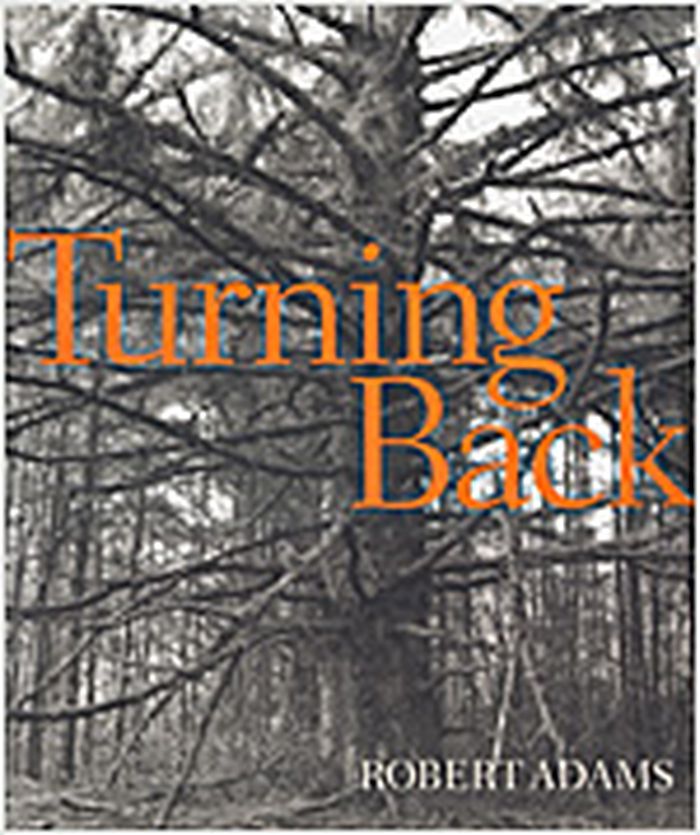
"Turning back: a photographic journal of re-exploration" is published to coincide with the bicentennial of the Lewis and Clark expedition. The narrative begins at the Pacific ocean and moves eastward through what was formerly one of the world’s great rain forests. Photographs at the center of the book report on the forest’s destruction. Elsewhere they trace a search for hope. Two hundred years ago, Lewis and Clark reported finding in the American Northwest a vast forest of ancient evergreens. In "Turning back", Robert Adams looks again at the region’s trees, discovering evidence both of America’s failure and of a continuing promise. President Jefferson’s primary charge to Lewis and Clark was to prepare the way for American commerce. Today, historians still speculate about why, upon his return, Lewis lapsed into depression and apparently committed suicide. "Going east," Adams suggests, "was more difficult than going west." So then, what is the future? "Turning back" documents two kinds of predictive evidence. On the one hand we observe the results of greed so unrestrained that they are indistinguishable from those of nihilism. On the other we see what still lives, whether by our design or neglect, or Providence; in these 164 pictures the tone is celebratory, as in a prayer book. From coastal landscapes populated with tourists to timber clear-cutting and small family farms in eastern Oregon, here we reflect on what was lost, what is retained, and what we value both regionally and as a people with a common history.
Robert Adams : turning back
Actions:
Price:
$56.95
(available to order)
Summary:
"Turning back: a photographic journal of re-exploration" is published to coincide with the bicentennial of the Lewis and Clark expedition. The narrative begins at the Pacific ocean and moves eastward through what was formerly one of the world’s great rain forests. Photographs at the center of the book report on the forest’s destruction. Elsewhere they trace a search for hope. Two hundred years ago, Lewis and Clark reported finding in the American Northwest a vast forest of ancient evergreens. In "Turning back", Robert Adams looks again at the region’s trees, discovering evidence both of America’s failure and of a continuing promise. President Jefferson’s primary charge to Lewis and Clark was to prepare the way for American commerce. Today, historians still speculate about why, upon his return, Lewis lapsed into depression and apparently committed suicide. "Going east," Adams suggests, "was more difficult than going west." So then, what is the future? "Turning back" documents two kinds of predictive evidence. On the one hand we observe the results of greed so unrestrained that they are indistinguishable from those of nihilism. On the other we see what still lives, whether by our design or neglect, or Providence; in these 164 pictures the tone is celebratory, as in a prayer book. From coastal landscapes populated with tourists to timber clear-cutting and small family farms in eastern Oregon, here we reflect on what was lost, what is retained, and what we value both regionally and as a people with a common history.
Form:
books
books
Publication:
May 2005, New York
May 2005, New York
Subject:
Photography monographs
Photography monographs
Form:
books
books
Title:
John Divola : three acts
John Divola : three acts
Actions:
Price:
$60.00
(available to order)
Summary:
In 1973, artist John Divola began the first of three highly ambitious and original bodies of work that together form this publication. The Vandalism series comprises black-and-white photographs of interiors of abandoned houses. Entering illegally, Divola spray painted expressive markings in the forms of dots, lines, and grids, creating a series of conceptual gestures that(...)
$60.00
(available to order)
Summary:
In 1973, artist John Divola began the first of three highly ambitious and original bodies of work that together form this publication. The Vandalism series comprises black-and-white photographs of interiors of abandoned houses. Entering illegally, Divola spray painted expressive markings in the forms of dots, lines, and grids, creating a series of conceptual gestures that(...)
Title:
John Divola : three acts
Actions:
Price:
$60.00
(available to order)
Summary:
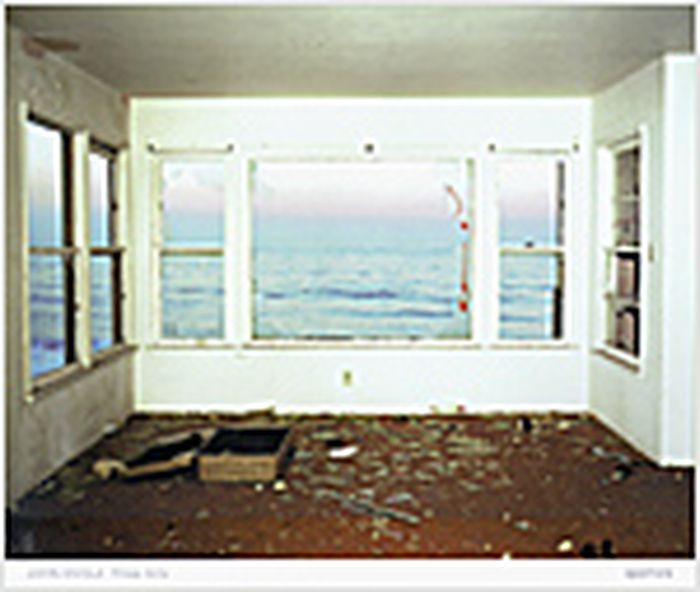
In 1973, artist John Divola began the first of three highly ambitious and original bodies of work that together form this publication. The Vandalism series comprises black-and-white photographs of interiors of abandoned houses. Entering illegally, Divola spray painted expressive markings in the forms of dots, lines, and grids, creating a series of conceptual gestures that referenced “action painting” as readily as the graffiti that was fast becoming a cultural phenomenon. The following year, Divola began the Los Angeles International Airport Noise Abatement series, photographing a condemned neighborhood bought out by the airport to serve as a noise buffer for new runways.An extensive catalog of break-ins, the photographs record the evidence of violent entries: shattered windows, doors torn from hinges, a crowbar resting in the jamb of a door pried open. The final installment in this book, the Zuma series, is the artist’s documentation of the destruction of an abandoned beachfront property. While employing similar strategies of painting and intervention, the Zuma images add variation and complexity to Divola’s established themes as they incorporate color, elements of nature, and meditation on change. These cyclical images skillfully juxtapose romantic skies and sunsets with a seaside structure that, frame by frame, deteriorates into ruin as it is vandalized by the artist and others who eventually set it on fire. Divola’s art practice shares a tradition with conceptual artists such as Bruce Nauman, whose photographs are considered to be performance or sculpture, and Robert Smithson, who used photography to investigate the built environment.
John Divola : three acts
Actions:
Price:
$60.00
(available to order)
Summary:
In 1973, artist John Divola began the first of three highly ambitious and original bodies of work that together form this publication. The Vandalism series comprises black-and-white photographs of interiors of abandoned houses. Entering illegally, Divola spray painted expressive markings in the forms of dots, lines, and grids, creating a series of conceptual gestures that referenced “action painting” as readily as the graffiti that was fast becoming a cultural phenomenon. The following year, Divola began the Los Angeles International Airport Noise Abatement series, photographing a condemned neighborhood bought out by the airport to serve as a noise buffer for new runways.An extensive catalog of break-ins, the photographs record the evidence of violent entries: shattered windows, doors torn from hinges, a crowbar resting in the jamb of a door pried open. The final installment in this book, the Zuma series, is the artist’s documentation of the destruction of an abandoned beachfront property. While employing similar strategies of painting and intervention, the Zuma images add variation and complexity to Divola’s established themes as they incorporate color, elements of nature, and meditation on change. These cyclical images skillfully juxtapose romantic skies and sunsets with a seaside structure that, frame by frame, deteriorates into ruin as it is vandalized by the artist and others who eventually set it on fire. Divola’s art practice shares a tradition with conceptual artists such as Bruce Nauman, whose photographs are considered to be performance or sculpture, and Robert Smithson, who used photography to investigate the built environment.
Form:
books
books
Publication:
May 2006, New York
May 2006, New York
Subject:
Photography monographs
Photography monographs
Form:
books
books
Title:
e-flux Index #9
e-flux Index #9
Actions:
Price:
$45.00
(available in store)
Summary:
This ninth issue of e-flux Index interweaves a selection of pieces published by e-flux throughout the Summer of 2025, and is divided into two parts. In six chapters that index the state of ''Art and Theory Today'', the first part revisits the primal scene of the Theory Wars—the tenor of which has changed, from an urgent ideological contest between humanist objectivity and(...)
$45.00
(available in store)
Summary:
This ninth issue of e-flux Index interweaves a selection of pieces published by e-flux throughout the Summer of 2025, and is divided into two parts. In six chapters that index the state of ''Art and Theory Today'', the first part revisits the primal scene of the Theory Wars—the tenor of which has changed, from an urgent ideological contest between humanist objectivity and(...)
Title:
e-flux Index #9
Actions:
Price:
$45.00
(available in store)
Summary:
This ninth issue of e-flux Index interweaves a selection of pieces published by e-flux throughout the Summer of 2025, and is divided into two parts. In six chapters that index the state of ''Art and Theory Today'', the first part revisits the primal scene of the Theory Wars—the tenor of which has changed, from an urgent ideological contest between humanist objectivity and postmodern relativism, to a more even-handed, pragmatic, and pluralist one, in the decades since. It brings together material that the various independent publishing arms of e-flux published around the theme of the often-fraught relations between theory and (artistic, architectural, pedagogic, political) practice. The second part of Index #9, ''This world, this mutilated space'', moves onto the terrain of the Forever War, examining the resilience shown by artistic communities living on its multiplying frontlines, the deepening climate war against the nonhuman world, and those displaced by these processes of destruction. As international relations "realists" like John Mearsheimer have regularly observed on the 24/7 war-pundit circuit since the illegal strike on Ayatollah Khamenei two months ago, the Iran War is a conflict which also displays no "logical sequence of thought"—which has no theory. This is a war whose aggressors (Netanyahu–Ben-Gvir and Trump–Hegseth–Rubio) seem less in hock to Carl von Clausewitz than to the instant dopaminergic kill-feed of a fifteen-year-old hooked on ''Call of Duty'' missions—with strategy configured as content, war as engagement metric.
e-flux Index #9
Actions:
Price:
$45.00
(available in store)
Summary:
This ninth issue of e-flux Index interweaves a selection of pieces published by e-flux throughout the Summer of 2025, and is divided into two parts. In six chapters that index the state of ''Art and Theory Today'', the first part revisits the primal scene of the Theory Wars—the tenor of which has changed, from an urgent ideological contest between humanist objectivity and postmodern relativism, to a more even-handed, pragmatic, and pluralist one, in the decades since. It brings together material that the various independent publishing arms of e-flux published around the theme of the often-fraught relations between theory and (artistic, architectural, pedagogic, political) practice. The second part of Index #9, ''This world, this mutilated space'', moves onto the terrain of the Forever War, examining the resilience shown by artistic communities living on its multiplying frontlines, the deepening climate war against the nonhuman world, and those displaced by these processes of destruction. As international relations "realists" like John Mearsheimer have regularly observed on the 24/7 war-pundit circuit since the illegal strike on Ayatollah Khamenei two months ago, the Iran War is a conflict which also displays no "logical sequence of thought"—which has no theory. This is a war whose aggressors (Netanyahu–Ben-Gvir and Trump–Hegseth–Rubio) seem less in hock to Carl von Clausewitz than to the instant dopaminergic kill-feed of a fifteen-year-old hooked on ''Call of Duty'' missions—with strategy configured as content, war as engagement metric.
Form:
books
books
Publication:
August 2026
August 2026
Subject:
Magazines
Magazines
Form:
books
books
Actions:
Price:
$39.95
(available to order)
Summary:
Paul Shepheard's previous book, What is Architecture?, was about making real, material things in the world -- landscapes, buildings, and machines. The Cultivated Wilderness is about those landscapes, and about the strategies that govern what we've done in shaping them.In the author's words, this book is about "seeing things that are too big to see." His emphasis on(...)
$39.95
(available to order)
Summary:
Paul Shepheard's previous book, What is Architecture?, was about making real, material things in the world -- landscapes, buildings, and machines. The Cultivated Wilderness is about those landscapes, and about the strategies that govern what we've done in shaping them.In the author's words, this book is about "seeing things that are too big to see." His emphasis on(...)
Title:
The cultivated wilderness or, what is landscape?
Actions:
Price:
$39.95
(available to order)
Summary:
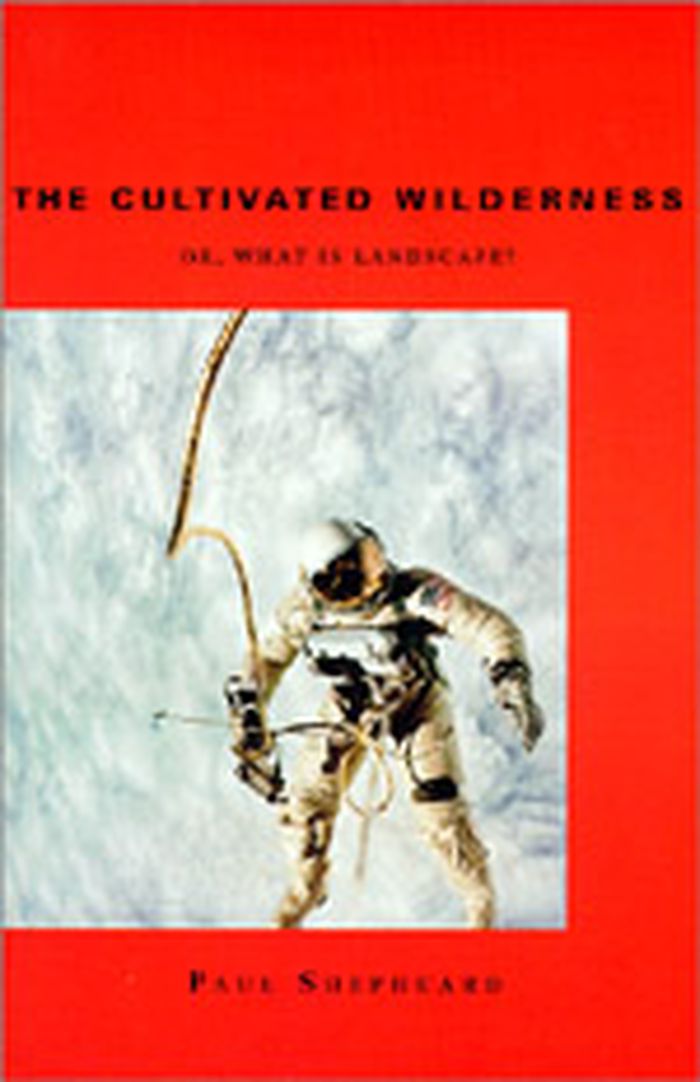
Paul Shepheard's previous book, What is Architecture?, was about making real, material things in the world -- landscapes, buildings, and machines. The Cultivated Wilderness is about those landscapes, and about the strategies that govern what we've done in shaping them.In the author's words, this book is about "seeing things that are too big to see." His emphasis on strategy makes landscape fundamental -- he says that every architectural move is set in a landscape. Norman England, for example, was constructed as a network of strong points, in a strategy of occupation. The eighteenth-century grid cities of the New World reflect a strategy of reason. Our current strategy is the economic exploitation of the Earth, an intricately woven blanket of commerce that covers up a multitude of other possibilities, many other ways to treat the surface of the globe -- some of which are the landscapes revealed in this book.In a series of first-person narratives, reminiscent of his last book, the author pairs six landscapes, in order of descending scale from global to local, from the seven wonders of the ancient world to the condensed destruction of World War I's Western Front. In an engaging style, Shepheard takes the reader on an odyssey through these landscapes, meeting people and seeing places. He states that now, at the end of a century in which the appropriate landscape was sought but never found, the strategy of turning the land to profit is under review -- and offers this book as his contribution to that review.
The cultivated wilderness or, what is landscape?
Actions:
Price:
$39.95
(available to order)
Summary:
Paul Shepheard's previous book, What is Architecture?, was about making real, material things in the world -- landscapes, buildings, and machines. The Cultivated Wilderness is about those landscapes, and about the strategies that govern what we've done in shaping them.In the author's words, this book is about "seeing things that are too big to see." His emphasis on strategy makes landscape fundamental -- he says that every architectural move is set in a landscape. Norman England, for example, was constructed as a network of strong points, in a strategy of occupation. The eighteenth-century grid cities of the New World reflect a strategy of reason. Our current strategy is the economic exploitation of the Earth, an intricately woven blanket of commerce that covers up a multitude of other possibilities, many other ways to treat the surface of the globe -- some of which are the landscapes revealed in this book.In a series of first-person narratives, reminiscent of his last book, the author pairs six landscapes, in order of descending scale from global to local, from the seven wonders of the ancient world to the condensed destruction of World War I's Western Front. In an engaging style, Shepheard takes the reader on an odyssey through these landscapes, meeting people and seeing places. He states that now, at the end of a century in which the appropriate landscape was sought but never found, the strategy of turning the land to profit is under review -- and offers this book as his contribution to that review.
Form:
books
books
Publication:
March 1997, Cambridge, Mass.
March 1997, Cambridge, Mass.
Subject:
Landscape Theory
Landscape Theory
Form:
books
books
Price:
$57.95
(available to order)
Summary:
Maine-Montparnasse et la Défense sont des opération emblématiques représentatives de la nouvelle définition du rapport entre ville et architecture qui se met en place après la guerre. La concentration démographique, la décentralisation des industries et l'avènement du secteur tertiaire obligent à remodeler des structures urbaines inadaptées à la circulation, aux modes de(...)
$57.95
(available to order)
Summary:
Maine-Montparnasse et la Défense sont des opération emblématiques représentatives de la nouvelle définition du rapport entre ville et architecture qui se met en place après la guerre. La concentration démographique, la décentralisation des industries et l'avènement du secteur tertiaire obligent à remodeler des structures urbaines inadaptées à la circulation, aux modes de(...)
Title:
Paris - ville moderne : Maine-Montparnasse et la Défense 1950-1975
Actions:
Price:
$57.95
(available to order)
Summary:
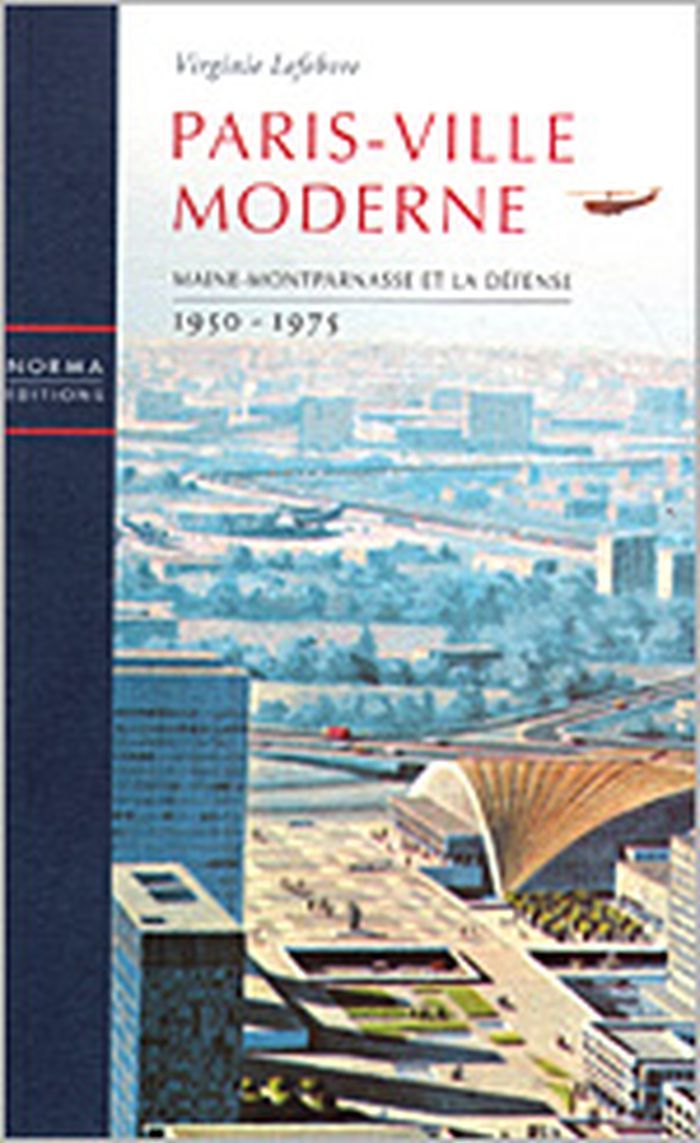
Maine-Montparnasse et la Défense sont des opération emblématiques représentatives de la nouvelle définition du rapport entre ville et architecture qui se met en place après la guerre. La concentration démographique, la décentralisation des industries et l'avènement du secteur tertiaire obligent à remodeler des structures urbaines inadaptées à la circulation, aux modes de déplacement et à la vitesse, préoccupations majeures des années 50. Cette nécessité de modernisation va de pair avec une montée de l'interventionnisme étatique qui a débuté sous le gouvernement de Vichy, en réaction à l'urbanisme incontrôlé de la périphérie parisienne. À partir de 1959, des plans directeurs successifs établissent les inventaires des opérations à entreprendre : destruction d'îlots insalubres, percement d'axes de circulation, remembrements. Cette politique, qui fait table rase du passé, trouve ses fondements aussi bien dans les thèses rationnalistes développées par Le Corbusier dans la Charte d'Athènes et dans les conclusions du rapport Buchanan pour Londres, que dans les projets utopiques d'Hugh Ferriss ou de Norman Bel Geddes. La dalle, sol artificiel maîtrisé par la technique, apparaît comme le socle idéal de la ville du futur. Des premiers dessins très schématiques, montrant les systèmes de circulation, sur lesquels les immeubles apparaissent de manière abstraite, aux réalisations du milieu des années 70, on voit à travers les phases successives de ces projets le concept d'une ville sur dalle naître, évoluer, puis disparaître, marquant la fin d'une époque optimiste où l'on croyait possible de modifier les conditions de la vie urbaine. Virginie Lefebvre, architecte, docteur en histoire de l'art est lecturer à la Graduate School of Design de l'Université de Harvard et membre du groupe de recherche sur l'architecture et les infrastructures (GRAI).
Paris - ville moderne : Maine-Montparnasse et la Défense 1950-1975
Actions:
Price:
$57.95
(available to order)
Summary:
Maine-Montparnasse et la Défense sont des opération emblématiques représentatives de la nouvelle définition du rapport entre ville et architecture qui se met en place après la guerre. La concentration démographique, la décentralisation des industries et l'avènement du secteur tertiaire obligent à remodeler des structures urbaines inadaptées à la circulation, aux modes de déplacement et à la vitesse, préoccupations majeures des années 50. Cette nécessité de modernisation va de pair avec une montée de l'interventionnisme étatique qui a débuté sous le gouvernement de Vichy, en réaction à l'urbanisme incontrôlé de la périphérie parisienne. À partir de 1959, des plans directeurs successifs établissent les inventaires des opérations à entreprendre : destruction d'îlots insalubres, percement d'axes de circulation, remembrements. Cette politique, qui fait table rase du passé, trouve ses fondements aussi bien dans les thèses rationnalistes développées par Le Corbusier dans la Charte d'Athènes et dans les conclusions du rapport Buchanan pour Londres, que dans les projets utopiques d'Hugh Ferriss ou de Norman Bel Geddes. La dalle, sol artificiel maîtrisé par la technique, apparaît comme le socle idéal de la ville du futur. Des premiers dessins très schématiques, montrant les systèmes de circulation, sur lesquels les immeubles apparaissent de manière abstraite, aux réalisations du milieu des années 70, on voit à travers les phases successives de ces projets le concept d'une ville sur dalle naître, évoluer, puis disparaître, marquant la fin d'une époque optimiste où l'on croyait possible de modifier les conditions de la vie urbaine. Virginie Lefebvre, architecte, docteur en histoire de l'art est lecturer à la Graduate School of Design de l'Université de Harvard et membre du groupe de recherche sur l'architecture et les infrastructures (GRAI).
Form:
books
books
Publication:
October 2003, Paris
October 2003, Paris
Subject:
Urban Theory
Urban Theory
Form:
journals and magazines
journals and magazines
Title:
Future anterior
Future anterior
Actions:
Price:
$14.95
(available to order)
Summary:
Historic preservation is at an important moment of rethinking. The field has grown exponentially in America since its first academic program was founded at Columbia University in 1965. Although initially concerned only with buildings, preservation has recently expanded to include the protection and creative interpretation of entire urban environments, landscapes,(...)
$14.95
(available to order)
Summary:
Historic preservation is at an important moment of rethinking. The field has grown exponentially in America since its first academic program was founded at Columbia University in 1965. Although initially concerned only with buildings, preservation has recently expanded to include the protection and creative interpretation of entire urban environments, landscapes,(...)
Title:
Future anterior
Actions:
Price:
$14.95
(available to order)
Summary:
Historic preservation is at an important moment of rethinking. The field has grown exponentially in America since its first academic program was founded at Columbia University in 1965. Although initially concerned only with buildings, preservation has recently expanded to include the protection and creative interpretation of entire urban environments, landscapes, highways, cultural traditions, artistic practices, and even specific “experiences” such as historic view sheds. Most importantly, historic preservation is beginning a significant re-clarification of its purposes, sharpening and deepening its focus on the contributions old architecture and artifacts make to our understanding of the human condition and how we should address and live in it. Future Anterior is the first and only journal in American academia to be devoted to the study and advancement of preservation, which brings together the interests of scholars and professionals in multiple disciplines such as architecture, art, history, philosophy, law, planning, materials science, cultural anthropology, conservation, and others. Future Anterior establishes an important and much needed forum for the critical examination of this expanding discipline, to spur challenges of its motives, goals, forms of practice and results. The appearance of Future Anterior signals the maturation of the field of preservation and a shift away from nostalgic antiquarianism towards an active involvement in the understanding and creative transformation of human environments. This turn in preservation is reflected in an increased interest in historic architecture and artifacts as expressive resources of great public importance. The destruction of patrimony, from the colossal Buddhas in Afghanistan to New York’s World Trade Center, is seen not just as barbarism but as sources of understanding about where we are going wrong and what we need to do next. In response, architects, planners, urban designers, and artists have been producing works which engage the public in new ways of reflecting and taking on the past not as constraint but as provocation.
Future anterior
Actions:
Price:
$14.95
(available to order)
Summary:
Historic preservation is at an important moment of rethinking. The field has grown exponentially in America since its first academic program was founded at Columbia University in 1965. Although initially concerned only with buildings, preservation has recently expanded to include the protection and creative interpretation of entire urban environments, landscapes, highways, cultural traditions, artistic practices, and even specific “experiences” such as historic view sheds. Most importantly, historic preservation is beginning a significant re-clarification of its purposes, sharpening and deepening its focus on the contributions old architecture and artifacts make to our understanding of the human condition and how we should address and live in it. Future Anterior is the first and only journal in American academia to be devoted to the study and advancement of preservation, which brings together the interests of scholars and professionals in multiple disciplines such as architecture, art, history, philosophy, law, planning, materials science, cultural anthropology, conservation, and others. Future Anterior establishes an important and much needed forum for the critical examination of this expanding discipline, to spur challenges of its motives, goals, forms of practice and results. The appearance of Future Anterior signals the maturation of the field of preservation and a shift away from nostalgic antiquarianism towards an active involvement in the understanding and creative transformation of human environments. This turn in preservation is reflected in an increased interest in historic architecture and artifacts as expressive resources of great public importance. The destruction of patrimony, from the colossal Buddhas in Afghanistan to New York’s World Trade Center, is seen not just as barbarism but as sources of understanding about where we are going wrong and what we need to do next. In response, architects, planners, urban designers, and artists have been producing works which engage the public in new ways of reflecting and taking on the past not as constraint but as provocation.
Form:
journals and magazines
journals and magazines
Publication:
October 2004, New York
October 2004, New York
Subject:
Magazines
Magazines
Form:
books
books
Actions:
Price:
$23.00
(available in store)
Summary:
As gentrification threatens to uproot neighbourhoods across the world, the flame of co-operative housing has been reignited while the concept of community landownership has the potential to turn the tide and put the destiny of our cities into the hands of residents.Villages in Cities takes us across North America to Montreal, Boston, Vermont, and Mississippi,(...)
$23.00
(available in store)
Summary:
As gentrification threatens to uproot neighbourhoods across the world, the flame of co-operative housing has been reignited while the concept of community landownership has the potential to turn the tide and put the destiny of our cities into the hands of residents.Villages in Cities takes us across North America to Montreal, Boston, Vermont, and Mississippi,(...)
Publication:
January 2019
January 2019
Title:
Villages in cities: community land ownership, cooperative housing, and the Milton Parc story
Actions:
Price:
$23.00
(available in store)
Summary:
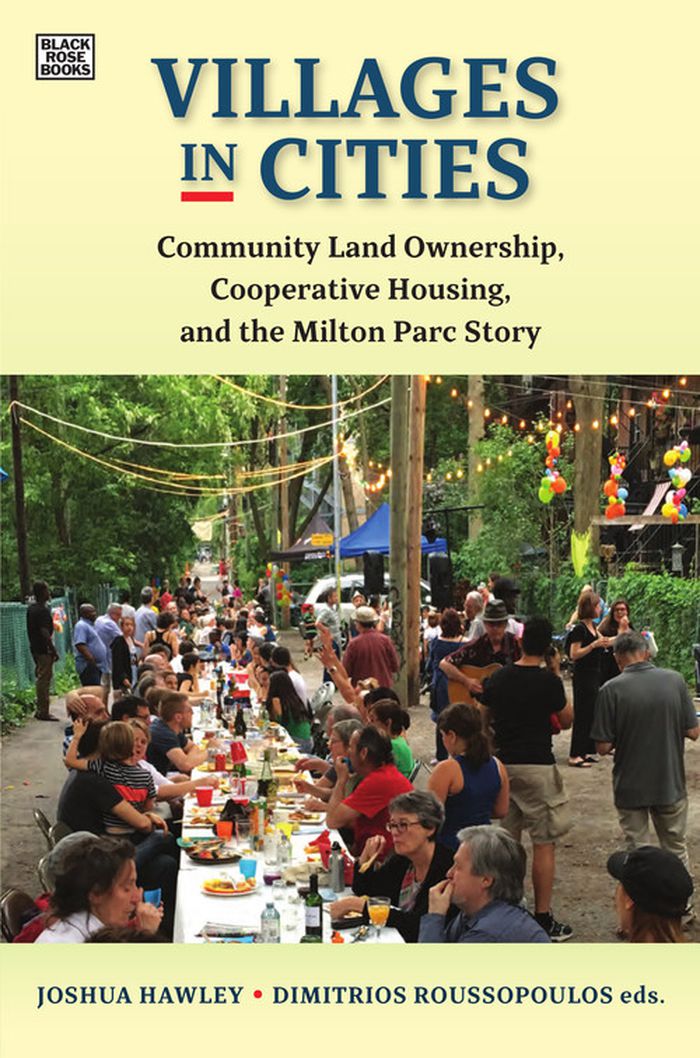
As gentrification threatens to uproot neighbourhoods across the world, the flame of co-operative housing has been reignited while the concept of community landownership has the potential to turn the tide and put the destiny of our cities into the hands of residents.Villages in Cities takes us across North America to Montreal, Boston, Vermont, and Mississippi, presentingconcrete examples of citizens taking back the land and claiming their right to secure housing. It also acts as a guidebook to contemporary urban struggles through fertile archival material from the Milton Parc struggle, which is as relevant today as it was 50 years ago.Villages in Cities presents a succinct portrait of the problems facing the ownership of urban land, the challenge of contesting the State’s presupposed legitimacy in determining our urban future, and the contradictions these elements imply. n Montreal in 1968, speculators announced their ‘urban renewal’ plan to demolish six blocks of the downtown heritage neighborhood of Milton Parc in order to build enormous high-rise condos, hotels, office buildings, and shopping malls. The local community viewed this as a declaration of war. What followed was a remarkable struggle that not only saved the heritage architecture from destruction but also protected local residents from gentrification through the creation of the largest nonprofit cooperative housing project on an urban community land trust in North America. And Milton Parc is not unique. Villages in Cities takes us across North America—to New York, Boston, Burlington, Oakland, Jackson, Montreal, Toronto, Ottawa, and Vancouver—to show concrete examples of citizens taking back the land and claiming their right to secure housing. The book draws connections among these projects, examines their underlying causes, and connects them with a holistic “Right to the City” movement that is emerging internationally.
Villages in cities: community land ownership, cooperative housing, and the Milton Parc story
Actions:
Price:
$23.00
(available in store)
Summary:
As gentrification threatens to uproot neighbourhoods across the world, the flame of co-operative housing has been reignited while the concept of community landownership has the potential to turn the tide and put the destiny of our cities into the hands of residents.Villages in Cities takes us across North America to Montreal, Boston, Vermont, and Mississippi, presentingconcrete examples of citizens taking back the land and claiming their right to secure housing. It also acts as a guidebook to contemporary urban struggles through fertile archival material from the Milton Parc struggle, which is as relevant today as it was 50 years ago.Villages in Cities presents a succinct portrait of the problems facing the ownership of urban land, the challenge of contesting the State’s presupposed legitimacy in determining our urban future, and the contradictions these elements imply. n Montreal in 1968, speculators announced their ‘urban renewal’ plan to demolish six blocks of the downtown heritage neighborhood of Milton Parc in order to build enormous high-rise condos, hotels, office buildings, and shopping malls. The local community viewed this as a declaration of war. What followed was a remarkable struggle that not only saved the heritage architecture from destruction but also protected local residents from gentrification through the creation of the largest nonprofit cooperative housing project on an urban community land trust in North America. And Milton Parc is not unique. Villages in Cities takes us across North America—to New York, Boston, Burlington, Oakland, Jackson, Montreal, Toronto, Ottawa, and Vancouver—to show concrete examples of citizens taking back the land and claiming their right to secure housing. The book draws connections among these projects, examines their underlying causes, and connects them with a holistic “Right to the City” movement that is emerging internationally.
Form:
books
books
Publication:
January 2019
January 2019
Form:
books
books
Actions:
Price:
$89.95
(available to order)
Summary:
La région de l'Île-de-France, avec sa ville phare, Paris, est une des plus riches et des plus active d'Europe. Mais que signifie cette richesse? Faut-il la mesurer exclusivement en revenu moyen par habitant? D'autres données statistiques font apparaître une réalité plus ambiguë. Les activités économiques d'une région métropolitaine produisent des inégalités sociales et(...)
$89.95
(available to order)
Summary:
La région de l'Île-de-France, avec sa ville phare, Paris, est une des plus riches et des plus active d'Europe. Mais que signifie cette richesse? Faut-il la mesurer exclusivement en revenu moyen par habitant? D'autres données statistiques font apparaître une réalité plus ambiguë. Les activités économiques d'une région métropolitaine produisent des inégalités sociales et(...)
Title:
Paysages territoires : l'Île-de-France comme métaphore
Actions:
Price:
$89.95
(available to order)
Summary:
La région de l'Île-de-France, avec sa ville phare, Paris, est une des plus riches et des plus active d'Europe. Mais que signifie cette richesse? Faut-il la mesurer exclusivement en revenu moyen par habitant? D'autres données statistiques font apparaître une réalité plus ambiguë. Les activités économiques d'une région métropolitaine produisent des inégalités sociales et culturelles, mais aussi une destruction du patrimoine paysager à leur mesure. C'est pourquoi l'action de classement et de protection menée par la Direction régionale de l'environnement (Diren) est dans cette région particulièrement nécessaire et significative. Ce livre en rend compte. Parmi les cinq cent sites "classés et protégés" que gère aujourd'hui la Diren, douz ont été retenus, dont la superficie et la définition patrimoniale varient très largement, depuis un jardin du XVIIIè siècle jusqu'à une vallée agricole, depuis une carrière de craie jusqu'à l'emprise d'un domaine de chase royale, en passant par la réserve naturelle d'une zone inondable, le cours enfoui d'une rivière ou les parages d'une institution psychiatrique. Douze monographies, construites chaque fois différemment, à partir d'une enquête photographique, traduisent cette diversité de territoires habités, parlés, racontés et imaginés. Dans chaque cas, le parcours du photographe, orienté par un savoir géographique, constitue la trame d'un récit descriptif, nourri de témoignages contemporains et de documents historiques ou poétiques. L'information et sa mise en forme passent ici par l'image et sa mise en page mais aussi par l'écoute et le montage. La complexité et l'ambiguité des situations décrites sont prises en compte, comme l'épaisseur ou l'opacité propres à la création artistique. "L'île-de-France comme métaphore" est un album photographique, documentaire et monumental. Et un essai à plusieurs voix de défense et illustration de l'environnement.
Paysages territoires : l'Île-de-France comme métaphore
Actions:
Price:
$89.95
(available to order)
Summary:
La région de l'Île-de-France, avec sa ville phare, Paris, est une des plus riches et des plus active d'Europe. Mais que signifie cette richesse? Faut-il la mesurer exclusivement en revenu moyen par habitant? D'autres données statistiques font apparaître une réalité plus ambiguë. Les activités économiques d'une région métropolitaine produisent des inégalités sociales et culturelles, mais aussi une destruction du patrimoine paysager à leur mesure. C'est pourquoi l'action de classement et de protection menée par la Direction régionale de l'environnement (Diren) est dans cette région particulièrement nécessaire et significative. Ce livre en rend compte. Parmi les cinq cent sites "classés et protégés" que gère aujourd'hui la Diren, douz ont été retenus, dont la superficie et la définition patrimoniale varient très largement, depuis un jardin du XVIIIè siècle jusqu'à une vallée agricole, depuis une carrière de craie jusqu'à l'emprise d'un domaine de chase royale, en passant par la réserve naturelle d'une zone inondable, le cours enfoui d'une rivière ou les parages d'une institution psychiatrique. Douze monographies, construites chaque fois différemment, à partir d'une enquête photographique, traduisent cette diversité de territoires habités, parlés, racontés et imaginés. Dans chaque cas, le parcours du photographe, orienté par un savoir géographique, constitue la trame d'un récit descriptif, nourri de témoignages contemporains et de documents historiques ou poétiques. L'information et sa mise en forme passent ici par l'image et sa mise en page mais aussi par l'écoute et le montage. La complexité et l'ambiguité des situations décrites sont prises en compte, comme l'épaisseur ou l'opacité propres à la création artistique. "L'île-de-France comme métaphore" est un album photographique, documentaire et monumental. Et un essai à plusieurs voix de défense et illustration de l'environnement.
Form:
books
books
Publication:
February 2003, Marseille
February 2003, Marseille
Subject:
Gardens
Gardens
Form:
books
books
Price:
$25.00
(available to order)
Summary:
The rat has been described as the shadow of the human. From ancient times it spread via the routes of commerce and conquest to eventually inhabit almost every part of the world. Its impact on history has been enormous in terms of the damage done through plague and disease, the destruction of agricultural produce, and the infestations of cities. At the same time the rat(...)
$25.00
(available to order)
Summary:
The rat has been described as the shadow of the human. From ancient times it spread via the routes of commerce and conquest to eventually inhabit almost every part of the world. Its impact on history has been enormous in terms of the damage done through plague and disease, the destruction of agricultural produce, and the infestations of cities. At the same time the rat(...)
Title:
Rat
Actions:
Price:
$25.00
(available to order)
Summary:
The rat has been described as the shadow of the human. From ancient times it spread via the routes of commerce and conquest to eventually inhabit almost every part of the world. Its impact on history has been enormous in terms of the damage done through plague and disease, the destruction of agricultural produce, and the infestations of cities. At the same time the rat has provided science with a huge resource for experimentation. This highly adaptable, fertile and intelligent creature is almost universally loathed, but there are cultures in which it is revered, even deified. This book traces the history of the human relationship with rats from the first archaeological finds to the genetically engineered rats of the present day, describing its role in the arts and sciences, religion and myth, psychoanalysis and medicine. The author includes wide-ranging examples of the rat’s appearance: in literature – 'The Pied Piper'; Beatrix Potter stories, 'The Wind in the Willows'; in culture – Victorian rat-and-dog baiting pits, its popularity as a pet, even the subject of a ’70s pop song; folklore – it was a good luck symbol in ancient Rome, symbol of cunning in Chinese mythology; and psychoanalysis – Freud’s Rat Man, for example. The book also seeks to answer two problems raised by the complexity of human attitudes to the rat. The first concerns how it was that the rat came to be seen not just as verminous, but also as being particularly despised for being so – more so, in fact, than other parasitic animals. The second concerns the manner in which human attitudes to the rat can be so contradictory, when admiration for its abilities are set against this idea of hatred. The rat can be found at the heart of human preoccupations with hygiene, sexuality and appetite, and exists as a perverse totem for the worst excesses of human behaviour. In 'Rat', Jonathan Burt provides a fascinating account of this animal in history, myth and culture.
Rat
Actions:
Price:
$25.00
(available to order)
Summary:
The rat has been described as the shadow of the human. From ancient times it spread via the routes of commerce and conquest to eventually inhabit almost every part of the world. Its impact on history has been enormous in terms of the damage done through plague and disease, the destruction of agricultural produce, and the infestations of cities. At the same time the rat has provided science with a huge resource for experimentation. This highly adaptable, fertile and intelligent creature is almost universally loathed, but there are cultures in which it is revered, even deified. This book traces the history of the human relationship with rats from the first archaeological finds to the genetically engineered rats of the present day, describing its role in the arts and sciences, religion and myth, psychoanalysis and medicine. The author includes wide-ranging examples of the rat’s appearance: in literature – 'The Pied Piper'; Beatrix Potter stories, 'The Wind in the Willows'; in culture – Victorian rat-and-dog baiting pits, its popularity as a pet, even the subject of a ’70s pop song; folklore – it was a good luck symbol in ancient Rome, symbol of cunning in Chinese mythology; and psychoanalysis – Freud’s Rat Man, for example. The book also seeks to answer two problems raised by the complexity of human attitudes to the rat. The first concerns how it was that the rat came to be seen not just as verminous, but also as being particularly despised for being so – more so, in fact, than other parasitic animals. The second concerns the manner in which human attitudes to the rat can be so contradictory, when admiration for its abilities are set against this idea of hatred. The rat can be found at the heart of human preoccupations with hygiene, sexuality and appetite, and exists as a perverse totem for the worst excesses of human behaviour. In 'Rat', Jonathan Burt provides a fascinating account of this animal in history, myth and culture.
Form:
books
books
Publication:
August 2005, London
August 2005, London
Subject:
Fauna and flora
Fauna and flora
Form:
books
books
Actions:
Price:
$36.00
(available in store)
Summary:
Synanthropes have always been an immutable part of the tapestry of our lives. They are the reason we hear birdsong in the morning and skittering throughout the day, and why we take such pains to fix lids to our garbage cans. But they are so much more than that, too: epidemic vectors, churners of soil, ecosystem evolvers, spiritual lodestars, and, sometimes, sharp-toothed(...)
$36.00
(available in store)
Summary:
Synanthropes have always been an immutable part of the tapestry of our lives. They are the reason we hear birdsong in the morning and skittering throughout the day, and why we take such pains to fix lids to our garbage cans. But they are so much more than that, too: epidemic vectors, churners of soil, ecosystem evolvers, spiritual lodestars, and, sometimes, sharp-toothed(...)
Title:
Our wild familiars: How animals are adapting to cities and reshaping the natural world
Actions:
Price:
$36.00
(available in store)
Summary:
Synanthropes have always been an immutable part of the tapestry of our lives. They are the reason we hear birdsong in the morning and skittering throughout the day, and why we take such pains to fix lids to our garbage cans. But they are so much more than that, too: epidemic vectors, churners of soil, ecosystem evolvers, spiritual lodestars, and, sometimes, sharp-toothed marauders making their way through our most intimate spaces with cruel intent. But beyond their quotidian impact on our lives, synanthropes have a critical part to play in how our communities are shaped and how sustainably they function. These creatures are ambassadors from nature, arbiters of our planet’s future, and a key influence on our species’ ongoing evolution; and recently, something essential has shifted with them. We are in a fraught era of environmental disruption, habitat destruction, and human population expansion that is ravaging formerly wild and untouched habitats. That’s caused us to become ever more inundated with synanthropes, which are bringing delight, chaos and danger to our doorstep. These species, so long dismissed, are forcing us to reckon with them—from the hundreds of thousands of raccoons in urban spaces that spread our refuse no matter how many “raccoon-proof” bags and bins we invent, to the invasive kudzu plants that grow a foot a day, enveloping houses, telephone poles, trees, and any other structures into their green abyss. Now, as urban spaces increasingly become wild spaces, we have a choice: continue to resist them by any means necessary, or take the opportunity to promote a more harmonious coexistence. Through vivid storytelling, ''Our Wild Familiars'' brings to spectacular life the world’s most successful synanthropes, from bats, raccoons, and crows, to some of its weirdest, including the Giant Pacific Octopus. Acting as a guide to the curious, Werb reveals how the cracks in our millennia-long efforts to shield ourselves against the outside world might just lead us to a new and necessary balance with nature—or to an ever more savage future.
Our wild familiars: How animals are adapting to cities and reshaping the natural world
Actions:
Price:
$36.00
(available in store)
Summary:
Synanthropes have always been an immutable part of the tapestry of our lives. They are the reason we hear birdsong in the morning and skittering throughout the day, and why we take such pains to fix lids to our garbage cans. But they are so much more than that, too: epidemic vectors, churners of soil, ecosystem evolvers, spiritual lodestars, and, sometimes, sharp-toothed marauders making their way through our most intimate spaces with cruel intent. But beyond their quotidian impact on our lives, synanthropes have a critical part to play in how our communities are shaped and how sustainably they function. These creatures are ambassadors from nature, arbiters of our planet’s future, and a key influence on our species’ ongoing evolution; and recently, something essential has shifted with them. We are in a fraught era of environmental disruption, habitat destruction, and human population expansion that is ravaging formerly wild and untouched habitats. That’s caused us to become ever more inundated with synanthropes, which are bringing delight, chaos and danger to our doorstep. These species, so long dismissed, are forcing us to reckon with them—from the hundreds of thousands of raccoons in urban spaces that spread our refuse no matter how many “raccoon-proof” bags and bins we invent, to the invasive kudzu plants that grow a foot a day, enveloping houses, telephone poles, trees, and any other structures into their green abyss. Now, as urban spaces increasingly become wild spaces, we have a choice: continue to resist them by any means necessary, or take the opportunity to promote a more harmonious coexistence. Through vivid storytelling, ''Our Wild Familiars'' brings to spectacular life the world’s most successful synanthropes, from bats, raccoons, and crows, to some of its weirdest, including the Giant Pacific Octopus. Acting as a guide to the curious, Werb reveals how the cracks in our millennia-long efforts to shield ourselves against the outside world might just lead us to a new and necessary balance with nature—or to an ever more savage future.
Form:
books
books
Publication:
July 2026
July 2026
Subject:
Fauna and flora
Fauna and flora


