


19531 Results
Form:
exhibitions
exhibitions
Description:
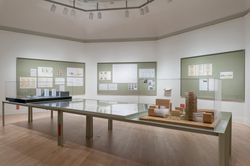
The exhibition Jai Tech: ÁbalosHerreros selected by Juan José Castellón examines the way the tower typology manifests distinct, strategic approaches in the architecture of ÁbalosHerreros, a firm that operated in Madrid from 1984 until 2008. Objects presented include site plans, photomontages, models, floor plans, and photographs. The exhibition also features a selection(...)
The exhibition Jai Tech: ÁbalosHerreros selected by Juan José Castellón examines the way the tower typology manifests distinct, strategic approaches in the architecture of ÁbalosHerreros, a firm that operated in Madrid from 1984 until 2008. Objects presented include site plans, photomontages, models, floor plans, and photographs. The exhibition also features a selection(...)
Location:
Octagonal gallery
Octagonal gallery
Date:
24 May 2015 to 12 July 2015
24 May 2015 to 12 July 2015
Title:
Jai Tech: Ábalos&Herreros selected by Juan José Castellón
Actions:
Description:
The exhibition Jai Tech: ÁbalosHerreros selected by Juan José Castellón examines the way the tower typology manifests distinct, strategic approaches in the architecture of ÁbalosHerreros, a firm that operated in Madrid from 1984 until 2008. Objects presented include site plans, photomontages, models, floor plans, and photographs. The exhibition also features a selection(...)
Jai Tech: Ábalos&Herreros selected by Juan José Castellón
Actions:
Description:
The exhibition Jai Tech: ÁbalosHerreros selected by Juan José Castellón examines the way the tower typology manifests distinct, strategic approaches in the architecture of ÁbalosHerreros, a firm that operated in Madrid from 1984 until 2008. Objects presented include site plans, photomontages, models, floor plans, and photographs. The exhibition also features a selection(...)
Form:
exhibitions
exhibitions
Date:
24 May 2015 to
12 July 2015
24 May 2015 to
12 July 2015
Location:
Octagonal gallery
Octagonal gallery
Form:
events
events

Form:
exhibitions
exhibitions
Description:
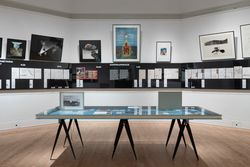
Alongside a growth in decentralized, experimental, and underground cinema at the end of the 1960s and in the early 1970s, many groups operating from inside the field of architecture such as Superstudio, Studio 9999, and Ant Farm explored the short film as a medium to expand architectural discourse, embed their projects with bold reflections and projections of society, and(...)
Alongside a growth in decentralized, experimental, and underground cinema at the end of the 1960s and in the early 1970s, many groups operating from inside the field of architecture such as Superstudio, Studio 9999, and Ant Farm explored the short film as a medium to expand architectural discourse, embed their projects with bold reflections and projections of society, and(...)
Location:
Octagonal gallery
Octagonal gallery
Date:
21 September 2018 to 19 May 2019
21 September 2018 to 19 May 2019
Title:
Scripts for a new world
Actions:
Description:
Alongside a growth in decentralized, experimental, and underground cinema at the end of the 1960s and in the early 1970s, many groups operating from inside the field of architecture such as Superstudio, Studio 9999, and Ant Farm explored the short film as a medium to expand architectural discourse, embed their projects with bold reflections and projections of society, and(...)
Scripts for a new world
Actions:
Description:
Alongside a growth in decentralized, experimental, and underground cinema at the end of the 1960s and in the early 1970s, many groups operating from inside the field of architecture such as Superstudio, Studio 9999, and Ant Farm explored the short film as a medium to expand architectural discourse, embed their projects with bold reflections and projections of society, and(...)
Form:
exhibitions
exhibitions
Date:
21 September 2018 to
19 May 2019
21 September 2018 to
19 May 2019
Location:
Octagonal gallery
Octagonal gallery
Form:
exhibitions
exhibitions
Title:
Toy Town
Toy Town
Actions:
Description:
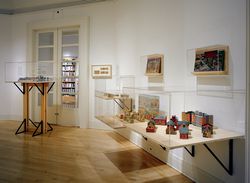
Toy Town explores how villages, towns, and cities have been represented in toys from Europe and North America. Drawn from CCA’s collection of architectural toys and games, the twenty-nine toys reflect shifting social values and different approaches to the design, organisation, and planning of communities in the nineteenth and twentieth centuries. Toy Town is the sixth in(...)
Toy Town explores how villages, towns, and cities have been represented in toys from Europe and North America. Drawn from CCA’s collection of architectural toys and games, the twenty-nine toys reflect shifting social values and different approaches to the design, organisation, and planning of communities in the nineteenth and twentieth centuries. Toy Town is the sixth in(...)
Location:
Octagonal gallery
Octagonal gallery
Date:
22 October 1997 to 31 May 1998
22 October 1997 to 31 May 1998
Title:
Toy Town
Actions:
Description:
Toy Town explores how villages, towns, and cities have been represented in toys from Europe and North America. Drawn from CCA’s collection of architectural toys and games, the twenty-nine toys reflect shifting social values and different approaches to the design, organisation, and planning of communities in the nineteenth and twentieth centuries. Toy Town is the sixth in(...)
Toy Town
Actions:
Description:
Toy Town explores how villages, towns, and cities have been represented in toys from Europe and North America. Drawn from CCA’s collection of architectural toys and games, the twenty-nine toys reflect shifting social values and different approaches to the design, organisation, and planning of communities in the nineteenth and twentieth centuries. Toy Town is the sixth in(...)
Form:
exhibitions
exhibitions
Date:
22 October 1997 to
31 May 1998
22 October 1997 to
31 May 1998
Location:
Octagonal gallery
Octagonal gallery
Form:
exhibitions
exhibitions
Actions:
Description:
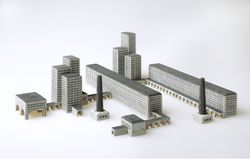
Technological advances as well as the general social, political, and economic climate have always been of great interest to architects. Toys and the Modernist Tradition examines at how toy manufacturers responded to the exciting and rapidly changing ideas of modern architects. Many of the exhibited toys were designed by leading architects of the modern movement, including(...)
Technological advances as well as the general social, political, and economic climate have always been of great interest to architects. Toys and the Modernist Tradition examines at how toy manufacturers responded to the exciting and rapidly changing ideas of modern architects. Many of the exhibited toys were designed by leading architects of the modern movement, including(...)
Title:
Toys and the Modernist Tradition
Actions:
Description:
Technological advances as well as the general social, political, and economic climate have always been of great interest to architects. Toys and the Modernist Tradition examines at how toy manufacturers responded to the exciting and rapidly changing ideas of modern architects. Many of the exhibited toys were designed by leading architects of the modern movement, including(...)
Toys and the Modernist Tradition
Actions:
Description:
Technological advances as well as the general social, political, and economic climate have always been of great interest to architects. Toys and the Modernist Tradition examines at how toy manufacturers responded to the exciting and rapidly changing ideas of modern architects. Many of the exhibited toys were designed by leading architects of the modern movement, including(...)
Form:
exhibitions
exhibitions
Date:
16 December 1993 to
1 May 1994
16 December 1993 to
1 May 1994
Level of archival description:
Project
Project
Reference number:
AP206.S1.1982.PR02
Description:
This project series documents an extension and additions to the Milkfed Punjab milk plant in Jalandhar, India from 1982-1985, governed by The National Dairy Development Board (NDDB). This project consisted of an extension to the main milk plant, as well as the building of a garage, stores, service block, duty rooms and an addition to the administrative block. An orchard and covered bike area were also proposed. The main plant extension, used for the processing of butter and ghee, was multi-leveled with a primary height of two-storeys but reaching up to four storeys. Different schemes were proposed for the administrative block addition, one which showed a square building and the other showing a round building. The duty rooms, dotted with irregularly placed and sized geometric windows, had a roof that curled up at one end, opening to expose windows. The project is recorded through original drawings dating from 1973, which include plans, elevations, sections, perspectives and details.
AP206.S1.1982.PR02
Description:
This project series documents an extension and additions to the Milkfed Punjab milk plant in Jalandhar, India from 1982-1985, governed by The National Dairy Development Board (NDDB). This project consisted of an extension to the main milk plant, as well as the building of a garage, stores, service block, duty rooms and an addition to the administrative block. An orchard and covered bike area were also proposed. The main plant extension, used for the processing of butter and ghee, was multi-leveled with a primary height of two-storeys but reaching up to four storeys. Different schemes were proposed for the administrative block addition, one which showed a square building and the other showing a round building. The duty rooms, dotted with irregularly placed and sized geometric windows, had a roof that curled up at one end, opening to expose windows. The project is recorded through original drawings dating from 1973, which include plans, elevations, sections, perspectives and details.
People:
Date:
1982-1985
1982-1985
Title:
NDDB Milkfed Punjab, Jalandhar, India (1982-1985)
Actions:
AP206.S1.1982.PR02
Description:
This project series documents an extension and additions to the Milkfed Punjab milk plant in Jalandhar, India from 1982-1985, governed by The National Dairy Development Board (NDDB). This project consisted of an extension to the main milk plant, as well as the building of a garage, stores, service block, duty rooms and an addition to the administrative block. An orchard and covered bike area were also proposed. The main plant extension, used for the processing of butter and ghee, was multi-leveled with a primary height of two-storeys but reaching up to four storeys. Different schemes were proposed for the administrative block addition, one which showed a square building and the other showing a round building. The duty rooms, dotted with irregularly placed and sized geometric windows, had a roof that curled up at one end, opening to expose windows. The project is recorded through original drawings dating from 1973, which include plans, elevations, sections, perspectives and details.
NDDB Milkfed Punjab, Jalandhar, India (1982-1985)
Actions:
AP206.S1.1982.PR02
Description:
This project series documents an extension and additions to the Milkfed Punjab milk plant in Jalandhar, India from 1982-1985, governed by The National Dairy Development Board (NDDB). This project consisted of an extension to the main milk plant, as well as the building of a garage, stores, service block, duty rooms and an addition to the administrative block. An orchard and covered bike area were also proposed. The main plant extension, used for the processing of butter and ghee, was multi-leveled with a primary height of two-storeys but reaching up to four storeys. Different schemes were proposed for the administrative block addition, one which showed a square building and the other showing a round building. The duty rooms, dotted with irregularly placed and sized geometric windows, had a roof that curled up at one end, opening to expose windows. The project is recorded through original drawings dating from 1973, which include plans, elevations, sections, perspectives and details.
Level of archival description:
Project
Project
Date:
1982-1985
1982-1985
People:
Level of archival description:
Series
Series
Actions:
Reference number:
AP115.S1
Description:
Cette série porte sur le travail de documentation photographique de Robert Duchesnay d'un des exemples construit du Dymaxion Dwelling Machine, à Wichita, Kansas, aux États-Unis. Le Dymaxion Dwelling Machine, concept conçu par Buckminster Fuller et considéré comme le précurseur du dôme géodésique, visait a créer un mode d'habitation donnant un maximun d'espace pour un minimum de coût et de matériaux. L'exemple du Wichita House est conçu par Fuller en 1945-1946. "L'apparence de cette machine à habiter ressemble quelque peu à une soucoupe volante. Avec sa peau externe en aluminium et ses fenêtres en plexiglass, elle offre un surface élégante et profilée, tout en renferman un espace au sol de 1100 pieds carrées." [1] Le Dymaxion Dwelling Machine est abandonné en 1970, pour être finalement acquise en 1990 par le Henry Ford Museum à Detroit, au Michigan. La structure est démantelé la même année avec l'aide d'un ancien collaborateur de Buckminster Fuller, Jay Baldwin. Le Dymaxion Dwelling Machine est toujours visible au Ford Museum. La série contient des photographies de la Wichita House avant et durant le démantèlement, brochures et feuillets du Wichita Art Museum présentant l'exposition de Robert Duchesnay sur le bâtiment, correspondance reçue par Duchesnay sur son projet de documentation des dômes géodésiques de Buckminster Fuller, et coupures de presse sur le Dymaxion Dwelling Machine et le démantèlement de la Wichita House. [1] Robert Duchesnay, "Dymaxion Dwelling Machine", 2022, https://robertduchesnay.com/fr/dymaxion-fr/ (page consultée 27 février 2023).
AP115.S1
Description:
Cette série porte sur le travail de documentation photographique de Robert Duchesnay d'un des exemples construit du Dymaxion Dwelling Machine, à Wichita, Kansas, aux États-Unis. Le Dymaxion Dwelling Machine, concept conçu par Buckminster Fuller et considéré comme le précurseur du dôme géodésique, visait a créer un mode d'habitation donnant un maximun d'espace pour un minimum de coût et de matériaux. L'exemple du Wichita House est conçu par Fuller en 1945-1946. "L'apparence de cette machine à habiter ressemble quelque peu à une soucoupe volante. Avec sa peau externe en aluminium et ses fenêtres en plexiglass, elle offre un surface élégante et profilée, tout en renferman un espace au sol de 1100 pieds carrées." [1] Le Dymaxion Dwelling Machine est abandonné en 1970, pour être finalement acquise en 1990 par le Henry Ford Museum à Detroit, au Michigan. La structure est démantelé la même année avec l'aide d'un ancien collaborateur de Buckminster Fuller, Jay Baldwin. Le Dymaxion Dwelling Machine est toujours visible au Ford Museum. La série contient des photographies de la Wichita House avant et durant le démantèlement, brochures et feuillets du Wichita Art Museum présentant l'exposition de Robert Duchesnay sur le bâtiment, correspondance reçue par Duchesnay sur son projet de documentation des dômes géodésiques de Buckminster Fuller, et coupures de presse sur le Dymaxion Dwelling Machine et le démantèlement de la Wichita House. [1] Robert Duchesnay, "Dymaxion Dwelling Machine", 2022, https://robertduchesnay.com/fr/dymaxion-fr/ (page consultée 27 février 2023).
People:
Date:
1990-1992
1990-1992
Title:
Dymaxion Dwelling Machine, Wichita, Kansas
Actions:
AP115.S1
Description:
Cette série porte sur le travail de documentation photographique de Robert Duchesnay d'un des exemples construit du Dymaxion Dwelling Machine, à Wichita, Kansas, aux États-Unis. Le Dymaxion Dwelling Machine, concept conçu par Buckminster Fuller et considéré comme le précurseur du dôme géodésique, visait a créer un mode d'habitation donnant un maximun d'espace pour un minimum de coût et de matériaux. L'exemple du Wichita House est conçu par Fuller en 1945-1946. "L'apparence de cette machine à habiter ressemble quelque peu à une soucoupe volante. Avec sa peau externe en aluminium et ses fenêtres en plexiglass, elle offre un surface élégante et profilée, tout en renferman un espace au sol de 1100 pieds carrées." [1] Le Dymaxion Dwelling Machine est abandonné en 1970, pour être finalement acquise en 1990 par le Henry Ford Museum à Detroit, au Michigan. La structure est démantelé la même année avec l'aide d'un ancien collaborateur de Buckminster Fuller, Jay Baldwin. Le Dymaxion Dwelling Machine est toujours visible au Ford Museum. La série contient des photographies de la Wichita House avant et durant le démantèlement, brochures et feuillets du Wichita Art Museum présentant l'exposition de Robert Duchesnay sur le bâtiment, correspondance reçue par Duchesnay sur son projet de documentation des dômes géodésiques de Buckminster Fuller, et coupures de presse sur le Dymaxion Dwelling Machine et le démantèlement de la Wichita House. [1] Robert Duchesnay, "Dymaxion Dwelling Machine", 2022, https://robertduchesnay.com/fr/dymaxion-fr/ (page consultée 27 février 2023).
Dymaxion Dwelling Machine, Wichita, Kansas
Actions:
AP115.S1
Description:
Cette série porte sur le travail de documentation photographique de Robert Duchesnay d'un des exemples construit du Dymaxion Dwelling Machine, à Wichita, Kansas, aux États-Unis. Le Dymaxion Dwelling Machine, concept conçu par Buckminster Fuller et considéré comme le précurseur du dôme géodésique, visait a créer un mode d'habitation donnant un maximun d'espace pour un minimum de coût et de matériaux. L'exemple du Wichita House est conçu par Fuller en 1945-1946. "L'apparence de cette machine à habiter ressemble quelque peu à une soucoupe volante. Avec sa peau externe en aluminium et ses fenêtres en plexiglass, elle offre un surface élégante et profilée, tout en renferman un espace au sol de 1100 pieds carrées." [1] Le Dymaxion Dwelling Machine est abandonné en 1970, pour être finalement acquise en 1990 par le Henry Ford Museum à Detroit, au Michigan. La structure est démantelé la même année avec l'aide d'un ancien collaborateur de Buckminster Fuller, Jay Baldwin. Le Dymaxion Dwelling Machine est toujours visible au Ford Museum. La série contient des photographies de la Wichita House avant et durant le démantèlement, brochures et feuillets du Wichita Art Museum présentant l'exposition de Robert Duchesnay sur le bâtiment, correspondance reçue par Duchesnay sur son projet de documentation des dômes géodésiques de Buckminster Fuller, et coupures de presse sur le Dymaxion Dwelling Machine et le démantèlement de la Wichita House. [1] Robert Duchesnay, "Dymaxion Dwelling Machine", 2022, https://robertduchesnay.com/fr/dymaxion-fr/ (page consultée 27 février 2023).
Level of archival description:
Série
Série
Date:
1990-1992
1990-1992
People:
Form:
events
events
Description:
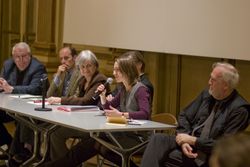
Front to Rear: Architecture and Planning during World War II, held at the Institute of Fine Arts, New York University, brings together research investigating a wide range of architectural activities, taking place in diverse geographical locations, and occurring between the bombings of Guernica in 1937 and Hiroshima in 1945. World War II was a key moment in the process of(...)
Front to Rear: Architecture and Planning during World War II, held at the Institute of Fine Arts, New York University, brings together research investigating a wide range of architectural activities, taking place in diverse geographical locations, and occurring between the bombings of Guernica in 1937 and Hiroshima in 1945. World War II was a key moment in the process of(...)
Location:
Institute of Fine Arts, New York University
Institute of Fine Arts, New York University
Date:
7 March 2009 to 8 March 2009
7 March 2009 to 8 March 2009
Title:
Front to Rear: Architecture and Planning during World War II
Actions:
Description:
Front to Rear: Architecture and Planning during World War II, held at the Institute of Fine Arts, New York University, brings together research investigating a wide range of architectural activities, taking place in diverse geographical locations, and occurring between the bombings of Guernica in 1937 and Hiroshima in 1945. World War II was a key moment in the process of(...)
Front to Rear: Architecture and Planning during World War II
Actions:
Description:
Front to Rear: Architecture and Planning during World War II, held at the Institute of Fine Arts, New York University, brings together research investigating a wide range of architectural activities, taking place in diverse geographical locations, and occurring between the bombings of Guernica in 1937 and Hiroshima in 1945. World War II was a key moment in the process of(...)
Form:
events
events
Date:
7 March 2009 to
8 March 2009
7 March 2009 to
8 March 2009
Location:
Institute of Fine Arts, New York University
Institute of Fine Arts, New York University
Form:
events
events
Actions:
Description:
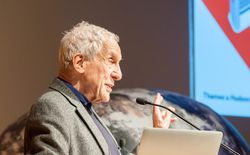
In this conversation, Kenneth Frampton (Columbia University) will discuss approaches to architectural history today with Esra Akcan (Cornell University) and Mark Jarzombek (Massachusetts Institute of Technology). What does it mean to write a global history of architecture now? What is the relationship between such a history and urgent contemporary concerns? During a(...)
In this conversation, Kenneth Frampton (Columbia University) will discuss approaches to architectural history today with Esra Akcan (Cornell University) and Mark Jarzombek (Massachusetts Institute of Technology). What does it mean to write a global history of architecture now? What is the relationship between such a history and urgent contemporary concerns? During a(...)
Date:
6 April 2017
6 April 2017
Title:
A Conversation with Kenneth Frampton: Can There Be a Global Architectural History Today?
Actions:
Description:
In this conversation, Kenneth Frampton (Columbia University) will discuss approaches to architectural history today with Esra Akcan (Cornell University) and Mark Jarzombek (Massachusetts Institute of Technology). What does it mean to write a global history of architecture now? What is the relationship between such a history and urgent contemporary concerns? During a(...)
A Conversation with Kenneth Frampton: Can There Be a Global Architectural History Today?
Actions:
Description:
In this conversation, Kenneth Frampton (Columbia University) will discuss approaches to architectural history today with Esra Akcan (Cornell University) and Mark Jarzombek (Massachusetts Institute of Technology). What does it mean to write a global history of architecture now? What is the relationship between such a history and urgent contemporary concerns? During a(...)
Form:
events
events
Date:
6 April 2017
6 April 2017
Form:
events
events
Title:
In Response
In Response
Actions:
Description:
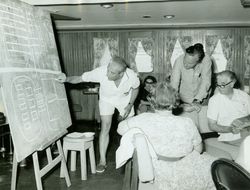
In Response is a series of public seminars that mark the final weeks of the exhibition The Other Architect. If the exhibition presents alternative approaches and models that have challenged traditional design practices, the seminars offer alternative curatorial views on the exhibition and accompanying publication. Respondents include: Felicity Scott (Thursday 10 March),(...)
In Response is a series of public seminars that mark the final weeks of the exhibition The Other Architect. If the exhibition presents alternative approaches and models that have challenged traditional design practices, the seminars offer alternative curatorial views on the exhibition and accompanying publication. Respondents include: Felicity Scott (Thursday 10 March),(...)
Location:
Main galleries
Main galleries
Date:
10 March 2016 to 1 April 2016
10 March 2016 to 1 April 2016
Title:
In Response
Actions:
Description:
In Response is a series of public seminars that mark the final weeks of the exhibition The Other Architect. If the exhibition presents alternative approaches and models that have challenged traditional design practices, the seminars offer alternative curatorial views on the exhibition and accompanying publication. Respondents include: Felicity Scott (Thursday 10 March),(...)
In Response
Actions:
Description:
In Response is a series of public seminars that mark the final weeks of the exhibition The Other Architect. If the exhibition presents alternative approaches and models that have challenged traditional design practices, the seminars offer alternative curatorial views on the exhibition and accompanying publication. Respondents include: Felicity Scott (Thursday 10 March),(...)
Form:
events
events
Date:
10 March 2016 to
1 April 2016
10 March 2016 to
1 April 2016
Location:
Main galleries
Main galleries


