


1897 Results
Form:
books
books
Actions:
Price:
$130.00
(available to order)
Summary:
For five decades, photographer Gianfranco Gorgoni (1941-2019) built his reputation as the premier documentarian of Land Art in the US and beyond. After leaving Italy, Gorgoni started making portraits of the major artists of the New York scene, including Michael Heizer, Robert Smithson, Nancy Holt, Walter De Maria, Carl Andre, and Richard Serra. It was not long before he(...)
$130.00
(available to order)
Summary:
For five decades, photographer Gianfranco Gorgoni (1941-2019) built his reputation as the premier documentarian of Land Art in the US and beyond. After leaving Italy, Gorgoni started making portraits of the major artists of the New York scene, including Michael Heizer, Robert Smithson, Nancy Holt, Walter De Maria, Carl Andre, and Richard Serra. It was not long before he(...)
Title:
Gianfranco Gorgoni: Land Art photographs
Actions:
Price:
$130.00
(available to order)
Summary:
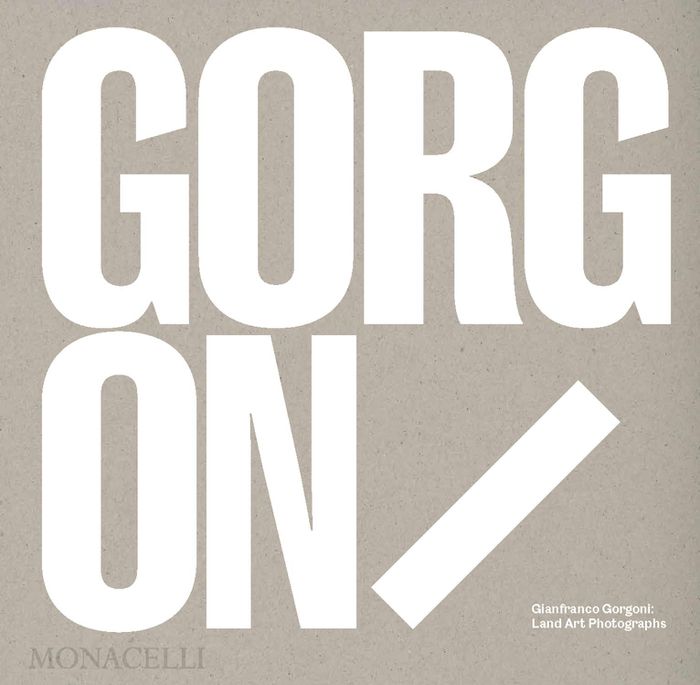
For five decades, photographer Gianfranco Gorgoni (1941-2019) built his reputation as the premier documentarian of Land Art in the US and beyond. After leaving Italy, Gorgoni started making portraits of the major artists of the New York scene, including Michael Heizer, Robert Smithson, Nancy Holt, Walter De Maria, Carl Andre, and Richard Serra. It was not long before he was traveling with Heizer, Smithson, and De Maria to the American West in the late 1960s to plot the works that would famously break art practice out of the confines of the gallery world. In Nevada, New Mexico, and Utah, these artists embarked on major Land Art installations that would redefine contemporary art practice of the era. In many cases, Gorgoni was the only photographer on the ground to document their projects, and his images often serve as the definitive photographic record of the planning and creation of these groundbreaking works. Published to coincide with the first major exhibition of Gorgoni's photographic Land Art images at the Nevada Museum of Art, featuring over fifty of his large-scale photographs, "Gianfranco Gorgoni: Land Art Photographs" includes an introduction by Ann M. Wolfe, Andrea and John C. Deane Family senior curator and deputy director at the Nevada Museum of Art, an essay by the late art historian and critic Germano Celant, whose contribution here is among the last he wrote before his death in 2020, and William L. Fox, the Peter E. Pool Director of the Center for Art + Environment.
Gianfranco Gorgoni: Land Art photographs
Actions:
Price:
$130.00
(available to order)
Summary:
For five decades, photographer Gianfranco Gorgoni (1941-2019) built his reputation as the premier documentarian of Land Art in the US and beyond. After leaving Italy, Gorgoni started making portraits of the major artists of the New York scene, including Michael Heizer, Robert Smithson, Nancy Holt, Walter De Maria, Carl Andre, and Richard Serra. It was not long before he was traveling with Heizer, Smithson, and De Maria to the American West in the late 1960s to plot the works that would famously break art practice out of the confines of the gallery world. In Nevada, New Mexico, and Utah, these artists embarked on major Land Art installations that would redefine contemporary art practice of the era. In many cases, Gorgoni was the only photographer on the ground to document their projects, and his images often serve as the definitive photographic record of the planning and creation of these groundbreaking works. Published to coincide with the first major exhibition of Gorgoni's photographic Land Art images at the Nevada Museum of Art, featuring over fifty of his large-scale photographs, "Gianfranco Gorgoni: Land Art Photographs" includes an introduction by Ann M. Wolfe, Andrea and John C. Deane Family senior curator and deputy director at the Nevada Museum of Art, an essay by the late art historian and critic Germano Celant, whose contribution here is among the last he wrote before his death in 2020, and William L. Fox, the Peter E. Pool Director of the Center for Art + Environment.
Form:
books
books
Publication:
August 2021
August 2021
Subject:
Photography monographs
Photography monographs
Form:
books
books
Actions:
Price:
$42.00
(available to order)
Summary:
Born in Estonia 1901 and brought to America in 1906, the architect Louis Kahn grew up in poverty in Philadelphia. By the time of his mysterious death in 1974, he was widely recognized as one of the greatest architects of his era. Yet this enormous reputation was based on only a handful of masterpieces, all built during the last fifteen years of his life. Wendy Lesser’s(...)
$42.00
(available to order)
Summary:
Born in Estonia 1901 and brought to America in 1906, the architect Louis Kahn grew up in poverty in Philadelphia. By the time of his mysterious death in 1974, he was widely recognized as one of the greatest architects of his era. Yet this enormous reputation was based on only a handful of masterpieces, all built during the last fifteen years of his life. Wendy Lesser’s(...)
Title:
You say to brick: the life of Louis Kahn
Actions:
Price:
$42.00
(available to order)
Summary:
Born in Estonia 1901 and brought to America in 1906, the architect Louis Kahn grew up in poverty in Philadelphia. By the time of his mysterious death in 1974, he was widely recognized as one of the greatest architects of his era. Yet this enormous reputation was based on only a handful of masterpieces, all built during the last fifteen years of his life. Wendy Lesser’s You Say to Brick: The Life of Louis Kahn is a major exploration of the architect’s life and work. Kahn, perhaps more than any other twentieth-century American architect, was a “public” architect. Rather than focusing on corporate commissions, he devoted himself to designing research facilities, government centers, museums, libraries, and other structures that would serve the public good. But this warm, captivating person, beloved by students and admired by colleagues, was also a secretive man hiding under a series of masks. Kahn himself, however, is not the only complex subject that comes vividly to life in these pages. His signature achievements—like the Salk Institute in La Jolla, the National Assembly Building of Bangladesh, and the Indian Institute of Management in Ahmedabad—can at first seem as enigmatic and beguiling as the man who designed them. In attempts to describe these structures, we are often forced to speak in contradictions and paradoxes: structures that seem at once unmistakably modern and ancient; enormous built spaces that offer a sense of intimate containment; designs in which light itself seems tangible, a raw material as tactile as travertine or Kahn’s beloved concrete.
You say to brick: the life of Louis Kahn
Actions:
Price:
$42.00
(available to order)
Summary:
Born in Estonia 1901 and brought to America in 1906, the architect Louis Kahn grew up in poverty in Philadelphia. By the time of his mysterious death in 1974, he was widely recognized as one of the greatest architects of his era. Yet this enormous reputation was based on only a handful of masterpieces, all built during the last fifteen years of his life. Wendy Lesser’s You Say to Brick: The Life of Louis Kahn is a major exploration of the architect’s life and work. Kahn, perhaps more than any other twentieth-century American architect, was a “public” architect. Rather than focusing on corporate commissions, he devoted himself to designing research facilities, government centers, museums, libraries, and other structures that would serve the public good. But this warm, captivating person, beloved by students and admired by colleagues, was also a secretive man hiding under a series of masks. Kahn himself, however, is not the only complex subject that comes vividly to life in these pages. His signature achievements—like the Salk Institute in La Jolla, the National Assembly Building of Bangladesh, and the Indian Institute of Management in Ahmedabad—can at first seem as enigmatic and beguiling as the man who designed them. In attempts to describe these structures, we are often forced to speak in contradictions and paradoxes: structures that seem at once unmistakably modern and ancient; enormous built spaces that offer a sense of intimate containment; designs in which light itself seems tangible, a raw material as tactile as travertine or Kahn’s beloved concrete.
Form:
books
books
Publication:
March 2017
March 2017
Subject:
Architecture Monographs
Architecture Monographs
Form:
books
books
Actions:
Price:
$80.00
(available to order)
Summary:
"Sleeping by the Mississippi" by Alec Soth is one of the defining publications in the photobook era. First published by Steidl in 2004, it was Soth’s first book, sold through three editions, and established him as one of the leading lights of contemporary photographic practice. This MACK edition launches to coincide with the first exhibition in London dedicated to the(...)
$80.00
(available to order)
Summary:
"Sleeping by the Mississippi" by Alec Soth is one of the defining publications in the photobook era. First published by Steidl in 2004, it was Soth’s first book, sold through three editions, and established him as one of the leading lights of contemporary photographic practice. This MACK edition launches to coincide with the first exhibition in London dedicated to the(...)
Title:
Alec Soth : sleeping by the Mississippi
Actions:
Price:
$80.00
(available to order)
Summary:
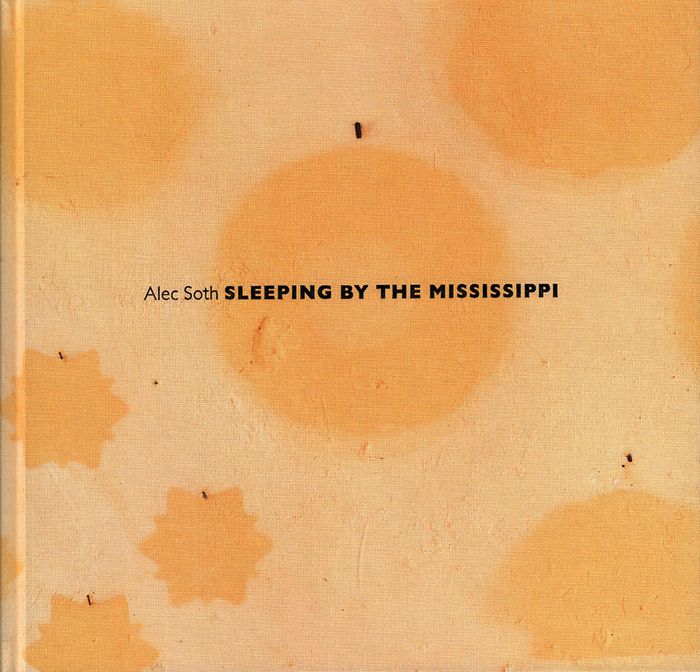
"Sleeping by the Mississippi" by Alec Soth is one of the defining publications in the photobook era. First published by Steidl in 2004, it was Soth’s first book, sold through three editions, and established him as one of the leading lights of contemporary photographic practice. This MACK edition launches to coincide with the first exhibition in London dedicated to the series at Beetles+Huxley gallery, and includes two new photographs that were not included in the previous versions of the book. Evolving from a series of road trips along the Mississippi River, "Sleeping by the Mississippi" captures America’s iconic yet oft-neglected ‘third coast’. Soth’s richly descriptive, large-format colour photographs present an eclectic mix of individuals, landscapes, and interiors. Sensuous in detail and raw in subject, Sleeping by the Mississippi elicits a consistent mood of loneliness, longing, and reverie. ‘In the book’s 46 ruthlessly edited pictures’, writes Anne Wilkes Tucker in the original essay published in the book, ‘Soth alludes to illness, procreation, race, crime, learning, art, music, death, religion, redemption, politics, and cheap sex.’ Like Robert Frank’s classic "The Americans", "Sleeping by the Mississippi" merges a documentary style with poetic sensibility. The Mississippi is less the subject of the book than its organizing structure. Not bound by a rigid concept or ideology, the series is created out of a quintessentially American spirit of wanderlust. Thirteen years since the book was first published, the artist’s lyrical view has undoubtedly acquired a nuanced significance – one in which hope, fear, desire and regret coalesce in the evocative journey along this mythic river.
Alec Soth : sleeping by the Mississippi
Actions:
Price:
$80.00
(available to order)
Summary:
"Sleeping by the Mississippi" by Alec Soth is one of the defining publications in the photobook era. First published by Steidl in 2004, it was Soth’s first book, sold through three editions, and established him as one of the leading lights of contemporary photographic practice. This MACK edition launches to coincide with the first exhibition in London dedicated to the series at Beetles+Huxley gallery, and includes two new photographs that were not included in the previous versions of the book. Evolving from a series of road trips along the Mississippi River, "Sleeping by the Mississippi" captures America’s iconic yet oft-neglected ‘third coast’. Soth’s richly descriptive, large-format colour photographs present an eclectic mix of individuals, landscapes, and interiors. Sensuous in detail and raw in subject, Sleeping by the Mississippi elicits a consistent mood of loneliness, longing, and reverie. ‘In the book’s 46 ruthlessly edited pictures’, writes Anne Wilkes Tucker in the original essay published in the book, ‘Soth alludes to illness, procreation, race, crime, learning, art, music, death, religion, redemption, politics, and cheap sex.’ Like Robert Frank’s classic "The Americans", "Sleeping by the Mississippi" merges a documentary style with poetic sensibility. The Mississippi is less the subject of the book than its organizing structure. Not bound by a rigid concept or ideology, the series is created out of a quintessentially American spirit of wanderlust. Thirteen years since the book was first published, the artist’s lyrical view has undoubtedly acquired a nuanced significance – one in which hope, fear, desire and regret coalesce in the evocative journey along this mythic river.
Form:
books
books
Publication:
September 2017
September 2017
Subject:
Photography monographs
Photography monographs
Form:
books
books
Actions:
Price:
$17.00
(available to order)
Summary:
Written in his characteristic "mesostics" (linked lines of prose poetry), Composition in Retrospect is a statement of methodology in which composer John Cage examines the central issues of his work: Indeterminacy, nonunderstanding, inconsistency, imitation, variable structure, contingency. Finished only shortly before his death in 1992, Composition in Retrospect completes(...)
$17.00
(available to order)
Summary:
Written in his characteristic "mesostics" (linked lines of prose poetry), Composition in Retrospect is a statement of methodology in which composer John Cage examines the central issues of his work: Indeterminacy, nonunderstanding, inconsistency, imitation, variable structure, contingency. Finished only shortly before his death in 1992, Composition in Retrospect completes(...)
Title:
John Cage composition in retrospect
Actions:
Price:
$17.00
(available to order)
Summary:
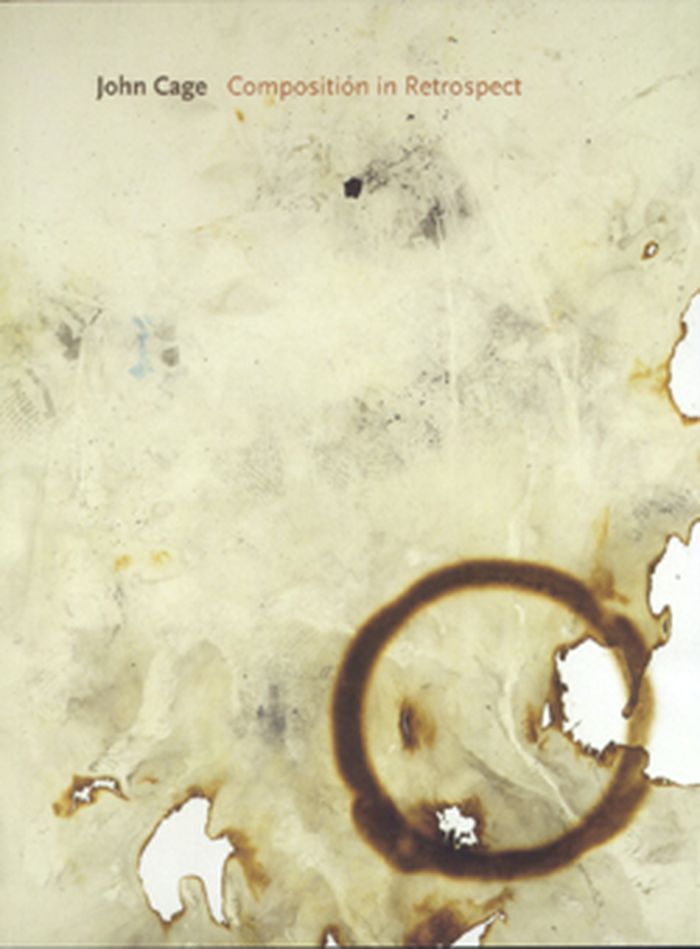
Written in his characteristic "mesostics" (linked lines of prose poetry), Composition in Retrospect is a statement of methodology in which composer John Cage examines the central issues of his work: Indeterminacy, nonunderstanding, inconsistency, imitation, variable structure, contingency. Finished only shortly before his death in 1992, Composition in Retrospect completes the documentation of Cage's thought that began with his classic book Silence (1961), but it is an introduction and invitation to his work as much as a summary or conclusion. Also included in this volume (at Cage's request) is "Themes and Variations," a piece written in 1982 about friends and heroes such as Jasper Johns, Buckminster Fuller, Marcel Duchamp and Erik Satie. Together these pieces form a book that is both a testament to the artists Cage admired and a clear statement of his own ars poetica. John Cage (1912-1992) was an American composer, writer, artist and mycologist. Having studied with Arnold Schonberg (who proclaimed him "not a composer, but an inventor-of genius") and Henry Cowell in the 30s, Cage went on to devise landmark compositions for percussion and prepared piano before making his hugely influential work 4'33" (1952). Later works privileged composition by chance procedure--"imitating Nature in the manner of her operation"--and the use of ambient noise, electronics and tape manipulation. Cage's influence can be seen in the works of countless composers (especially the New York School "group" of Morton Feldman, Christian Wolff and Earle Brown), artists (such as those affiliated with Fluxus) and writers.
John Cage composition in retrospect
Actions:
Price:
$17.00
(available to order)
Summary:
Written in his characteristic "mesostics" (linked lines of prose poetry), Composition in Retrospect is a statement of methodology in which composer John Cage examines the central issues of his work: Indeterminacy, nonunderstanding, inconsistency, imitation, variable structure, contingency. Finished only shortly before his death in 1992, Composition in Retrospect completes the documentation of Cage's thought that began with his classic book Silence (1961), but it is an introduction and invitation to his work as much as a summary or conclusion. Also included in this volume (at Cage's request) is "Themes and Variations," a piece written in 1982 about friends and heroes such as Jasper Johns, Buckminster Fuller, Marcel Duchamp and Erik Satie. Together these pieces form a book that is both a testament to the artists Cage admired and a clear statement of his own ars poetica. John Cage (1912-1992) was an American composer, writer, artist and mycologist. Having studied with Arnold Schonberg (who proclaimed him "not a composer, but an inventor-of genius") and Henry Cowell in the 30s, Cage went on to devise landmark compositions for percussion and prepared piano before making his hugely influential work 4'33" (1952). Later works privileged composition by chance procedure--"imitating Nature in the manner of her operation"--and the use of ambient noise, electronics and tape manipulation. Cage's influence can be seen in the works of countless composers (especially the New York School "group" of Morton Feldman, Christian Wolff and Earle Brown), artists (such as those affiliated with Fluxus) and writers.
Form:
books
books
Publication:
June 2008, Cambridge
June 2008, Cambridge
Subject:
Contemporary Art Monographs
Contemporary Art Monographs
Form:
books
books
Title:
On European ground
On European ground
Actions:
Price:
$45.00
(available to order)
Summary:
A profound visual meditation on the trauma that scars twentieth-century Europe, Alan Cohen's "On European Ground" considers the battlefields of World War I, the Nazi death camps, and the Berlin Wall, and records the distance between what we remember about these places and what we can (...)
$45.00
(available to order)
Summary:
A profound visual meditation on the trauma that scars twentieth-century Europe, Alan Cohen's "On European Ground" considers the battlefields of World War I, the Nazi death camps, and the Berlin Wall, and records the distance between what we remember about these places and what we can (...)
Title:
On European ground
Actions:
Price:
$45.00
(available to order)
Summary:
A profound visual meditation on the trauma that scars twentieth-century Europe, Alan Cohen's "On European Ground" considers the battlefields of World War I, the Nazi death camps, and the Berlin Wall, and records the distance between what we remember about these places and what we can still observe in them today. By walking these sites and photographing the very ground in which their history has dissolved, Cohen opens a space for reflection on their complex gravity and legacy. Cohen's images achieve a solemn beauty even as they engage history at its most topical. Pictures of trenches and bunkers at the battlefields of Somme and Verdun explore the tension between the violence of the past and the inscrutability of its remnants. Photographs from the grounds of Dachau and Auschwitz solicit a provocative dialogue between the ordinariness of these sites today and their haunting memory. They teach us, as the New Art Examiner notes, "that the living perceptual connection to the Holocaust is vanishing." Images of the Berlin Wall show only the footprint of the barricade that once separated two hostile ideologies. They record the physical erosion and looming disappearance of the Wall while capturing its reappearance as a memorialized abstraction. Accompanying the photographs in On European Ground are essays by Sander Gilman and Jonathan Bordo, as well as an interview with Cohen by critic Roberta Smith of the New York Times. The essays present both an introduction to and aesthetic analysis of Cohen's work, while the interview discusses the intractable problems of history and memory that his photographs so uniquely capture.
On European ground
Actions:
Price:
$45.00
(available to order)
Summary:
A profound visual meditation on the trauma that scars twentieth-century Europe, Alan Cohen's "On European Ground" considers the battlefields of World War I, the Nazi death camps, and the Berlin Wall, and records the distance between what we remember about these places and what we can still observe in them today. By walking these sites and photographing the very ground in which their history has dissolved, Cohen opens a space for reflection on their complex gravity and legacy. Cohen's images achieve a solemn beauty even as they engage history at its most topical. Pictures of trenches and bunkers at the battlefields of Somme and Verdun explore the tension between the violence of the past and the inscrutability of its remnants. Photographs from the grounds of Dachau and Auschwitz solicit a provocative dialogue between the ordinariness of these sites today and their haunting memory. They teach us, as the New Art Examiner notes, "that the living perceptual connection to the Holocaust is vanishing." Images of the Berlin Wall show only the footprint of the barricade that once separated two hostile ideologies. They record the physical erosion and looming disappearance of the Wall while capturing its reappearance as a memorialized abstraction. Accompanying the photographs in On European Ground are essays by Sander Gilman and Jonathan Bordo, as well as an interview with Cohen by critic Roberta Smith of the New York Times. The essays present both an introduction to and aesthetic analysis of Cohen's work, while the interview discusses the intractable problems of history and memory that his photographs so uniquely capture.
Form:
books
books
Publication:
April 2001, Chicago
April 2001, Chicago
Form:
books
books
Actions:
Price:
$90.00
(available to order)
Summary:
Henri Cartier-Bresson (1908–2004) is one of the most influential and beloved figures in the history of photography. His inventive work of the early 1930s helped define the creative potential of modern photography. Following World War II, he helped found the Magnum photo agency, which enabled photojournalists to reach a broad audience through magazines such as Life while(...)
$90.00
(available to order)
Summary:
Henri Cartier-Bresson (1908–2004) is one of the most influential and beloved figures in the history of photography. His inventive work of the early 1930s helped define the creative potential of modern photography. Following World War II, he helped found the Magnum photo agency, which enabled photojournalists to reach a broad audience through magazines such as Life while(...)
Title:
Henri Cartier-Bresson : the modern century
Actions:
Price:
$90.00
(available to order)
Summary:
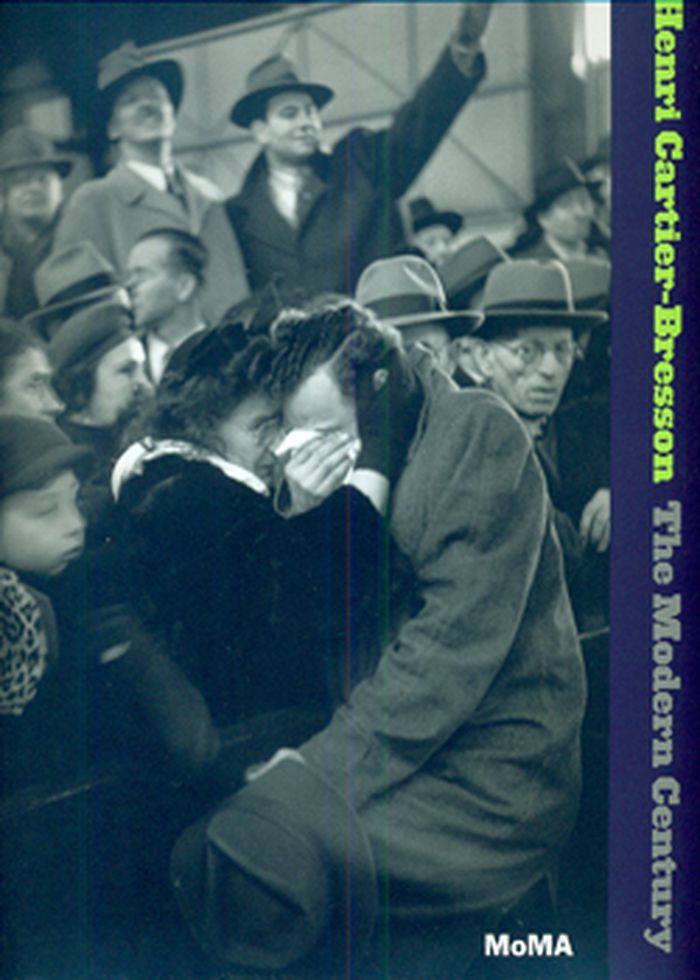
Henri Cartier-Bresson (1908–2004) is one of the most influential and beloved figures in the history of photography. His inventive work of the early 1930s helped define the creative potential of modern photography. Following World War II, he helped found the Magnum photo agency, which enabled photojournalists to reach a broad audience through magazines such as Life while retaining control over their work. Cartier-Bresson would go on to produce major bodies of photographic reportage, capturing such events as China during the revolution, the Soviet Union after Stalin's death, the United States in the postwar boom and Europe as its older cultures confronted modern realities. Published to accompany an exhibition at The Museum of Modern Art, this is the first major publication to make full use of the extensive holdings of the Fondation Cartier-Bresson — including thousands of prints and a vast resource of documents relating to the photographer's life and work. The heart of the book surveys Cartier-Bresson's career through 300 photographs divided into 12 chapters. While many of his most famous pictures are included, a great number of images will be unfamiliar even to specialists. A wide-ranging essay by Peter Galassi, Chief Curator of Photography at the Museum, offers an entirely new understanding of Cartier-Bresson's extraordinary career and its overlapping contexts of journalism and art. The extensive supporting material — featuring detailed chronologies of the photographer's professional travels and of spreads of his picture stories as they appeared in magazines — will revolutionize the study of Cartier-Bresson's work.
Henri Cartier-Bresson : the modern century
Actions:
Price:
$90.00
(available to order)
Summary:
Henri Cartier-Bresson (1908–2004) is one of the most influential and beloved figures in the history of photography. His inventive work of the early 1930s helped define the creative potential of modern photography. Following World War II, he helped found the Magnum photo agency, which enabled photojournalists to reach a broad audience through magazines such as Life while retaining control over their work. Cartier-Bresson would go on to produce major bodies of photographic reportage, capturing such events as China during the revolution, the Soviet Union after Stalin's death, the United States in the postwar boom and Europe as its older cultures confronted modern realities. Published to accompany an exhibition at The Museum of Modern Art, this is the first major publication to make full use of the extensive holdings of the Fondation Cartier-Bresson — including thousands of prints and a vast resource of documents relating to the photographer's life and work. The heart of the book surveys Cartier-Bresson's career through 300 photographs divided into 12 chapters. While many of his most famous pictures are included, a great number of images will be unfamiliar even to specialists. A wide-ranging essay by Peter Galassi, Chief Curator of Photography at the Museum, offers an entirely new understanding of Cartier-Bresson's extraordinary career and its overlapping contexts of journalism and art. The extensive supporting material — featuring detailed chronologies of the photographer's professional travels and of spreads of his picture stories as they appeared in magazines — will revolutionize the study of Cartier-Bresson's work.
Form:
books
books
Publication:
April 2010
April 2010
Subject:
Photography monographs
Photography monographs
Form:
books
books
Actions:
Price:
$72.95
(available to order)
Summary:
Landforms are a fast-developing art form that enjoy a wide following today, because of their multiple uses and their enveloping beauty. As formal landscapes that often arise from necessity - recycling a coal site for human use or making new use of excess earth - they are a pleasure to walk over and through. In this collection of his recent work, Charles Jencks explains(...)
$72.95
(available to order)
Summary:
Landforms are a fast-developing art form that enjoy a wide following today, because of their multiple uses and their enveloping beauty. As formal landscapes that often arise from necessity - recycling a coal site for human use or making new use of excess earth - they are a pleasure to walk over and through. In this collection of his recent work, Charles Jencks explains(...)
Title:
The universe in the landscape: landforms by Charles Jencks
Actions:
Price:
$72.95
(available to order)
Summary:
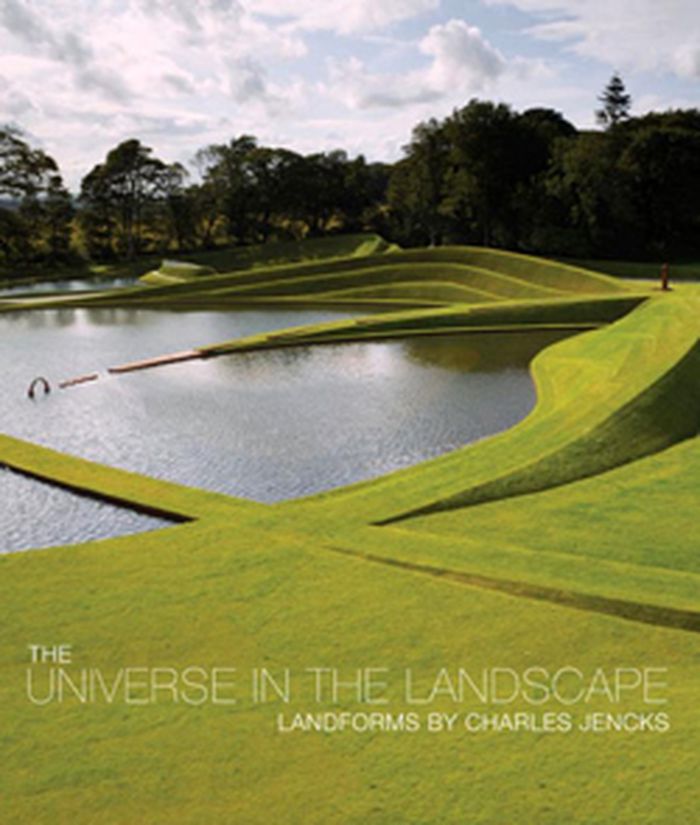
Landforms are a fast-developing art form that enjoy a wide following today, because of their multiple uses and their enveloping beauty. As formal landscapes that often arise from necessity - recycling a coal site for human use or making new use of excess earth - they are a pleasure to walk over and through. In this collection of his recent work, Charles Jencks explains his particular approach to the landform. Like the prehistoric earthworks of Britain that have been an inspiration, such as Stonehenge, his landforms contain cosmic symbolism, and they draw together sculpture, epigraphy, water, gardens, scrap metal and architecture. They address perennial themes - identity, patterns of nature, death and the power of life - but in a contemporary way, based on the insights of science. So Jencks portrays universal aspects of DNA, the spacetime warp of a black hole, the extraordinary way cells divide and unite and some basic forms of life. In this publication Jencks seeks to define a new landscape iconography based on forms and themes that may be eternal, in the sense that they crystallise nature's laws, some of which have been recently discovered. To see a world in a grain of sand was a poetic quest of William Blake and, in a different sense, to find the universe in a ritual landscape was a goal of prehistoric cultures. Jencks allies these spiritual affinities with the view of science that stresses the common patterns that underlie all parts of the cosmos, thus making them like our home planet, and the universe in a landscape.
The universe in the landscape: landforms by Charles Jencks
Actions:
Price:
$72.95
(available to order)
Summary:
Landforms are a fast-developing art form that enjoy a wide following today, because of their multiple uses and their enveloping beauty. As formal landscapes that often arise from necessity - recycling a coal site for human use or making new use of excess earth - they are a pleasure to walk over and through. In this collection of his recent work, Charles Jencks explains his particular approach to the landform. Like the prehistoric earthworks of Britain that have been an inspiration, such as Stonehenge, his landforms contain cosmic symbolism, and they draw together sculpture, epigraphy, water, gardens, scrap metal and architecture. They address perennial themes - identity, patterns of nature, death and the power of life - but in a contemporary way, based on the insights of science. So Jencks portrays universal aspects of DNA, the spacetime warp of a black hole, the extraordinary way cells divide and unite and some basic forms of life. In this publication Jencks seeks to define a new landscape iconography based on forms and themes that may be eternal, in the sense that they crystallise nature's laws, some of which have been recently discovered. To see a world in a grain of sand was a poetic quest of William Blake and, in a different sense, to find the universe in a ritual landscape was a goal of prehistoric cultures. Jencks allies these spiritual affinities with the view of science that stresses the common patterns that underlie all parts of the cosmos, thus making them like our home planet, and the universe in a landscape.
Form:
books
books
Publication:
June 2011
June 2011
Subject:
Landscape Architecture, Monographs
Landscape Architecture, Monographs
Form:
books
books
Actions:
Price:
$30.00
(available to order)
Summary:
What is a designer proposes what design could be: there is no question mark in its title. Potter’s book is unusual in combining elevated ideas with down-to-earth advice. The first edition was published by Studio Vista in 1969. The second edition, published by Hyphen Press in 1980, was a very different work: completely reset and with new chapters that doubled the book in(...)
$30.00
(available to order)
Summary:
What is a designer proposes what design could be: there is no question mark in its title. Potter’s book is unusual in combining elevated ideas with down-to-earth advice. The first edition was published by Studio Vista in 1969. The second edition, published by Hyphen Press in 1980, was a very different work: completely reset and with new chapters that doubled the book in(...)
Title:
What is a designer : things, places, messages
Actions:
Price:
$30.00
(available to order)
Summary:
What is a designer proposes what design could be: there is no question mark in its title. Potter’s book is unusual in combining elevated ideas with down-to-earth advice. The first edition was published by Studio Vista in 1969. The second edition, published by Hyphen Press in 1980, was a very different work: completely reset and with new chapters that doubled the book in extent. A third edition (1989) incorporated revisions and updatings, and included a new introduction in which Norman Potter considered his own position in the light of the tremendous changes of the 1980s: some sharp blows were delivered at ‘designer culture’. Now, after the author’s death in 1995, the book is reissued in what must be a final edition: the outdated references again excised, to leave the enduring core of Potter’s arguments. The three parts of the book are signalled visibly by a change of paper colour. The first part contains a sequence of quite general essays. A number of central ideas are discussed here. Design is essentially a useful and modest art. The designer is at the service of the community. These principles should animate education. Potter casts a critical and sceptical eye over the realities of design education. In the reference section the book stands apart from other literature on design, in its discussions of the processes of getting work done. Finally there is a set of appendixes, prodding the reader into thought and action. The book has no visual illustrations. By this means it achieves a greater generality of reference and — true to its critical principles — avoids giving readers models for imitation. The book includes an afterword by Robin Kinross.
What is a designer : things, places, messages
Actions:
Price:
$30.00
(available to order)
Summary:
What is a designer proposes what design could be: there is no question mark in its title. Potter’s book is unusual in combining elevated ideas with down-to-earth advice. The first edition was published by Studio Vista in 1969. The second edition, published by Hyphen Press in 1980, was a very different work: completely reset and with new chapters that doubled the book in extent. A third edition (1989) incorporated revisions and updatings, and included a new introduction in which Norman Potter considered his own position in the light of the tremendous changes of the 1980s: some sharp blows were delivered at ‘designer culture’. Now, after the author’s death in 1995, the book is reissued in what must be a final edition: the outdated references again excised, to leave the enduring core of Potter’s arguments. The three parts of the book are signalled visibly by a change of paper colour. The first part contains a sequence of quite general essays. A number of central ideas are discussed here. Design is essentially a useful and modest art. The designer is at the service of the community. These principles should animate education. Potter casts a critical and sceptical eye over the realities of design education. In the reference section the book stands apart from other literature on design, in its discussions of the processes of getting work done. Finally there is a set of appendixes, prodding the reader into thought and action. The book has no visual illustrations. By this means it achieves a greater generality of reference and — true to its critical principles — avoids giving readers models for imitation. The book includes an afterword by Robin Kinross.
Form:
books
books
Publication:
April 2002, London
April 2002, London
Subject:
Graphic Design and Typography
Graphic Design and Typography
Form:
books
books
Actions:
Price:
$29.95
(available to order)
Summary:
"Light in the Dark Room" explores photography not as a document of the past but rather as a realization of what we have lost. When we look at a photograph we see a moment that is no more. Photographs place reality into the past tense, representing not memory but memory’s loss. They are not conduits for the return of memory, but memento mori: reminders of the fact of(...)
$29.95
(available to order)
Summary:
"Light in the Dark Room" explores photography not as a document of the past but rather as a realization of what we have lost. When we look at a photograph we see a moment that is no more. Photographs place reality into the past tense, representing not memory but memory’s loss. They are not conduits for the return of memory, but memento mori: reminders of the fact of(...)
Title:
Light in the dark room : photography and loss
Actions:
Price:
$29.95
(available to order)
Summary:
"Light in the Dark Room" explores photography not as a document of the past but rather as a realization of what we have lost. When we look at a photograph we see a moment that is no more. Photographs place reality into the past tense, representing not memory but memory’s loss. They are not conduits for the return of memory, but memento mori: reminders of the fact of death itself. And it is in this, Jay Prosser tells us, that we find the gift of photography. Engaging the photographic reflections of figures as different as Roland Barthes and Claude Lévi-Strauss, Gordon Parks and Elizabeth Bishop, "Light in the Dark Room" offers a vision of photography as realization of loss - and a revelation of how photographs can shed light on the dark rooms of our lives. Beginning with an analysis of Roland Barthes’s "Camera Lucida", Prosser explores the relationship of autobiography and photography and then considers Lévi-Strauss’s last published book, his photographic memoir; he uncovers the collection of photography painstakingly assembled by poet Elizabeth Bishop but never published; and he recounts the story of a forgotten Brazilian boy from the 1960s who lost his home as a result of photographs. The losses this book recalls are poignant yet universal - a son loses his mother; an anthropologist, his culture; a photographer, his youth; a poet, her lover. Among these personal and moving losses and the remarkable photographs that accompany them, Prosser weaves his own meditations on photography, on the interdependence of loss and enlightenment, on the emergence of our technologized society - and the world we have lost in the process.
Light in the dark room : photography and loss
Actions:
Price:
$29.95
(available to order)
Summary:
"Light in the Dark Room" explores photography not as a document of the past but rather as a realization of what we have lost. When we look at a photograph we see a moment that is no more. Photographs place reality into the past tense, representing not memory but memory’s loss. They are not conduits for the return of memory, but memento mori: reminders of the fact of death itself. And it is in this, Jay Prosser tells us, that we find the gift of photography. Engaging the photographic reflections of figures as different as Roland Barthes and Claude Lévi-Strauss, Gordon Parks and Elizabeth Bishop, "Light in the Dark Room" offers a vision of photography as realization of loss - and a revelation of how photographs can shed light on the dark rooms of our lives. Beginning with an analysis of Roland Barthes’s "Camera Lucida", Prosser explores the relationship of autobiography and photography and then considers Lévi-Strauss’s last published book, his photographic memoir; he uncovers the collection of photography painstakingly assembled by poet Elizabeth Bishop but never published; and he recounts the story of a forgotten Brazilian boy from the 1960s who lost his home as a result of photographs. The losses this book recalls are poignant yet universal - a son loses his mother; an anthropologist, his culture; a photographer, his youth; a poet, her lover. Among these personal and moving losses and the remarkable photographs that accompany them, Prosser weaves his own meditations on photography, on the interdependence of loss and enlightenment, on the emergence of our technologized society - and the world we have lost in the process.
Form:
books
books
Publication:
December 2005, Minneapolis
December 2005, Minneapolis
Subject:
Theory of Photography
Theory of Photography
Form:
books
books
Price:
$75.95
(available to order)
Summary:
More than one hundred exhibitions of Frank Lloyd Wright's work were mounted between 1894 and his death in 1959. Wright organized the majority of these exhibitions himself and viewed them as crucial to his self-presentation as his extensive writings. He used them to promote his designs, appeal to new viewers, and persuade his detractors. Wright on Exhibit presents the(...)
$75.95
(available to order)
Summary:
More than one hundred exhibitions of Frank Lloyd Wright's work were mounted between 1894 and his death in 1959. Wright organized the majority of these exhibitions himself and viewed them as crucial to his self-presentation as his extensive writings. He used them to promote his designs, appeal to new viewers, and persuade his detractors. Wright on Exhibit presents the(...)
Title:
Wright on exhibit: Frank Lloyd Wright's architectural exhibitions
Actions:
Price:
$75.95
(available to order)
Summary:
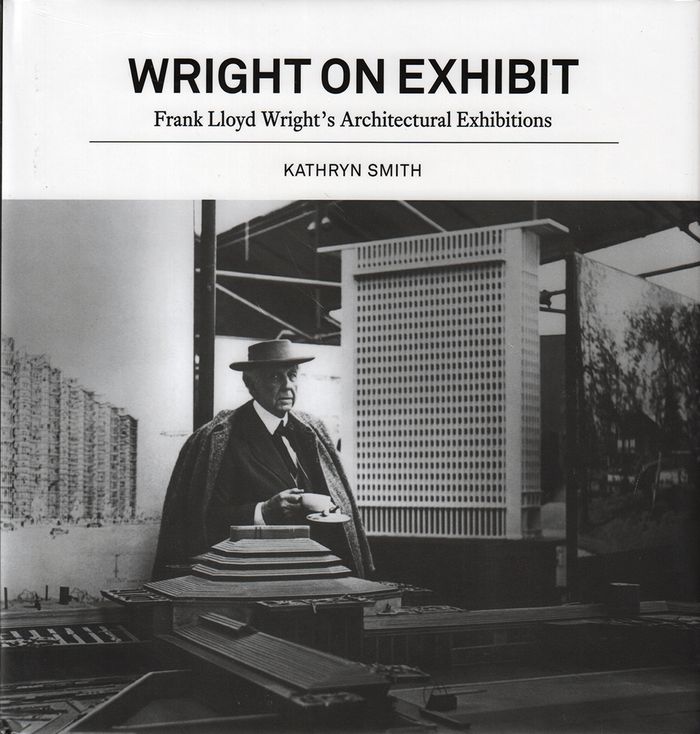
More than one hundred exhibitions of Frank Lloyd Wright's work were mounted between 1894 and his death in 1959. Wright organized the majority of these exhibitions himself and viewed them as crucial to his self-presentation as his extensive writings. He used them to promote his designs, appeal to new viewers, and persuade his detractors. Wright on Exhibit presents the first history of this neglected aspect of the architect’s influential career. Drawing extensively from Wright’s unpublished correspondence, Kathryn Smith challenges the preconceived notion of Wright as a self-promoter who displayed his work in search of money, clients, and fame. She shows how he was an artist-architect projecting an avant-garde program, an innovator who expanded the palette of installation design as technology evolved, and a social activist driven to revolutionize society through design. While Wright’s earliest exhibitions were largely for other architects, by the 1930s he was creating public installations intended to inspire debate and change public perceptions about architecture. The nature of his exhibitions expanded with the times beyond models, drawings, and photographs to include more immersive tools such as slides, film, and even a full-scale structure built especially for his 1953 retrospective at the Guggenheim Museum. Placing Wright’s exhibitions side by side with his writings, Smith shows how integral these exhibitions were to his vision and sheds light on the broader discourse concerning architecture and modernism during the first half of the twentieth century. Wright on Exhibit features color renderings, photos, and plans, as well as a checklist of exhibitions and an illustrated catalog of extant and lost models made under Wright’s supervision.
Wright on exhibit: Frank Lloyd Wright's architectural exhibitions
Actions:
Price:
$75.95
(available to order)
Summary:
More than one hundred exhibitions of Frank Lloyd Wright's work were mounted between 1894 and his death in 1959. Wright organized the majority of these exhibitions himself and viewed them as crucial to his self-presentation as his extensive writings. He used them to promote his designs, appeal to new viewers, and persuade his detractors. Wright on Exhibit presents the first history of this neglected aspect of the architect’s influential career. Drawing extensively from Wright’s unpublished correspondence, Kathryn Smith challenges the preconceived notion of Wright as a self-promoter who displayed his work in search of money, clients, and fame. She shows how he was an artist-architect projecting an avant-garde program, an innovator who expanded the palette of installation design as technology evolved, and a social activist driven to revolutionize society through design. While Wright’s earliest exhibitions were largely for other architects, by the 1930s he was creating public installations intended to inspire debate and change public perceptions about architecture. The nature of his exhibitions expanded with the times beyond models, drawings, and photographs to include more immersive tools such as slides, film, and even a full-scale structure built especially for his 1953 retrospective at the Guggenheim Museum. Placing Wright’s exhibitions side by side with his writings, Smith shows how integral these exhibitions were to his vision and sheds light on the broader discourse concerning architecture and modernism during the first half of the twentieth century. Wright on Exhibit features color renderings, photos, and plans, as well as a checklist of exhibitions and an illustrated catalog of extant and lost models made under Wright’s supervision.
Form:
books
books
Publication:
May 2017
May 2017
Subject:
Architecture Monographs
Architecture Monographs


