


2 Résultats
Classification:
périodiques
périodiques
Titre:
PB 06 In Class with Tavora
PB 06 In Class with Tavora
Actions:
Prix:
$45.00
(disponible en magasin)
Résumé:
The 6th title in the AMAG Pocket Books Collection explores the enduring pedagogical legacy of Fernando Távora, a pivotal figure in Portuguese architecture and a key influence on the Porto School. Celebrating the continued relevance of his teachings, the authors delve into his philosophy of making architecture for living, emphasizing the interplay between modernity and(...)
$45.00
(disponible en magasin)
Résumé:
The 6th title in the AMAG Pocket Books Collection explores the enduring pedagogical legacy of Fernando Távora, a pivotal figure in Portuguese architecture and a key influence on the Porto School. Celebrating the continued relevance of his teachings, the authors delve into his philosophy of making architecture for living, emphasizing the interplay between modernity and(...)
Titre:
PB 06 In Class with Tavora
Actions:
Prix:
$45.00
(disponible en magasin)
Résumé:
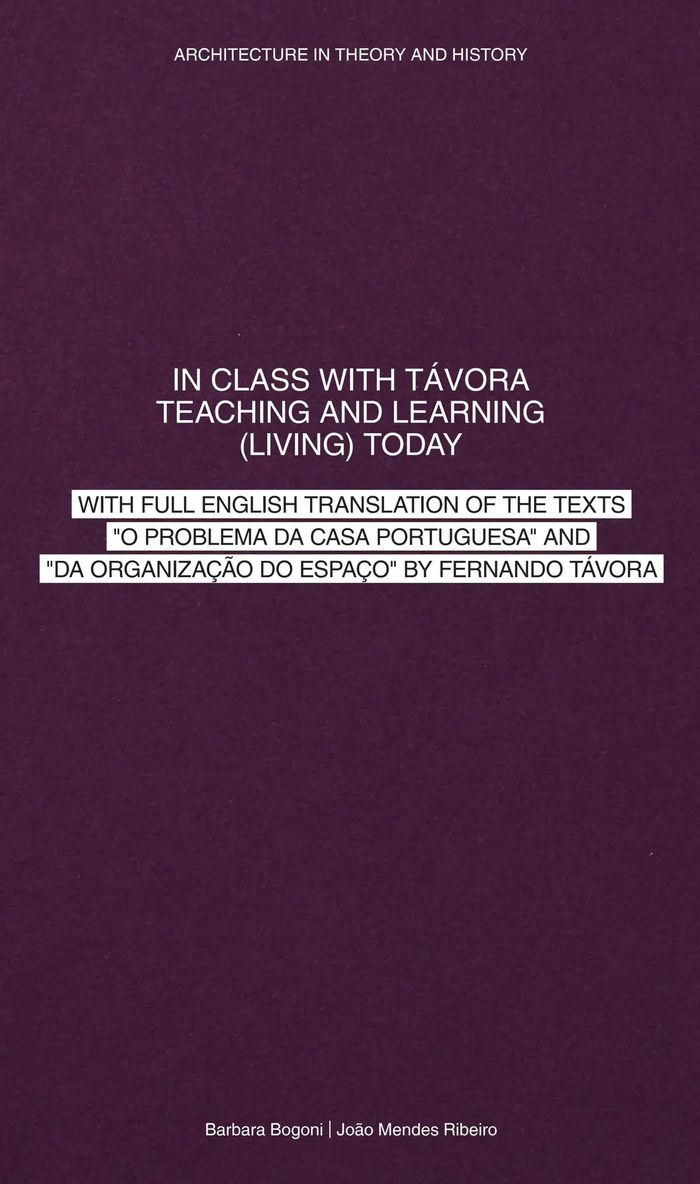
The 6th title in the AMAG Pocket Books Collection explores the enduring pedagogical legacy of Fernando Távora, a pivotal figure in Portuguese architecture and a key influence on the Porto School. Celebrating the continued relevance of his teachings, the authors delve into his philosophy of making architecture for living, emphasizing the interplay between modernity and tradition, the humanity of space, and the essence of spatial composition. While numerous studies on Távora exist, most remain within Portugal; this volume seeks to bring his insights to a broader audience, reaffirming his influence on new generations of architects.
PB 06 In Class with Tavora
Actions:
Prix:
$45.00
(disponible en magasin)
Résumé:
The 6th title in the AMAG Pocket Books Collection explores the enduring pedagogical legacy of Fernando Távora, a pivotal figure in Portuguese architecture and a key influence on the Porto School. Celebrating the continued relevance of his teachings, the authors delve into his philosophy of making architecture for living, emphasizing the interplay between modernity and tradition, the humanity of space, and the essence of spatial composition. While numerous studies on Távora exist, most remain within Portugal; this volume seeks to bring his insights to a broader audience, reaffirming his influence on new generations of architects.
Classification:
périodiques
périodiques
Publication:
novembre 2025
novembre 2025
Sujet:
Théorie de l’architecture
Théorie de l’architecture
Classification:
périodiques
périodiques
Titre:
AMAG 42: Acayaba + Rosenberg
AMAG 42: Acayaba + Rosenberg
Actions:
Prix:
$106.00
(disponible sur commande)
Résumé:
Founded in São Paulo, Brazil, ACAYABA + ROSENBERG, also knowned as AR Arquitetos, is led by Juan Pablo Rosenberg and Marina Acayaba, whose trajectories combine academic accouracy, international experience, and a refined architectural sensibility. The practice’s conceptual foundation is rooted in the very idea of air: without fixed form or volume, expanding and moving(...)
$106.00
(disponible sur commande)
Résumé:
Founded in São Paulo, Brazil, ACAYABA + ROSENBERG, also knowned as AR Arquitetos, is led by Juan Pablo Rosenberg and Marina Acayaba, whose trajectories combine academic accouracy, international experience, and a refined architectural sensibility. The practice’s conceptual foundation is rooted in the very idea of air: without fixed form or volume, expanding and moving(...)
Titre:
AMAG 42: Acayaba + Rosenberg
Actions:
Prix:
$106.00
(disponible sur commande)
Résumé:
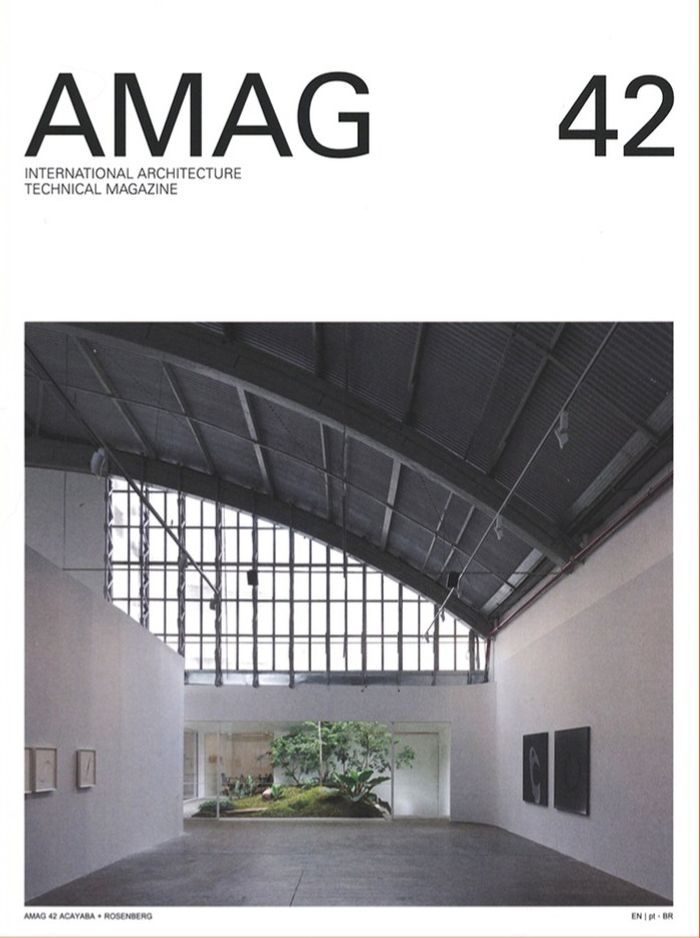
Founded in São Paulo, Brazil, ACAYABA + ROSENBERG, also knowned as AR Arquitetos, is led by Juan Pablo Rosenberg and Marina Acayaba, whose trajectories combine academic accouracy, international experience, and a refined architectural sensibility. The practice’s conceptual foundation is rooted in the very idea of air: without fixed form or volume, expanding and moving to occupy space. For AR Arquitetos, architecture begins with this notion of movement. Space is conceived as a narrative, a carefully orchestrated sequence that reveals unexpected views and unforeseen places. Their work does not rely solely on formal gestures, but materializes through use, perception, and atmosphere. Together, Rosenberg and Acayaba shape a practice that merges intellectual reflection and spatial sensitivity. AR Arquitetos’ projects are defined by continuity, subtle transitions, and a careful dialogue with context, transforming architecture into an experiential journey where movement becomes the essence of inhabiting space.
AMAG 42: Acayaba + Rosenberg
Actions:
Prix:
$106.00
(disponible sur commande)
Résumé:
Founded in São Paulo, Brazil, ACAYABA + ROSENBERG, also knowned as AR Arquitetos, is led by Juan Pablo Rosenberg and Marina Acayaba, whose trajectories combine academic accouracy, international experience, and a refined architectural sensibility. The practice’s conceptual foundation is rooted in the very idea of air: without fixed form or volume, expanding and moving to occupy space. For AR Arquitetos, architecture begins with this notion of movement. Space is conceived as a narrative, a carefully orchestrated sequence that reveals unexpected views and unforeseen places. Their work does not rely solely on formal gestures, but materializes through use, perception, and atmosphere. Together, Rosenberg and Acayaba shape a practice that merges intellectual reflection and spatial sensitivity. AR Arquitetos’ projects are defined by continuity, subtle transitions, and a careful dialogue with context, transforming architecture into an experiential journey where movement becomes the essence of inhabiting space.
Classification:
périodiques
périodiques
Publication:
mai 2026
mai 2026
Sujet:
Revues
Revues


