


23 Résultats
Classification:
livres
livres

Titre:
Domesticity at War
Domesticity at War
Actions:
Prix:
$54.95
(disponible sur commande)
Résumé:
In the years immediately following World War II, America embraced modern architecture--not as something imported from Europe, but as an entirely new mode of operation, with original and captivating designs made in the USA. Beatriz Colomina shows how postwar American architecture adapted the techniques and materials that were developed for military applications to domestic(...)
$54.95
(disponible sur commande)
Résumé:
In the years immediately following World War II, America embraced modern architecture--not as something imported from Europe, but as an entirely new mode of operation, with original and captivating designs made in the USA. Beatriz Colomina shows how postwar American architecture adapted the techniques and materials that were developed for military applications to domestic(...)
Sujet:
Théorie de l’architecture
Théorie de l’architecture
Publication:
mars 2007, Cambridge / London
mars 2007, Cambridge / London
Titre:
Domesticity at War
Actions:
Prix:
$54.95
(disponible sur commande)
Résumé:
In the years immediately following World War II, America embraced modern architecture--not as something imported from Europe, but as an entirely new mode of operation, with original and captivating designs made in the USA. Beatriz Colomina shows how postwar American architecture adapted the techniques and materials that were developed for military applications to domestic use. Just as manufacturers were turning wartime industry to peacetime productivity--going from missiles to washing machines--American architects and cultural institutions were, in Buckminster Fuller’s words, turning "weaponry into livingry." This new form of domesticity itself turned out to be a powerful weapon. Images of American domestic bliss--suburban homes, manicured lawns, kitchen accessories--went around the world as an effective propaganda campaign. Cold War anxieties were masked by endlessly repeated images of a picture-perfect domestic environment. Even the popular conception of the architect became domesticated, changing from that of an austere modernist to a plaid-shirt wearing homebody. Domesticity at War itself has a distinctive architecture. Housed within the case are two units: one book of text, and one book of illustrations--most of them in color, including advertisements, newspaper and magazine articles, architectural photographs, and more.
Domesticity at War
Actions:
Prix:
$54.95
(disponible sur commande)
Résumé:
In the years immediately following World War II, America embraced modern architecture--not as something imported from Europe, but as an entirely new mode of operation, with original and captivating designs made in the USA. Beatriz Colomina shows how postwar American architecture adapted the techniques and materials that were developed for military applications to domestic use. Just as manufacturers were turning wartime industry to peacetime productivity--going from missiles to washing machines--American architects and cultural institutions were, in Buckminster Fuller’s words, turning "weaponry into livingry." This new form of domesticity itself turned out to be a powerful weapon. Images of American domestic bliss--suburban homes, manicured lawns, kitchen accessories--went around the world as an effective propaganda campaign. Cold War anxieties were masked by endlessly repeated images of a picture-perfect domestic environment. Even the popular conception of the architect became domesticated, changing from that of an austere modernist to a plaid-shirt wearing homebody. Domesticity at War itself has a distinctive architecture. Housed within the case are two units: one book of text, and one book of illustrations--most of them in color, including advertisements, newspaper and magazine articles, architectural photographs, and more.
Classification:
livres
livres
Publication:
mars 2007, Cambridge / London
mars 2007, Cambridge / London
Sujet:
Théorie de l’architecture
Théorie de l’architecture
Classification:
livres
livres
Actions:
Prix:
$35.00
(disponible en magasin)
Résumé:
The sequel to the authors’ “Are We Human?”, this provocative book is an urgent manifesto for an alternative architectural philosophy. It treats bacteria as the real architects, construction workers, maintenance crews and inhabitants of buildings. Colomina and Wigley draw on the latest research into microbes to rethink the past and possible futures of the built(...)
$35.00
(disponible en magasin)
Résumé:
The sequel to the authors’ “Are We Human?”, this provocative book is an urgent manifesto for an alternative architectural philosophy. It treats bacteria as the real architects, construction workers, maintenance crews and inhabitants of buildings. Colomina and Wigley draw on the latest research into microbes to rethink the past and possible futures of the built(...)
Titre:
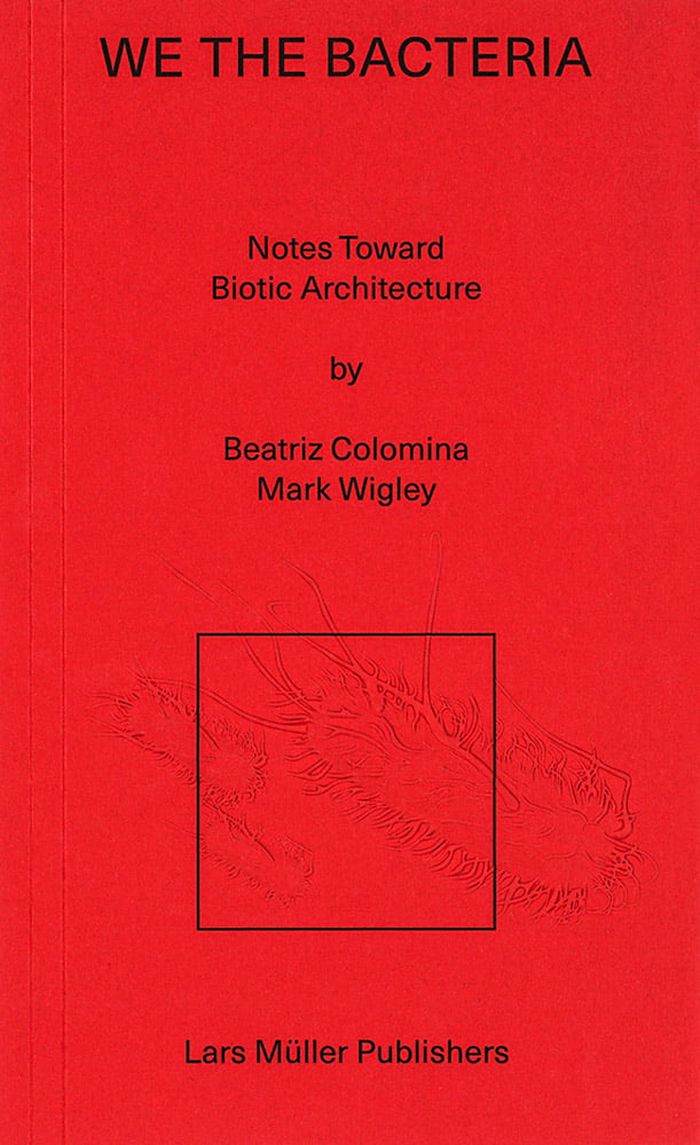
We the bacteria: Notes towards biotic architecture
Actions:
Prix:
$35.00
(disponible en magasin)
Résumé:
The sequel to the authors’ “Are We Human?”, this provocative book is an urgent manifesto for an alternative architectural philosophy. It treats bacteria as the real architects, construction workers, maintenance crews and inhabitants of buildings. Colomina and Wigley draw on the latest research into microbes to rethink the past and possible futures of the built environment. The book explores the intimate entanglements of the microbes within bodies and buildings over the last 10,000 years, culminating in the antibiotic philosophy of contemporary architecture. The diseases of our time are diseases of the built environment. The deadly combination of rapidly declining microbial diversity and rising antibiotic-resistant bacteria is as great a threat as climate change. Hostility to bacteria has to give way to new forms of hospitality from a more symbiotic architecture that learns from bacteria, embracing them and reconnecting with soil, plants and other species. Buildings based on fear of bacteria, which is to say fear of life itself, must give way to buildings learning from models of coexistence based on bacteria themselves. The main goal of the book is to rethink the very idea of shelter in terms of forms of inclusion rather than prophylactic forms of exclusion.
We the bacteria: Notes towards biotic architecture
Actions:
Prix:
$35.00
(disponible en magasin)
Résumé:
The sequel to the authors’ “Are We Human?”, this provocative book is an urgent manifesto for an alternative architectural philosophy. It treats bacteria as the real architects, construction workers, maintenance crews and inhabitants of buildings. Colomina and Wigley draw on the latest research into microbes to rethink the past and possible futures of the built environment. The book explores the intimate entanglements of the microbes within bodies and buildings over the last 10,000 years, culminating in the antibiotic philosophy of contemporary architecture. The diseases of our time are diseases of the built environment. The deadly combination of rapidly declining microbial diversity and rising antibiotic-resistant bacteria is as great a threat as climate change. Hostility to bacteria has to give way to new forms of hospitality from a more symbiotic architecture that learns from bacteria, embracing them and reconnecting with soil, plants and other species. Buildings based on fear of bacteria, which is to say fear of life itself, must give way to buildings learning from models of coexistence based on bacteria themselves. The main goal of the book is to rethink the very idea of shelter in terms of forms of inclusion rather than prophylactic forms of exclusion.
Classification:
livres
livres
Publication:
octobre 2025
octobre 2025
Sujet:
L'écologie de l'architecure
L'écologie de l'architecure
Classification:
livres
livres
Titre:
Sick Architecture
Sick Architecture
Actions:
Prix:
$73.00
(disponible en magasin)
Résumé:
Illnesses, wellness, and architecture are inseparable. Medical professionals and architects have always been in a kind of dance, often influencing one another, though the dance is not always synchronized. Drawing from a wide range of historical and contemporary case studies from ancient Greece to twentieth-century India to present-day New York City, Sick Architecture(...)
$73.00
(disponible en magasin)
Résumé:
Illnesses, wellness, and architecture are inseparable. Medical professionals and architects have always been in a kind of dance, often influencing one another, though the dance is not always synchronized. Drawing from a wide range of historical and contemporary case studies from ancient Greece to twentieth-century India to present-day New York City, Sick Architecture(...)
Titre:
Sick Architecture
Actions:
Prix:
$73.00
(disponible en magasin)
Résumé:
Illnesses, wellness, and architecture are inseparable. Medical professionals and architects have always been in a kind of dance, often influencing one another, though the dance is not always synchronized. Drawing from a wide range of historical and contemporary case studies from ancient Greece to twentieth-century India to present-day New York City, Sick Architecture highlights a topic that has shaped our lives from the very beginnings of architecture to the outbreak of the Covid-19 pandemic and beyond. "Sick Architecture" goes beyond the sicknesses recognized by the medical profession to ask: What aspects of society may be ill, in need of care, or subject to pathologization? Similarly the book goes beyond physical buildings and cities to interrogate architecture’s policy protocols and spatial logics.
Sick Architecture
Actions:
Prix:
$73.00
(disponible en magasin)
Résumé:
Illnesses, wellness, and architecture are inseparable. Medical professionals and architects have always been in a kind of dance, often influencing one another, though the dance is not always synchronized. Drawing from a wide range of historical and contemporary case studies from ancient Greece to twentieth-century India to present-day New York City, Sick Architecture highlights a topic that has shaped our lives from the very beginnings of architecture to the outbreak of the Covid-19 pandemic and beyond. "Sick Architecture" goes beyond the sicknesses recognized by the medical profession to ask: What aspects of society may be ill, in need of care, or subject to pathologization? Similarly the book goes beyond physical buildings and cities to interrogate architecture’s policy protocols and spatial logics.
Classification:
livres
livres
Publication:
octobre 2025
octobre 2025
Sujet:
Théorie de l’architecture
Théorie de l’architecture
Classification:
livres
livres
Actions:
Prix:
$90.00
(disponible sur commande)
Résumé:
Rachel Whiteread (b. 1963) creates spare, poetic sculptures that challenge perceptions of the commonplace. Working from everyday domestic items, she casts - in rubber, concrete, plaster, and polyester resin - the negative spaces inside closets and underneath beds, sinks, bathtubs, and chairs. Now, in what may be her most personal project to date, the Turner Prize-winning(...)
$90.00
(disponible sur commande)
Résumé:
Rachel Whiteread (b. 1963) creates spare, poetic sculptures that challenge perceptions of the commonplace. Working from everyday domestic items, she casts - in rubber, concrete, plaster, and polyester resin - the negative spaces inside closets and underneath beds, sinks, bathtubs, and chairs. Now, in what may be her most personal project to date, the Turner Prize-winning(...)
Publication:
octobre 2001, New York
octobre 2001, New York
Titre:
Rachel Whiteread : transient spaces
Actions:
Prix:
$90.00
(disponible sur commande)
Résumé:
Rachel Whiteread (b. 1963) creates spare, poetic sculptures that challenge perceptions of the commonplace. Working from everyday domestic items, she casts - in rubber, concrete, plaster, and polyester resin - the negative spaces inside closets and underneath beds, sinks, bathtubs, and chairs. Now, in what may be her most personal project to date, the Turner Prize-winning artist has been commissioned by Deutsche Guggenheim Berlin to make two large-scale casts from distinct spaces in a London building that she recently purchased to become her home and studio. Although the building has a history as both a synagogue and a factory, it is a product of austere postwar architecture, lacking many of the traditional embellishments associated with such structures. This fully illustrated volume documents Whiteread's process as she creates casts from this religious-cum-industrial-cum-personal space, which blurs boundaries between the spiritual and secular, as well as the public and private.
Rachel Whiteread : transient spaces
Actions:
Prix:
$90.00
(disponible sur commande)
Résumé:
Rachel Whiteread (b. 1963) creates spare, poetic sculptures that challenge perceptions of the commonplace. Working from everyday domestic items, she casts - in rubber, concrete, plaster, and polyester resin - the negative spaces inside closets and underneath beds, sinks, bathtubs, and chairs. Now, in what may be her most personal project to date, the Turner Prize-winning artist has been commissioned by Deutsche Guggenheim Berlin to make two large-scale casts from distinct spaces in a London building that she recently purchased to become her home and studio. Although the building has a history as both a synagogue and a factory, it is a product of austere postwar architecture, lacking many of the traditional embellishments associated with such structures. This fully illustrated volume documents Whiteread's process as she creates casts from this religious-cum-industrial-cum-personal space, which blurs boundaries between the spiritual and secular, as well as the public and private.
Classification:
livres
livres
Publication:
octobre 2001, New York
octobre 2001, New York
Classification:
livres
livres
Titre:
X-Ray architecture
X-Ray architecture
Actions:
Prix:
$54.00
(disponible sur commande)
Résumé:
How our medical obsessions and the image of the body influence modern architecture. This book explores the impact of medical discourse and diagnostic technologies on the formation, representation and reception of modern architecture. It challenges the normal understanding of modern architecture by proposing that the architecture of the early 20th century was shaped by the(...)
$54.00
(disponible sur commande)
Résumé:
How our medical obsessions and the image of the body influence modern architecture. This book explores the impact of medical discourse and diagnostic technologies on the formation, representation and reception of modern architecture. It challenges the normal understanding of modern architecture by proposing that the architecture of the early 20th century was shaped by the(...)
Titre:
X-Ray architecture
Actions:
Prix:
$54.00
(disponible sur commande)
Résumé:
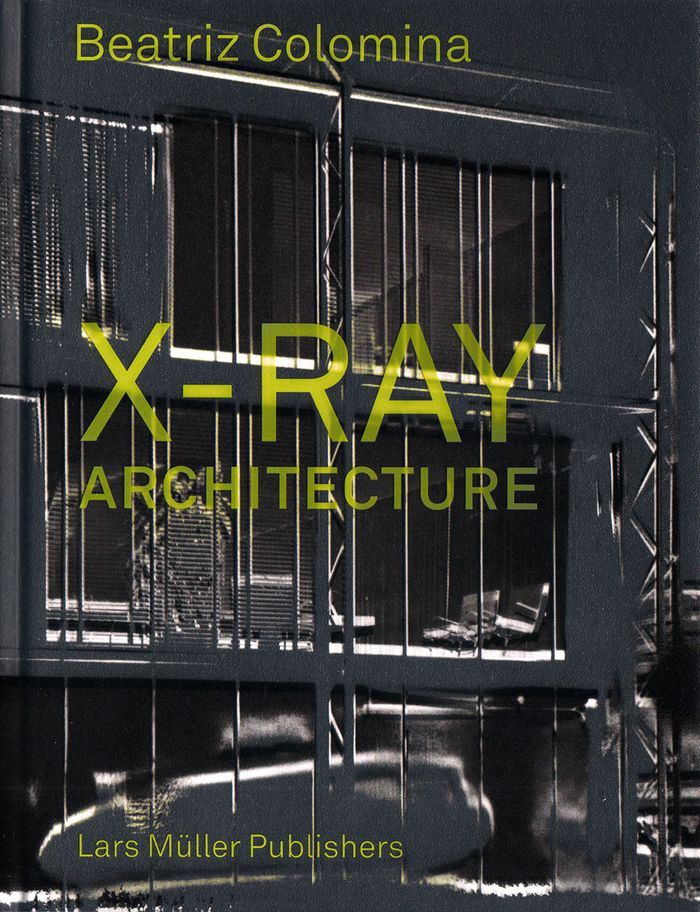
How our medical obsessions and the image of the body influence modern architecture. This book explores the impact of medical discourse and diagnostic technologies on the formation, representation and reception of modern architecture. It challenges the normal understanding of modern architecture by proposing that the architecture of the early 20th century was shaped by the dominant medical obsession of its time: tuberculosis and its primary diagnostic tool, the X-ray.
X-Ray architecture
Actions:
Prix:
$54.00
(disponible sur commande)
Résumé:
How our medical obsessions and the image of the body influence modern architecture. This book explores the impact of medical discourse and diagnostic technologies on the formation, representation and reception of modern architecture. It challenges the normal understanding of modern architecture by proposing that the architecture of the early 20th century was shaped by the dominant medical obsession of its time: tuberculosis and its primary diagnostic tool, the X-ray.
Classification:
livres
livres
Publication:
avril 2019
avril 2019
Sujet:
Architecture contemporaine
Architecture contemporaine
Classification:
livres
livres
Actions:
Prix:
$49.95
(disponible sur commande)
Résumé:
''Superhumanity'' seeks to explore and challenge our understanding of ''design'' by engaging with and departing from the concept of the ''self.'' This volume brings together more than fifty essays by leading scientists, artists, architects, designers, philosophers, historians, archaeologists, and anthropologists, originally disseminated online via e-flux Architecture(...)
$49.95
(disponible sur commande)
Résumé:
''Superhumanity'' seeks to explore and challenge our understanding of ''design'' by engaging with and departing from the concept of the ''self.'' This volume brings together more than fifty essays by leading scientists, artists, architects, designers, philosophers, historians, archaeologists, and anthropologists, originally disseminated online via e-flux Architecture(...)
Sujet:
Théorie de l’architecture
Théorie de l’architecture
Publication:
janvier 2018
janvier 2018
Titre:
Superhumanity: design of the self. E-Flux Classics
Actions:
Prix:
$49.95
(disponible sur commande)
Résumé:
''Superhumanity'' seeks to explore and challenge our understanding of ''design'' by engaging with and departing from the concept of the ''self.'' This volume brings together more than fifty essays by leading scientists, artists, architects, designers, philosophers, historians, archaeologists, and anthropologists, originally disseminated online via e-flux Architecture between September 2016 and February 2017 on the invitation of the Third Istanbul Design Biennial. Probing the idea that we are and always have been continuously reshaped by the artifacts we shape, this book asks: Who designed the lives we live today? What are the forms of life we inhabit, and what new forms are currently being designed? Where are the sites, and what are the techniques, to design others?
Superhumanity: design of the self. E-Flux Classics
Actions:
Prix:
$49.95
(disponible sur commande)
Résumé:
''Superhumanity'' seeks to explore and challenge our understanding of ''design'' by engaging with and departing from the concept of the ''self.'' This volume brings together more than fifty essays by leading scientists, artists, architects, designers, philosophers, historians, archaeologists, and anthropologists, originally disseminated online via e-flux Architecture between September 2016 and February 2017 on the invitation of the Third Istanbul Design Biennial. Probing the idea that we are and always have been continuously reshaped by the artifacts we shape, this book asks: Who designed the lives we live today? What are the forms of life we inhabit, and what new forms are currently being designed? Where are the sites, and what are the techniques, to design others?
Classification:
livres
livres
Publication:
janvier 2018
janvier 2018
Sujet:
Théorie de l’architecture
Théorie de l’architecture
Classification:
livres
livres

Prix:
$74.00
(disponible sur commande)
Résumé:
An explosion of little architectural magazines in the 1960s and 1970s instigated a radical transformation in architectural culture, as the magazines acted as a site of innovation and debate. Clip, Stamp, Fold takes stock of seventy little magazines from this period that were published in over a dozen cities. Coined in the early twentieth century to designate progressive(...)
$74.00
(disponible sur commande)
Résumé:
An explosion of little architectural magazines in the 1960s and 1970s instigated a radical transformation in architectural culture, as the magazines acted as a site of innovation and debate. Clip, Stamp, Fold takes stock of seventy little magazines from this period that were published in over a dozen cities. Coined in the early twentieth century to designate progressive(...)
Titre:
Clip stamp fold: The radical architecture of little magazines
Actions:
Prix:
$74.00
(disponible sur commande)
Résumé:
An explosion of little architectural magazines in the 1960s and 1970s instigated a radical transformation in architectural culture, as the magazines acted as a site of innovation and debate. Clip, Stamp, Fold takes stock of seventy little magazines from this period that were published in over a dozen cities. Coined in the early twentieth century to designate progressive literary journals, the term little magazine was remobilized during the 1960s to grapple with the contemporary proliferation of independent architectural periodicals. In addition to short-lived radical magazines, this book includes pamphlets and building instruction manuals along with professional magazines that experienced moments of littleness, influenced by the graphics and intellectual concerns of their self-published contemporaries.
Clip stamp fold: The radical architecture of little magazines
Actions:
Prix:
$74.00
(disponible sur commande)
Résumé:
An explosion of little architectural magazines in the 1960s and 1970s instigated a radical transformation in architectural culture, as the magazines acted as a site of innovation and debate. Clip, Stamp, Fold takes stock of seventy little magazines from this period that were published in over a dozen cities. Coined in the early twentieth century to designate progressive literary journals, the term little magazine was remobilized during the 1960s to grapple with the contemporary proliferation of independent architectural periodicals. In addition to short-lived radical magazines, this book includes pamphlets and building instruction manuals along with professional magazines that experienced moments of littleness, influenced by the graphics and intellectual concerns of their self-published contemporaries.
Classification:
livres
livres
Publication:
avril 2010
avril 2010
Classification:
livres
livres

Titre:
Das Andere (the other)
Das Andere (the other)
Actions:
Prix:
$38.00
(disponible sur commande)
Résumé:
In 1903, Adolf Loos edited the journal Das Andere – Ein Blatt zur Einführung abendländischer 'Kunst in Österreich', in which he expressed his thoughts on, and theories of, contemporary architecture, fashion, and design. The publication was born out of Loos’ aversion to a superficial aestheticization of life in Austria, which he saw embodied by the “Wiener Secession” and(...)
$38.00
(disponible sur commande)
Résumé:
In 1903, Adolf Loos edited the journal Das Andere – Ein Blatt zur Einführung abendländischer 'Kunst in Österreich', in which he expressed his thoughts on, and theories of, contemporary architecture, fashion, and design. The publication was born out of Loos’ aversion to a superficial aestheticization of life in Austria, which he saw embodied by the “Wiener Secession” and(...)
Titre:
Das Andere (the other)
Actions:
Prix:
$38.00
(disponible sur commande)
Résumé:
In 1903, Adolf Loos edited the journal Das Andere – Ein Blatt zur Einführung abendländischer 'Kunst in Österreich', in which he expressed his thoughts on, and theories of, contemporary architecture, fashion, and design. The publication was born out of Loos’ aversion to a superficial aestheticization of life in Austria, which he saw embodied by the “Wiener Secession” and later on “Wiener Werkstätte” and “Werkbund”. As a counterbalance, in Das Andere he showed his admiration especially for the fashion and culture of England and America. Contemporary advertisements on these subjects were included in the journal, which ran for just two issues. Beatriz Colomina supplements the reprint of Das Andere with an extensive commentary.
Das Andere (the other)
Actions:
Prix:
$38.00
(disponible sur commande)
Résumé:
In 1903, Adolf Loos edited the journal Das Andere – Ein Blatt zur Einführung abendländischer 'Kunst in Österreich', in which he expressed his thoughts on, and theories of, contemporary architecture, fashion, and design. The publication was born out of Loos’ aversion to a superficial aestheticization of life in Austria, which he saw embodied by the “Wiener Secession” and later on “Wiener Werkstätte” and “Werkbund”. As a counterbalance, in Das Andere he showed his admiration especially for the fashion and culture of England and America. Contemporary advertisements on these subjects were included in the journal, which ran for just two issues. Beatriz Colomina supplements the reprint of Das Andere with an extensive commentary.
Classification:
livres
livres
Publication:
février 2016
février 2016
Sujet:
Architecture, monographies
Architecture, monographies
Classification:
livres
livres
Actions:
Prix:
$45.00
(disponible en magasin)
Résumé:
The question Are We Human? is both urgent and ancient. Beatriz Colomina and Mark Wigley offer a multi-layered exploration of the intimate relationship between human and design and rethink the philosophy of design in a multi-dimensional exploration from the very ?rst tools and ornaments to the constant buzz of social media. The average day involves the experience of(...)
$45.00
(disponible en magasin)
Résumé:
The question Are We Human? is both urgent and ancient. Beatriz Colomina and Mark Wigley offer a multi-layered exploration of the intimate relationship between human and design and rethink the philosophy of design in a multi-dimensional exploration from the very ?rst tools and ornaments to the constant buzz of social media. The average day involves the experience of(...)
Titre:
Are we human? The design of the species: 2 seconds, 2 days, 2 years, 200 years, 200,00 years. Istanbul Design Biennal 2016
Actions:
Prix:
$45.00
(disponible en magasin)
Résumé:
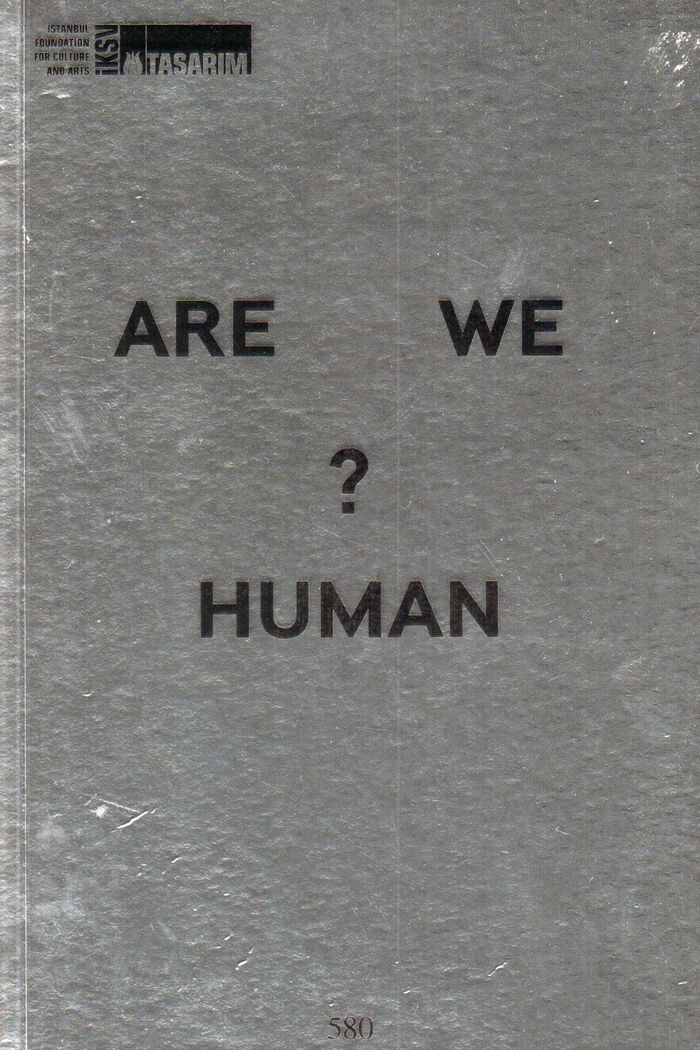
The question Are We Human? is both urgent and ancient. Beatriz Colomina and Mark Wigley offer a multi-layered exploration of the intimate relationship between human and design and rethink the philosophy of design in a multi-dimensional exploration from the very ?rst tools and ornaments to the constant buzz of social media. The average day involves the experience of thousands of layers of design that reach to outside space but also reach deep into our bodies and brains. Even the planet itself has been completely encrusted by design as a geological layer. There is no longer an outside to the world of design. Colomina’s and Wigley’s field notes offer an archaeology of the way design has gone viral and is now bigger than the world. They range across the last few hundred thousand years and the last few seconds to scrutinize the uniquely plastic relation between brain and artifact.
Are we human? The design of the species: 2 seconds, 2 days, 2 years, 200 years, 200,00 years. Istanbul Design Biennal 2016
Actions:
Prix:
$45.00
(disponible en magasin)
Résumé:
The question Are We Human? is both urgent and ancient. Beatriz Colomina and Mark Wigley offer a multi-layered exploration of the intimate relationship between human and design and rethink the philosophy of design in a multi-dimensional exploration from the very ?rst tools and ornaments to the constant buzz of social media. The average day involves the experience of thousands of layers of design that reach to outside space but also reach deep into our bodies and brains. Even the planet itself has been completely encrusted by design as a geological layer. There is no longer an outside to the world of design. Colomina’s and Wigley’s field notes offer an archaeology of the way design has gone viral and is now bigger than the world. They range across the last few hundred thousand years and the last few seconds to scrutinize the uniquely plastic relation between brain and artifact.
Classification:
livres
livres
Publication:
octobre 2016
octobre 2016
Sujet:
Théorie du design
Théorie du design
Classification:
livres
livres
Actions:
Prix:
$27.95
(disponible en magasin)
Résumé:
The question "Are we human?" is both urgent and ancient. Beatriz Colomina and Mark Wigley offer a multi-layered exploration of the intimate relationship between human and design and rethink the philosophy of design in a multi-dimensional exploration from the very ?rst tools and ornaments to the constant buzz of social media. The average day involves the experience of(...)
$27.95
(disponible en magasin)
Résumé:
The question "Are we human?" is both urgent and ancient. Beatriz Colomina and Mark Wigley offer a multi-layered exploration of the intimate relationship between human and design and rethink the philosophy of design in a multi-dimensional exploration from the very ?rst tools and ornaments to the constant buzz of social media. The average day involves the experience of(...)
Titre:
Are we human?: notes on an archaeology of design
Actions:
Prix:
$27.95
(disponible en magasin)
Résumé:
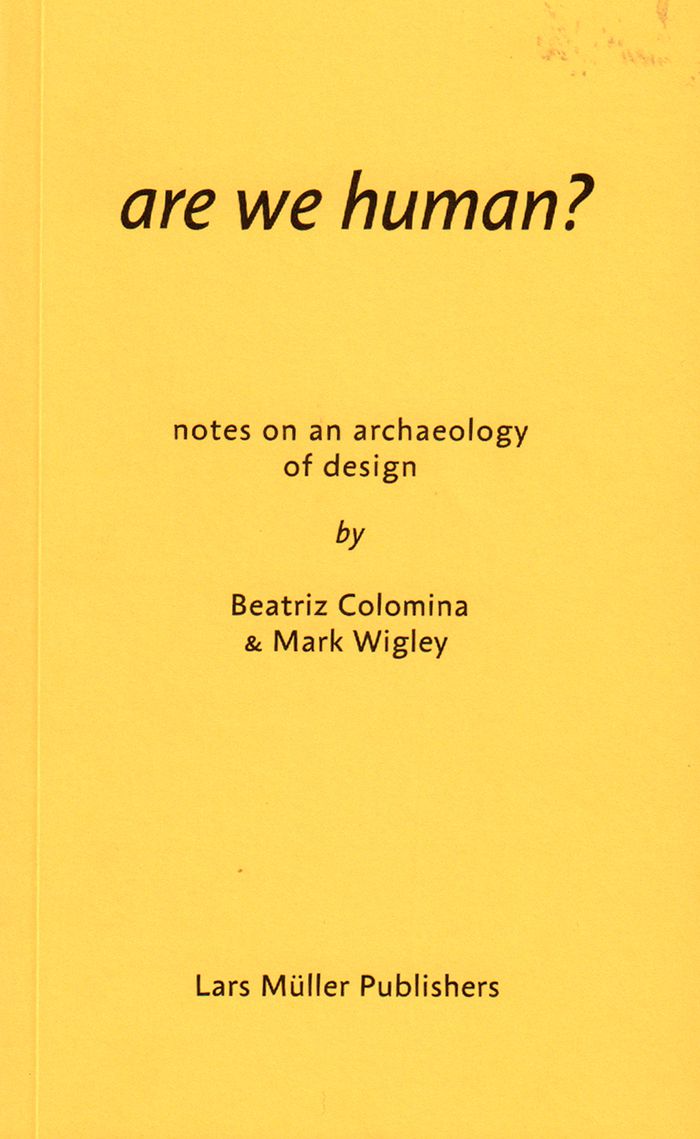
The question "Are we human?" is both urgent and ancient. Beatriz Colomina and Mark Wigley offer a multi-layered exploration of the intimate relationship between human and design and rethink the philosophy of design in a multi-dimensional exploration from the very ?rst tools and ornaments to the constant buzz of social media. The average day involves the experience of thousands of layers of design that reach to outside space but also reach deep into our bodies and brains. Even the planet itself has been completely encrusted by design as a geological layer. There is no longer an outside to the world of design. Colomina’s and Wigley’s field notes offer an archaeology of the way design has gone viral and is now bigger than the world. They range across the last few hundred thousand years and the last few seconds to scrutinize the uniquely plastic relation between brain and artifact. A vivid portrait emerges. Design is what makes the human. It becomes the way humans ask questions and thereby continuously redesign themselves.
Are we human?: notes on an archaeology of design
Actions:
Prix:
$27.95
(disponible en magasin)
Résumé:
The question "Are we human?" is both urgent and ancient. Beatriz Colomina and Mark Wigley offer a multi-layered exploration of the intimate relationship between human and design and rethink the philosophy of design in a multi-dimensional exploration from the very ?rst tools and ornaments to the constant buzz of social media. The average day involves the experience of thousands of layers of design that reach to outside space but also reach deep into our bodies and brains. Even the planet itself has been completely encrusted by design as a geological layer. There is no longer an outside to the world of design. Colomina’s and Wigley’s field notes offer an archaeology of the way design has gone viral and is now bigger than the world. They range across the last few hundred thousand years and the last few seconds to scrutinize the uniquely plastic relation between brain and artifact. A vivid portrait emerges. Design is what makes the human. It becomes the way humans ask questions and thereby continuously redesign themselves.
Classification:
livres
livres
Publication:
janvier 2017
janvier 2017
Sujet:
Théorie du design
Théorie du design


