


17 Résultats
Classification:
livres
livres
Actions:
Prix:
$110.00
(disponible sur commande)
Résumé:
Like the most recent exhibitions curated by Daniel Birnbaum, the Art Biennale 2009 will present worlds in the making. A work of art is more than an object, he says, more than a commodity. It represents a vision of the world, and, if taken seriously, it can be seen as a way of world-making. It is Birnbaum’s ambition to create a show that, although articulated into(...)
$110.00
(disponible sur commande)
Résumé:
Like the most recent exhibitions curated by Daniel Birnbaum, the Art Biennale 2009 will present worlds in the making. A work of art is more than an object, he says, more than a commodity. It represents a vision of the world, and, if taken seriously, it can be seen as a way of world-making. It is Birnbaum’s ambition to create a show that, although articulated into(...)
Publication:
novembre 2009
novembre 2009
Titre:
Making worlds: 53rd Venice Biennale
Actions:
Prix:
$110.00
(disponible sur commande)
Résumé:
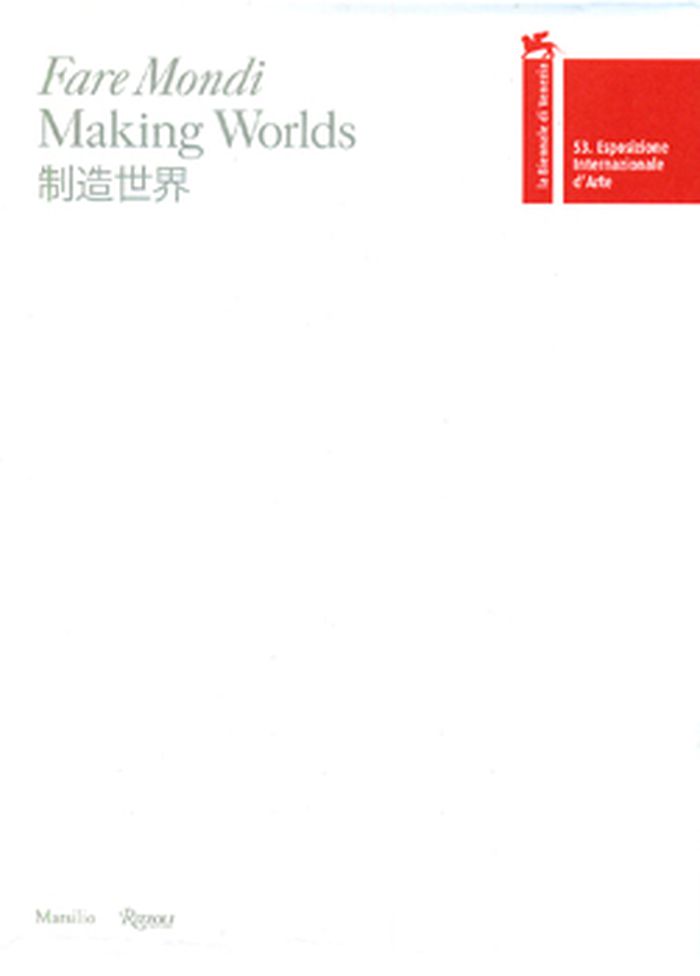
Like the most recent exhibitions curated by Daniel Birnbaum, the Art Biennale 2009 will present worlds in the making. A work of art is more than an object, he says, more than a commodity. It represents a vision of the world, and, if taken seriously, it can be seen as a way of world-making. It is Birnbaum’s ambition to create a show that, although articulated into individual zones of intensity, remains fundamentally a unique exhibition.
Making worlds: 53rd Venice Biennale
Actions:
Prix:
$110.00
(disponible sur commande)
Résumé:
Like the most recent exhibitions curated by Daniel Birnbaum, the Art Biennale 2009 will present worlds in the making. A work of art is more than an object, he says, more than a commodity. It represents a vision of the world, and, if taken seriously, it can be seen as a way of world-making. It is Birnbaum’s ambition to create a show that, although articulated into individual zones of intensity, remains fundamentally a unique exhibition.
Classification:
livres
livres
Publication:
novembre 2009
novembre 2009
Classification:
livres
livres

Actions:
Prix:
$95.00
(disponible sur commande)
Résumé:
Merging art and science, Eliasson engages the observer as participant, challenging the passive viewing experience by utilizing such elements as temperature, smell, moisture and light to trigger physical sensations. Olafur Eliasson: Inner City Out documents the artist's first project in Berlin, where he has lived and worked for many years. Designed for the(...)
$95.00
(disponible sur commande)
Résumé:
Merging art and science, Eliasson engages the observer as participant, challenging the passive viewing experience by utilizing such elements as temperature, smell, moisture and light to trigger physical sensations. Olafur Eliasson: Inner City Out documents the artist's first project in Berlin, where he has lived and worked for many years. Designed for the(...)
Titre:
Olafur Eliasson: Inner city out
Actions:
Prix:
$95.00
(disponible sur commande)
Résumé:
Merging art and science, Eliasson engages the observer as participant, challenging the passive viewing experience by utilizing such elements as temperature, smell, moisture and light to trigger physical sensations. Olafur Eliasson: Inner City Out documents the artist's first project in Berlin, where he has lived and worked for many years. Designed for the Martin-Gropius-Bau, and curated by Daniel Birnbaum, it examines the relationship between the museum and the city, bridging the two through ephemeral installations placed in various locations throughout the city as well as within the museum itself.
Olafur Eliasson: Inner city out
Actions:
Prix:
$95.00
(disponible sur commande)
Résumé:
Merging art and science, Eliasson engages the observer as participant, challenging the passive viewing experience by utilizing such elements as temperature, smell, moisture and light to trigger physical sensations. Olafur Eliasson: Inner City Out documents the artist's first project in Berlin, where he has lived and worked for many years. Designed for the Martin-Gropius-Bau, and curated by Daniel Birnbaum, it examines the relationship between the museum and the city, bridging the two through ephemeral installations placed in various locations throughout the city as well as within the museum itself.
Classification:
livres
livres
Publication:
septembre 2010
septembre 2010
Classification:
livres
livres
Actions:
Prix:
$54.00
(disponible sur commande)
Résumé:
This publication gathers the interior photographs of Amy Simon. Like the apartment depicted in these images, the places where Simon works hold special significance for her, attuned as she is to the mood and suggestiveness of interiors. Further exploring Simon's engagement with issues of domesticity, the book features a series of new drawings and wallpaper designs recently(...)
$54.00
(disponible sur commande)
Résumé:
This publication gathers the interior photographs of Amy Simon. Like the apartment depicted in these images, the places where Simon works hold special significance for her, attuned as she is to the mood and suggestiveness of interiors. Further exploring Simon's engagement with issues of domesticity, the book features a series of new drawings and wallpaper designs recently(...)
Titre:
Amy Simon: a different state of mind
Actions:
Prix:
$54.00
(disponible sur commande)
Résumé:
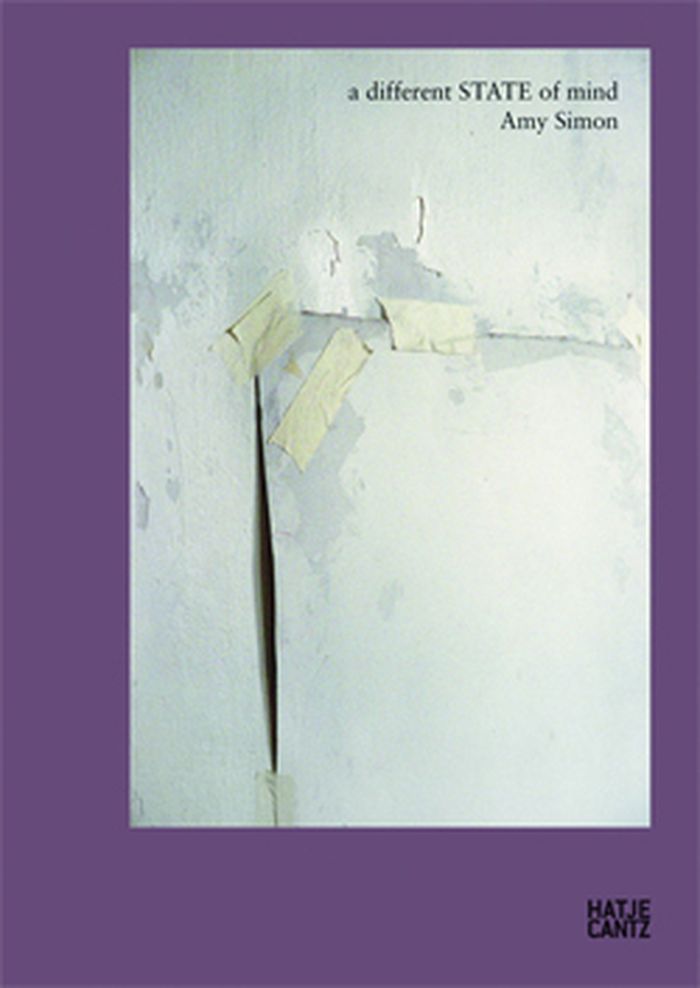
This publication gathers the interior photographs of Amy Simon. Like the apartment depicted in these images, the places where Simon works hold special significance for her, attuned as she is to the mood and suggestiveness of interiors. Further exploring Simon's engagement with issues of domesticity, the book features a series of new drawings and wallpaper designs recently exhibited at the Venice Biennale.
Amy Simon: a different state of mind
Actions:
Prix:
$54.00
(disponible sur commande)
Résumé:
This publication gathers the interior photographs of Amy Simon. Like the apartment depicted in these images, the places where Simon works hold special significance for her, attuned as she is to the mood and suggestiveness of interiors. Further exploring Simon's engagement with issues of domesticity, the book features a series of new drawings and wallpaper designs recently exhibited at the Venice Biennale.
Classification:
livres
livres
Publication:
août 2010
août 2010
Sujet:
Monographies photo
Monographies photo
Classification:
livres
livres
Prix:
$79.95
(disponible sur commande)
Résumé:
Defining Contemporary Art responds to this unique landscape with an innovative approach to art history. Assembled and written by eight of the most prominent curators working today, all of whom have both witnessed and shaped this period, this book tells the story of the two hundred pivotal artworks of the past twenty-five years. These artworks include not only the most(...)
$79.95
(disponible sur commande)
Résumé:
Defining Contemporary Art responds to this unique landscape with an innovative approach to art history. Assembled and written by eight of the most prominent curators working today, all of whom have both witnessed and shaped this period, this book tells the story of the two hundred pivotal artworks of the past twenty-five years. These artworks include not only the most(...)
Publication:
novembre 2011
novembre 2011
Titre:
Defining contemporary art: 25 years in 200 pivotal artworks
Actions:
Prix:
$79.95
(disponible sur commande)
Résumé:
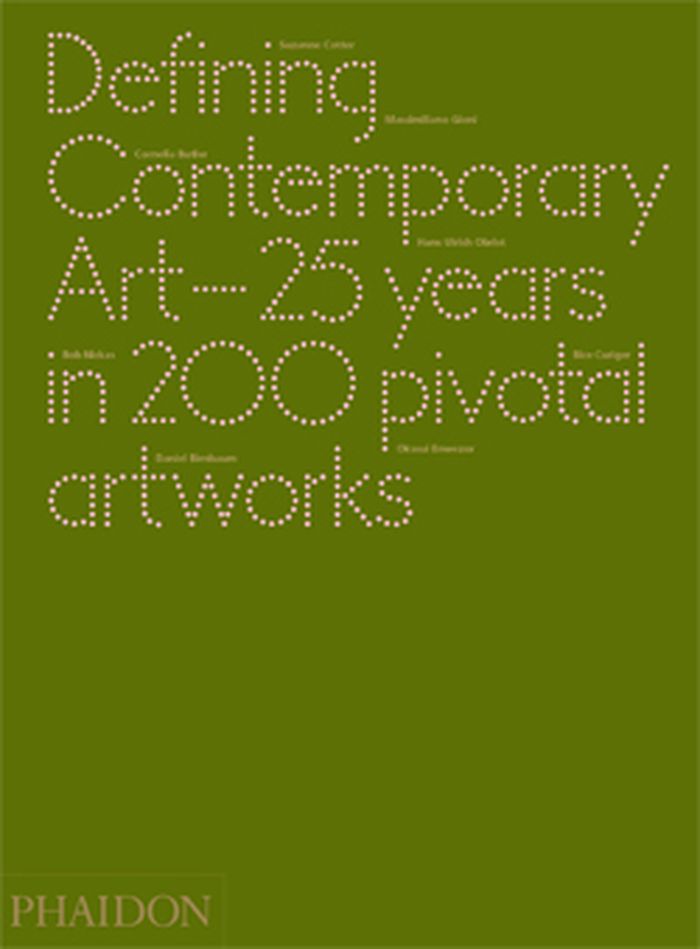
Defining Contemporary Art responds to this unique landscape with an innovative approach to art history. Assembled and written by eight of the most prominent curators working today, all of whom have both witnessed and shaped this period, this book tells the story of the two hundred pivotal artworks of the past twenty-five years. These artworks include not only the most talked about pieces but also the quietly influential works, those which may have been overlooked at the time of their making but which went on to change the paradigm of their era.
Defining contemporary art: 25 years in 200 pivotal artworks
Actions:
Prix:
$79.95
(disponible sur commande)
Résumé:
Defining Contemporary Art responds to this unique landscape with an innovative approach to art history. Assembled and written by eight of the most prominent curators working today, all of whom have both witnessed and shaped this period, this book tells the story of the two hundred pivotal artworks of the past twenty-five years. These artworks include not only the most talked about pieces but also the quietly influential works, those which may have been overlooked at the time of their making but which went on to change the paradigm of their era.
Classification:
livres
livres
Publication:
novembre 2011
novembre 2011
Classification:
livres
livres
Actions:
Prix:
$24.95
(disponible sur commande)
Résumé:
By many art history accounts, the art of the twentieth century was decided by Pablo Picasso and Marcel Duchamp. In these versions, Picasso stands for prolific production, a fierce expressionism, endless research of the picture plane and a sense of voracious creativity; whereas Duchamp stands for cerebral brilliance, rejection of optical pleasure and a subtle but(...)
$24.95
(disponible sur commande)
Résumé:
By many art history accounts, the art of the twentieth century was decided by Pablo Picasso and Marcel Duchamp. In these versions, Picasso stands for prolific production, a fierce expressionism, endless research of the picture plane and a sense of voracious creativity; whereas Duchamp stands for cerebral brilliance, rejection of optical pleasure and a subtle but(...)
Titre:
Duchamp & Picasso: He Was Wrong
Actions:
Prix:
$24.95
(disponible sur commande)
Résumé:
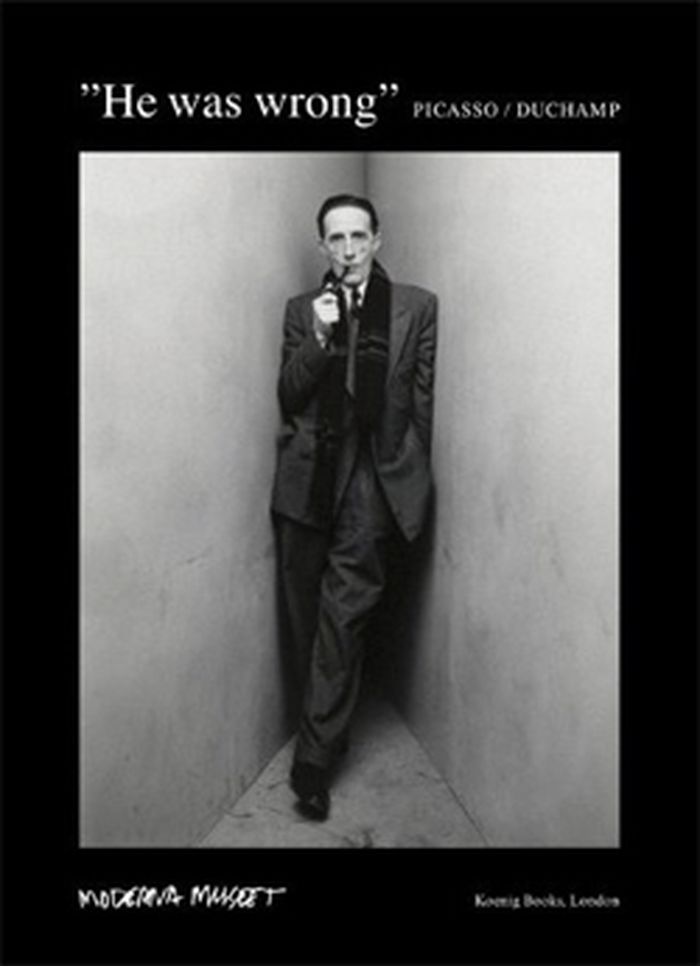
By many art history accounts, the art of the twentieth century was decided by Pablo Picasso and Marcel Duchamp. In these versions, Picasso stands for prolific production, a fierce expressionism, endless research of the picture plane and a sense of voracious creativity; whereas Duchamp stands for cerebral brilliance, rejection of optical pleasure and a subtle but all-pervasive conceptual sabotage and irony. (Of course, they shared as many traits, including an appetite for provocation and the recognition of eros as a fundamental, animating life principle.) So who was right? This volume, published for a show at the Moderna Museet in Stockholm, argues for both sides of the coin, looking at various aspects of both oeuvres, including Picasso’s fascination with the Minotaur and Duchamp’s Rrose Selavy alter ego. The book is appropriately divided in two halves separated by a reverse binding.
Duchamp & Picasso: He Was Wrong
Actions:
Prix:
$24.95
(disponible sur commande)
Résumé:
By many art history accounts, the art of the twentieth century was decided by Pablo Picasso and Marcel Duchamp. In these versions, Picasso stands for prolific production, a fierce expressionism, endless research of the picture plane and a sense of voracious creativity; whereas Duchamp stands for cerebral brilliance, rejection of optical pleasure and a subtle but all-pervasive conceptual sabotage and irony. (Of course, they shared as many traits, including an appetite for provocation and the recognition of eros as a fundamental, animating life principle.) So who was right? This volume, published for a show at the Moderna Museet in Stockholm, argues for both sides of the coin, looking at various aspects of both oeuvres, including Picasso’s fascination with the Minotaur and Duchamp’s Rrose Selavy alter ego. The book is appropriately divided in two halves separated by a reverse binding.
Classification:
livres
livres
Publication:
janvier 2013
janvier 2013
Sujet:
Théorie de l’art
Théorie de l’art
Classification:
livres
livres
Actions:
Prix:
$85.00
(disponible sur commande)
Résumé:
In 1936, an ornithologist called James Bond released the definitive taxonomy of birds found in the Caribbean, titled Birds of the West Indies. Ian Fleming, an active bird watcher living in Jamaica, subsequently appropriated the name for his novel’s lead character. This co-opting of names was the first in a series of substitutions that would become central to the(...)
$85.00
(disponible sur commande)
Résumé:
In 1936, an ornithologist called James Bond released the definitive taxonomy of birds found in the Caribbean, titled Birds of the West Indies. Ian Fleming, an active bird watcher living in Jamaica, subsequently appropriated the name for his novel’s lead character. This co-opting of names was the first in a series of substitutions that would become central to the(...)
Titre:
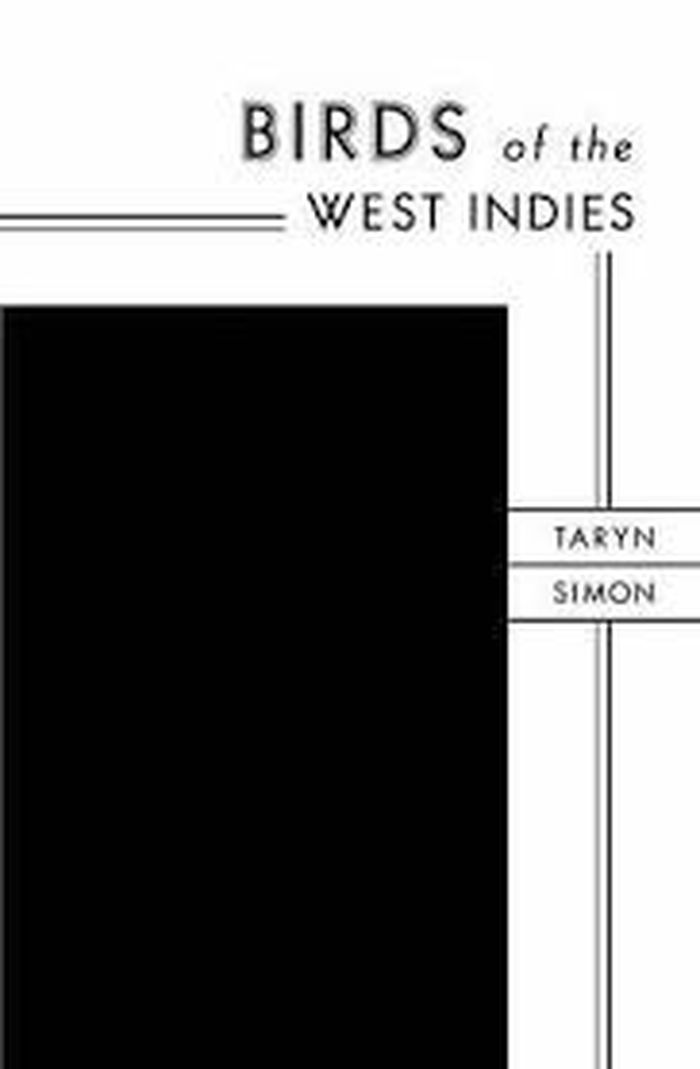
Taryn Simon : birds of the West Indies
Actions:
Prix:
$85.00
(disponible sur commande)
Résumé:
In 1936, an ornithologist called James Bond released the definitive taxonomy of birds found in the Caribbean, titled Birds of the West Indies. Ian Fleming, an active bird watcher living in Jamaica, subsequently appropriated the name for his novel’s lead character. This co-opting of names was the first in a series of substitutions that would become central to the construction of the James Bond narrative. In a meticulous and comprehensive dissection of the Bond films, artist Taryn Simon inventoried women, weapons and vehicles, constant elements in the films between 1962 and 2012. The contents of these categories function as essential accessories to the narrative’s myth of the seductive, powerful and invincible western male.
Taryn Simon : birds of the West Indies
Actions:
Prix:
$85.00
(disponible sur commande)
Résumé:
In 1936, an ornithologist called James Bond released the definitive taxonomy of birds found in the Caribbean, titled Birds of the West Indies. Ian Fleming, an active bird watcher living in Jamaica, subsequently appropriated the name for his novel’s lead character. This co-opting of names was the first in a series of substitutions that would become central to the construction of the James Bond narrative. In a meticulous and comprehensive dissection of the Bond films, artist Taryn Simon inventoried women, weapons and vehicles, constant elements in the films between 1962 and 2012. The contents of these categories function as essential accessories to the narrative’s myth of the seductive, powerful and invincible western male.
Classification:
livres
livres
Publication:
octobre 2013
octobre 2013
Classification:
livres
livres
Titre:
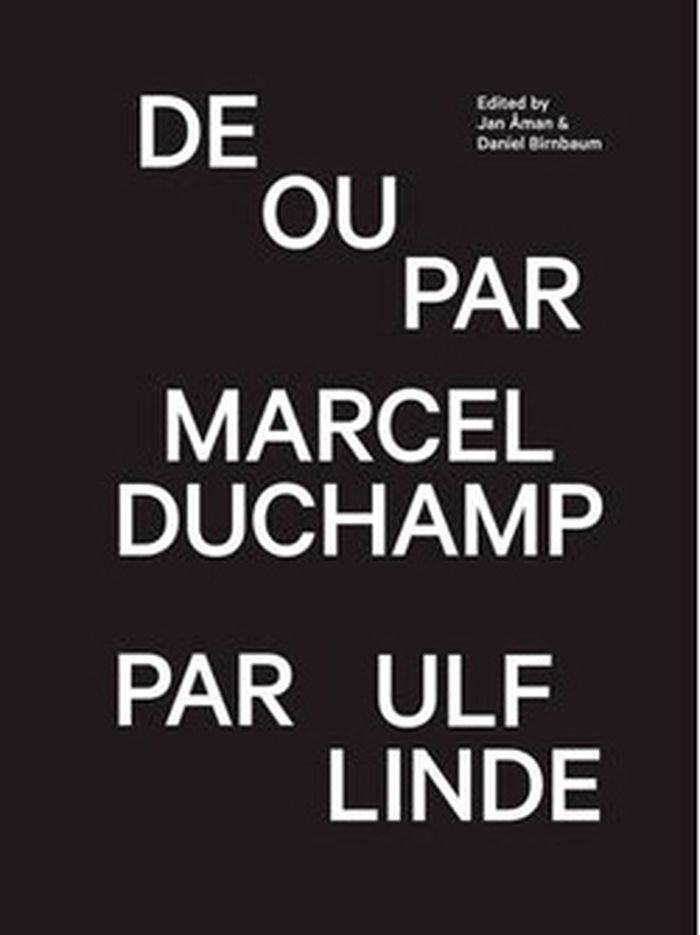
De ou par Marcel Duchamp
De ou par Marcel Duchamp
Actions:
Prix:
$66.95
(disponible sur commande)
Résumé:
Ulf Linde is without doubt one of the world’s most important interpreters of Marcel Duchamp’s art. For more than half a century, he has pursued intense studies of Duchamp’s entire oeuvre and has made perfect replicas of all his major works. His as-yet unpublished manuscript scrutinizing the mathematical principles behind Duchamp’s art reveals what Linde claims to be the(...)
$66.95
(disponible sur commande)
Résumé:
Ulf Linde is without doubt one of the world’s most important interpreters of Marcel Duchamp’s art. For more than half a century, he has pursued intense studies of Duchamp’s entire oeuvre and has made perfect replicas of all his major works. His as-yet unpublished manuscript scrutinizing the mathematical principles behind Duchamp’s art reveals what Linde claims to be the(...)
Titre:
De ou par Marcel Duchamp
Actions:
Prix:
$66.95
(disponible sur commande)
Résumé:
Ulf Linde is without doubt one of the world’s most important interpreters of Marcel Duchamp’s art. For more than half a century, he has pursued intense studies of Duchamp’s entire oeuvre and has made perfect replicas of all his major works. His as-yet unpublished manuscript scrutinizing the mathematical principles behind Duchamp’s art reveals what Linde claims to be the key to Duchamp’s poetic universe.
De ou par Marcel Duchamp
Actions:
Prix:
$66.95
(disponible sur commande)
Résumé:
Ulf Linde is without doubt one of the world’s most important interpreters of Marcel Duchamp’s art. For more than half a century, he has pursued intense studies of Duchamp’s entire oeuvre and has made perfect replicas of all his major works. His as-yet unpublished manuscript scrutinizing the mathematical principles behind Duchamp’s art reveals what Linde claims to be the key to Duchamp’s poetic universe.
Classification:
livres
livres
Publication:
novembre 2013
novembre 2013


