


28 Résultats
Classification:
livres
livres

Titre:
Pablo López Luz: Baja Moda
Pablo López Luz: Baja Moda
Actions:
Prix:
$68.00
(disponible sur commande)
Résumé:
The project "Baja Moda (Low Fashion)" explores two key aspects of contemporary Latin American culture: identity and resistance. While working on a previous project across Latin America, I began documenting store fronts and shoe shops still standing unaltered through the passage of time, unconcerned with the tendencies of modern globalized culture, seemingly opposing the(...)
$68.00
(disponible sur commande)
Résumé:
The project "Baja Moda (Low Fashion)" explores two key aspects of contemporary Latin American culture: identity and resistance. While working on a previous project across Latin America, I began documenting store fronts and shoe shops still standing unaltered through the passage of time, unconcerned with the tendencies of modern globalized culture, seemingly opposing the(...)
Titre:
Pablo López Luz: Baja Moda
Actions:
Prix:
$68.00
(disponible sur commande)
Résumé:
The project "Baja Moda (Low Fashion)" explores two key aspects of contemporary Latin American culture: identity and resistance. While working on a previous project across Latin America, I began documenting store fronts and shoe shops still standing unaltered through the passage of time, unconcerned with the tendencies of modern globalized culture, seemingly opposing the economic transition to overseas manufacturing.
Pablo López Luz: Baja Moda
Actions:
Prix:
$68.00
(disponible sur commande)
Résumé:
The project "Baja Moda (Low Fashion)" explores two key aspects of contemporary Latin American culture: identity and resistance. While working on a previous project across Latin America, I began documenting store fronts and shoe shops still standing unaltered through the passage of time, unconcerned with the tendencies of modern globalized culture, seemingly opposing the economic transition to overseas manufacturing.
Classification:
livres
livres
Publication:
mars 2022
mars 2022
Sujet:
Monographies photo
Monographies photo
Classification:
livres
livres
Titre:
John Divola: Scapes
John Divola: Scapes
Actions:
Prix:
$70.00
(disponible sur commande)
Résumé:
Cameras and their users are caught between the universal and the particular. Photography and photographs; humanity and whatever specific kind of human we happen to be. There is at least something existentially universal about Divola’s photographic adventures. The lone observer moving through the world and reflecting upon it through various camera possibilities. But nobody(...)
$70.00
(disponible sur commande)
Résumé:
Cameras and their users are caught between the universal and the particular. Photography and photographs; humanity and whatever specific kind of human we happen to be. There is at least something existentially universal about Divola’s photographic adventures. The lone observer moving through the world and reflecting upon it through various camera possibilities. But nobody(...)
Titre:
John Divola: Scapes
Actions:
Prix:
$70.00
(disponible sur commande)
Résumé:
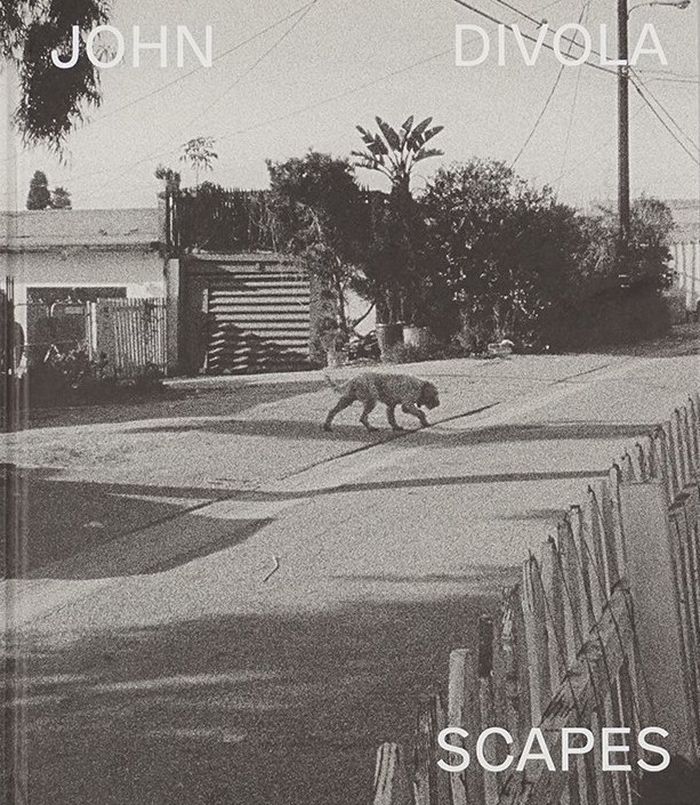
Cameras and their users are caught between the universal and the particular. Photography and photographs; humanity and whatever specific kind of human we happen to be. There is at least something existentially universal about Divola’s photographic adventures. The lone observer moving through the world and reflecting upon it through various camera possibilities. But nobody is truly universal, or only universal. We each come wrapped in our particulars, just as each and every photograph belongs to the universe of photography precisely insofar as it is particular. Forever the two.
John Divola: Scapes
Actions:
Prix:
$70.00
(disponible sur commande)
Résumé:
Cameras and their users are caught between the universal and the particular. Photography and photographs; humanity and whatever specific kind of human we happen to be. There is at least something existentially universal about Divola’s photographic adventures. The lone observer moving through the world and reflecting upon it through various camera possibilities. But nobody is truly universal, or only universal. We each come wrapped in our particulars, just as each and every photograph belongs to the universe of photography precisely insofar as it is particular. Forever the two.
Classification:
livres
livres
Publication:
juin 2022
juin 2022
Sujet:
Monographies photo
Monographies photo
Classification:
livres
livres
Titre:
Jeff Wall: picture for women
Jeff Wall: picture for women
Actions:
Prix:
$18.95
(disponible sur commande)
Résumé:
Jeff Wall's Picture for Women (1979) marks the transition of photography as an art form from the printed page to the gallery wall. Before this, photographs--from the orthodox photographic work of Walker Evans to the Conceptual photography of Dan Graham--seemed intended for the page even when hung in a gallery. In Picture for Women, a woman looks outward, as if at the(...)
$18.95
(disponible sur commande)
Résumé:
Jeff Wall's Picture for Women (1979) marks the transition of photography as an art form from the printed page to the gallery wall. Before this, photographs--from the orthodox photographic work of Walker Evans to the Conceptual photography of Dan Graham--seemed intended for the page even when hung in a gallery. In Picture for Women, a woman looks outward, as if at the(...)
Titre:
Jeff Wall: picture for women
Actions:
Prix:
$18.95
(disponible sur commande)
Résumé:
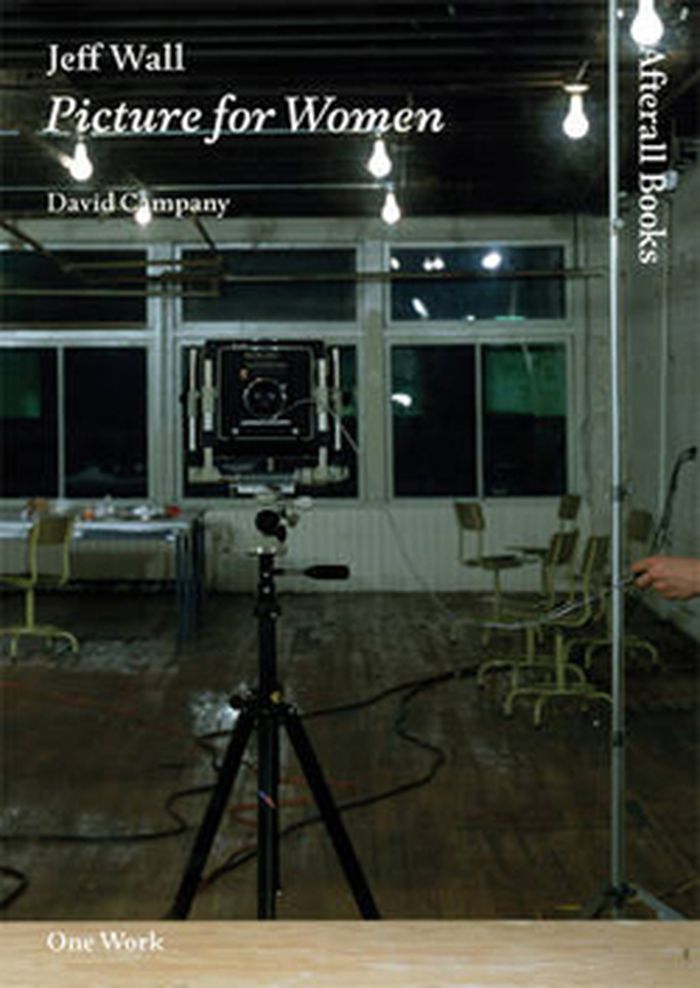
Jeff Wall's Picture for Women (1979) marks the transition of photography as an art form from the printed page to the gallery wall. Before this, photographs--from the orthodox photographic work of Walker Evans to the Conceptual photography of Dan Graham--seemed intended for the page even when hung in a gallery. In Picture for Women, a woman looks outward, as if at the viewer; a camera occupies the center of the photograph; the photographer stands on the right. Modeled on Manet's famous painting Un bar aux Folies-Bergere, in which a barmaid seems to look directly out of the painting, observed by a man on the right, Picture for Women establishes its own art historical genealogy, claiming its rightful position within the canon. Wall's photograph is an ambitious attempt to relate the artistic and spectatorial demands of the late 1970s to a modernist pictorial art that had been too hastily rejected by Conceptualism. In this illustrated study, David Campany offers an account of Wall's move from a Conceptual approach to a reengagement with the idea of a singular (as opposed to serial) picture. He shows that Wall's decision to present his work as a large-scale back-lit transparency, together with his commitment to a singular image, amounted to a radical departure. He contrasts Wall's idea of the photograph as a tableau or "picture," inherited from the history of painting, with the works of the "Pictures Generation" - including Richard Prince, Cindy Sherman, and Jack Goldstein - and argues that Picture for Women is inseparable from the modern fate of the picture in general.
Jeff Wall: picture for women
Actions:
Prix:
$18.95
(disponible sur commande)
Résumé:
Jeff Wall's Picture for Women (1979) marks the transition of photography as an art form from the printed page to the gallery wall. Before this, photographs--from the orthodox photographic work of Walker Evans to the Conceptual photography of Dan Graham--seemed intended for the page even when hung in a gallery. In Picture for Women, a woman looks outward, as if at the viewer; a camera occupies the center of the photograph; the photographer stands on the right. Modeled on Manet's famous painting Un bar aux Folies-Bergere, in which a barmaid seems to look directly out of the painting, observed by a man on the right, Picture for Women establishes its own art historical genealogy, claiming its rightful position within the canon. Wall's photograph is an ambitious attempt to relate the artistic and spectatorial demands of the late 1970s to a modernist pictorial art that had been too hastily rejected by Conceptualism. In this illustrated study, David Campany offers an account of Wall's move from a Conceptual approach to a reengagement with the idea of a singular (as opposed to serial) picture. He shows that Wall's decision to present his work as a large-scale back-lit transparency, together with his commitment to a singular image, amounted to a radical departure. He contrasts Wall's idea of the photograph as a tableau or "picture," inherited from the history of painting, with the works of the "Pictures Generation" - including Richard Prince, Cindy Sherman, and Jack Goldstein - and argues that Picture for Women is inseparable from the modern fate of the picture in general.
Classification:
livres
livres
Publication:
mars 2011
mars 2011
Classification:
livres
livres

Actions:
Prix:
$69.95
(disponible sur commande)
Résumé:
Walker Evans (1903-1975) was one of the most important and influential artists of the twentieth century, producing a body of photographs that continues to shape our understanding of the modern era. He worked in every genre and format, in black & white and colour, but two passions were constant: literature and the printed page. While his photographic books are among the(...)
$69.95
(disponible sur commande)
Résumé:
Walker Evans (1903-1975) was one of the most important and influential artists of the twentieth century, producing a body of photographs that continues to shape our understanding of the modern era. He worked in every genre and format, in black & white and colour, but two passions were constant: literature and the printed page. While his photographic books are among the(...)
Titre:
Walker Evans: the magazine work
Actions:
Prix:
$69.95
(disponible sur commande)
Résumé:
Walker Evans (1903-1975) was one of the most important and influential artists of the twentieth century, producing a body of photographs that continues to shape our understanding of the modern era. He worked in every genre and format, in black & white and colour, but two passions were constant: literature and the printed page. While his photographic books are among the most influential in the medium's history, Evans's more ephemeral pages remain largely unknown. From small avant-garde publications to mainstream titles such as Harper's Bazaar, Vogue, Architectural Forum, Life and Fortune he produced innovative and independent journalism, often setting his own assignments, editing, writing and designing his pages. Presenting many of his photo-essays in their entirety Walker Evans: the Magazine Work assembles the unwritten history of this work, allowing us to see how he protected his autonomy, earned a living and found audiences far beyond the museum and gallery.
Walker Evans: the magazine work
Actions:
Prix:
$69.95
(disponible sur commande)
Résumé:
Walker Evans (1903-1975) was one of the most important and influential artists of the twentieth century, producing a body of photographs that continues to shape our understanding of the modern era. He worked in every genre and format, in black & white and colour, but two passions were constant: literature and the printed page. While his photographic books are among the most influential in the medium's history, Evans's more ephemeral pages remain largely unknown. From small avant-garde publications to mainstream titles such as Harper's Bazaar, Vogue, Architectural Forum, Life and Fortune he produced innovative and independent journalism, often setting his own assignments, editing, writing and designing his pages. Presenting many of his photo-essays in their entirety Walker Evans: the Magazine Work assembles the unwritten history of this work, allowing us to see how he protected his autonomy, earned a living and found audiences far beyond the museum and gallery.
Classification:
livres
livres
Publication:
avril 2013
avril 2013
Sujet:
Monographies photo
Monographies photo
Classification:
livres
livres
Titre:
David Campany: gasoline
David Campany: gasoline
Actions:
Prix:
$41.00
(disponible en magasin)
Résumé:
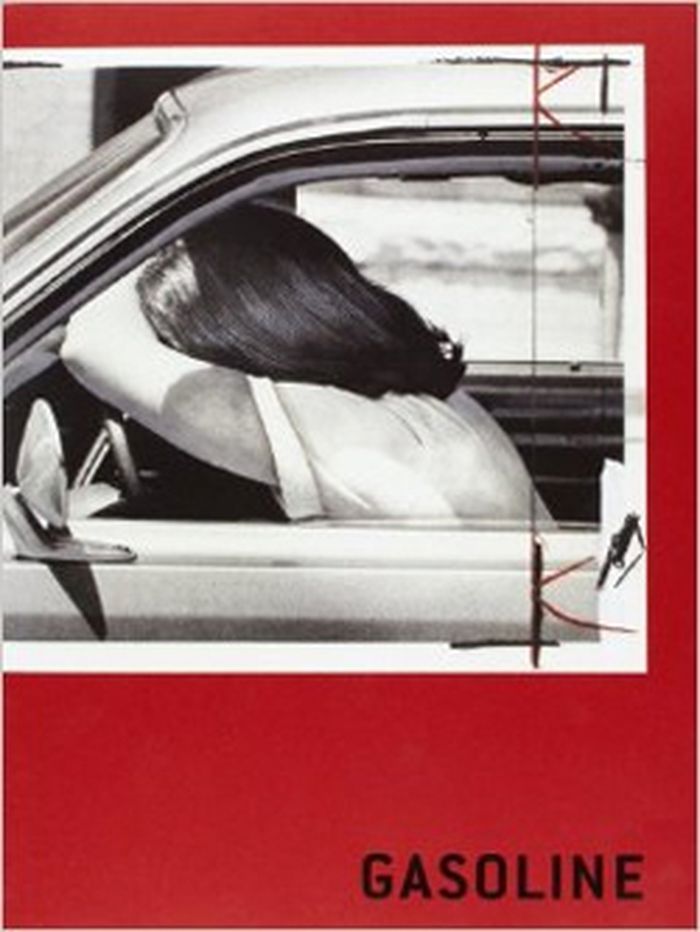
Gasoline presents 35 archive press images of gas stations taken between 1944 and 1995. They have been collected by writer David Campany, purchased from the photography archives of several American newspapers which have been discarding their analogue print collections and moving to the now ubiquitous .jpeg or .tif formats.
$41.00
(disponible en magasin)
Résumé:
Gasoline presents 35 archive press images of gas stations taken between 1944 and 1995. They have been collected by writer David Campany, purchased from the photography archives of several American newspapers which have been discarding their analogue print collections and moving to the now ubiquitous .jpeg or .tif formats.
Titre:
David Campany: gasoline
Actions:
Prix:
$41.00
(disponible en magasin)
Résumé:
Gasoline presents 35 archive press images of gas stations taken between 1944 and 1995. They have been collected by writer David Campany, purchased from the photography archives of several American newspapers which have been discarding their analogue print collections and moving to the now ubiquitous .jpeg or .tif formats.
David Campany: gasoline
Actions:
Prix:
$41.00
(disponible en magasin)
Résumé:
Gasoline presents 35 archive press images of gas stations taken between 1944 and 1995. They have been collected by writer David Campany, purchased from the photography archives of several American newspapers which have been discarding their analogue print collections and moving to the now ubiquitous .jpeg or .tif formats.
Classification:
livres
livres
Publication:
août 2013
août 2013
Sujet:
Monographies photo
Monographies photo
Classification:
livres
livres

Prix:
$65.00
(disponible sur commande)
Résumé:
After World War II, the American road trip began appearing prominently in literature, music, movies and photography. As Stephen Shore has written, “Our country is made for long trips. Since the 1940s, the dream of the road trip, and the sense of possibility and freedom that it represents, has taken its own important place within our culture.” Many photographers(...)
$65.00
(disponible sur commande)
Résumé:
After World War II, the American road trip began appearing prominently in literature, music, movies and photography. As Stephen Shore has written, “Our country is made for long trips. Since the 1940s, the dream of the road trip, and the sense of possibility and freedom that it represents, has taken its own important place within our culture.” Many photographers(...)
Titre:
The open road : photography and the American road trip
Actions:
Prix:
$65.00
(disponible sur commande)
Résumé:
After World War II, the American road trip began appearing prominently in literature, music, movies and photography. As Stephen Shore has written, “Our country is made for long trips. Since the 1940s, the dream of the road trip, and the sense of possibility and freedom that it represents, has taken its own important place within our culture.” Many photographers purposefully embarked on journeys across the U.S. in order to create work. Hundreds of them have continued the tradition of the photographic road trip on down to the present, from Stephen Shore to Taiyo Onorato, Nico Krebs, Alec Soth and Ryan McGinley. The Open Road considers the photographic road trip as a genre in and of itself, and presents the story of photographers for whom the American road is muse. The book features David Campany’s introduction to the genre and 18 chapters presented chronologically, each exploring one American road trip in depth through a portfolio of images and informative texts.
The open road : photography and the American road trip
Actions:
Prix:
$65.00
(disponible sur commande)
Résumé:
After World War II, the American road trip began appearing prominently in literature, music, movies and photography. As Stephen Shore has written, “Our country is made for long trips. Since the 1940s, the dream of the road trip, and the sense of possibility and freedom that it represents, has taken its own important place within our culture.” Many photographers purposefully embarked on journeys across the U.S. in order to create work. Hundreds of them have continued the tradition of the photographic road trip on down to the present, from Stephen Shore to Taiyo Onorato, Nico Krebs, Alec Soth and Ryan McGinley. The Open Road considers the photographic road trip as a genre in and of itself, and presents the story of photographers for whom the American road is muse. The book features David Campany’s introduction to the genre and 18 chapters presented chronologically, each exploring one American road trip in depth through a portfolio of images and informative texts.
Classification:
livres
livres
Publication:
août 2014
août 2014
Sujet:
Photographie par région
Photographie par région
Classification:
livres
livres
Actions:
Prix:
$34.00
(disponible sur commande)
Résumé:
The work of British conceptual artist and writer Victor Burgin revolves around the relationship between image and text, one in which neither optical nor verbal predominates, and explores the territory between still and moving images. Four essays are included in this volume, written by D.N. Rodowick, Gülru Çakmak, Homay King and Anthony Vidler, each analysing various(...)
$34.00
(disponible sur commande)
Résumé:
The work of British conceptual artist and writer Victor Burgin revolves around the relationship between image and text, one in which neither optical nor verbal predominates, and explores the territory between still and moving images. Four essays are included in this volume, written by D.N. Rodowick, Gülru Çakmak, Homay King and Anthony Vidler, each analysing various(...)
Publication:
avril 2015
avril 2015
Titre:
Projective: essays about the work of Victor Burgin
Actions:
Prix:
$34.00
(disponible sur commande)
Résumé:
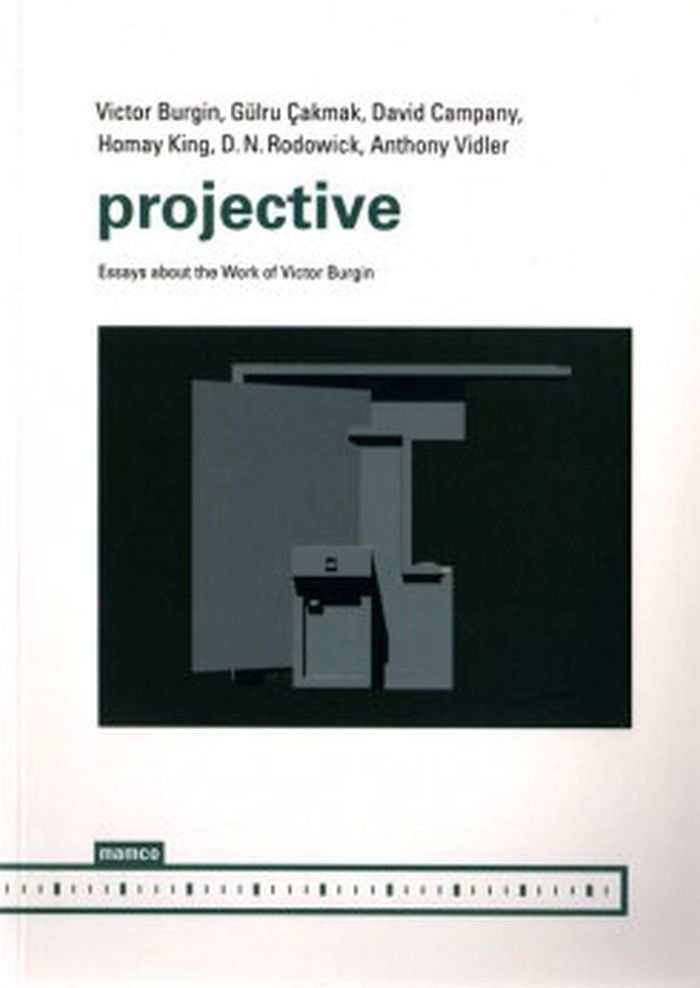
The work of British conceptual artist and writer Victor Burgin revolves around the relationship between image and text, one in which neither optical nor verbal predominates, and explores the territory between still and moving images. Four essays are included in this volume, written by D.N. Rodowick, Gülru Çakmak, Homay King and Anthony Vidler, each analysing various aspects of Burgin's attention to the affective agency of space in his work, from orientalism and the cultural politics of modernity, to viewing Burgin's work through the lens of Henri Bergson and Gilles Deleuze.
Projective: essays about the work of Victor Burgin
Actions:
Prix:
$34.00
(disponible sur commande)
Résumé:
The work of British conceptual artist and writer Victor Burgin revolves around the relationship between image and text, one in which neither optical nor verbal predominates, and explores the territory between still and moving images. Four essays are included in this volume, written by D.N. Rodowick, Gülru Çakmak, Homay King and Anthony Vidler, each analysing various aspects of Burgin's attention to the affective agency of space in his work, from orientalism and the cultural politics of modernity, to viewing Burgin's work through the lens of Henri Bergson and Gilles Deleuze.
Classification:
livres
livres
Publication:
avril 2015
avril 2015
Classification:
livres
livres

Prix:
$56.95
(disponible sur commande)
Résumé:
A Handful of Dust is David Campany’s speculative history of the last century, and a visual journey through some of its unlikeliest imagery. Let’s suppose the modern era begins in October of 1922. A little French avant-garde journal publishes a photograph of a sheet of glass covered in dust. The photographer is Man Ray, the glass is by Marcel Duchamp. At first they called(...)
$56.95
(disponible sur commande)
Résumé:
A Handful of Dust is David Campany’s speculative history of the last century, and a visual journey through some of its unlikeliest imagery. Let’s suppose the modern era begins in October of 1922. A little French avant-garde journal publishes a photograph of a sheet of glass covered in dust. The photographer is Man Ray, the glass is by Marcel Duchamp. At first they called(...)
Titre:
David Campany: a handful of dust, from the cosmic to the domestic
Actions:
Prix:
$56.95
(disponible sur commande)
Résumé:
A Handful of Dust is David Campany’s speculative history of the last century, and a visual journey through some of its unlikeliest imagery. Let’s suppose the modern era begins in October of 1922. A little French avant-garde journal publishes a photograph of a sheet of glass covered in dust. The photographer is Man Ray, the glass is by Marcel Duchamp. At first they called it a view from an aeroplane. Then they called it Dust Breeding. It’s abstract, it’s realist. It’s an artwork, it’s a document. It’s revolting and compelling. Cameras must be kept away from dust but they find it highly photogenic. At the same time, a little English journal publishes TS Eliot’s poem The Waste Land. “I will show you fear in a handful of dust.”
David Campany: a handful of dust, from the cosmic to the domestic
Actions:
Prix:
$56.95
(disponible sur commande)
Résumé:
A Handful of Dust is David Campany’s speculative history of the last century, and a visual journey through some of its unlikeliest imagery. Let’s suppose the modern era begins in October of 1922. A little French avant-garde journal publishes a photograph of a sheet of glass covered in dust. The photographer is Man Ray, the glass is by Marcel Duchamp. At first they called it a view from an aeroplane. Then they called it Dust Breeding. It’s abstract, it’s realist. It’s an artwork, it’s a document. It’s revolting and compelling. Cameras must be kept away from dust but they find it highly photogenic. At the same time, a little English journal publishes TS Eliot’s poem The Waste Land. “I will show you fear in a handful of dust.”
Classification:
livres
livres
Publication:
octobre 2015
octobre 2015
Sujet:
Monographies photo
Monographies photo


