


1 Résultats
Classification:
livres
livres
Titre:
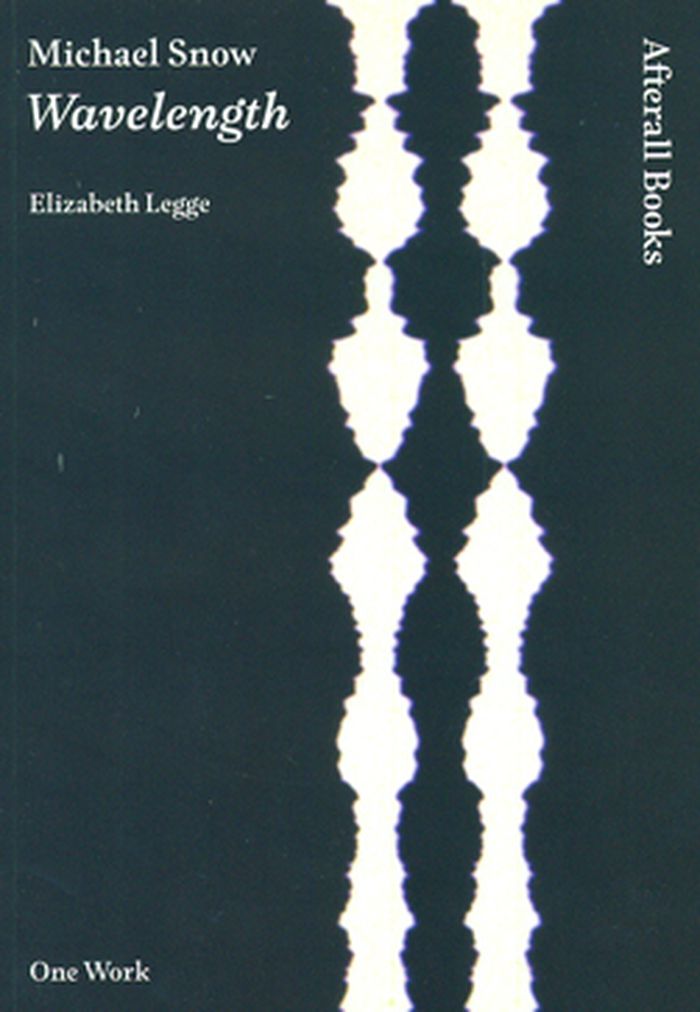
Michael Snow, wavelength
Michael Snow, wavelength
Actions:
Prix:
$18.00
(disponible sur commande)
Résumé:
In 1966, at the height of minimal art in New York, artist Michael Snow chose not to make another object to be placed in a room but instead spent a year planning a film of a room: Wavelength, a forty-five-minute more or less straight-line zoom from the near to the far wall of a loft space, accompanied by a rising sine wave. In this critical study, Elizabeth Legge describes(...)
$18.00
(disponible sur commande)
Résumé:
In 1966, at the height of minimal art in New York, artist Michael Snow chose not to make another object to be placed in a room but instead spent a year planning a film of a room: Wavelength, a forty-five-minute more or less straight-line zoom from the near to the far wall of a loft space, accompanied by a rising sine wave. In this critical study, Elizabeth Legge describes(...)
Titre:
Michael Snow, wavelength
Actions:
Prix:
$18.00
(disponible sur commande)
Résumé:
In 1966, at the height of minimal art in New York, artist Michael Snow chose not to make another object to be placed in a room but instead spent a year planning a film of a room: Wavelength, a forty-five-minute more or less straight-line zoom from the near to the far wall of a loft space, accompanied by a rising sine wave. In this critical study, Elizabeth Legge describes Wavelength as a film of virtuosically managed tensions, sensuous beauty, subtle light and color, and recession into perspectival depth. Wavelength won the grand prize for experimental film at Knokke-le-Zoute in 1967, and it was crucial to critics' efforts to establish a vocabulary for temporal art. It was a "wavelength" that could stand up to the French new wave, and it has has functioned ever since as a touchstone for art and film studies, and as a blue screen in front of which a range of ideological and intellectual dramas have been played.
Michael Snow, wavelength
Actions:
Prix:
$18.00
(disponible sur commande)
Résumé:
In 1966, at the height of minimal art in New York, artist Michael Snow chose not to make another object to be placed in a room but instead spent a year planning a film of a room: Wavelength, a forty-five-minute more or less straight-line zoom from the near to the far wall of a loft space, accompanied by a rising sine wave. In this critical study, Elizabeth Legge describes Wavelength as a film of virtuosically managed tensions, sensuous beauty, subtle light and color, and recession into perspectival depth. Wavelength won the grand prize for experimental film at Knokke-le-Zoute in 1967, and it was crucial to critics' efforts to establish a vocabulary for temporal art. It was a "wavelength" that could stand up to the French new wave, and it has has functioned ever since as a touchstone for art and film studies, and as a blue screen in front of which a range of ideological and intellectual dramas have been played.
Classification:
livres
livres
Publication:
octobre 2009
octobre 2009
Sujet:
Théorie de l’art
Théorie de l’art


