


1 Résultats
Classification:
livres
livres
Prix:
$26.95
(disponible en magasin)
Résumé:
Most people associate Britain and Ireland with the English language, a vast, sprawling linguistic tree with roots in Latin, French, and German. But the inhabitants of these islands originally spoke another tongue. Look closely enough and English contains traces of the Celtic soil from which it sprung, found in words like bog, loch, cairn, and crag. Today, this heritage(...)
$26.95
(disponible en magasin)
Résumé:
Most people associate Britain and Ireland with the English language, a vast, sprawling linguistic tree with roots in Latin, French, and German. But the inhabitants of these islands originally spoke another tongue. Look closely enough and English contains traces of the Celtic soil from which it sprung, found in words like bog, loch, cairn, and crag. Today, this heritage(...)
Titre:
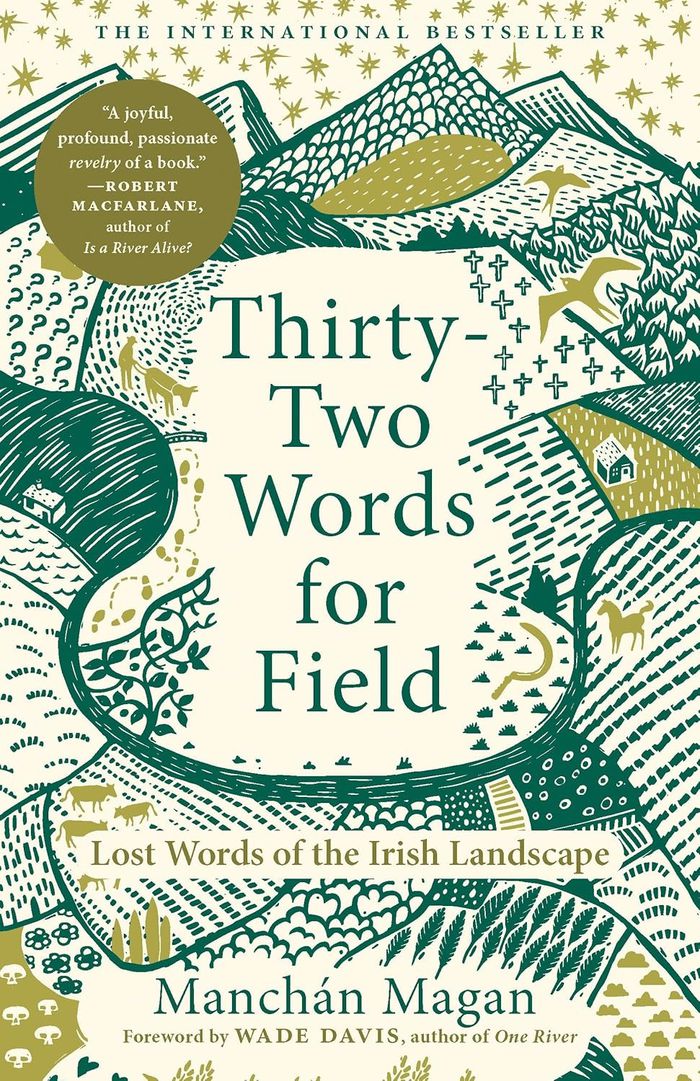
Thirty-two words for field: Lost words of the Irish Landscape
Actions:
Prix:
$26.95
(disponible en magasin)
Résumé:
Most people associate Britain and Ireland with the English language, a vast, sprawling linguistic tree with roots in Latin, French, and German. But the inhabitants of these islands originally spoke another tongue. Look closely enough and English contains traces of the Celtic soil from which it sprung, found in words like bog, loch, cairn, and crag. Today, this heritage can be found nowhere more powerfully than in modern-day Gaelic.? In ''Thirty-Two Words for Field'', Manchán explores how Gaelic, a three-thousand-year-old lexicon, has imbued the natural world with meaning and magic, evoking a time-honored way of life, from its thirty-two separate words for a field to terms like bróis (whiskey for a horseman at a wedding), iarmhaireacht (the loneliness you feel when you are the only person awake at dawn), and bladhmann (steam rising from a fermented haystack or idle boasting).? Manchán urges readers to consider the sublime beauty and profound oddness of this ancient tongue that has been spoken in close connection to the land for thousands of years. Told through stories collected from his own life and travels, ''Thirty-Two Words for Field'' is an enthralling celebration of Irish words and a testament to the indelible relationship between landscape, culture, and language.
Thirty-two words for field: Lost words of the Irish Landscape
Actions:
Prix:
$26.95
(disponible en magasin)
Résumé:
Most people associate Britain and Ireland with the English language, a vast, sprawling linguistic tree with roots in Latin, French, and German. But the inhabitants of these islands originally spoke another tongue. Look closely enough and English contains traces of the Celtic soil from which it sprung, found in words like bog, loch, cairn, and crag. Today, this heritage can be found nowhere more powerfully than in modern-day Gaelic.? In ''Thirty-Two Words for Field'', Manchán explores how Gaelic, a three-thousand-year-old lexicon, has imbued the natural world with meaning and magic, evoking a time-honored way of life, from its thirty-two separate words for a field to terms like bróis (whiskey for a horseman at a wedding), iarmhaireacht (the loneliness you feel when you are the only person awake at dawn), and bladhmann (steam rising from a fermented haystack or idle boasting).? Manchán urges readers to consider the sublime beauty and profound oddness of this ancient tongue that has been spoken in close connection to the land for thousands of years. Told through stories collected from his own life and travels, ''Thirty-Two Words for Field'' is an enthralling celebration of Irish words and a testament to the indelible relationship between landscape, culture, and language.
Classification:
livres
livres
Publication:
mars 2026
mars 2026
Sujet:
Théorie du paysage
Théorie du paysage


