


48 Résultats
Classification:
livres
livres
Actions:
Prix:
$31.50
(disponible sur commande)
Résumé:
The past decade has seen phenomenal growth in the development and use of virtual worlds. In one of the most notable, Second Life, millions of people have created online avatars in order to play games, take classes, socialize, and conduct business transactions. Second Life offers a gathering point and the tools for people to create a new world online. Too often neglected(...)
$31.50
(disponible sur commande)
Résumé:
The past decade has seen phenomenal growth in the development and use of virtual worlds. In one of the most notable, Second Life, millions of people have created online avatars in order to play games, take classes, socialize, and conduct business transactions. Second Life offers a gathering point and the tools for people to create a new world online. Too often neglected(...)
Titre:
Making virtual worlds : Linden Lab and Second Life
Actions:
Prix:
$31.50
(disponible sur commande)
Résumé:
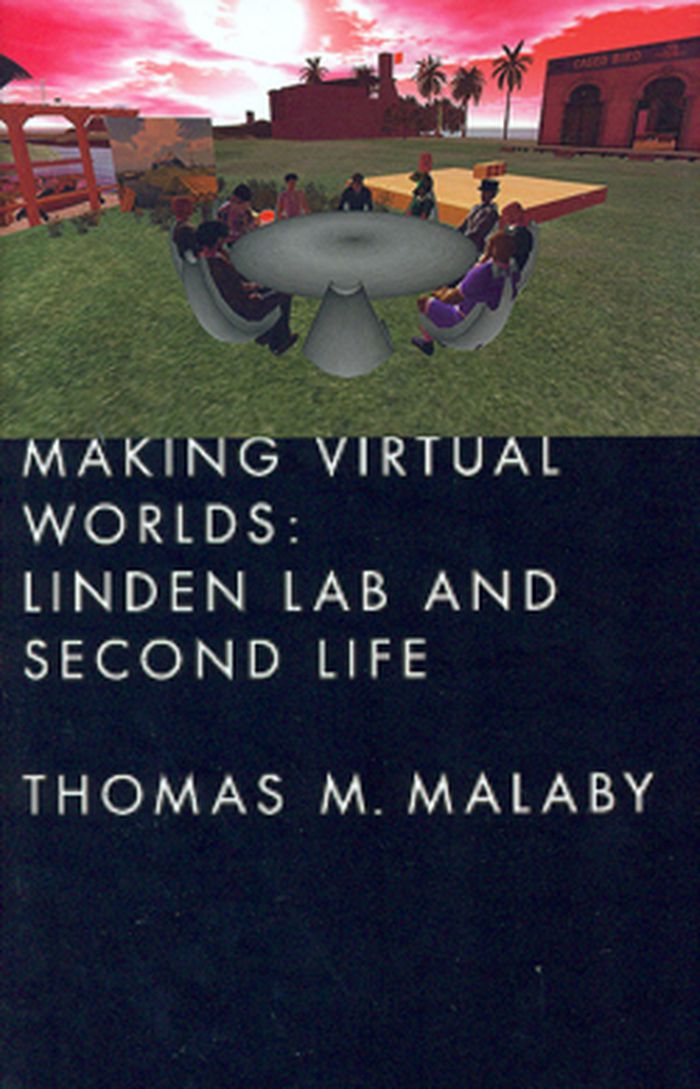
The past decade has seen phenomenal growth in the development and use of virtual worlds. In one of the most notable, Second Life, millions of people have created online avatars in order to play games, take classes, socialize, and conduct business transactions. Second Life offers a gathering point and the tools for people to create a new world online. Too often neglected in popular and scholarly accounts of such groundbreaking new environments is the simple truth that, of necessity, such virtual worlds emerge from physical workplaces marked by negotiation, creation, and constant change. Thomas Malaby spent a year at Linden Lab, the real-world home of Second Life, observing those who develop and profit from the sprawling, self-generating system they have created.
Making virtual worlds : Linden Lab and Second Life
Actions:
Prix:
$31.50
(disponible sur commande)
Résumé:
The past decade has seen phenomenal growth in the development and use of virtual worlds. In one of the most notable, Second Life, millions of people have created online avatars in order to play games, take classes, socialize, and conduct business transactions. Second Life offers a gathering point and the tools for people to create a new world online. Too often neglected in popular and scholarly accounts of such groundbreaking new environments is the simple truth that, of necessity, such virtual worlds emerge from physical workplaces marked by negotiation, creation, and constant change. Thomas Malaby spent a year at Linden Lab, the real-world home of Second Life, observing those who develop and profit from the sprawling, self-generating system they have created.
Classification:
livres
livres
Publication:
juin 2009
juin 2009
Sujet:
Épistémologie et réseau
Épistémologie et réseau
Classification:
livres
livres

Actions:
Prix:
$16.95
(disponible sur commande)
Résumé:
Originally published in 1968, this sequel to "The Medium is the Massage" is a collage of images and text that sharply illustrates how electric technology "stimulate more discontinuity and diversity and division than the old mechanical society."
$16.95
(disponible sur commande)
Résumé:
Originally published in 1968, this sequel to "The Medium is the Massage" is a collage of images and text that sharply illustrates how electric technology "stimulate more discontinuity and diversity and division than the old mechanical society."
Sujet:
Épistémologie et réseau
Épistémologie et réseau
Publication:
janvier 1900, Berkeley
janvier 1900, Berkeley
Titre:
War and peace in the global village
Actions:
Prix:
$16.95
(disponible sur commande)
Résumé:
Originally published in 1968, this sequel to "The Medium is the Massage" is a collage of images and text that sharply illustrates how electric technology "stimulate more discontinuity and diversity and division than the old mechanical society."
War and peace in the global village
Actions:
Prix:
$16.95
(disponible sur commande)
Résumé:
Originally published in 1968, this sequel to "The Medium is the Massage" is a collage of images and text that sharply illustrates how electric technology "stimulate more discontinuity and diversity and division than the old mechanical society."
Classification:
livres
livres
Publication:
janvier 1900, Berkeley
janvier 1900, Berkeley
Sujet:
Épistémologie et réseau
Épistémologie et réseau
Classification:
livres
livres

Actions:
Prix:
$42.95
(disponible sur commande)
Résumé:
Environmentalism and social sciences appear to be in a period of disorientation and perhaps transition. In this innovative collection, leading international thinkers explore the notion that one explanation for the current malaise of the “politics of ecology” is that we increasingly find ourselves negotiating “technonatural” space/times. International contributors map the(...)
$42.95
(disponible sur commande)
Résumé:
Environmentalism and social sciences appear to be in a period of disorientation and perhaps transition. In this innovative collection, leading international thinkers explore the notion that one explanation for the current malaise of the “politics of ecology” is that we increasingly find ourselves negotiating “technonatural” space/times. International contributors map the(...)
Titre:
Technonature: environments, technologies, spaces and places in the twenty-first century
Actions:
Prix:
$42.95
(disponible sur commande)
Résumé:
Environmentalism and social sciences appear to be in a period of disorientation and perhaps transition. In this innovative collection, leading international thinkers explore the notion that one explanation for the current malaise of the “politics of ecology” is that we increasingly find ourselves negotiating “technonatural” space/times. International contributors map the political ecologies of our technonatural present and indicate possible paths for technonatural futures.
Technonature: environments, technologies, spaces and places in the twenty-first century
Actions:
Prix:
$42.95
(disponible sur commande)
Résumé:
Environmentalism and social sciences appear to be in a period of disorientation and perhaps transition. In this innovative collection, leading international thinkers explore the notion that one explanation for the current malaise of the “politics of ecology” is that we increasingly find ourselves negotiating “technonatural” space/times. International contributors map the political ecologies of our technonatural present and indicate possible paths for technonatural futures.
Classification:
livres
livres
Publication:
mars 2009
mars 2009
Sujet:
Épistémologie et réseau
Épistémologie et réseau
Classification:
livres
livres
Actions:
Prix:
$32.95
(disponible sur commande)
Résumé:
In Prometheus Wired, Darin Barney debunks claims that a networked society will provide the infrastructure for a political revolution and shows that the resources we need for understanding and making sound judgments about this new technology are surprisingly close at hand. By looking to thinkers who grappled with the relationship of society and technology, such as Plato,(...)
$32.95
(disponible sur commande)
Résumé:
In Prometheus Wired, Darin Barney debunks claims that a networked society will provide the infrastructure for a political revolution and shows that the resources we need for understanding and making sound judgments about this new technology are surprisingly close at hand. By looking to thinkers who grappled with the relationship of society and technology, such as Plato,(...)
Titre:
Prometheus wired: the hope for democraty in the age of network technology
Actions:
Prix:
$32.95
(disponible sur commande)
Résumé:
In Prometheus Wired, Darin Barney debunks claims that a networked society will provide the infrastructure for a political revolution and shows that the resources we need for understanding and making sound judgments about this new technology are surprisingly close at hand. By looking to thinkers who grappled with the relationship of society and technology, such as Plato, Aristotle, Marx, and Heidegger, Barney critically examines such assertions about the character of digital networks.
Prometheus wired: the hope for democraty in the age of network technology
Actions:
Prix:
$32.95
(disponible sur commande)
Résumé:
In Prometheus Wired, Darin Barney debunks claims that a networked society will provide the infrastructure for a political revolution and shows that the resources we need for understanding and making sound judgments about this new technology are surprisingly close at hand. By looking to thinkers who grappled with the relationship of society and technology, such as Plato, Aristotle, Marx, and Heidegger, Barney critically examines such assertions about the character of digital networks.
Classification:
livres
livres
Publication:
octobre 2001, Vancouver, Toronto
octobre 2001, Vancouver, Toronto
Sujet:
Épistémologie et réseau
Épistémologie et réseau
Classification:
livres
livres

Actions:
Prix:
$62.80
(disponible sur commande)
Résumé:
3 audio-cds, 192 minutes booklet, 40 pages
$62.80
(disponible sur commande)
Résumé:
3 audio-cds, 192 minutes booklet, 40 pages
Titre:
okkulte stimmen mediale musik: recordinsgs of intelligences 1905-2007
Actions:
Prix:
$62.80
(disponible sur commande)
Résumé:
3 audio-cds, 192 minutes booklet, 40 pages
okkulte stimmen mediale musik: recordinsgs of intelligences 1905-2007
Actions:
Prix:
$62.80
(disponible sur commande)
Résumé:
3 audio-cds, 192 minutes booklet, 40 pages
Classification:
livres
livres
Publication:
janvier 1900, Berlin
janvier 1900, Berlin
Sujet:
Épistémologie et réseau
Épistémologie et réseau
Classification:
livres
livres
Actions:
Prix:
$71.95
(disponible sur commande)
Résumé:
Although many people view virtual reality as a totally new phenomenon, it has its foundations in an unrecognized history of immersive images. Indeed, the search for illusionary visual space can be traced back to antiquity. In this book Oliver Grau shows how virtual art fits into the art history of illusion and immersion. He describes the metamorphosis of the concepts of(...)
$71.95
(disponible sur commande)
Résumé:
Although many people view virtual reality as a totally new phenomenon, it has its foundations in an unrecognized history of immersive images. Indeed, the search for illusionary visual space can be traced back to antiquity. In this book Oliver Grau shows how virtual art fits into the art history of illusion and immersion. He describes the metamorphosis of the concepts of(...)
Titre:
Virtual art from illusion to immersion
Actions:
Prix:
$71.95
(disponible sur commande)
Résumé:
Although many people view virtual reality as a totally new phenomenon, it has its foundations in an unrecognized history of immersive images. Indeed, the search for illusionary visual space can be traced back to antiquity. In this book Oliver Grau shows how virtual art fits into the art history of illusion and immersion. He describes the metamorphosis of the concepts of art and the image and relates those concepts to interactive art, interface design, agents, telepresence, and image evolution. Grau retells art history as media history, helping us to understand the phenomenon of virtual reality beyond the hype. Grau shows how each epoch used the technical means available to produce maximum illusion. He discusses frescoes such as those in the Villa dei Misteri in Pompeii and the gardens of the Villa Livia near Primaporta, Renaissance and Baroque illusion spaces, and panoramas, which were the most developed form of illusion achieved through traditional methods of painting and the mass image medium before film. Through a detailed analysis of perhaps the most important German panorama, Anton von Werner's 1883 The Battle of Sedan, Grau shows how immersion produced emotional responses. He traces immersive cinema through Cinerama, Sensorama, Expanded Cinema, 3-D, Omnimax and IMAX, and the head mounted display with its military origins. He also examines those characteristics of virtual reality that distinguish it from earlier forms of illusionary art. His analysis draws on the work of contemporary artists and groups ART+COM, Maurice Benayoun, Charlotte Davies, Monika Fleischmann, Ken Goldberg, Agnes Hegedues, Eduardo Kac, Knowbotic Research, Laurent Mignonneau, Michael Naimark, Simon Penny, Daniela Plewe, Paul Sermon, Jeffrey Shaw, Karl Sims, Christa Sommerer, and Wolfgang Strauss. Grau offers not just a history of illusionary space but also a theoretical framework for analyzing its phenomenologies, functions, and strategies throughout history and into the future.
Virtual art from illusion to immersion
Actions:
Prix:
$71.95
(disponible sur commande)
Résumé:
Although many people view virtual reality as a totally new phenomenon, it has its foundations in an unrecognized history of immersive images. Indeed, the search for illusionary visual space can be traced back to antiquity. In this book Oliver Grau shows how virtual art fits into the art history of illusion and immersion. He describes the metamorphosis of the concepts of art and the image and relates those concepts to interactive art, interface design, agents, telepresence, and image evolution. Grau retells art history as media history, helping us to understand the phenomenon of virtual reality beyond the hype. Grau shows how each epoch used the technical means available to produce maximum illusion. He discusses frescoes such as those in the Villa dei Misteri in Pompeii and the gardens of the Villa Livia near Primaporta, Renaissance and Baroque illusion spaces, and panoramas, which were the most developed form of illusion achieved through traditional methods of painting and the mass image medium before film. Through a detailed analysis of perhaps the most important German panorama, Anton von Werner's 1883 The Battle of Sedan, Grau shows how immersion produced emotional responses. He traces immersive cinema through Cinerama, Sensorama, Expanded Cinema, 3-D, Omnimax and IMAX, and the head mounted display with its military origins. He also examines those characteristics of virtual reality that distinguish it from earlier forms of illusionary art. His analysis draws on the work of contemporary artists and groups ART+COM, Maurice Benayoun, Charlotte Davies, Monika Fleischmann, Ken Goldberg, Agnes Hegedues, Eduardo Kac, Knowbotic Research, Laurent Mignonneau, Michael Naimark, Simon Penny, Daniela Plewe, Paul Sermon, Jeffrey Shaw, Karl Sims, Christa Sommerer, and Wolfgang Strauss. Grau offers not just a history of illusionary space but also a theoretical framework for analyzing its phenomenologies, functions, and strategies throughout history and into the future.
Classification:
livres
livres
Publication:
janvier 1900, Cambridge, Mass.
janvier 1900, Cambridge, Mass.
Sujet:
Épistémologie et réseau
Épistémologie et réseau
Classification:
livres
livres

Actions:
Prix:
$27.95
(disponible en magasin)
Résumé:
Depuis la publication en 1982-1986 d'une imposante Histoire de l´édition française en quatre gros volumes, de multiples travaux ont vu le jour qui modifient singulièrement les perspectives développées voici plus de trente ans par les pionniers de cette histoire. Jean-Yves Mollier, historien du livre, de l'édition et de la lecture, en France et dans le monde, propose ici(...)
$27.95
(disponible en magasin)
Résumé:
Depuis la publication en 1982-1986 d'une imposante Histoire de l´édition française en quatre gros volumes, de multiples travaux ont vu le jour qui modifient singulièrement les perspectives développées voici plus de trente ans par les pionniers de cette histoire. Jean-Yves Mollier, historien du livre, de l'édition et de la lecture, en France et dans le monde, propose ici(...)
Titre:
Une autre histoire de l'édition française
Actions:
Prix:
$27.95
(disponible en magasin)
Résumé:
Depuis la publication en 1982-1986 d'une imposante Histoire de l´édition française en quatre gros volumes, de multiples travaux ont vu le jour qui modifient singulièrement les perspectives développées voici plus de trente ans par les pionniers de cette histoire. Jean-Yves Mollier, historien du livre, de l'édition et de la lecture, en France et dans le monde, propose ici de revisiter ce chantier en insistant sur ce que signifie l'acte d´éditer.
Une autre histoire de l'édition française
Actions:
Prix:
$27.95
(disponible en magasin)
Résumé:
Depuis la publication en 1982-1986 d'une imposante Histoire de l´édition française en quatre gros volumes, de multiples travaux ont vu le jour qui modifient singulièrement les perspectives développées voici plus de trente ans par les pionniers de cette histoire. Jean-Yves Mollier, historien du livre, de l'édition et de la lecture, en France et dans le monde, propose ici de revisiter ce chantier en insistant sur ce que signifie l'acte d´éditer.
Classification:
livres
livres
Publication:
janvier 2016
janvier 2016
Sujet:
Épistémologie et réseau
Épistémologie et réseau
Classification:
livres
livres

Prix:
$21.95
(disponible sur commande)
Résumé:
Google, Facebook, Amazon, mais aussi les banques et les assureurs : la constitution d’énormes bases de données (les « big data ») confère une place de plus en plus centrale aux algorithmes. L’ambition de ce livre est de montrer comment ces nouvelles techniques de calcul bouleversent notre société. À travers le classement de l’information, la personnalisation publicitaire,(...)
$21.95
(disponible sur commande)
Résumé:
Google, Facebook, Amazon, mais aussi les banques et les assureurs : la constitution d’énormes bases de données (les « big data ») confère une place de plus en plus centrale aux algorithmes. L’ambition de ce livre est de montrer comment ces nouvelles techniques de calcul bouleversent notre société. À travers le classement de l’information, la personnalisation publicitaire,(...)
Publication:
novembre 2015
novembre 2015
Titre:
À quoi rêvent les algorithmes. Nos vies à l'heure des big data
Actions:
Prix:
$21.95
(disponible sur commande)
Résumé:
Google, Facebook, Amazon, mais aussi les banques et les assureurs : la constitution d’énormes bases de données (les « big data ») confère une place de plus en plus centrale aux algorithmes. L’ambition de ce livre est de montrer comment ces nouvelles techniques de calcul bouleversent notre société. À travers le classement de l’information, la personnalisation publicitaire, la recommandation de produits, le ciblage des comportements ou l’orientation des déplacements, les méga-calculateurs sont en train de s’immiscer, de plus en plus intimement, dans la vie des individus. Or, loin d’être de simples outils techniques, les algorithmes véhiculent un projet politique. Comprendre leur logique, les valeurs et le type de société qu’ils promeuvent, c’est donner aux internautes les moyens de reprendre du pouvoir dans la société des calculs.
À quoi rêvent les algorithmes. Nos vies à l'heure des big data
Actions:
Prix:
$21.95
(disponible sur commande)
Résumé:
Google, Facebook, Amazon, mais aussi les banques et les assureurs : la constitution d’énormes bases de données (les « big data ») confère une place de plus en plus centrale aux algorithmes. L’ambition de ce livre est de montrer comment ces nouvelles techniques de calcul bouleversent notre société. À travers le classement de l’information, la personnalisation publicitaire, la recommandation de produits, le ciblage des comportements ou l’orientation des déplacements, les méga-calculateurs sont en train de s’immiscer, de plus en plus intimement, dans la vie des individus. Or, loin d’être de simples outils techniques, les algorithmes véhiculent un projet politique. Comprendre leur logique, les valeurs et le type de société qu’ils promeuvent, c’est donner aux internautes les moyens de reprendre du pouvoir dans la société des calculs.
Classification:
livres
livres
Publication:
novembre 2015
novembre 2015


