


183 Résultats
Classification:
livres
livres
Actions:
Prix:
$42.00
(disponible sur commande)
Résumé:
This book highlights sound's invisible, disruptive, and affective qualities and asks whether the unseen nature of sound can support a political transformation. In ''Sonic agency'', Brandon LaBelle sets out to engage contemporary social and political crises by way of sonic thought and imagination. He divides sound's functions into four figures of resistance -- the(...)
$42.00
(disponible sur commande)
Résumé:
This book highlights sound's invisible, disruptive, and affective qualities and asks whether the unseen nature of sound can support a political transformation. In ''Sonic agency'', Brandon LaBelle sets out to engage contemporary social and political crises by way of sonic thought and imagination. He divides sound's functions into four figures of resistance -- the(...)
Titre:
Sonic agency: sound and emergent forms of resistance
Actions:
Prix:
$42.00
(disponible sur commande)
Résumé:
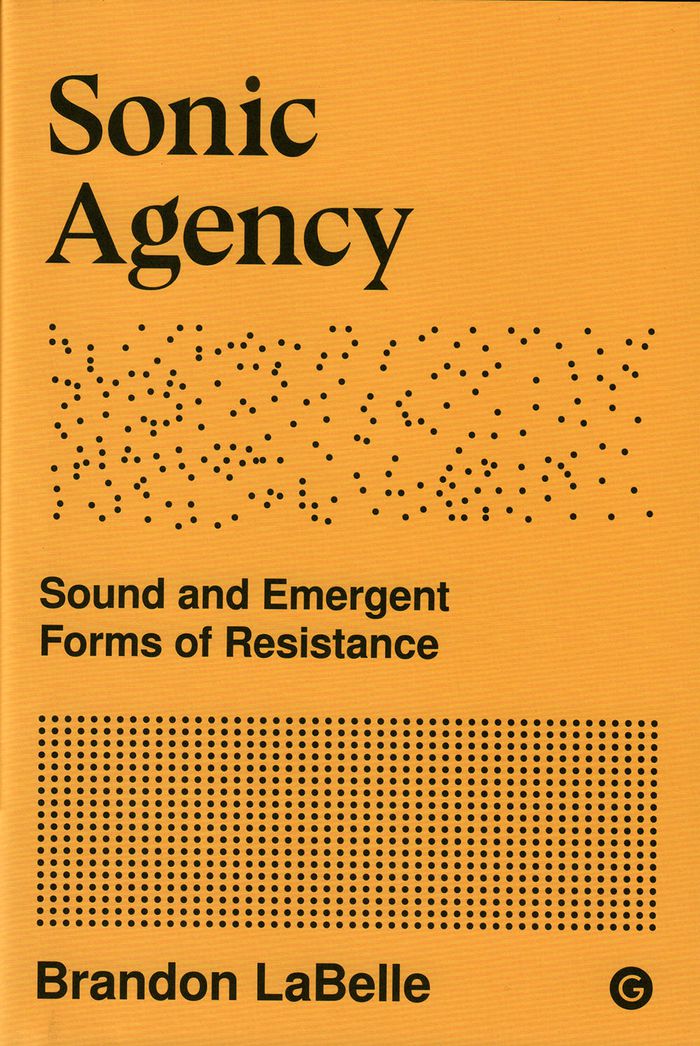
This book highlights sound's invisible, disruptive, and affective qualities and asks whether the unseen nature of sound can support a political transformation. In ''Sonic agency'', Brandon LaBelle sets out to engage contemporary social and political crises by way of sonic thought and imagination. He divides sound's functions into four figures of resistance -- the invisible, the overheard, the itinerant, and the weak -- and argues for their role in creating alternative "unlikely publics" in which to foster mutuality and dissent. He considers issues of disappearance and hidden culture, nonviolence and noise, creole poetics, and networked life, aiming to unsettle traditional notions of the "space of appearance" as the condition for political action and survival.
Sonic agency: sound and emergent forms of resistance
Actions:
Prix:
$42.00
(disponible sur commande)
Résumé:
This book highlights sound's invisible, disruptive, and affective qualities and asks whether the unseen nature of sound can support a political transformation. In ''Sonic agency'', Brandon LaBelle sets out to engage contemporary social and political crises by way of sonic thought and imagination. He divides sound's functions into four figures of resistance -- the invisible, the overheard, the itinerant, and the weak -- and argues for their role in creating alternative "unlikely publics" in which to foster mutuality and dissent. He considers issues of disappearance and hidden culture, nonviolence and noise, creole poetics, and networked life, aiming to unsettle traditional notions of the "space of appearance" as the condition for political action and survival.
Classification:
livres
livres
Publication:
février 2018
février 2018
Sujet:
Acoustique
Acoustique
Classification:
livres
livres
Titre:
The noise of being
The noise of being
Actions:
Prix:
$45.00
(disponible sur commande)
Résumé:
The Noise of Being attempts to piece together the dissonance that was produced and gathered at the 2017 Sonic Acts Festival. The festival focused on a theme that resonates deeply when thinking about the contemporary – namely, what it means to be human, to be part of a world that is an ever changing network. Many different ‘noises’ were featured and produced at the(...)
$45.00
(disponible sur commande)
Résumé:
The Noise of Being attempts to piece together the dissonance that was produced and gathered at the 2017 Sonic Acts Festival. The festival focused on a theme that resonates deeply when thinking about the contemporary – namely, what it means to be human, to be part of a world that is an ever changing network. Many different ‘noises’ were featured and produced at the(...)
Titre:
The noise of being
Actions:
Prix:
$45.00
(disponible sur commande)
Résumé:
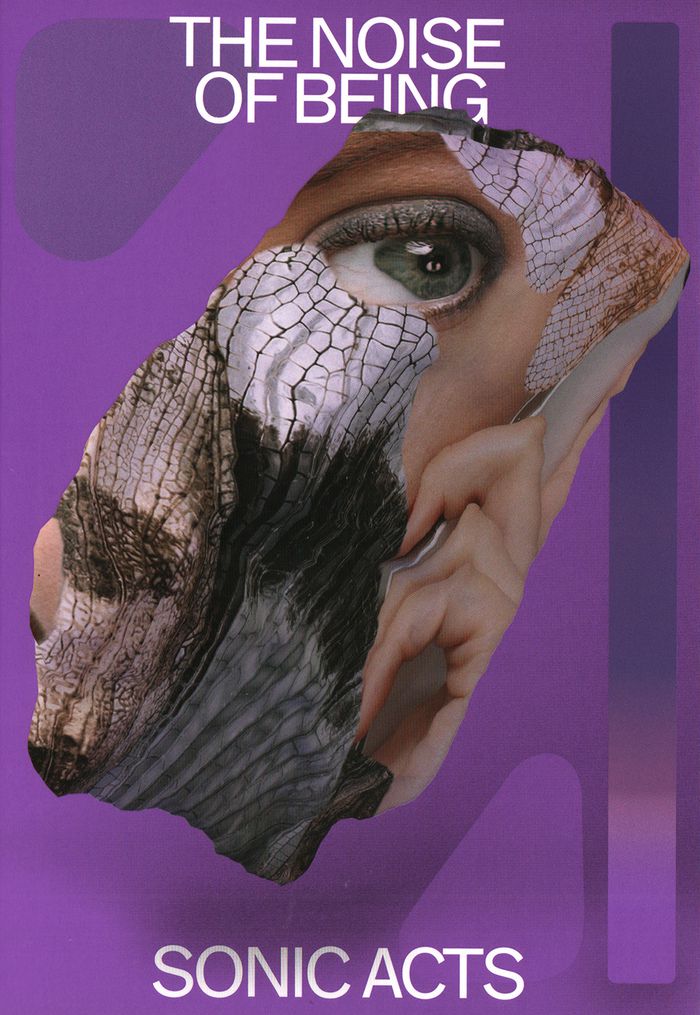
The Noise of Being attempts to piece together the dissonance that was produced and gathered at the 2017 Sonic Acts Festival. The festival focused on a theme that resonates deeply when thinking about the contemporary – namely, what it means to be human, to be part of a world that is an ever changing network. Many different ‘noises’ were featured and produced at the festival conference, in the clubs, museums, and cinemas. This book is by no means a definite conclusion: more of a reminder and a chance to continue speculating about the strange and anxious state of being. The Noise of Being features contributions by Arie Altena, Ingrid Burrington, Wendy Hui Kyong Chun, Rick Dolphijn, Jennifer Gabrys, Louis Henderson, Jamon Van Den Hoek, Joey Holder, Rosa Menkman, Metahaven, Nina Power, The Rodina, Daniel Rourke, Lucas van der Velden, Eyal Weizman, Ytasha Womack, and Juha van ’t Zelfde.
The noise of being
Actions:
Prix:
$45.00
(disponible sur commande)
Résumé:
The Noise of Being attempts to piece together the dissonance that was produced and gathered at the 2017 Sonic Acts Festival. The festival focused on a theme that resonates deeply when thinking about the contemporary – namely, what it means to be human, to be part of a world that is an ever changing network. Many different ‘noises’ were featured and produced at the festival conference, in the clubs, museums, and cinemas. This book is by no means a definite conclusion: more of a reminder and a chance to continue speculating about the strange and anxious state of being. The Noise of Being features contributions by Arie Altena, Ingrid Burrington, Wendy Hui Kyong Chun, Rick Dolphijn, Jennifer Gabrys, Louis Henderson, Jamon Van Den Hoek, Joey Holder, Rosa Menkman, Metahaven, Nina Power, The Rodina, Daniel Rourke, Lucas van der Velden, Eyal Weizman, Ytasha Womack, and Juha van ’t Zelfde.
Classification:
livres
livres
Publication:
octobre 2017
octobre 2017
Sujet:
Acoustique
Acoustique
Classification:
livres
livres
Actions:
Prix:
$18.95
(disponible en magasin)
Résumé:
Ce livre est la rencontre entre deux artistes qui ont étudié le silence en s’y immergeant afin de déconstruire une chose et d’en reconstruire une autre, par les sensibilités de chacun, les images trouvées, les objets, les conversations entendues, les bruits de la ville enregistrés, etc.
$18.95
(disponible en magasin)
Résumé:
Ce livre est la rencontre entre deux artistes qui ont étudié le silence en s’y immergeant afin de déconstruire une chose et d’en reconstruire une autre, par les sensibilités de chacun, les images trouvées, les objets, les conversations entendues, les bruits de la ville enregistrés, etc.
Titre:
Silence-décomposition : à l'écoute d'une ville
Actions:
Prix:
$18.95
(disponible en magasin)
Résumé:
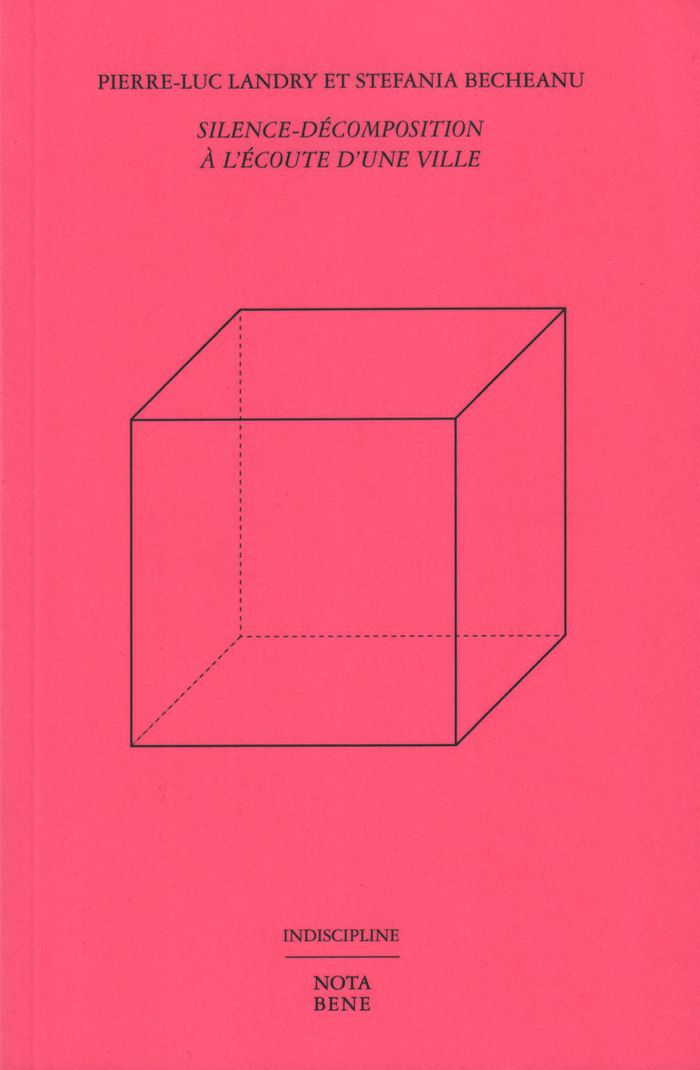
Ce livre est la rencontre entre deux artistes qui ont étudié le silence en s’y immergeant afin de déconstruire une chose et d’en reconstruire une autre, par les sensibilités de chacun, les images trouvées, les objets, les conversations entendues, les bruits de la ville enregistrés, etc.
Silence-décomposition : à l'écoute d'une ville
Actions:
Prix:
$18.95
(disponible en magasin)
Résumé:
Ce livre est la rencontre entre deux artistes qui ont étudié le silence en s’y immergeant afin de déconstruire une chose et d’en reconstruire une autre, par les sensibilités de chacun, les images trouvées, les objets, les conversations entendues, les bruits de la ville enregistrés, etc.
Classification:
livres
livres
Publication:
juin 2017
juin 2017
Sujet:
Acoustique
Acoustique
Classification:
livres
livres
Actions:
Prix:
$84.95
(disponible sur commande)
Résumé:
Architects are used to designing visually. In order to expand their basic design tools, this book explores the interactions between sound, space, hearing, and architecture. To this end, the author uses contemporary and historic buildings and projects, but also fictional, philosophical, and theoretical approaches – the idea is not only to define sound as a source, but also(...)
$84.95
(disponible sur commande)
Résumé:
Architects are used to designing visually. In order to expand their basic design tools, this book explores the interactions between sound, space, hearing, and architecture. To this end, the author uses contemporary and historic buildings and projects, but also fictional, philosophical, and theoretical approaches – the idea is not only to define sound as a source, but also(...)
Titre:
Architectures of sound: acoustic concepts and parameters for architectural design
Actions:
Prix:
$84.95
(disponible sur commande)
Résumé:
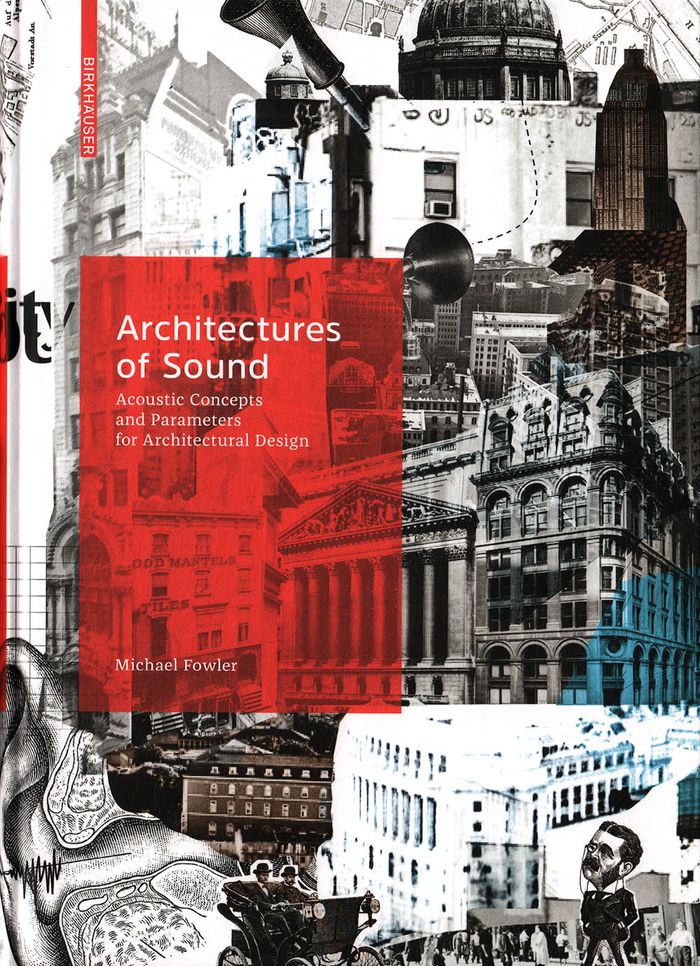
Architects are used to designing visually. In order to expand their basic design tools, this book explores the interactions between sound, space, hearing, and architecture. To this end, the author uses contemporary and historic buildings and projects, but also fictional, philosophical, and theoretical approaches – the idea is not only to define sound as a source, but also as an instrument of architectural space. By introducing a metatheory of "critical hearing", designers are able to acoustically test their projects and contribute to their design with auditive input, already at the design stage.
Architectures of sound: acoustic concepts and parameters for architectural design
Actions:
Prix:
$84.95
(disponible sur commande)
Résumé:
Architects are used to designing visually. In order to expand their basic design tools, this book explores the interactions between sound, space, hearing, and architecture. To this end, the author uses contemporary and historic buildings and projects, but also fictional, philosophical, and theoretical approaches – the idea is not only to define sound as a source, but also as an instrument of architectural space. By introducing a metatheory of "critical hearing", designers are able to acoustically test their projects and contribute to their design with auditive input, already at the design stage.
Classification:
livres
livres
Publication:
octobre 2017
octobre 2017
Sujet:
Acoustique
Acoustique
Classification:
livres
livres
Titre:
Arcana 2 musicians on music
Arcana 2 musicians on music
Actions:
Prix:
$40.00
(disponible sur commande)
Résumé:
Arcana II is the second in a groundbreaking series of volumes presented by John Zorn answering a continuing need for critical attention toward avant-garde and experimental music. Thirty distinguished composer/performers illuminate and speculate upon method and practice in the process of making, experiencing, and thinking about music. Imaginatively elucidating through(...)
$40.00
(disponible sur commande)
Résumé:
Arcana II is the second in a groundbreaking series of volumes presented by John Zorn answering a continuing need for critical attention toward avant-garde and experimental music. Thirty distinguished composer/performers illuminate and speculate upon method and practice in the process of making, experiencing, and thinking about music. Imaginatively elucidating through(...)
Titre:
Arcana 2 musicians on music
Actions:
Prix:
$40.00
(disponible sur commande)
Résumé:
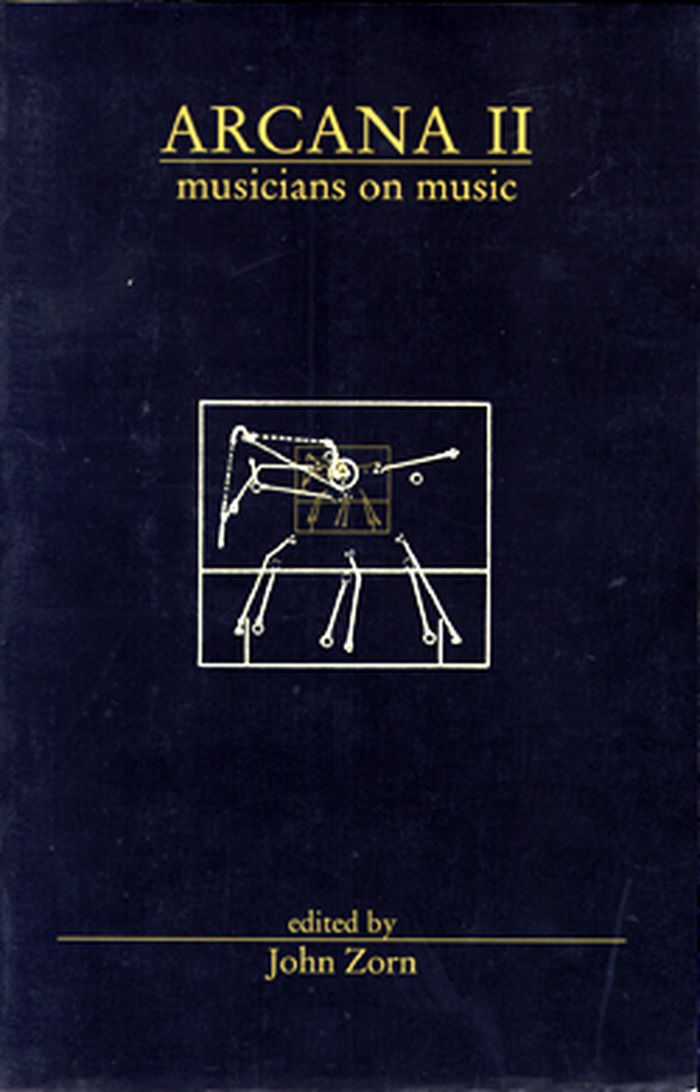
Arcana II is the second in a groundbreaking series of volumes presented by John Zorn answering a continuing need for critical attention toward avant-garde and experimental music. Thirty distinguished composer/performers illuminate and speculate upon method and practice in the process of making, experiencing, and thinking about music. Imaginatively elucidating through essays, scores, manifestoes, and interviews both real and imaginary, Arcana II gives voice to a new generation of brave musical explorers living outside the mainstream academy who passionately and selflessly devote themselves to a search for the miraculous.
Arcana 2 musicians on music
Actions:
Prix:
$40.00
(disponible sur commande)
Résumé:
Arcana II is the second in a groundbreaking series of volumes presented by John Zorn answering a continuing need for critical attention toward avant-garde and experimental music. Thirty distinguished composer/performers illuminate and speculate upon method and practice in the process of making, experiencing, and thinking about music. Imaginatively elucidating through essays, scores, manifestoes, and interviews both real and imaginary, Arcana II gives voice to a new generation of brave musical explorers living outside the mainstream academy who passionately and selflessly devote themselves to a search for the miraculous.
Classification:
livres
livres
Publication:
janvier 1900, New York
janvier 1900, New York
Sujet:
Acoustique
Acoustique
Classification:
livres
livres
Actions:
Prix:
$45.95
(disponible sur commande)
Résumé:
2000
$45.95
(disponible sur commande)
Résumé:
2000
Titre:
Sounding out the city : personal stereos and the management of every life
Actions:
Prix:
$45.95
(disponible sur commande)
Résumé:
2000
Sounding out the city : personal stereos and the management of every life
Actions:
Prix:
$45.95
(disponible sur commande)
Résumé:
2000
Classification:
livres
livres
Publication:
juin 2000, New York, Oxford
juin 2000, New York, Oxford
Sujet:
Acoustique
Acoustique
Classification:
livres
livres
Titre:
Arcana 3 musicians on music
Arcana 3 musicians on music
Actions:
Prix:
$42.00
(disponible sur commande)
Résumé:
The writings in the continuing Arcana series provide direct connections to the inner sanctums of some of the most extraordinary musical thinkers of our time. Technical, philosophical and mystical in nature, these essays reach out to the listener to illuminate the creative processes and hidden stratagem of a music (and a community) largely misjudged and unappreciated by(...)
$42.00
(disponible sur commande)
Résumé:
The writings in the continuing Arcana series provide direct connections to the inner sanctums of some of the most extraordinary musical thinkers of our time. Technical, philosophical and mystical in nature, these essays reach out to the listener to illuminate the creative processes and hidden stratagem of a music (and a community) largely misjudged and unappreciated by(...)
Titre:
Arcana 3 musicians on music
Actions:
Prix:
$42.00
(disponible sur commande)
Résumé:
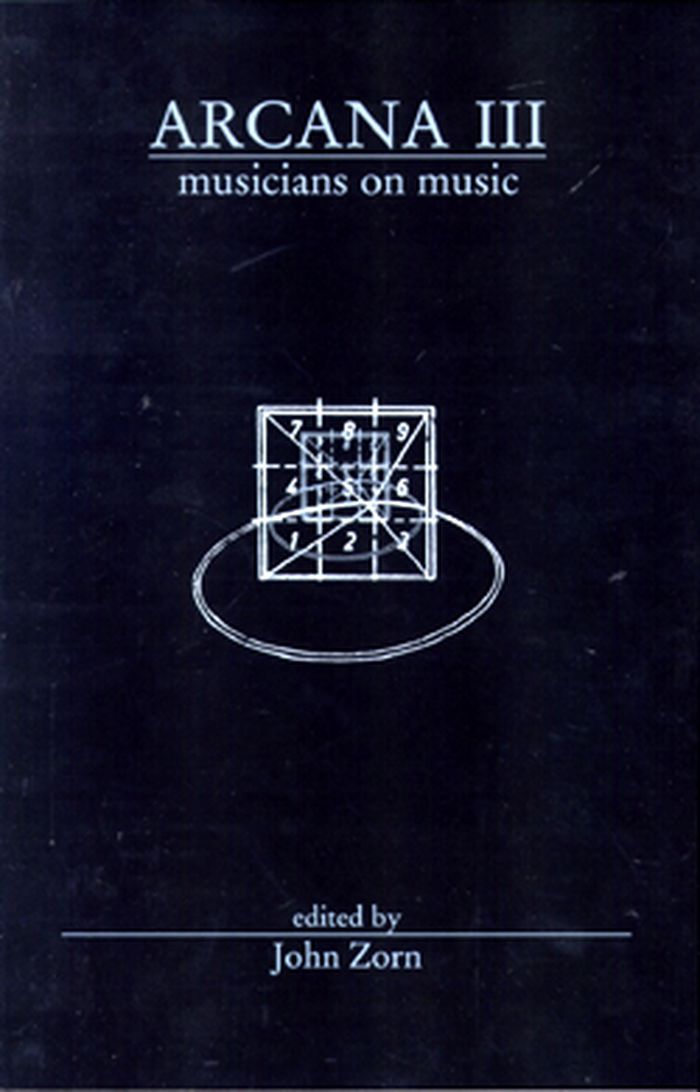
The writings in the continuing Arcana series provide direct connections to the inner sanctums of some of the most extraordinary musical thinkers of our time. Technical, philosophical and mystical in nature, these essays reach out to the listener to illuminate the creative processes and hidden stratagem of a music (and a community) largely misjudged and unappreciated by mainstream culture. Arcana provides welcome tools for digging into the underground and can lead the creative mind toward an exciting world of possibilities for artists, musicians, musical theorists and curious listeners alike.
Arcana 3 musicians on music
Actions:
Prix:
$42.00
(disponible sur commande)
Résumé:
The writings in the continuing Arcana series provide direct connections to the inner sanctums of some of the most extraordinary musical thinkers of our time. Technical, philosophical and mystical in nature, these essays reach out to the listener to illuminate the creative processes and hidden stratagem of a music (and a community) largely misjudged and unappreciated by mainstream culture. Arcana provides welcome tools for digging into the underground and can lead the creative mind toward an exciting world of possibilities for artists, musicians, musical theorists and curious listeners alike.
Classification:
livres
livres
Publication:
septembre 2008, New York
septembre 2008, New York
Sujet:
Acoustique
Acoustique
Classification:
livres
livres
Actions:
Prix:
$41.00
(disponible sur commande)
Résumé:
Karin Bijsterveld examines the persistence of noise on the public agenda, looking at four episodes of noise and the public response to it in Europe and the United States between 1875 and 1975: industrial noise, traffic noise, noise from neighborhood radios and gramophones, and aircraft noise. She also looks at a twentieth-century counterpoint to complaints about noise:(...)
$41.00
(disponible sur commande)
Résumé:
Karin Bijsterveld examines the persistence of noise on the public agenda, looking at four episodes of noise and the public response to it in Europe and the United States between 1875 and 1975: industrial noise, traffic noise, noise from neighborhood radios and gramophones, and aircraft noise. She also looks at a twentieth-century counterpoint to complaints about noise:(...)
Titre:
Mechanical sound, technology, culture, and public problems of noise in the twentieth century
Actions:
Prix:
$41.00
(disponible sur commande)
Résumé:
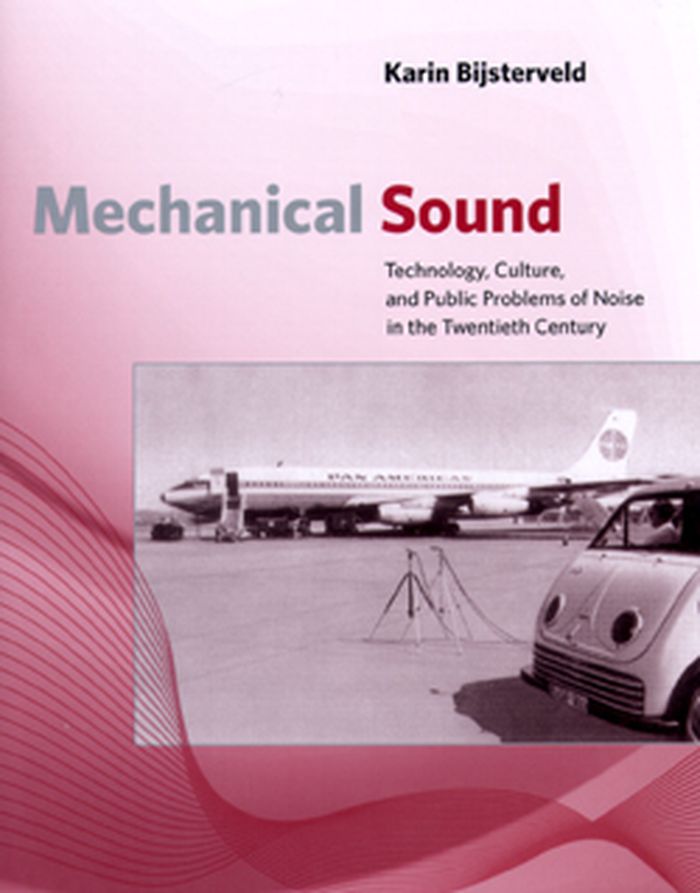
Karin Bijsterveld examines the persistence of noise on the public agenda, looking at four episodes of noise and the public response to it in Europe and the United States between 1875 and 1975: industrial noise, traffic noise, noise from neighborhood radios and gramophones, and aircraft noise. She also looks at a twentieth-century counterpoint to complaints about noise: the celebration of mechanical sound in avant-garde music composed between the two world wars.
Mechanical sound, technology, culture, and public problems of noise in the twentieth century
Actions:
Prix:
$41.00
(disponible sur commande)
Résumé:
Karin Bijsterveld examines the persistence of noise on the public agenda, looking at four episodes of noise and the public response to it in Europe and the United States between 1875 and 1975: industrial noise, traffic noise, noise from neighborhood radios and gramophones, and aircraft noise. She also looks at a twentieth-century counterpoint to complaints about noise: the celebration of mechanical sound in avant-garde music composed between the two world wars.
Classification:
livres
livres
Publication:
août 2008, Cambridge
août 2008, Cambridge
Sujet:
Acoustique
Acoustique
Classification:
livres
livres
Actions:
Prix:
$30.95
(disponible sur commande)
Résumé:
Hearing Cultures is a timely examination of the elusive, often evocative, and sometimes cacophonous auditory sense. It answers such intriguing questions as: Did people in Shakespeare's time hear differently from us? In what way does technology affect our ears? Why do people in Egypt increasingly listen to taped religious sermons? Why did Enlightenment doctors believe that(...)
$30.95
(disponible sur commande)
Résumé:
Hearing Cultures is a timely examination of the elusive, often evocative, and sometimes cacophonous auditory sense. It answers such intriguing questions as: Did people in Shakespeare's time hear differently from us? In what way does technology affect our ears? Why do people in Egypt increasingly listen to taped religious sermons? Why did Enlightenment doctors believe that(...)
Titre:
Hearing cultures: essays on sound, listening and modernity (wenner gren international symposium series)
Actions:
Prix:
$30.95
(disponible sur commande)
Résumé:
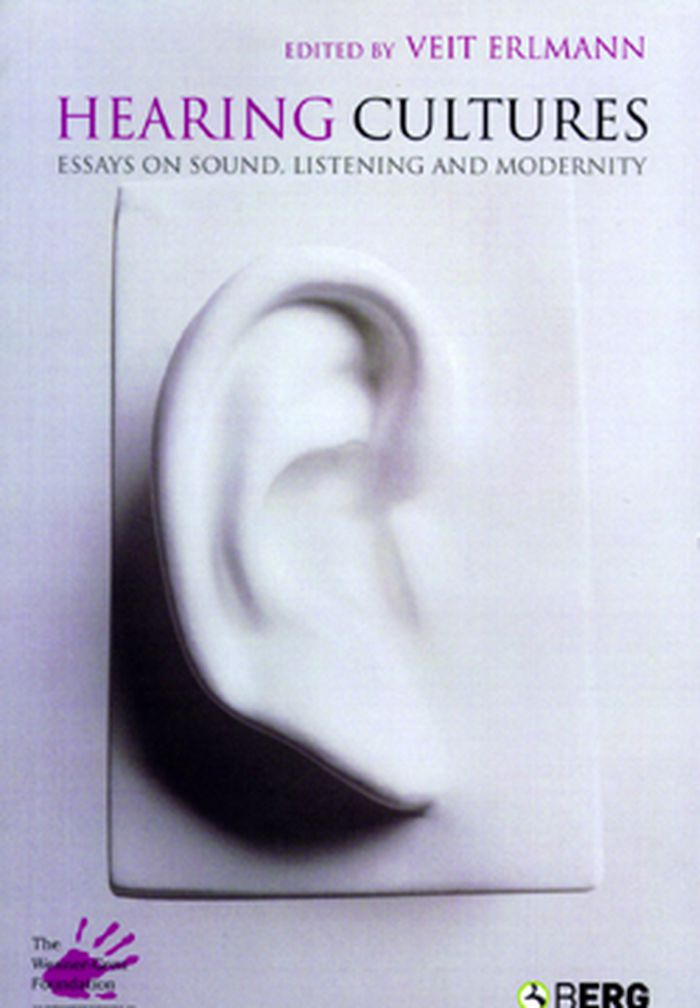
Hearing Cultures is a timely examination of the elusive, often evocative, and sometimes cacophonous auditory sense. It answers such intriguing questions as: Did people in Shakespeare's time hear differently from us? In what way does technology affect our ears? Why do people in Egypt increasingly listen to taped religious sermons? Why did Enlightenment doctors believe that music was an essential cure? What happens acoustically in cross-cultural first encounters? The ear, as much as the eye, nose, mouth and hand, defines experience. This book shows how sound offers a refreshing new lens through which to examine culture and complex social issues.
Hearing cultures: essays on sound, listening and modernity (wenner gren international symposium series)
Actions:
Prix:
$30.95
(disponible sur commande)
Résumé:
Hearing Cultures is a timely examination of the elusive, often evocative, and sometimes cacophonous auditory sense. It answers such intriguing questions as: Did people in Shakespeare's time hear differently from us? In what way does technology affect our ears? Why do people in Egypt increasingly listen to taped religious sermons? Why did Enlightenment doctors believe that music was an essential cure? What happens acoustically in cross-cultural first encounters? The ear, as much as the eye, nose, mouth and hand, defines experience. This book shows how sound offers a refreshing new lens through which to examine culture and complex social issues.
Classification:
livres
livres
Publication:
novembre 2004, Oxford New-York
novembre 2004, Oxford New-York
Sujet:
Acoustique
Acoustique
Classification:
livres
livres
Actions:
Prix:
$30.95
(disponible sur commande)
Résumé:
The rise of a prominent auditory culture, reveals the degree to which sound art is lending definition to the 21st Century. And yet sound art still lacks related literature to compliment, and expand, the realm of practice. Background Noise sets out an historical overview, while at the same time shaping that history according to what sound art reveals - the dynamics of art(...)
$30.95
(disponible sur commande)
Résumé:
The rise of a prominent auditory culture, reveals the degree to which sound art is lending definition to the 21st Century. And yet sound art still lacks related literature to compliment, and expand, the realm of practice. Background Noise sets out an historical overview, while at the same time shaping that history according to what sound art reveals - the dynamics of art(...)
Titre:
Background noise: perspectives on sound art
Actions:
Prix:
$30.95
(disponible sur commande)
Résumé:
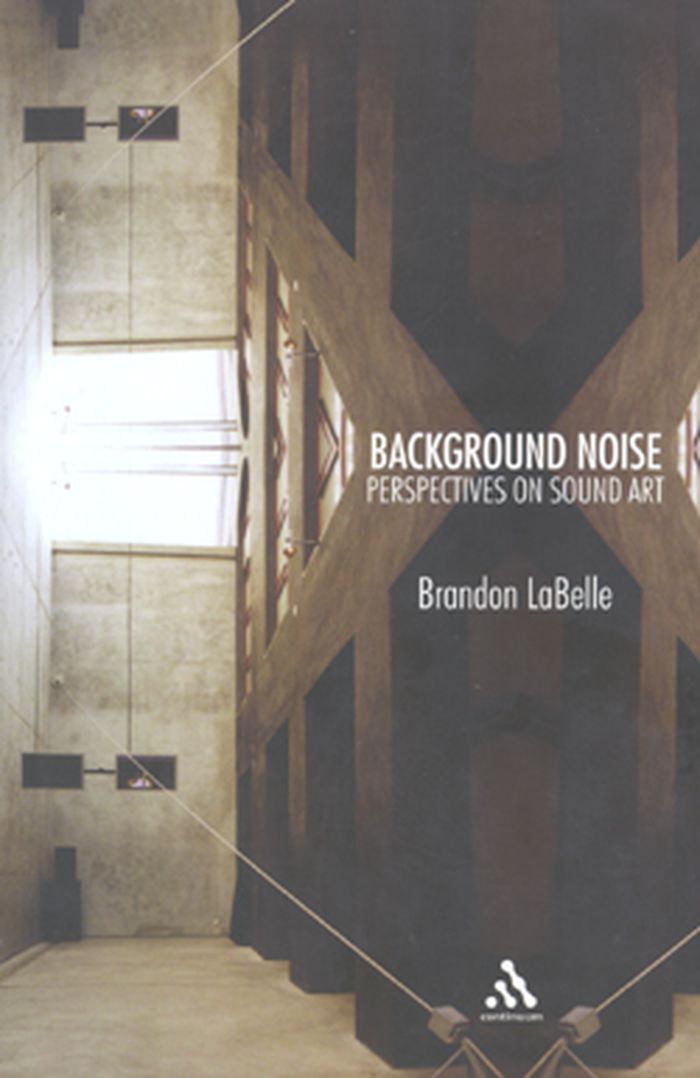
The rise of a prominent auditory culture, reveals the degree to which sound art is lending definition to the 21st Century. And yet sound art still lacks related literature to compliment, and expand, the realm of practice. Background Noise sets out an historical overview, while at the same time shaping that history according to what sound art reveals - the dynamics of art to operate spatially, through media of reproduction and broadcast, and in relation to the intensities of communication and its contextual framework Brandon LaBelle is a writer and curator who currently lives in Denmark. From 1998 to 2002 he developed and curated an international sound art festival in Los Angeles, Beyond Music; in 2001 he developed and organized Social Music, a series of radio works for Kunstradio in Vienna; in 2002 he curated Concrete Feedback, an exhibition of sound installations working with architecture, presented at the Southern California Institute of Architecture; and in 2002-03 he researched and curated the music section to the exhibition, Beyond Geometry: Experiments in Form, 1940s - 1970s for the Los Angeles County Museum of Art.
Background noise: perspectives on sound art
Actions:
Prix:
$30.95
(disponible sur commande)
Résumé:
The rise of a prominent auditory culture, reveals the degree to which sound art is lending definition to the 21st Century. And yet sound art still lacks related literature to compliment, and expand, the realm of practice. Background Noise sets out an historical overview, while at the same time shaping that history according to what sound art reveals - the dynamics of art to operate spatially, through media of reproduction and broadcast, and in relation to the intensities of communication and its contextual framework Brandon LaBelle is a writer and curator who currently lives in Denmark. From 1998 to 2002 he developed and curated an international sound art festival in Los Angeles, Beyond Music; in 2001 he developed and organized Social Music, a series of radio works for Kunstradio in Vienna; in 2002 he curated Concrete Feedback, an exhibition of sound installations working with architecture, presented at the Southern California Institute of Architecture; and in 2002-03 he researched and curated the music section to the exhibition, Beyond Geometry: Experiments in Form, 1940s - 1970s for the Los Angeles County Museum of Art.
Classification:
livres
livres
Publication:
avril 2006, New York, London
avril 2006, New York, London
Sujet:
Acoustique
Acoustique


