


2227 Résultats
Classification:
livres
livres
Prix:
$51.50
(disponible en magasin)
Résumé:
The city of Homs, like so many places in Syria, has suffered mass destruction since the war began in 2011. So far, the architectural response to the crisis has focused on ''cultural heritage'', ancient architecture, and the external displacement of refugees, often neglecting the everyday lives of Syrians and the buildings that make up their homes and communities. In(...)
$51.50
(disponible en magasin)
Résumé:
The city of Homs, like so many places in Syria, has suffered mass destruction since the war began in 2011. So far, the architectural response to the crisis has focused on ''cultural heritage'', ancient architecture, and the external displacement of refugees, often neglecting the everyday lives of Syrians and the buildings that make up their homes and communities. In(...)
Titre:
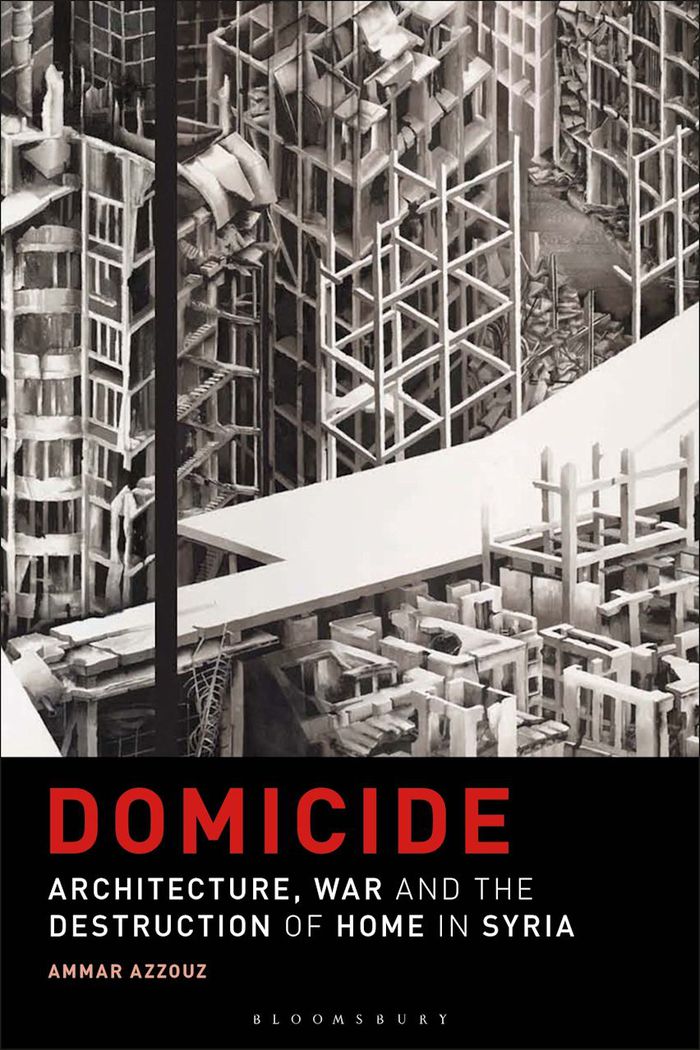
Domicide: Architecture, war and the destruction of home in Syria
Actions:
Prix:
$51.50
(disponible en magasin)
Résumé:
The city of Homs, like so many places in Syria, has suffered mass destruction since the war began in 2011. So far, the architectural response to the crisis has focused on ''cultural heritage'', ancient architecture, and the external displacement of refugees, often neglecting the everyday lives of Syrians and the buildings that make up their homes and communities. In ''Domicide'', Ammar Azzouz uses the notion of the 'home' to address the destruction in cities like Homs, the displacement of Syrian people both externally and internally, and to explore how cities can be rebuilt without causing further damage to the communities that live there. Drawing on interviews with those working in the built environment professions, both inside and outside of Syria, but also Syrians from other backgrounds who have become architects in their own way as they were forced to repair and rebuild their homes by themselves, Domicide offers fresh insight into the role of the architect during time of war, and explores how the future reconstruction of cities should mirror the wants and needs, the traditions and ways of living, of local communities. Focusing on Homs but offering a blueprint for other urban areas of conflict across Syria and the wider world, the book is essential reading for researchers in architecture, urban planning, heritage studies and conflict studies.
Domicide: Architecture, war and the destruction of home in Syria
Actions:
Prix:
$51.50
(disponible en magasin)
Résumé:
The city of Homs, like so many places in Syria, has suffered mass destruction since the war began in 2011. So far, the architectural response to the crisis has focused on ''cultural heritage'', ancient architecture, and the external displacement of refugees, often neglecting the everyday lives of Syrians and the buildings that make up their homes and communities. In ''Domicide'', Ammar Azzouz uses the notion of the 'home' to address the destruction in cities like Homs, the displacement of Syrian people both externally and internally, and to explore how cities can be rebuilt without causing further damage to the communities that live there. Drawing on interviews with those working in the built environment professions, both inside and outside of Syria, but also Syrians from other backgrounds who have become architects in their own way as they were forced to repair and rebuild their homes by themselves, Domicide offers fresh insight into the role of the architect during time of war, and explores how the future reconstruction of cities should mirror the wants and needs, the traditions and ways of living, of local communities. Focusing on Homs but offering a blueprint for other urban areas of conflict across Syria and the wider world, the book is essential reading for researchers in architecture, urban planning, heritage studies and conflict studies.
Classification:
livres
livres
Publication:
janvier 2025
janvier 2025
Sujet:
Théorie de l’architecture
Théorie de l’architecture
Classification:
livres
livres
Prix:
$63.00
(disponible en magasin)
Résumé:
Despite growing calls for global architectural histories, the historiography of modern architecture remains depicted predominantly by Western figures, narratives, and experiences. This publication takes a different approach by uncovering previously overlooked histories and contributions that shaped the Arab world’s modern built environment. It considers projects from the(...)
$63.00
(disponible en magasin)
Résumé:
Despite growing calls for global architectural histories, the historiography of modern architecture remains depicted predominantly by Western figures, narratives, and experiences. This publication takes a different approach by uncovering previously overlooked histories and contributions that shaped the Arab world’s modern built environment. It considers projects from the(...)
Titre:
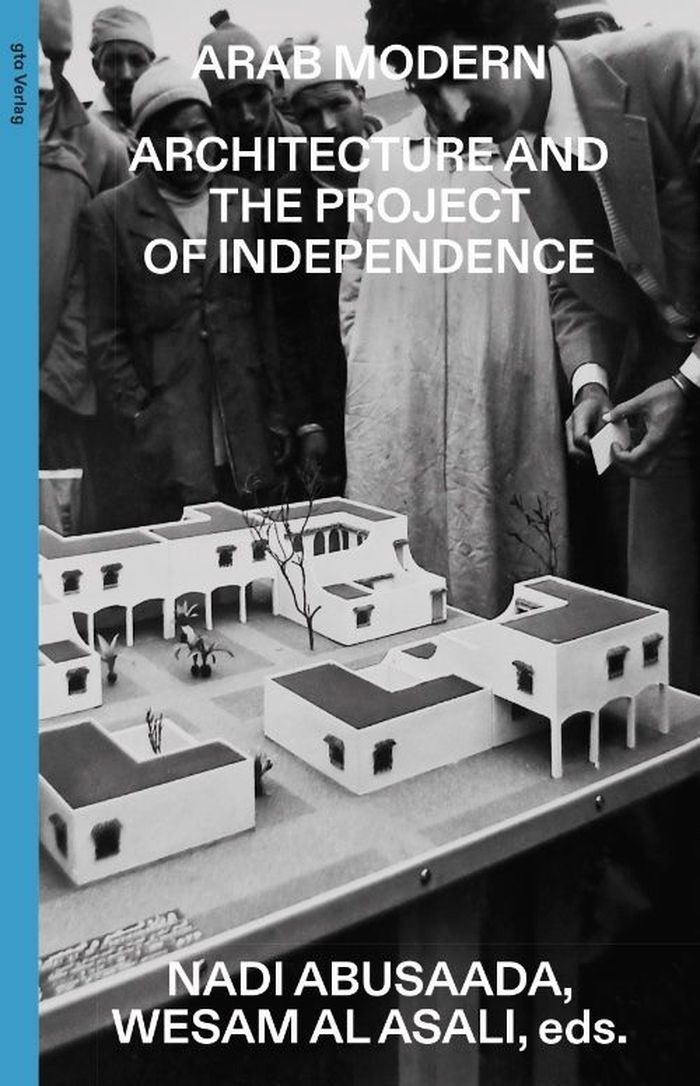
Arab modern: Architecture and the project of independence
Actions:
Prix:
$63.00
(disponible en magasin)
Résumé:
Despite growing calls for global architectural histories, the historiography of modern architecture remains depicted predominantly by Western figures, narratives, and experiences. This publication takes a different approach by uncovering previously overlooked histories and contributions that shaped the Arab world’s modern built environment. It considers projects from the Arabian Gulf, the Levant, and North Africa during a critical moment when several Arab countries were entering a new phases of post-colonial nation-building. From both within and outside the architectural profession, a multifaceted exchange of ideas informed architectural thinking in the wake of independence.
Arab modern: Architecture and the project of independence
Actions:
Prix:
$63.00
(disponible en magasin)
Résumé:
Despite growing calls for global architectural histories, the historiography of modern architecture remains depicted predominantly by Western figures, narratives, and experiences. This publication takes a different approach by uncovering previously overlooked histories and contributions that shaped the Arab world’s modern built environment. It considers projects from the Arabian Gulf, the Levant, and North Africa during a critical moment when several Arab countries were entering a new phases of post-colonial nation-building. From both within and outside the architectural profession, a multifaceted exchange of ideas informed architectural thinking in the wake of independence.
Classification:
livres
livres
Publication:
mars 2025
mars 2025
Sujet:
Théorie de l’architecture
Théorie de l’architecture
Classification:
livres
livres
Actions:
Prix:
$34.99
(disponible en magasin)
Résumé:
''Fortress Power'' presents a genealogy of fortification as a material and political technology intent on obstruction, tracing its implementation across battlefields, borders, and urban environments. Drawing on the influential work of philosophers Michel Foucault and Giorgio Agamben, Derek S. Denman places the fortress alongside the archetypes of the prison and the camp,(...)
$34.99
(disponible en magasin)
Résumé:
''Fortress Power'' presents a genealogy of fortification as a material and political technology intent on obstruction, tracing its implementation across battlefields, borders, and urban environments. Drawing on the influential work of philosophers Michel Foucault and Giorgio Agamben, Derek S. Denman places the fortress alongside the archetypes of the prison and the camp,(...)
Titre:
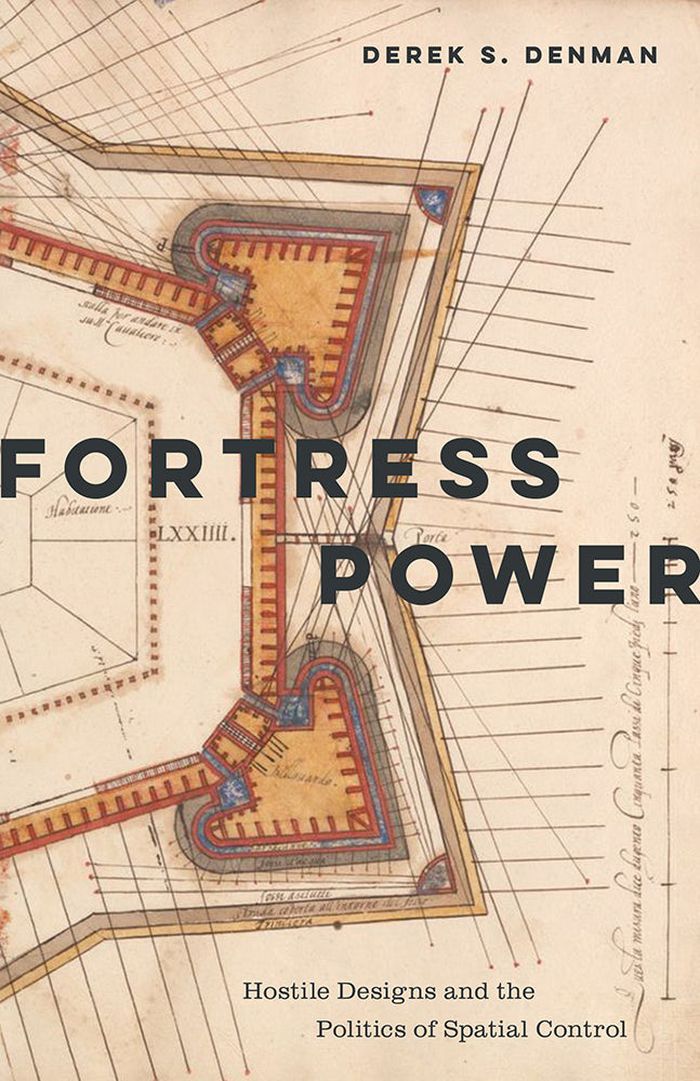
Fortress power: Hostile designs and the politics of spatial control
Actions:
Prix:
$34.99
(disponible en magasin)
Résumé:
''Fortress Power'' presents a genealogy of fortification as a material and political technology intent on obstruction, tracing its implementation across battlefields, borders, and urban environments. Drawing on the influential work of philosophers Michel Foucault and Giorgio Agamben, Derek S. Denman places the fortress alongside the archetypes of the prison and the camp, citing them as paradigmatic of how space is transformed into a tool of domination and control. Focusing on the defensive architecture of bastion fortresses, urban design, and border landscapes, ''Fortress Power'' charts the rise of a form of governance grounded in hostility, extending the scope of its subject from a piece of military construction to a much broader political concept. Detailing how power manifests in everything from city centers to international boundaries, the book analyzes the logic of fortification as it moves through various contexts in the advancement of surveillance, exploitation, warfare, and political authority.
Fortress power: Hostile designs and the politics of spatial control
Actions:
Prix:
$34.99
(disponible en magasin)
Résumé:
''Fortress Power'' presents a genealogy of fortification as a material and political technology intent on obstruction, tracing its implementation across battlefields, borders, and urban environments. Drawing on the influential work of philosophers Michel Foucault and Giorgio Agamben, Derek S. Denman places the fortress alongside the archetypes of the prison and the camp, citing them as paradigmatic of how space is transformed into a tool of domination and control. Focusing on the defensive architecture of bastion fortresses, urban design, and border landscapes, ''Fortress Power'' charts the rise of a form of governance grounded in hostility, extending the scope of its subject from a piece of military construction to a much broader political concept. Detailing how power manifests in everything from city centers to international boundaries, the book analyzes the logic of fortification as it moves through various contexts in the advancement of surveillance, exploitation, warfare, and political authority.
Classification:
livres
livres
Publication:
juillet 2025
juillet 2025
Sujet:
Théorie de l’architecture
Théorie de l’architecture
Classification:
livres
livres
Prix:
$48.99
(disponible en magasin)
Résumé:
Along with the rise of Mussolini’s fascist regime, the interwar years in Italy also saw the widespread development of its modernist interior design and furnishing practices. While the regime’s politics were overtly manifest in monumental government architecture, ''Furnishing Fascism'' examines the subtler yet effective role of household goods and decor in the cultivation(...)
$48.99
(disponible en magasin)
Résumé:
Along with the rise of Mussolini’s fascist regime, the interwar years in Italy also saw the widespread development of its modernist interior design and furnishing practices. While the regime’s politics were overtly manifest in monumental government architecture, ''Furnishing Fascism'' examines the subtler yet effective role of household goods and decor in the cultivation(...)
Titre:
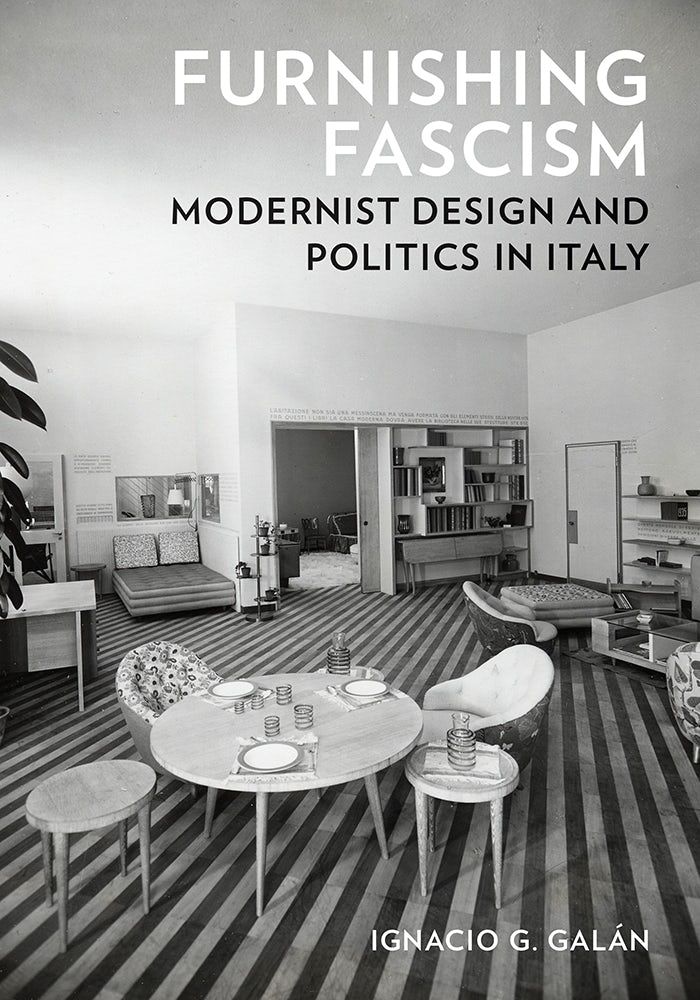
Furnishing fascism: Modernist design and politics in Italy
Actions:
Prix:
$48.99
(disponible en magasin)
Résumé:
Along with the rise of Mussolini’s fascist regime, the interwar years in Italy also saw the widespread development of its modernist interior design and furnishing practices. While the regime’s politics were overtly manifest in monumental government architecture, ''Furnishing Fascism'' examines the subtler yet effective role of household goods and decor in the cultivation of Italy’s exclusionary sense of national identity. Presenting a fresh look at the work of various architects and designers, including iconic figures such as Gio Ponti and Carlo Enrico Rava, Ignacio G. Galán explores how seemingly neutral products of everyday life contributed to the propagation of fascist ideology. Through extensive promotion in popular magazines and department stores, on the film sets of Cinecittà Studios, and throughout the country’s colonial territories, Italy’s modernist design practices were part of a larger political project that aimed to produce a totalizing image of cultural hegemony.
Furnishing fascism: Modernist design and politics in Italy
Actions:
Prix:
$48.99
(disponible en magasin)
Résumé:
Along with the rise of Mussolini’s fascist regime, the interwar years in Italy also saw the widespread development of its modernist interior design and furnishing practices. While the regime’s politics were overtly manifest in monumental government architecture, ''Furnishing Fascism'' examines the subtler yet effective role of household goods and decor in the cultivation of Italy’s exclusionary sense of national identity. Presenting a fresh look at the work of various architects and designers, including iconic figures such as Gio Ponti and Carlo Enrico Rava, Ignacio G. Galán explores how seemingly neutral products of everyday life contributed to the propagation of fascist ideology. Through extensive promotion in popular magazines and department stores, on the film sets of Cinecittà Studios, and throughout the country’s colonial territories, Italy’s modernist design practices were part of a larger political project that aimed to produce a totalizing image of cultural hegemony.
Classification:
livres
livres
Publication:
mai 2025
mai 2025
Sujet:
Théorie de l’architecture
Théorie de l’architecture
Classification:
livres
livres
Prix:
$45.00
(disponible sur commande)
Résumé:
L'architecture et le design partagent un même souci des formes, tous deux les considérant moins pour ce qu'elles sont que pour ce qu'elles peuvent, pour ce qu'elles engagent et ouvrent comme possibilités. N'aspirant pas à avoir empire sur elles, ils assumeraient, l'un et l'autre à leur manière, de gouverner les formes, au sens d'un ménagement (das Schonen), pour que(...)
$45.00
(disponible sur commande)
Résumé:
L'architecture et le design partagent un même souci des formes, tous deux les considérant moins pour ce qu'elles sont que pour ce qu'elles peuvent, pour ce qu'elles engagent et ouvrent comme possibilités. N'aspirant pas à avoir empire sur elles, ils assumeraient, l'un et l'autre à leur manière, de gouverner les formes, au sens d'un ménagement (das Schonen), pour que(...)
Titre:
Du gouvernement des formes : Essai sur l'architecture et le design
Actions:
Prix:
$45.00
(disponible sur commande)
Résumé:
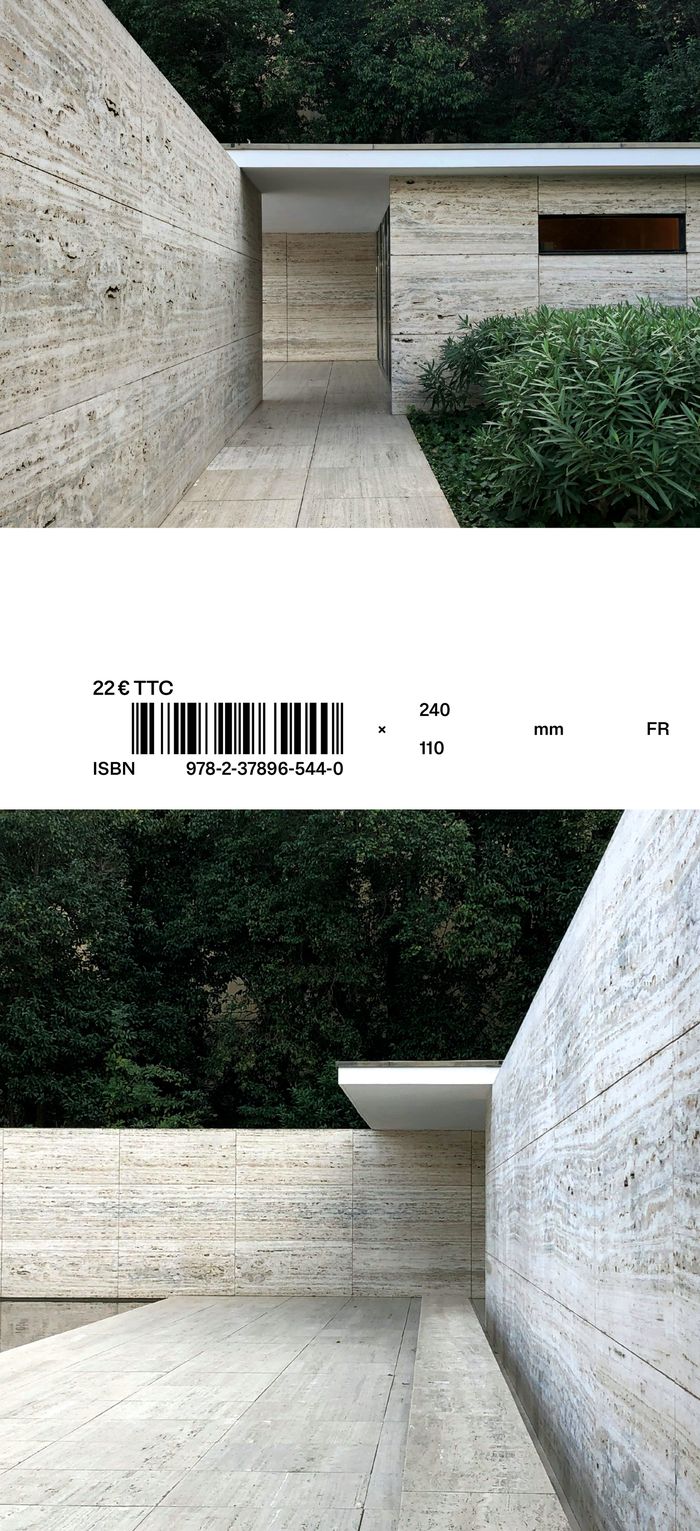
L'architecture et le design partagent un même souci des formes, tous deux les considérant moins pour ce qu'elles sont que pour ce qu'elles peuvent, pour ce qu'elles engagent et ouvrent comme possibilités. N'aspirant pas à avoir empire sur elles, ils assumeraient, l'un et l'autre à leur manière, de gouverner les formes, au sens d'un ménagement (das Schonen), pour que dérivent d'elles tant l'apparence que l'utilité de bâtiments, d'objets nouveaux entre autres choses. Au sein de cet essai, David Bihanic s'attelle à clarifier la contribution commune de l'architecture et du design au dessein des formes, précisant en quoi celle-ci s'avèrerait tout entière retenue à un accomplissement.
Du gouvernement des formes : Essai sur l'architecture et le design
Actions:
Prix:
$45.00
(disponible sur commande)
Résumé:
L'architecture et le design partagent un même souci des formes, tous deux les considérant moins pour ce qu'elles sont que pour ce qu'elles peuvent, pour ce qu'elles engagent et ouvrent comme possibilités. N'aspirant pas à avoir empire sur elles, ils assumeraient, l'un et l'autre à leur manière, de gouverner les formes, au sens d'un ménagement (das Schonen), pour que dérivent d'elles tant l'apparence que l'utilité de bâtiments, d'objets nouveaux entre autres choses. Au sein de cet essai, David Bihanic s'attelle à clarifier la contribution commune de l'architecture et du design au dessein des formes, précisant en quoi celle-ci s'avèrerait tout entière retenue à un accomplissement.
Classification:
livres
livres
Publication:
avril 2025
avril 2025
Sujet:
Théorie de l’architecture
Théorie de l’architecture
Classification:
livres
livres
Titre:
Architecture and retrenchment : aesthetics, spatial practices and the neoliberalisation of the 1980s
Architecture and retrenchment : aesthetics, spatial practices and the neoliberalisation of the 1980s
Actions:
Prix:
$51.50
(disponible en magasin)
Résumé:
"Architecture and retrenchment" explores the "neoliberal turn" in architecture, through the rise and fall of the Swedish welfare state. There are few better case studies of architecture's role in the retrenchment and dismantling of the welfare state than Sweden, the birthplace of the world-famous "Swedish Model" and now home to Europe's fastest-growing inequality. Through(...)
$51.50
(disponible en magasin)
Résumé:
"Architecture and retrenchment" explores the "neoliberal turn" in architecture, through the rise and fall of the Swedish welfare state. There are few better case studies of architecture's role in the retrenchment and dismantling of the welfare state than Sweden, the birthplace of the world-famous "Swedish Model" and now home to Europe's fastest-growing inequality. Through(...)
Titre:
Architecture and retrenchment : aesthetics, spatial practices and the neoliberalisation of the 1980s
Actions:
Prix:
$51.50
(disponible en magasin)
Résumé:
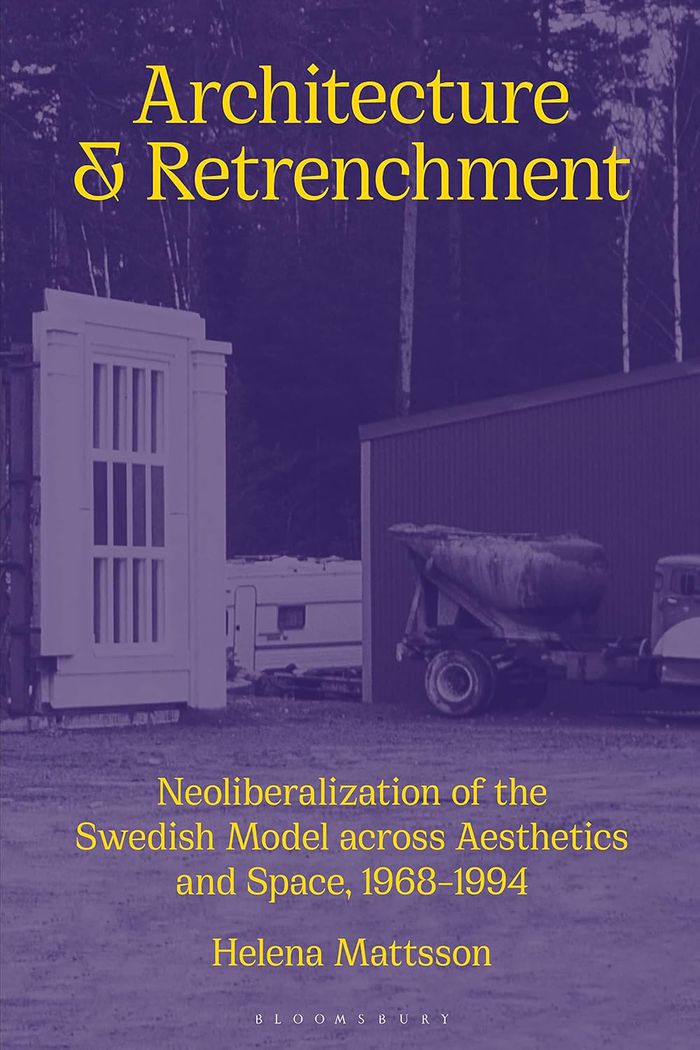
"Architecture and retrenchment" explores the "neoliberal turn" in architecture, through the rise and fall of the Swedish welfare state. There are few better case studies of architecture's role in the retrenchment and dismantling of the welfare state than Sweden, the birthplace of the world-famous "Swedish Model" and now home to Europe's fastest-growing inequality. Through eight in-depth architectural case studies, Helena Mattsson analyzes how neoliberalism has created conditions for a new built environment which was once closely integral to the welfare system, examining how new architectural strategies and techniques were developed in order to protect the agency of architecture in a newly re-organised society, and revealing the role of architecture in creating new types of segregation, discrimination, and social stratification.
Architecture and retrenchment : aesthetics, spatial practices and the neoliberalisation of the 1980s
Actions:
Prix:
$51.50
(disponible en magasin)
Résumé:
"Architecture and retrenchment" explores the "neoliberal turn" in architecture, through the rise and fall of the Swedish welfare state. There are few better case studies of architecture's role in the retrenchment and dismantling of the welfare state than Sweden, the birthplace of the world-famous "Swedish Model" and now home to Europe's fastest-growing inequality. Through eight in-depth architectural case studies, Helena Mattsson analyzes how neoliberalism has created conditions for a new built environment which was once closely integral to the welfare system, examining how new architectural strategies and techniques were developed in order to protect the agency of architecture in a newly re-organised society, and revealing the role of architecture in creating new types of segregation, discrimination, and social stratification.
Classification:
livres
livres
Publication:
juin 2024
juin 2024
Sujet:
Théorie de l’architecture
Théorie de l’architecture
Classification:
livres
livres
Titre:
Pandemic objects
Pandemic objects
Actions:
Prix:
$48.95
(disponible en magasin)
Résumé:
A publication based on "Pandemic objects", an editorial project that compiles and reflects on objects that have taken on new meaning and purpose during the Covid-19 pandemic. During times of pandemic, a host of everyday often-overlooked "objects" are suddenly charged with new urgency. Toilet paper becomes a symbol of public panic, a forehead thermometer a tool for social(...)
$48.95
(disponible en magasin)
Résumé:
A publication based on "Pandemic objects", an editorial project that compiles and reflects on objects that have taken on new meaning and purpose during the Covid-19 pandemic. During times of pandemic, a host of everyday often-overlooked "objects" are suddenly charged with new urgency. Toilet paper becomes a symbol of public panic, a forehead thermometer a tool for social(...)
Titre:
Pandemic objects
Actions:
Prix:
$48.95
(disponible en magasin)
Résumé:
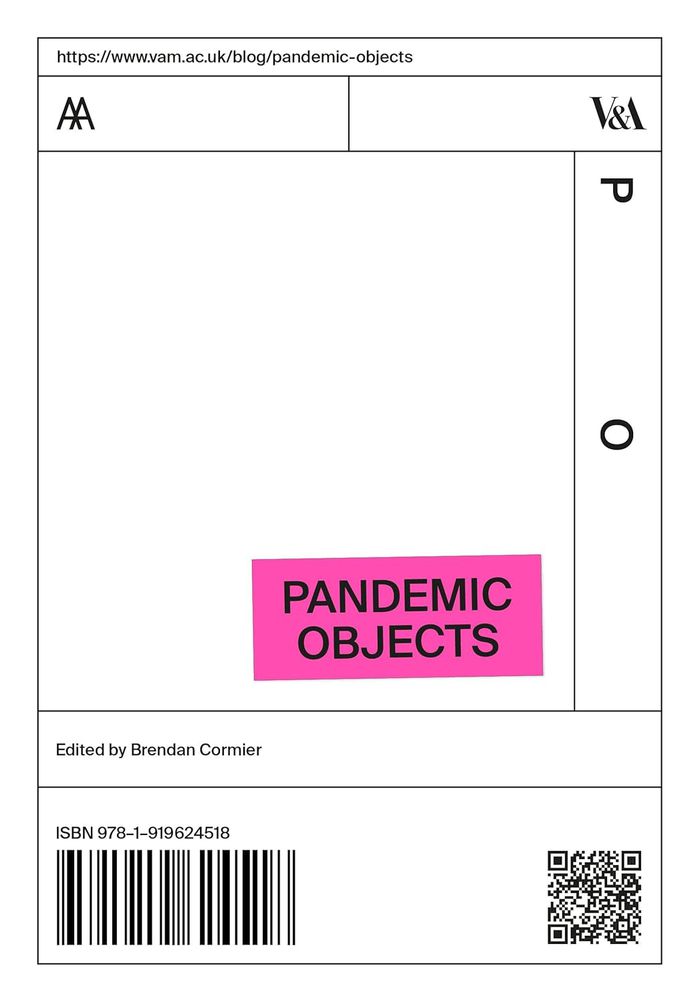
A publication based on "Pandemic objects", an editorial project that compiles and reflects on objects that have taken on new meaning and purpose during the Covid-19 pandemic. During times of pandemic, a host of everyday often-overlooked "objects" are suddenly charged with new urgency. Toilet paper becomes a symbol of public panic, a forehead thermometer a tool for social control, convention centres become hospitals, while parks become contested public commodities. By compiling these objects and reflecting on their changing purpose and meaning, the project aims to paint a unique picture of the pandemic and the pivotal role objects play within it.
Pandemic objects
Actions:
Prix:
$48.95
(disponible en magasin)
Résumé:
A publication based on "Pandemic objects", an editorial project that compiles and reflects on objects that have taken on new meaning and purpose during the Covid-19 pandemic. During times of pandemic, a host of everyday often-overlooked "objects" are suddenly charged with new urgency. Toilet paper becomes a symbol of public panic, a forehead thermometer a tool for social control, convention centres become hospitals, while parks become contested public commodities. By compiling these objects and reflecting on their changing purpose and meaning, the project aims to paint a unique picture of the pandemic and the pivotal role objects play within it.
Classification:
livres
livres
Publication:
mars 2025
mars 2025
Sujet:
Théorie de l’architecture
Théorie de l’architecture
Classification:
livres
livres
Titre:
Concerning land: Stories
Concerning land: Stories
Actions:
Prix:
$18.95
(disponible en magasin)
Résumé:
This publication asks contributors a direct and open question: what are you concerned with right now? Its aim is to place current topics and debate at the centre of architectural education. By publishing contrasting views revolving around a singular question, architects, practitioners, educators, students and theorists can share their ideas on how urgent issues can be(...)
$18.95
(disponible en magasin)
Résumé:
This publication asks contributors a direct and open question: what are you concerned with right now? Its aim is to place current topics and debate at the centre of architectural education. By publishing contrasting views revolving around a singular question, architects, practitioners, educators, students and theorists can share their ideas on how urgent issues can be(...)
Sujet:
Théorie de l’architecture
Théorie de l’architecture
Publication:
mars 2025
mars 2025
Titre:
Concerning land: Stories
Actions:
Prix:
$18.95
(disponible en magasin)
Résumé:
This publication asks contributors a direct and open question: what are you concerned with right now? Its aim is to place current topics and debate at the centre of architectural education. By publishing contrasting views revolving around a singular question, architects, practitioners, educators, students and theorists can share their ideas on how urgent issues can be examined and rethought within education, practice and writing.
Concerning land: Stories
Actions:
Prix:
$18.95
(disponible en magasin)
Résumé:
This publication asks contributors a direct and open question: what are you concerned with right now? Its aim is to place current topics and debate at the centre of architectural education. By publishing contrasting views revolving around a singular question, architects, practitioners, educators, students and theorists can share their ideas on how urgent issues can be examined and rethought within education, practice and writing.
Classification:
livres
livres
Publication:
mars 2025
mars 2025
Sujet:
Théorie de l’architecture
Théorie de l’architecture
Classification:
livres
livres
Prix:
$67.50
(disponible en magasin)
Résumé:
Formerly the Louis I. Kahn Visiting Assistant Professor at Yale University, architect Fernanda Canales (born 1974), together with her studio, was named one of the world's "100+ Best Architecture Firms" by Domus magazine, and was cited by the New York Times as one of 10 women changing the face of international leadership. Canales' practice almost exclusively focuses on(...)
$67.50
(disponible en magasin)
Résumé:
Formerly the Louis I. Kahn Visiting Assistant Professor at Yale University, architect Fernanda Canales (born 1974), together with her studio, was named one of the world's "100+ Best Architecture Firms" by Domus magazine, and was cited by the New York Times as one of 10 women changing the face of international leadership. Canales' practice almost exclusively focuses on(...)
Titre:
2G Essays: My house, your city. Privacy in a shared world
Actions:
Prix:
$67.50
(disponible en magasin)
Résumé:
Formerly the Louis I. Kahn Visiting Assistant Professor at Yale University, architect Fernanda Canales (born 1974), together with her studio, was named one of the world's "100+ Best Architecture Firms" by Domus magazine, and was cited by the New York Times as one of 10 women changing the face of international leadership. Canales' practice almost exclusively focuses on residential buildings. Her solutions address the environmental challenges of a given area or of a changing climate at large: whether rebuilding a family home damaged by an earthquake or designing a new house around the existing trees and vegetation. In this collection of essays published by 2G, Canales analyzes the evolution of the house by dismantling three critical assumptions: the house as a place of rest separate from work, the house as an object of private property and the house as a sanctuary for the nuclear family.
2G Essays: My house, your city. Privacy in a shared world
Actions:
Prix:
$67.50
(disponible en magasin)
Résumé:
Formerly the Louis I. Kahn Visiting Assistant Professor at Yale University, architect Fernanda Canales (born 1974), together with her studio, was named one of the world's "100+ Best Architecture Firms" by Domus magazine, and was cited by the New York Times as one of 10 women changing the face of international leadership. Canales' practice almost exclusively focuses on residential buildings. Her solutions address the environmental challenges of a given area or of a changing climate at large: whether rebuilding a family home damaged by an earthquake or designing a new house around the existing trees and vegetation. In this collection of essays published by 2G, Canales analyzes the evolution of the house by dismantling three critical assumptions: the house as a place of rest separate from work, the house as an object of private property and the house as a sanctuary for the nuclear family.
Classification:
livres
livres
Publication:
mai 2025
mai 2025
Sujet:
Théorie de l’architecture
Théorie de l’architecture
Classification:
livres
livres
Actions:
Prix:
$61.95
(disponible en magasin)
Résumé:
Longtemps insolite et singulière, la réhabilitation de l'existant est en passe d'être systématiquement envisagée dans les grands projets architecturaux et urbains. En cause ? La priorité donnée aux vertus écologiques du réemploi, qui s'est récemment greffée sur le souci fondateur de la préservation du patrimoine. Ancienne abbatiale, piscine municipale, gare désaffectée,(...)
$61.95
(disponible en magasin)
Résumé:
Longtemps insolite et singulière, la réhabilitation de l'existant est en passe d'être systématiquement envisagée dans les grands projets architecturaux et urbains. En cause ? La priorité donnée aux vertus écologiques du réemploi, qui s'est récemment greffée sur le souci fondateur de la préservation du patrimoine. Ancienne abbatiale, piscine municipale, gare désaffectée,(...)
Titre:
L'inachevé : Le jeu des métamorphoses
Actions:
Prix:
$61.95
(disponible en magasin)
Résumé:
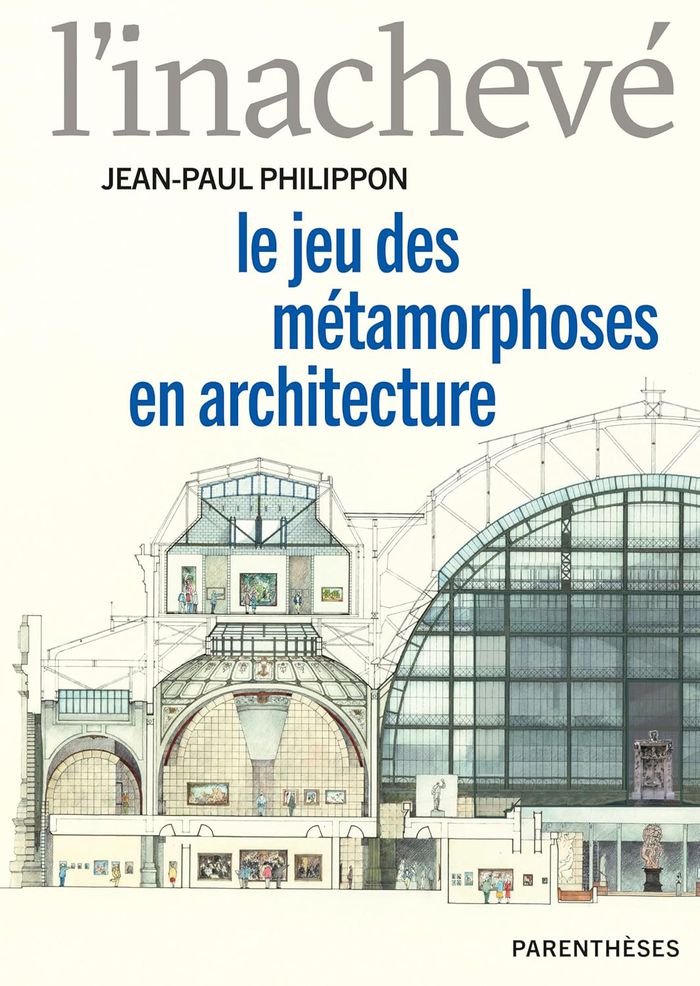
Longtemps insolite et singulière, la réhabilitation de l'existant est en passe d'être systématiquement envisagée dans les grands projets architecturaux et urbains. En cause ? La priorité donnée aux vertus écologiques du réemploi, qui s'est récemment greffée sur le souci fondateur de la préservation du patrimoine. Ancienne abbatiale, piscine municipale, gare désaffectée, entrepôts industriels à l'abandon, usines, moulins et ateliers à l'arrêt : la destruction est la solution d'une époque révolue ; paradoxalement rétrograde. L'auteur de cet ouvrage, acteur de la transformation de la gare d'Orsay en musée, et concepteur entre autres de La Piscine à Roubaix et du musée de Valence, a été l'un des pionniers en France de la métamorphose architecturale.
L'inachevé : Le jeu des métamorphoses
Actions:
Prix:
$61.95
(disponible en magasin)
Résumé:
Longtemps insolite et singulière, la réhabilitation de l'existant est en passe d'être systématiquement envisagée dans les grands projets architecturaux et urbains. En cause ? La priorité donnée aux vertus écologiques du réemploi, qui s'est récemment greffée sur le souci fondateur de la préservation du patrimoine. Ancienne abbatiale, piscine municipale, gare désaffectée, entrepôts industriels à l'abandon, usines, moulins et ateliers à l'arrêt : la destruction est la solution d'une époque révolue ; paradoxalement rétrograde. L'auteur de cet ouvrage, acteur de la transformation de la gare d'Orsay en musée, et concepteur entre autres de La Piscine à Roubaix et du musée de Valence, a été l'un des pionniers en France de la métamorphose architecturale.
Classification:
livres
livres
Publication:
mai 2025
mai 2025
Sujet:
Théorie de l’architecture
Théorie de l’architecture


