


2227 Résultats
Classification:
livres
livres
Actions:
Prix:
$50.00
(disponible sur commande)
Résumé:
Quelle était la vie quotidienne des citadins en URSS ? L'histoire de l'appartement communautaire, qui représenta le logement majoritaire dans les grandes villes soviétiques, commence après la Révolution de 1917. Dès décembre 1918, les appartements des immeubles de rapport et les hôtels particuliers sont divisés en parties individuelles et en parties communes. Retraçant(...)
$50.00
(disponible sur commande)
Résumé:
Quelle était la vie quotidienne des citadins en URSS ? L'histoire de l'appartement communautaire, qui représenta le logement majoritaire dans les grandes villes soviétiques, commence après la Révolution de 1917. Dès décembre 1918, les appartements des immeubles de rapport et les hôtels particuliers sont divisés en parties individuelles et en parties communes. Retraçant(...)
Titre:
L'appartement communautaire: l'histoire cachée du logement soviétique
Actions:
Prix:
$50.00
(disponible sur commande)
Résumé:
Quelle était la vie quotidienne des citadins en URSS ? L'histoire de l'appartement communautaire, qui représenta le logement majoritaire dans les grandes villes soviétiques, commence après la Révolution de 1917. Dès décembre 1918, les appartements des immeubles de rapport et les hôtels particuliers sont divisés en parties individuelles et en parties communes. Retraçant les utopies qui donnèrent naissance aux différents types de logements collectifs, s'appuyant sur de nombreux textes législatifs mais aussi sur des témoignages d'habitants, Katerina Azarova nous plonge dans l'univers labyrinthique et exacerbé de la vie communautaire. Illustré d'une centaine de photographies, son livre nous donne des clés pour comprendre la société soviétique d'hier et celle des Russes d'aujourd'hui.
L'appartement communautaire: l'histoire cachée du logement soviétique
Actions:
Prix:
$50.00
(disponible sur commande)
Résumé:
Quelle était la vie quotidienne des citadins en URSS ? L'histoire de l'appartement communautaire, qui représenta le logement majoritaire dans les grandes villes soviétiques, commence après la Révolution de 1917. Dès décembre 1918, les appartements des immeubles de rapport et les hôtels particuliers sont divisés en parties individuelles et en parties communes. Retraçant les utopies qui donnèrent naissance aux différents types de logements collectifs, s'appuyant sur de nombreux textes législatifs mais aussi sur des témoignages d'habitants, Katerina Azarova nous plonge dans l'univers labyrinthique et exacerbé de la vie communautaire. Illustré d'une centaine de photographies, son livre nous donne des clés pour comprendre la société soviétique d'hier et celle des Russes d'aujourd'hui.
Classification:
livres
livres
Publication:
octobre 2007, Paris
octobre 2007, Paris
Sujet:
Théorie de l’architecture
Théorie de l’architecture
Classification:
livres
livres
Titre:
Inverted world
Inverted world
Actions:
Prix:
$16.95
(disponible sur commande)
Résumé:
The city is winched along tracks through a devastated land full of hostile tribes. Rails must be freshly laid ahead of the city and carefully removed in its wake. Rivers and mountains present nearly insurmountable challenges to the ingenuity of the city’s engineers. But if the city does not move, it will fall farther and farther behind the “optimum” into the crushing(...)
$16.95
(disponible sur commande)
Résumé:
The city is winched along tracks through a devastated land full of hostile tribes. Rails must be freshly laid ahead of the city and carefully removed in its wake. Rivers and mountains present nearly insurmountable challenges to the ingenuity of the city’s engineers. But if the city does not move, it will fall farther and farther behind the “optimum” into the crushing(...)
Titre:
Inverted world
Actions:
Prix:
$16.95
(disponible sur commande)
Résumé:
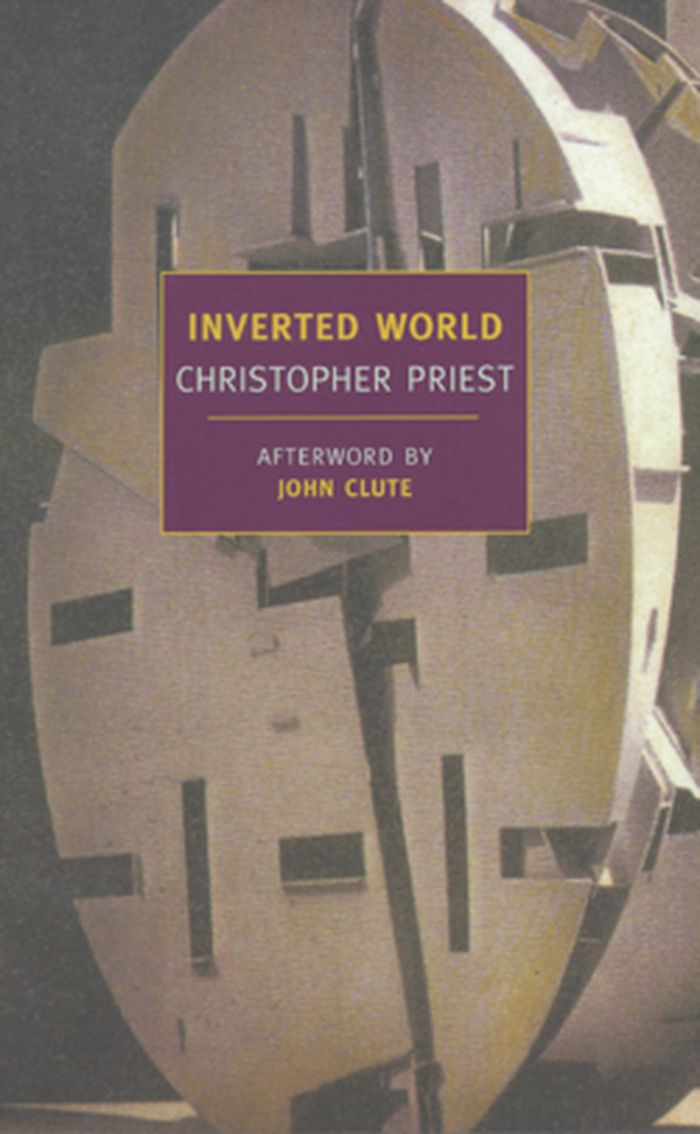
The city is winched along tracks through a devastated land full of hostile tribes. Rails must be freshly laid ahead of the city and carefully removed in its wake. Rivers and mountains present nearly insurmountable challenges to the ingenuity of the city’s engineers. But if the city does not move, it will fall farther and farther behind the “optimum” into the crushing gravitational field that has transformed life on Earth. The only alternative to progress is death. The secret directorate that governs the city makes sure that its inhabitants know nothing of this. Raised in common in crèches, nurtured on synthetic food, prevented above all from venturing outside the closed circuit of the city, they are carefully sheltered from the dire necessities that have come to define human existence. And yet the city is in crisis. The people are growing restive, the population is dwindling, and the rulers know that, for all their efforts, slowly but surely the city is slipping ever farther behind the optimum. Helward Mann is a member of the city’s elite. Better than anyone, he knows how tenuous is the city’s continued existence. But the world—he is about to discover—is infinitely stranger than the strange world he believes he knows so well.
Inverted world
Actions:
Prix:
$16.95
(disponible sur commande)
Résumé:
The city is winched along tracks through a devastated land full of hostile tribes. Rails must be freshly laid ahead of the city and carefully removed in its wake. Rivers and mountains present nearly insurmountable challenges to the ingenuity of the city’s engineers. But if the city does not move, it will fall farther and farther behind the “optimum” into the crushing gravitational field that has transformed life on Earth. The only alternative to progress is death. The secret directorate that governs the city makes sure that its inhabitants know nothing of this. Raised in common in crèches, nurtured on synthetic food, prevented above all from venturing outside the closed circuit of the city, they are carefully sheltered from the dire necessities that have come to define human existence. And yet the city is in crisis. The people are growing restive, the population is dwindling, and the rulers know that, for all their efforts, slowly but surely the city is slipping ever farther behind the optimum. Helward Mann is a member of the city’s elite. Better than anyone, he knows how tenuous is the city’s continued existence. But the world—he is about to discover—is infinitely stranger than the strange world he believes he knows so well.
Classification:
livres
livres
Publication:
juillet 2008, New York
juillet 2008, New York
Sujet:
Théorie de l’architecture
Théorie de l’architecture
Classification:
livres
livres
Actions:
Prix:
$53.50
(disponible sur commande)
Résumé:
This book collects the best in recent scholarly and philosophical writings that bear upon the history of domestic architecture in the nineteenth and twentieth centuries. Lane combines exemplary readings that focus on and examine the issues involved in the study of domestic architecture. The readings address, among other issues, the relation between the public and the(...)
$53.50
(disponible sur commande)
Résumé:
This book collects the best in recent scholarly and philosophical writings that bear upon the history of domestic architecture in the nineteenth and twentieth centuries. Lane combines exemplary readings that focus on and examine the issues involved in the study of domestic architecture. The readings address, among other issues, the relation between the public and the(...)
Titre:
Housing and dwelling: perpspectives on modern domestic architecture
Actions:
Prix:
$53.50
(disponible sur commande)
Résumé:
This book collects the best in recent scholarly and philosophical writings that bear upon the history of domestic architecture in the nineteenth and twentieth centuries. Lane combines exemplary readings that focus on and examine the issues involved in the study of domestic architecture. The readings address, among other issues, the relation between the public and the private sphere, the gendering of space, notions of domesticity, the relation between domesticity and social class, the role of builders and prefabrications, and the relationship between architects and the inhabitants of dwellings.
Housing and dwelling: perpspectives on modern domestic architecture
Actions:
Prix:
$53.50
(disponible sur commande)
Résumé:
This book collects the best in recent scholarly and philosophical writings that bear upon the history of domestic architecture in the nineteenth and twentieth centuries. Lane combines exemplary readings that focus on and examine the issues involved in the study of domestic architecture. The readings address, among other issues, the relation between the public and the private sphere, the gendering of space, notions of domesticity, the relation between domesticity and social class, the role of builders and prefabrications, and the relationship between architects and the inhabitants of dwellings.
Classification:
livres
livres
Publication:
octobre 2006, New York
octobre 2006, New York
Sujet:
Théorie de l’architecture
Théorie de l’architecture
Classification:
livres
livres
Actions:
Prix:
$43.50
(disponible sur commande)
Résumé:
This publication explores the increasing significance of globalization processes on urban change, architectural practice and the built environment. In what is primarily a critical sociological overview of the current global architectural industry, Donald McNeill covers the "star system" of international architects who combine celebrity and hypermobility, the top firms,(...)
$43.50
(disponible sur commande)
Résumé:
This publication explores the increasing significance of globalization processes on urban change, architectural practice and the built environment. In what is primarily a critical sociological overview of the current global architectural industry, Donald McNeill covers the "star system" of international architects who combine celebrity and hypermobility, the top firms,(...)
Titre:
The global architect : firms, fame and urban form
Actions:
Prix:
$43.50
(disponible sur commande)
Résumé:
This publication explores the increasing significance of globalization processes on urban change, architectural practice and the built environment. In what is primarily a critical sociological overview of the current global architectural industry, Donald McNeill covers the "star system" of international architects who combine celebrity and hypermobility, the top firms, whose offices are currently undergoing a major global expansion, and the role of advanced information technology in expanding the geographical scope of the industry.
The global architect : firms, fame and urban form
Actions:
Prix:
$43.50
(disponible sur commande)
Résumé:
This publication explores the increasing significance of globalization processes on urban change, architectural practice and the built environment. In what is primarily a critical sociological overview of the current global architectural industry, Donald McNeill covers the "star system" of international architects who combine celebrity and hypermobility, the top firms, whose offices are currently undergoing a major global expansion, and the role of advanced information technology in expanding the geographical scope of the industry.
Classification:
livres
livres
Publication:
janvier 2009
janvier 2009
Sujet:
Théorie de l’architecture
Théorie de l’architecture
Classification:
livres
livres

Actions:
Prix:
$45.00
(disponible sur commande)
Résumé:
Building Happiness discusses the nature of happiness within our built environment. In association with Building Futures, the book includes ideas and debates informed by architects such as Herman Hertzberger and Aldo van Eyck, with these brought up to date through the work of contemporary architects and commentators. The nature of our environment and how we use it and how(...)
$45.00
(disponible sur commande)
Résumé:
Building Happiness discusses the nature of happiness within our built environment. In association with Building Futures, the book includes ideas and debates informed by architects such as Herman Hertzberger and Aldo van Eyck, with these brought up to date through the work of contemporary architects and commentators. The nature of our environment and how we use it and how(...)
Titre:
Building happiness: architecture to make you smile
Actions:
Prix:
$45.00
(disponible sur commande)
Résumé:
Building Happiness discusses the nature of happiness within our built environment. In association with Building Futures, the book includes ideas and debates informed by architects such as Herman Hertzberger and Aldo van Eyck, with these brought up to date through the work of contemporary architects and commentators. The nature of our environment and how we use it and how we are conditioned by it is considered in detail, particularly the ways this affects our sense of wellbeing or happiness. Is this a personal feeling or is it how space is used in our community that constructs happiness? Is it green eco-houses, traditional cottages or 1970s modernism that makes you happy? Building Happiness comprises both short commentaries and longer essays concerned with the impact of our built environment. The book also provides a visual representation of the themes addressed through evocative illustrations, sketches and photography. With an introduction by Jane Wernick, and contributions by architectural and social critics such as Jeremy Till, Shami Chakrabarti, and Kirsty Wark, as well as commentaries from Glenda Jackson and prestigious architects and artists such as Richard Rogers and Richard Wentworth, amongst others.
Building happiness: architecture to make you smile
Actions:
Prix:
$45.00
(disponible sur commande)
Résumé:
Building Happiness discusses the nature of happiness within our built environment. In association with Building Futures, the book includes ideas and debates informed by architects such as Herman Hertzberger and Aldo van Eyck, with these brought up to date through the work of contemporary architects and commentators. The nature of our environment and how we use it and how we are conditioned by it is considered in detail, particularly the ways this affects our sense of wellbeing or happiness. Is this a personal feeling or is it how space is used in our community that constructs happiness? Is it green eco-houses, traditional cottages or 1970s modernism that makes you happy? Building Happiness comprises both short commentaries and longer essays concerned with the impact of our built environment. The book also provides a visual representation of the themes addressed through evocative illustrations, sketches and photography. With an introduction by Jane Wernick, and contributions by architectural and social critics such as Jeremy Till, Shami Chakrabarti, and Kirsty Wark, as well as commentaries from Glenda Jackson and prestigious architects and artists such as Richard Rogers and Richard Wentworth, amongst others.
Classification:
livres
livres
Publication:
décembre 2008, London
décembre 2008, London
Sujet:
Théorie de l’architecture
Théorie de l’architecture
Classification:
livres
livres
Actions:
Prix:
$16.95
(disponible sur commande)
Résumé:
De la ville au technocosme n'est pas un essai ordinaire. C'est fort de son expérience et de ses lectures que l'auteur s'est plongé dans ce monde, le nôtre, constamment renouvelé par la technologie. En interrogeant ce nouvel environnement - un assemblage de réseaux, de fonctions et de lieux qui équipent notre existence et servent notre quête de performance -, il nous(...)
$16.95
(disponible sur commande)
Résumé:
De la ville au technocosme n'est pas un essai ordinaire. C'est fort de son expérience et de ses lectures que l'auteur s'est plongé dans ce monde, le nôtre, constamment renouvelé par la technologie. En interrogeant ce nouvel environnement - un assemblage de réseaux, de fonctions et de lieux qui équipent notre existence et servent notre quête de performance -, il nous(...)
Titre:
De la ville au technocosme, le meilleur des mondes?
Actions:
Prix:
$16.95
(disponible sur commande)
Résumé:
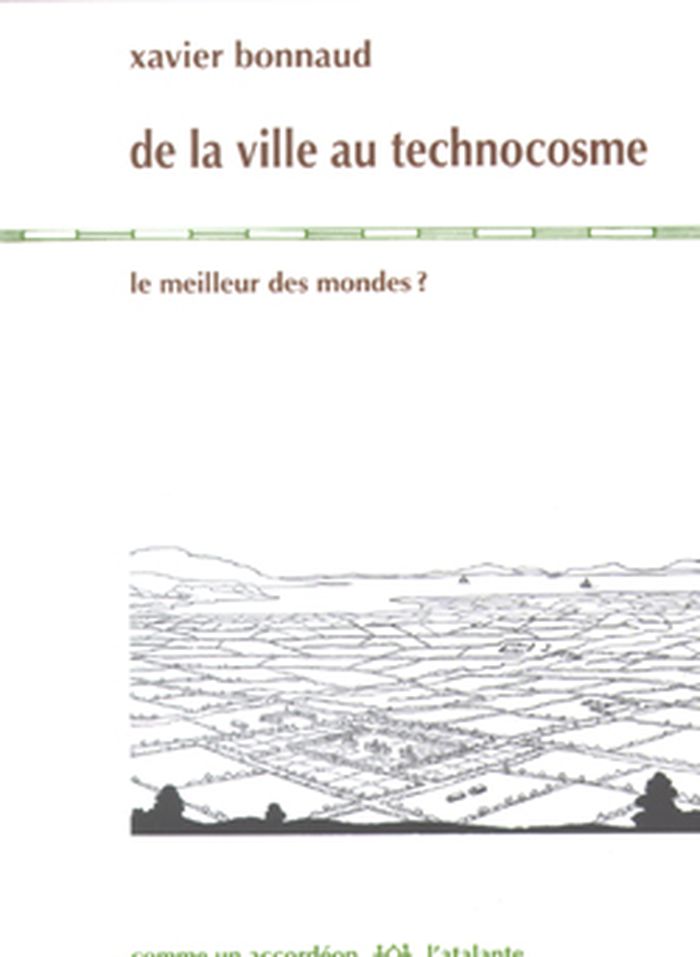
De la ville au technocosme n'est pas un essai ordinaire. C'est fort de son expérience et de ses lectures que l'auteur s'est plongé dans ce monde, le nôtre, constamment renouvelé par la technologie. En interrogeant ce nouvel environnement - un assemblage de réseaux, de fonctions et de lieux qui équipent notre existence et servent notre quête de performance -, il nous propose de réfléchir à l'impact de la technicité croissante de nos existences. Vers quoi allons-nous ? est-ce que cette artificialisation du réel préfigure la fin du genre humain ? Ni idolâtre ni catastrophiste, Xavier Bonnaud nous prévient de la menace majeure de cette évolution techniciste : la capitulation définitive, donc sans retour possible, de l'humain. Faut-il voir dans l'avènement de ce technocosme une métaphore du " meilleur des mondes " ?
De la ville au technocosme, le meilleur des mondes?
Actions:
Prix:
$16.95
(disponible sur commande)
Résumé:
De la ville au technocosme n'est pas un essai ordinaire. C'est fort de son expérience et de ses lectures que l'auteur s'est plongé dans ce monde, le nôtre, constamment renouvelé par la technologie. En interrogeant ce nouvel environnement - un assemblage de réseaux, de fonctions et de lieux qui équipent notre existence et servent notre quête de performance -, il nous propose de réfléchir à l'impact de la technicité croissante de nos existences. Vers quoi allons-nous ? est-ce que cette artificialisation du réel préfigure la fin du genre humain ? Ni idolâtre ni catastrophiste, Xavier Bonnaud nous prévient de la menace majeure de cette évolution techniciste : la capitulation définitive, donc sans retour possible, de l'humain. Faut-il voir dans l'avènement de ce technocosme une métaphore du " meilleur des mondes " ?
Classification:
livres
livres
Publication:
janvier 1900, Nantes
janvier 1900, Nantes
Sujet:
Théorie de l’architecture
Théorie de l’architecture
Classification:
livres
livres

Prix:
$50.95
(disponible sur commande)
Résumé:
Employing ethnographies from the United States to continental Europe, Asia, and South America, Deciphering the Global exemplifies the next wave of globalization studies and lays the groundworks for a new school in the study of the global.
$50.95
(disponible sur commande)
Résumé:
Employing ethnographies from the United States to continental Europe, Asia, and South America, Deciphering the Global exemplifies the next wave of globalization studies and lays the groundworks for a new school in the study of the global.
Titre:
Deciphering the global: its scales, spaces, and subjects
Actions:
Prix:
$50.95
(disponible sur commande)
Résumé:
Employing ethnographies from the United States to continental Europe, Asia, and South America, Deciphering the Global exemplifies the next wave of globalization studies and lays the groundworks for a new school in the study of the global.
Deciphering the global: its scales, spaces, and subjects
Actions:
Prix:
$50.95
(disponible sur commande)
Résumé:
Employing ethnographies from the United States to continental Europe, Asia, and South America, Deciphering the Global exemplifies the next wave of globalization studies and lays the groundworks for a new school in the study of the global.
Classification:
livres
livres
Publication:
avril 2007, London, New York
avril 2007, London, New York
Sujet:
Théorie de l’architecture
Théorie de l’architecture
Classification:
livres
livres
Actions:
Prix:
$61.50
(disponible sur commande)
Résumé:
Lefebvre’s massive body of work has generated two main schools of thought: one that is political economic, and another that is more culturally oriented and poststructuralist in tone. Space, Difference, and Everyday Life merges these two schools of thought into a unified Lefebvrian approach to contemporary urban issues and the nature of our spatialized social structures.
$61.50
(disponible sur commande)
Résumé:
Lefebvre’s massive body of work has generated two main schools of thought: one that is political economic, and another that is more culturally oriented and poststructuralist in tone. Space, Difference, and Everyday Life merges these two schools of thought into a unified Lefebvrian approach to contemporary urban issues and the nature of our spatialized social structures.
Sujet:
Théorie de l’architecture
Théorie de l’architecture
Publication:
août 2008, New York, London
août 2008, New York, London
Titre:
Space difference, everyday life: Henri Lefebvre and radical politics
Actions:
Prix:
$61.50
(disponible sur commande)
Résumé:
Lefebvre’s massive body of work has generated two main schools of thought: one that is political economic, and another that is more culturally oriented and poststructuralist in tone. Space, Difference, and Everyday Life merges these two schools of thought into a unified Lefebvrian approach to contemporary urban issues and the nature of our spatialized social structures.
Space difference, everyday life: Henri Lefebvre and radical politics
Actions:
Prix:
$61.50
(disponible sur commande)
Résumé:
Lefebvre’s massive body of work has generated two main schools of thought: one that is political economic, and another that is more culturally oriented and poststructuralist in tone. Space, Difference, and Everyday Life merges these two schools of thought into a unified Lefebvrian approach to contemporary urban issues and the nature of our spatialized social structures.
Classification:
livres
livres
Publication:
août 2008, New York, London
août 2008, New York, London
Sujet:
Théorie de l’architecture
Théorie de l’architecture
Classification:
livres
livres
Actions:
Prix:
$18.00
(disponible sur commande)
Résumé:
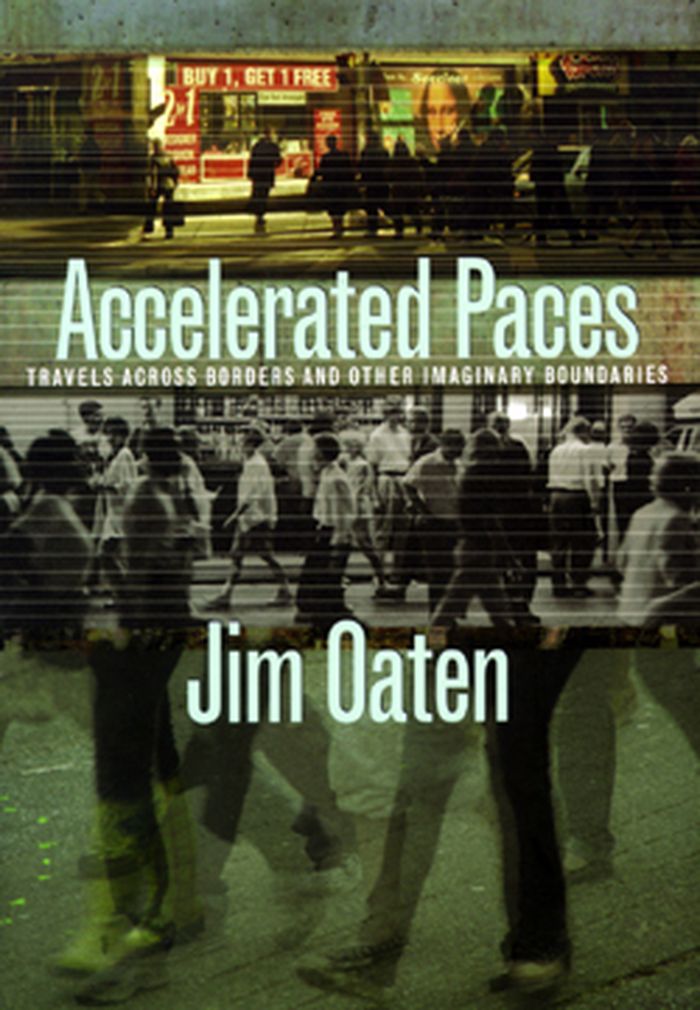
Set somewhere between here and the heat-death of the universe, Jim Oaten’s debut collection serves up random samples of literal and literary truth scooped up at top speed. Whether peeking out from the backseat of Mom and Dad’s car or surveying the grimy wings of mental wards, Accelerated Paces hurdles that uneasy terrain between creative fact and honest fiction. These(...)
$18.00
(disponible sur commande)
Résumé:
Set somewhere between here and the heat-death of the universe, Jim Oaten’s debut collection serves up random samples of literal and literary truth scooped up at top speed. Whether peeking out from the backseat of Mom and Dad’s car or surveying the grimy wings of mental wards, Accelerated Paces hurdles that uneasy terrain between creative fact and honest fiction. These(...)
Titre:
Accelerated paces: travels across borders and other imaginary boundaries
Actions:
Prix:
$18.00
(disponible sur commande)
Résumé:
Set somewhere between here and the heat-death of the universe, Jim Oaten’s debut collection serves up random samples of literal and literary truth scooped up at top speed. Whether peeking out from the backseat of Mom and Dad’s car or surveying the grimy wings of mental wards, Accelerated Paces hurdles that uneasy terrain between creative fact and honest fiction. These short stories and pieces ignore borders as they jaunt thorough external trips and internal voyages. This is both creative non-fiction and creative fiction, which follows the idea of crossing boundaries and blurring borders. Think part of this collection will be an explicit demonstration of how the two genres interplay, of how a non-fiction event can inspire a fictional piece, and, interestingly enough, the reverse as well.
Accelerated paces: travels across borders and other imaginary boundaries
Actions:
Prix:
$18.00
(disponible sur commande)
Résumé:
Set somewhere between here and the heat-death of the universe, Jim Oaten’s debut collection serves up random samples of literal and literary truth scooped up at top speed. Whether peeking out from the backseat of Mom and Dad’s car or surveying the grimy wings of mental wards, Accelerated Paces hurdles that uneasy terrain between creative fact and honest fiction. These short stories and pieces ignore borders as they jaunt thorough external trips and internal voyages. This is both creative non-fiction and creative fiction, which follows the idea of crossing boundaries and blurring borders. Think part of this collection will be an explicit demonstration of how the two genres interplay, of how a non-fiction event can inspire a fictional piece, and, interestingly enough, the reverse as well.
Classification:
livres
livres
Publication:
octobre 2008, Vancouver
octobre 2008, Vancouver
Sujet:
Théorie de l’architecture
Théorie de l’architecture
Classification:
livres
livres
Titre:
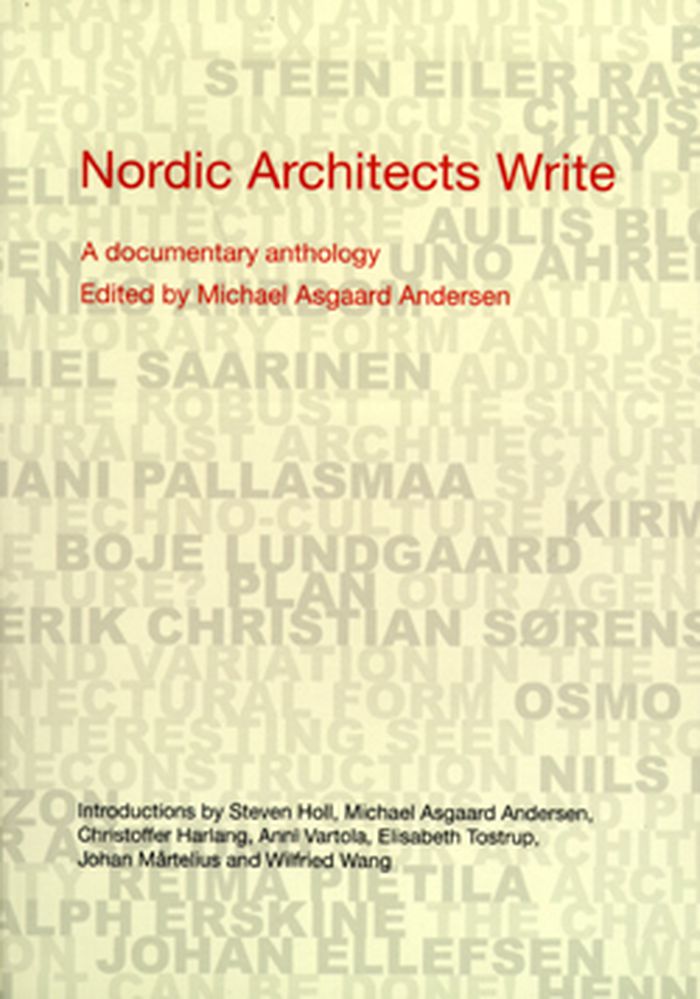
Nordic architects write
Nordic architects write
Actions:
Prix:
$64.95
(disponible sur commande)
Résumé:
This anthology gathers together, for the first time the most influential architectural texts from the Nordic countries: Denmark, Finland, Norway, and Sweden. Many of the texts appear for the first time in English, making them available to a worldwide readership. These texts were written between 1920 and 2007 by architects who lived and worked in the Nordic countries. The(...)
$64.95
(disponible sur commande)
Résumé:
This anthology gathers together, for the first time the most influential architectural texts from the Nordic countries: Denmark, Finland, Norway, and Sweden. Many of the texts appear for the first time in English, making them available to a worldwide readership. These texts were written between 1920 and 2007 by architects who lived and worked in the Nordic countries. The(...)
Sujet:
Théorie de l’architecture
Théorie de l’architecture
Publication:
octobre 2008, Abingdon
octobre 2008, Abingdon
Titre:
Nordic architects write
Actions:
Prix:
$64.95
(disponible sur commande)
Résumé:
This anthology gathers together, for the first time the most influential architectural texts from the Nordic countries: Denmark, Finland, Norway, and Sweden. Many of the texts appear for the first time in English, making them available to a worldwide readership. These texts were written between 1920 and 2007 by architects who lived and worked in the Nordic countries. The book is structured in sections by country with supportive introductions by regional experts. The reader can seek out common themes of space, place, materials, etc across nations or approach the material chronologically.
Nordic architects write
Actions:
Prix:
$64.95
(disponible sur commande)
Résumé:
This anthology gathers together, for the first time the most influential architectural texts from the Nordic countries: Denmark, Finland, Norway, and Sweden. Many of the texts appear for the first time in English, making them available to a worldwide readership. These texts were written between 1920 and 2007 by architects who lived and worked in the Nordic countries. The book is structured in sections by country with supportive introductions by regional experts. The reader can seek out common themes of space, place, materials, etc across nations or approach the material chronologically.
Classification:
livres
livres
Publication:
octobre 2008, Abingdon
octobre 2008, Abingdon
Sujet:
Théorie de l’architecture
Théorie de l’architecture


