


878 Résultats
Classification:
livres
livres
Titre:
East Coast Europe
East Coast Europe
Actions:
Prix:
$28.00
(disponible sur commande)
Résumé:
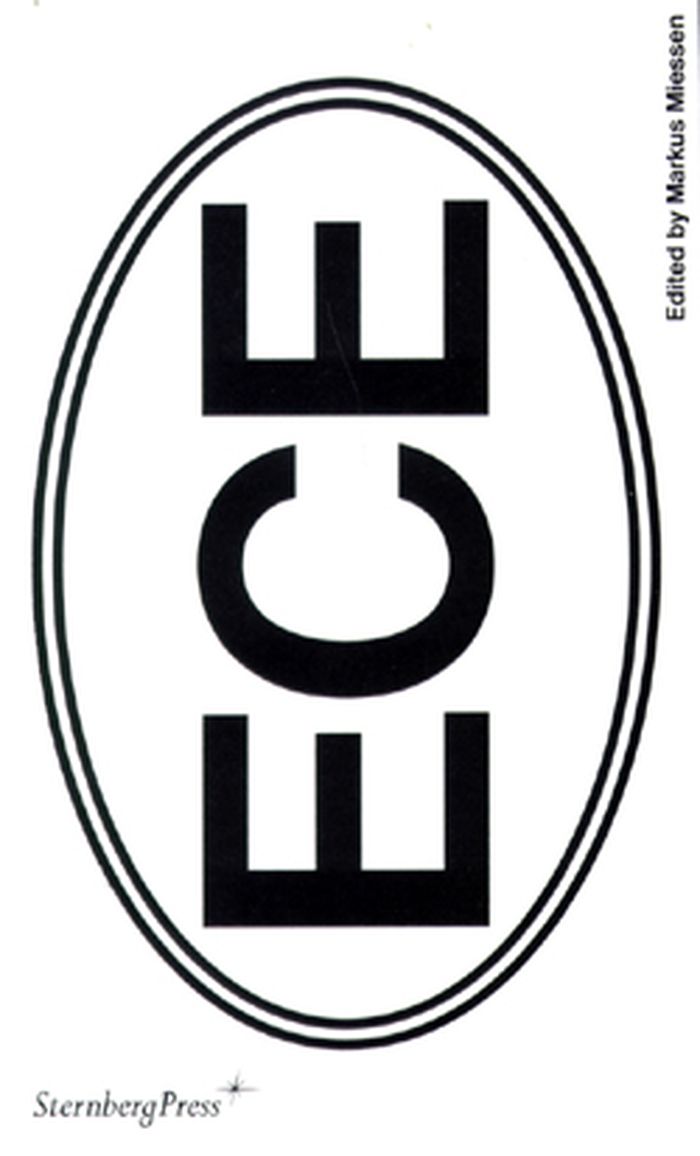
“East Coast Europe,” which took place during Spring 2008, is a project about the perceptions of contemporary European identity and its relation to spatial practices and international politics.
$28.00
(disponible sur commande)
Résumé:
“East Coast Europe,” which took place during Spring 2008, is a project about the perceptions of contemporary European identity and its relation to spatial practices and international politics.
Titre:
East Coast Europe
Actions:
Prix:
$28.00
(disponible sur commande)
Résumé:
“East Coast Europe,” which took place during Spring 2008, is a project about the perceptions of contemporary European identity and its relation to spatial practices and international politics.
East Coast Europe
Actions:
Prix:
$28.00
(disponible sur commande)
Résumé:
“East Coast Europe,” which took place during Spring 2008, is a project about the perceptions of contemporary European identity and its relation to spatial practices and international politics.
Classification:
livres
livres
Publication:
octobre 2008, Berlin / New York
octobre 2008, Berlin / New York
Sujet:
Théorie/ philosophie
Théorie/ philosophie
Classification:
livres
livres

Prix:
$31.00
(disponible sur commande)
Résumé:
Greil Marcus, author of Mystery Train, widely acclaimed as the best book ever written about America as seen through its music, began work on this new book out of a fascination with the Sex Pistols: that scandalous antimusical group, invented in London in 1975 and dead within two years, which sparked the emergence of the culture called punk. "I am an antichrist!" shouted(...)
$31.00
(disponible sur commande)
Résumé:
Greil Marcus, author of Mystery Train, widely acclaimed as the best book ever written about America as seen through its music, began work on this new book out of a fascination with the Sex Pistols: that scandalous antimusical group, invented in London in 1975 and dead within two years, which sparked the emergence of the culture called punk. "I am an antichrist!" shouted(...)
Titre:
Lipstick traces: a secret history of the twentieth century
Actions:
Prix:
$31.00
(disponible sur commande)
Résumé:
Greil Marcus, author of Mystery Train, widely acclaimed as the best book ever written about America as seen through its music, began work on this new book out of a fascination with the Sex Pistols: that scandalous antimusical group, invented in London in 1975 and dead within two years, which sparked the emergence of the culture called punk. "I am an antichrist!" shouted singer Johnny Rotten--where in the world of pop music did that come from? Looking for an answer, with a high sense
Lipstick traces: a secret history of the twentieth century
Actions:
Prix:
$31.00
(disponible sur commande)
Résumé:
Greil Marcus, author of Mystery Train, widely acclaimed as the best book ever written about America as seen through its music, began work on this new book out of a fascination with the Sex Pistols: that scandalous antimusical group, invented in London in 1975 and dead within two years, which sparked the emergence of the culture called punk. "I am an antichrist!" shouted singer Johnny Rotten--where in the world of pop music did that come from? Looking for an answer, with a high sense
Classification:
livres
livres
Publication:
septembre 1960, Cambridge
septembre 1960, Cambridge
Sujet:
Théorie/ philosophie
Théorie/ philosophie
Classification:
livres
livres
Actions:
Prix:
$29.95
(disponible sur commande)
Résumé:
Winner of the 2006 Zia Award from the New Mexico Press Women With a strong, distinctive voice, Roberta Price recalls the years she spent in the Huerfano ("Orphan") Valley when it was a petrie dish of countercultural experiments. Documenting her story with photos as well as words, and placing it in the larger context of the times, she describes her participation in the(...)
$29.95
(disponible sur commande)
Résumé:
Winner of the 2006 Zia Award from the New Mexico Press Women With a strong, distinctive voice, Roberta Price recalls the years she spent in the Huerfano ("Orphan") Valley when it was a petrie dish of countercultural experiments. Documenting her story with photos as well as words, and placing it in the larger context of the times, she describes her participation in the(...)
Titre:
Huerfano: a memoir of life in the counterculture
Actions:
Prix:
$29.95
(disponible sur commande)
Résumé:
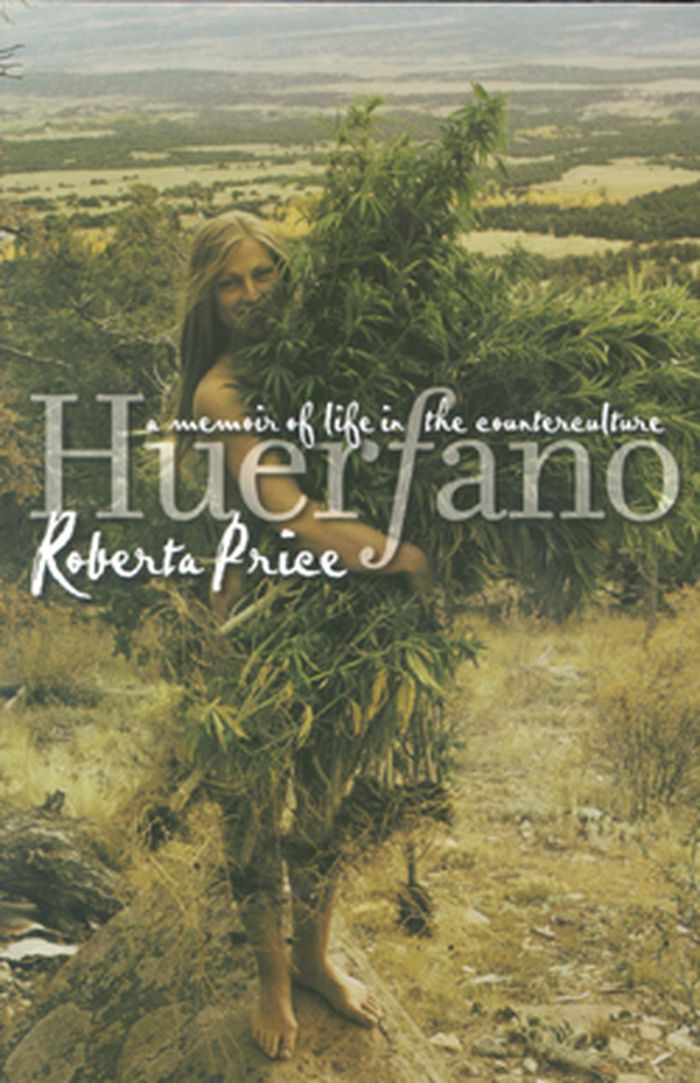
Winner of the 2006 Zia Award from the New Mexico Press Women With a strong, distinctive voice, Roberta Price recalls the years she spent in the Huerfano ("Orphan") Valley when it was a petrie dish of countercultural experiments. Documenting her story with photos as well as words, and placing it in the larger context of the times, she describes her participation in the antiwar movement, the advent of the women's movement, and her encounters with such icons as Ken Kesey, Gary Snyder, Abbie Hoffman, Stewart Brand, Allen Ginsburg, and Baba Ram Dass.
Huerfano: a memoir of life in the counterculture
Actions:
Prix:
$29.95
(disponible sur commande)
Résumé:
Winner of the 2006 Zia Award from the New Mexico Press Women With a strong, distinctive voice, Roberta Price recalls the years she spent in the Huerfano ("Orphan") Valley when it was a petrie dish of countercultural experiments. Documenting her story with photos as well as words, and placing it in the larger context of the times, she describes her participation in the antiwar movement, the advent of the women's movement, and her encounters with such icons as Ken Kesey, Gary Snyder, Abbie Hoffman, Stewart Brand, Allen Ginsburg, and Baba Ram Dass.
Classification:
livres
livres
Publication:
septembre 2006, Amherst, Boston
septembre 2006, Amherst, Boston
Sujet:
Théorie/ philosophie
Théorie/ philosophie
Classification:
livres
livres
Prix:
$40.00
(disponible sur commande)
Résumé:
This nostalgic tour-de-force celebrates the alternative news-papers that forever influenced culture, politics, and society. Taking the collective name from the wartime 'underground press' of Europe's anti-Nazi resistance, the rebellious countercultural publications examined here were all members of the Underground Press Syndicate (later renamed the Alternative Press(...)
$40.00
(disponible sur commande)
Résumé:
This nostalgic tour-de-force celebrates the alternative news-papers that forever influenced culture, politics, and society. Taking the collective name from the wartime 'underground press' of Europe's anti-Nazi resistance, the rebellious countercultural publications examined here were all members of the Underground Press Syndicate (later renamed the Alternative Press(...)
Titre:
Free press: underground & alternative publications 1965-1975
Actions:
Prix:
$40.00
(disponible sur commande)
Résumé:
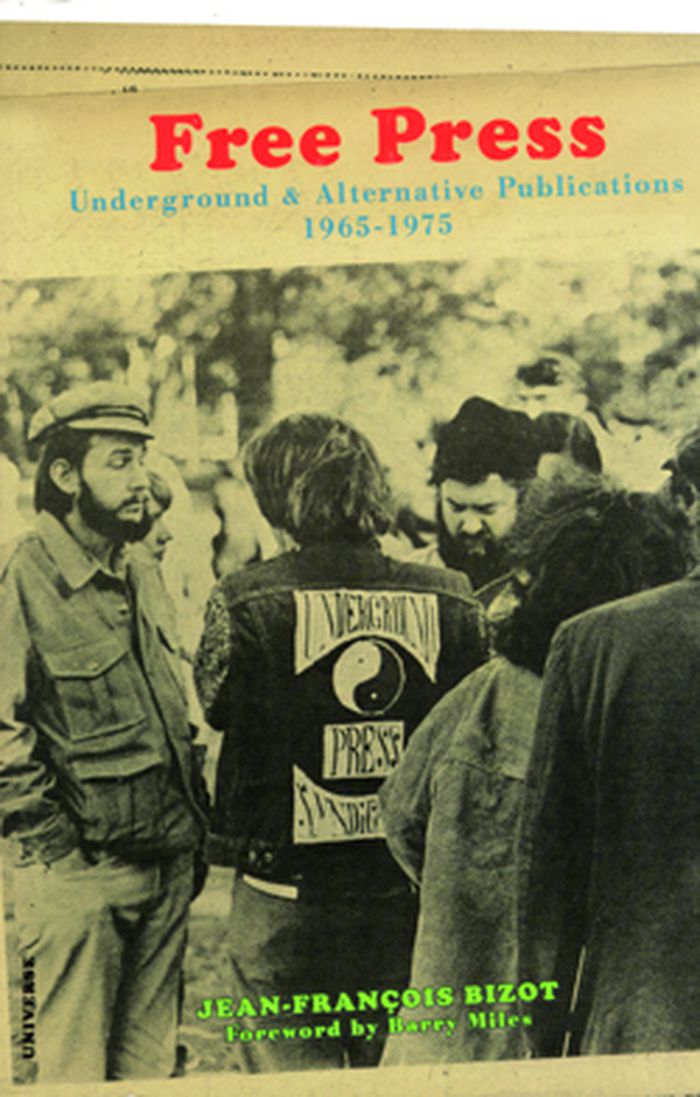
This nostalgic tour-de-force celebrates the alternative news-papers that forever influenced culture, politics, and society. Taking the collective name from the wartime 'underground press' of Europe's anti-Nazi resistance, the rebellious countercultural publications examined here were all members of the Underground Press Syndicate (later renamed the Alternative Press Syndicate), which was founded in 1967 so that member papers could freely share material. This utopian model perfectly suited the times. The work of soon to be famous writers and artists such as Hunter S. Thompson, T. Coraghessan Boyle, Ken Kesey, T. Crumb, and Art Spiegelman was soon widely available from coast to coast.
Free press: underground & alternative publications 1965-1975
Actions:
Prix:
$40.00
(disponible sur commande)
Résumé:
This nostalgic tour-de-force celebrates the alternative news-papers that forever influenced culture, politics, and society. Taking the collective name from the wartime 'underground press' of Europe's anti-Nazi resistance, the rebellious countercultural publications examined here were all members of the Underground Press Syndicate (later renamed the Alternative Press Syndicate), which was founded in 1967 so that member papers could freely share material. This utopian model perfectly suited the times. The work of soon to be famous writers and artists such as Hunter S. Thompson, T. Coraghessan Boyle, Ken Kesey, T. Crumb, and Art Spiegelman was soon widely available from coast to coast.
Classification:
livres
livres
Publication:
octobre 2006, New York
octobre 2006, New York
Sujet:
Théorie/ philosophie
Théorie/ philosophie
Classification:
livres
livres
Actions:
Prix:
$17.00
(disponible sur commande)
Résumé:
This essential document gathers more than 100 provocative artists, cultural critics, and activists to reflect on the historical roots and current manifestations of democracy in the United States.
$17.00
(disponible sur commande)
Résumé:
This essential document gathers more than 100 provocative artists, cultural critics, and activists to reflect on the historical roots and current manifestations of democracy in the United States.
Titre:
A guide to democracy in America
Actions:
Prix:
$17.00
(disponible sur commande)
Résumé:
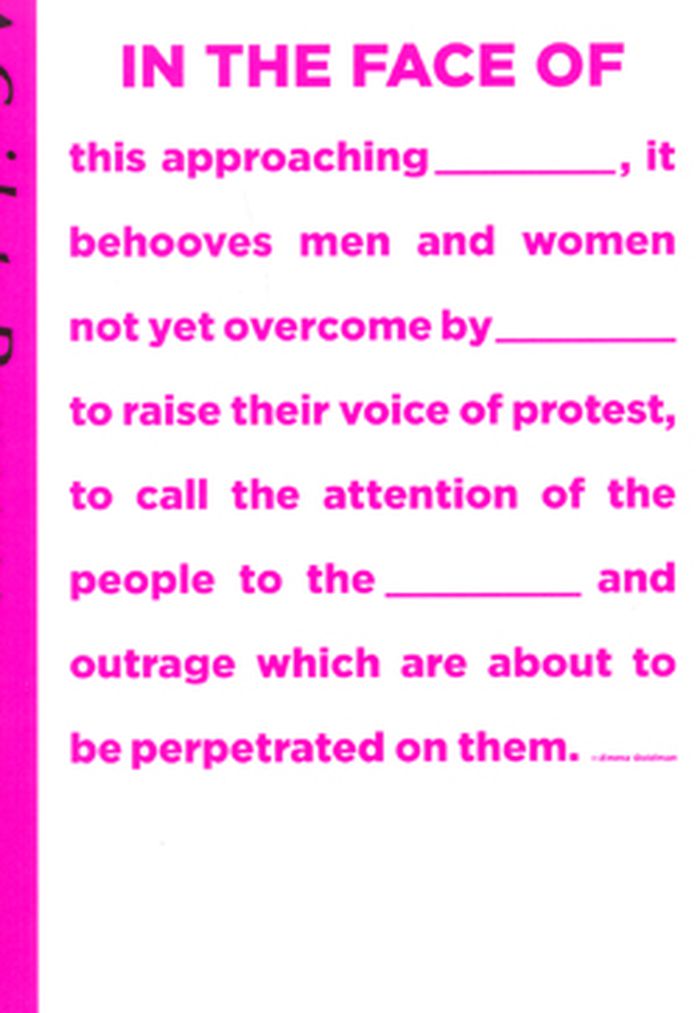
This essential document gathers more than 100 provocative artists, cultural critics, and activists to reflect on the historical roots and current manifestations of democracy in the United States.
A guide to democracy in America
Actions:
Prix:
$17.00
(disponible sur commande)
Résumé:
This essential document gathers more than 100 provocative artists, cultural critics, and activists to reflect on the historical roots and current manifestations of democracy in the United States.
Classification:
livres
livres
Publication:
novembre 2008, New York
novembre 2008, New York
Sujet:
Théorie/ philosophie
Théorie/ philosophie
Classification:
livres
livres
Prix:
$18.95
(disponible sur commande)
Résumé:
In 2004 and 2005, Antonio Negri held ten workshops at the Collège International de Philosophie in Paris to formulate a new political grammar of the postmodern. Postmodernity, Negri suggests, can be described as a "porcelain workshop": a delicate and fragile construction that could be destroyed through one clumsy act. Looking across twentieth century history, Negri warns(...)
$18.95
(disponible sur commande)
Résumé:
In 2004 and 2005, Antonio Negri held ten workshops at the Collège International de Philosophie in Paris to formulate a new political grammar of the postmodern. Postmodernity, Negri suggests, can be described as a "porcelain workshop": a delicate and fragile construction that could be destroyed through one clumsy act. Looking across twentieth century history, Negri warns(...)
Titre:
The porcelain workshop: for a new grammar of politics
Actions:
Prix:
$18.95
(disponible sur commande)
Résumé:
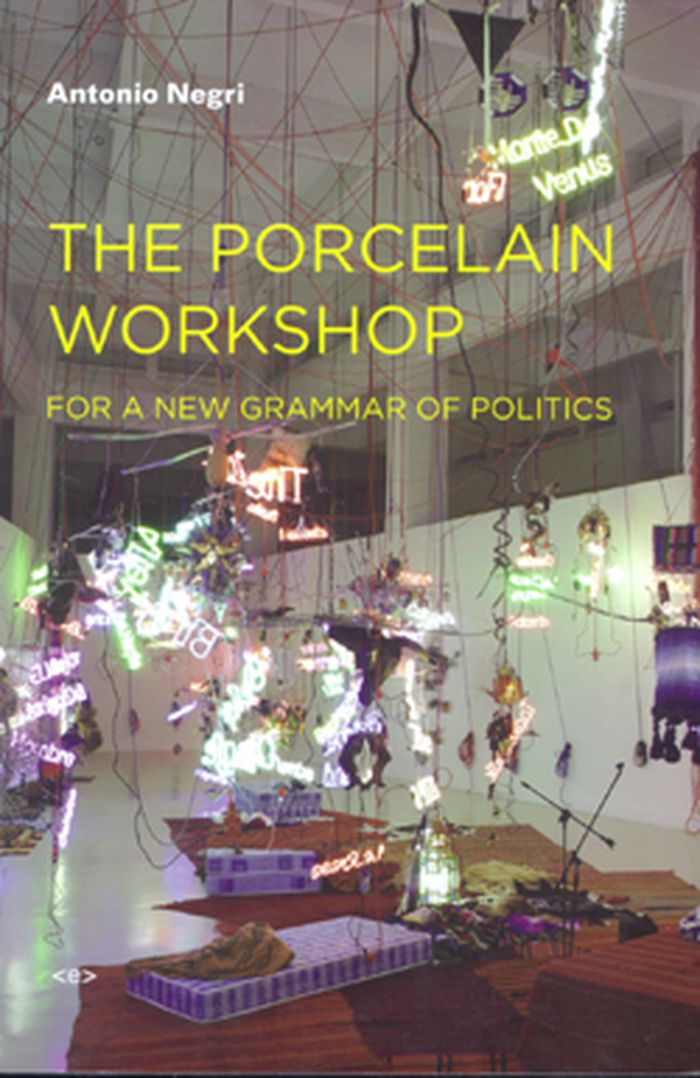
In 2004 and 2005, Antonio Negri held ten workshops at the Collège International de Philosophie in Paris to formulate a new political grammar of the postmodern. Postmodernity, Negri suggests, can be described as a "porcelain workshop": a delicate and fragile construction that could be destroyed through one clumsy act. Looking across twentieth century history, Negri warns that our inability to anticipate future developments has already placed coming generations in serious jeopardy. Describing the years 1917-1968 as the "short century," Negri suggests that by the end of it, all of the familiar markers of modernity (including that of socialism) had lost their relevance. Confronted with an intolerable reality, indignation and the revolutionary will to transform the world have both taken new forms and must be understood anew, free of modernist assumptions. In the impassioned debates recounted in this book, Antonio Negri attempts to describe the formation of an alternative political horizon and looks for a way to define the practices and modes of expression that democracy could take.
The porcelain workshop: for a new grammar of politics
Actions:
Prix:
$18.95
(disponible sur commande)
Résumé:
In 2004 and 2005, Antonio Negri held ten workshops at the Collège International de Philosophie in Paris to formulate a new political grammar of the postmodern. Postmodernity, Negri suggests, can be described as a "porcelain workshop": a delicate and fragile construction that could be destroyed through one clumsy act. Looking across twentieth century history, Negri warns that our inability to anticipate future developments has already placed coming generations in serious jeopardy. Describing the years 1917-1968 as the "short century," Negri suggests that by the end of it, all of the familiar markers of modernity (including that of socialism) had lost their relevance. Confronted with an intolerable reality, indignation and the revolutionary will to transform the world have both taken new forms and must be understood anew, free of modernist assumptions. In the impassioned debates recounted in this book, Antonio Negri attempts to describe the formation of an alternative political horizon and looks for a way to define the practices and modes of expression that democracy could take.
Classification:
livres
livres
Publication:
août 2008, Cambridge, London
août 2008, Cambridge, London
Sujet:
Théorie/ philosophie
Théorie/ philosophie
Classification:
livres
livres
Prix:
$29.50
(disponible sur commande)
Résumé:
Instead of treating art as a unique creation that requires reason and refined taste to appreciate, Elizabeth Grosz argues that art-especially architecture, music, and painting-is born from the disruptive forces of sexual selection. She approaches art as a form of erotic expression connecting sensory richness with primal desire, and in doing so, finds that the meaning of(...)
$29.50
(disponible sur commande)
Résumé:
Instead of treating art as a unique creation that requires reason and refined taste to appreciate, Elizabeth Grosz argues that art-especially architecture, music, and painting-is born from the disruptive forces of sexual selection. She approaches art as a form of erotic expression connecting sensory richness with primal desire, and in doing so, finds that the meaning of(...)
Titre:
Chaos, territory, art, Deleuze and the framing of the earth
Actions:
Prix:
$29.50
(disponible sur commande)
Résumé:
Instead of treating art as a unique creation that requires reason and refined taste to appreciate, Elizabeth Grosz argues that art-especially architecture, music, and painting-is born from the disruptive forces of sexual selection. She approaches art as a form of erotic expression connecting sensory richness with primal desire, and in doing so, finds that the meaning of art comes from the intensities and sensations it inspires, not just its intention and aesthetic. By regarding our most cultured human accomplishments as the result of the excessive, nonfunctional forces of sexual attraction and seduction, Grosz encourages us to see art as a kind of bodily enhancement or mode of sensation enabling living bodies to experience and transform the universe. Art can be understood as a way for bodies to augment themselves and their capacity for perception and affection-a way to grow and evolve through sensation. Through this framework, which knits together the theories of Charles Darwin, Henri Bergson, Gilles Deleuze, FA(c)lix Guattari, and Jakob von UexkA1/4ll, we are able to grasp art's deep animal lineage. Grosz argues that art is not tied to the predictable and known but to new futures not contained in the present. Its animal affiliations ensure that art is intensely political and charged with the creation of new worlds and new forms of living. According to Grosz, art is the way in which life experiments with materiality, or nature, in order to bring about change.
Chaos, territory, art, Deleuze and the framing of the earth
Actions:
Prix:
$29.50
(disponible sur commande)
Résumé:
Instead of treating art as a unique creation that requires reason and refined taste to appreciate, Elizabeth Grosz argues that art-especially architecture, music, and painting-is born from the disruptive forces of sexual selection. She approaches art as a form of erotic expression connecting sensory richness with primal desire, and in doing so, finds that the meaning of art comes from the intensities and sensations it inspires, not just its intention and aesthetic. By regarding our most cultured human accomplishments as the result of the excessive, nonfunctional forces of sexual attraction and seduction, Grosz encourages us to see art as a kind of bodily enhancement or mode of sensation enabling living bodies to experience and transform the universe. Art can be understood as a way for bodies to augment themselves and their capacity for perception and affection-a way to grow and evolve through sensation. Through this framework, which knits together the theories of Charles Darwin, Henri Bergson, Gilles Deleuze, FA(c)lix Guattari, and Jakob von UexkA1/4ll, we are able to grasp art's deep animal lineage. Grosz argues that art is not tied to the predictable and known but to new futures not contained in the present. Its animal affiliations ensure that art is intensely political and charged with the creation of new worlds and new forms of living. According to Grosz, art is the way in which life experiments with materiality, or nature, in order to bring about change.
Classification:
livres
livres
Publication:
août 2008, New York
août 2008, New York
Sujet:
Théorie/ philosophie
Théorie/ philosophie
Classification:
livres
livres
Actions:
Prix:
$29.95
(disponible sur commande)
Résumé:
Originally published as Mille Plateaux, volume 2 of Capitalisme et Schizophrénie, 1980. A Thousand Plateaus continues the work Gilles Deleuze and Félix Guattari began in Anti-Oedipus and has now become established as one of the classic studies of the development of critical theory in the late twentieth century. It occupies an important place at the center of the debate(...)
$29.95
(disponible sur commande)
Résumé:
Originally published as Mille Plateaux, volume 2 of Capitalisme et Schizophrénie, 1980. A Thousand Plateaus continues the work Gilles Deleuze and Félix Guattari began in Anti-Oedipus and has now become established as one of the classic studies of the development of critical theory in the late twentieth century. It occupies an important place at the center of the debate(...)
Sujet:
Théorie/ philosophie
Théorie/ philosophie
Publication:
décembre 1987, London, Minneapolis
décembre 1987, London, Minneapolis
Titre:
A thousand plateaus capitalism and schizophrenia
Actions:
Prix:
$29.95
(disponible sur commande)
Résumé:
Originally published as Mille Plateaux, volume 2 of Capitalisme et Schizophrénie, 1980. A Thousand Plateaus continues the work Gilles Deleuze and Félix Guattari began in Anti-Oedipus and has now become established as one of the classic studies of the development of critical theory in the late twentieth century. It occupies an important place at the center of the debate reassessing the works of Freud and Marx, advancing an approach that is neither Freudian nor Marxist but which learns from both to find an entirely new and radical path. It presents an attempt to pioneer a variety of social and psychological analyses free of the philosophical encumbrances criticized by postmodern writers. A Thousand Plateaus is an essential text for feminists, literary theorists, social scientists, philosophers, and others interested in the problems of contemporary Western culture.
A thousand plateaus capitalism and schizophrenia
Actions:
Prix:
$29.95
(disponible sur commande)
Résumé:
Originally published as Mille Plateaux, volume 2 of Capitalisme et Schizophrénie, 1980. A Thousand Plateaus continues the work Gilles Deleuze and Félix Guattari began in Anti-Oedipus and has now become established as one of the classic studies of the development of critical theory in the late twentieth century. It occupies an important place at the center of the debate reassessing the works of Freud and Marx, advancing an approach that is neither Freudian nor Marxist but which learns from both to find an entirely new and radical path. It presents an attempt to pioneer a variety of social and psychological analyses free of the philosophical encumbrances criticized by postmodern writers. A Thousand Plateaus is an essential text for feminists, literary theorists, social scientists, philosophers, and others interested in the problems of contemporary Western culture.
Classification:
livres
livres
Publication:
décembre 1987, London, Minneapolis
décembre 1987, London, Minneapolis
Sujet:
Théorie/ philosophie
Théorie/ philosophie
Classification:
livres
livres
Titre:
Open sky
Open sky
Actions:
Prix:
$22.00
(disponible sur commande)
Résumé:
Deepening and extending his earlier work, Paul Virilio explores the growing danger of what he calls a "generalized accident," provoked by the breakdown of our collective and individual relation to time, space and movement in the contex of global electronic media. Translated by Julie Rose.
$22.00
(disponible sur commande)
Résumé:
Deepening and extending his earlier work, Paul Virilio explores the growing danger of what he calls a "generalized accident," provoked by the breakdown of our collective and individual relation to time, space and movement in the contex of global electronic media. Translated by Julie Rose.
Titre:
Open sky
Actions:
Prix:
$22.00
(disponible sur commande)
Résumé:
Deepening and extending his earlier work, Paul Virilio explores the growing danger of what he calls a "generalized accident," provoked by the breakdown of our collective and individual relation to time, space and movement in the contex of global electronic media. Translated by Julie Rose.
Open sky
Actions:
Prix:
$22.00
(disponible sur commande)
Résumé:
Deepening and extending his earlier work, Paul Virilio explores the growing danger of what he calls a "generalized accident," provoked by the breakdown of our collective and individual relation to time, space and movement in the contex of global electronic media. Translated by Julie Rose.
Classification:
livres
livres
Publication:
juillet 1997, London / New York
juillet 1997, London / New York
Sujet:
Théorie/ philosophie
Théorie/ philosophie
Classification:
livres
livres
Actions:
Prix:
$12.95
(disponible sur commande)
Résumé:
paru en 1967. Guy Debord (1931-1994) a suivi dans sa vie, jusqu'à la mort qu'il s'est choisie, une seule règle. Celle-là même qu'il résume dans l'avertissement pour la troisième édition française de son livre "La Société du Spectacle". « Il faut lire ce livre en considérant qu'il a été sciemment écrit dans l'intention de nuire à la société spectaculaire. Il n'a jamais(...)
$12.95
(disponible sur commande)
Résumé:
paru en 1967. Guy Debord (1931-1994) a suivi dans sa vie, jusqu'à la mort qu'il s'est choisie, une seule règle. Celle-là même qu'il résume dans l'avertissement pour la troisième édition française de son livre "La Société du Spectacle". « Il faut lire ce livre en considérant qu'il a été sciemment écrit dans l'intention de nuire à la société spectaculaire. Il n'a jamais(...)
Publication:
janvier 2002, Paris
janvier 2002, Paris
Titre:
La société du spectacle, ancienne version
Actions:
Prix:
$12.95
(disponible sur commande)
Résumé:
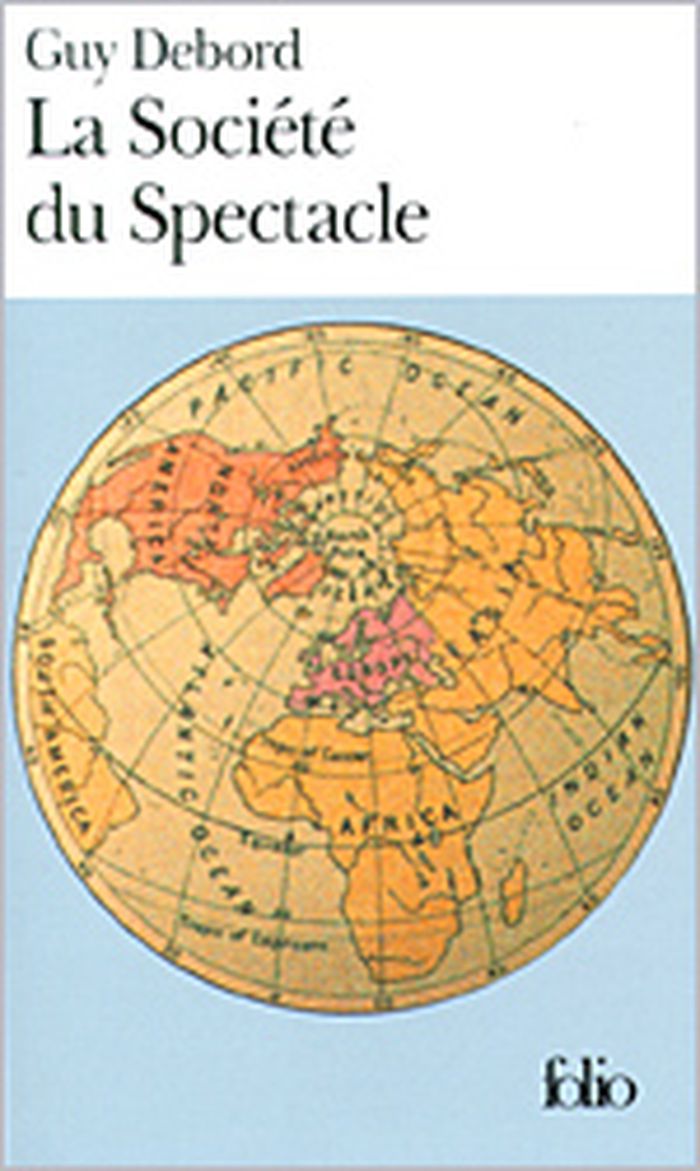
paru en 1967. Guy Debord (1931-1994) a suivi dans sa vie, jusqu'à la mort qu'il s'est choisie, une seule règle. Celle-là même qu'il résume dans l'avertissement pour la troisième édition française de son livre "La Société du Spectacle". « Il faut lire ce livre en considérant qu'il a été sciemment écrit dans l'intention de nuire à la société spectaculaire. Il n'a jamais rien dit d'outrancier. »
La société du spectacle, ancienne version
Actions:
Prix:
$12.95
(disponible sur commande)
Résumé:
paru en 1967. Guy Debord (1931-1994) a suivi dans sa vie, jusqu'à la mort qu'il s'est choisie, une seule règle. Celle-là même qu'il résume dans l'avertissement pour la troisième édition française de son livre "La Société du Spectacle". « Il faut lire ce livre en considérant qu'il a été sciemment écrit dans l'intention de nuire à la société spectaculaire. Il n'a jamais rien dit d'outrancier. »
Classification:
livres
livres
Publication:
janvier 2002, Paris
janvier 2002, Paris


