


878 Résultats
Classification:
livres
livres
Prix:
$23.50
(disponible sur commande)
Résumé:
Has COVID-19 ushered in the end of the office? Or is it the office’s final triumph? For decades, futurologists have prophesied a boundaryless working world, freed from the cramped confines of the office. During the COVID-19 crisis, employees around the globe got a taste of it. Confined by lockdown to their homes, they met, mingled, collaborated, and created(...)
$23.50
(disponible sur commande)
Résumé:
Has COVID-19 ushered in the end of the office? Or is it the office’s final triumph? For decades, futurologists have prophesied a boundaryless working world, freed from the cramped confines of the office. During the COVID-19 crisis, employees around the globe got a taste of it. Confined by lockdown to their homes, they met, mingled, collaborated, and created(...)
Titre:
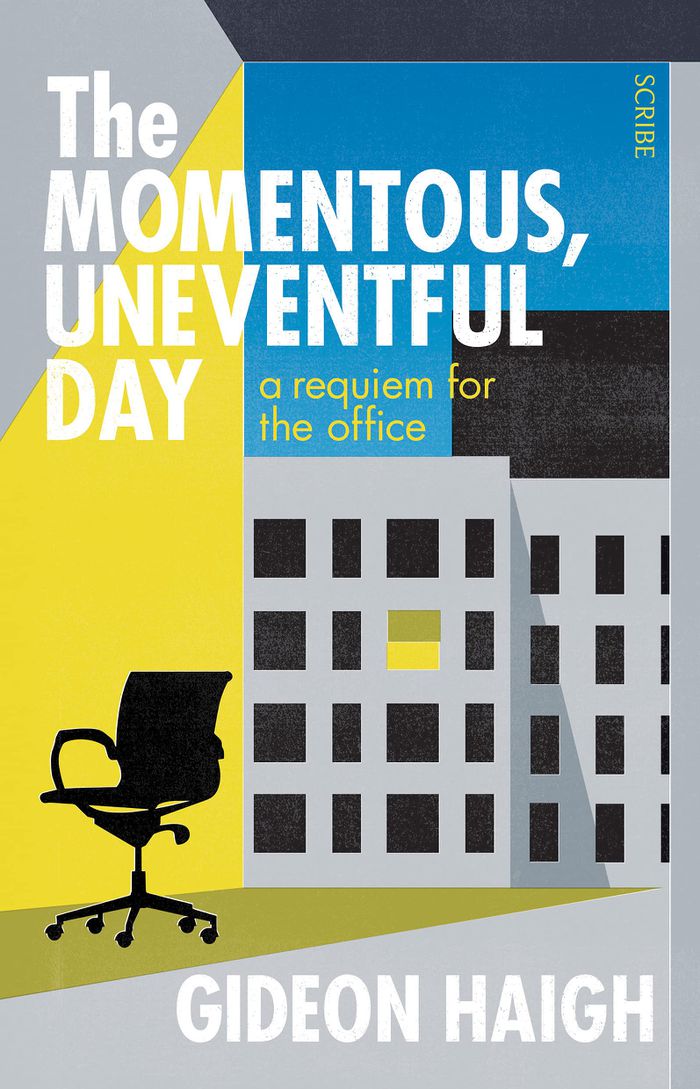
The momentous, uneventful day: A requiem for the office
Actions:
Prix:
$23.50
(disponible sur commande)
Résumé:
Has COVID-19 ushered in the end of the office? Or is it the office’s final triumph? For decades, futurologists have prophesied a boundaryless working world, freed from the cramped confines of the office. During the COVID-19 crisis, employees around the globe got a taste of it. Confined by lockdown to their homes, they met, mingled, collaborated, and created electronically. At length, they returned to something approaching normality. Or had they glimpsed the normal to come? In''The momentous, uneventful day,'' Gideon Haigh reflects on our ambivalent relationship to office work and office life, how we ended up with the offices we have, how they have reflected our best and worst instincts, and how these might be affected by a world in a time of contagion. Like the factory in the nineteenth century, the office was the characteristic building form of the twentieth, reshaping our cities, redirecting our lives. We all have a stake in how it will change in the twenty-first. Enlivened by copious citations from literature, film, memoir, and corporate history, and interspersed with relevant images,''The momentous, uneventful day'' is the ideal companion for a lively current debate about the role offices will play in the future.
The momentous, uneventful day: A requiem for the office
Actions:
Prix:
$23.50
(disponible sur commande)
Résumé:
Has COVID-19 ushered in the end of the office? Or is it the office’s final triumph? For decades, futurologists have prophesied a boundaryless working world, freed from the cramped confines of the office. During the COVID-19 crisis, employees around the globe got a taste of it. Confined by lockdown to their homes, they met, mingled, collaborated, and created electronically. At length, they returned to something approaching normality. Or had they glimpsed the normal to come? In''The momentous, uneventful day,'' Gideon Haigh reflects on our ambivalent relationship to office work and office life, how we ended up with the offices we have, how they have reflected our best and worst instincts, and how these might be affected by a world in a time of contagion. Like the factory in the nineteenth century, the office was the characteristic building form of the twentieth, reshaping our cities, redirecting our lives. We all have a stake in how it will change in the twenty-first. Enlivened by copious citations from literature, film, memoir, and corporate history, and interspersed with relevant images,''The momentous, uneventful day'' is the ideal companion for a lively current debate about the role offices will play in the future.
Classification:
livres
livres
Publication:
septembre 2021
septembre 2021
Sujet:
Théorie/ philosophie
Théorie/ philosophie
Classification:
livres
livres

Titre:
The palliative society
The palliative society
Actions:
Prix:
$19.95
(disponible sur commande)
Résumé:
Our societies today are characterized by a universal algophobia: a generalized fear of pain. We strive to avoid all painful conditions – even the pain of love is treated as suspect. This algophobia extends into society: less and less space is given to conflicts and controversies that might prompt painful discussions. It takes hold of politics too: politics becomes a(...)
$19.95
(disponible sur commande)
Résumé:
Our societies today are characterized by a universal algophobia: a generalized fear of pain. We strive to avoid all painful conditions – even the pain of love is treated as suspect. This algophobia extends into society: less and less space is given to conflicts and controversies that might prompt painful discussions. It takes hold of politics too: politics becomes a(...)
Titre:
The palliative society
Actions:
Prix:
$19.95
(disponible sur commande)
Résumé:
Our societies today are characterized by a universal algophobia: a generalized fear of pain. We strive to avoid all painful conditions – even the pain of love is treated as suspect. This algophobia extends into society: less and less space is given to conflicts and controversies that might prompt painful discussions. It takes hold of politics too: politics becomes a palliative politics that is incapable of implementing radical reforms that might be painful, so all we get is more of the same. Faced with the coronavirus pandemic, the palliative society is transformed into a society of survival. The virus enters the palliative zone of well-being and turns it into a quarantine zone in which life is increasingly focused on survival. And the more life becomes survival, the greater the fear of death: the pandemic makes death, which we had carefully repressed and set aside, visible again. Everywhere, the prolongation of life at any cost is the preeminent value, and we are prepared to sacrifice everything that makes life worth living for the sake of survival. This trenchant analysis of our contemporary societies by one of the most original cultural critics of our time will appeal to a wide readership.
The palliative society
Actions:
Prix:
$19.95
(disponible sur commande)
Résumé:
Our societies today are characterized by a universal algophobia: a generalized fear of pain. We strive to avoid all painful conditions – even the pain of love is treated as suspect. This algophobia extends into society: less and less space is given to conflicts and controversies that might prompt painful discussions. It takes hold of politics too: politics becomes a palliative politics that is incapable of implementing radical reforms that might be painful, so all we get is more of the same. Faced with the coronavirus pandemic, the palliative society is transformed into a society of survival. The virus enters the palliative zone of well-being and turns it into a quarantine zone in which life is increasingly focused on survival. And the more life becomes survival, the greater the fear of death: the pandemic makes death, which we had carefully repressed and set aside, visible again. Everywhere, the prolongation of life at any cost is the preeminent value, and we are prepared to sacrifice everything that makes life worth living for the sake of survival. This trenchant analysis of our contemporary societies by one of the most original cultural critics of our time will appeal to a wide readership.
Classification:
livres
livres
Publication:
septembre 2021
septembre 2021
Sujet:
Théorie/ philosophie
Théorie/ philosophie
Classification:
livres
livres
Titre:
Inclusions
Inclusions
Actions:
Prix:
$32.95
(disponible sur commande)
Résumé:
À l'heure de l'Anthropocène, quel pourrait être le rôle de l'art? Dans une culture qui a accéléré jusqu'au délire le passage de la marchandise à l'ordure, de la valeur au déchet, il n'est désormais rien qui ne puisse prétendre s'extraire de la logique de crise affectant la totalité des habitants de la planète Terre. À la crise climatique et à la crise économique répond en(...)
$32.95
(disponible sur commande)
Résumé:
À l'heure de l'Anthropocène, quel pourrait être le rôle de l'art? Dans une culture qui a accéléré jusqu'au délire le passage de la marchandise à l'ordure, de la valeur au déchet, il n'est désormais rien qui ne puisse prétendre s'extraire de la logique de crise affectant la totalité des habitants de la planète Terre. À la crise climatique et à la crise économique répond en(...)
Titre:
Inclusions
Actions:
Prix:
$32.95
(disponible sur commande)
Résumé:
À l'heure de l'Anthropocène, quel pourrait être le rôle de l'art? Dans une culture qui a accéléré jusqu'au délire le passage de la marchandise à l'ordure, de la valeur au déchet, il n'est désormais rien qui ne puisse prétendre s'extraire de la logique de crise affectant la totalité des habitants de la planète Terre. À la crise climatique et à la crise économique répond en effet une crise de la culture, mêlant gaspillages, exclusions, pollutions, appropriations brutales - faisant de l'art le collaborateur de la destruction planétaire. Comment réagir à cet état des choses? Dans ce nouvel essai, urgent et passionné, Nicolas Bourriaud se fait l'avocat d'une conception nouvelle de l'art, qui prenne la mesure d'une écologie et d'une économie instituant la décroissance, la décolonisation et l'inclusion en maîtres-mots. Convoquant les plus grands créateurs de notre temps ainsi que les derniers apports de l'anthropologie, de la philosophie ou de l'esthétique, Inclusions est un vibrant plaidoyer pour une forme enfin soutenable de vie, dont l'art pourrait constituer le modèle.
Inclusions
Actions:
Prix:
$32.95
(disponible sur commande)
Résumé:
À l'heure de l'Anthropocène, quel pourrait être le rôle de l'art? Dans une culture qui a accéléré jusqu'au délire le passage de la marchandise à l'ordure, de la valeur au déchet, il n'est désormais rien qui ne puisse prétendre s'extraire de la logique de crise affectant la totalité des habitants de la planète Terre. À la crise climatique et à la crise économique répond en effet une crise de la culture, mêlant gaspillages, exclusions, pollutions, appropriations brutales - faisant de l'art le collaborateur de la destruction planétaire. Comment réagir à cet état des choses? Dans ce nouvel essai, urgent et passionné, Nicolas Bourriaud se fait l'avocat d'une conception nouvelle de l'art, qui prenne la mesure d'une écologie et d'une économie instituant la décroissance, la décolonisation et l'inclusion en maîtres-mots. Convoquant les plus grands créateurs de notre temps ainsi que les derniers apports de l'anthropologie, de la philosophie ou de l'esthétique, Inclusions est un vibrant plaidoyer pour une forme enfin soutenable de vie, dont l'art pourrait constituer le modèle.
Classification:
livres
livres
Publication:
avril 2021
avril 2021
Sujet:
Théorie/ philosophie
Théorie/ philosophie
Classification:
livres
livres
Prix:
$37.00
(disponible sur commande)
Résumé:
In this timely and enlightening book, the bestselling author of Deep Work introduces a philosophy for technology use that has already improved countless lives. Digital minimalists are all around us. They're the calm, happy people who can hold long conversations without furtive glances at their phones. They can get lost in a good book, a woodworking project, or a(...)
$37.00
(disponible sur commande)
Résumé:
In this timely and enlightening book, the bestselling author of Deep Work introduces a philosophy for technology use that has already improved countless lives. Digital minimalists are all around us. They're the calm, happy people who can hold long conversations without furtive glances at their phones. They can get lost in a good book, a woodworking project, or a(...)
Titre:
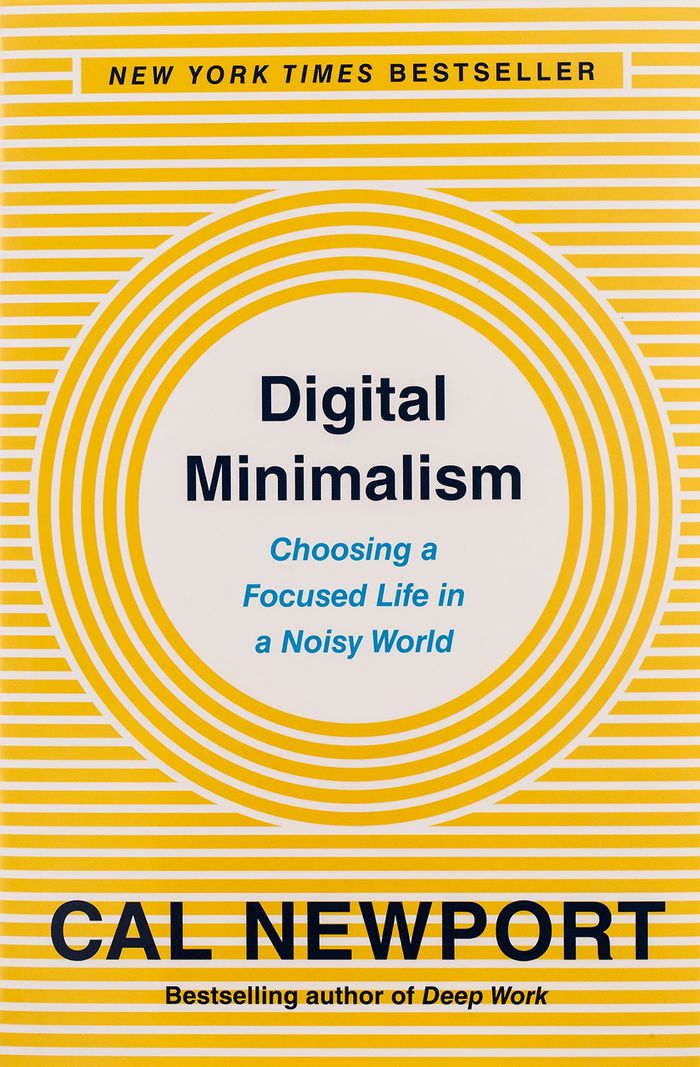
Digital minimalism: choosing a focused life in a noisy world
Actions:
Prix:
$37.00
(disponible sur commande)
Résumé:
In this timely and enlightening book, the bestselling author of Deep Work introduces a philosophy for technology use that has already improved countless lives. Digital minimalists are all around us. They're the calm, happy people who can hold long conversations without furtive glances at their phones. They can get lost in a good book, a woodworking project, or a leisurely morning run. They can have fun with friends and family without the obsessive urge to document the experience. They stay informed about the news of the day, but don't feel overwhelmed by it. They don't experience "fear of missing out" because they already know which activities provide them meaning and satisfaction. Now, Newport gives us a name for this quiet movement, and makes a persuasive case for its urgency in our tech-saturated world. Common sense tips, like turning off notifications, or occasional rituals like observing a digital sabbath, don't go far enough in helping us take back control of our technological lives, and attempts to unplug completely are complicated by the demands of family, friends and work. What we need instead is a thoughtful method to decide what tools to use, for what purposes, and under what conditions.
Digital minimalism: choosing a focused life in a noisy world
Actions:
Prix:
$37.00
(disponible sur commande)
Résumé:
In this timely and enlightening book, the bestselling author of Deep Work introduces a philosophy for technology use that has already improved countless lives. Digital minimalists are all around us. They're the calm, happy people who can hold long conversations without furtive glances at their phones. They can get lost in a good book, a woodworking project, or a leisurely morning run. They can have fun with friends and family without the obsessive urge to document the experience. They stay informed about the news of the day, but don't feel overwhelmed by it. They don't experience "fear of missing out" because they already know which activities provide them meaning and satisfaction. Now, Newport gives us a name for this quiet movement, and makes a persuasive case for its urgency in our tech-saturated world. Common sense tips, like turning off notifications, or occasional rituals like observing a digital sabbath, don't go far enough in helping us take back control of our technological lives, and attempts to unplug completely are complicated by the demands of family, friends and work. What we need instead is a thoughtful method to decide what tools to use, for what purposes, and under what conditions.
Classification:
livres
livres
Publication:
février 2019
février 2019
Sujet:
Théorie/ philosophie
Théorie/ philosophie
Classification:
livres
livres
Actions:
Prix:
$41.00
(disponible sur commande)
Résumé:
Before there was money, there was debt. Every economics textbook says the same thing: Money was invented to replace onerous and complicated barter systems—to relieve ancient people from having to haul their goods to market. The problem with this version of history? There’s not a shred of evidence to support it. Here anthropologist David Graeber presents a stunning(...)
$41.00
(disponible sur commande)
Résumé:
Before there was money, there was debt. Every economics textbook says the same thing: Money was invented to replace onerous and complicated barter systems—to relieve ancient people from having to haul their goods to market. The problem with this version of history? There’s not a shred of evidence to support it. Here anthropologist David Graeber presents a stunning(...)
Titre:
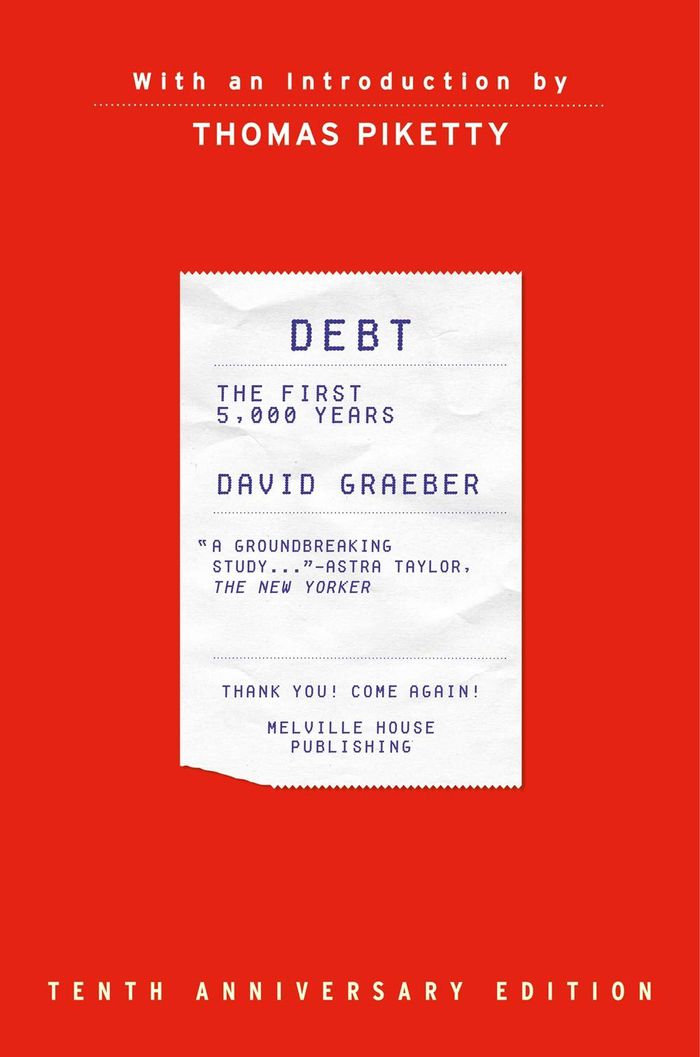
Debt: The first 5,000 years, updated and expanded
Actions:
Prix:
$41.00
(disponible sur commande)
Résumé:
Before there was money, there was debt. Every economics textbook says the same thing: Money was invented to replace onerous and complicated barter systems—to relieve ancient people from having to haul their goods to market. The problem with this version of history? There’s not a shred of evidence to support it. Here anthropologist David Graeber presents a stunning reversal of conventional wisdom. He shows that for more than 5,000 years, since the beginnings of the first agrarian empires, humans have used elaborate credit systems to buy and sell goods—that is, long before the invention of coins or cash. It is in this era, Graeber argues, that we also first encounter a society divided into debtors and creditors. Graeber shows that arguments about debt and debt forgiveness have been at the center of political debates from Italy to China, as well as sparking innumerable insurrections. He also brilliantly demonstrates that the language of the ancient works of law and religion (words like ''guilt,'' ''sin,'' and ''redemption'') derive in large part from ancient debates about debt, and shape even our most basic ideas of right and wrong. We are still fighting these battles today without knowing it. ''Debt: The first 5,000 years'' is a fascinating chronicle of this little known history—as well as how it has defined human history. It shows how debt has defined our human past, and what that means for our economic future.
Debt: The first 5,000 years, updated and expanded
Actions:
Prix:
$41.00
(disponible sur commande)
Résumé:
Before there was money, there was debt. Every economics textbook says the same thing: Money was invented to replace onerous and complicated barter systems—to relieve ancient people from having to haul their goods to market. The problem with this version of history? There’s not a shred of evidence to support it. Here anthropologist David Graeber presents a stunning reversal of conventional wisdom. He shows that for more than 5,000 years, since the beginnings of the first agrarian empires, humans have used elaborate credit systems to buy and sell goods—that is, long before the invention of coins or cash. It is in this era, Graeber argues, that we also first encounter a society divided into debtors and creditors. Graeber shows that arguments about debt and debt forgiveness have been at the center of political debates from Italy to China, as well as sparking innumerable insurrections. He also brilliantly demonstrates that the language of the ancient works of law and religion (words like ''guilt,'' ''sin,'' and ''redemption'') derive in large part from ancient debates about debt, and shape even our most basic ideas of right and wrong. We are still fighting these battles today without knowing it. ''Debt: The first 5,000 years'' is a fascinating chronicle of this little known history—as well as how it has defined human history. It shows how debt has defined our human past, and what that means for our economic future.
Classification:
livres
livres
Publication:
juin 2021
juin 2021
Sujet:
Théorie/ philosophie
Théorie/ philosophie
Classification:
livres
livres
Actions:
Prix:
$32.00
(disponible sur commande)
Résumé:
When the “sharing economy” launched a decade ago, proponents claimed that it would transform the experience of work—giving earners flexibility, autonomy, and a decent income. It was touted as a cure for social isolation and rampant ecological degradation. But this novel form of work soon sprouted a dark side: exploited Uber drivers, neighborhoods ruined by Airbnb, racial(...)
$32.00
(disponible sur commande)
Résumé:
When the “sharing economy” launched a decade ago, proponents claimed that it would transform the experience of work—giving earners flexibility, autonomy, and a decent income. It was touted as a cure for social isolation and rampant ecological degradation. But this novel form of work soon sprouted a dark side: exploited Uber drivers, neighborhoods ruined by Airbnb, racial(...)
Titre:
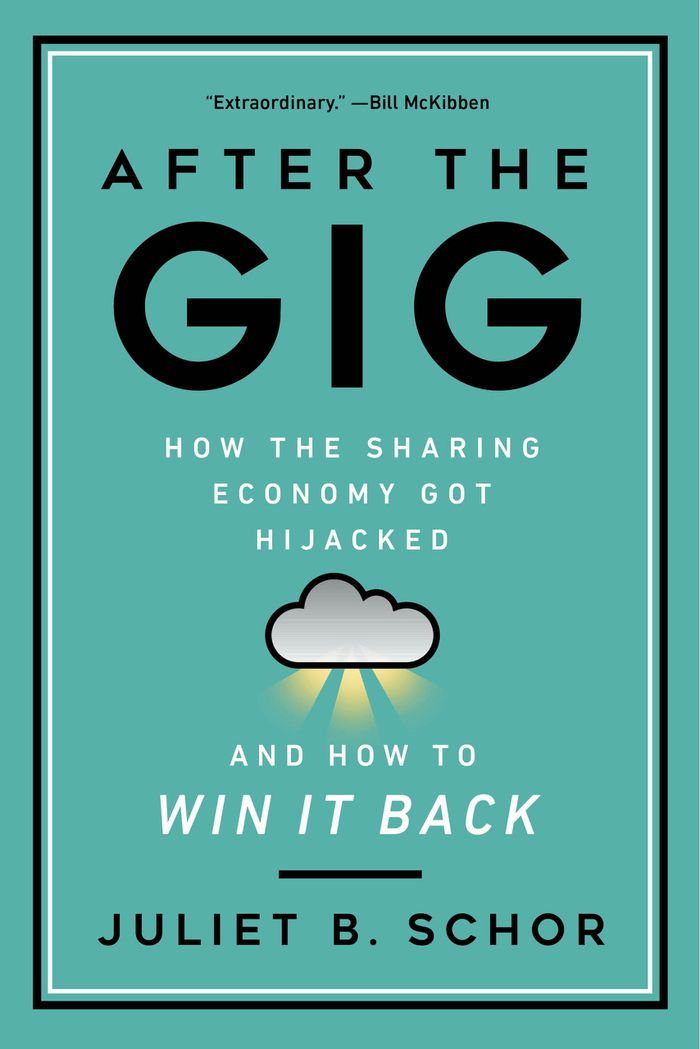
After the gig: how the sharing economy got hijacked, and how to win it back
Actions:
Prix:
$32.00
(disponible sur commande)
Résumé:
When the “sharing economy” launched a decade ago, proponents claimed that it would transform the experience of work—giving earners flexibility, autonomy, and a decent income. It was touted as a cure for social isolation and rampant ecological degradation. But this novel form of work soon sprouted a dark side: exploited Uber drivers, neighborhoods ruined by Airbnb, racial discrimination, and rising carbon emissions. Several of the most prominent platforms are now faced with existential crises as they prioritize growth over fairness and long-term viability. Based on nearly a decade of pioneering research, this publication dives into what went wrong with this contemporary reimagining of labor. It examines multiple types of data from thirteen cases to identify the unique features and potential of sharing platforms that prior research has failed to pinpoint. Juliet B. Schor presents a compelling argument that we can engineer a reboot: through regulatory reforms and cooperative platforms owned and controlled by users, an equitable and truly shared economy is still possible.
After the gig: how the sharing economy got hijacked, and how to win it back
Actions:
Prix:
$32.00
(disponible sur commande)
Résumé:
When the “sharing economy” launched a decade ago, proponents claimed that it would transform the experience of work—giving earners flexibility, autonomy, and a decent income. It was touted as a cure for social isolation and rampant ecological degradation. But this novel form of work soon sprouted a dark side: exploited Uber drivers, neighborhoods ruined by Airbnb, racial discrimination, and rising carbon emissions. Several of the most prominent platforms are now faced with existential crises as they prioritize growth over fairness and long-term viability. Based on nearly a decade of pioneering research, this publication dives into what went wrong with this contemporary reimagining of labor. It examines multiple types of data from thirteen cases to identify the unique features and potential of sharing platforms that prior research has failed to pinpoint. Juliet B. Schor presents a compelling argument that we can engineer a reboot: through regulatory reforms and cooperative platforms owned and controlled by users, an equitable and truly shared economy is still possible.
Classification:
livres
livres
Publication:
juillet 2021
juillet 2021
Sujet:
Théorie/ philosophie
Théorie/ philosophie
Classification:
livres
livres

Titre:
Undoing property?
Undoing property?
Actions:
Prix:
$37.00
(disponible sur commande)
Résumé:
''Undoing property?'' examines complex relationships inside art, culture, political economy, immaterial production, and the public realm today. In its pages artists and theorists address aspects of computing, curating, economy, ecology, gentrification, music, publishing, piracy, and much more. Property shapes all social relations. Its invisible lines force separations(...)
$37.00
(disponible sur commande)
Résumé:
''Undoing property?'' examines complex relationships inside art, culture, political economy, immaterial production, and the public realm today. In its pages artists and theorists address aspects of computing, curating, economy, ecology, gentrification, music, publishing, piracy, and much more. Property shapes all social relations. Its invisible lines force separations(...)
Titre:
Undoing property?
Actions:
Prix:
$37.00
(disponible sur commande)
Résumé:
''Undoing property?'' examines complex relationships inside art, culture, political economy, immaterial production, and the public realm today. In its pages artists and theorists address aspects of computing, curating, economy, ecology, gentrification, music, publishing, piracy, and much more. Property shapes all social relations. Its invisible lines force separations and create power relations felt through the unequal distribution of what is otherwise collectively produced value. Over the last few years the precise question of what should be privately owned and publicly shared in society has animated intense political struggles and social movements around the world. In this shadow the publication's critical texts, interviews and artistic interventions offer models of practice and interrogate diverse sites, from the body, to the courtroom, to the server, to the museum. The book asks why propertization itself has changed so fundamentally over the last few decades and what might be done to challenge it. The "undoing" of ''Undoing property?'' begins with the recognition that something else is possible.
Undoing property?
Actions:
Prix:
$37.00
(disponible sur commande)
Résumé:
''Undoing property?'' examines complex relationships inside art, culture, political economy, immaterial production, and the public realm today. In its pages artists and theorists address aspects of computing, curating, economy, ecology, gentrification, music, publishing, piracy, and much more. Property shapes all social relations. Its invisible lines force separations and create power relations felt through the unequal distribution of what is otherwise collectively produced value. Over the last few years the precise question of what should be privately owned and publicly shared in society has animated intense political struggles and social movements around the world. In this shadow the publication's critical texts, interviews and artistic interventions offer models of practice and interrogate diverse sites, from the body, to the courtroom, to the server, to the museum. The book asks why propertization itself has changed so fundamentally over the last few decades and what might be done to challenge it. The "undoing" of ''Undoing property?'' begins with the recognition that something else is possible.
Classification:
livres
livres
Publication:
septembre 2013
septembre 2013
Sujet:
Théorie/ philosophie
Théorie/ philosophie
Classification:
livres
livres

Actions:
Prix:
$18.95
(disponible sur commande)
Résumé:
Un autre ton de Foucault. Un autre Foucault. Plus près de l’aveu de soi. Plus près de la littérature. Deux conférences de 1966 : totalement inédite pour l’une (Le Corps Utopique) ; inédite sous cette forme pour l’autre (Les Hétérotopies).
$18.95
(disponible sur commande)
Résumé:
Un autre ton de Foucault. Un autre Foucault. Plus près de l’aveu de soi. Plus près de la littérature. Deux conférences de 1966 : totalement inédite pour l’une (Le Corps Utopique) ; inédite sous cette forme pour l’autre (Les Hétérotopies).
Titre:
Le corps utopique, Les hétérotopies
Actions:
Prix:
$18.95
(disponible sur commande)
Résumé:
Un autre ton de Foucault. Un autre Foucault. Plus près de l’aveu de soi. Plus près de la littérature. Deux conférences de 1966 : totalement inédite pour l’une (Le Corps Utopique) ; inédite sous cette forme pour l’autre (Les Hétérotopies).
Le corps utopique, Les hétérotopies
Actions:
Prix:
$18.95
(disponible sur commande)
Résumé:
Un autre ton de Foucault. Un autre Foucault. Plus près de l’aveu de soi. Plus près de la littérature. Deux conférences de 1966 : totalement inédite pour l’une (Le Corps Utopique) ; inédite sous cette forme pour l’autre (Les Hétérotopies).
Classification:
livres
livres
Publication:
octobre 2019
octobre 2019
Sujet:
Théorie/ philosophie
Théorie/ philosophie
Classification:
livres
livres
Titre:
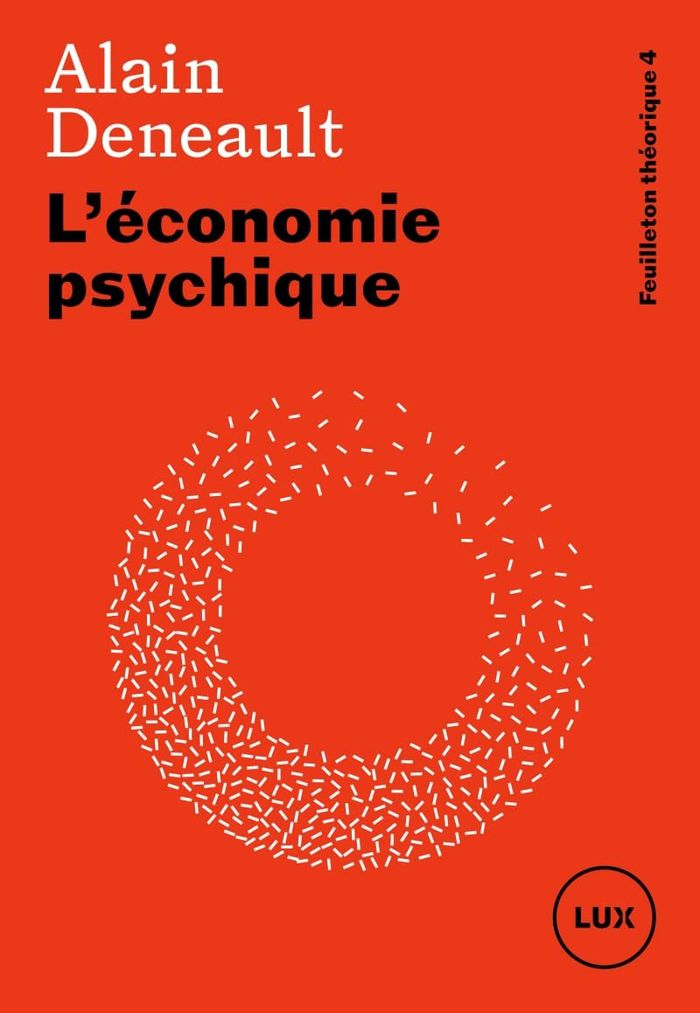
L'économie psychique
L'économie psychique
Actions:
Prix:
$19.95
(disponible sur commande)
Résumé:
Depuis la conception vitaliste de l’«économie animale» en biologie et le travail spécifiquement philosophique de Sigmund Freud, l’«économie psychique» désigne les tensions qui s’observent entre l’affirmation pulsionnelle et les impératifs sociaux, moraux et anthropologiques qui s’interposent pour la censurer. Or, les structures sociales qui, jusqu’à il y a peu, assuraient(...)
$19.95
(disponible sur commande)
Résumé:
Depuis la conception vitaliste de l’«économie animale» en biologie et le travail spécifiquement philosophique de Sigmund Freud, l’«économie psychique» désigne les tensions qui s’observent entre l’affirmation pulsionnelle et les impératifs sociaux, moraux et anthropologiques qui s’interposent pour la censurer. Or, les structures sociales qui, jusqu’à il y a peu, assuraient(...)
Titre:
L'économie psychique
Actions:
Prix:
$19.95
(disponible sur commande)
Résumé:
Depuis la conception vitaliste de l’«économie animale» en biologie et le travail spécifiquement philosophique de Sigmund Freud, l’«économie psychique» désigne les tensions qui s’observent entre l’affirmation pulsionnelle et les impératifs sociaux, moraux et anthropologiques qui s’interposent pour la censurer. Or, les structures sociales qui, jusqu’à il y a peu, assuraient encore l’organisation de la personne et le refoulement des pulsions ont disparu. Nous sommes désormais contraints de trouver en nous-mêmes d’autres modalités d’organisation, et l’ancienne personnalité qui se sentait perpétuellement en dette envers la société a cédé la place à un individu qui tend à croire que tout lui est dû. Alain Deneault décrit cette évolution de l’économie psychique qui, bien qu’étrangère aux sciences économiques, a été récupérée par ces dernières et par leurs domaines régionaux que sont le marketing et le management. Ce quatrième opuscule du feuilleton «Les économies» se termine par une «césure» dans laquelle l’auteur répond à quelques détracteurs vivant mal le sort que son travail fait subir aux «économistes» et à ceux qui les suivent.
L'économie psychique
Actions:
Prix:
$19.95
(disponible sur commande)
Résumé:
Depuis la conception vitaliste de l’«économie animale» en biologie et le travail spécifiquement philosophique de Sigmund Freud, l’«économie psychique» désigne les tensions qui s’observent entre l’affirmation pulsionnelle et les impératifs sociaux, moraux et anthropologiques qui s’interposent pour la censurer. Or, les structures sociales qui, jusqu’à il y a peu, assuraient encore l’organisation de la personne et le refoulement des pulsions ont disparu. Nous sommes désormais contraints de trouver en nous-mêmes d’autres modalités d’organisation, et l’ancienne personnalité qui se sentait perpétuellement en dette envers la société a cédé la place à un individu qui tend à croire que tout lui est dû. Alain Deneault décrit cette évolution de l’économie psychique qui, bien qu’étrangère aux sciences économiques, a été récupérée par ces dernières et par leurs domaines régionaux que sont le marketing et le management. Ce quatrième opuscule du feuilleton «Les économies» se termine par une «césure» dans laquelle l’auteur répond à quelques détracteurs vivant mal le sort que son travail fait subir aux «économistes» et à ceux qui les suivent.
Classification:
livres
livres
Publication:
novembre 2021
novembre 2021
Sujet:
Théorie/ philosophie
Théorie/ philosophie
Classification:
livres
livres

Actions:
Prix:
$53.95
(disponible sur commande)
Résumé:
Water is the element that, more than any other, ties human beings in to the world around them – from the oceans that surround us to the water that makes up most of our bodies. Exploring the cultural and philosophical implications of this fact, this book develops an innovative new mode of posthuman feminist phenomenology that understands our bodies as being fundamentally(...)
$53.95
(disponible sur commande)
Résumé:
Water is the element that, more than any other, ties human beings in to the world around them – from the oceans that surround us to the water that makes up most of our bodies. Exploring the cultural and philosophical implications of this fact, this book develops an innovative new mode of posthuman feminist phenomenology that understands our bodies as being fundamentally(...)
Titre:
Bodies of water: posthuman feminist phenomenology
Actions:
Prix:
$53.95
(disponible sur commande)
Résumé:
Water is the element that, more than any other, ties human beings in to the world around them – from the oceans that surround us to the water that makes up most of our bodies. Exploring the cultural and philosophical implications of this fact, this book develops an innovative new mode of posthuman feminist phenomenology that understands our bodies as being fundamentally part of the natural world and not separate from or privileged to it.
Bodies of water: posthuman feminist phenomenology
Actions:
Prix:
$53.95
(disponible sur commande)
Résumé:
Water is the element that, more than any other, ties human beings in to the world around them – from the oceans that surround us to the water that makes up most of our bodies. Exploring the cultural and philosophical implications of this fact, this book develops an innovative new mode of posthuman feminist phenomenology that understands our bodies as being fundamentally part of the natural world and not separate from or privileged to it.
Classification:
livres
livres
Publication:
mai 2019
mai 2019
Sujet:
Théorie/ philosophie
Théorie/ philosophie


